The right garden shed idea depends on whether you are building from scratch, modifying a kit, or skinning a cheap metal shell with found wood. Spend more than thirty dollars on a spring seed-starting rig and you have wasted money; the tote cracks and you will rebuild it anyway.
1. Rustic and Quaint Sheds
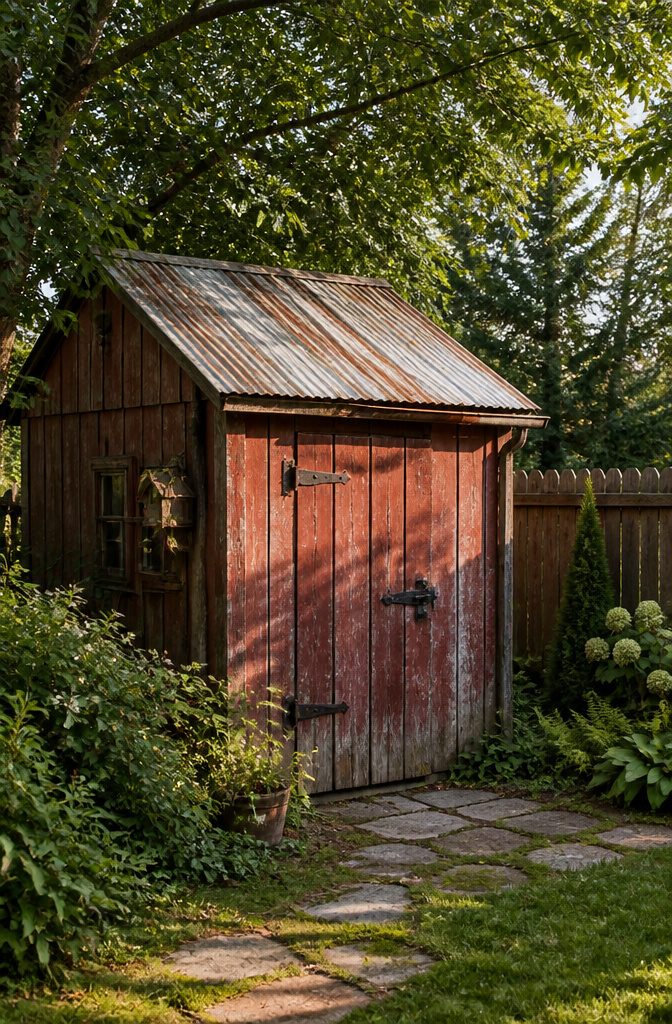
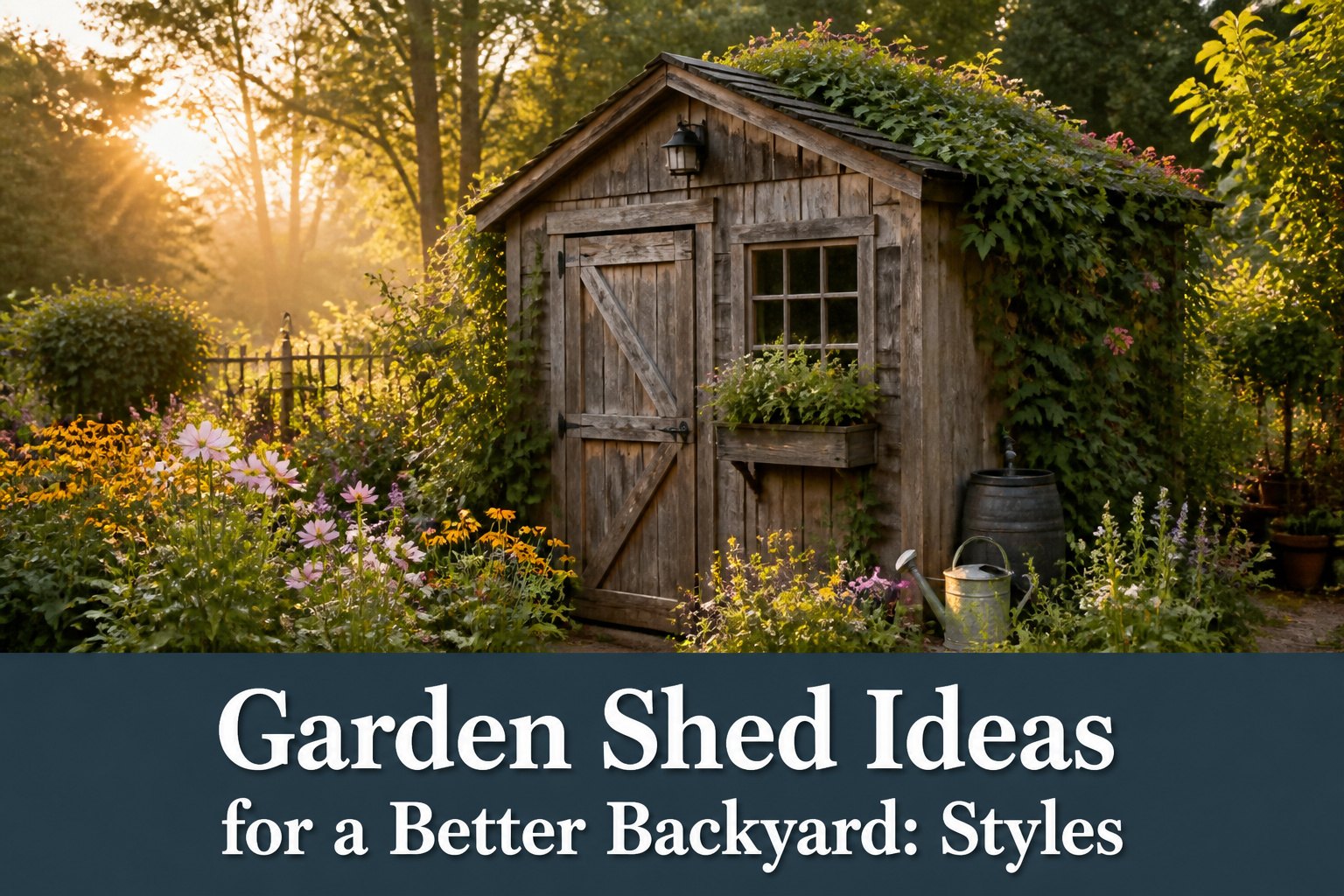
Weathered wood and reclaimed barn siding carry a shed back decades before it was built. Corrugated metal roofs age faster than asphalt shingles, and that rusted, deliberated look is the point. Vintage hardware, even just a pair of old strap hinges, finishes the illusion without finishing the budget.
Paint reads best when it looks like it has already survived fifteen summers. Faded barn reds, sun-bleached sage, or the matte charcoal that leans more utility than whimsy all work better here than anything bright and new. The goal is a shed that appears to have weathered storms, not one that announces it just arrived.
Reclaimed materials make this look possible on a real budget. Fence wood sourced from neighbors, barn siding pulled before demolition, and hardware from salvage yards cut costs and guarantee no two sheds match. Defining the purpose first keeps the design honest: a tool storage shed needs fewer windows and more wall space than a craft spot or antique display area. Build for the work, then age the appearance. The other way around produces a prop, not a backyard.
2. Artsy and Creative Sheds
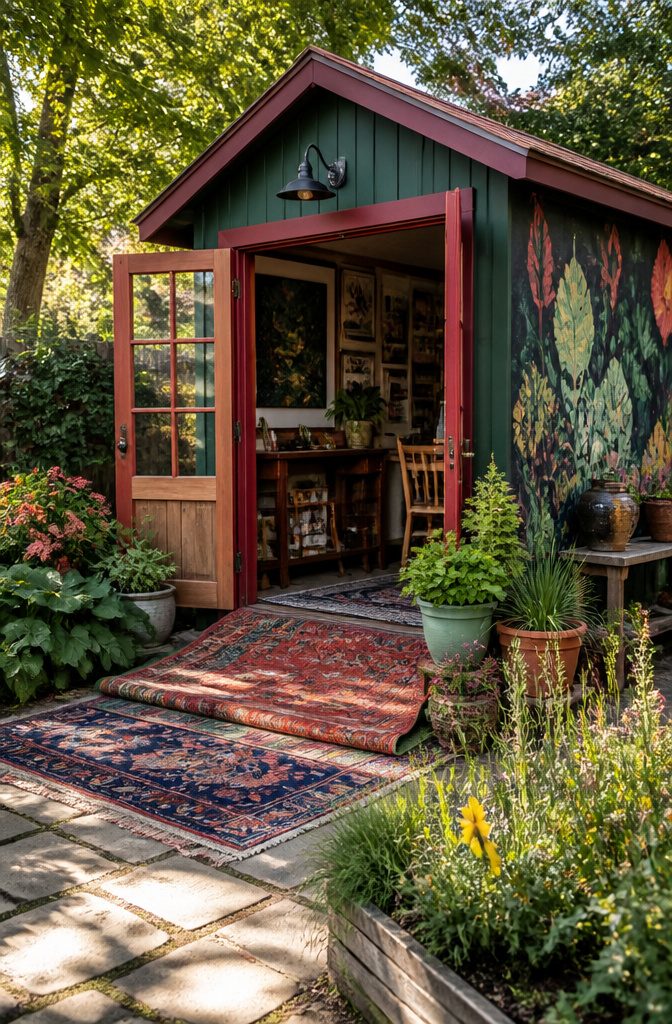
A shed painted in jewel-toned sage with layered rugs spilling out the door stops being storage and starts being a story. That shift from utility to studio changes everything about how you build it. Paint swatches on the exterior, let them dry completely, then decide — colors read differently in morning shade and afternoon sun than they do on a hardware store card.
Bold color works best on trim and doors rather than full walls. Super-bright shades date fast, and a neutral backdrop inside keeps your options open if the space becomes a workspace one year and a retreat the next. The purpose matters upfront: a painting studio needs north light and wall space, while a reading nook wants cushions and low shelves. Mosaic accents or a hand-painted exterior mural turn the structure into outdoor gallery space, but the function behind the art has to be settled first or you’ll paint yourself into a corner that doesn’t fit your tools.
Earthy greens, off-white, and dark browns wear well against garden foliage. Specialist outdoor paint on wood or metal protects the material and buys you years before the next coat.
3. Modern and Classy Sheds
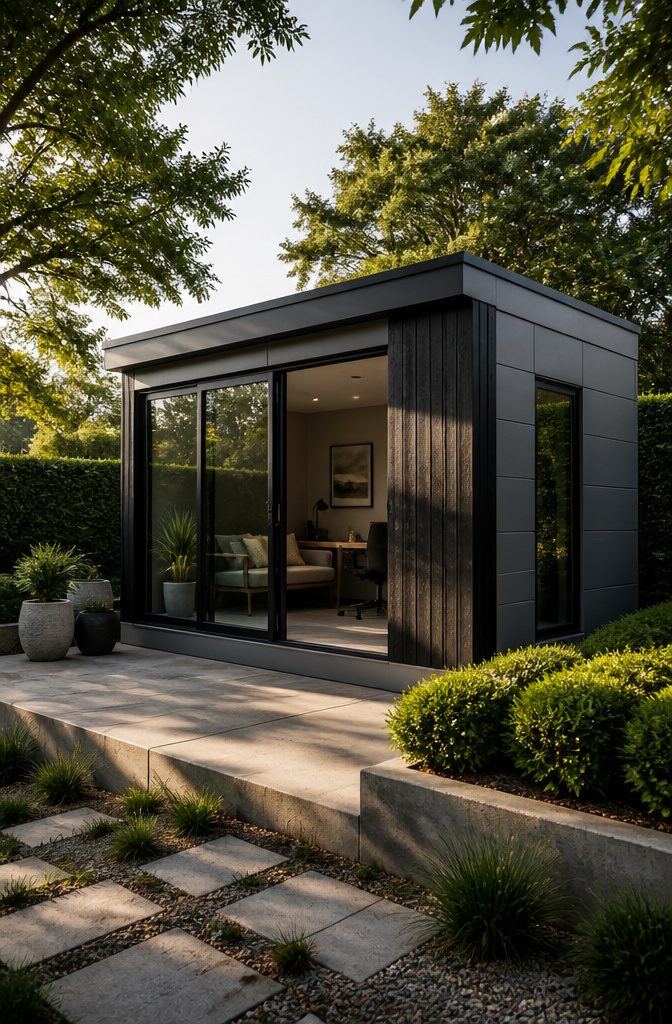
A flat or mono-pitch roof is where the modern look starts, and the cladding does most of the heavy lifting. Fiber cement panel reads clean and stays that way, while blackened wood gives the same silhouette with more warmth up close. The sources lean hard into vertical lines and dark trim, and the window placement matters as much as the material. Wall-to-wall glass turns the shed into something closer to a studio, but even a row of transom windows keeps the box from feeling closed in.
The catch is height. Push too far for that dramatic roofline or tall glass wall, and you can cross into permit territory. Most municipalities trigger extra paperwork somewhere around 120 square feet or a 12-foot ridge, though the exact line shifts by zip code. A mono-pitch keeps the peak lower than a gable would, which helps, but a long slope in one direction still adds up. If you are building close to the property line, the flat roof profile is your friend; it reads lower to the eye even when the interior ceiling stays generous. Keep the cladding consistent corner to corner, and skip the decorative trim. The restraint is what makes it look expensive, not the spend itself.
4. Nature-Friendly Sheds
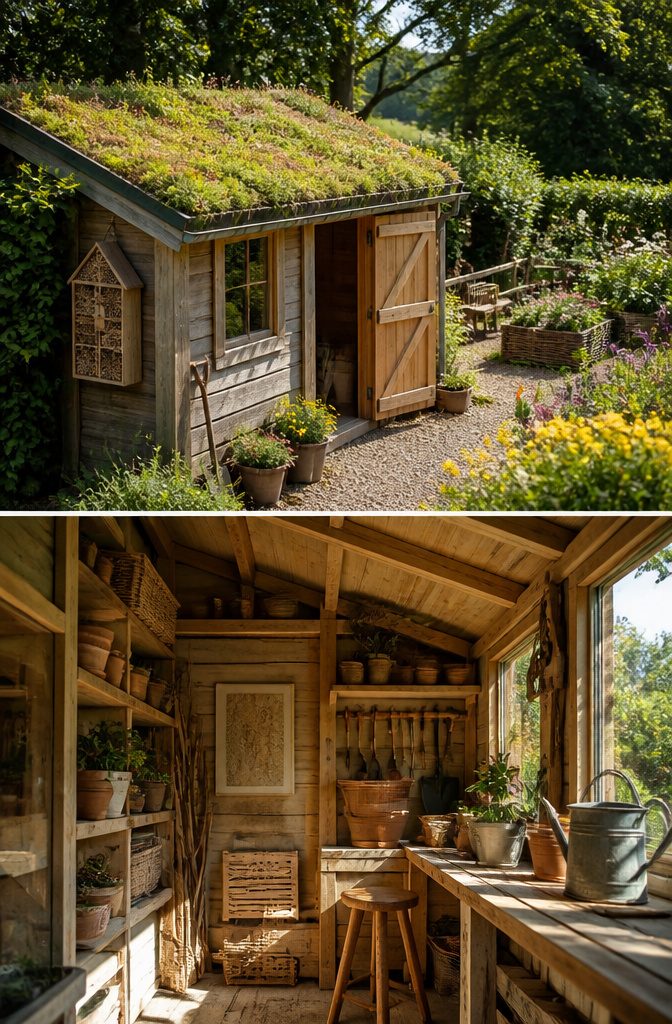
A green roof planted with sedum or native grasses does more than soften the sightline from your kitchen window. The mat of living plants insulates the shed underneath, keeping the interior steadier through summer heat and winter cold, and the root layer slows rainfall enough to ease pressure on whatever drainage sits below. Sedum arrives in rolls like turf, roots shallow, survives drought with near-zero attention, and still pulls butterflies and birds into a yard that might otherwise read as all hardscape and fence line.
The exterior walls offer another opening for wildlife. A bug hotel hung on the sheltered side of the shed, away from driving rain, gives solitary bees, lacewings, and ladybirds a place to bunker through bad weather. Those same insects feed on aphids and mites that would otherwise reach your tomatoes or roses first. The National Trust sells reliable ones; the cheap pressed-bamboo versions from garden-center checkout lines tend to mold before anything moves in.
Materials matter too. Wood left to silver, steel finished in matte tones that already sit in your garden’s palette, anything that weathers into the background rather than pitching a contrasting color against the fence. Where you need power for lights or a small tool charger, a modest solar panel on the roof avoids the cost and labor of trenching cable from the house. Most shed loads are light enough that a single panel and a small battery bank handle the job without drama.
5. Functional Sheds: Potting Sheds, Studios, and Workspaces
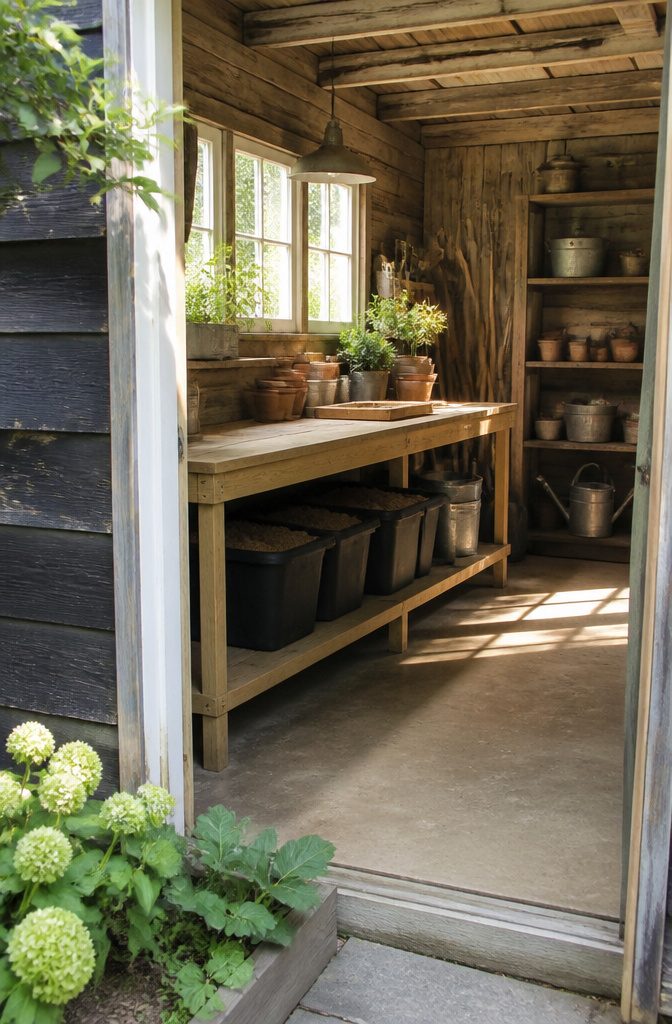
A shed built around one task stays usable in ways a general storage box never will. The potting bench I keep coming back to is nothing more than two sawhorses topped with treated lumber, soil storage underneath, and shelves to the side for trays and hand tools. Position it over a planted bed and you gain drainage and something green to look at while you work. North light matters if drawing or painting is the goal; that steady, shadowless wall of light keeps colors true through an afternoon session. For writing, a built-in desk deep enough for a laptop and a cup of coffee, with cabinets above for reference books and hooks by the door for a jacket, turns a few square yards into a room that happens to sit in the backyard.
Shelving, wall hooks, and cupboards are what separate these spaces from chaos. Without them, the potting bench becomes a surface buried under bags of compost, and the studio floor becomes the storage the walls should have handled. A simple curtain, even cheesecloth, can divide the room when tools and compost bags have to share space with the work itself.
The real value shows up on wet-weather days. A shed gives you a dry place to sort seeds, start seedlings, or simply stay with the garden when the rain would otherwise send you inside.
6. Upcycled and DIY Sheds
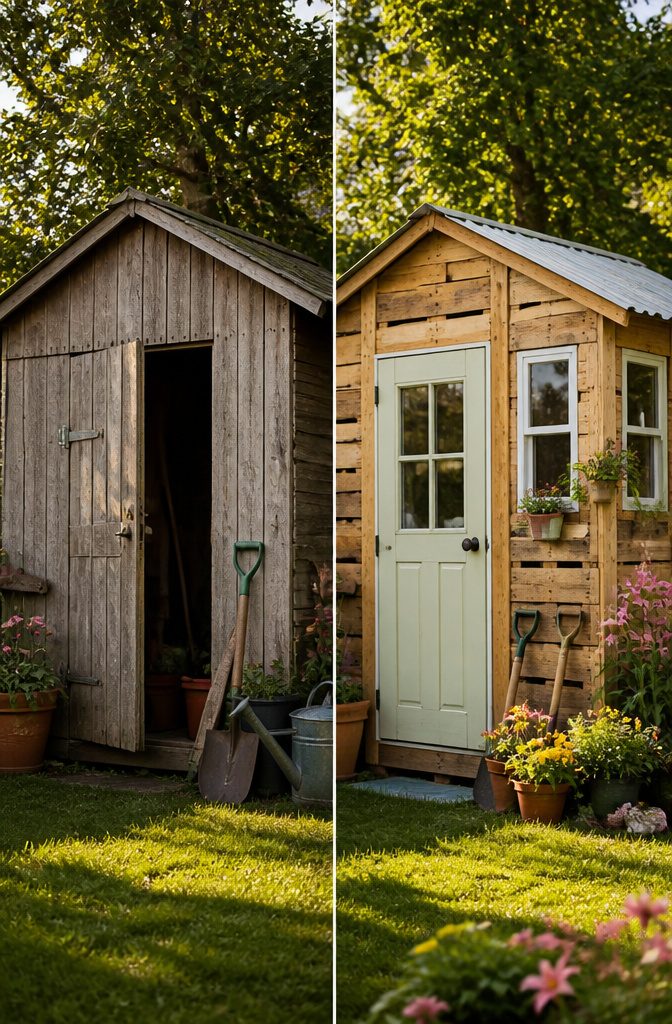
Pallet walls give a shed its texture fast, and the price is hard to beat if you have time to pull the boards and pull the nails. A friend of mine spent one Saturday driving for pallets and the next sanding and cutting them to clad a 6-by-8 frame. The walls looked rustic, not sloppy, because she kept the gaps tight and painted only the trim. Salvaged doors and windows work the same way: a solid-core door from a remodel, set in a frame you build yourself, beats a thin kit door for keeping weather out. Windows need more care; loose glass or rotted sills will cost you more in heat and damage than you saved.
The kit route is the middle ground. A 12-by-20 gable garage plan runs about $14.99 for the drawings, and the real money goes into lumber and the weekend you spend cutting to length. Some builders start with a cheap metal shed shell and skin the outside with found wood, which gets you weatherproof fast and handsome later. Metal sheds run less than half the cost of wood, though you will need a second pair of hands and probably owe someone a drink.
Whether it is cheaper to buy or build comes down to what you already own. Saws, a drill, and the confidence to use them tilt the math toward building. Without them, hiring out the labor swings it back, and quotes vary enough that calling two or three local carpenters is worth the hour. For most renters and first-time owners, a modified kit or a pallet-clad frame lands in that few-hundred-dollar, two-weekend sweet spot.
Storage Solutions That Keep Sheds Working
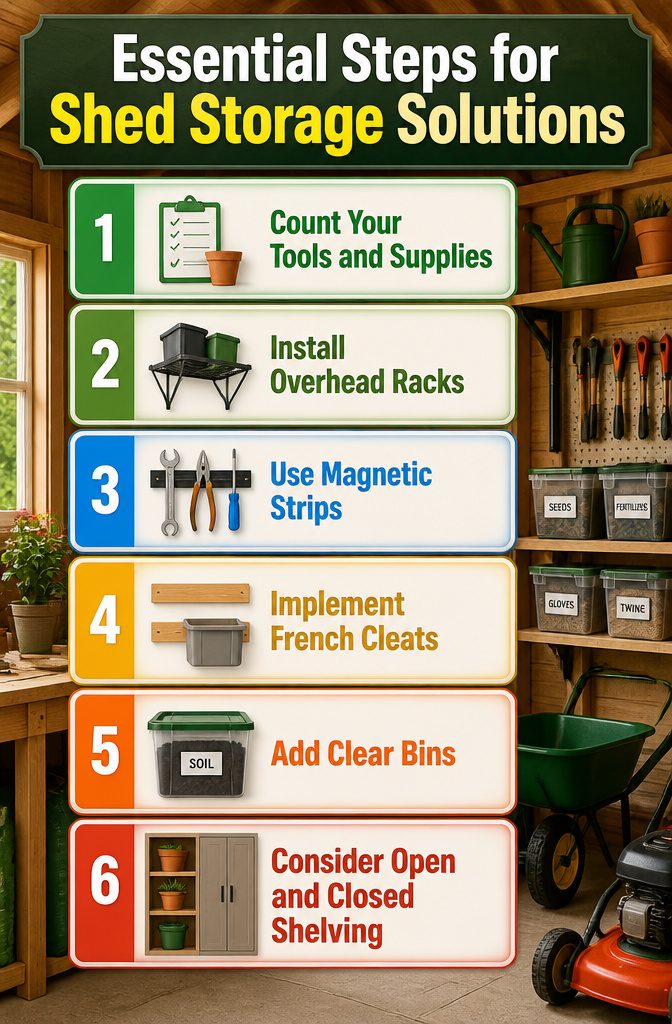
The shell goes up fast, but the real test is whether you can find anything six months later. Start with what you actually own: count the bags of compost, the empty pots, the tools that multiply every spring. Shelving only works when you know the weight it needs to carry.
Overhead racks earn back the floor space a wheelbarrow or lawnmower demands. Magnetic strips keep hand tools visible and reachable instead of buried in a drawer. French cleats run the full wall and let you move bins, shelves, or a folded trestle tabletop as the seasons shift; a surface for potting or a quick repair appears when you need it, then packs flat when you don’t. Clear bins finish the job, because a labeled lid you cannot see through becomes a box you never open.
Open shelving shows off the pieces you like looking at. Closed storage hides the bags, the chemicals, the half-empty sacks that sag and spill. A simple muslin curtain can split one shed into two zones if you are sharing the square footage between potting bench and tool pile.
Seasonal Decor and Rotation
A shed that only works one season ends up as expensive storage by August. Rotating the setup four times a year keeps it earning its square footage.
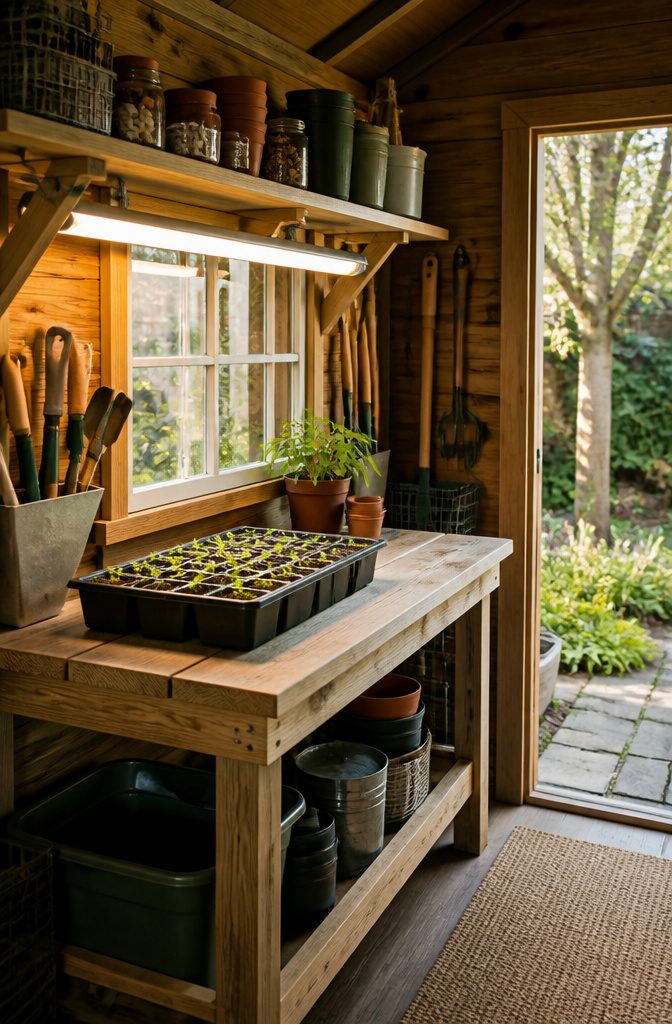
Spring means the bench becomes a seed-starting station. I swap in a plastic tote with a fitted shop light hung from a shelf bracket above it. The warmth from the ballast helps germination, and the whole rig stores flat against the wall once May hits. Spending more than thirty dollars here is a mistake; the tote cracks, the light gets knocked, and you’ll rebuild it anyway.
Summer shifts the priority to airflow. A solar vent fan screwed into the gable end runs without wiring, and a roll-down bamboo shade on the window side cuts afternoon heat enough that glue and paint stay usable inside. Come autumn, that same bench holds harvest sorting: buckets for squash, onions braided to a hanging dowel, a clipboard for logging what came out of which bed.
Winter is about protecting what winter kills. Battery-powered tools come inside to the house; hand tools get a quick wipe with oil and hang on a pegboard so nothing sits in a damp pile. The solar fan reverses to pull dry air through, keeping rust off blades and bits until March rolls back around.
What to Know Before You Start
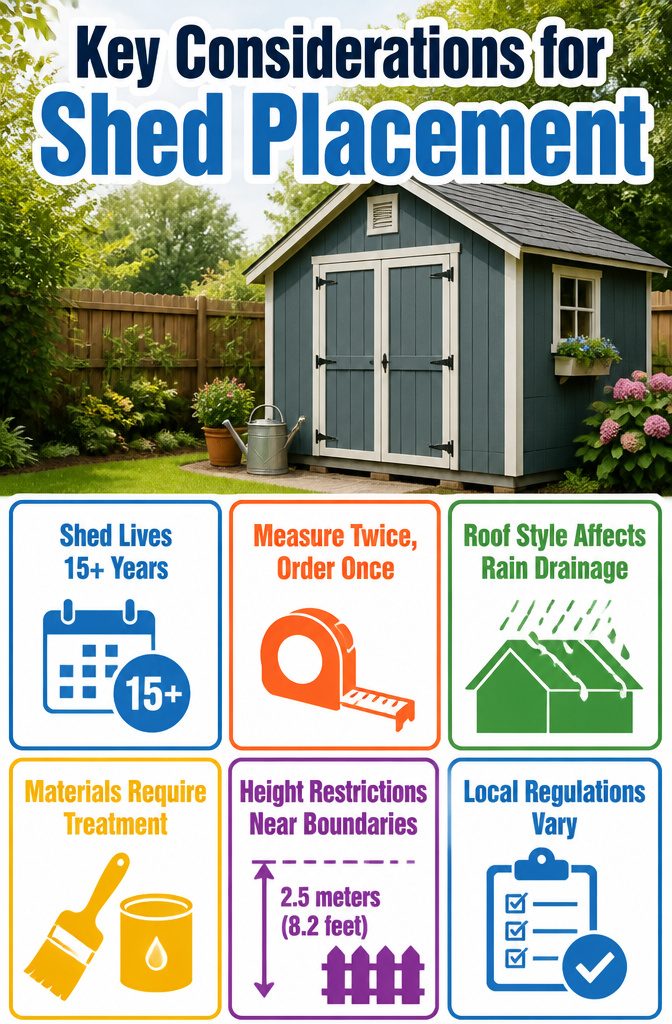
A shed sits in your yard for fifteen years, so placement matters more than the design you pick. Measure twice before you order anything. Roof style decides whether rain and snow slide off or pool and rot the walls; a gabled roof sheds water better than a flat one, and a lean-to pitched roof buys you headroom on a skinny lot. Door placement sets whether you can actually wheel a lawnmower inside without a three-point turn.
Materials need treatment from day one. Lumber, polycarbonate, shiplap, and roof felt all have different appetites for moisture. Skip the seal coat on the baseboards and you’ll find soft wood by year three.
Height rules bite harder than width rules. If your shed sits within two meters of a property boundary, keep it under 2.5 meters (8.2 feet) tall. Further back, you may have more room depending on roof style. Local regulations vary by city and county, and the variance is real. One town wants a setback diagram; the next wants nothing. Checking first beats asking forgiveness later, especially if you ever sell the house and the buyer’s inspector wanders back there.
Frequently Asked Questions
What are some garden shed ideas?
Styles range from rustic and quaint with weathered wood and reclaimed barn siding, to artsy and creative studios painted in bold colors, to modern and classy sheds with flat roofs and fiber cement paneling. Nature-friendly options include green roofs planted with sedum, while functional designs center on potting benches, writing desks, or art studios built around a single task. Upcycled and DIY sheds using pallet walls or salvaged doors offer budget-friendly alternatives.
Is it cheaper to buy or build a garden shed?
This depends on what you already own and your skill level. Saws, a drill, and the confidence to use them tilt the math toward building, especially if you can source salvaged or cut timber. Without tools or experience, hiring labor swings the cost back toward buying, and quotes vary enough that calling two or three local carpenters is worth the hour. Metal sheds run less than half the cost of wood and serve as a middle-ground option.
How big can a shed be without a permit?
Most U.S. municipalities trigger extra paperwork around 120 square feet or a 12-foot ridge height, though the exact line shifts by zip code. If your shed sits within two meters of a property boundary, keep it under 2.5 meters (8.2 feet) tall. Checking with your local planning department before you start beats asking forgiveness later, especially at resale when a buyer’s inspector may flag unpermitted work.