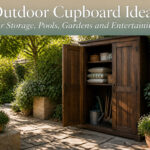
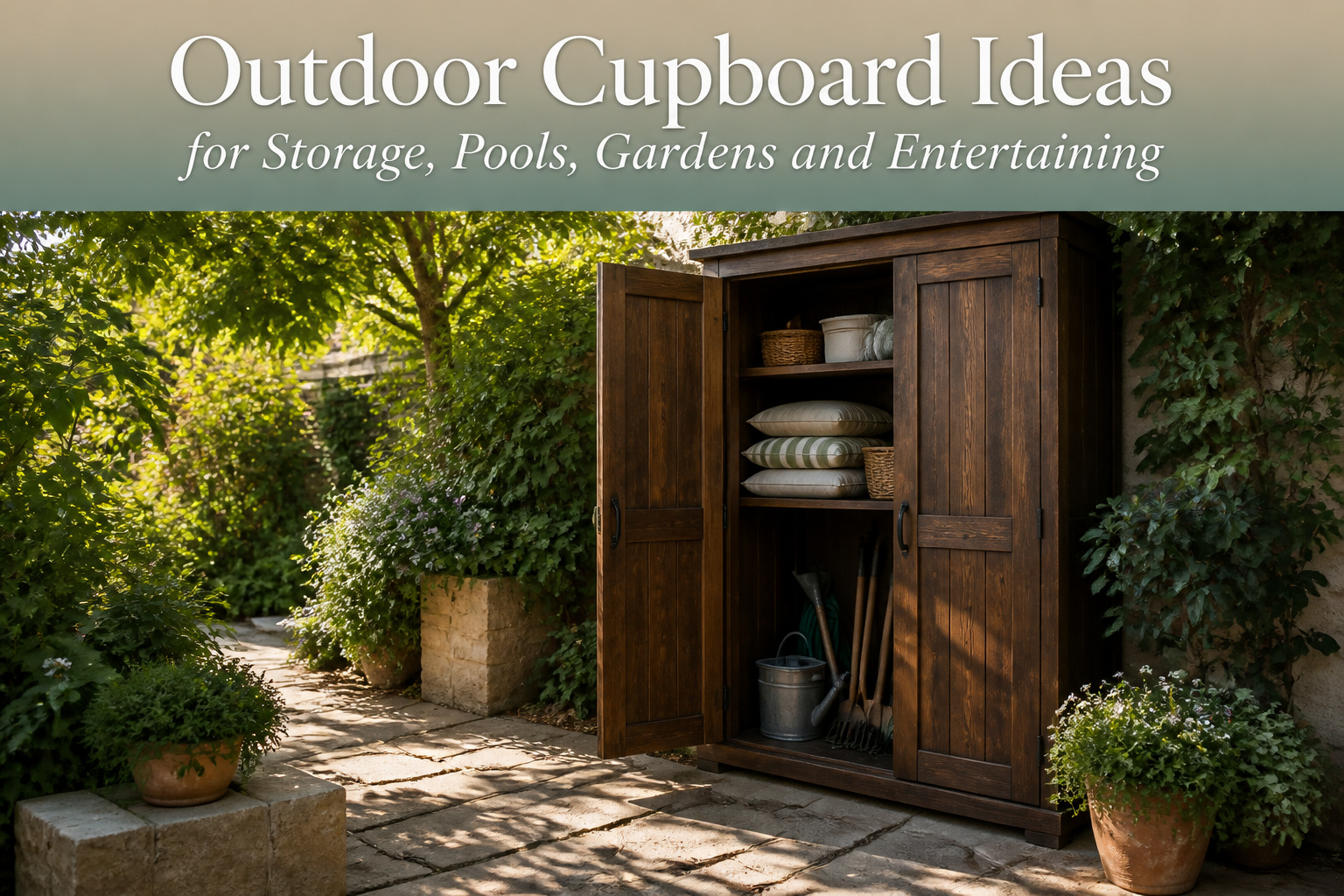
Outdoor cupboards are tall, enclosed storage units built for backyards and patios, and most people buy too shallow. Twenty-four inches of depth is the minimum that closes over stacked chair backs, bags of cushions, and a cooler stood upright. HDPE construction costs more than wood up front but survives two winters without swelling, warping, or cracking, and wipes clean with a hose.
Tall Outdoor Storage Cabinets
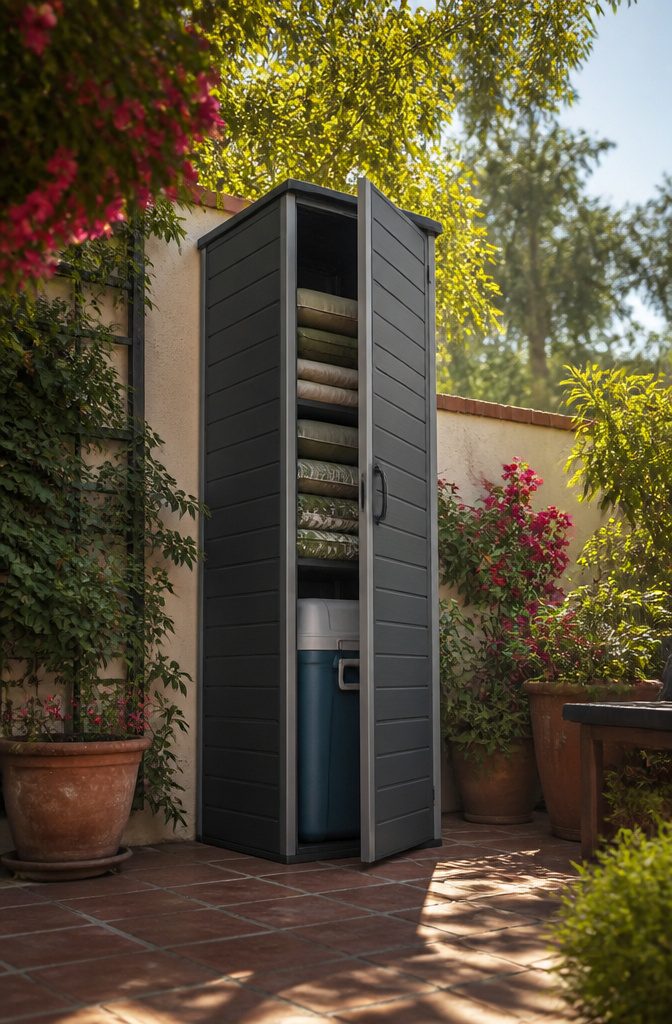
Vertical storage changes what a small patio can hold. A footprint of two feet by two feet, taken upward to six or seven feet, stows what would otherwise sprawl across walls of bins. The tradeoff is depth. My first cabinet was eighteen inches front to back, and stacked chair backs kept the doors from latching. Twenty-four inches is the minimum that actually closes over bulk items: cushions compressed in bags, a cooler slid in upright, firewood stacked three splits deep. HDPE construction keeps the shell from swelling in rain, though the weight of a full load surprised me. Empty, the cabinet moves with one person; loaded with pool gear and pots, it needs two to shift or a wall anchor to keep it steady in wind.
Customized Pantry Cabinets
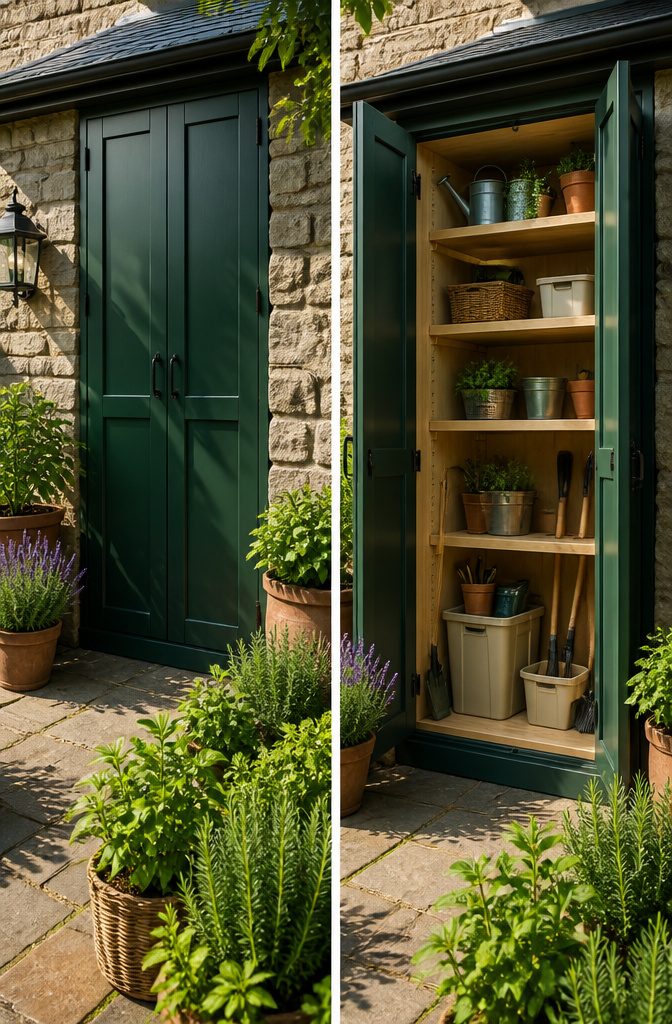
Off-the-shelf outdoor cabinets rarely fill a space without leaving six inches of dead wall on one side or a toe-stubbing gap at the base. Measuring the actual footprint, including any slope in a patio slab, lets you build to the real dimensions instead of accepting what a warehouse decided was standard.
The two-door versus four-door choice matters more than it looks. Two wide doors swing far, which is fine along a pool deck but awkward on a narrow garden path. Four narrower doors keep the swing radius tight and let you grab one section without exposing everything to weather or pollen.
Shelf spacing is where I burned eighty dollars. I ordered fixed shelves set for standard bins and garden gloves, then tried to stand a fertilizer spreader upright inside. It wedged at a diagonal and the door wouldn’t close. Retrofitting adjustable bracket tracks meant new side panels and a Saturday lost to drilling. Adjustable shelves from the start would have cost the same and saved the rework.
Pool Equipment Storage
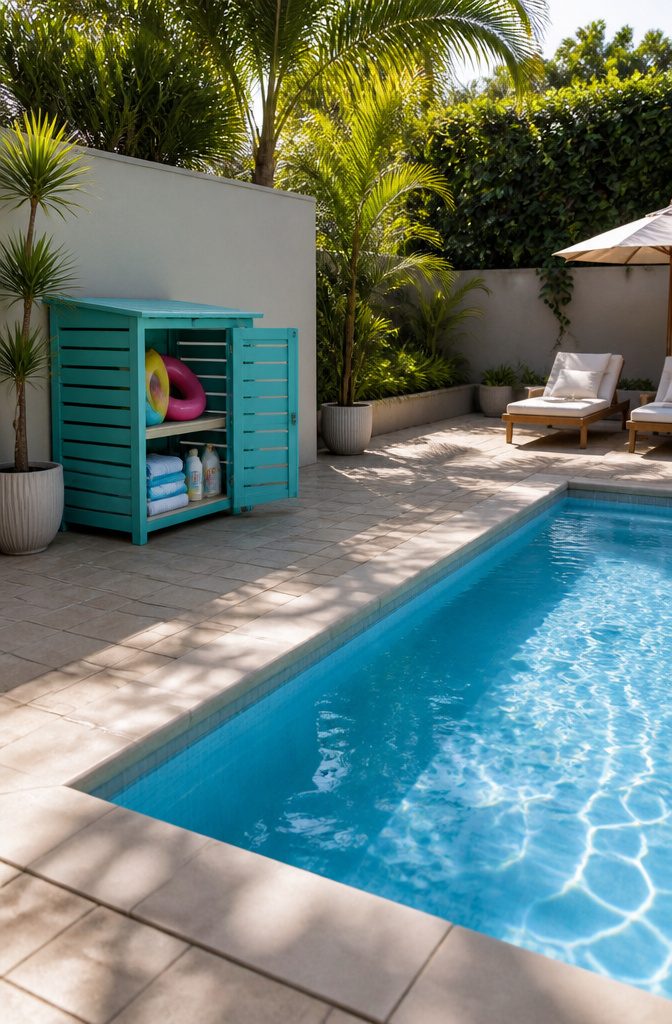
The pool area collects more than you picture when you first plan it. Towels multiply fast, a single afternoon with guests can leave a damp stack that won’t dry before nightfall, and floats left out grow slick with mildew in the humidity that rises off the water. A dedicated cabinet gives each category a boundary.
I learned the ventilation part the hard way. Sealed storage looked neat until I opened the doors on a stack of pool noodles furred with black spots. Now any cabinet I use near water gets slatted sides or a vent cut high in the back wall, enough to let air move without letting rain in.
Chemical storage is the piece that pushes you toward a cabinet with a real latch, not a magnetic catch. Chlorine and shock treatments need to sit away from heat and anything a child or dog might nose open. The labels on those containers are specific about separation from food, cookware, and anything that might transfer residue; a separate shelf inside a locked cabinet is the minimum.
Sunscreen belongs in that same cabinet, but not on a shelf that catches afternoon sun. The active ingredients degrade faster than most people realize, and a bottle left poolside through July turns into expensive lotion that does not block anything. Indoor-adjacent storage, or at least a shaded interior shelf, buys you the full season the label promises.
Gardening Tools Storage
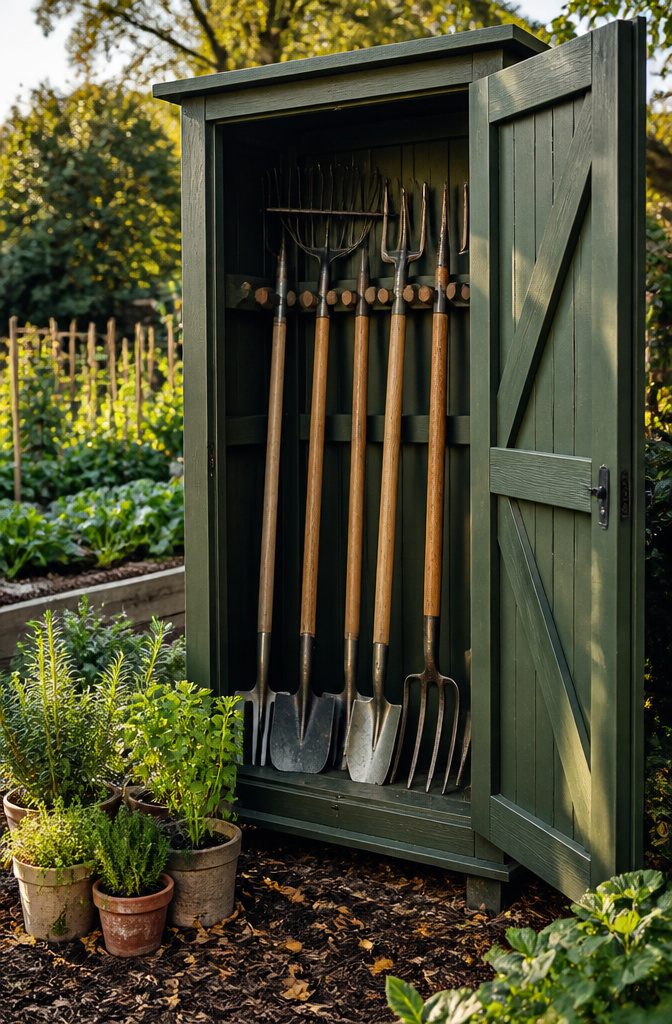
Long-handled tools are the first thing that defeats a shallow outdoor cupboard. Rakes, hoes, and shovels lean, slide, and eventually crash into the door the moment you open it. A cabinet needs at least 24 inches of depth to let them stand upright without fussing with angles.
Hooks beat slots for most of what I hang. A hook lets a tool settle into its own balance; a slot forces you to hit a narrow opening with a muddy handle in dim light. I learned that after watching a hoe handle splinter against a slot edge one wet afternoon.
What goes in bins matters too. Fertilizer stays sealed, gloves stay paired, and hose fittings stop rolling to the back corner where I used to lose them. Anything fabric or granular belongs in a lidded bin on a shelf; metal hangs where air moves.
The rust issue came from ignoring that last part. One season I left a spade and hand fork in a cabinet that sat damp through March. By May the spade had a rough orange bloom along the blade and the fork’s tines pitted where they touched the shelf. Now I hang anything forged and keep a small vent gap at the top of that cabinet, even if it means a little dust.
Outdoor Cookware and Entertaining Supplies
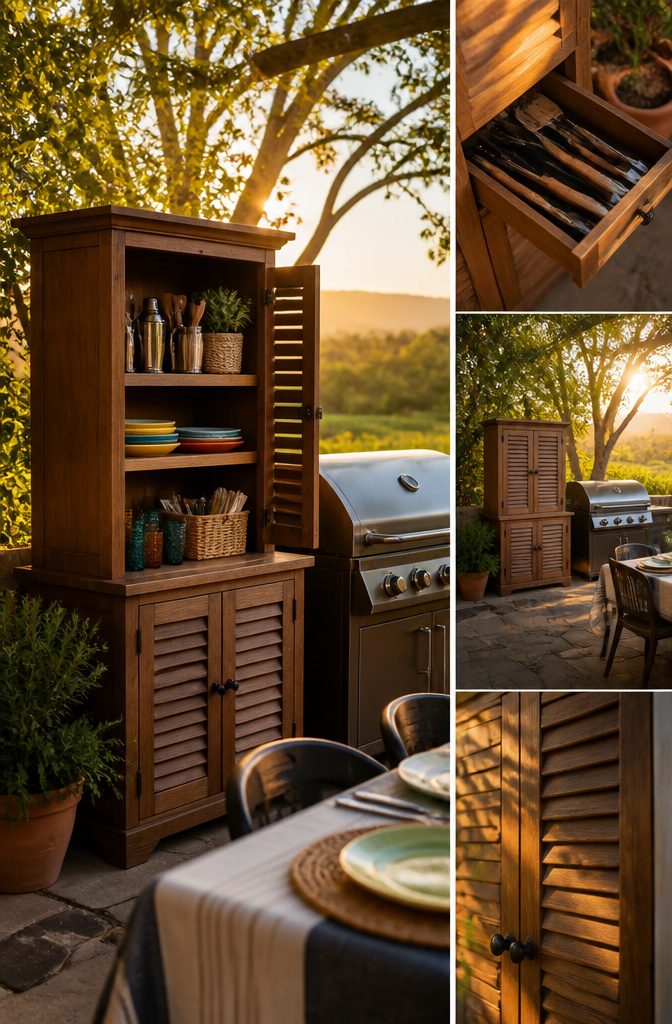
An outdoor cabinet by the grill saves the back-and-forth that turns a quick dinner into a relay race. I keep the practical stuff there: spatulas, tongs, basting brushes, stackable platters, and a set of everyday serving utensils that can take a little weather. Reusable drinkware and spare table linens live on the middle shelf, ready when someone stays later than expected.
The good knives stay inside. So does anything with a plastic handle that softens in sun, and anything I would mind replacing. Heat is the other reason to be selective. My first cabinet warped badly from radiant heat before I moved it six feet away, and that distance made the difference. Six feet of clearance from a hot grill or smoker is the working rule I use now.
Propane storage needs its own thinking. A closed cabinet traps leaks, so I keep the tank in an open-sided compartment or a dedicated spot with ventilation to the air, not into an enclosed box. The serving trays and extra tools can live in a tall cabinet with solid doors; the tank cannot.
Cleaning and Sports Equipment Storage
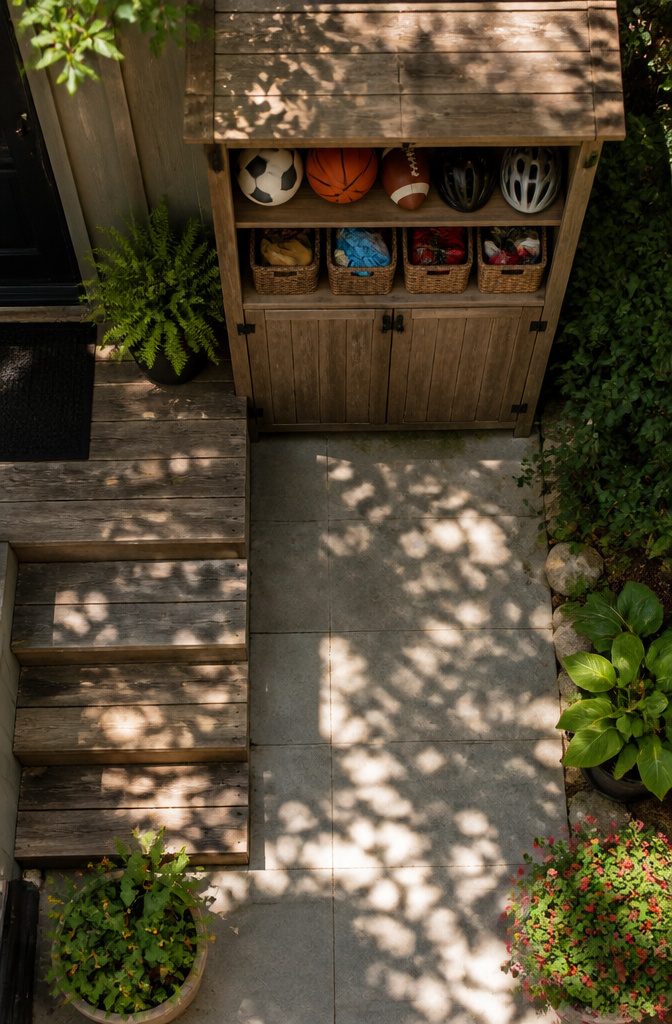
The mixed-use cabinet by the back door started as a single open bay for brooms, spray bottles, and whatever sports gear got kicked in from the yard. That open bay turned into a pile fast. Balls rolled behind the vacuum, helmets got wedged under shelves, and every time I needed the all-purpose cleaner I had to unbury it.
Chemical safety became a real issue after my nephew visited. He was tall enough to reach lower shelves but not old enough to read labels. A locked lower cabinet for anything in a spray bottle or jug fixed that. The lock is a small combination model, nothing electronic, because batteries die outside.
The bin system came later, after one too many mornings of pulling out a bike helmet that still smelled like sweat from the week before. Now labeled containers separate by activity: one bin for yard tools, one for balls and rackets, one for helmets and pads. Sports gear stays on a rack by the door until it is fully dry, then moves to its bin. Storing damp pads guarantees a smell that does not wash out, and the whole cabinet suffers for it.
Outdoor pantry cabinets with this kind of mixed use work best when the categories stay visible. Bins and labeled containers keep smaller items from disappearing into the back and make the whole setup easier to maintain week to week.
HDPE and Weatherproof Materials
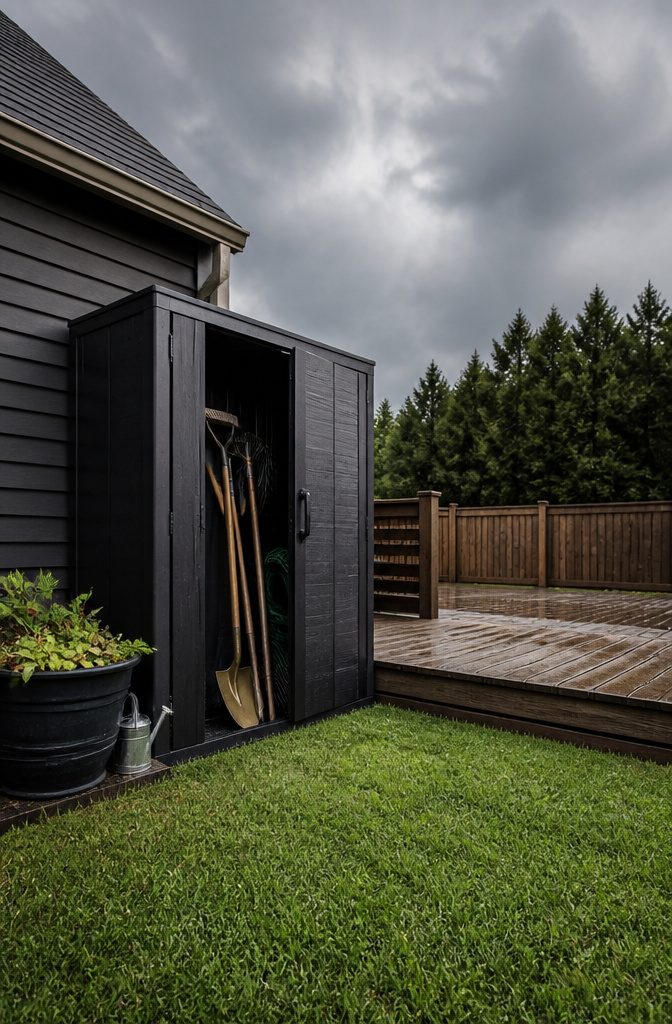
The cupboard that finally survived my backyard was made of HDPE, not wood, and the difference showed up inside two winters. Water pools on it instead of soaking in, so the shelves stay dry even after a hose-down, and the red wine stain from last summer’s cookout wiped off with a paper towel instead of sanding into the grain.
My old pine cabinet looked better the day I bought it. By year three the door had swollen shut from rain, and I spent a Saturday scraping and re-sealing just to get it to close. The HDPE unit has needed nothing but a spray from the garden hose every few months. No re-staining, no warping, no freeze-thaw cracks after the hard January we just had.
Up front the HDPE ran me about forty percent more. Add in two cans of marine sealant, a new hinge, and four hours of weekend labor for the pine cabinet, and the gap closes fast. Over five years the HDPE is the cheaper buy, and the only one I’d trust with the good serving platters.
Shelf Layout and Interior Setup
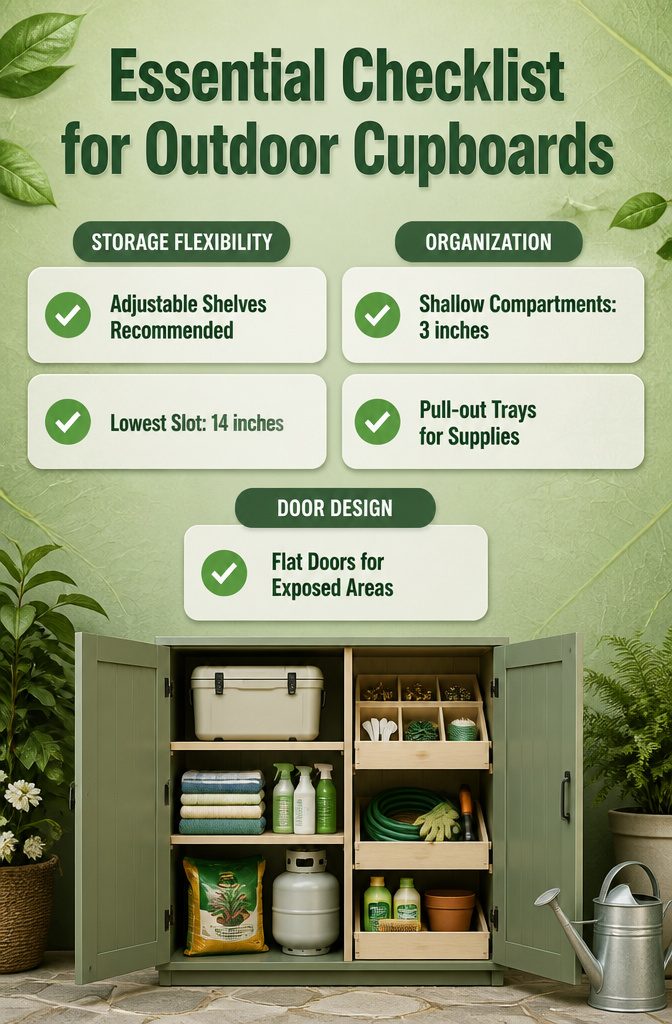
Fixed shelves look tidy until a propane canister or a bag of potting soil shows up and the space stops working. Adjustable shelves win for outdoor cupboards because the things you store change with the season. I set my lowest slot at fourteen inches for a cooler to slide straight in, then add a second tier around ten inches for folded towels or cleaning bottles. The top stays open for tall items when the standard spacing won’t cut it.
The real mess is the small stuff. Screws, hose washers, and plant tags migrate to the back corners where they vanish until you pull everything out. After losing a handful of brass fittings to the void, I added shallow compartments along one side, about three inches deep, and the hunt stopped. Pull-out trays help with supplies stacked toward the rear, though they eat a few inches of depth you might need for bulkier gear.
Pegboard on a door interior is tempting for hand tools and gloves, but a flat door closes tighter against weather stripping and costs nothing extra. I keep the pegboard for sheltered spots like a covered patio cabinet and leave the exposed ones flat.
Frequently Asked Questions
What are some ideas for outdoor storage cabinets?
Tall vertical cabinets, customized pantry units, and dedicated cabinets for pool gear, gardening tools, and outdoor cookware are the most useful types. A tall cabinet that uses vertical space instead of spreading across the patio keeps related items together in one footprint. Custom dimensions and adjustable shelving let you fit the actual space instead of accepting standard sizes that leave gaps.