
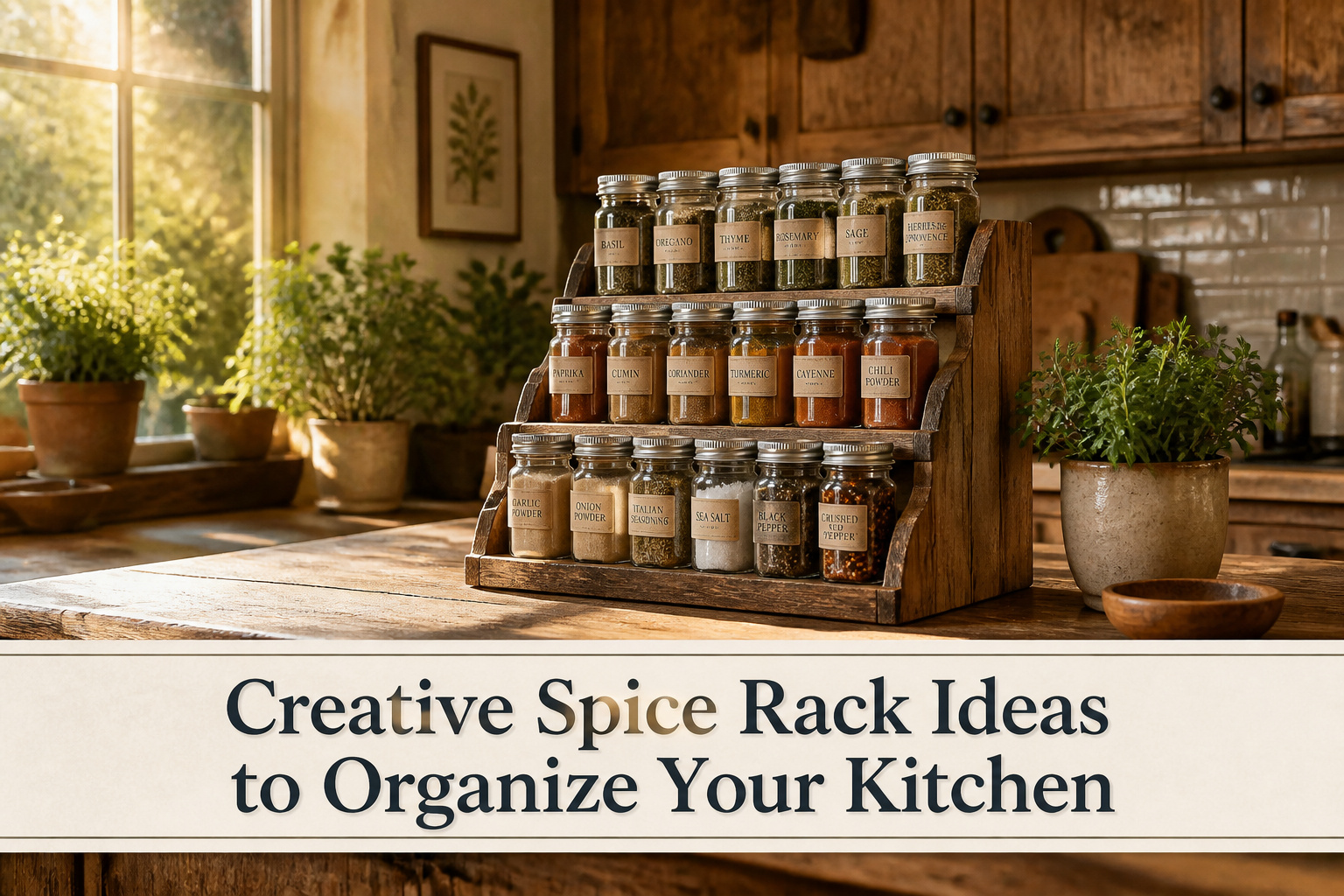
Creative spice rack ideas range from $23 drawer inserts to $50 spinning towers, and the single factor that separates the ones you will actually use from the ones you abandon is whether you can reach a jar with one hand while the other holds a hot pan.
The catch is that most setups fail this test: pull-out drawers demand both hands and a step backward, lift-out tiers force you to unstack containers mid-recipe, and door-mounted racks only work if your pantry door sits far enough from the shelving behind it to close without knocking turmeric into the gap.
A 16-jar Lazy Susan at $49 spins within cabinet depth and passes the reach-and-grab test, which is why it outlasted the over-door basket that dumped star anise behind a closed door.
1. Acrylic Drawer Organizers
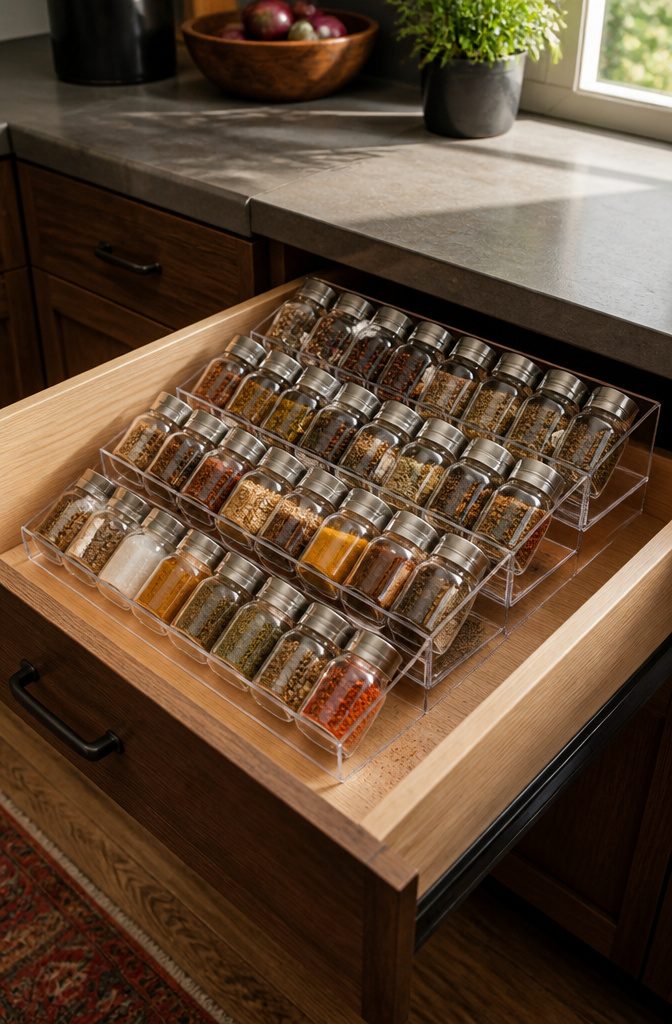
Clear acrylic organizers that expand from 13 inches to 26 inches can turn a junk drawer into something that reads like a custom built-in, no screws required.
The expansion mechanism works through a sliding frame that locks into place with spring tension, which matters more than you’d think when you’re renting and can’t touch the cabinets.
The measurement that actually counts is the inside width of the drawer box, not the cabinet face.
Most standard kitchen drawers sit between 15 and 18 inches wide, so the 13-inch minimum starts compressed and the organizer presses outward until it grips both sides.
When the fit is slightly off, say a 19-inch drawer with the organizer at full stretch, the tension weakens and the whole unit shifts when you pull a bottle.
A 26-inch drawer does the same thing in reverse; the springs can’t extend far enough to seat properly.
Tiered levels help with visibility, angled so labels face up rather than out. That angle is what separates these from flat inserts where bottles disappear behind each other.
For renters, the draw-and-drop installation means the organizer leaves with you, though the reality is most people forget it exists until move-out day and abandon it anyway.
2. Over-the-Door Organizers
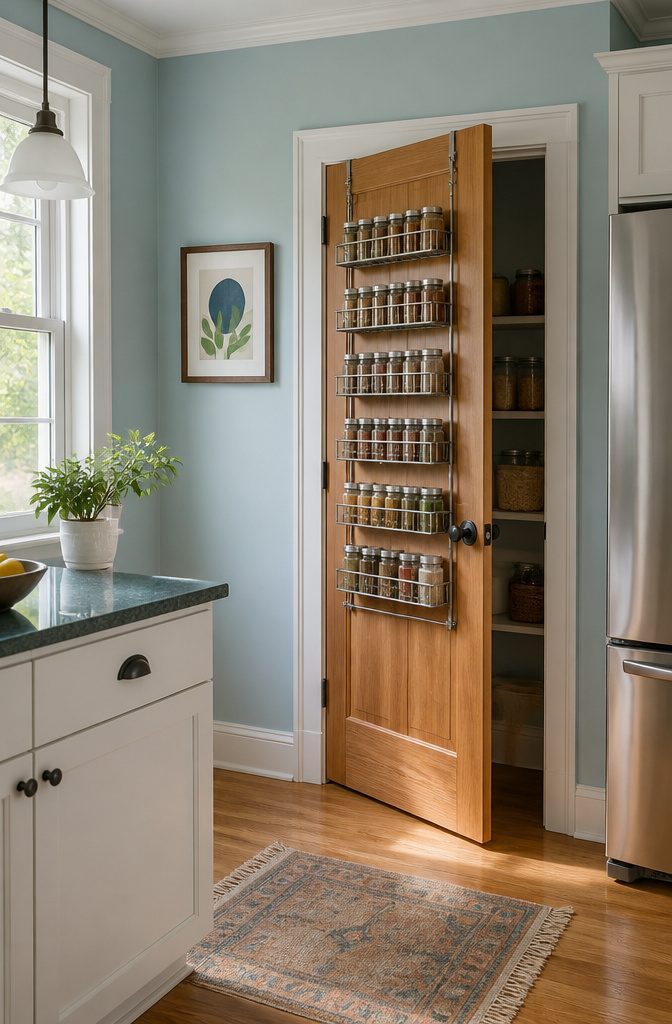
Over-the-door organizers run about $40 and turn the back of a cabinet or pantry door into usable depth.
The hook style matters more than the basket itself: tension rods that brace against the door frame leave no marks, which is the only kind most lease agreements tolerate.
Adhesive strips look easier but peel paint on hollow-core doors, and the replacement cost eats your security deposit faster than the organizer saved you.
Door clearance is the harder limit.
Most pantry doors sit an inch or two from the shelving inside, so the organizer’s total depth, basket plus jars, has to stay under that gap or the door bangs and the latch won’t catch.
Spice jars taller than four inches tip backward out of wire baskets, a lesson learned after finding turmeric ground into the floor behind a closed door.
Shorter jars or a shelf-style organizer with a front lip solve it; the nine-tier basket models adjust vertically, but nothing in them fixes a jar that simply does not fit the shallow pocket.
3. Rotating Spice Racks
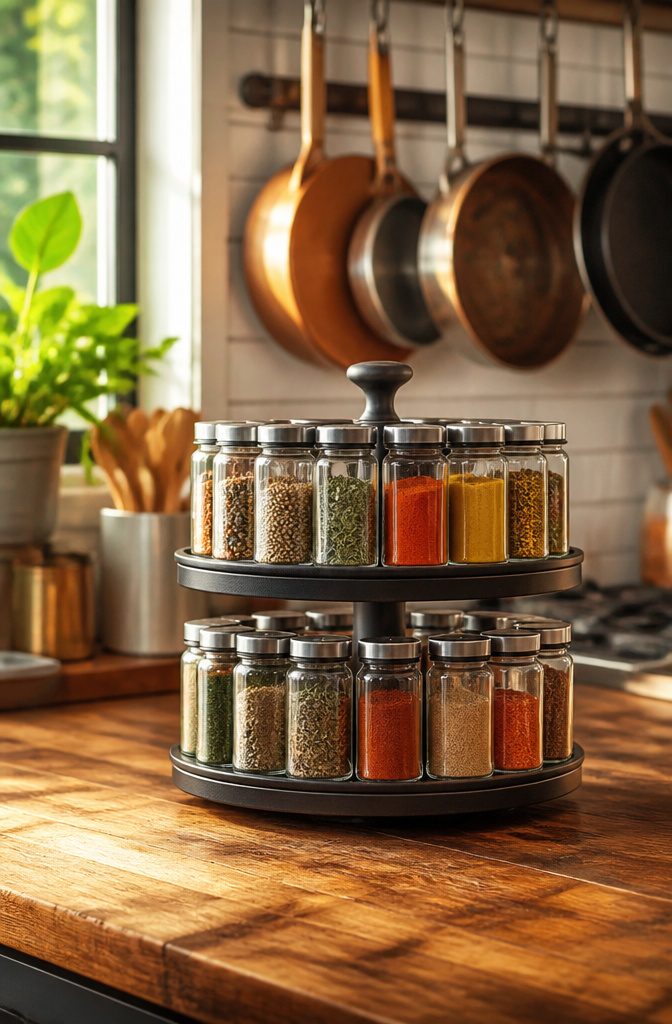
A 16-jar Lazy Susan runs about $49 and gives every jar a front-row seat with a quick flick of the wrist.
The two-tiered version, closer to $38, stacks the same idea vertically and tucks neatly into a cabinet or a tight corner of the counter.
Either way, the whole footprint spins, so radius matters in a small kitchen: measure the swing before you buy, because a rack that kisses the refrigerator on every turn gets old fast.
Counter space is the real tradeoff. These sit out in the open, and in a galley kitchen that surface is already spoken for.
What surprised me reading through the options was how the back row still disappears even on a spinner. Cumin and coriander I use twice a week somehow migrate behind the star anise I bought for one recipe in 2019.
Rotation fixes reach, but it does not fix memory. The tower style narrows the footprint and keeps everything visible from one angle, though it costs more and the passages do not list a price for it.
4. Magnetic Spice Racks
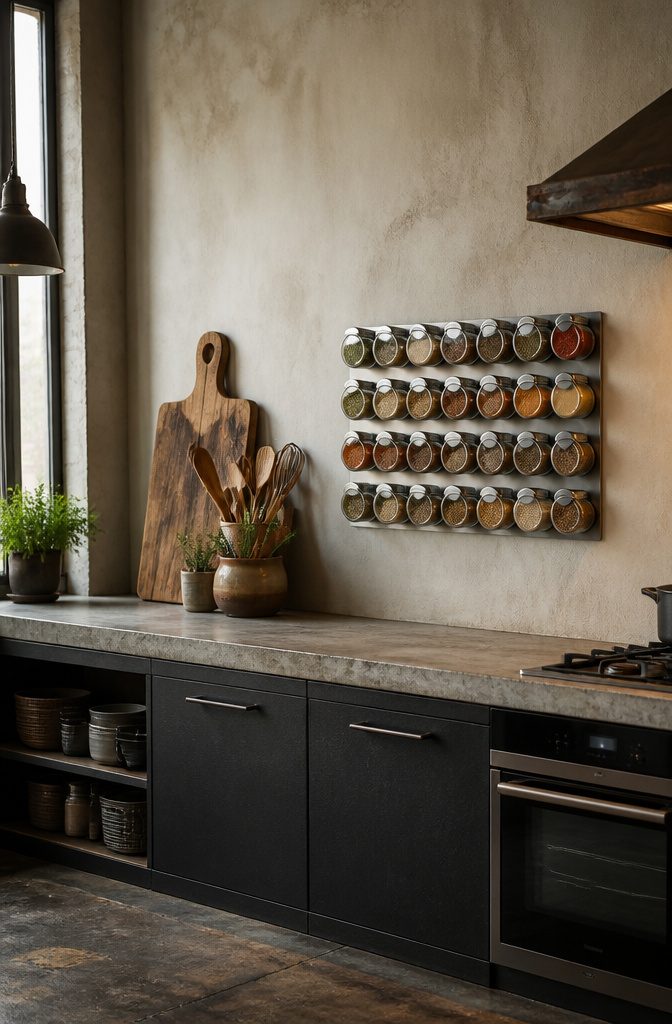
Magnetic spice racks land under the $30 mark and mount either to refrigerator sides or to metal strips screwed into wall or cabinet.
The refrigerator route skips tools entirely, which matters if drills and drywall anchors are not already in your weekend kit.
The weight limit is where the Pinterest shot separates from the real kitchen. A full set of glass jars with metal lids pulls harder than the same volume in lightweight tin or plastic.
Sources note these setups hold spices, oils, and loose pantry ingredients, but the cumulative load adds up fast.
The wall of uniform hexagon jars reads beautifully in a photo, yet exposed jars collect dust and kitchen grease faster than anything behind a cabinet door.
The same source that praises the look also flags spice jars as among the germiest surfaces in a kitchen, which tracks with what open storage actually faces near a stove or sink.
Sticker labels help, but the maintenance is ongoing. For a renter who moves often, the refrigerator-mounted version travels intact.
The metal-strip wall install leaves holes to patch, though it opens placement beyond where the fridge sits.
5. Tiered Organizers
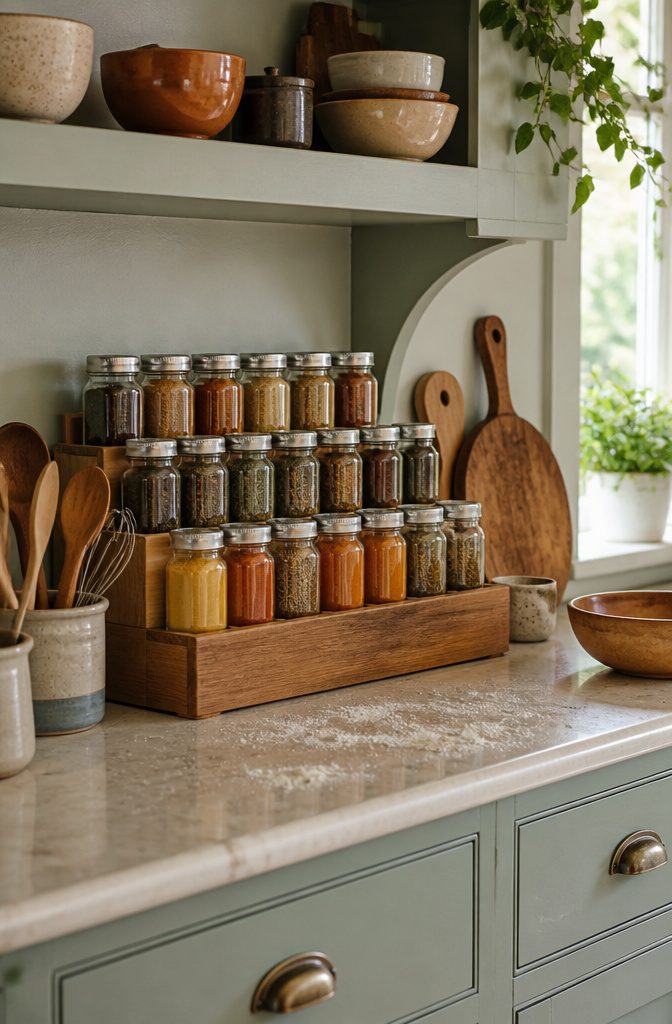
A three-tier stair-step organizer runs about $23 and solves the problem of reading labels without pulling every bottle forward.
The back row sits high enough that you can scan the whole collection from one angle, which only works if your cabinet depth matches the footprint.
Too shallow and the top tier crowds the door frame; too deep and you lose the back row behind shadow.
Plastic versions expand to fit the drawer width exactly, but the angled levels stress at the joints after a year of sliding in and out.
Wood looks better on an open shelf, yet the fixed width means you are cutting filler strips or leaving gaps. I have seen both fail: plastic cracks at the expander mechanism, wood swells and sticks when the humidity climbs.
For a rental kitchen you are replacing in two years, plastic wins. For a cabinet you own and want to keep neat, measure the depth first, then buy the material that fits the timeline.
6. Floating Shelves
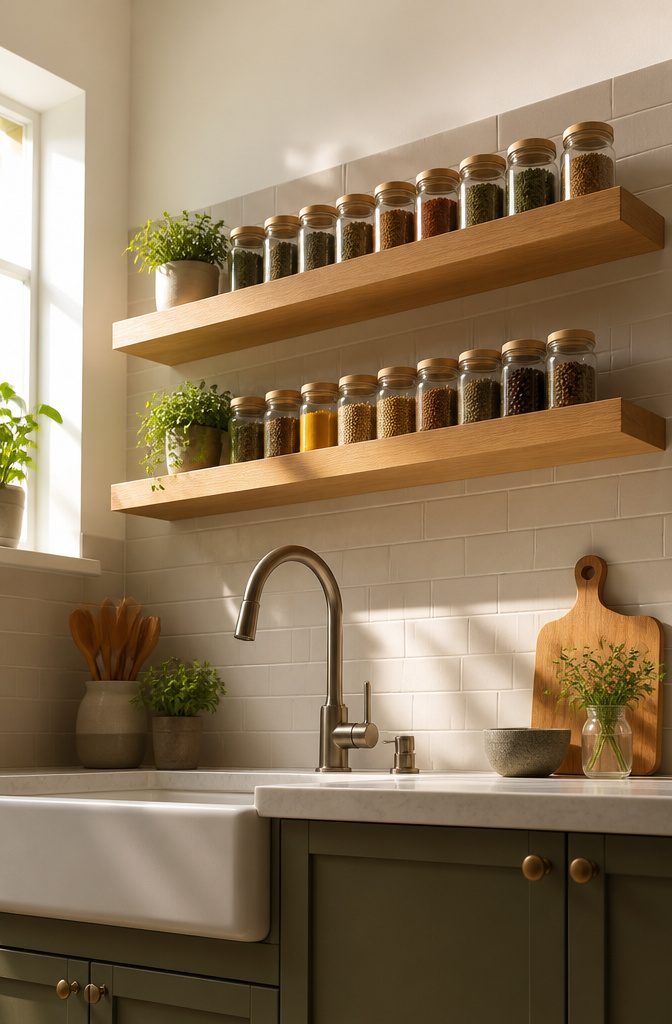
Wall-mounted floating shelves turn an empty stretch of kitchen wall into storage without touching a single cabinet.
The renter-friendly version uses a tension rod system that presses between floor and ceiling, or between two walls, which means no holes to patch later.
Bracket-mounted shelves drilled into studs hold more weight and stay put when you bump them grabbing cumin mid-recipe, though finding the stud wrong by half an inch cost me an afternoon of patching and re-drilling after the first bracket pulled free.
Open shelving leaves spices exposed to dust and grease from the stove.
Uniform jars with matching lids cut the visual clutter and seal tight enough that a quick rinse under the tap handles the film that settles after a few months.
Glass fronts or full glass jars let you spot the turmeric without lifting every lid, which matters more than you’d think when the water’s boiling.
7. Criss-Cross Organizers
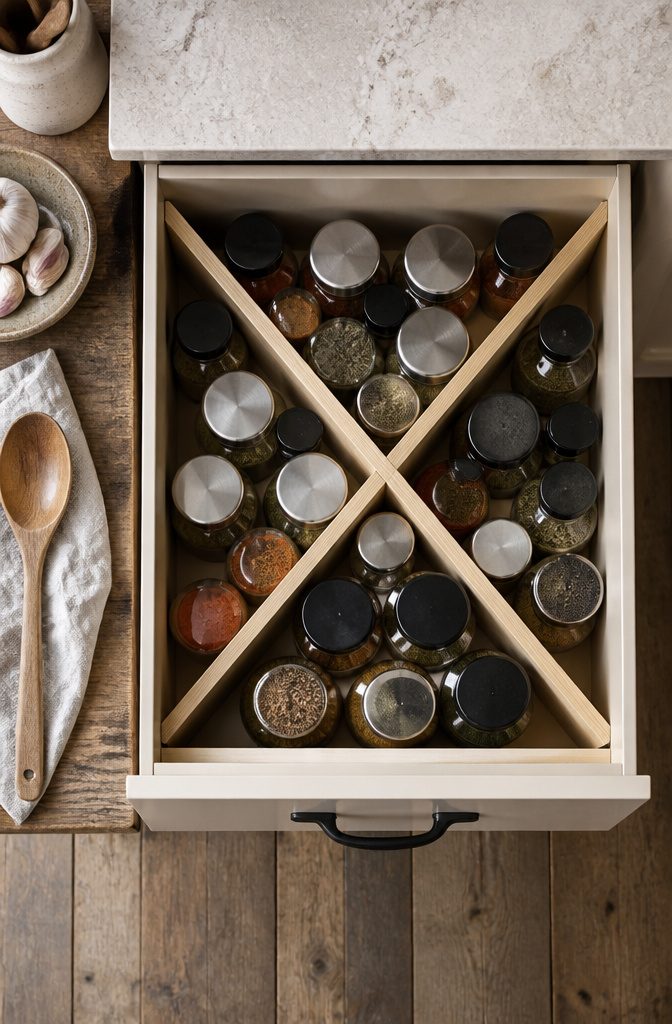
The X-shaped divider at $29 turns one flat surface into four triangular pockets. Geometry does the counting for you: each arm meets at 90 degrees, so a standard 18-inch drawer fits four full-size jars per quadrant before the corners pinch.
Wider drawers gain less than you’d expect; past 22 inches the center cross wastes space that straight rows would use.
Stability is where the shape shows its limits. Heavy glass jars on one arm tilt the whole frame toward that side, especially if the other three hold lightweight plastic.
Rubber feet help, but the real fix is loading heavy items in opposing quadrants like a balance scale.
The sweet spot is drawers between 14 and 20 inches wide. Below that, straight rows handle narrow space better.
Above it, the diagonal arms leave too much dead zone in the center. My own drawer sits at 16 inches, and the criss-cross wins there by turning what would be two ragged back rows into usable corners.
8. Slide-Out Spice Racks
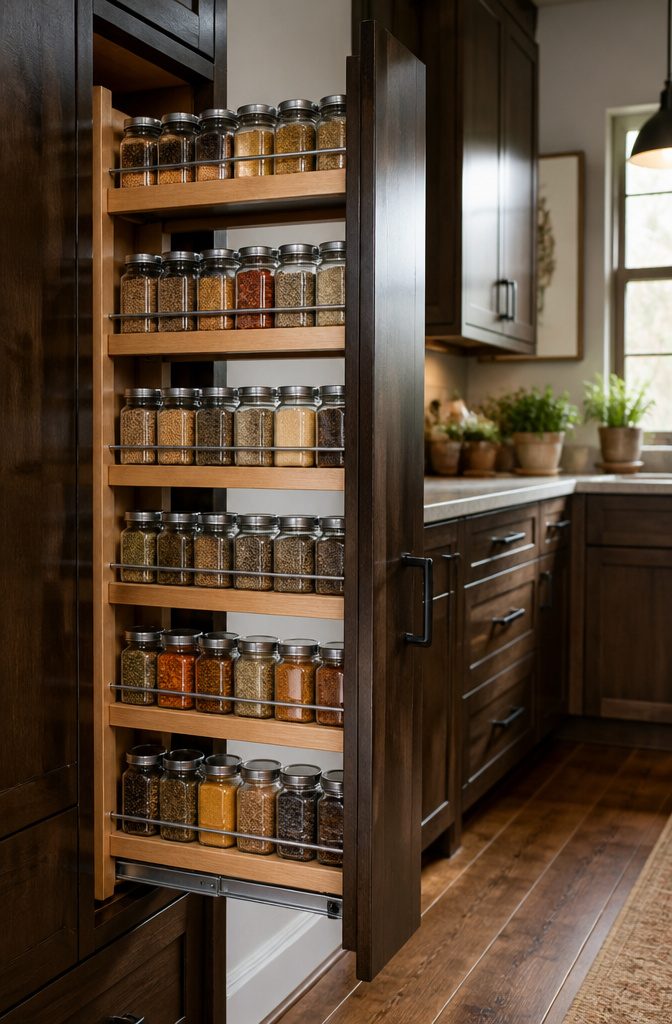
Slide-out spice racks priced around $30 solve the blind reach into deep cabinets. The tracks install two ways: sticky-back strips for renters who need to reverse the change later, or screwed mounts for drawers that see daily yanking.
Cabinet width is the detail that stops some buyers cold. Measure the interior frame, not the door opening, because a quarter-inch shy means the rack jams or the track bows.
Full-extension slides pull every jar into daylight, including the turmeric bought once for a recipe and forgotten. Partial extension saves a few dollars but leaves the back third in shadow, so the same jars stay lost.
That tradeoff matters more than the sticker price.
9. Stove Shelves
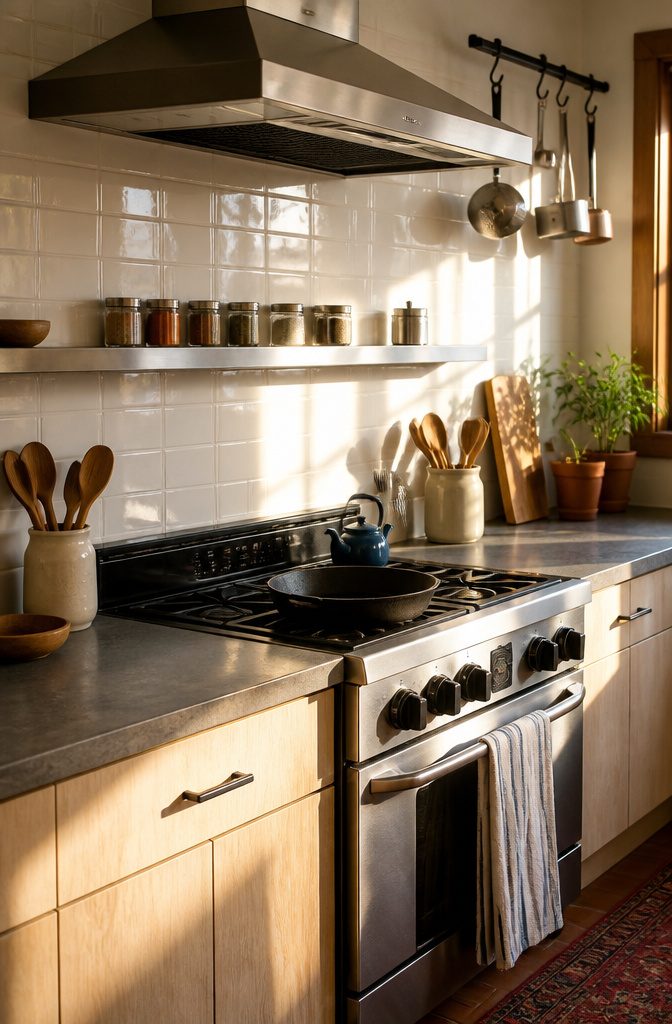
The shelf that rides above the back burner controls runs about $44.99 and turns dead space into something you can actually reach while a pan is sizzling. Heat tolerance is the real question.
The metal top of a stove cycles through temperatures that would warp cheaper organizers, and anything sitting directly over the cooking surface needs to clear the backsplash lip and your tallest pot lid.
My stove has a fairly deep control panel, which helped, but the clearance still mattered enough that I measured twice before ordering.
Steam damage is what caught me off guard. Boiling pasta or a long-simmering sauce sends moisture straight up the back panel, and spice labels left in that path softened and curled within a couple of months.
The spices themselves stayed fine, but reading the jar meant peeling back paper. Keeping only the week’s regulars up there, and moving anything long-term to a drier cabinet, turned out to be the workable compromise.
10. Expandable Spice Racks
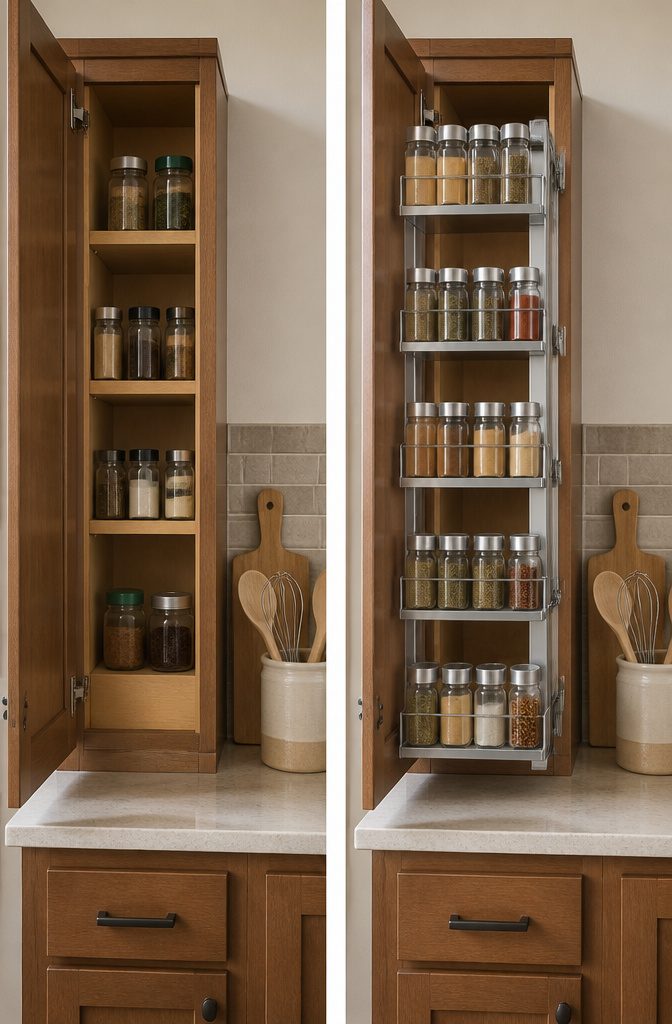
An expandable spice rack fills the gap between a narrow cabinet and a wide one with the same unit, which sounds like the answer to every rental kitchen.
The mechanism is usually a pair of rails that telescope outward and lock at preset widths with a twist knob or spring-loaded pin.
I like the idea in principle, but there is a catch: once you extend one of these shelves to its full width, the center span starts to dip.
A non-slip bottom helps, yet the physics do not change, and a double-layer design only adds weight up top.
The real decision comes down to your cabinet dimensions. These racks suit a range roughly from 8 inches to 16 or so, the zone where a fixed-width organizer either rattles around or simply does not fit.
Below that minimum, the collapsed unit still slides; above it, you are better off with a fixed shelf that sits flush against the sides and carries weight evenly.
For the awkward narrow cabinets most apartments seem to include, the single-rack, non-expanding slide-out versions actually win on stability, even if they lack the transform-in-place appeal.
Uniform Jars and Labels
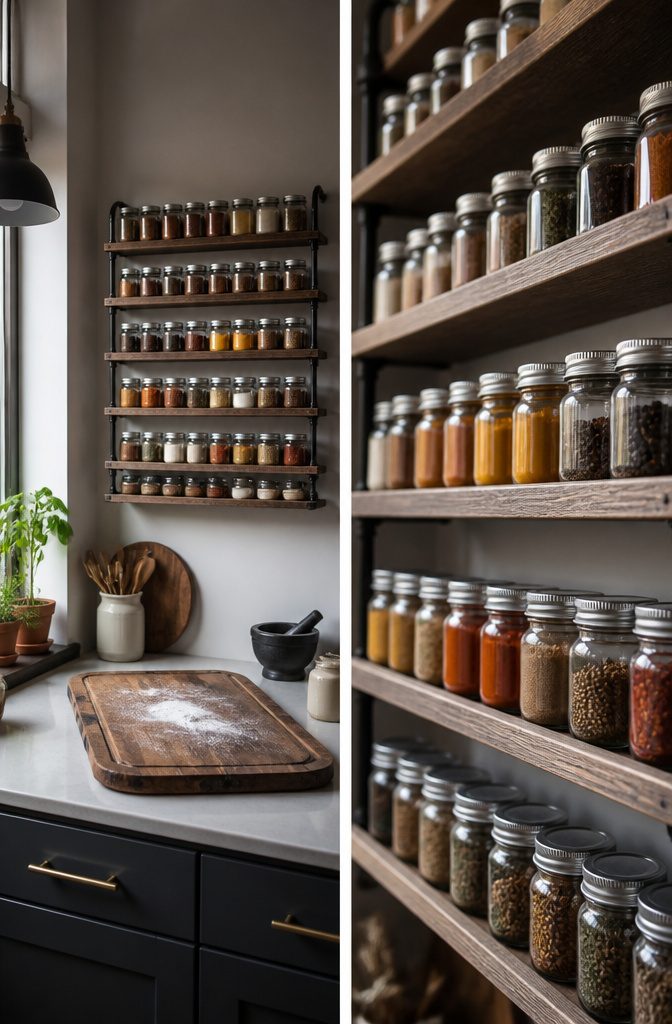
The first decision is four-ounce versus six-ounce jars, and it matters more than the pretty photos suggest.
A four-ounce jar holds roughly a standard grocery-store bottle of dried herb; six ounces leaves headroom for the bulk bags I started buying after the first round of transfers.
I went with four-ounce glass bottles with bamboo lids, reasoning that a full spice cabinet looks tighter if every jar is the same height.
Two months later I was decanting cumin into a ramekin because the six-ounce bag from the co-op would not fit. Buy the size that matches where you shop, not where you wish you shopped.
Labels are where weekend projects go to die.
The paper ones that ship with most jar sets look fine until the first oil splatter from a hot pan; then the ink bleeds and the corner peels and you are staring at a smudged "cumin / kumin / ???" while dinner smokes.
The set that finally worked for me came with 386 black labels and a white chalk marker.
With four tiers in total, this stackable spice shelf set includes 28 clear glass jars—plus 386 black labels and a white chalk marker so you can label each one.
That chalk marker wipes clean with water, which means relabeling when you repurpose a jar for something else. The count of 386 labels is not generous; it is realistic.
You will misspell "turmeric" twice. You will change your mind on abbreviations.
You will label the back of at least one jar by accident.
The real mistake is trying to transfer spices and label them the same day.
Funneling ground spices into a small mouth makes fine dust settle on every surface; your fingers are oily, your patience thins, and the labels will not stick to glass that has a film of coriander on it.
One afternoon for the transfer, wash the jars that evening, label the next morning when the kitchen is calm. The project takes a weekend either way; doing it in the wrong order just makes it feel like it failed.
Vertical Space and Cabinet Doors
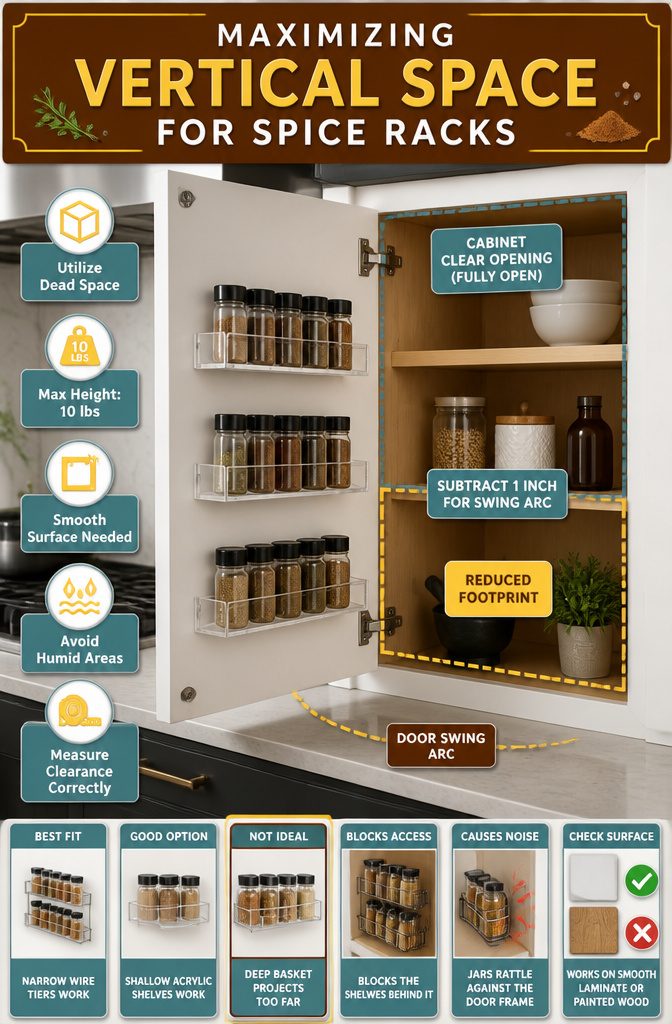
Most kitchen cabinets leave a foot of depth between the door and the back wall, and that vertical plane is dead space until you mount something to it.
The swing of the door itself is the first thing to check: a rack that sits too proud will knock your spices against the frame every time you close it.
I lost part of a security deposit years ago on screw holes I drilled into a landlord’s cabinet door, so adhesive-backed strips rated for ten pounds or more are what I reach for now, provided the door surface is smooth laminate or painted wood.
Rough oak veneer is another story; the grip fails in humidity, and you are back to screws or doing without.
Measure the clear opening with the door swung fully open, subtract an inch for the swing arc, and buy a rack that fits inside that reduced footprint. Narrow wire tiers work, as do shallow acrylic shelves.
What does not work is the deep basket meant for a pantry wall; it projects too far, blocks the shelves behind it, and the jars rattle against the door frame.
Access While Cooking
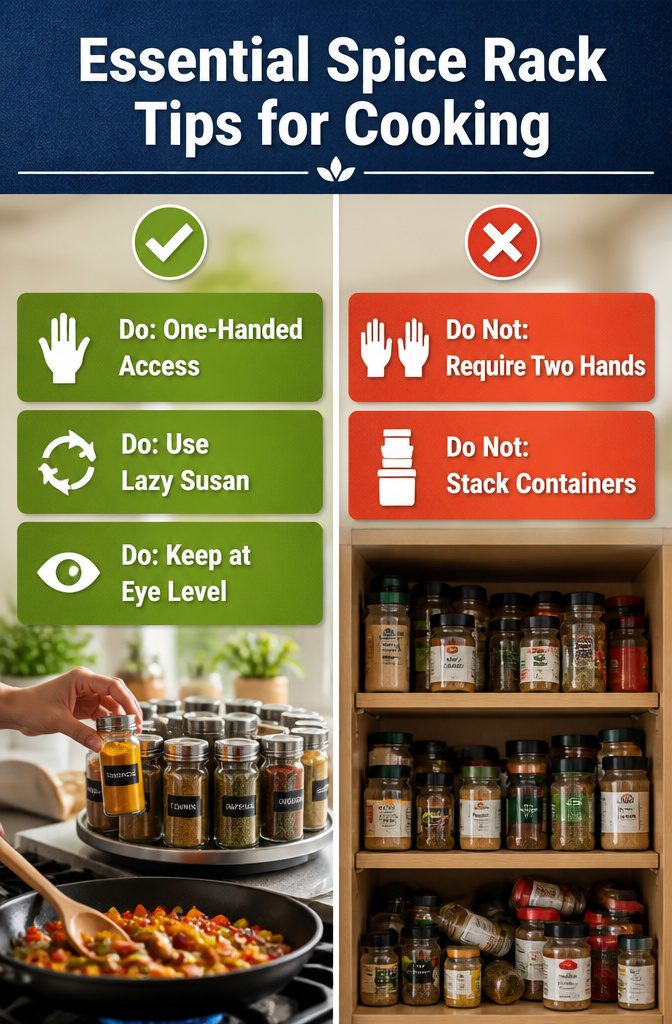
The best-looking spice rack in the kitchen still fails the first time you need turmeric with a hot pan hissing on the stove. That reach-and-grab test is what separates storage you use from storage you eventually ignore.
Most of us have one hand busy when we cook. The other might be holding a spoon, steadying a cutting board, or keeping a lid from sliding.
A practical spice rack needs to open or spin with a single hand, no gripping required. Spin motions beat pull motions here; a lazy Susan inside a cabinet turns toward you while your other hand stays on the pan handle.
Pull-out drawers demand both hands and a step backward, which is why mine stayed half-open through most of a dinner party last fall while I crossed the kitchen with a screaming-hot skillet, looking for the one jar that had slid to the back.
Lift motions are worse. Anything requiring you to remove a whole tier or unstack containers belongs in the pantry, not by the stove.
Placement matters more than the mechanism itself. Eye level is ideal; below the counter means crouching, and above the hood means reaching through steam that fogs your glasses and leaves oil on the jars.
The mistake that cost me a burned sauce was mounting a shallow rack on the wall beside the refrigerator, two full steps from where I actually stood to cook. Pretty from the doorway, useless at the moment I needed it.
Frequently Asked Questions
What are some creative spice rack ideas?
Acrylic drawer organizers that expand from 13 to 26 inches, over-the-door organizers with tension-rod hooks, two-tiered Lazy Susans around $38 to $49, magnetic racks under $30 for refrigerator sides, and X-shaped criss-cross drawer dividers at $29 all offer different ways to fit specific kitchen constraints.
Each solves a different problem: renters need no-drill options, deep cabinets need slide-out racks near $30, and narrow drawers need geometry that turns dead corners into usable space.
How can I organize my spices effectively?
Tiered stair-step organizers around $23 let you read labels from one angle without pulling bottles forward, while rotating racks spin every jar to the front with a wrist flick.
The real test is single-handed access while cooking: spin motions work when your other hand holds a hot pan, but pull-out drawers demand both hands and a step backward.
Match the mechanism to where you actually stand at the stove, not where the rack looks prettiest from the doorway.
What is the best way to store spices?
Uniform four-ounce or six-ounce jars with bamboo lids and chalk-marker labels that wipe clean for relabeling keep contents visible and organized, and a full set with 386 labels runs about the price mentioned for stackable shelves with 28 glass jars.
Store them behind a cabinet door if possible: open racks near the stove collect grease and dust, and exposed jars are among the germiest surfaces in a kitchen.
If you must use open shelving, glass-front jars let you spot turmeric without lifting every lid.