
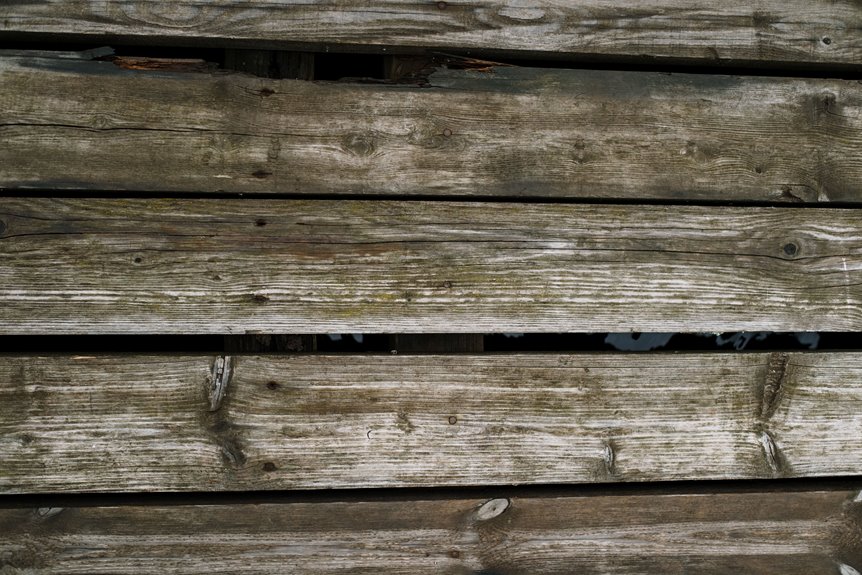
I’ve learned composite decking isn’t as worry-free as the brochures promise. You’ll battle warping and buckling when summer heat hits, watch thermal expansion open gaps that catch your shoe, and discover your “maintenance-free” deck still needs scrubbing against mildew and stains.
The surface gets slippery when wet, especially that slick plastic sheen. Beneath the boards, moisture quietly rots timber subframes even when composites stay pristine.
Then comes the fading: rich browns turn muddy gray, pale tones shift unevenly, and you’re stuck with a weathered look no cleaner can reverse.
What follows is a detailed breakdown of each issue you’ll actually encounter on job sites, plus practical solutions to address them.
Warping and Buckling: When Heat Destroys Composite Decking Structure
When I installed my first composite deck back in 2018, I thought I’d solved the maintenance headaches of traditional wood for good. No more staining, no more rotting, just endless summer barbecues. That assumption proved incorrect.
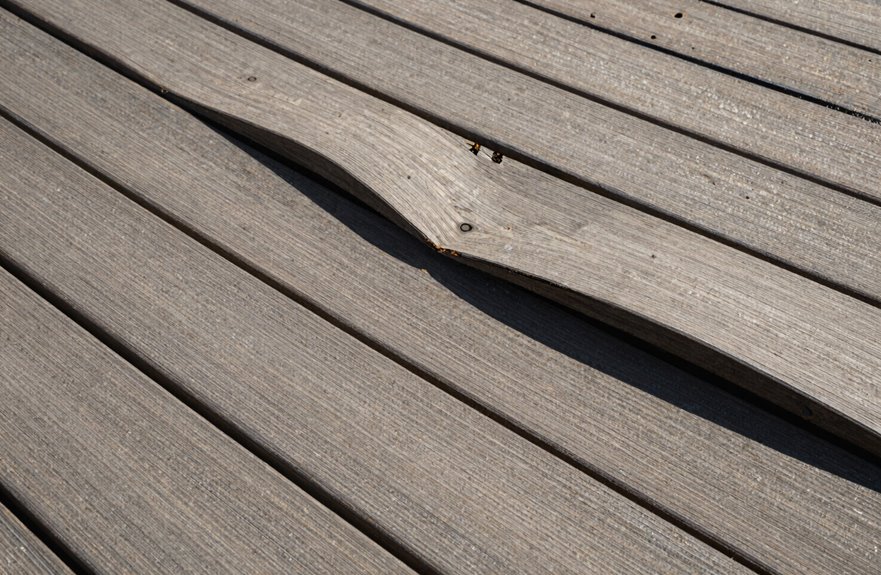
What actually happens with these decking materials when summer hits hard involves basic physics. The plastic components expand faster than the wood fibers, creating internal stress you can’t see until it’s too late. I’ve watched boards warp into gentle curves, twist at the ends, and buckle where they meet. Temperature changes drive constant expansion and contraction cycles that gradually fatigue the material.
Even premium products can’t escape this entirely. After about ten years, sagging often appears between joists. Composite isn’t immune to physics. It’s just trading one set of problems for another.
Thermal Expansion Leaves Gaps and Tripping Hazards
The math isn’t complicated, but it’s unforgiving.
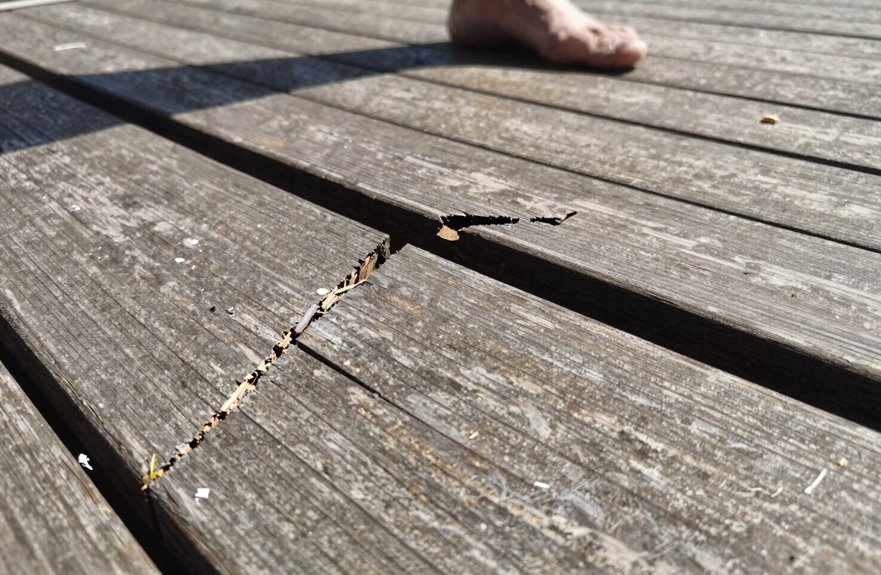
I’ve stood on decks where expansion and contraction from weather effects had opened finger-wide gaps between boards, perfect for catching a heel. Thermal expansion pushes boards outward in summer heat, then winter cold pulls them apart, leaving uneven spacing that creates real trip hazards.
During decking installation, you’ve got to calculate end-of-board spacing precisely. Get it wrong, and summer heat causes buckling; too loose, and you’ll have gaps wide enough to lose your keys in. I’ve seen composite boards warp as plastic and wood fibers expand at different rates, creating a wavy surface that channels water unpredictably.
The constant expansion and contraction cycle gradually sags the structure, especially in warmer climates. Proper spacing is the difference between a safe walkway and a liability underfoot.
How Composite Decking Traps Moisture and Rots Timber Subframes
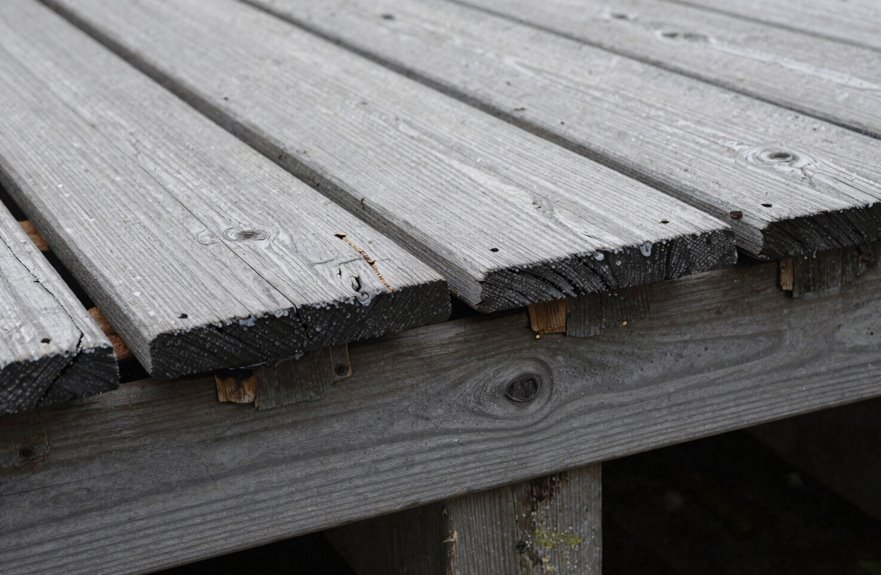
Although composite boards themselves shrug off rot like water off a duck’s back, what lies beneath tells a very different story. I once pulled up a pristine-looking deck to find the timber subframes crumbling like wet cardboard. Moisture sneaks between the boards and the joists, pooling where drainage fails and ventilation can’t reach. Even capped composites, with their zero water absorption, don’t stop this transfer. The trapped dampness feeds fungi, turning sturdy subframes into spongy hazards. Without proper airflow gaps and sloped drainage, you’re hosting a mildew party underfoot. Specify treated lumber, add ventilation channels, and never assume the top layer protects what’s below. Your deck’s structural integrity depends entirely on the condition of its subframe.
Mildew, Stains, and Scrubbing: The Real Maintenance Load
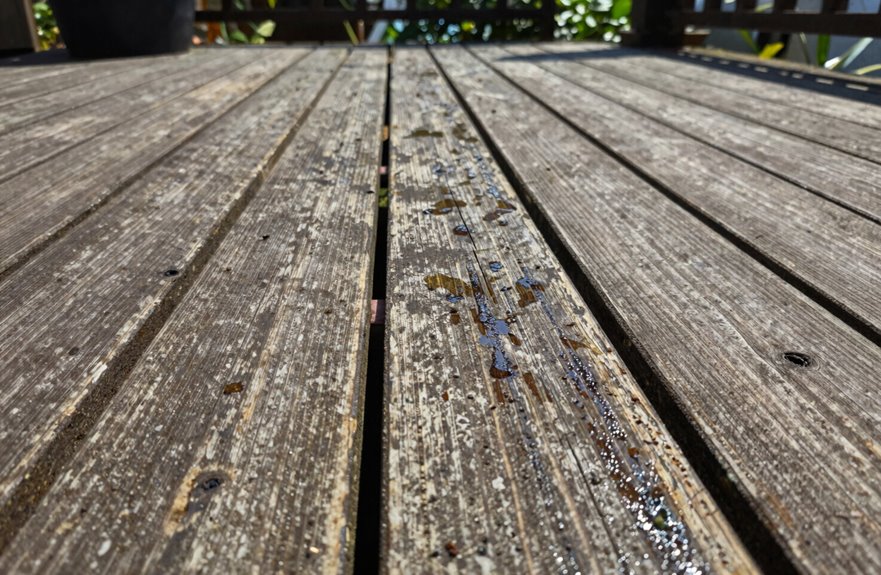
Scrubbing away at stubborn black spots, I’ve lost more Saturday afternoons than I’d care to admit. We all bought into the “no maintenance” promise, didn’t we. Turns out, mildew and stains demand more from us than the brochures suggested.
- That sinking feeling when tannins from your maple tree leave permanent souvenirs
- Realizing your “low maintenance” deck material needs annual cleaning anyway
- Discovering the wrong cleaner voids your warranty after you’ve used it
- Watching mold creep back, knowing remediation gets harder each time
I’ve learned to inspect my boards yearly, use deck-specific solutions, and document everything. When damage worsens the problem, that warranty documentation becomes critical. The maintenance isn’t zero. It’s just different, and requires consistent attention to protect your investment.
Slippery When Wet: Why Composite Decking Falls Short on Safety
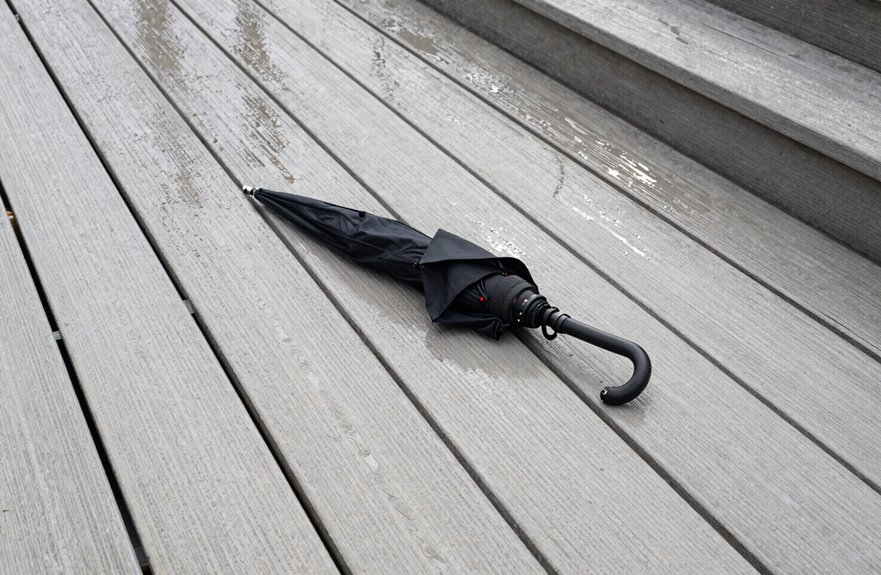
Surface texture on composite decking isn’t just about looks. It’s the difference between a confident stride and a heart-stopping slip. When I compare these planks to traditional wood, the plastic-resin composition creates a slickness that catches you off guard, especially around pool edges or after morning dew sets in. Not all composites handle water the same way. I’ve tested boards marketed as “slip-resistant” that still sent my coffee flying. The difference between grip-worthy and liability-prone boards comes down to specific material composition and surface treatment rather than marketing claims alone.
Surface Texture Concerns
How many times have I caught myself doing that little penguin-shuffle across my own deck after a rainstorm. I’ve learned the hard way that deck surface texture matters more than marketing claims suggest.
Even “slip-resistant” composites disappoint when water on surface meets smooth plastic grain. I’ve felt that heart-dropping slide, arms windmilling, wondering if this is the fall that changes everything.
Surface texture varies wildly between brands, yet slipperiness persists as a shared flaw. Heat compounds the danger. Hot plastic underfoot turns treacherous when wet, especially in blazing summer months.
- The panic of catching yourself mid-slide, knowing your kids play here
- That embarrassed glance at neighbors who’ve witnessed your near-spill
- The frustration of researching solutions, only finding mixed reviews
- The quiet worry every time dark clouds gather overhead
I’ve stopped trusting my deck completely.
Slip Resistance Comparisons
Surface texture concerns bleed directly into the bigger picture: how composite decking actually performs when safety matters most. Testing this myself reveals the issue. Spray the hose, step carefully, and feel that unsettling slide underfoot. Wet slip resistance on composite decking often disappoints, even with “slip-resistant” marketing claims. Water pools on plastic surfaces, amplifying slipperiness. Older decks get noticeably worse with age.
Temperature impact matters too. Walking barefoot on CoolDeck and Lineage products shows they help, but midday sun still bakes them. Light colors reduce heat, yet don’t solve wet conditions.
Non-slip coatings exist. Testing two brands produced mixed results. Families need protection based on proven performance, not product guessing.
Fading and Colour Loss That Makes Composite Decks Look Dated
I’ve watched my neighbor’s once-rich espresso deck fade to a patchy taupe in just four summers. UV rays attack the plastic binders in composite boards, breaking them down molecule by molecule while the pigments wash out or shift unpredictably. Sometimes the fading occurs evenly, and sometimes in blotchy swaths that make your deck look half-finished. Even those fancy capped boards with their protective outer shells can’t fully stop the bleeding. I’ve seen “50-year warranties” that cover structural rot but explicitly exclude noticeable color change, leaving you stuck with a weathered patio you can’t repaint or stain back to life.
UV Damage Mechanisms
Why does that gorgeous espresso-brown deck you installed five summers ago now look like it’s been left out in a sun-bleached photograph? I’ve watched it happen to neighbors, friends, my own backyard retreat. UV exposure doesn’t discriminate.
What you’re really up against:
- UV degradation attacks the polymer bonds, breaking down what keeps your color rich and alive
- Fading happens even with “UV-resistant” labels
- Color change accelerates in south-facing yards, turning your investment into a patchy surface
- Co-extruded boards buy you time, not immunity, and warranty limitations rarely cover faded deck finishes
Magazine-worthy decks require maintenance. Sun damage is inevitable without proper protection.
Colour Degradation Timeline
That breakdown of polymer bonds is just the beginning. I’ve watched neighbors chase UV exposure with pressure washers, desperate to revive decks that went chic to shabby in half a decade. Fading deserves honest assessment. Co-extruded boards and UV-resistant coatings slow color degradation, but they don’t freeze time. I’ve seen “worry-free” warranties promise 50 years while reality shows noticeable shifts in year seven. Planning ahead means your future self won’t face unexpected aesthetic decline.
| Your Hope | The Reality | What We Do Together |
|---|---|---|
| “It’ll stay like new” | UV-driven change happens regardless | Choose colors knowing they’ll soften |
| “Light grey hides everything” | Even pale tones shift unevenly | Accept patina as part of the story |
| “Premium means permanent” | Long-term color stability varies wildly | Budget for eventual aesthetic refresh |
Build something beautiful with clear expectations about what time will do to it.
Protective Coating Limits
So how much protection does that fancy capped shell actually buy you?
I’ve watched neighbors learn the hard way that co-extruded composite decking isn’t bulletproof. UV exposure keeps working, year after year, and color fading happens anyway. What I’ve noticed:
- That “rich walnut” you loved? It’ll shift toward ashy gray, guaranteed
- Fading warranties sound comforting until you read the fine print exclusions
- Color uniformity fails first at cut edges, where the core shows through
- You’re stuck with your choice. No repainting, no do-overs
Even premium lines show wear. The capped layer buys time, not immunity. I’ve scrubbed, treated, and hoped. Once the original color’s gone, it’s gone. The reality is that protective coatings on composite decking have measurable limits. UV degradation occurs consistently regardless of initial quality, and fading cannot be reversed through maintenance alone.