
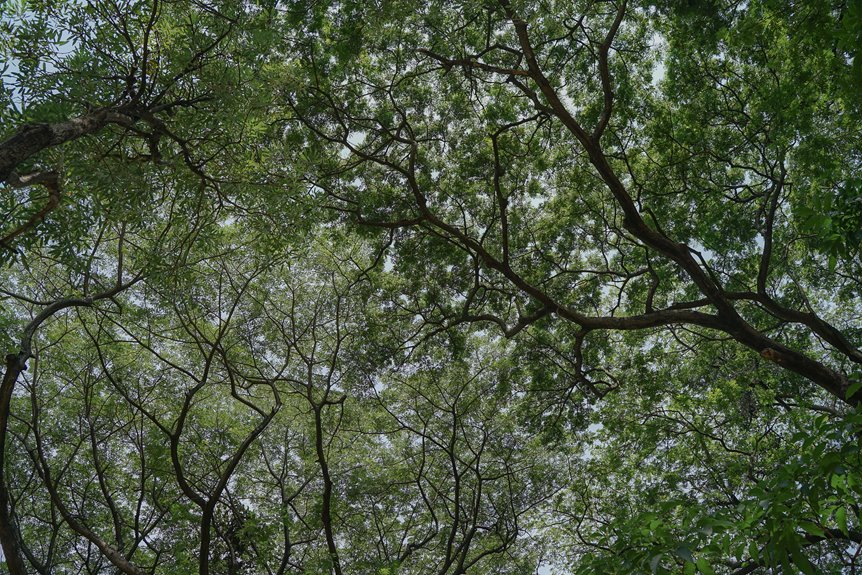
I’ve watched a single oak drop my backyard temperature fifteen degrees, and that cooling spreads. Shade cuts AC bills by a quarter, tree-lined streets boost home values up to ten percent, and shoppers linger longer and spend more on leafy blocks. Trees filter half the pollution near busy roads, ease asthma rates, absorb stormwater to prevent flooding, and feed birds and bees through urban corridors. Every dollar you spend planting returns five in energy savings, cleaner water, and healthier neighbors. I’ll show you exactly where to put that shovel for maximum impact.
How Trees Cool Neighborhoods by 10 Degrees
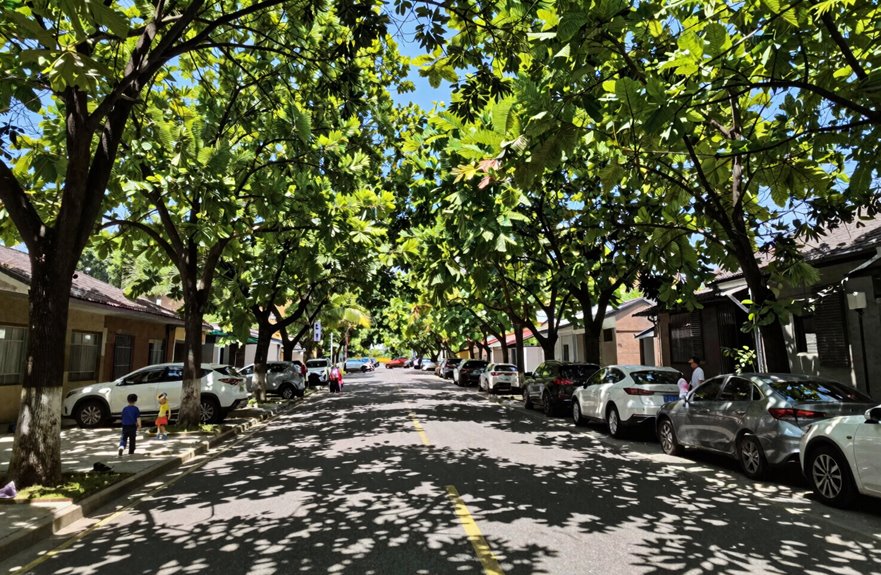
Why does stepping onto a tree-lined street on a scorching July afternoon feel like walking into a different world entirely. I’ve felt it myself, that instant relief when shade replaces sun, when the air actually moves against your skin instead of pressing down.
Every tree is working like a natural air conditioner. Through evapotranspiration, they’re releasing water vapor, literally cooling the air around them. Combined with shade blocking solar radiation from baking pavement and rooftops, large specimens can drop surrounding temperatures by 10 to 15 degrees in their immediate vicinity.
This matters because our cities trap heat. Concrete, asphalt, and buildings absorb and radiate warmth, creating urban heat islands that endanger vulnerable neighbors. Widespread planting disrupts this cycle, reducing heat storage in paving and structures. We’re not just landscaping; we’re protecting each other.
Can Shade From Trees Cut Your Energy Bills?
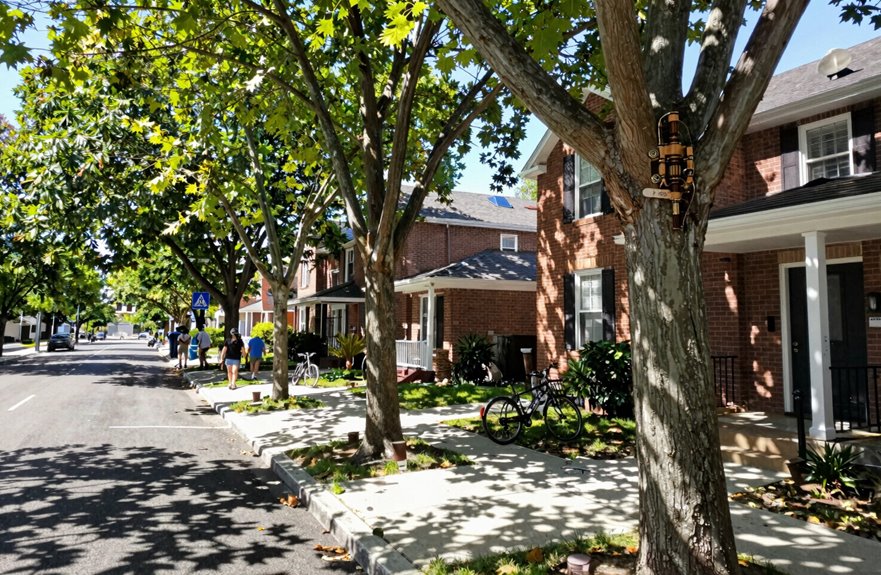
That 10-degree drop I mentioned translates directly to real savings on your energy costs. When I planted a mature oak on my home’s west side, my summer cooling bills dropped noticeably, about 20–25%, matching what researchers find consistently.
The shade creates a natural cooling effect that reduces how hard your air conditioner works. Urban trees amplify this benefit across entire neighborhoods, combating heat islands that drive up everyone’s expenses. The difference is noticeable when walking down tree-lined blocks versus exposed pavement.
Strategic placement matters. Position deciduous trees where summer sun hits hardest; they’ll block heat then shed leaves for winter warmth. This energy efficiency strategy works year-round, as trees also act as windbreaks, reducing heat loss when temperatures drop.
Your wallet and your community benefit together.
How Tree-Lined Streets Boost Home Values 10
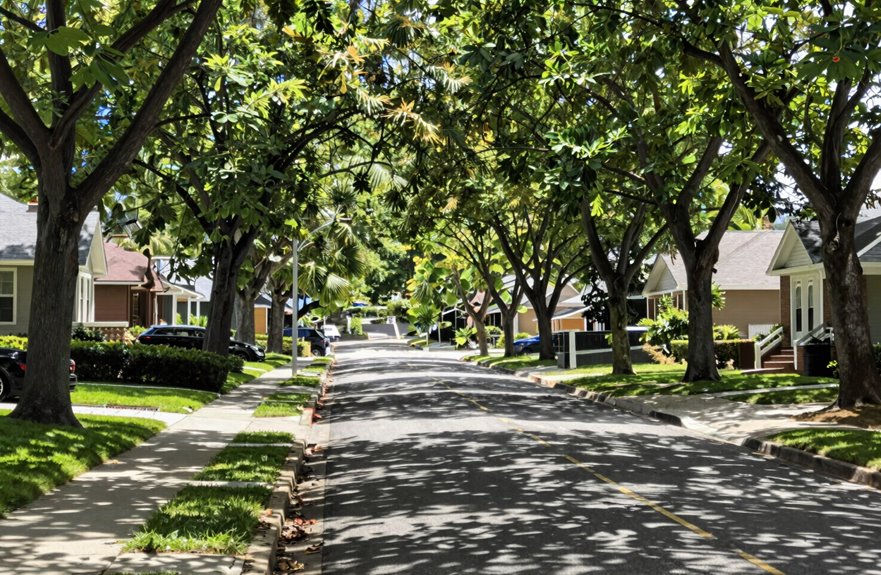
Where exactly does that extra 10% in your home’s value come from? I’ve walked enough neighborhoods to spot the difference immediately. Tree-lined streets signal something powerful: stability, care, community.
It starts with curb appeal, that first impression buyers can’t shake. Mature trees frame your property like nature’s own staging, and I’ve seen single large trees add about 1% each, stacking up to that full 10% in leafy blocks. Beyond looks, shading cuts cooling costs, which appraisers notice. Lower bills mean higher property value.
Homes on these streets move faster and fetch stronger offers. Buyers pay premiums for that belonging, the sense that neighbors invested here and that roots run deep. Plant trees now, and you’re not just growing shade. You’re growing wealth, together.
Why Shoppers Spend 12% More on Tree-Lined Blocks
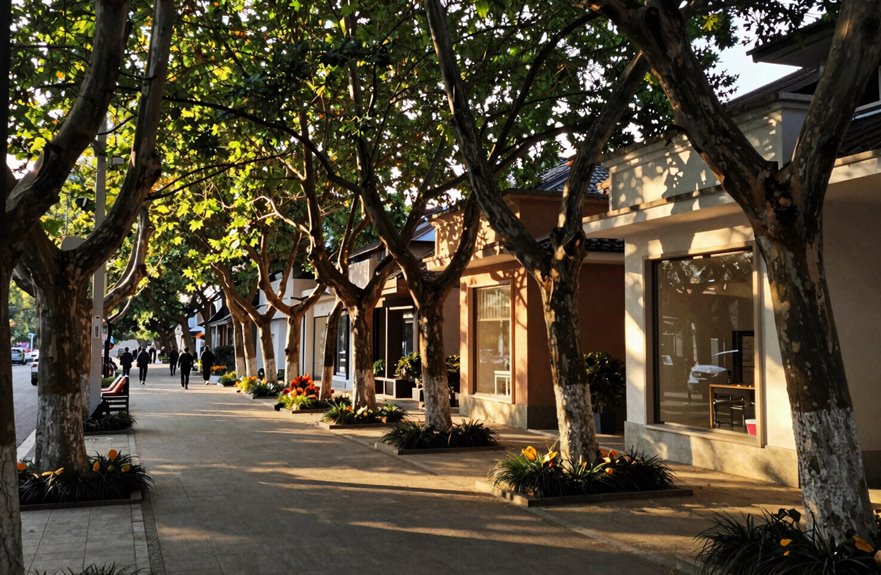
How exactly does a few oak trees convince someone to drop an extra twelve bucks on lunch?
I used to think it was just coincidence that I’d linger longer on certain blocks. Turns out, our brains respond to green space in predictable ways.
Here’s what’s happening while you’re strolling:
- Shade keeps you comfortable. Cooler streets mean you’ll actually slow down instead of rushing past storefronts.
- Tree canopy creates “third spaces”. That inviting spot between home and work where you feel like you belong, not just pass through.
- Better property value attracts investment. Nicer storefronts, outdoor seating, and energy savings that owners pass along as improved experiences.
That increased foot traffic translates directly to higher customer spending. People open their wallets wider in environments where they feel welcomed.
How Trees Filter Air Pollution and Reduce Asthma
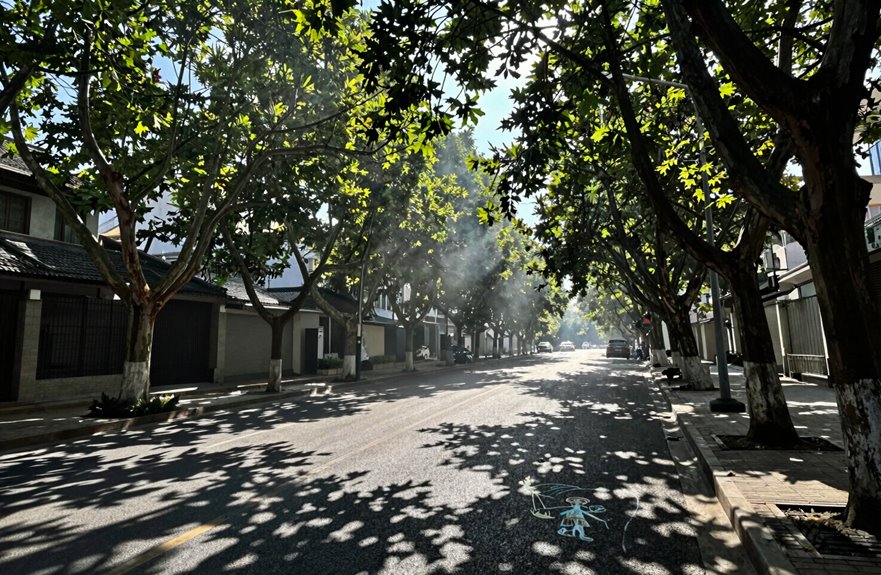
The economic boost from tree-lined streets is just one piece of what they’re doing for us. Urban trees are quietly working as our neighborhood’s air scrubbers.
Pollution filtration through tree leaves captures particulate matter, the nasty stuff from car exhaust and industry, before we breathe it in. Along busy roads, urban trees cut nearby air pollution by over half. That means fewer kids reaching for inhalers and fewer asthma attacks disrupting school days and family dinners.
Our collective canopy removes hundreds of thousands of metric tons of pollution yearly across the country. Cities like New York estimate urban trees save about eight lives annually just through cleaner air. When a tree is planted, it protects neighbors’ lungs.
The Stress Relief of Living Near Community Trees
Am I the only one who walks slower past a row of oaks, or do you do this too? There’s something about community trees that makes me breathe deeper, like the urban environment finally exhales with me. I didn’t realize how much I needed green spaces until I moved near a park. My mental health shifted with less rumination and more presence.
Research backs what we feel. Stress relief isn’t just poetic; living near trees measurably lowers cortisol. I notice three things in my tree-rich neighborhood:
- Neighbors actually stop to chat on shaded sidewalks
- I exercise more without forcing it. Walking just feels good there.
- Summer heat doesn’t trap me indoors; I still belong outside
We’re not meant to live among concrete alone. These roots ground us together.
How Trees Absorb Stormwater and Prevent Flooding
I’ve watched my own street turn into a river during summer storms, and that’s when I started noticing which yards stayed dry. Almost always, they were the ones with mature oaks or maples soaking up the deluge. Trees act like living sponges, catching rain in their leaves, drawing it down through their roots, and releasing it slowly so storm drains don’t get overwhelmed. This practical function keeps basements dry and streets passable without requiring a single concrete culvert.
Natural Flood Control
When heavy rain starts hammering your neighborhood, mature trees actively fight flooding rather than simply absorbing the water. Urban trees transform our streets into living infrastructure that provides measurable flood control benefits.
Trees become your community’s flood control allies through three primary mechanisms:
- Their canopies intercept rainfall, slowing stormwater runoff before it hits pavement
- Root systems act as natural sponges, storing thousands of gallons while providing water filtration
- Dense root networks anchor soil, delivering erosion protection that shields downstream neighbors
Flood-prone areas have become more resilient after planting campaigns. The cooling effect of evapotranspiration reduces heat stress and decreases strain on sewers. When we protect existing trees and plant new ones, we’re building shared safety infrastructure. Your street’s greenery provides measurable protection for everyone in the community.
Urban Runoff Reduction
How much stormwater rushes off your street after a heavy rain? Watching it cascade down concrete, carrying oil, litter, and chemicals straight into our waterways reveals a serious problem. Urban trees change that equation entirely.
Their canopies intercept rainfall before it ever hits the ground. Just one hundred mature trees can catch roughly 250,000 gallons annually in their leaves alone. That water evaporates or drips slowly, giving soil time to absorb it rather than becoming destructive runoff.
Below ground, root systems work like natural filters. As water percolates through, leaves and roots trap contaminants, providing filtration that protects our rivers and streams. This green infrastructure stabilizes soil, prevents erosion, and reduces the polluted surge overwhelming our sewers.
Neighborhoods with robust canopy cover weather storms that flood treeless blocks. Less runoff means lower flood risk, fewer treatment costs, and cleaner water for all of us.
Trees as Habitat: Birds, Bees, and Urban Wildlife
Where exactly do you think the sparrows go when concrete takes over?
When concrete takes over, the sparrows have nowhere left to go.
I planted a redbud in my narrow strip of yard last spring, and by June, I’d counted seven species of urban wildlife using it. Birds nested in the branches. Bees mobbed the pink blossoms. One tree becomes a habitat, a refuge, a living thing connecting us to something bigger.
We’re building urban forests together, one yard at a time. Here’s how trees weave us into nature’s network:
- Native canopies feed pollinators and balance fragile city ecosystems
- Corridors and hedgerows link fragmented spaces so creatures move safely
- Sheltering roots and branches let wildlife thrive where we live
When I see a chickadee flit through my maple, I remember that belonging works both ways. We belong to them, too.
Do Neighborhood Trees Really Pay 5-to-1 Returns?
Sparrows need somewhere to land, sure, but I’ve also got bills to pay. That’s why I dug into whether tree planting actually makes financial sense for folks like us.
The numbers surprised me. Every dollar we spend on planting and care can return five dollars back. I’m talking real energy savings: shade that cools your home in July, evergreens that cut winter heating bills by about 3%. My neighbor’s place sold for 10% more than identical houses on the bare street, thanks to her mature oaks.
Then there’s air pollution reduction, which matters when your kid’s got asthma. Trees in Chicago alone capture $195 million yearly in health and utility benefits. Shoppers linger longer on tree-lined blocks, spending 12% more at local shops.
Urban economics aren’t abstract. They’re your property value, your coffee shop staying open, your lower electric bill.
Clean Water From Tree Roots: Your Local Watershed
I’ve watched rainwater sheet off pavement and wondered where it carries all that grit and oil. Then I started noticing how tree roots act like nature’s own filtration system, trapping pollutants before they reach our streams. When you plant along slopes or near waterways, you’re building a living buffer that shields fish habitats from sediment overload and keeps nutrients from triggering algae blooms downstream. It’s surprisingly practical, too. Communities with healthy watershed forests often spend less on expensive water treatment plants because nature’s already doing the strenuous work.
Filtering Rainfall Naturally
When I first learned how tree roots actually clean water, I stood in my backyard staring at an oak I’d ignored for years, suddenly impressed by what was happening beneath my feet. That tree wasn’t just standing there. It was working, filtering rainfall through its root system like a natural Brita pitcher.
What I’ve discovered about how we can all contribute to cleaner water together:
- Rainwater filtration happens underground – roots capture contaminants as water percolates through soil, protecting our local watershed quality
- Runoff reduction starts overhead – a dense tree canopy intercepts rainfall before it becomes stormwater carrying pollutants
- Urban pollution reduction requires community action – over 180 million Americans already rely on forested watersheds for drinking water
Expand our neighborhood’s natural filtration system.
Protecting Aquatic Ecosystems
Tree roots quietly set up shop beneath the surface, filtering groundwater long before it ever reaches a stream or lake. Walking through forested valleys reveals how those trees work to catch sediment, absorb nutrients, and keep water quality high for downstream aquatic systems.
When I plant in my own yard, I’m essentially extending that protective buffer. Urban trees sequester carbon and reduce stormwater runoff, which means less gunk; oil, fertilizer, and debris wash into creeks at lower rates. Pollution reduction becomes measurable after heavy rains.
Proper forest management creates crucial riparian zones where banks stabilize and fish thrive. Wetlands formed by strategic planting slow erosion while maintaining clean habitat. We’re all connected to the same watershed.
Reducing Treatment Costs
How exactly does my sapling in the backyard end up lowering someone else’s water bill? I asked myself this after planting my first serviceberry, and the answer ties us together more than you’d think.
Trees quietly share the burden through three mechanisms:
- They filter before we pay — roots trap pollutants, boosting water quality so treatment plants work less
- They ease the rush — slowing stormwater across the entire watershed protects pipes and cuts infrastructure strain
- They cool what we collect — shade and evapotranspiration reduce energy for moving and treating water
When we invest in urban forestry, we’re not just beautifying streets. Over 180 million Americans already drink from forested watersheds. My single tree joins yours in a living system that measurably reduces treatment costs for neighbors I’ve never met.