
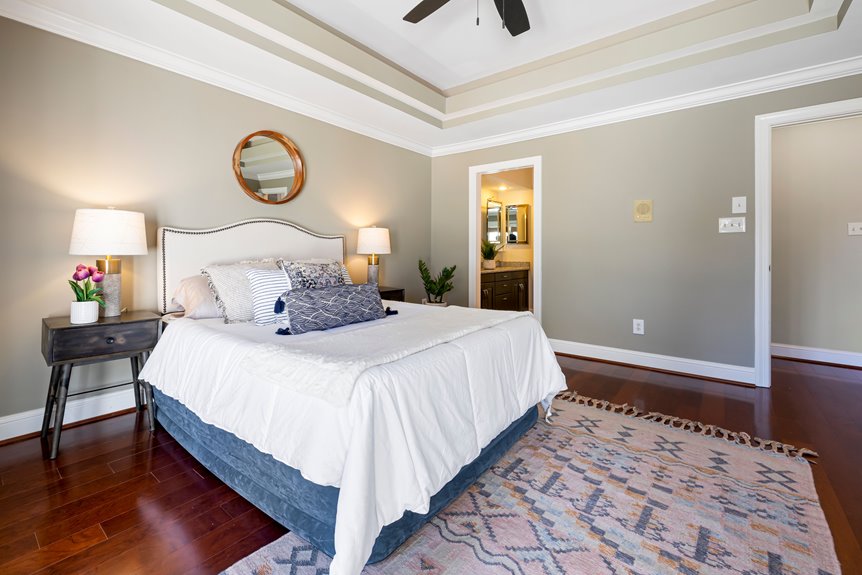
I always start by measuring my bed and taping out the space on the floor. King beds need 9×12 rugs, queens need 8×10, with 18 to 24 inches showing on each side for that soft morning landing. I center the rug around the bottom two-thirds of the bed, treating it as my room’s anchor, then decide if I want full coverage or just the front half for smaller spaces.
I test horizontal and angled orientations to frame walking paths, leaving 12 to 18 inches of bare floor around the edges. After placing my rug pad to prevent slips, I let everything settle for a day or two before tweaking the leg placement one last time. Each step requires attention to detail that prevents common placement mistakes.
Measure Your Master Bedroom and Match Rug Size to Bed Type
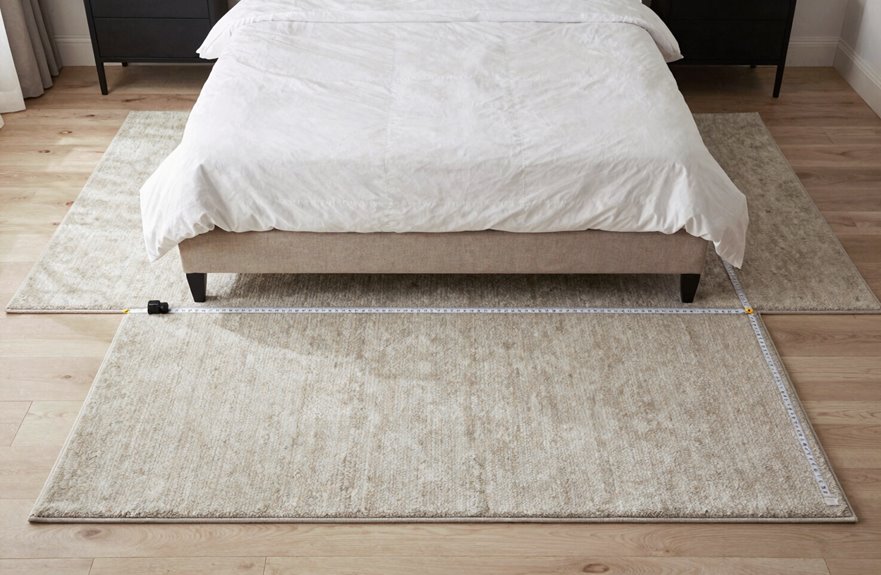
I learned this the hard way after dragging home a gorgeous rug that turned my bedroom into an expensive game of Tetris. Now I always measure first. For a king bed, you’ll want roughly 9 by 12 feet, enough visible rug framing your sleep zone as it deserves. Got a queen. Aim for 8 by 10 feet with 18 to 24 inches showing on each side.
My pre-purchase ritual involves grabbing masking tape and mapping the rug placement directly on my floor. This room measurement trick reveals exactly how that under-bed protrusion will look, saving you from awkward spacing issues. Your rug center sits around the bottom two-thirds of your bed; more side protrusion than foot. Your bare morning feet will have adequate coverage this way.
Align the Rug With Your Bed as the Room’s Anchor
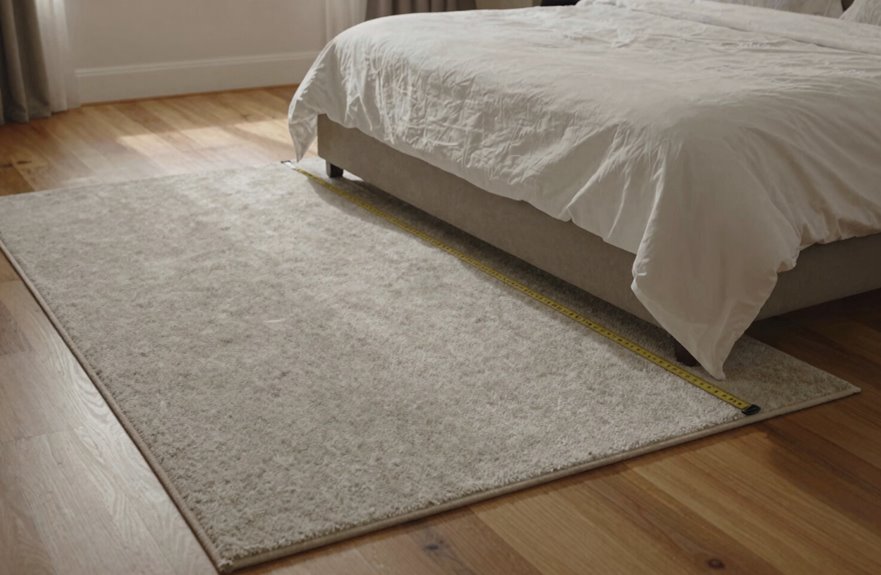
The bed functions as the visual foundation for bedroom rug placement.
The bed functions as the visual foundation for bedroom rug placement. When you center rug placement around the bed rather than the room’s architecture, you create instant cohesion.
For rug sizing: a king bed pairs well with a 9 x 12 rug, while a queen works best with an 8 x 10 rug positioned with 18–24 inches of space on each side.
Position the rug under the bed so one-third to one-half extends beyond the foot and sides. This creates a soft area for barefoot mornings. For nightstand alignment, start the rug just in front of the bed, or place everything on top of the rug for a fully grounded, cohesive design.
Choose: Rug Under All of Bed or Just the Front Half
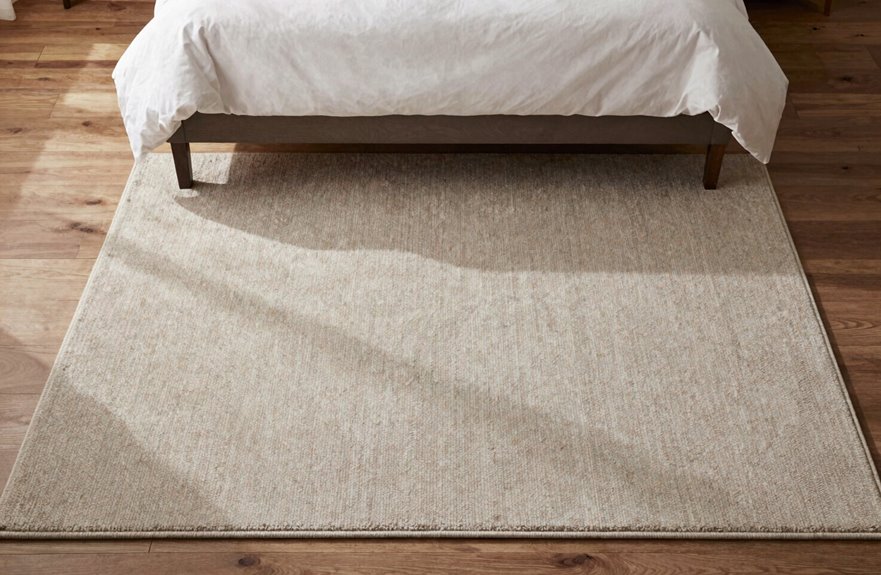
How do you want to feel when your feet hit the floor each morning? That question shapes your entire rug placement decision.
I’ve tried both approaches. Full bed coverage creates sanctuary. Your bed with rug becomes an island where everything, including nightstands placement, rests together. Furniture feels grounding when all legs sit on one surface. For this, your bedroom rug size needs visible rug edges extending 18–24 inches beyond the bed.
In smaller spaces, the front half rug approach using the two-thirds rule works well. Position your under-bed rug so it starts about one-third down, letting back legs stay on bare floor. It preserves breathing room while still anchoring your space. Both approaches work; you just need to decide what “home” feels like to you.
Angle the Rug to Frame Your Bed and Walking Paths
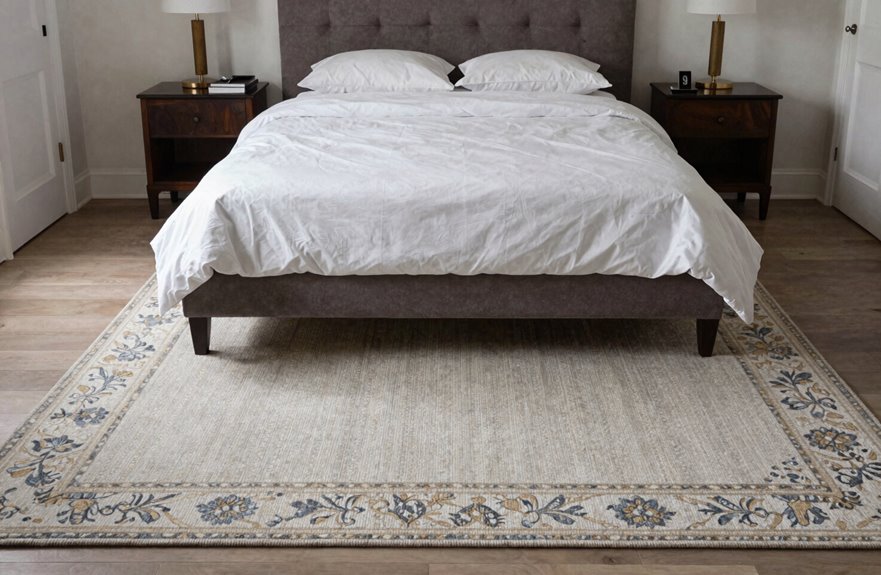
Once you’ve settled on full coverage or the front-half approach, the real fun begins. Testing horizontal, vertical, and angled orientations will quickly show which placement defines your walking paths and creates that cozy boundary between sleep and living zones. Tilt the rug so the bed stays centered within its frame, especially in asymmetrical rooms where nothing quite lines up.
Align the rug’s major angle with doorways or windows. This prevents visual dissonance and keeps the room grounded. Leave 12 to 18 inches of bare floor around the edges; this proportion ensures visibility and airiness. Your rug becomes a subtle stage that frames where life actually happens.
Secure Your Rug and Adjust as Furniture Settles
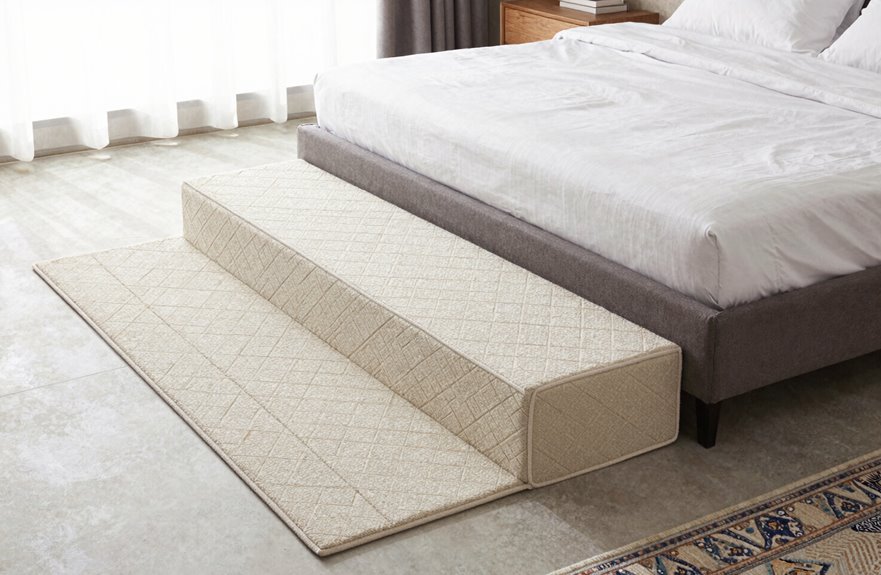
Where exactly should that rug sit once everything’s in motion? Without proper anchoring, even the most beautiful rug becomes a hazard.
Start with rug underlay, an anti-slip layer that prevents shifting and protects your floors, especially hardwood or tile. Once you’ve laid it down, let your furniture settle for a day or two, then re-check your work. Focus on those frontline legs: whether you chose all legs or just the front ones on the rug, make sure they still rest properly after the settling period.
If the bed shifts slightly off-center, adjust the rug to center the bed instead of forcing it to the room’s middle. This creates cohesive framing around your sleeping space. Life happens, seating arrangements change, and you’ll need to re-align occasionally. Your rug functions as a living element in your bedroom sanctuary, shifting with you as your needs evolve.