
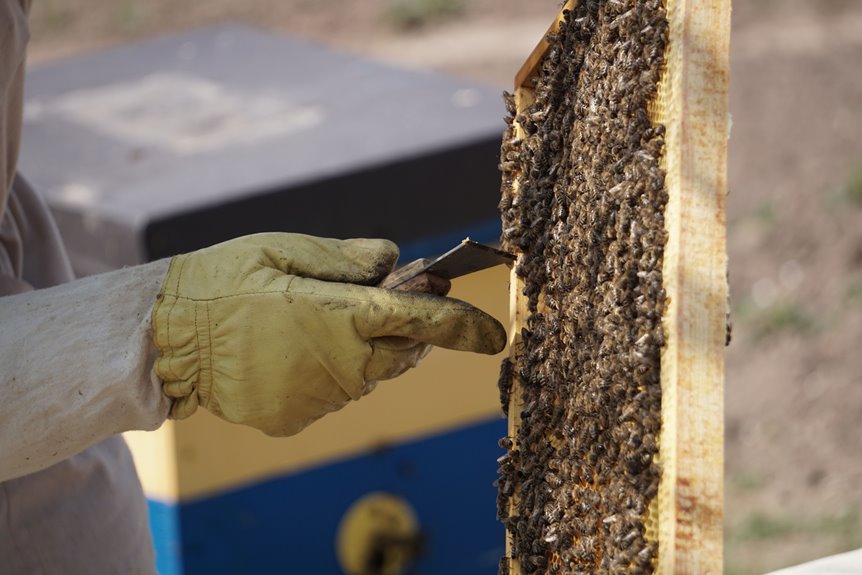
I’ve learned that safe bee removal starts with getting kids and pets to a safe zone, then figuring out if you’re dealing with fuzzy honey bees or sleek, aggressive wasps. If it’s bees, I call a local beekeeper. Many relocate swarms for free. I’ll sprinkle garlic powder or set out vinegar bowls as natural deterrents before they settle, but if they’re in my walls or chimney, I phone a pro immediately. I never spray or poke the cluster because it makes them defensive. Once they’re gone, I seal every crack to keep them from coming back. This prevents future infestations and protects your home’s structural integrity.
Keep Children and Pets Away From Backyard Bees
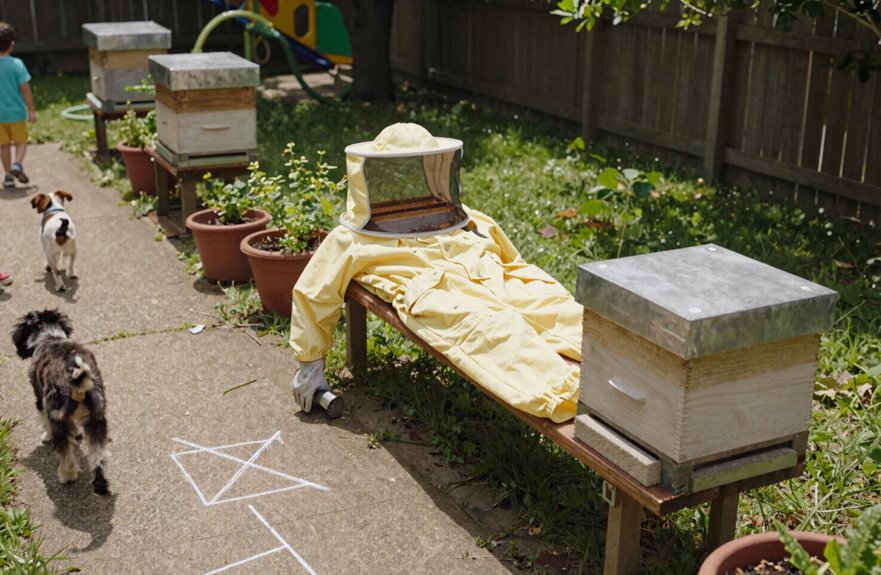
When I spot bees clustering in my backyard, my first move isn’t figuring out how to remove them. Instead, I get everyone else out of harm’s way. I gather my children and pets immediately, guiding them toward our predetermined safe zone, usually the front porch or garage. Safety comes before anything else. I don’t take chances with curious little hands or noses that might wander too close.
Next, I alert everyone in my household because we’re all involved in staying safe. I assign someone to watch the kids while I observe from a distance, noting whether the swarm’s resting or settling in. I never spray water or chemicals. That approach turns calm bees defensive. If activity persists or bees enter our home, I call a professional without delay.
Identify Honey Bees, Wasps, or Yellow Jackets
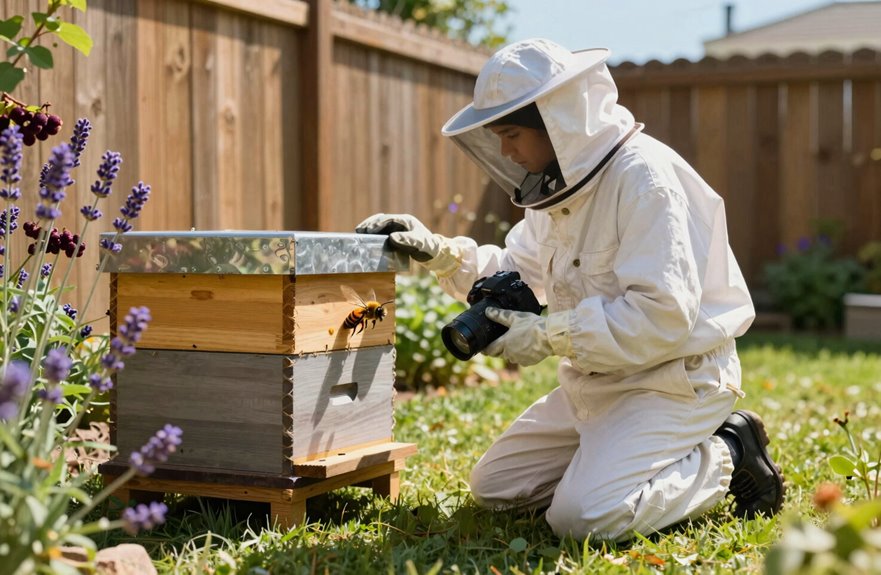
I can’t tell you how many times I’ve squinted at a buzzing insect, convinced it was a honey bee, only to realize I’d been watching a wasp raid my picnic. Start with a visual comparison guide: honey bees have fuzzy, rounded bodies with amber and black stripes, while wasps appear sleek, shiny, and almost architectural in their narrow-waisted build. Once you’ve noted the physical differences, spend ten minutes observing their behavior. Honey bees generally mind their own business, collecting pollen with single-minded focus, whereas yellow jackets act like they’re auditioning for a role as your personal antagonist, zigzagging aggressively toward any movement.
Visual Comparison Guide
How can you tell if you’re dealing with a friendly pollinator or a tiny, striped menace with anger management issues. Honey bees are fuzzy, amber-and-black insects with rounded abdomens and a calm, businesslike buzz. Wasps and yellow jackets are sleek, shiny, and practically built for trouble; they have narrow waists, smooth bodies, and aggressive behavior.
What to watch for: honey bees carry pollen baskets on their legs, like little saddlebags, while wasps have nothing to haul but aggression. Early identification matters. If you’re unsure, grab protective equipment, keep your distance, and call a beekeeper. Everyone has a role in this ecosystem. Knowing when to step back and let the experts help keeps both bees and people safe.
Behavioral Differences
Where exactly can you spot the difference between a honey bee going about her day and a wasp looking for trouble? It’s all in the attitude. When I’m doing hive identification in my yard, I watch how they move. Honey bees float, fuzzy and unhurried, collecting pollen like they’ve got nowhere else to be. Wasps and yellow jackets dart, aggressive and territorial, ready to defend their paper nests with multiple stings.
Bees versus wasps comes down to patience versus panic. Bees sting once, which is suicide for them, so they’re reluctant. Wasps sting repeatedly with no hesitation. For gentle removal, I always observe first. If I’m unsure, I call a pro. Keeping our backyards safe requires understanding these differences and respecting the space of all creatures.
Call a Beekeeper to Remove Backyard Swarms for Free
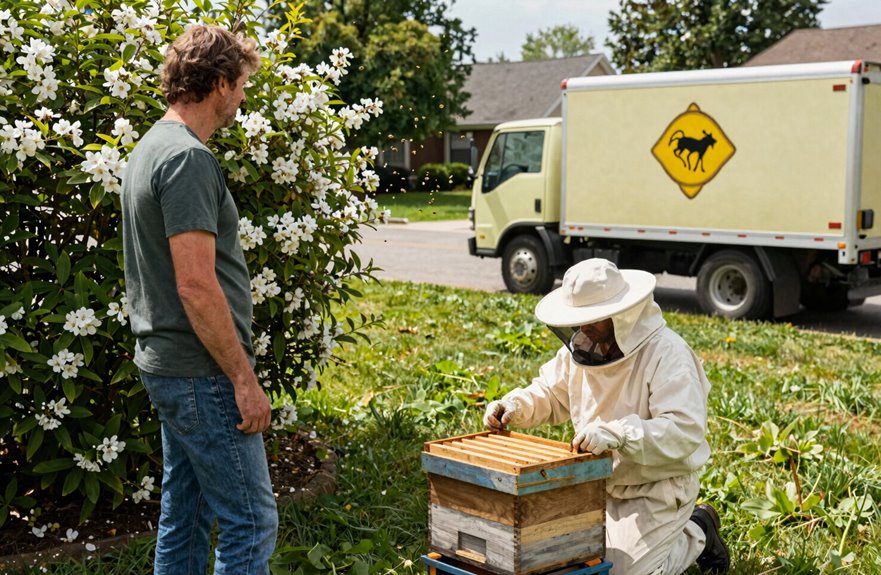
A swarm in your backyard doesn’t require panic or an expensive exterminator bill. Beekeepers often handle backyard swarm removal for free or low-cost relocation since they need the bees and you need them gone. This arrangement benefits both parties and connects you to your local community.
Before calling, gather these details: confirm they’re honey bees rather than wasps, note the cluster’s height and size, and take a photo. Check how long they’ve been there and whether they’re in an open space or trapped inside a wall. Enclosed spots require professional handling, and faster calls result in lower costs.
BeesWarmed.org helps you find nearby rescuers. If someone doesn’t respond, your local beekeeping club or Agricultural Commissioner can provide referrals.
Try Natural Deterrents Before Bees Settle In

I’ve learned that stopping bees before they move in saves everyone a headache, so I focus on early prevention methods like timing deterrents before spring swarming season and placing them where scouts first appear. Natural scent barriers work effectively. Garlic powder, cinnamon, or distilled white vinegar placed in strategic spots create invisible no-go zones without harming a single bee. I also keep peppermint plants near my patio and citronella candles handy for windy days when outdoor scents struggle to stick around.
Early Prevention Methods
Why wait until you’re sharing your morning coffee with a dozen uninvited guests? Early prevention saves me from frantic searches for safe removal options later.
I start with bee deterrents before any buzzing begins. I sprinkle garlic powder around potential entry points, never on the bees themselves, and plant peppermint where I walk most. The scent alone keeps them wandering elsewhere. Cinnamon works in corners where I’ve spotted scouts, and I place open bowls of distilled white vinegar near problem zones to mask sweet attractants. When I’m entertaining, I light citronella candles, which handle mosquitoes too.
These small rituals, done consistently, let me reclaim my space without confrontation. My backyard remains a comfortable environment for human activity.
Natural Scent Barriers
How do you keep bees from claiming your backyard before they even arrive? Scent barriers work effectively and keep our shared outdoor spaces welcoming for everyone.
- Distilled white vinegar: Place open bowls around problem zones; the sharp smell sends bees searching elsewhere.
- Citronella: Candles or plants mask sweet attractants, especially when paired with gentle smoke on breezy days.
- Peppermint: Tuck plants near seating areas. Bees avoid the fragrance, but guests appreciate it.
- Garlic and cinnamon: Powdered garlic sprinkled discreetly and cinnamon dusted along paths provide simple, harmless deterrents that protect without harm.
These methods let you reclaim your yards naturally.
Timing and Placement
Those scent barriers are solid first-line defenses. The timing of deterrent placement is critical. Swarms often rest on surfaces for hours before moving on by dusk, creating a narrow window when interventions work best.
| Strategy | Where to Put It |
|---|---|
| Garlic powder | Problem areas, never directly on bees |
| Peppermint plants | Near traffic zones, patios, doorways |
| Cinnamon | Entry points, cracks, potential nest sites |
| Vinegar bowls | Problem zones, refreshed often |
Citronella works best indoors when conditions are windy or dry. If bees persist beyond the initial day or if anyone in your household has allergies, professional relocation is the appropriate next step. This protects both your family and the bee population.
When Backyard Bees Move Into Your House: Walls, Roofs, and Chimneys
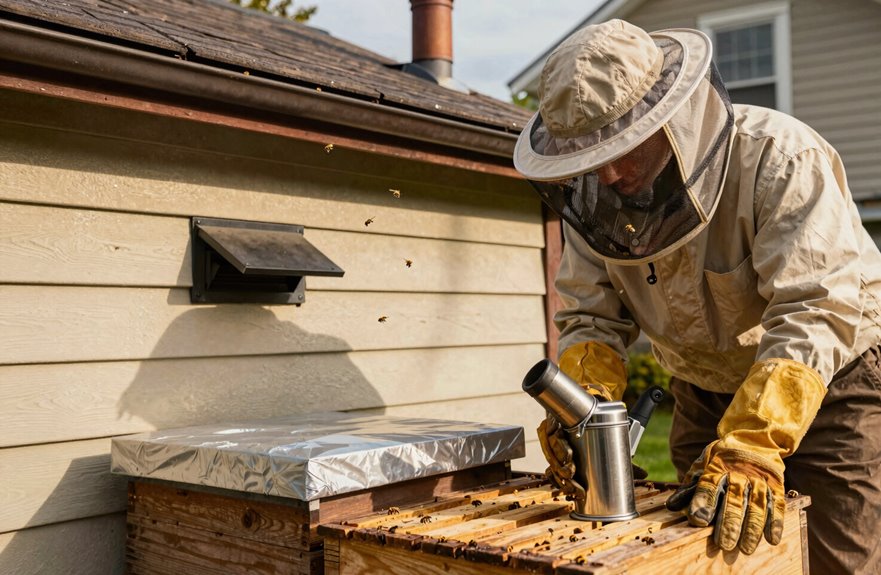
Where do you even begin when you’ve got bees in your walls? You can’t handle it yourself. Wall and roof colonies demand professional bee removal with proper structure containment, not your neighbor’s borrowed ladder.
What actually works:
- Call immediately. Early intervention saves money and prevents permanent hive damage.
- Skip the spray. Water and store-bought products provoke aggression without solving anything.
- Document everything. Location, height, access points, and photos help rescuers plan safely.
- Mention your region. Africanized bees change the risk profile, and experienced beekeepers need to know.
Finding the right professional with insurance, protective gear, and proper technique protects both your home and the bees.
Never Spray or Disturb a Bee Cluster
Why do we always reach for the spray first? I’ve done it too, standing there with a hose in hand, thinking I’m solving the problem. I’m not.
When bees form a cluster, a temporary swarm resting on your fence, branch, or porch, spraying water or over-the-counter products won’t help. It’ll just make them angry, scattered, and harder to remove. I’ve learned to resist the urge to poke, shake, or “encourage” them along. Disturbing the cluster risks stings and leaves you with stragglers everywhere.
Instead, I step back. I watch. Sometimes they’re just passing through, relocating their queen, and they’ll move on within hours. Other times, they settle in. That’s when I call for safe removal. Professionals bring proper gear, insurance, and the know-how I simply don’t have. Early help prevents bigger problems later.
Prevent Bees From Returning to Your Backyard
How do I keep bees from treating my backyard like their personal real estate? Smart bees removal means thinking ahead, not just solving today’s problem. After working with a relocation professional, I make sure I’m not accidentally rolling out the welcome mat again.
- Seal every crack and opening by checking eaves, siding gaps, and chimney crevices where scout bees hunt for real estate.
- Schedule regular maintenance by walking your property seasonally to catch vulnerabilities before bees do.
- Remove old honeycomb residue since pheromones linger, signaling “good spot” to future colonies. Clean thoroughly after any removal.
- Build relationships with local experts. Your relocation professional knows your yard now and can discuss prevent re-nesting strategies tailored to your space.
These steps will reduce the likelihood of bees returning to your property.