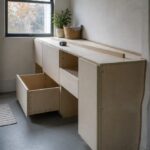
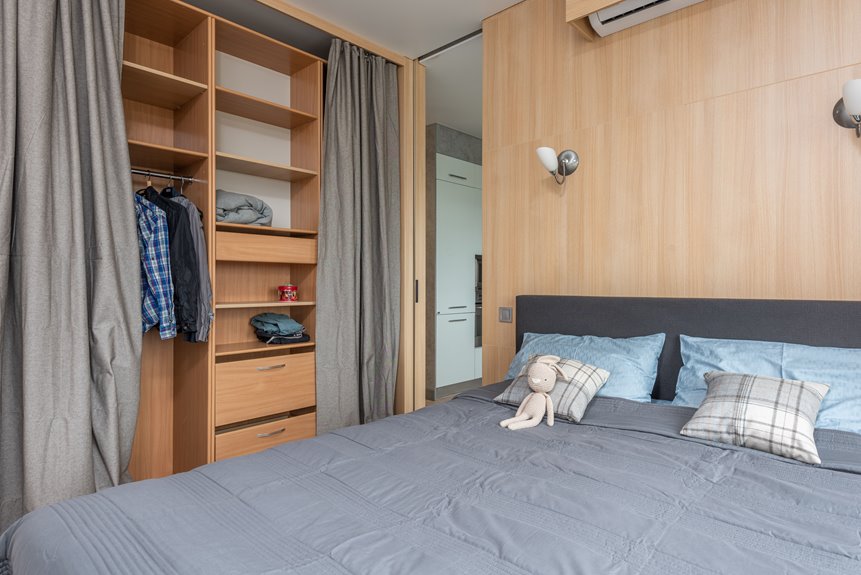
I’ve learned that maximum storage starts with mapping your bedroom into zones: sleeping alcove, wardrobe, bedside essentials. Before buying a single bin, zone your space. I declutter ruthlessly by dumping everything onto my bed and keeping only what earns daily use or genuine joy. Every keeper gets a permanent home. Under-bed drawers store winter coats, wall hooks hold robes, and nightstand drawers with dividers organize cords. I limit surfaces to three items maximum and reset in five minutes each evening. Reassess quarterly to prevent clutter accumulation. Your space becomes functional when it works as hard as you do.
Plan Your Bedroom Storage Zones Before Buying Anything
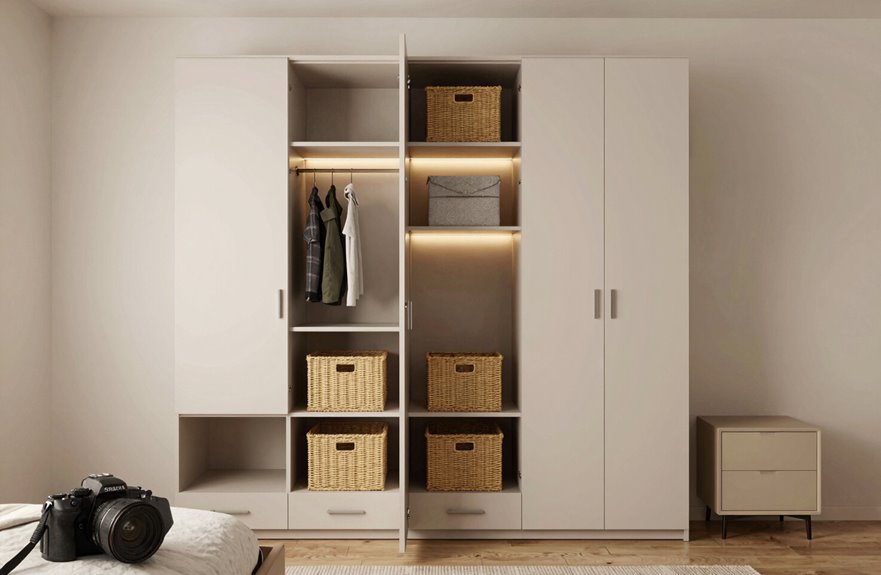
Where do you even start when your bedroom feels like it’s closing in on you? I’ve been there, staring at piles and paralyzed by where to begin. Map your storage zones before buying a single bin.
I divide my room into distinct areas: sleeping alcove, wardrobe, bedside essentials, closet overflow. Each zone gets a purpose. I assess what I already own, spot the gaps, then prioritize what supports my daily routines. My nightstand has built-in storage, a charging hub, and zero surface clutter.
For closet organization, I’m planning modular systems that grow with me. Under-bed bins and rolling carts offer scalable solutions. Decluttering happens zone by zone, one section at a time. This approach prevents overwhelm while moving through intentional steps. Your space will function for you instead of against you.

Under-the-bed storage bag (2-pack) helps keep items safely stored, freeing up extra closet and drawer space

Large Capacity: This under bed storage bag measures 39.4"(100cm) x 19.7"(50cm) x 7.1"(18cm) and has a capacity of 95L which can easily hold 20 sweaters, 4 thick blankets and 14 sheets. Ideal for under-bed storage, closet or shelves.
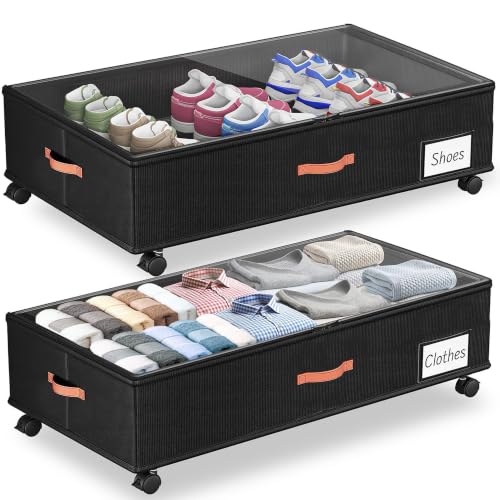
Large Capacity Construction: Engineered with 600D PU-coated fabric and reinforced metal frame, 30% stronger than standard mesh organizers. Two removable partition panels let you create compartments for clothes, shoes, books, or toys, getting the most storage space in the least space without compromising stability and durability
Declutter Ruthlessly to Free Up Space
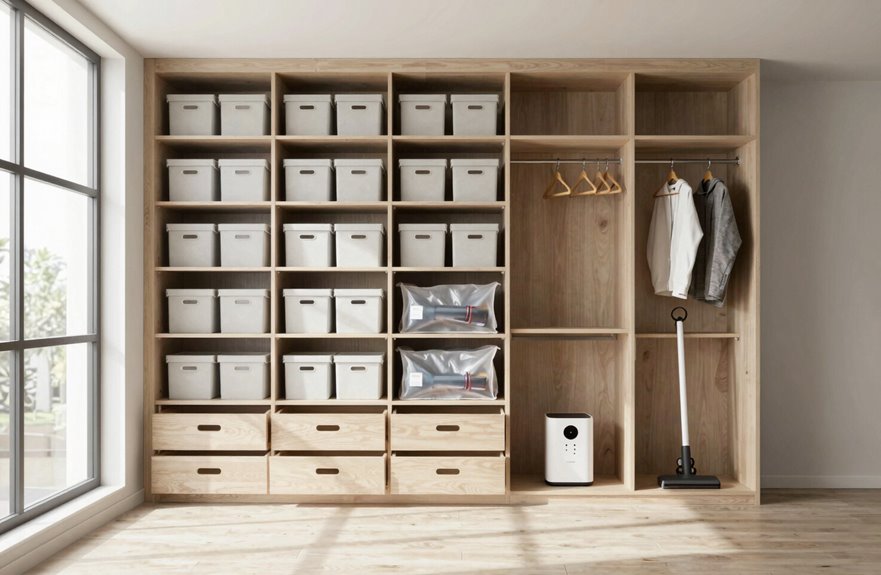
I always start by dumping everything onto my bed. Yes, it looks chaotic, but sorting before storing forces me to face what I actually own, what I’ve forgotten, and what’s just taking up precious drawer space. I’ve learned to embrace a minimalist mindset not by living with bare walls, but by asking myself whether each item earns its keep through daily use or genuine joy; everything else gets donated, sold, or recycled. To keep my bedroom from creeping back into chaos, I schedule quick monthly purges, usually while listening to a podcast, so clutter never gets a chance to settle in again.
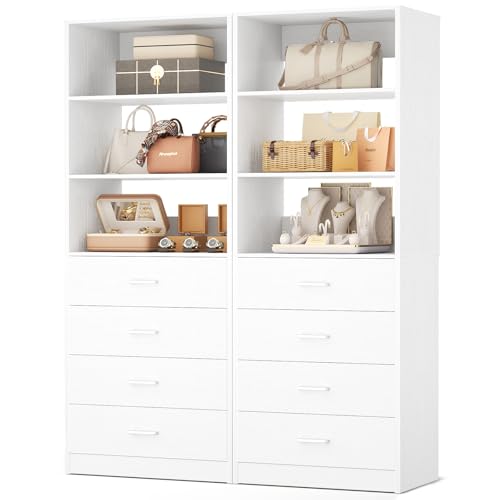
【Wood Closet System with 4 Drawers】 With 4 wooden drawers which are durable, unlike other’s fabric drawers that are easily damaged and difficult to clean.Perfect for stashing your personal belongings, underwear or socks.The drawers can also stack some T-shirts. The metal drawer handles are more exquisite. The drawers are easy to open with smooth sliders.

Simply Modern, Seamless Fit: The CUSTOS Collection pairs crisp right‑angled lines with handy open storage to create a minimalist look that fits easily into your home. Complete your space with matching storage furniture for a cohesive look

4-SPACIOUS PUSH TO OPEN DRAWERS: Tuck away craft supplies, clothing, and more in this closet organizer for a tidy appearance - each drawer holds up to 15 lbs. when installed per manufacturer's instructions with weight evenly distributed
Sort Before Storing
Clutter has a sneaky way of masquerading as “just stuff I might need,” when really it’s the thing eating our drawer space before we’ve even bought a single storage bin. Buying containers before decluttering just hides the problem, not solves it.
My method: I pull everything out, sort ruthlessly, and ask whether each item deserves a designated home. If it doesn’t, I donate, sell, or relocate it immediately. Only then do I choose storage solutions that actually fit what remains.
I give every keeper a specific spot: socks in the top left drawer, journals on the nightstand shelf. When something lacks a home, that’s my signal to let it go. I reassess monthly, because clutter creeps back when I’m not looking.
Embrace Minimalist Mindset
Once you’ve sorted through the obvious candidates for donation, the real work begins: deciding what actually earns its place in your bedroom.
I embrace minimalism because I’ve felt the difference between waking up surrounded by chaos versus calm. Decluttering ruthlessly means choosing space over stuff, actually letting go rather than just shuffling things around. I donate what I haven’t touched in a year, sell what holds value, and experience the mental weight lift.
My hard rule: every item needs a permanent home. Surfaces stay clear, period. I tackle one drawer, one shelf at a time, expanding storage optimization only when I’ve honestly assessed what’s essential. This isn’t about emptiness; it’s about keeping what serves rest, clarity, and the life I’m actually living.
Maintain Regular Purges
Why does clutter creep back in even after our best efforts? Without regular purges, stuff simply accumulates. It’s inevitable, not a personal failing.
I declutter ruthlessly every season, removing unnecessary items first because space versus stuff is a daily choice. I tackle one area at a time: my nightstand this weekend, my closet next. Systematic progress prevents overwhelm and keeps me consistent.
I reassess regularly, ensuring only essentials remain and each item has a designated home. Storage optimization matters here. I use labeled bins and baskets so everything stays visible and accessible.
Items I no longer need get donated or sold. This benefits others and reinforces my stress-reducing approach. Regular purges maintain bedrooms that function better and feel more spacious.
Give Every Kept Item a Permanent Home
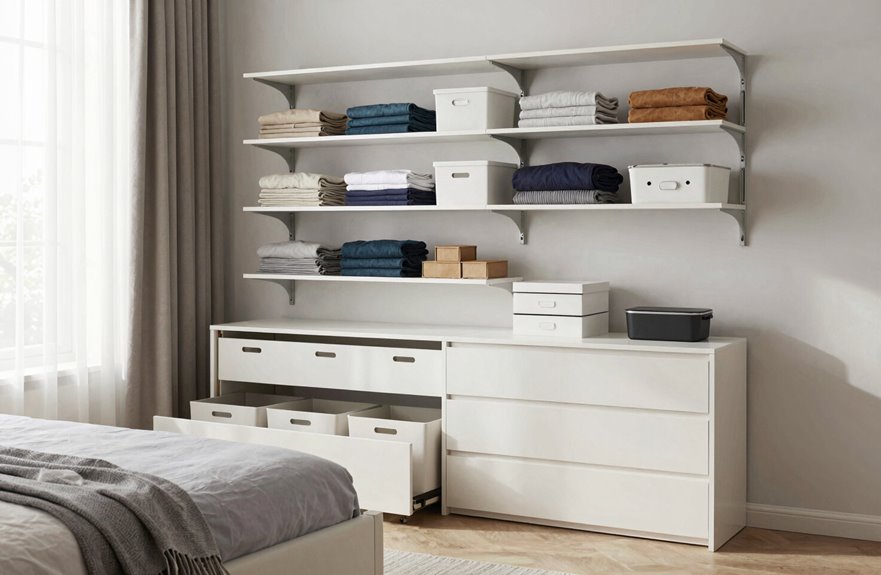
Where does your phone charger end up by Tuesday afternoon? Mine used to vanish into the void, along with my patience.
Everything needs permanent homes, not temporary landing zones. Start by decluttering ruthlessly. If you haven’t touched it in months, it’s not earning its keep. Then assign designated spots based on how you actually live. I keep my charger on the nightstand, my workout gear in a basket by the door, and my keys in a dish I can reach blindfolded.
Closet systems help here: shelves for folded items, rods at varied heights, drawers for the small stuff. I reassess quarterly because drift happens. When every item has a place, returning things becomes automatic. You won’t hunt for clean socks at 6 AM when you know exactly where they are.
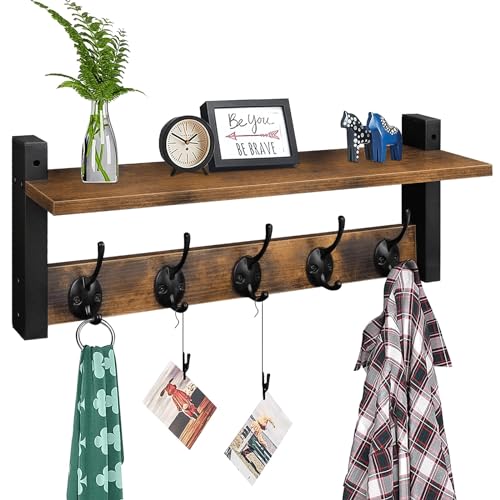
MATCHE THE AESTHETIC: Rustic brown wood surface for an old-time classic look, rigid black iron for industrial chic style, they now come together on this shelf with hooks to bring a elegant style to your home and go along with your theme in entryway, hallway, bathroom or bedroom

Strong Adhesive: With the ultra-high-viscosity sticky pad, the bathroom towel hook can hold up to 6kg without falling

STURDY DOOR HOOKS The door holder is made of alloy and carbon steel, durable and rust resistant and can hold up to 44 lbs. Great as coat hook, wreath door hanger, towel hook, hat hook, closet hook, cubicle hook, shower organizer, hat organizer, bathroom accessories and more.
Keep Surfaces Clear for Visual Calm
How quickly does a clear nightstand become a graveyard for receipts, hair ties, and that book I’ll definitely finish next week? Surface decluttering isn’t about perfection. It’s about creating breathing room.
Here’s my rhythm for keeping spaces calm:
- I scan surfaces each evening, returning strays to their designated storage.
- I limit myself to three items: a lamp, one photo, maybe a candle.
- I catch myself before the impulse dump, asking where this really belongs.
- I treat clear counters as a visual cue, resetting them each morning.
This clutter control routine takes two minutes, and the payoff lasts all day. When my surfaces breathe, so do I.

Perfect Fit for Small Spaces: Designed with a narrow 11.8" width, this Lazzanato bedside table slides easily into small bedrooms, apartment corners, or next to a sofa, maximizing every inch without crowding your room
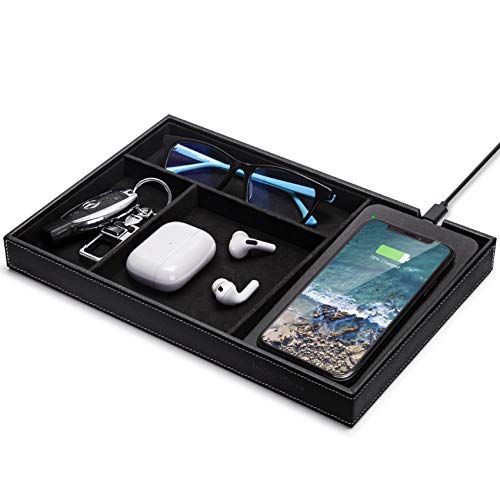
★ Functional Nightstand Organizer -Mens valet tray designed with 4 different sizes compartments for wallet, key, phone ,money , mens/womens jewelry and other accessories. Built in a detachable wireless charging pad,just place your phone on the wireless charger for charging, no more need to plug and unplug. Portable and easy to carry

Lamp Table Combo: This end table with lamp offers a practical 2-in-1 solution, featuring a roomy desktop to hold phones and daily essentials. With a simple click, switch between warm, natural, and cool light tones to match your activity—whether reading, working, or relaxing. The wooden drawer keeps items neatly stored, helping you maintain a clean and organized space effortlessly
Upgrade Your Nightstand With Hidden Storage and Charging
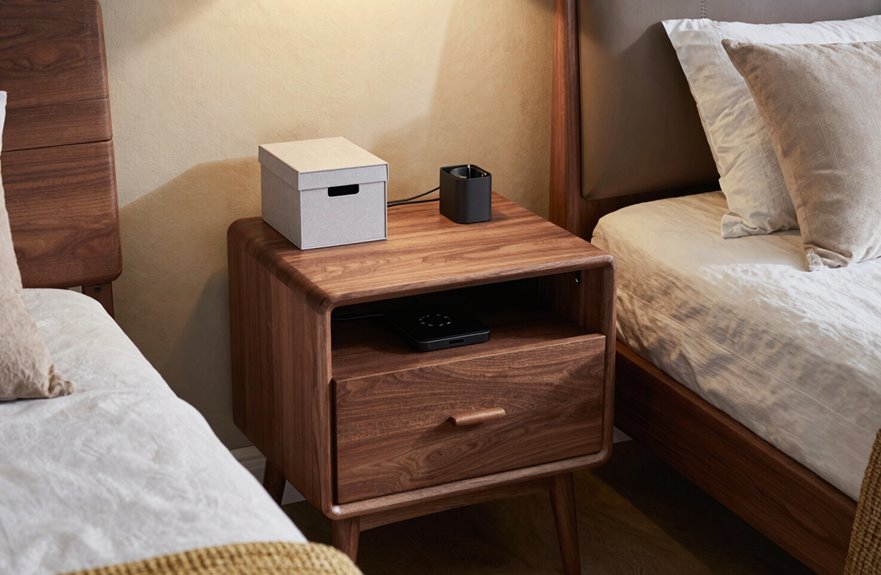
I swapped my old nightstand for one with a deep, hidden drawer, and suddenly my chargers, glasses, and that half-read novel weren’t staging a daily coup on my tabletop anymore. I also drilled a small hole through the back, threaded a charging strip through it, and now my phone, Kindle, and AirPods power up overnight without a single cord visible. It’s one of those upgrades that costs very little while delivering outsized practical benefits. Your furniture can do more than you realize.


CUT THE CLUTTER - If you’re looking to maximize your closet storage, then our slim, compact, under bed storage bags are just what you need to take your home organization a notch higher!

Versatile Dividers: Yecaye under bed storage containers comes with 2 adjustable dividers that let you organize items of varying sizes effortlessly. Whether it’s winter boots or seasonal clothes, configure the compartments to fit your exact needs. Our underbed storage ensures every inch of space is utilized efficiently, transforming chaos into an artful organization
Hidden Drawer Solutions
Why does your nightstand drawer always feel like a graveyard for tangled cords and mystery items? Nightstand organization transforms chaos into calm.
Here’s my nightstand organization breakthrough:
- Install a charging strip at the back to centralize power and banish visible cords.
- Add drawer dividers with small bins creating designated homes for electronics, chargers, and bedside essentials.
- Choose furniture with multiple drawers to keep glasses, books, and daily items out of sight but within reach.
- Reassess contents monthly to clear clutter and maintain accessible spaces for what you actually use.
These simple shifts create an organized drawer space. No more midnight rummaging, no more cord clutter; just drawers that function efficiently for your daily needs.
Built-In Charging Stations
Between the tangled mess of cords on my nightstand and the constant hunt for an available outlet, I found a solution through a built-in charging station. I installed a charging strip at the back of my nightstand, and now my phone, Kindle, AirPods, and Fitbit power up simultaneously.
To replicate this setup: I drilled a discreet back hole for cables, threading everything through so only my devices peek out. This built-in charging station keeps my essentials organized, within arm’s reach, and completely clutter-free.
Cord management is simple. Position your charging setup near the bed for accessibility without the visible mess. The process requires no fancy tools and takes about an hour to complete. Your nightstand will have four devices charging at once with zero visible cords.
Reclaim Floor Space With Under-Bed and Ottoman Storage
The floor space in my bedroom used to be a graveyard of storage bins and random clutter, until I finally looked under my bed and wondered why I was letting all that square footage go to waste. You’ve probably been there too, tripping over stuff that should’ve been tucked away.
Here’s how I reclaimed my space:
Here’s how I reclaimed my space—from cluttered chaos to organized calm, one under-bed drawer at a time.
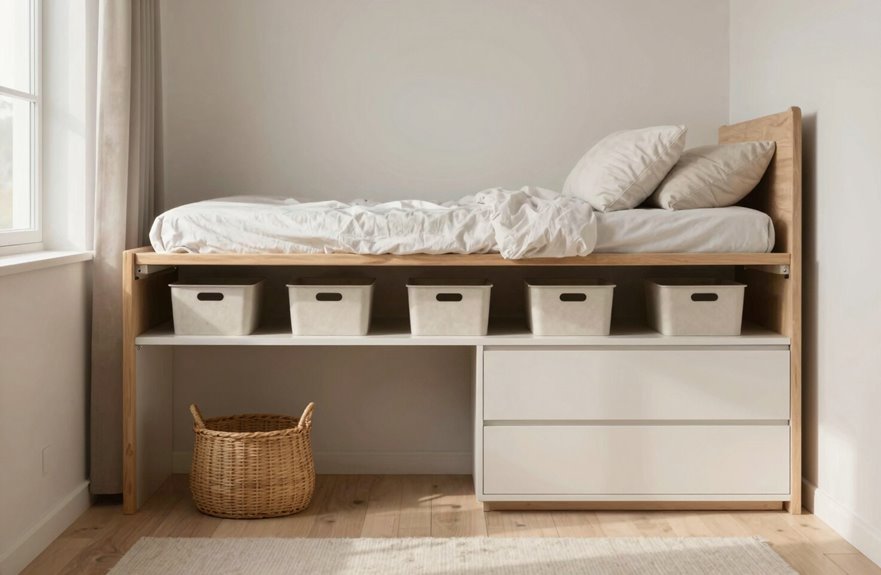
- I swapped my basic frame for under-bed storage with built-in drawers. This works particularly well for winter coats.
- I measured carefully and chose shallow containers; I still need clearance to actually breathe down there.
- I added storage benches and ottomans at my footboard for blankets and a spot to tie my shoes.
- I grabbed stackable boxes I could actually pull out without straining my back.
I made sure everything fit my room’s flow. Storage you can’t walk around defeats the purpose.

【Maximize Vertical Space with 4FT Closet System】This 80" tall small closet system features 4 rods & 2 shelf towers. Store 150+ items: place boxes on top, hang coats/dresses up high, pants/shirts below. Our closet organizer system maximizes closet storage while keeping floors clear
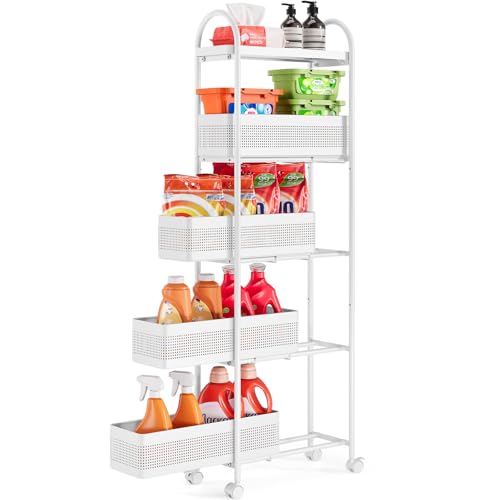
【Slim & Space-Saving Design】The slim storage cart measures 7.4"D x 15.7"W x 44.8"H, fitting seamlessly into narrow spaces in kitchens, bathrooms, laundry rooms or offices. Maximize your storage potential in otherwise unused corners with this versatile rolling cart.

【8-21FT+ ULTIMATE MODULAR SYSTEM & U-SHAPE DESIGN】 Achieve your dream dressing room with our 4-piece mega closet organizer system. The high-performance 22"-39.4" extension rods allow you to bridge all four units into an I-shape, L-shape, or U-shape layout to match your room’s architecture. Spanning over 94.8"-252.4"(approx 8FT to 21FT), this heavy duty closet system effectively replaces expensive custom cabinetry, maximizing every inch of your space with a professional, high-capacity walk-in closet organizer solution.
Use Wall Shelves and Hooks for Vertical Storage
Where else could I possibly put my growing collection of books and that stack of hats I’d been meaning to organize? I found my answer in vertical storage: wall shelves and wall hooks that transform empty walls into functional, beautiful space.
I started with floating wall shelves above my nightstand, creating display room for books, plants, and small treasures while keeping my floor completely clear. For heavier items, I made sure to anchor into studs since proper installation prevents accidents and damage.
Then I added wall hooks inside my closet door and along an empty bedroom wall. My purses, robes, and hats now had dedicated spots instead of sitting in piles. I paired my shelves with labeled baskets for small items, keeping everything accessible and organized.
This approach combines practicality with personalization. Your walls display what matters to you while maintaining order and visual clarity.

NOT APPLICABLE SURFACES :Painted wall, limestone wall, wall paper or uneven surfaces.

Large Hooks for Hanging Heavy Duty: These strong self adhesive hooks measure 2.7 x 2.7 x 2in and support over 26lb. Designed to meet all your household hanging needs, these wall hooks help create joy in every organized space of your home.

【 MATERIAL 】: Wall hooks are made of high quality zinc die-casting material, heavy duty wall hooks can hold up to 40 pounds without deformation or breakage, the surface of the wardrobe hooks is treated with electroplating process, which can prevent rust and keep it beautiful and wear-resistant
Maximize Closet Space With Adjustable Systems
My closet used to be a black hole of tangled hangers and shoes I forgot I owned. Adjustable closet systems solved this problem for me, and they can for you too.
Here’s how I transformed my chaos:
- I installed an extra hanging rod, doubling my vertical storage instantly
- I added modular components: shelves, drawers, and shoe racks that shift with my seasons
- I chose EasyClosets-style systems to maximize space in my cramped, non-walk-in closet
- I staggered shelves at different heights, so even my nephew can now grab his own jacket
These flexible solutions grow with you. No drilling into walls you don’t own, no commitments you can’t keep. You’ll find clean lines, reachable clothes, and the practical benefit of knowing exactly where your brown belt lives.

Designed for Small Space: Whether there is a place in your house that can not place a regular size table, but shame to leave it alone? Check out LOAKEKEL 15.75L×7.87W×23.22H inch narrow end table, your recliners, sofas, and beds with tight spaces will be fully put in to use. The top and middle shelf of the side table are crafted from FSC-certified wood panels

★ Functional Nightstand Organizer -Mens valet tray designed with 4 different sizes compartments for wallet, key, phone ,money , mens/womens jewelry and other accessories. Built in a detachable wireless charging pad,just place your phone on the wireless charger for charging, no more need to plug and unplug. Portable and easy to carry

Integrated Charging Hub Design: Built-in power station with 1 USB-A, 1 USB-C & 2 AC outlets plus a 4.9ft long cord that tucks neatly behind beds. Charge cell phones, alarm clocks and e-readers without messy extra wall adapters inside bedroom, dorm or apartment spaces
Add Portable Storage for Rented or Small Rooms
I once crammed my entire apartment into a hatchback when my lease ended abruptly, so I know the panic of bulky furniture that won’t budge. Rolling carts became my solution: they glide from closet to desk to bathroom, corral skincare and snacks alike, and collapse flat when it’s time to move. Pair that with vacuum-sealed bags under the bed and a slim, ladder-style shelf you can reposition in minutes, and you’ve got a functional system that moves when you do.

Your voices are the sole measure of our product quality

MAXIMIZES STORAGE SPACE: These bags are ideal for under-bed storage, making use of hard-to-reach areas. They hold an impressive volume of items, such as seasonal clothing, blankets, shoes, and even outdoor cushions, while saving significant space compared to bulky plastic bins

Dimensions - 30.75 x 17 x 6.5 inches (with wheels)
Rolling Cart Benefits
A rolling cart can be a renter’s practical asset when you’re stuck with a bedroom that has zero built-in storage and a landlord who frowns on wall-mounted shelves. This storage solution has proven reliable through multiple apartments and various living situations.
Here’s why this storage option works well for bedroom organization:
- Portability — Roll it between rooms, tuck it into corners, reclaim your space instantly
- Vertical tiers — Two or three levels multiply your storage without eating floor space
- Flexibility — Reposition it as a temporary desk, nightstand, or folding station
- Closet backup — Stash shoes, sweaters, accessories when your wardrobe runs out of room
When selecting a rolling cart, prioritize locking wheels, sturdy materials, and modular bins. These features ensure durability and long-term functionality.
Under-Bed Solutions
Where does your bedroom hide its most overlooked storage real estate? The answer is right beneath you, literally. Under-bed storage transforms that dusty void into prime territory for seasonal sweaters, extra linens, or those books you’ll definitely read someday.
I use shallow bins to keep bed clearance comfortable, and storage beds with built-in drawers eliminate the hunt entirely. For rented apartments, soft-sided fabric bins slide into narrow gaps without scratching floors. Landlords appreciate that.
My actual system relies on labeled containers. Clear ones let me spot my winter coat instantly, while handwritten tags prevent the panic of opening everything. I rotate items quarterly, checking what I’ve actually used. This prevents forgotten gifts or duplicate purchases from accumulating in the shadows.
That awkward space now functions more efficiently than my closet.
Vertical Storage Options
Once you’ve claimed every inch beneath the bed, it’s time to look up. Vertical storage transforms cramped walls into your secret weapon. I’ve learned this the hard way in three studio apartments.
Here’s how I maximize every foot of height:
- Install wall-mounted shelves above doorways and desks for books, baskets, and that plant collection you’re pretending to keep alive.
- Add a double-rail closet system to instantly double hanging space. Shirts go up top, pants below, with zero construction required.
- Roll in portable solutions: slim carts beside the bed, storage ottomans that follow you between rooms.
- Stack narrow organizers, over-door racks, and modular bins that reconfigure when your lease ends.
Your rental isn’t permanent, but your storage strategy will remain effective across multiple moves.
Reset Your Bedroom in 5 Minutes Each Evening
Why let the day’s chaos follow you into tomorrow? I reset my bedroom each evening in five minutes flat, and it’s transformed how I sleep.
I start with a quick declutter: nightstands, dressers, any surface that’s collected life’s debris. Everything returns to its designated homes. Phone goes to charger, book to shelf, that rogue sock to the laundry basket. No exceptions.
Next, I straighten. Pillows get fluffed, baskets close, stray items find their preassigned spots. Sometimes I’ll check one storage area, like a nightstand drawer, just to keep closet organization from creeping into chaos.
I finish with a visual sweep. Cords tucked, bed neat, surfaces clear. This small ritual signals my brain that the day is complete, the space is secure, and I’m ready for rest. You’ll notice the difference in how you sleep.

Aheaplus Closet System, 8FT Closet Organizer with 4 Wooden Drawers, Wood Closet Organizer System with Tower, Walk-in Closet Organizer Wardrobe Clothes Rack with 4 Hanging Rods, Garment Rack, White

【Wood Closet System with 4 Drawers】 With 4 wooden drawers which are durable, unlike other’s fabric drawers that are easily damaged and difficult to clean.Perfect for stashing your personal belongings, underwear or socks.The drawers can also stack some T-shirts. The metal drawer handles are more exquisite. The drawers are easy to open with smooth sliders.

2 Hanging Rods & Storage Shelf: Features two sturdy hanging rods ideal for organizing dresses, shirts, jackets, and pants. The adjustable top shelf offers open storage for handbags, bins, or folded sweaters. This closet tower with 2 rods helps maximize vertical space and keep everything tidy.