
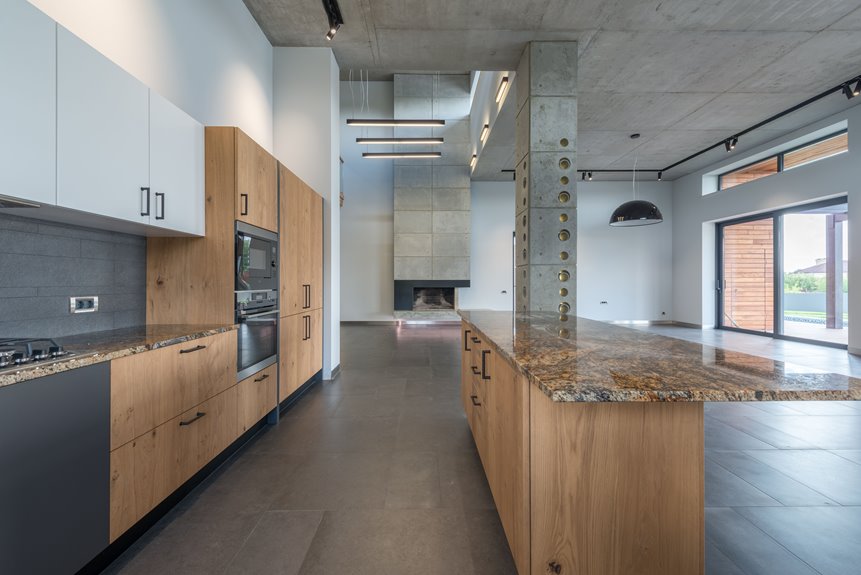
In my kitchen, I’ve worked with every surface worth considering for 2027.
Granite handles my hottest pans without flinching, while quartz shrugs off turmeric and wine without sealing.
Porcelain gives me those seamless ten-foot islands I crave, and marble delivers drama if I’ve got patience for the upkeep.
Soapstone takes heat beautifully and darkens with character.
Butcher block is where I chop, roll dough, and sand away scars every few months with mineral oil massages.
Each material sets a different rhythm for daily life, and I’ll walk you through finding your match.
Granite vs. Quartz: Which Kitchen Island Material Fits Your Cooking Style?
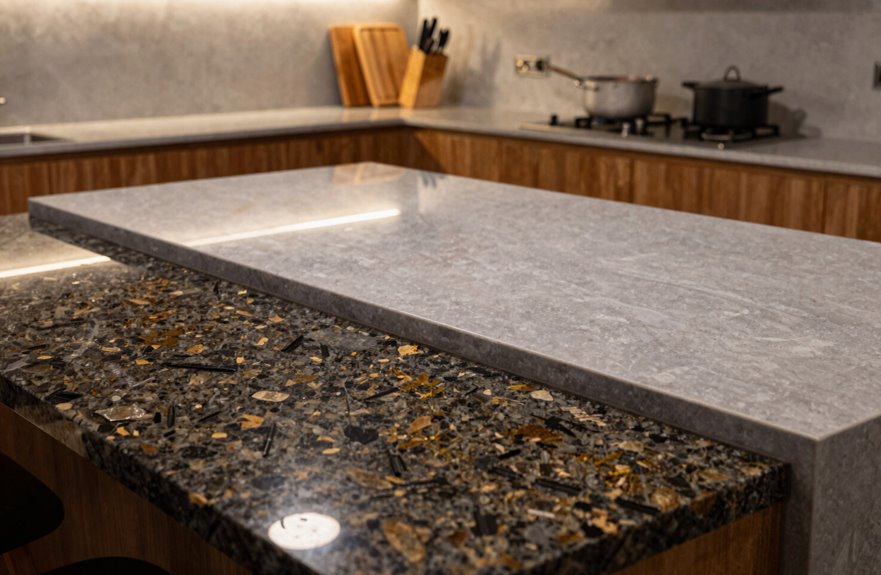
Granite handles my knife slips without scratching, though it’ll dull my blades faster than a cutting board would. Its wild, one-of-a-kind patterns mean no neighbor’s island looks like mine. Quartz provides that calm, consistent backdrop for charcuterie spreads. It’s nonporous, so red wine and coffee stains wipe away easily.
I’m messy, so quartz’s zero-sealing maintenance removes a household chore. Granite’s natural toughness suits chaotic cooking. Neither tolerates neglect with hot pots; granite fluctuates in temperature, quartz cracks. Choose granite if you want a distinctive, durable surface. Choose quartz if you prefer consistency and minimal upkeep.
Granite Kitchen Island Countertops: Natural Stone Heat Resistance
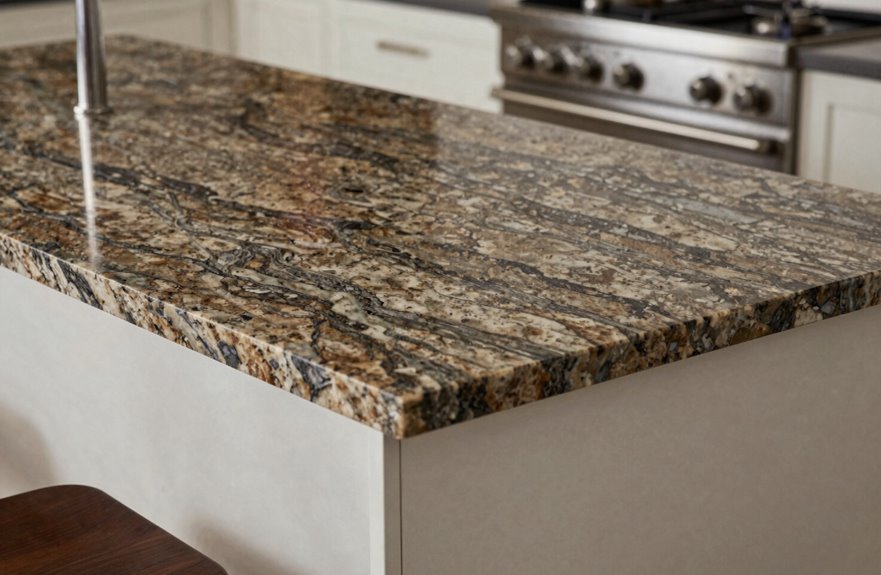
While quartz won me over with its easygoing maintenance, I keep circling back to granite for one thing that happens almost daily in my kitchen: I set down hot pans without thinking.
Granite countertops, born from solidified molten lava, shrug off searing skillets that would scar lesser surfaces. I’ve watched friends flinch, grabbing trivets they don’t need. Not me. This heat resistance isn’t just convenient; it’s liberating.
| Morning Rush | Evening Wind-Down | Weekend Projects |
|---|---|---|
| Coffee pot, straight from the burner | Roasting pan, 425 degrees | Hot glue gun for crafts |
| Toaster oven tray, no pad needed | Cast iron, searing steaks | Candle making, melted wax |
| Curling iron, temporary spot | Pizza stone, fresh from oven | Resin coaster project |
| Slow cooker, transferred hot | Broiler pan, sizzling fish | Wood burning tool rest |
| Waffle iron, lid open | Tea kettle, base down | Soldering iron, quick set |
Granite handles extreme temperatures without cracking, discoloring, or requiring protective pads. That reliability transforms daily kitchen tasks from a series of cautious maneuvers into straightforward actions.
Quartz Island Surfaces: Stain-Proof Engineered Stone
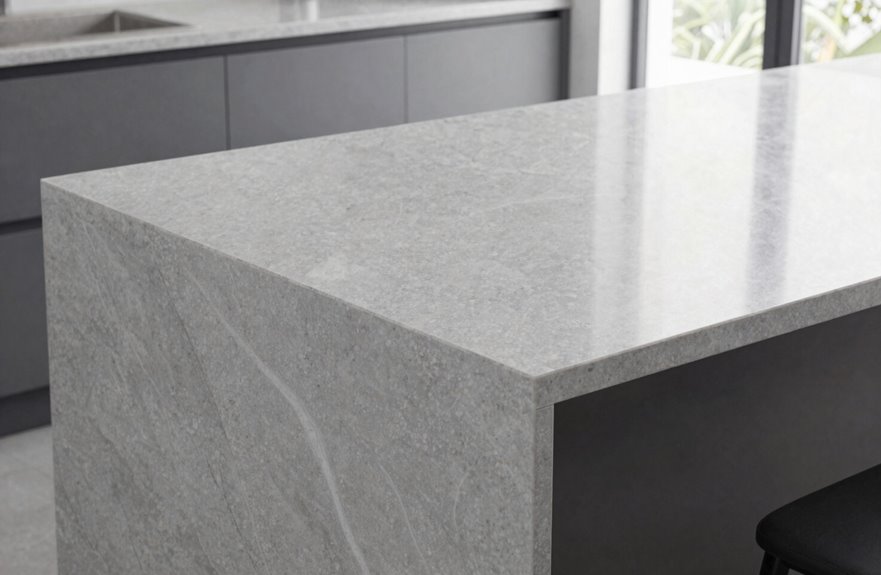
Why do I keep a spray bottle of plain water and a dish cloth within arm’s reach of my island. Because with Quartz, that’s all you need.
This engineered stone has become my quiet workhorse. Crushed Quartz bound with resin creates a nonporous surface where red wine, coffee, and turmeric surrender without a fight. No sealing, no special potions, no panic when the kids help with breakfast.
I’ve learned the hard way: trivets matter. Quartz handles daily life beautifully but hates sudden heat, so I keep boards handy for pots straight from the flame.
The patterns stay consistent and predictable. You’ll spot seams in larger islands, and that south-facing window might soften darker tones over time. But I’ll trade fading for never scrubbing another turmeric stain.
Porcelain Slabs: Seamless Large-Format Islands
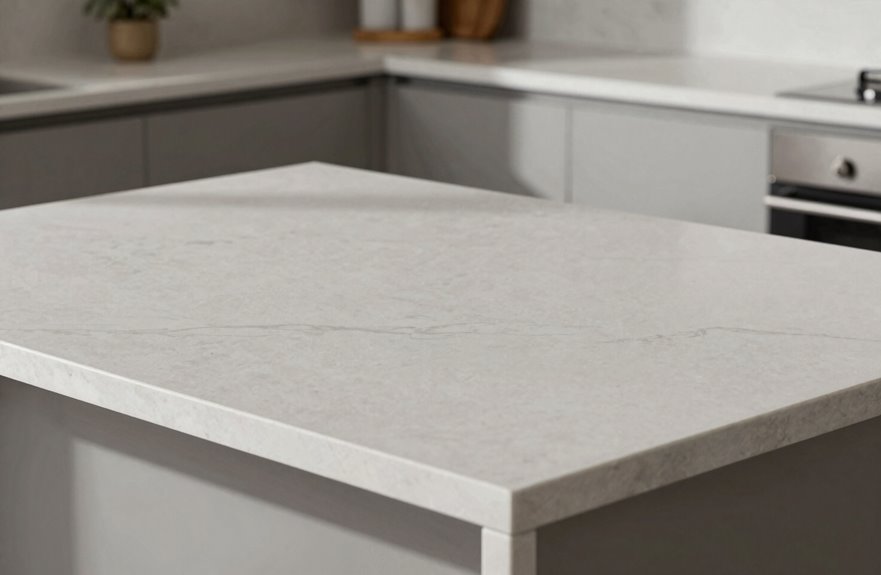
Three things sold me on porcelain: one seam across my ten-foot island, a coffee mug ring that wiped off cold, and watching my contractor drop a tape measure from shoulder height without leaving a mark.
For seamless countertops that actually survive real life, porcelain slabs deliver. I’ve got kids, a sourdough habit, and zero patience for babying surfaces. These large-format pieces stretch up to ten feet, giving that uninterrupted, magazine-spread look we’re all after without the fragility you’d expect.
The veining tricks even my designer friends. Gray wisps, warm greige, deep charcoal; pick your lane. Cleanup means a swipe, no sealing, no panic about red wine. Non-porous means bacteria can’t hide. In 2027, this is how you get luxury without becoming its prisoner.
Marble Island Countertops: Beauty With Maintenance Tradeoffs
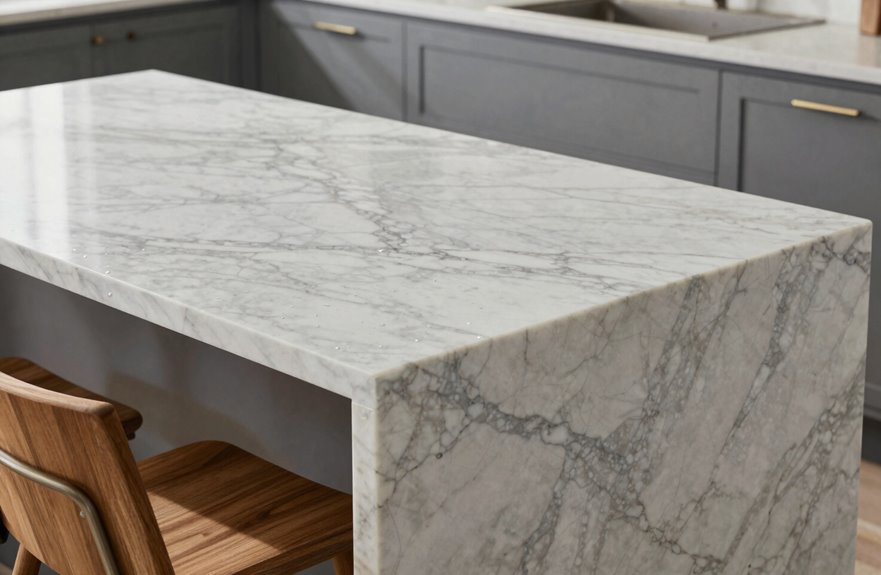
Where do I even start with marble? It’s the countertop equivalent of that friend who’s gorgeous but high-maintenance, and we love them anyway.
Marble countertops bring serious sophistication to your kitchen island. You’ll see those dreamy veining patterns, that glossy luxuriousness, and the way light dances across crystallized limestone formed deep in the earth. You’ll find shades ranging from classic white and cream to unexpected pink, green, or even black with crystal enrichment.
Maintenance isn’t optional. Marble’s porous nature means it stains easily from wine and other liquids. Acidic foods will etch the surface. You’ll need sealing, regular upkeep, and quick action with a cloth when spills occur.
If you’re willing to embrace the patina that develops over time, marble rewards you with unmatched elegance. Understand the commitment required before choosing this material.
Soapstone: Heat-Proof Stone That Patinas Over Time
How do you feel about a countertop that actually gets better looking the more you beat it up? That’s the magic of soapstone.
This heat-proof stone doesn’t flinch when you slam down a screaming hot Dutch oven straight from the oven. It’s non-porous, so red wine spills and citrus splashes won’t damage it. Soapstone develops a patina, a living finish that deepens from soft gray to rich charcoal as years pass.
- Your grandmother’s well-worn leather satchel, darkened at the handle where generations gripped it.
- A farmhouse table whose surface tells stories of Sunday dinners through its gentle wear.
- Sun-bleached driftwood, smoothed and transformed by time and tide.
- Iron cookware, seasoned and cherished, growing more beautiful with every use.
Scratches sand out easily if you want, or stay as character marks. Monthly mineral oil rubs enhance that patina. Professional installation is recommended to properly seal the surface.
Butcher Block Islands: Warm Wood for Prep Zones
I love how a butcher block island instantly brings that natural warmth into a kitchen. There’s something grounding about working on solid maple, birch, or oak while you chop vegetables or roll out dough. The surface is genuinely prep-friendly, forgiving on your knives in ways that stone never will be. This relationship requires commitment. You’ll need to commit to regular mineral oil or beeswax treatments, similar to moisturizing your countertop, and stay vigilant about heat, moisture, and stains. Installation costs roughly $30 to $60 per square foot.
Natural Warmth Appeal
Why settle for cold, impersonal surfaces when your kitchen island could feel like the heart of a farmhouse kitchen? I chose butcher block for my own renovation, and I’ll never forget the first morning I rolled dough on that warm, living surface. Unlike natural stone, wood invites you in.
Picture this:
- Morning light catching maple’s honey tones while coffee brews nearby
- Children doing homework at the island’s welcoming edge
- Dinner prep becoming a gathering, not a chore
- Cherry wood deepening to rich burgundy over years of shared meals
Quarterly oiling maintains the surface. In 2027, brilliant pairings like quartz perimeter with butcher block island combine tradition with practicality. The forgiving surface tolerates spills and knife marks without permanent damage.
Prep-Friendly Surface
The surface beneath your knife matters more than you’d think. I’ve spent years watching home cooks struggle with surfaces that fight back, and butcher block changed everything for me.
Wood countertops give you that rare combination: they’re durable enough for daily use, yet forgiving enough that your blades stay sharp. Hard maple, walnut, oak. Each brings its own character to your kitchen. When I chop vegetables on mine, I feel connected to something timeless.
Scratches aren’t disasters. Sand them out, re-oil, and your island looks fresh again. That resilience means you’re not babying a showpiece; you’re using a tool built for real cooking.
Wood countertops do require maintenance. Mineral oil, regular sealing. These tasks become part of your kitchen rhythm rather than an inconvenient obligation.
Maintenance Essentials
Keeping up with a butcher block island means embracing a simple rhythm, not a chore list that overwhelms. Maintenance becomes second nature once you know the steps, and caring for wood that responds to your touch creates a tactile connection to your kitchen.
Here’s what I do:
- Every few months, I massage food-grade mineral oil into the grain, watching the wood absorb it.
- I sand away the small scars of daily cooking, then re-seal so the surface stays smooth and forgiving.
- Trivets live on my counter now, a small habit that prevents scorch marks.
- Soap, warm water, a soft cloth: that’s my cleaning trio, nothing harsher.
Treat your butcher block well, and it becomes part of your kitchen’s story, not just its surface.