
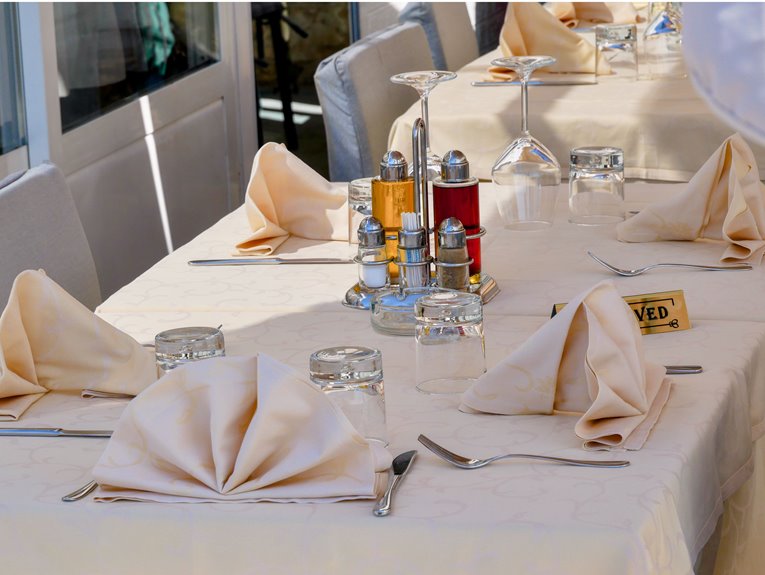
I always start with round shapes: curved plates, circular placemats, glassware with soft edges. I layer outward from a focal point in colors that complement each other, like oak and sky blue with brushed gold accents. One bold centerpiece anchors everything, or I use three candlesticks at varied heights for a more formal presentation. I weave in three to five natural elements, such as a sculptural branch, some wilting eucalyptus, or a bowl of imperfect peaches, because rigid arrangements lack visual interest.
Real candles, brass accents, and hurricane holders provide warmth as daylight fades. I adjust the formality based on season and occasion: breezy pitchers in summer, velvet runners in fall. Each of these techniques requires intentional execution to achieve the desired effect.
Start With Circular Shapes and a Cohesive Palette
Why do so many dining tables feel stiff and unwelcoming? Harsh edges and clashing colors are often the culprits.
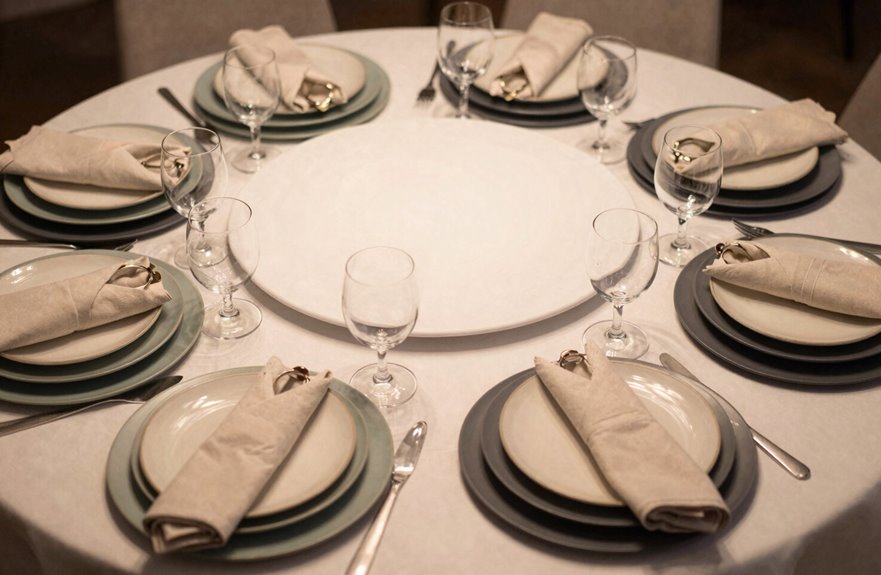
Dining table styling starts with circular shapes. Round placemats, curved plates, and rounded glassware create flow from edge to center. The curves guide everyone inward, toward each other.
Layer these elements in concentric tiers, building outward from a focal point. A cohesive palette ties it together: natural oak, sky blues, brushed gold. Pairing soft earthenware with these tones makes mismatched pieces feel intentional.
Keep centerpieces low and round to preserve sightlines. Conversations flow easier when you’re not craning around obstructions.
Tableware harmony requires welcoming design, not perfection.
Anchor the Center: One Bold Piece or a Curated Trio
Three competing vases and a bowl I grabbed on sale once made my table look like a garage sale, not a gathering place. Dining table decor needs an anchored display, something that welcomes everyone in.
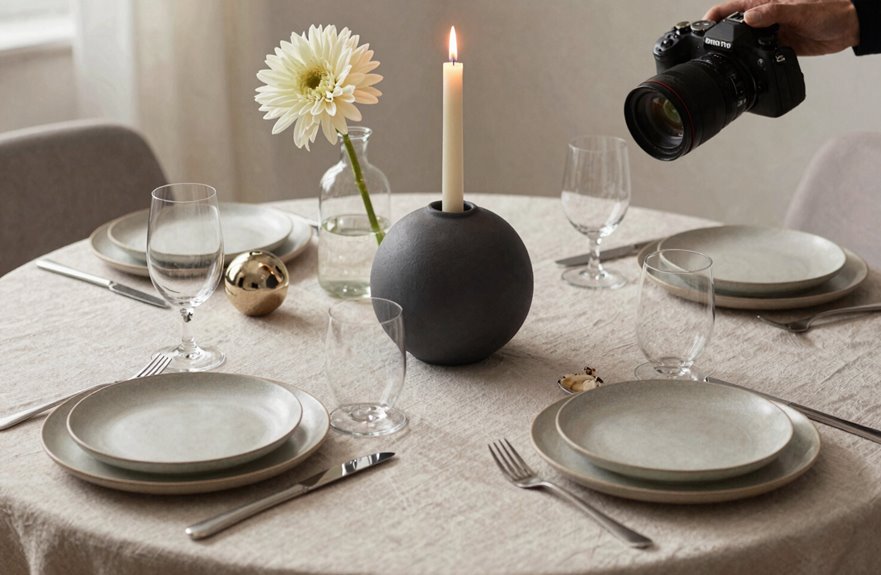
I choose one bold centerpiece, like an oversized ceramic bowl, or a curated trio arrangement. Three matching candlesticks, balanced in height, create a focal point that feels intentional, not accidental. Two pieces work too; they’re relaxed but still deliberate.
For variety, I pair one large piece with two smaller companions. Cohesion matters.
| Approach | Best For | My Go-To |
|---|---|---|
| One bold piece | Small tables, drama | Oversized brass bowl |
| Trio arrangement | Long tables, symmetry | Three white vases |
| Two pieces | Casual gatherings | Bowl + candlestick |
| Mixed sizes | Dynamic interest | Large bowl + two spheres |
Your table becomes a place where people want to linger.
Weave In 3–5 Natural Elements for Life and Texture
What does a dining table need to feel alive? Natural elements, woven deliberately into vignettes that breathe.
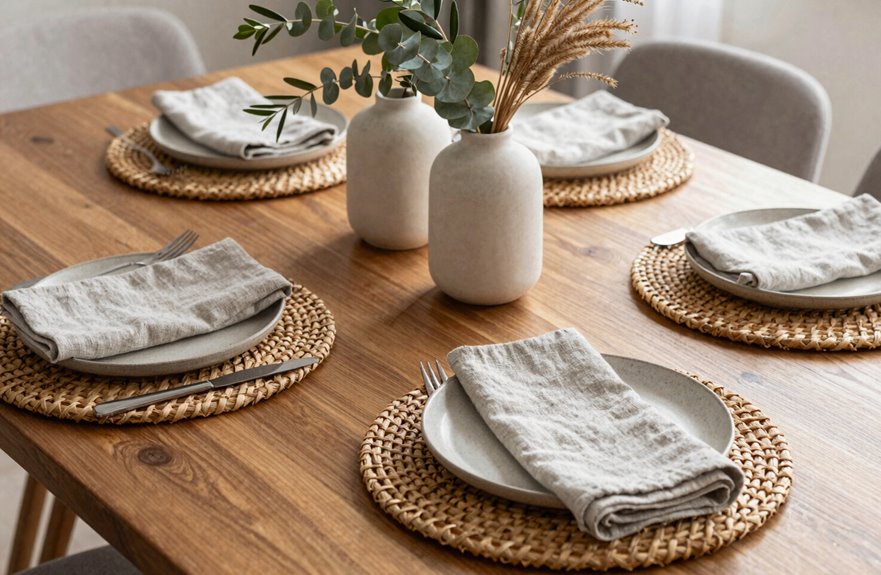
I cluster three to five pieces, never more, to keep balance without chaos. Here’s how I build them:
- Start with greenery as your anchor; nothing grounds a space like unfussy stems or seasonal fruit
- Add height variation by pairing a sculptural branch with low bowls or small vases nearby
- Mix related items in threes, then slip in one unexpected piece for that “I just gathered this” spontaneity
I avoid overthinking. A wilted leaf, an imperfect pear. These keep the moment honest. When your guests glimpse that casual cluster and feel invited to lean in, you’ve created the right balance between edited and effortless.
Layer Candlelight and Soft Metallics for Evening Warmth
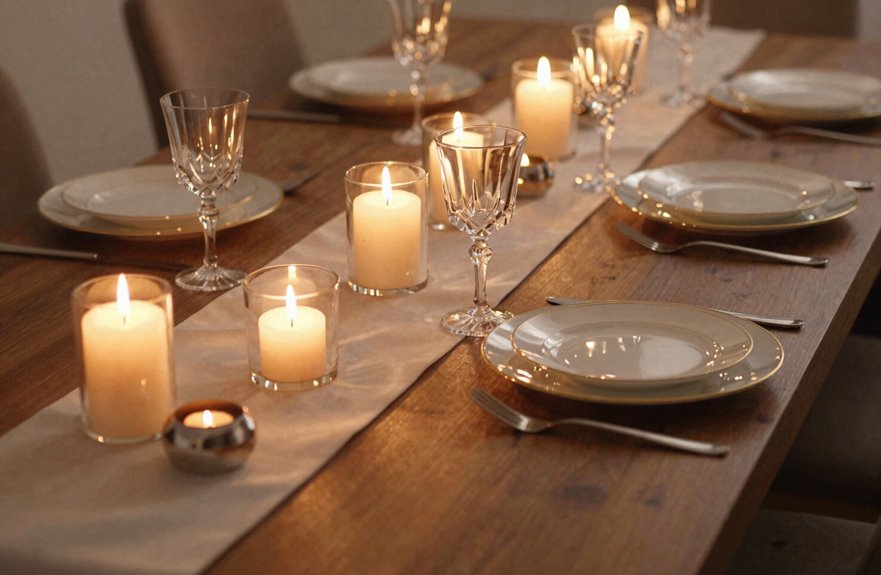
How do you turn a Tuesday dinner into something worth lingering over. I light real candles, never those battery-operated flickers at the dining table, and watch everything soften.
I cluster brass candlesticks, brushed gold cutlery, and curved glassware so metallics catch and multiply the glow. For height without harshness, I slip candles into hurricane holders, then build my centerpiece: one tall statement piece flanked by lower votives. The varying heights keep the eye moving, the ambiance deep and dimensional.
Sometimes I’ll tuck in shell-encrusted candlesticks as movable accents, coastal texture that dances when candlelight hits. The result accomplishes what fussy styling cannot; it creates genuine invitation. Your guests lean in, stay longer, feel held. Candlelight multiplies presence at the table.
Adjust Formality to Your Season and Occasion
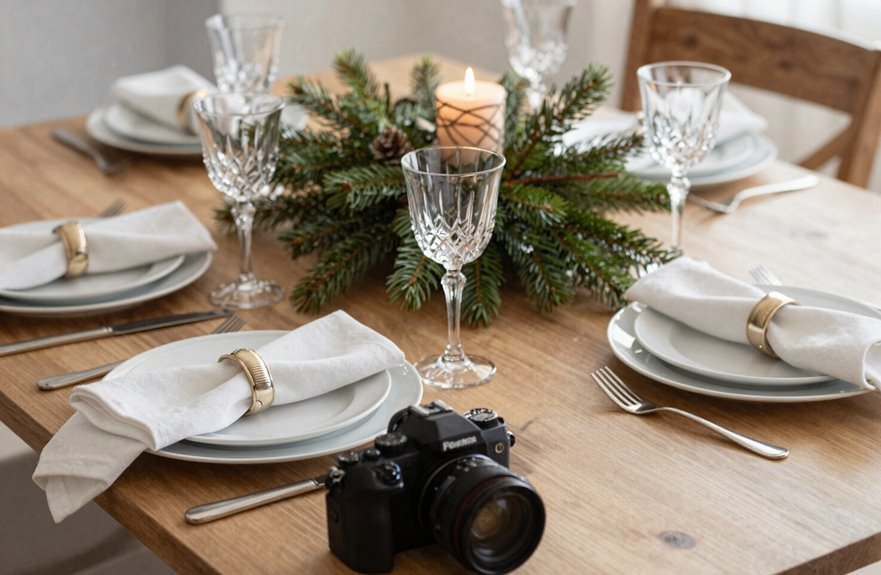
Summer’s casual energy calls for breezy, unfussy tables. I’ll scatter a few stems in a low pitcher, maybe add a bowl of ripe peaches, and move on. When autumn arrives, I reach for velvet runners and taper candles. Seasonality guides every choice I make.
Dining table styling isn’t about rigid rules. It’s reading the room, literally. I adjust formality through intentional centerpieces and vignettes that feel right for the moment:
- For festive gatherings, I build bolder, celebratory centerpieces with layered textures
- For casual nights, I keep vignettes spare, three to five objects max
- For cold evenings indoors, I cluster candles low; outdoors, I embrace weather-worn simplicity
The best hosts make guests feel at home, whatever the occasion.