
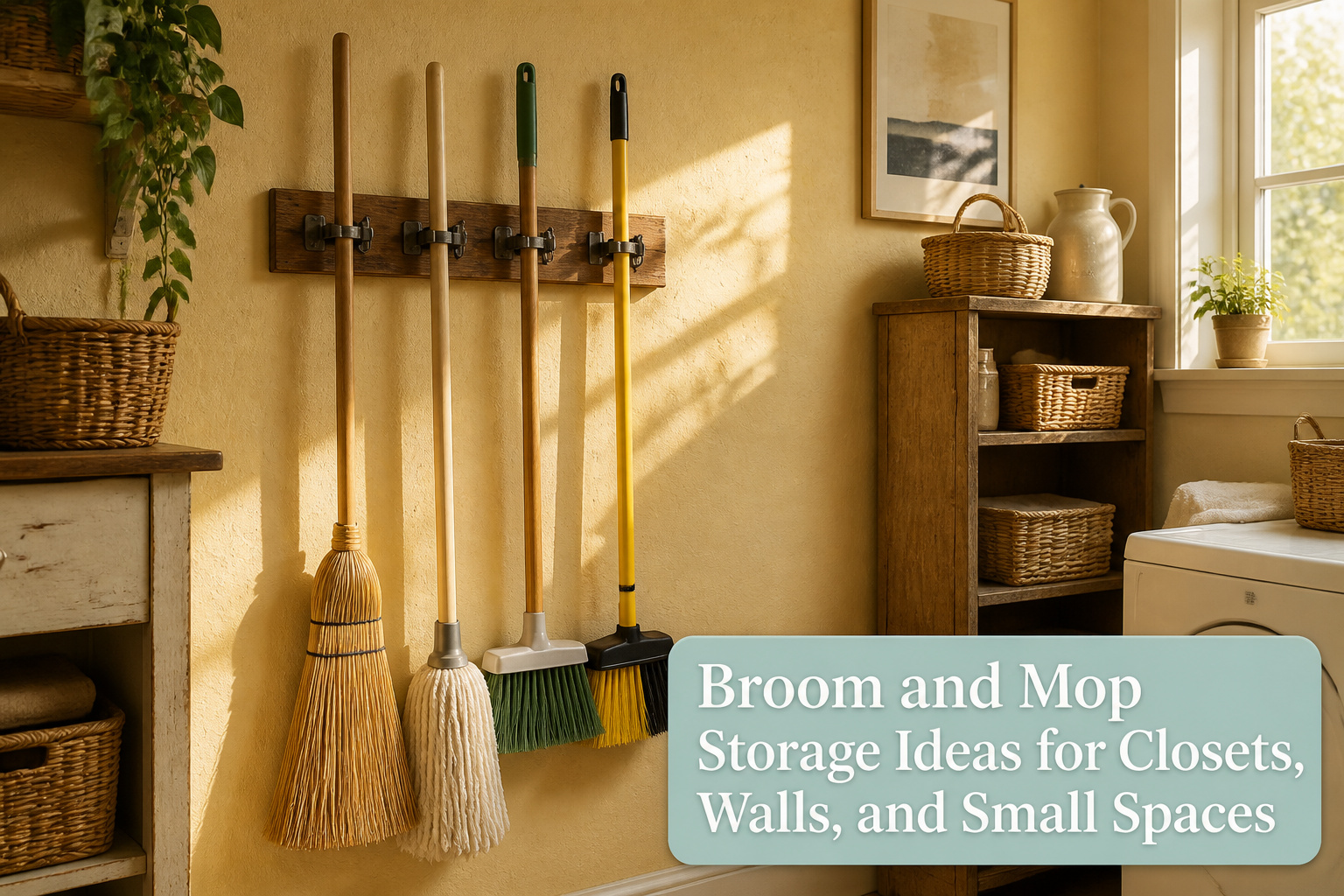
Broom and mop storage works only when the hardware matches the wall behind it. A screw-in hook rated for ten pounds will pull out of standard drywall within a season if it’s carrying a wet mop; the hold depends on biting into a stud, a toggle anchor, or at minimum a plastic anchor sized to the screw. I learned the hook type the hard way after a narrow S-hook let everything swing and bang the door, while a J-hook with a closed eye kept the handle vertical and the brush head off the floor.
Hooks and Zip Ties
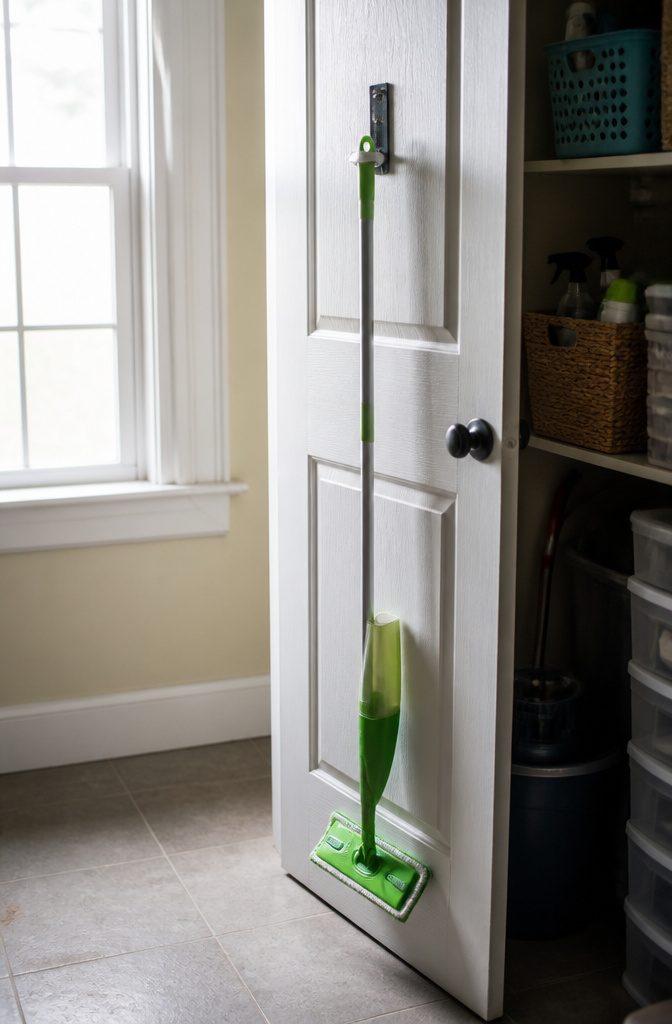
The back of a closet door is dead space until you put a hook on it. A basic utility hook screwed into the stud, or a door-mounted over-hook if you’re renting, will take a broom or a Swiffer-style mop with a hole in the handle. For everything else, a zip tie looped around the shaft creates a hanging point that costs almost nothing and holds up for years.
Drywall is where cheap hooks die. A standard screw-in hook rated for ten pounds will pull out of gypsum within a season if it’s carrying a wet mop. The hold depends on what the hook bites into: a stud, a toggle anchor, or at minimum a plastic anchor sized to the screw. The zip tie itself is the weak link only if you cinch it against a sharp edge; a broad band around the handle, snug but not cutting in, distributes the load and doesn’t slip.
I learned the hook type the hard way. A narrow S-hook looks tidy but lets the tool swing and bang the door. A J-hook with a closed eye, or a shallow bracket, keeps the handle vertical and the brush head off the floor. For the basement stair wall or the narrow slice of pantry between shelves, that’s the difference between storage you use and storage you walk past.
Wall-Mounted Hangers
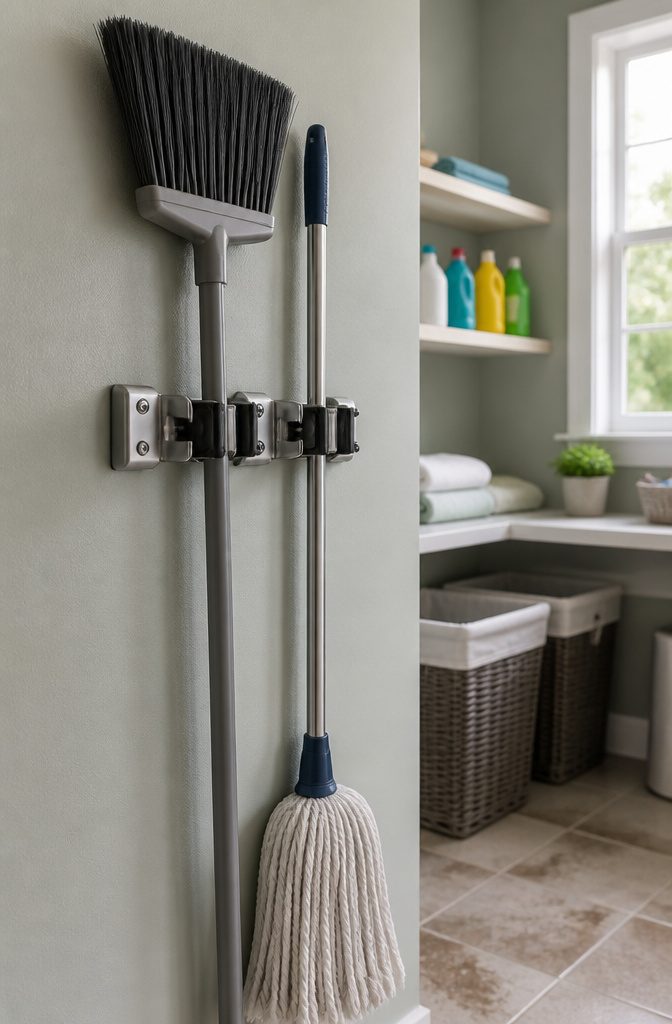
Dedicated wall-mounted hangers grip broom and mop necks more securely than basic hooks, and they install with the same two-screw routine you’d use anywhere. The space savings are immediate: handles sit flat against the wall instead of jutting out, which matters in a narrow laundry corner or behind a door that still needs to swing open.
I tried the Guay Clean Sliding Rail system after seeing it recommended, but the plastic grips loosened within a month on my heavier corn broom. The rail itself stayed mounted fine, but the individual holders stopped holding. I replaced it with a spring-loaded metal clip hanger, the kind with rubber-lined jaws, and that grip has stayed tight through two years of daily use. Metal spring clips outperform plastic slide grips for heavier tools; the upfront cost runs a few dollars more, but buying once beats a second trip to the hardware store.
For renters, the two-screw mounting means patching later, but the footprint is small enough that most landlords won’t flag it. If you own, it’s a ten-minute install that clears floor space you didn’t realize you were losing.
Sliding Wall Organizers
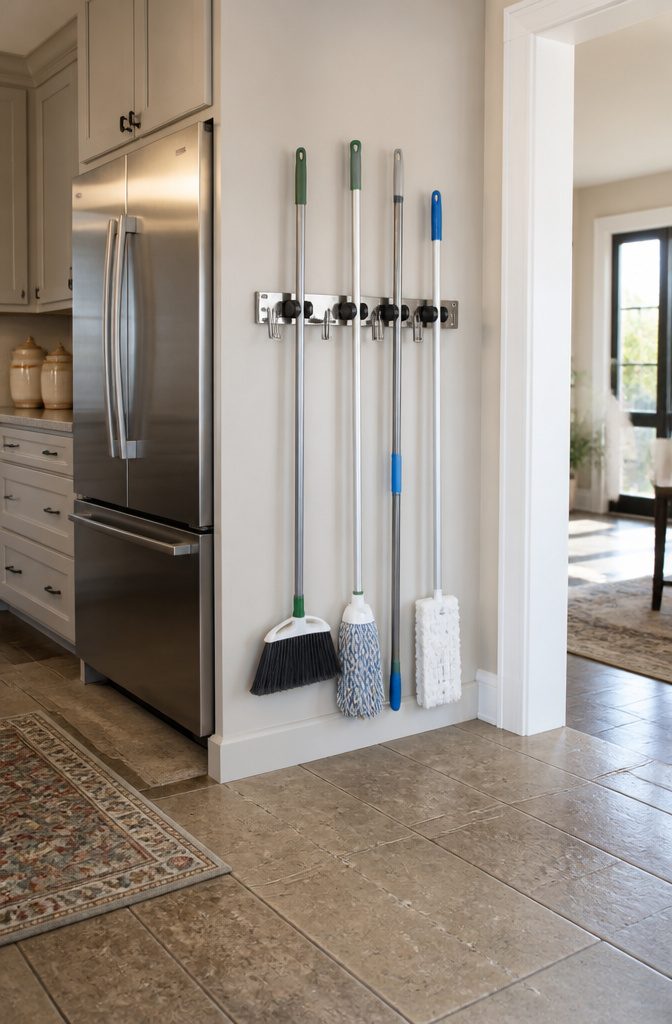
The six-inch gap between my fridge and the wall was technically floor space, but nothing sat there without getting lost or looking like clutter. That’s where I ended up mounting a sliding wall organizer, and the sliding feature mattered more than I expected because pulling the whole unit out to grab a broom beats reaching blindly into a crevice every time.
Mine is the Guay Clean style, a rail-mounted holder that grips broom and Swiffer necks securely. The sources mention this option only once compared to fixed hangers, which seems backwards to me. Fixed mounts win on simplicity, but for renters in kitchens where every inch counts, the sliding rail turns dead space into actual storage without requiring a full free wall.
Installation is the same as any wall-mounted hanger, and it handles the same tools. The difference is you can tuck it away. For narrow spaces between appliances, that single moving part is what makes the solution practical rather than theoretical.
Shoe Organizer Repurposed
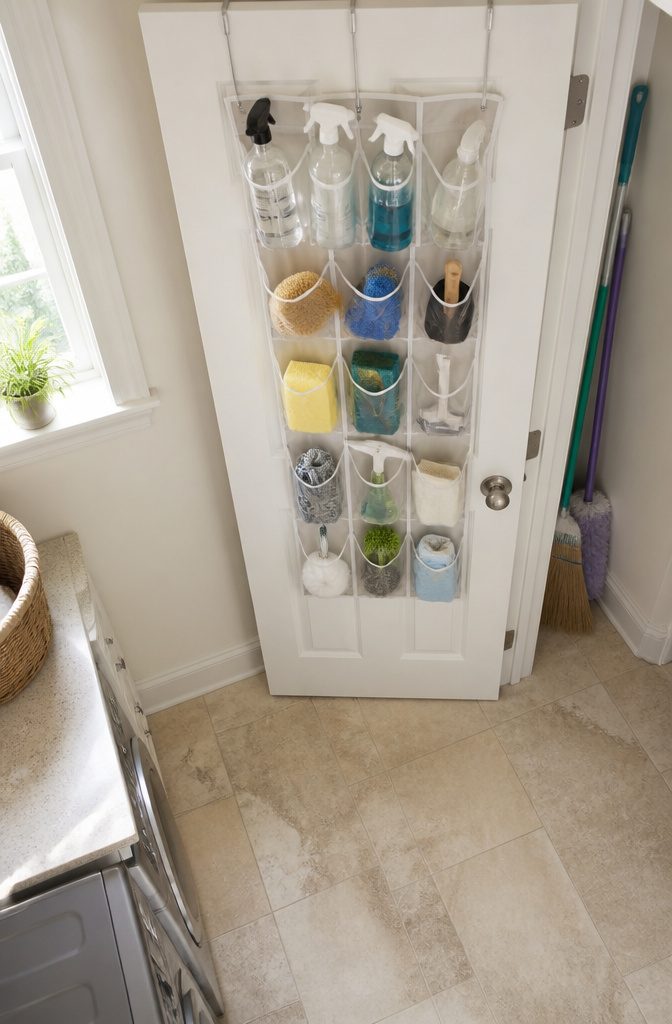
A clear-pocket shoe organizer turned out to be the single best move for corralling the smaller half of my cleaning arsenal. The pockets fit spray bottles, scrub brushes, sponge packs, and those individually wrapped floor wipes I buy in bulk. What did not fit: anything with a long handle. My broom and mop still needed wall hooks, and the Swiffer WetJet base was too thick to slide in without warping the plastic.
I hung mine on the back of the laundry room door with two over-the-door hooks, the kind with the padded bracket so the metal does not chew the trim. The clear plastic meant I could scan the whole inventory in about three seconds, which mattered more than I expected. No more digging past the granite cleaner to find the leather conditioner.
The one limit worth watching is pocket depth. Taller bottles, the 32-ounce refills especially, sat too high and made the whole row bulge. I ended up keeping those on a narrow shelf above the washer and reserving the organizer for anything under about eight inches.
Towel Bar for Spray Bottles
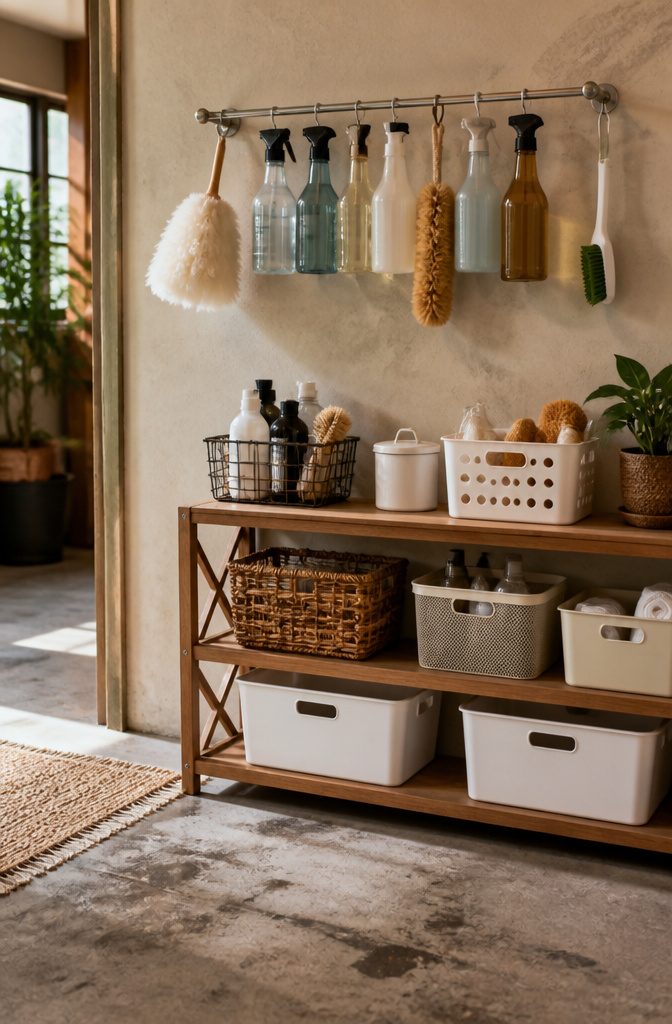
A standard towel bar mounted at eye level turns a blank wall into storage for spray bottles. Hook the trigger handles over the bar and they hang ready, no shelf required. A bar diameter of ¾ inch to 1 inch grips most trigger bottles without letting them swing or slide; anything narrower and the bottles can pivot, anything thicker and the trigger loop won’t clear.
S-hooks added to the same bar pull in dusters and handheld brooms, so the whole cleaning kit lives in one vertical column. The bar works inside a closet where depth is tight, or on the back of a door if the frame allows clearance. In my own reading, the towel bar came up again and again because it costs less than most dedicated organizers and uses hardware renters already know how to install.
Cleaning Caddy
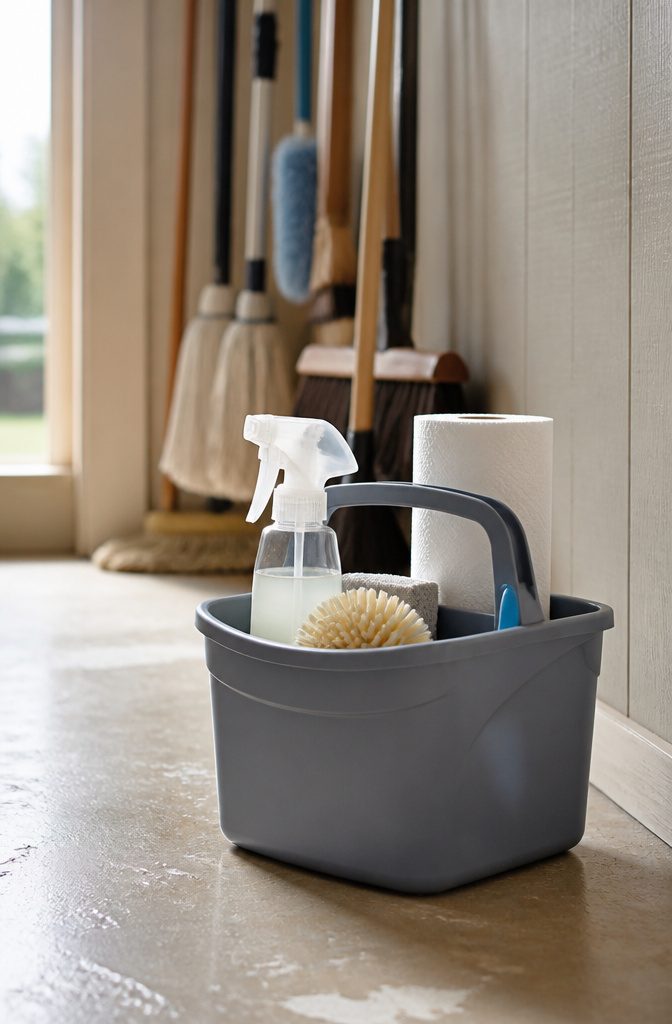
A portable cleaning caddy lives on the floor of my utility closet, not on the wall. The distinction matters: anything with a handle stays mobile, and anything that sprays or squeezes stays put. In mine there is a spray bottle of all-purpose cleaner, a scrub brush, a squeegee for the shower doors, and a roll of paper towels. The broom and the mop hang on hooks behind the door where they can dry without touching anything else.
What stays on the wall is the hardware of cleaning. The dustpan clips to a nail. The microfiber dusters hang from S-hooks on a towel bar. Those do not travel room to room; they wait for whole-house days.
The caddy itself is worth choosing with some care. I kept a cheap plastic one until last January, when the garage closet dropped below freezing and the bottom cracked clean across. Brittle plastic and cold weather do not mix. A caddy with some flex in the material will survive a winter in an unheated mudroom or a garage closet far better than the rigid kind.
What I Skip and Why
Freestanding broom racks look tidy in product photos, but the narrow base on most models makes them a tipping hazard the second you lean a mop at the wrong angle. I stopped using one after finding it sprawled across the laundry room floor every few weeks, and the floor space it ate up never felt justified by four or five tools.
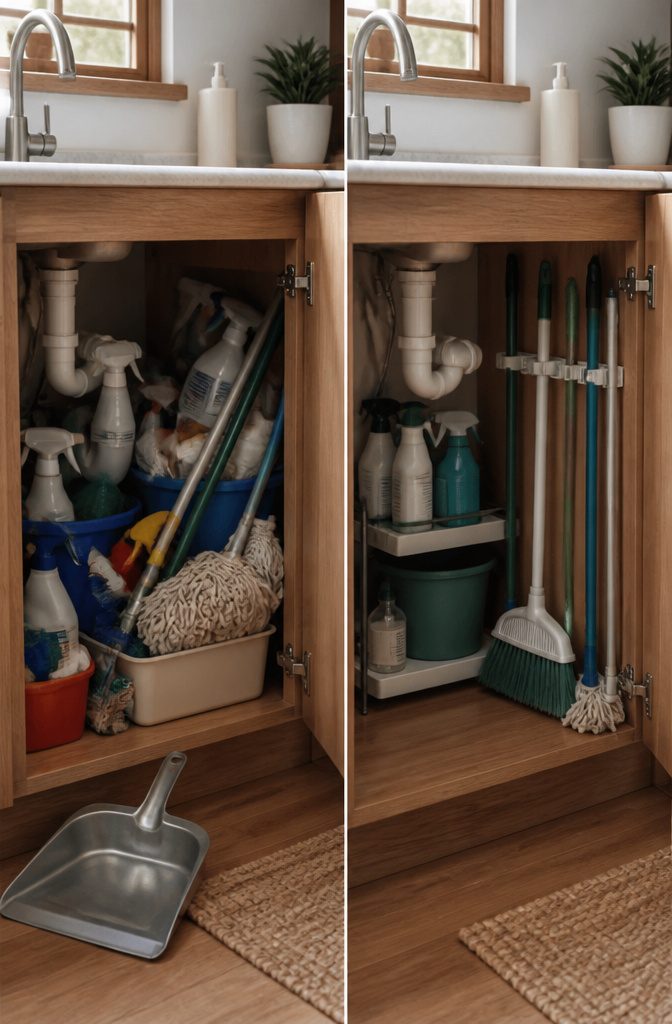
Under-sink cabinets get suggested constantly for broom mop storage ideas, yet the plumbing stack kills half the usable width and the low ceiling leaves long handles slanted and wedged. What reads as "hidden storage" usually turns into a dark game of Jenga where the dustpan stays lost behind bottles.
Over-door organizers with wire baskets fare worse than you’d expect. The metal hooks slip on modern hollow-core doors, and every time the door swings the hardware rattles against the veneer. In a small apartment, that clatter carries. The noise alone was enough to pull ours off within a week.
Frequently Asked Questions
How do I store my brooms and mops?
Hang them on hooks or wall-mounted hangers to keep handles vertical and brush heads off the floor. A zip tie looped around the shaft creates a hanging point for tools without a hole in the handle. For heavier brooms, spring-loaded metal clip hangers grip more securely than plastic slide grips.