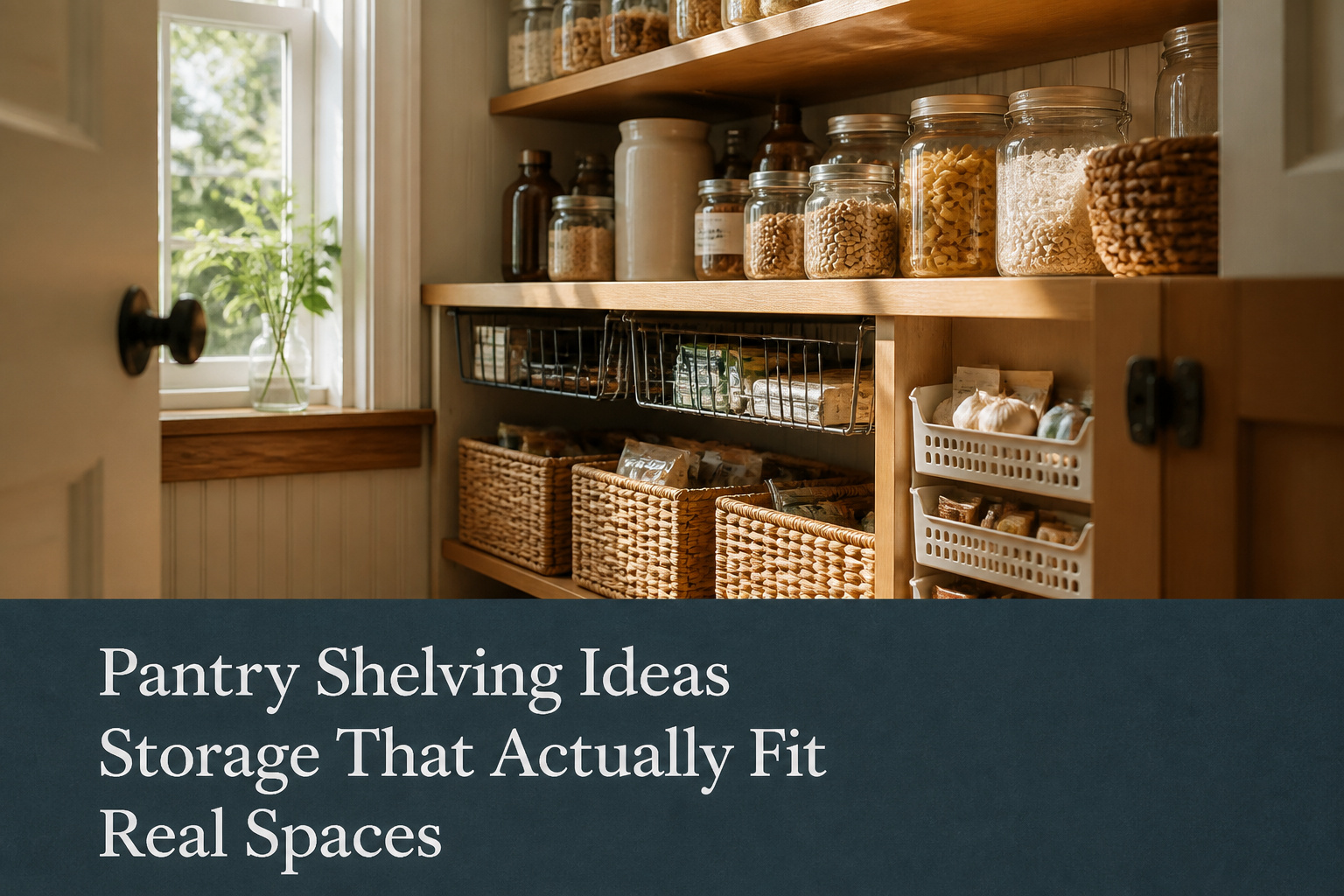
The right pantry shelving ideas storage for your space depend on how much wall you have, whether you rent, and how deep your shelves run. A lazy susan only earns its footprint in cabinets deep enough to swallow bottles whole; under-shelf baskets work anywhere there is a board to clip onto, no drill needed. Most guides skip the shoe holder entirely, but a cut-down plastic organizer behind a lower cabinet door keeps garlic and spice packets off every shelf.
1. Use Labels
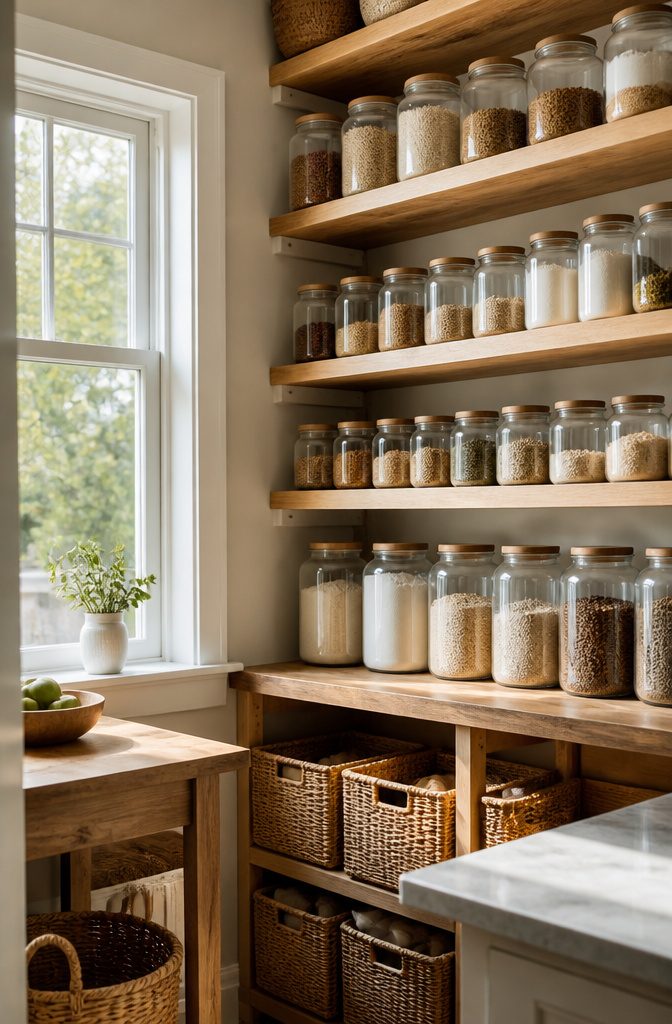
Labels are what keep a pantry system working long-term, and three separate guides back this up as the step that prevents backsliding. Without them, even the best-intentioned household drifts back to chaos inside a month.
The practical move is labeling both the container and the shelf it sits on. A jar of sugar gets its own tag, and the shelf beneath it gets one too, so anyone putting groceries away knows exactly where the item lives. This matters most in shared households, where one person did the organizing and the other members are left guessing. Clear jars for spices, sugar, and salt already save space over original packaging, but labels turn that efficiency into a system anyone can maintain.
Expiration dates on baking supplies are worth adding while you are at it. Flour and baking powder sit invisible for months, and a quick date on the lid saves you from a failed batch later. The few minutes spent with a label maker or masking tape and marker pay back every time someone else unloads groceries or hunts down the cinnamon before breakfast.
2. Bring Back the Cookie Jars
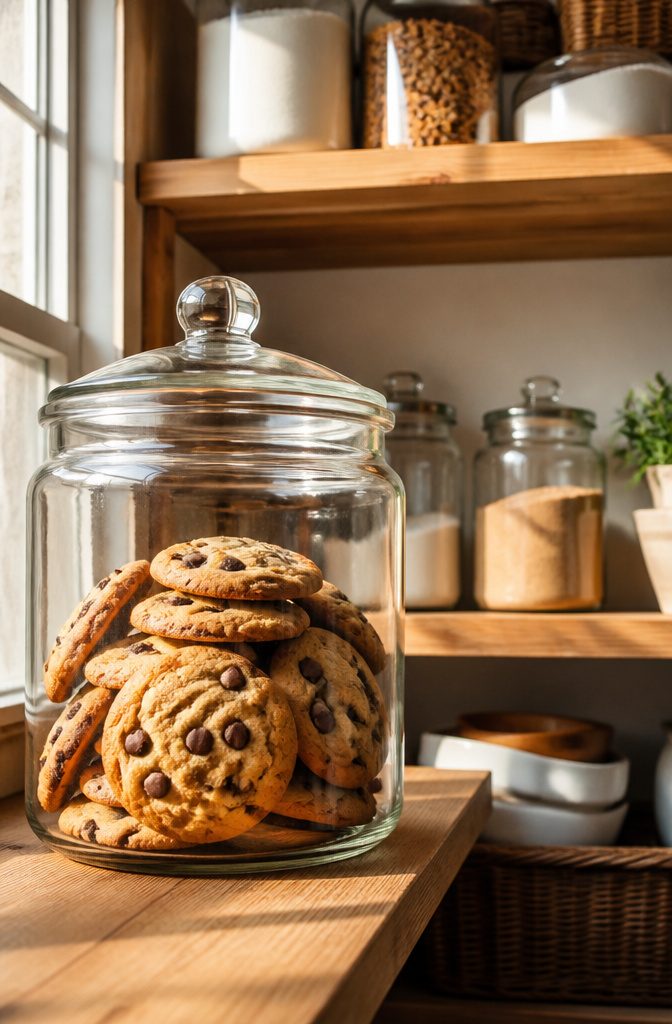
Wide-mouth jars earn their shelf space the moment you decant a five-pound bag of flour and watch the excess air disappear. The original packaging for dry goods, spices, sugar, and salts bulks out far more than the contents themselves, and clear jars cut that wasted volume sharply while letting you see exactly what remains. I keep granola, nuts, oats, and the snacks my household tears through in airtight glass, and the difference against cardboard boxes is immediate. For baking staples, the wide mouth fits a full scoop without sprinkling half the flour across the counter. What I skip: occasional purchases or anything already in a workable canister, since the space savings only matter for what you reach for weekly.
3. DIY Wall Storage
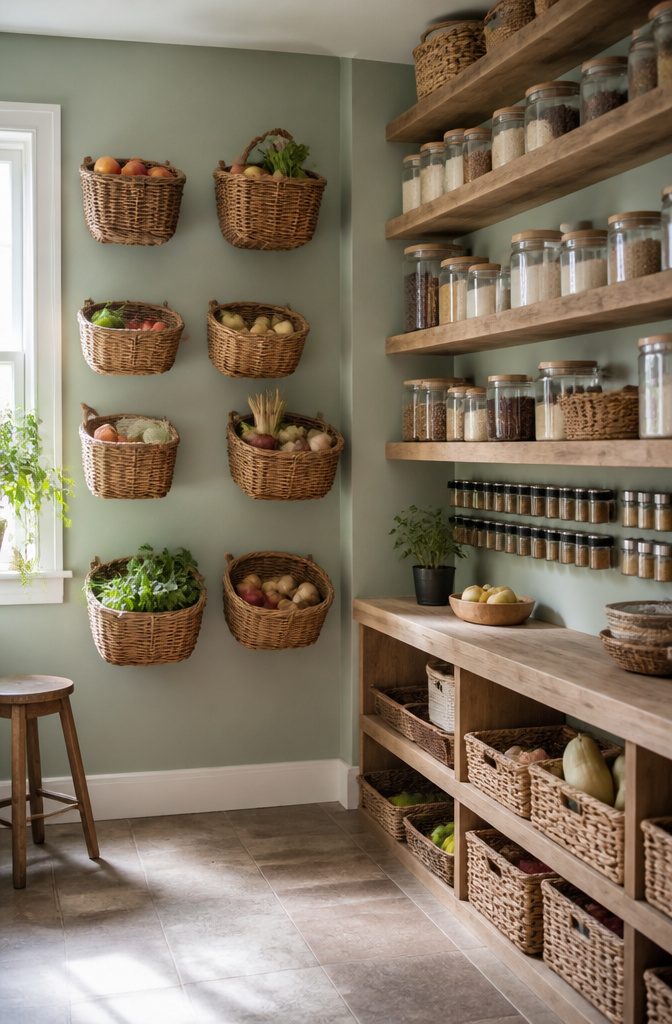
Wall space in a pantry earns its keep the same way wall space in a garage does: by holding things off the floor and out of the drawers. Any vertical surface is viable real estate for shelving, hanging baskets, magnetic strips, hooks, or cabinetry, and the mix is what keeps the storage from looking like a warehouse rack.
I like the idea of mixed-size natural woven bags hung at different heights. One size works for onions and garlic, another for soft fruit that bruises in a pile, a smaller one for fresh herbs that otherwise turn to slime in the crisper. The material breathes, which matters more than I expected for produce that needs to last the week. Shelving above eye level handles the dry goods in matching containers, while magnetic strips or slim hooks fill the narrow gaps between. The goal is choosing what goes on the wall by how often you reach for it: daily items at hand height, occasional ones higher, never-used items off the wall entirely.
4. Under Shelf Basket
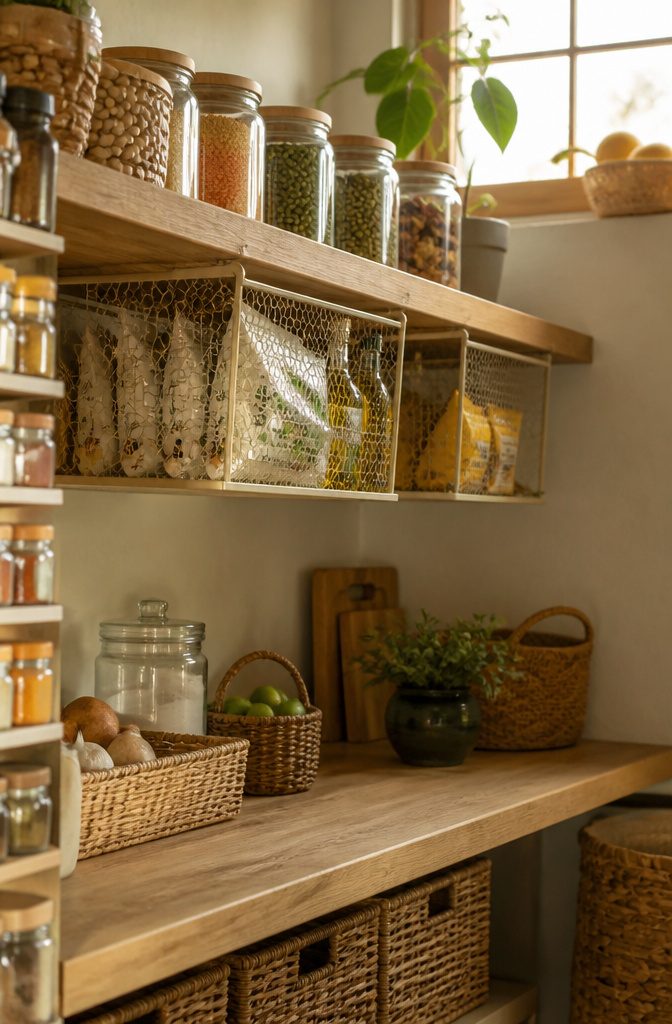
The space beneath a fixed shelf is usually dead air, which makes under-shelf baskets one of the easiest wins in a small pantry. Most versions slide right onto the shelf board without hardware, so renters do not risk their deposit drilling into cabinetry that is not theirs.
I have watched these work best for the loose items that otherwise colonize flat surfaces: a single basket for snack bags, another for backstock cans, a third for the oils and vinegars that leave ring stains on painted shelves. The basket catches drips, and when you need something, you pull the whole unit out rather than dislodging five boxes to reach the one behind.
Fixed-slide models keep the footprint minimal. Unlike bins that sit on the shelf and compete for the same real estate, these hang below it, adding storage without subtracting what is already there. A "smoothie basket" approach works here too: load one with powders and add-ins, lift it out whole when the blender runs, return it when done. The system stays tidy because the system stays contained.
5. The Lazy Susan Solution
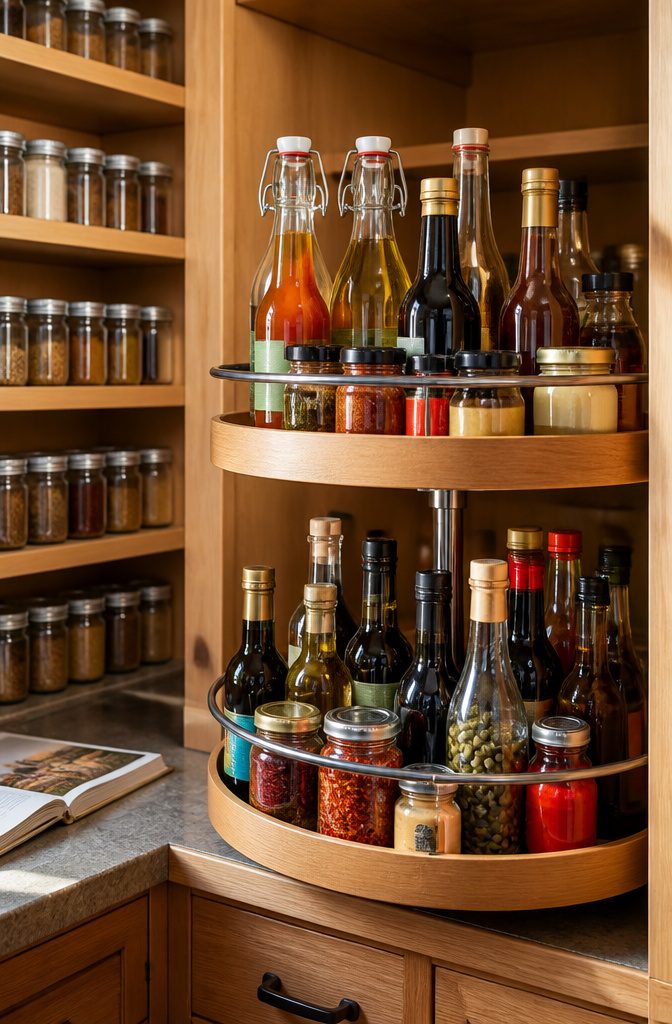
Corner shelves and deep cabinets swallow items whole; a lazy susan spins them back into view. Oils, vinegars, and sauces cluster together, and one turn brings the back row forward without unloading everything in front. Nothing gets lost behind another bottle, which matters more than it sounds when you are cooking dinner and the sesame oil has vanished again.
For a small pantry, this is one of the few upgrades that actually recaptures space rather than reorganizing it. A clear container shows you what you have, but a lazy susan lets you reach it. The tradeoff is the footprint; the spinning base eats a few inches of shelf depth that a static tray would not. In a cabinet that is already shallow, that can matter. In a deep one, it is the difference between using the back half and forgetting it exists.
6. Over the Door Shelving System
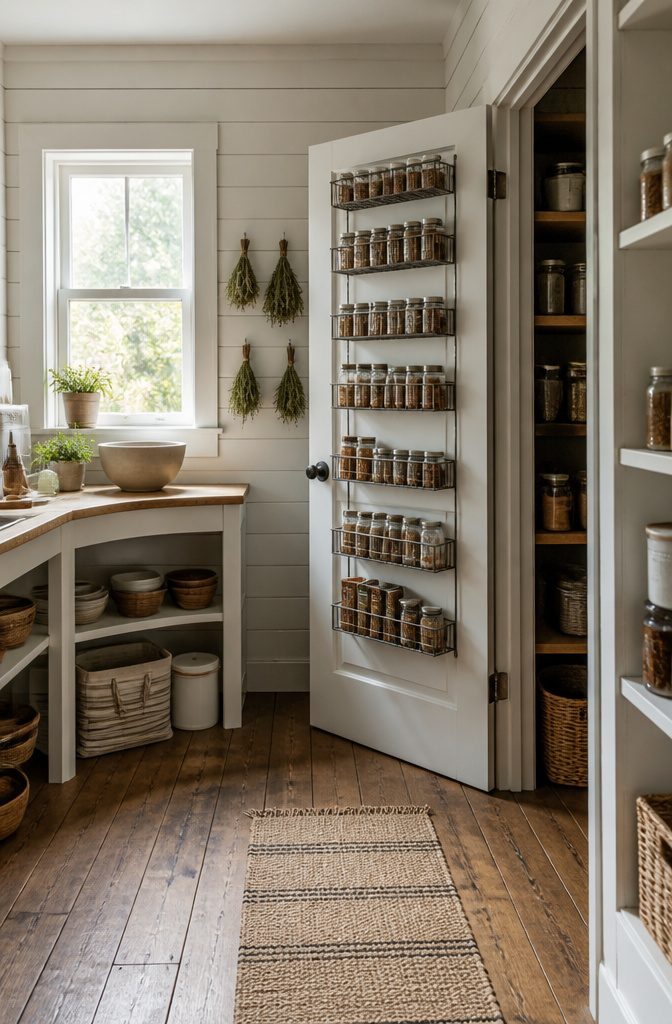
The back of a pantry door is free square footage most renters never touch, and that omission costs usable storage in a space that rarely has enough. Over-the-door shelving systems come in enough sizes and materials to match a narrow closet pantry or a full walk-in without blowing a weekend timeline. Mounting one takes a drill and a level, maybe twenty minutes if the hardware lines up with solid wood rather than hollow-core construction. A cheap plastic shoe organizer hung the same way works for smaller items, herbs, or produce that does not need refrigeration, though the pockets sag over time if you load them with anything heavier than a spice jar. Treat the door as a mini grocery store’s overflow rack: everyday items stay at eye level inside the pantry, and the door handles the backups or the tools you grab twice a day.
7. Clear the Junk Drawer
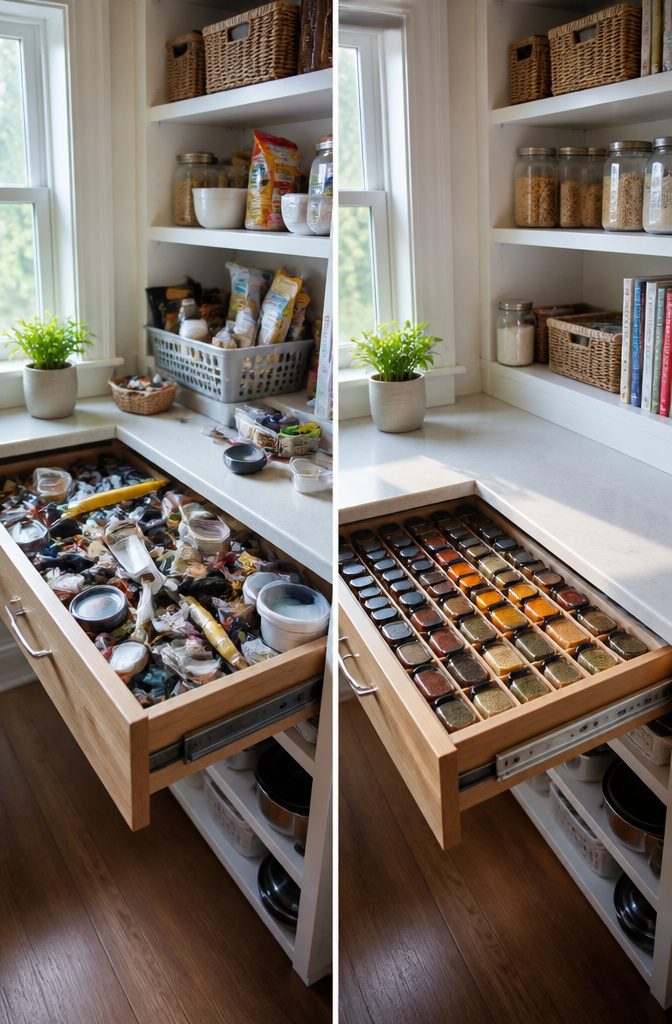
The junk drawer sitting inside your pantry is probably the easiest space to reclaim and the one most people skip over because it feels too small to matter. In a small kitchen, that one drawer of take-out menus and mystery hardware is storage you cannot afford to waste on items you are not sure why you kept. Converting it into a spice drawer, a tea drawer, or any category your kitchen actually uses gives you back real square footage without touching a single shelf.
When space is tight, intentionality beats volume every time. The same logic applies to the pantry itself: focus on staples you actually use, group them into clear categories, and lean on vertical storage where you can. Clear containers and lazy Susans help you see what you own so nothing drifts to the back and rots. The goal is not a perfect magazine spread; it is a pantry where you stop buying a third bottle of cumin because the first two were buried under half-empty bags.
8. Try a Shoe Holder
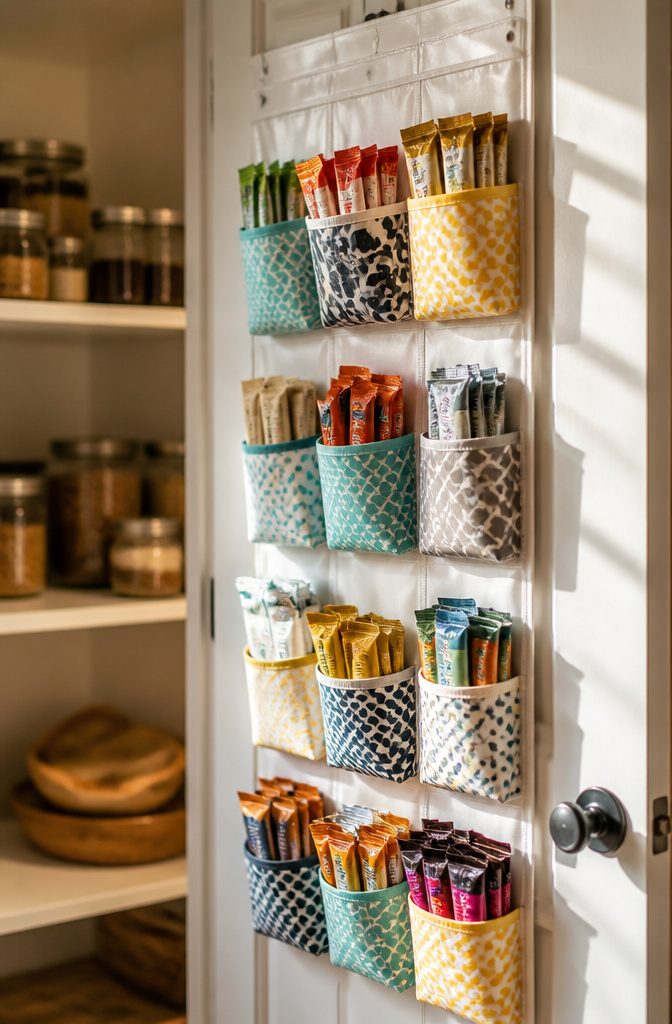
Most pantry shelving ideas storage roundups skip the humble hanging shoe holder entirely, which is a shame because those cheap plastic over-door organizers solve a real problem for small, loose items. The standard pocket layout fits spice packets, seasoning envelopes, snack bars, and produce like garlic or small onions without demanding a single inch of shelf depth. You can hang one on the back of a pantry door, or cut it down and mount it inside a cabinet door if the swing clearance allows. I like that the pockets keep soft items like tomatoes or herbs from getting bruised in a basket pile, though anything heavy will distort the pockets over time. Cut the unit to fit rather than forcing a full-size holder into a tight space; a half-height version behind a lower cabinet door stays out of sight and functional.
9. Freestanding Wine Storage
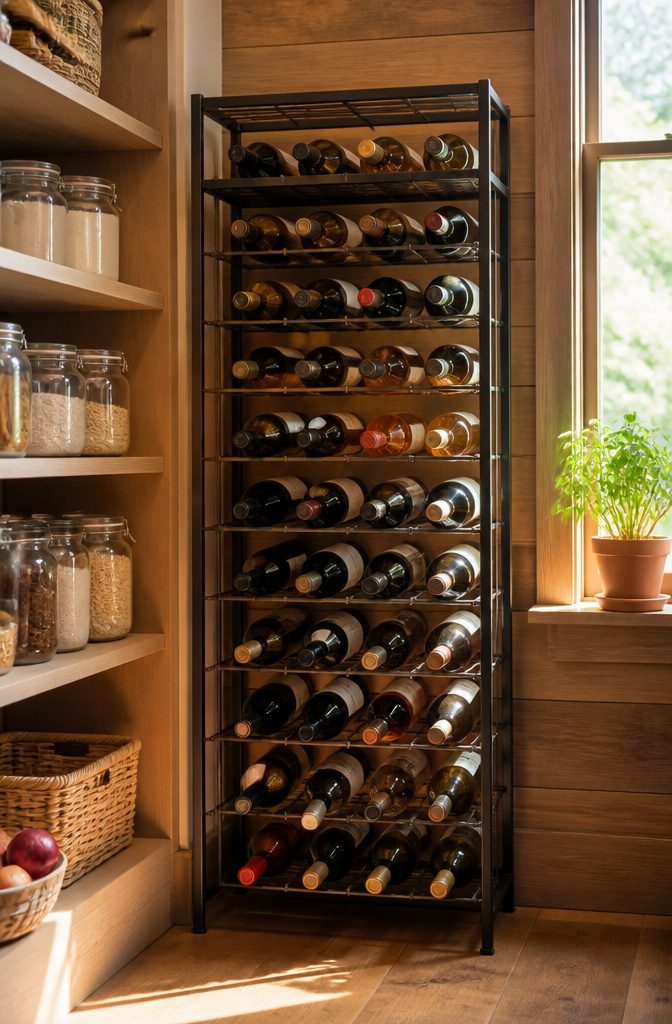
A freestanding wine rack tucked against the pantry wall keeps bottles horizontal without eating cabinet space. Most units run narrow, 12–16 inches deep, so they slide into gaps between shelving and the door frame where nothing else fits. I like the metal grid styles for pantries because air moves around the bottles and you can see labels without pulling each one forward. Wood lattice looks warmer but traps dust in the corners and needs a vacuum hose every few months.
Leave six inches clear above the top row so you are not knocking bottles when you reach for the cereal shelf above. If your pantry floor is uneven, the wobble gets old fast; a shim under one foot fixes it in thirty seconds and costs nothing. The real limit is temperature. A pantry that runs warm in summer will age wine faster than the rack implies, so the bottles you keep there should be the Tuesday-night bottles, not the save-for-a-decade ones.
10. Flatware Pantry Storage
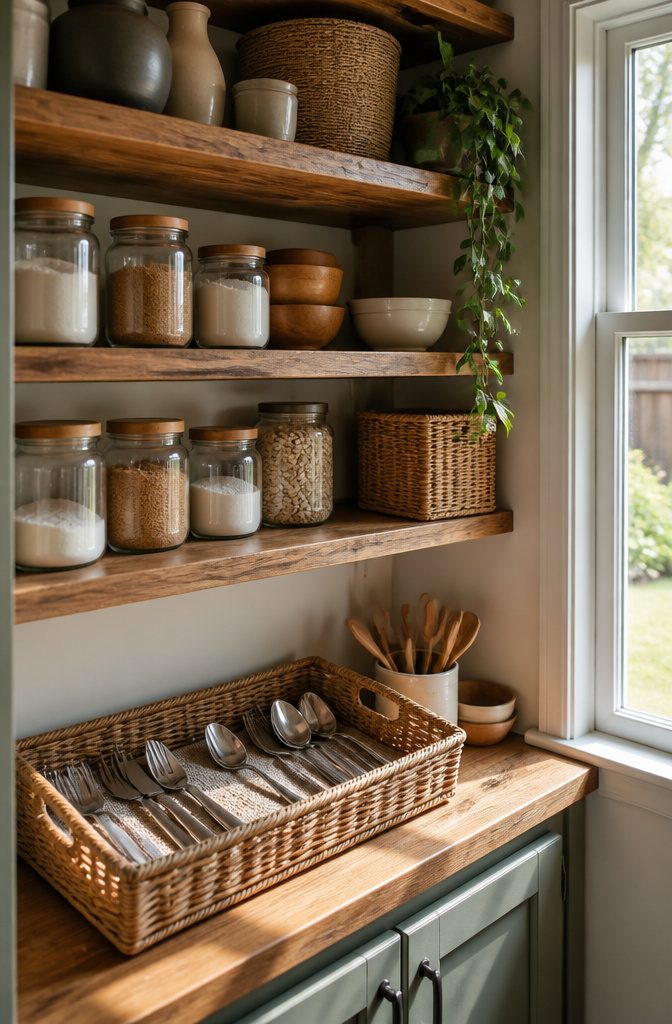
Flatware takes up more drawer space than most people realize, and moving it to the pantry freed up my entire silverware drawer for cooking tools I actually reach for daily. The trick is keeping it accessible enough that setting the table does not feel like a chore. A shallow basket on a pantry shelf at counter height works better than stacking trays deep in a cabinet; you want to grab a fork without unstacking three layers of serving pieces. I line the bottom with a scrap of nonslip liner so the basket does not slide when I pull it forward.
What convinced me, reading through a dozen of these setups, was how many people treated their pantry flatware like a buffet station rather than hidden storage. A lidded bin on a middle shelf keeps dust off special-occasion pieces you use monthly, while everyday stainless sits in something open. The only mistake I have seen repeated is choosing a container too tall for the shelf above it; leave two inches of clearance or the lid will not come off straight. Renters especially should skip wall-mounted racks inside the pantry door, since the weight of full flatware strains adhesive hooks and most landlords frown on screws through cabinet faces.
11. Use Bins and Baskets
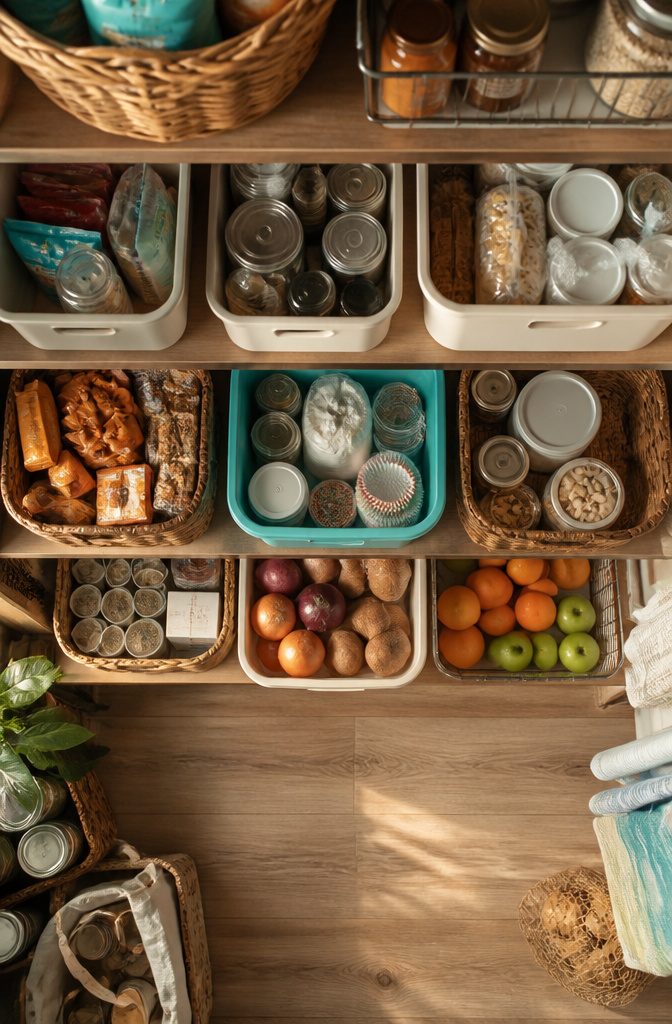
The first time I sorted a pantry with bins, I used whatever was already in the house: a cardboard box for snacks, a wicker basket for bread, a plastic tote I found in the garage. It looked mismatched but worked better than the open-shelf chaos before it. A bin pulls out as one unit, so the bag of rice that always tipped over stayed upright, and the loose seasoning packets stopped sliding behind the cereal boxes.
For small pantries, the real win is grouping by task, not just by type. One basket holds everything for morning smoothies: powders, add-ins, the protein tub. In the morning, that single basket comes to the counter and goes back when the blender’s clean. No more opening five different cabinets.
Under-shelf baskets that clip onto existing shelves add a layer without drilling or buying hardware. They hang below the main shelf, giving you a slot for napkins, wraps, or the flat bags that otherwise vanish. The tradeoff is headroom; in a shallow closet pantry, the lower basket can block taller items on the shelf beneath it.
Bins also catch the drips and crumbs that ruin shelf surfaces over time. A quick rinse of the basket beats scrubbing a stained shelf.
12. Color Code
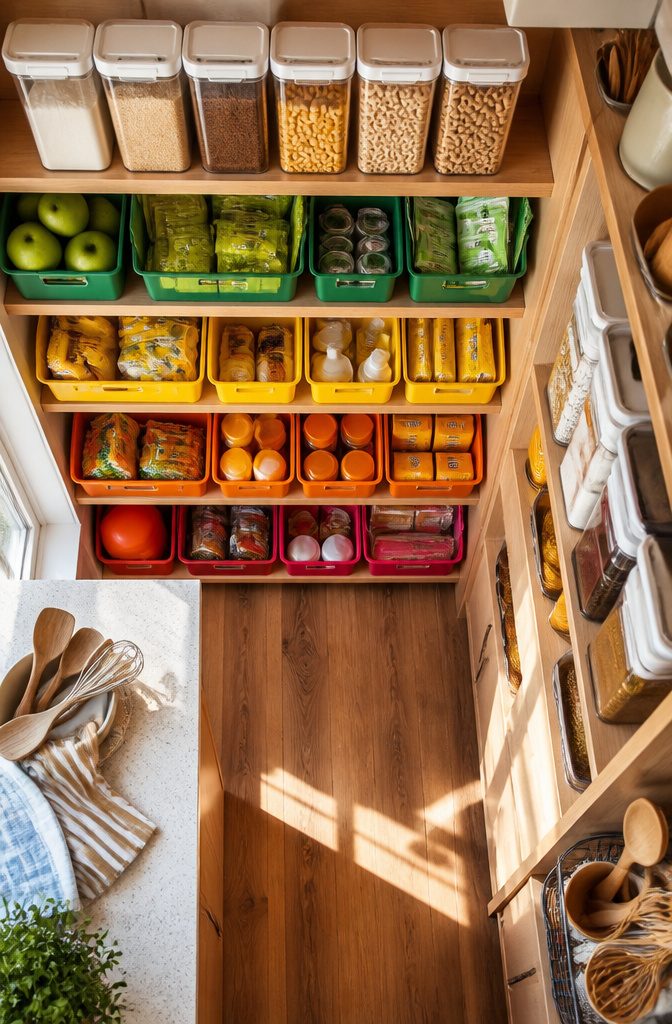
Color coding only starts paying off after the first time you pour cereal out of what turned out to be the rice bin. A system of matching colors to categories, breakfast in blue and baking in green, catches mistakes before they happen, especially for baskets stored up high where the contents stay hidden. Keeping a small reference list taped inside the pantry door heads off the five-second blank when you forget whether red meant snacks or canned goods.
The same colors that keep adults sorted also make the system readable for kids. Plastic containers in those matching shades, lighter and safer than glass, let a six-year-old grab the yellow bin for crackers without needing to read labels or ask for help. Clear bins stacked behind them still show what sits in back, so the color layer works with visibility rather than against it. In a small pantry where deep shelves hide half of what you own, that pairing matters: color gives you the category at a glance, and clear sides confirm the exact item before you pull it down.
13. Make It Kid-Friendly
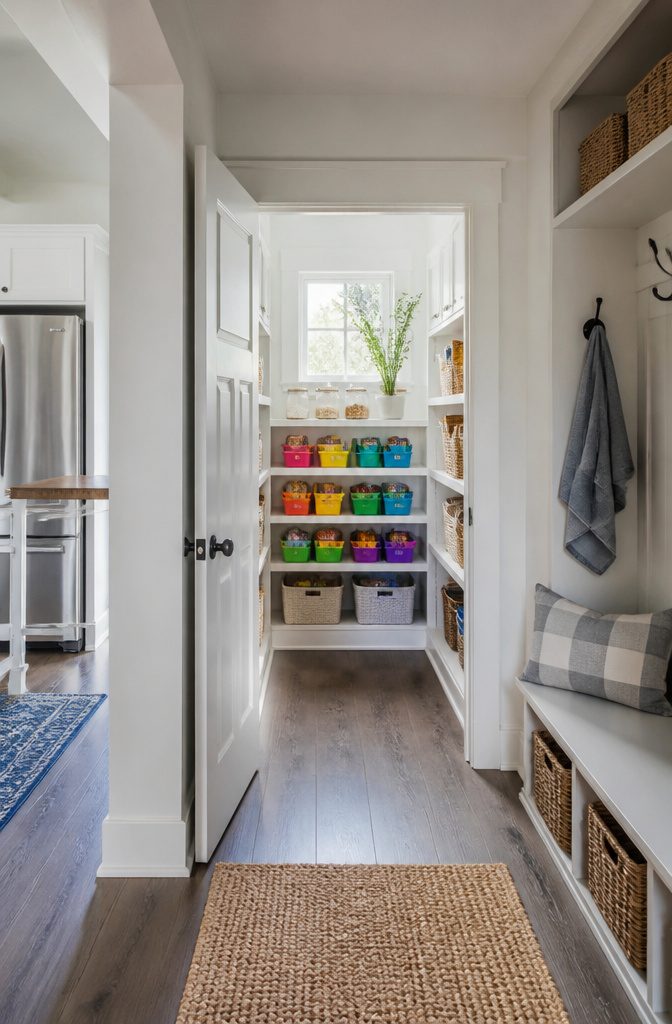
A pantry that works for kids needs materials that can survive small hands. Plastic containers beat glass here because they are lighter and far less likely to shatter when a child pulls one down. The same goes for whatever system you use to label things: keep it simple enough that a first grader can read it back to you.
This is a smaller point that only a few guides even mention, but it matters once you are living with it. Color coding works only if the colors mean something obvious to everyone in the house, not just to the adult who set it up. I have seen kitchens where the blue lid meant snacks and the green lid meant dinner prep, and the kids ignored both because no one explained the code. If you want a child to actually put the cereal back where it belongs, the spot needs to make sense without a memo.
Most pantry advice assumes a household of adults. When kids are in the mix, the safety call on materials and the clarity of the system deserve their own beat, even if it is a short one.
14. Pull-Out Drawers
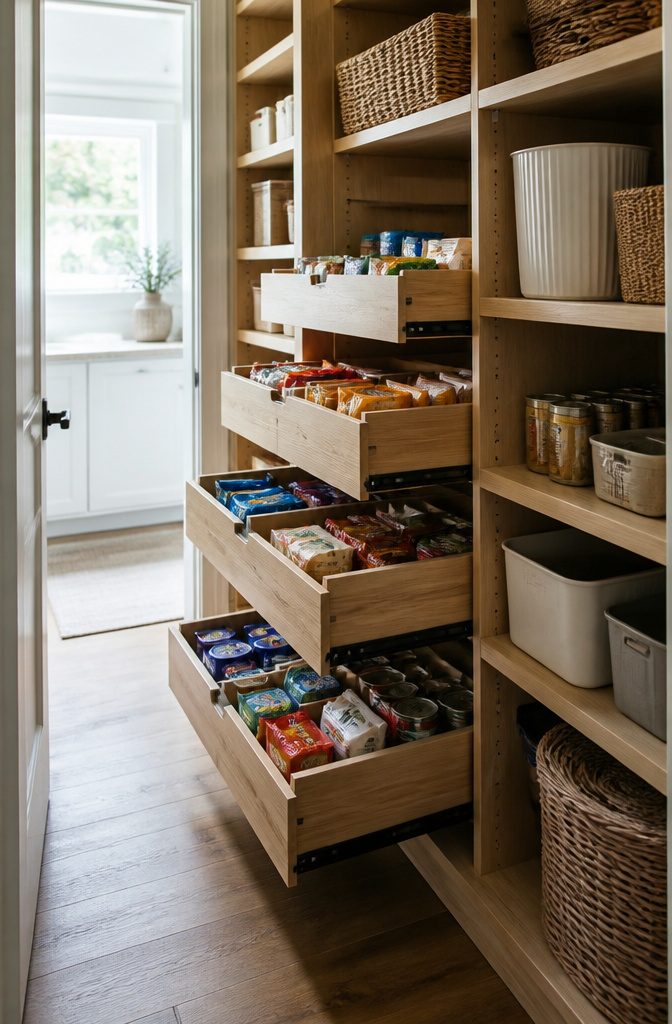
Deep pantry shelves look generous until you realize half the contents have vanished into the void behind the cereal boxes. Pull-out drawers turn that dead zone into usable storage by bringing the back row to you, the same way a filing cabinet brings the rear files forward.
The hardware is straightforward: a drawer box on full-extension slides mounts to the existing shelf, or you can install tiered pull-out baskets that ride on their own tracks. Either way, the motion is the same gentle pull on a handle. Baskets have the edge if you store loose items like snack bags or cleaning supplies that would slide around in a flat drawer; the sides corral the mess and lift out for trips to the counter.
What convinced me, reading through a dozen of these setups, is that the real win is not the extra inches reclaimed but the habit change. When nothing hides in back, nothing expires in back. The upfront cost runs higher than bins you simply slide by hand, but the glide mechanism means you will actually do it every time instead of letting the black hole refill.
Start With a Full Declutter
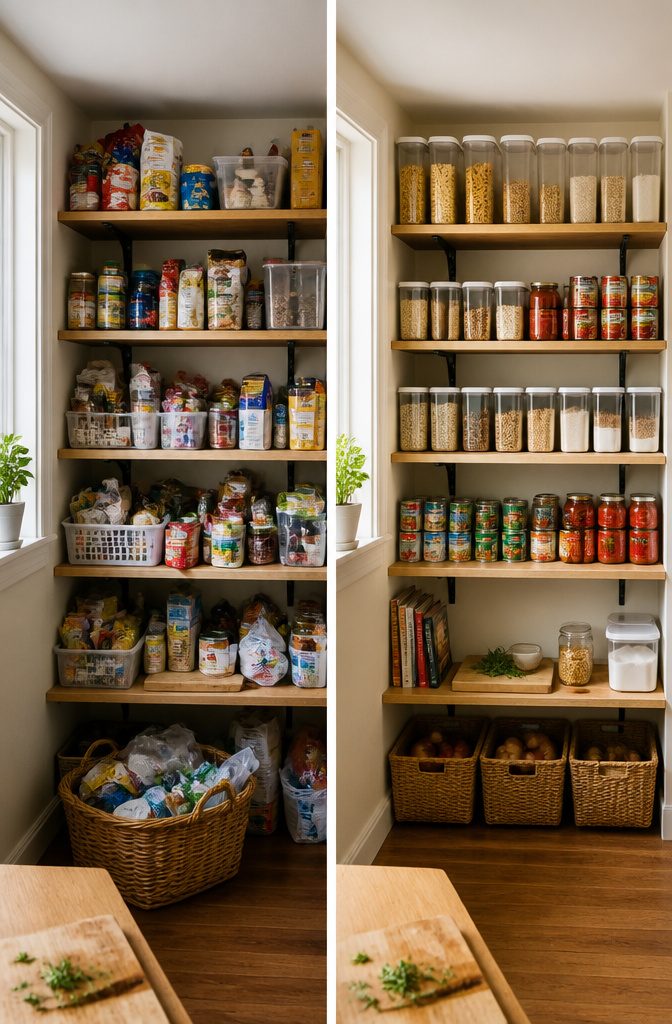
The back of the pantry is where cans of tomatoes go to disappear, and where three boxes of pasta, all bought because each one was hidden behind something else, quietly expire together. Pull everything out before you measure for a single shelf. The expired stuff and the duplicates you forgot about are what make a small pantry feel chaotic, and no clever shelving fixes a space that is still half full of things nobody will eat. I have stood in front of a reorganized pantry a week after the work, still unable to find the one can I needed, because I skipped this step and simply rearranged the clutter into neater piles. The purge is not a separate project. It is the first shelf measurement, because the amount you actually keep determines how many linear feet you need and whether a wall-mounted system will even fit without crowding the door swing. Work top to bottom, check dates on everything, and group what remains by how you cook, not by some system you saw online. What survives the cut is your real inventory, and only that number tells you what shelving ideas storage will actually serve your space.
Build Up, Not Out
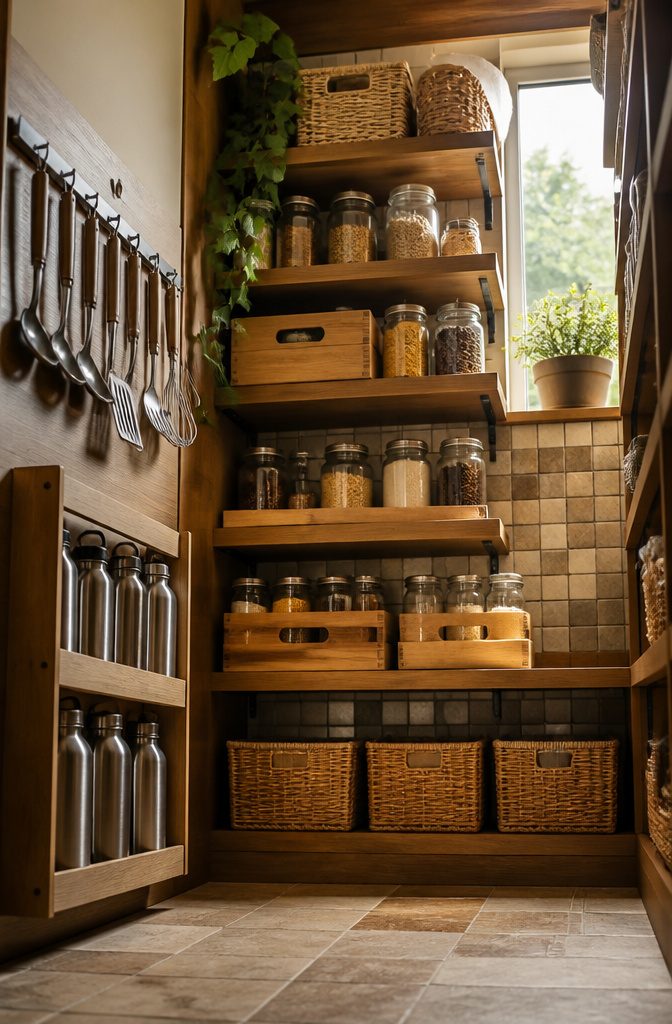
Wire shelves in a closet-style pantry leave gaps that small jars and bags slip through, so wooden boxes and baskets solve two problems at once: they catch what would fall and stack upward without wasting an inch of vertical space. A water bottle holder hung on the wall keeps tall, awkward shapes from stealing shelf real estate. Where there is wall, there is viable real estate for storage. Magnetic strips, hooks, and hanging baskets turn the narrow gap between shelves and the door frame into usable depth. The mistake most people make is stopping at eye level. Clear containers and lazy Susans stacked to the ceiling keep back-row items visible so nothing gets forgotten, but only if you group by category first and leave the top shelf for the lightest, least-used staples. Tall bins work only when you can actually lift them down without a step stool you do not own.
Decant Into Clear Containers
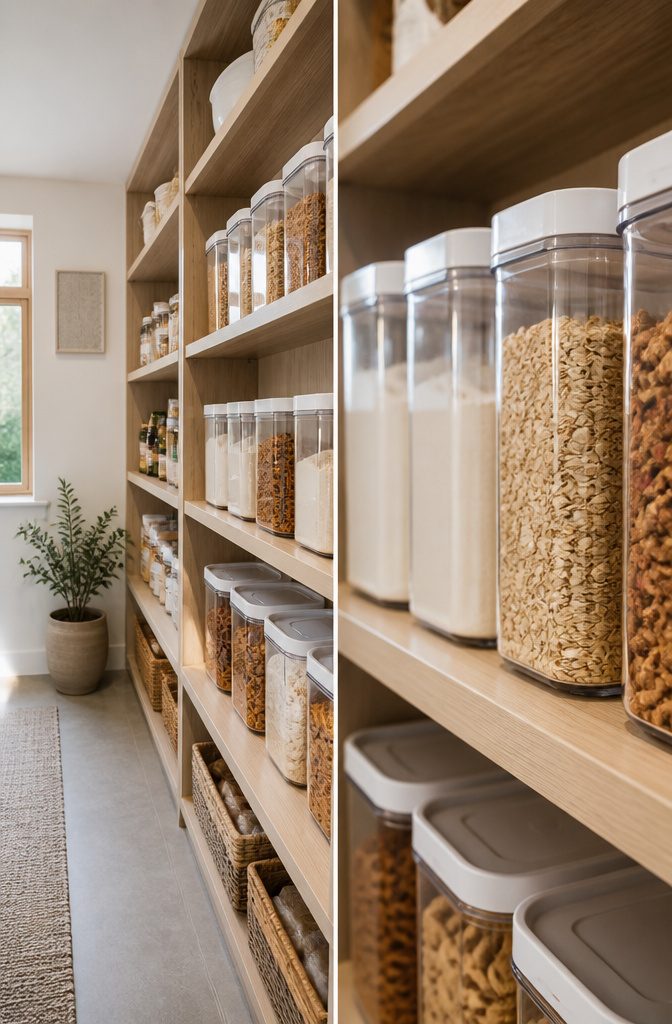
Clear containers earn their shelf space by removing the guesswork. Decanting dry goods into airtight containers saves space and lets you see exactly what you have, which matters more than it sounds when you are standing in front of a pantry at 6 a.m. trying to remember if you are out of oats.
The bulky cardboard boxes most staples come in waste inches on every side. Flour bags collapse and spill; granola boxes never stack clean. I would rather transfer everyday items, the ones I reach for weekly, into something uniform that fills the depth of the shelf edge to edge. Granola, nuts, oats, flour, snacks like goldfish and bars, these are the keepers.
What stays in its original packaging? Anything I buy once in a while, or anything that already sits well on its own. Zip bag protein powder and oats in a canister do not need my help. Cereal boxes and pasta bags often fall into the same skip-it category if they are not in constant rotation.
For the decanted goods, wide mouth jars or clear bins with a full opening change the daily experience. A wider mouth means a larger scoop and less mess when you are measuring flour or rice for dinner. The same jars that hold flour can hold sugar, pasta, or a batch of cookies if you are the type to bake ahead. The container becomes the system, not the product label.
Organize Like a Grocery Store
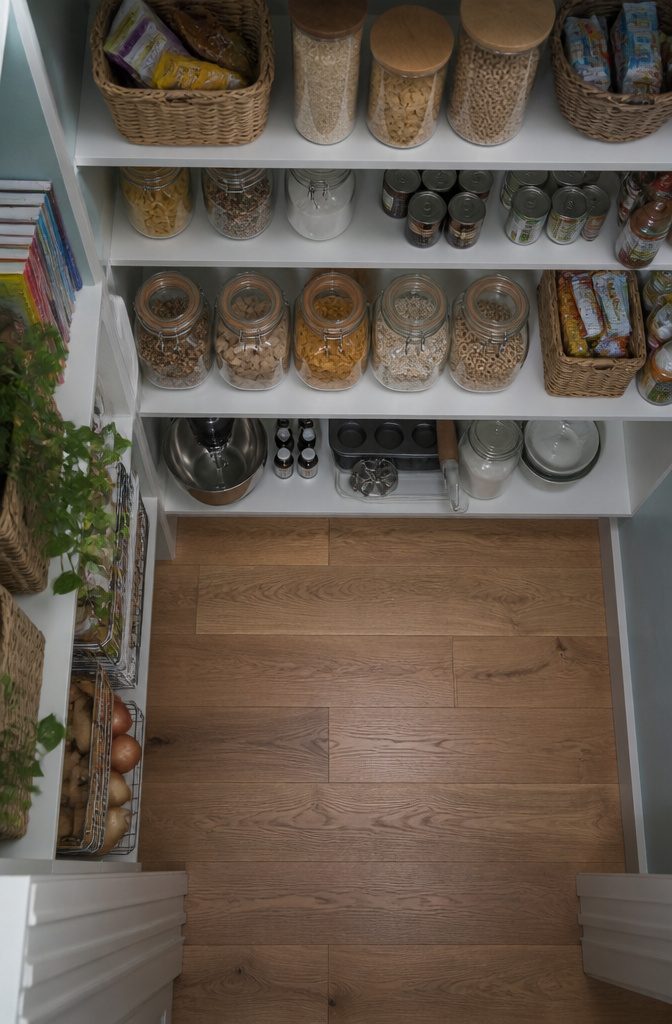
The first time I sorted my pantry like a grocery store, the relief was immediate. Breakfast foods landed together on the middle shelf where I reach every morning. Baking supplies collected on a lower one, since I only pull them out weekends. Canned goods got their own zone, snacks another, drinks the last. Eye-level shelves hold what you use daily; heavy or bulky items go lower, rarely-used stuff up top. Deep shelves hide what sits behind, so I learned to keep the front row low and use clear bins for anything that would otherwise vanish in back.
You do not need a dozen categories. Six usually covers it: breakfast, baking, grains and pasta, canned goods, snacks, drinks. The proportions shift with actual habits. Snacks eat more space at my house; baking barely rates a bin. Treating a closet pantry the same way works too, just scaled down: everyday at eye level, door storage for overflow, and a small light so the back wall is not a mystery.
What Works in a Closet Pantry
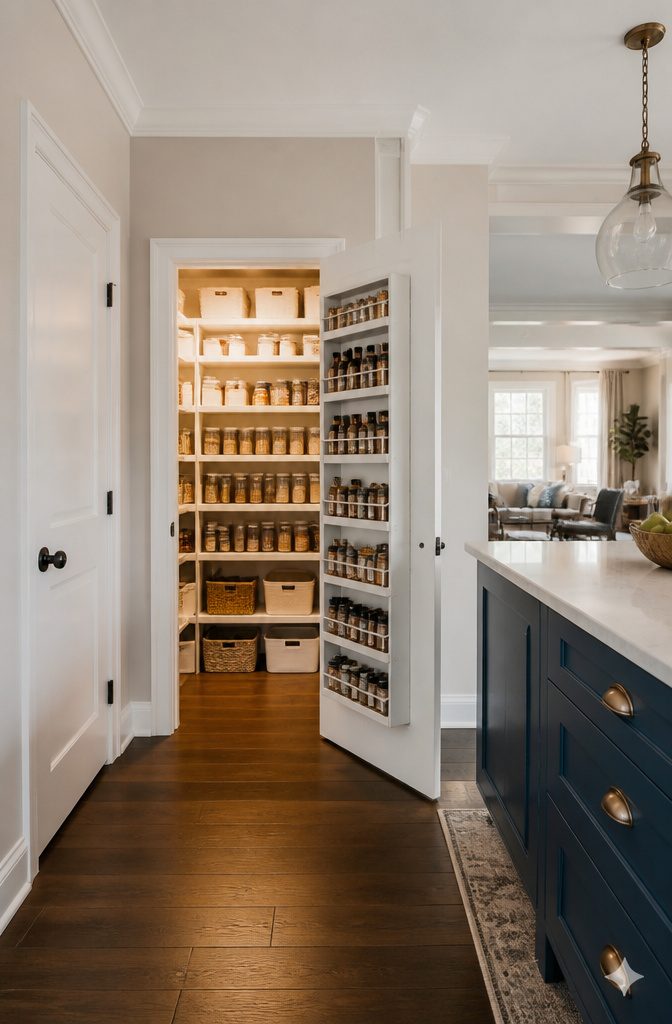
A closet pantry rewards the same logic that keeps a small grocery store from feeling cramped: everyday items live at eye level, rarely used goods go up top, and the heavy stuff stays low where it won’t strain your arms or the shelf itself. The back of the door is fair game for extra storage, and a battery-powered light strip fixes the shadow problem that turns deep closet shelves into black holes.
Very small spaces force harder choices. Staples take priority over someday ingredients, and clear categories matter more than clever systems. Vertical storage keeps the footprint tight; narrow shelves or a simple riser on an existing shelf buys another row without crowding the walkway. Bins and baskets help here, since pulling one container beats rearranging five loose jars every time you need the vanilla behind them.
Frequently Asked Questions
How do you organize a pantry with very little space?
Focus on staples you actually use, group them into clear categories, and lean on vertical storage wherever possible. Clear containers and lazy Susans help you see what you own so nothing drifts to the back and expires. Wall space, the back of the door, and under-shelf baskets all add storage without eating shelf depth.
Is it worth decanting food in a small pantry?
Yes, especially for everyday staples and products that are harder to store in their original containers. Clear containers save space and let you see exactly what you have, which matters most at 6 a.m. when you are trying to remember if you are out of oats. Skip it for occasional purchases or anything that already sits well on its own, like cereal boxes or pasta bags you do not use weekly.
What’s the best way to organize a closet pantry?
Treat it like a mini grocery store: everyday items at eye level, heavy or bulky items lower, rarely used goods up top. The back of the door is fair game for extra storage, and a battery-powered light strip fixes the shadow problem that turns deep shelves into black holes. Very small spaces force harder choices, so staples take priority over someday ingredients.