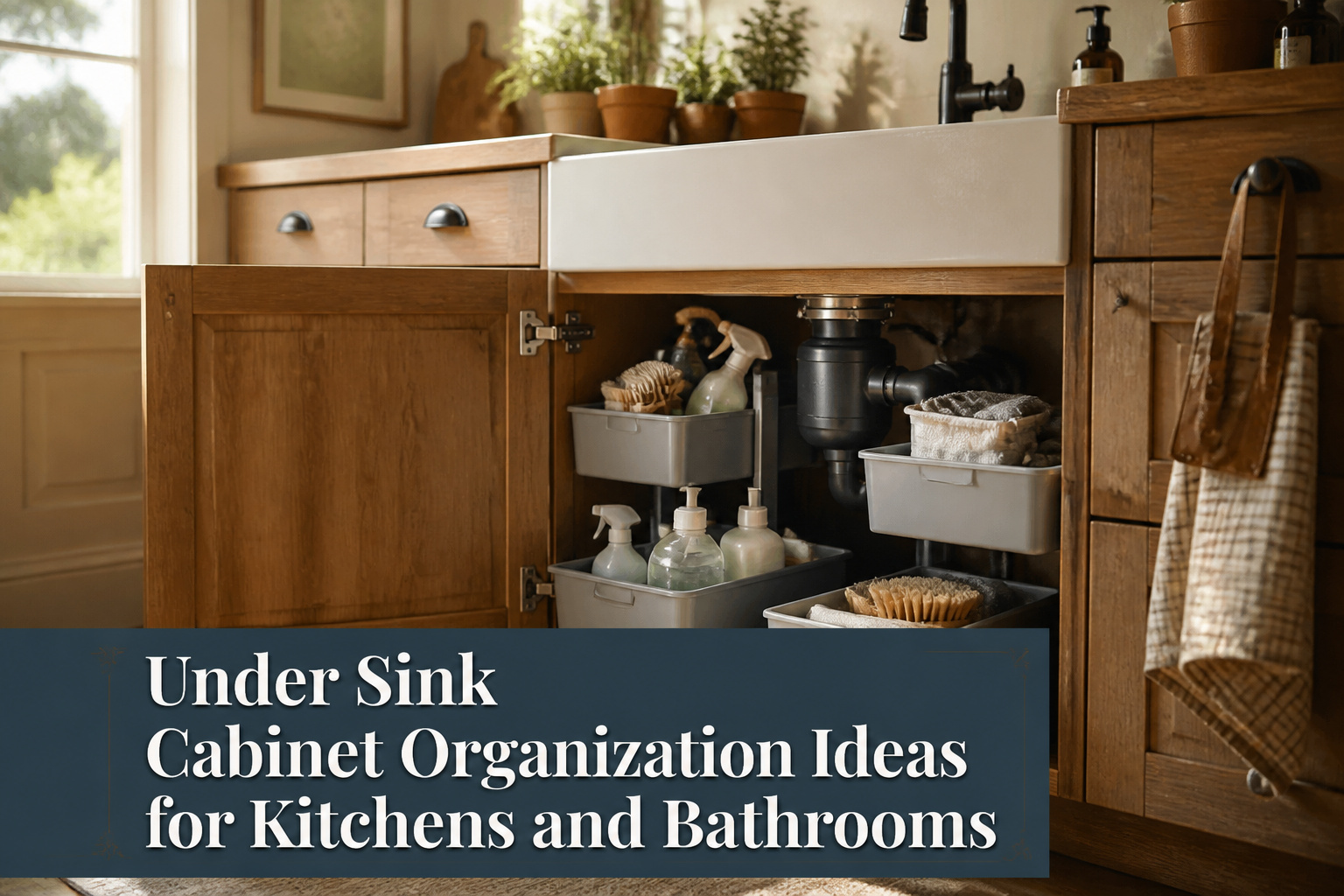
Under sink cabinet organization ideas are ways to reclaim the awkward space beneath sinks where plumbing blocks standard shelves and moisture ruins unprotected floors. They work only when you measure around your pipes first, not just the cabinet width, so the unit slides in without catching on the P-trap. A two-tier pull-out drawer with adjustable height can straddle the disposal unit itself, with heavy spray bottles below and lighter supplies above.
Pull-Out Drawers
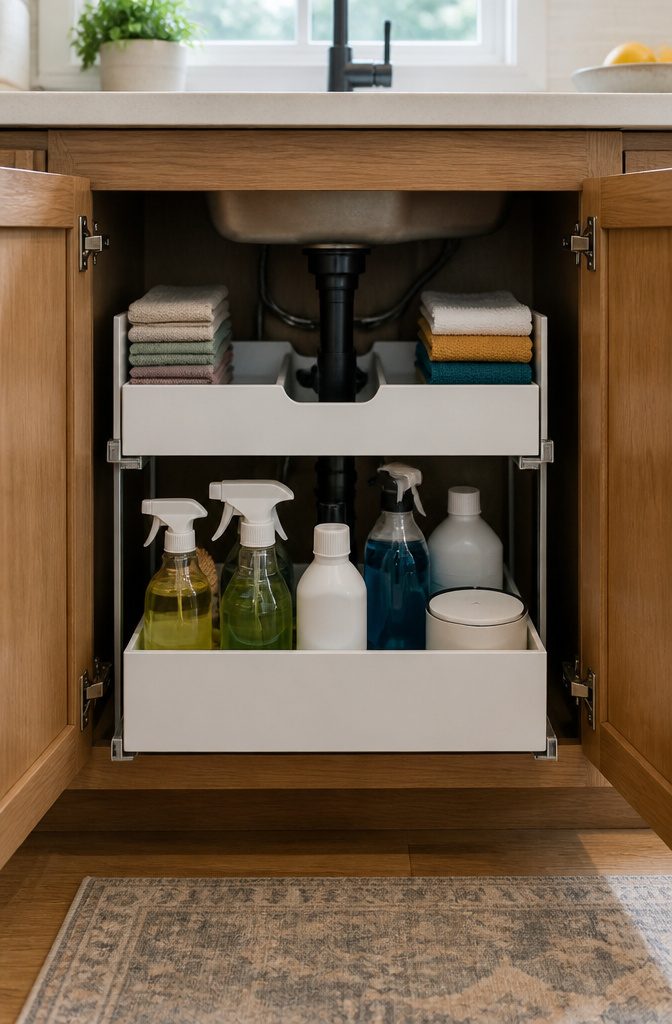
Pull-out drawers change the equation from "reach and hope" to sliding out everything you own in one motion. The garbage disposal and sink pipes sit dead center in most cabinets, which is exactly why standard shelves fail so hard. A two-tier organizer with an adjustable height works around that plumbing instead of pretending it isn’t there. The bottom drawer holds the heavy stuff, your spray bottles and bulk cleaner, while the top keeps dish towels or lighter supplies within easy reach. What sold me on reading through the options was the stability: these don’t tip when you yank a full drawer forward, which matters more than you’d think at 7 a.m. with a spill on the counter.
Measuring around your pipes before you buy is the step most people skip, then they wonder why the drawer catches on the P-trap. Account for where the plumbing sits, not just the cabinet width, so the unit slides in without a fight. Once it is in, vertical space on either side of those pipes is yours to use. Less-used items can drop to the bottom layer; daily cleaners stay on top. No more kneeling into dark corners to find the bottle you bought twice because the first one disappeared.
Stackable Bins
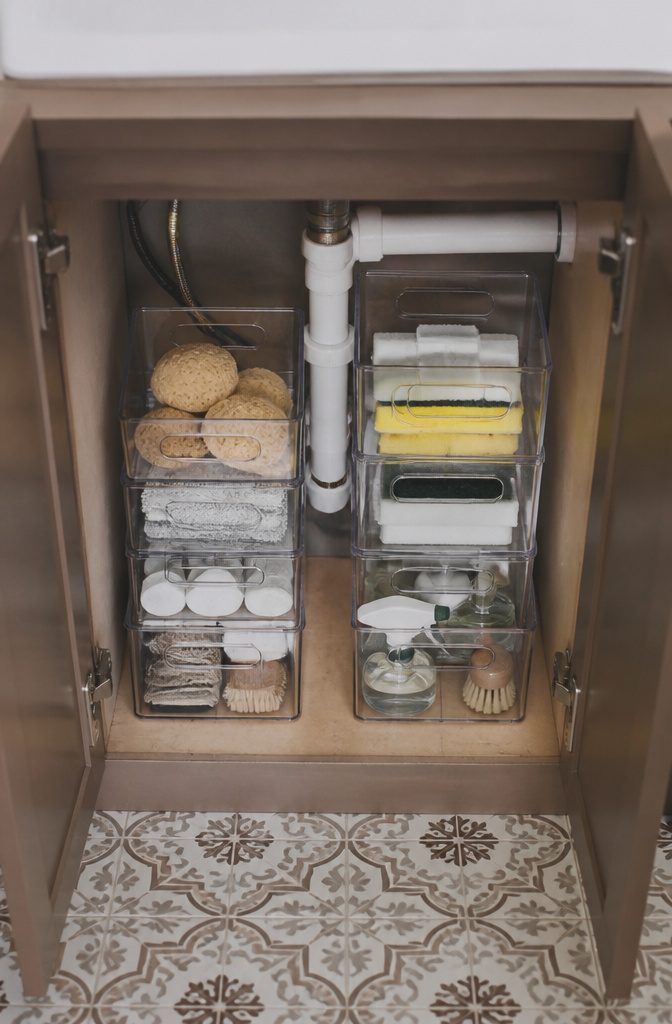
Most under-sink cabinets are tall but shallow front-to-back, which leaves a lot of vertical space doing nothing while your bottles spread sideways and tangle with the P-trap. Stackable bins fix that by building upward instead of outward. In my sister’s kitchen, three 4.5-inch clear acrylic drawers stacked to hold sponges, steel wool pads, and Magic Erasers right where the pipe slope left no room for a single wide basket. The same bins come in a 6.75-inch height if you store taller items like spray bottles upright.
The clear sides matter more than you’d expect. You see what you have without unstacking anything, so you stop buying a third bottle of granite cleaner because the first two are hidden behind the drainpipe. If your cabinet has a garbage disposal eating the center height, you can still use shorter bins on the door side or in front of it, building around the obstruction rather than surrendering the whole space. One tradeoff: rigid stacks don’t pull out as a unit like a drawer system would, so the bottom bin needs to hold something you reach for less often, or you’ll unstack and restack every time you need the dish soap.
Deep Baskets
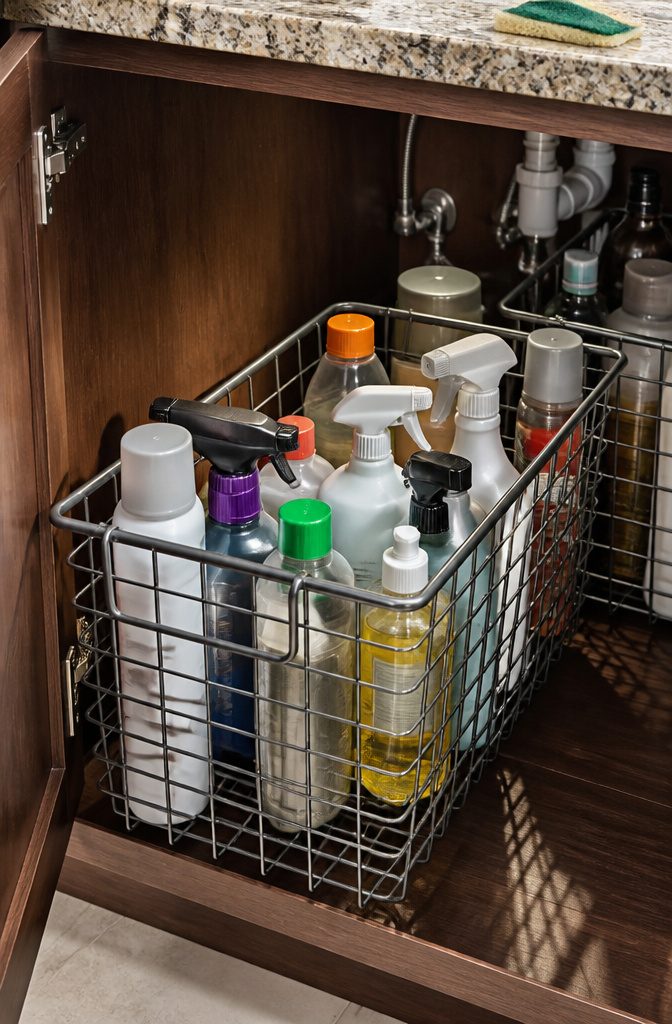
Loose bottles and spray cans under a sink have a way of swallowing each other whole. Deep baskets stop that spiral by giving everything a contained home where you can see the full contents from above, not just the front row. Wire or mesh styles are especially useful here, since light passes through and you spot the backup dish soap or that spare toothbrush holder without pulling half the cabinet onto the floor.
The real payoff is accessibility. A basket with foam feet slides out smoothly over cabinet baseboards, so the back row stops being a forgotten archive. Tall bottles stand upright in the open top instead of tipping or getting wedged sideways. For renters, this matters because you are not installing anything; you are just dropping in a vessel that moves with you.
One limit to keep in mind: plumbing shapes vary, so a single deep basket may not hug every pipe run. Measure your floor space before buying, and expect to work around the P-trap rather than over it.
Protective Liners
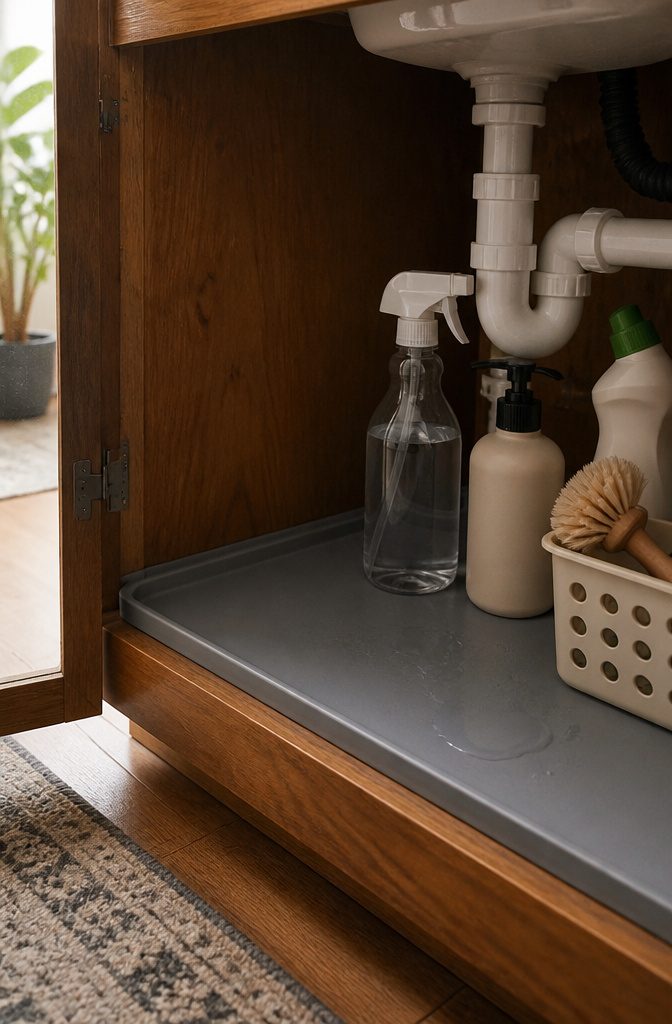
Water tends to find its way under sinks long before anyone notices. A slow drip from the drain trap or a bottle of cleaner tipped on its side can leave a cabinet floor stained or swollen within a single weekend, and that damage is almost always permanent. The fix is simple and cheap, which is why skipping it feels so foolish in hindsight. A waterproof silicone liner with a raised lip around the edge is the most reliable barrier. It sits directly on the cabinet base, catches spills before they reach the wood, and lifts out for rinsing when something leaks.
Not every cabinet cooperates with a standard-size mat. Corner sinks and pipe runs through the bottom mean you sometimes need to cut holes for plumbing or trim the liner to fit. Silicone flexes enough for that. One note from actual use: if you are planning rolling organizers on top, pick a liner with a flat surface. Textured patterns stop wheels from tracking smoothly, and you will feel that resistance every time you pull a caddy forward.
Absorbent waterproof liners are the lower-cost alternative. They trim to any shape, which suits rental cabinets that might already have warped floors or odd dimensions, but they lack the lip that contains a real leak. They catch drips, not puddles.
Modular Stacking Drawers
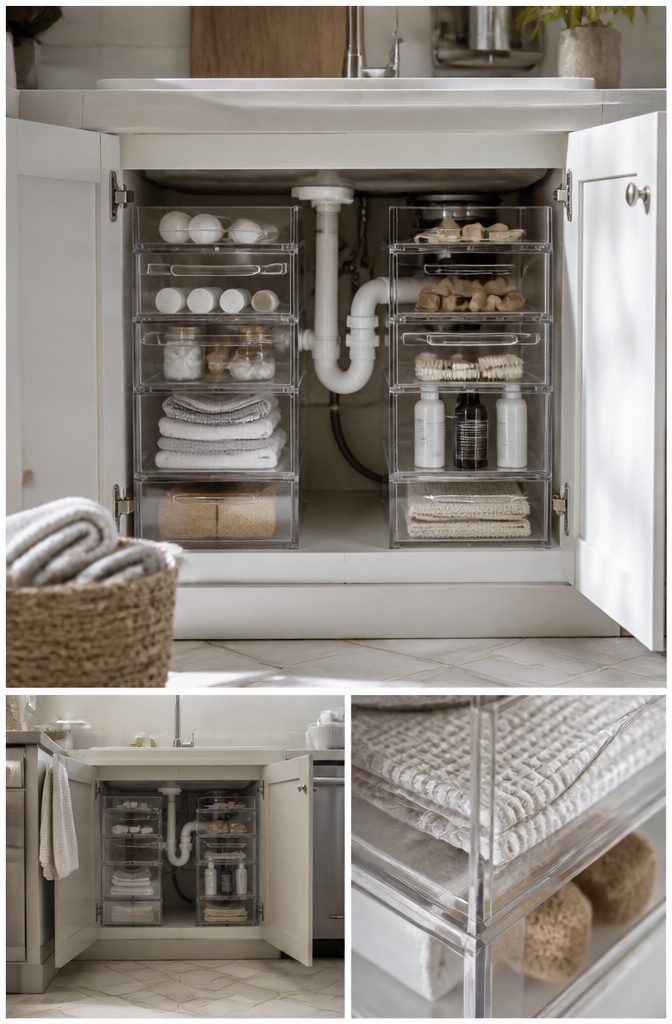
Modular stacking drawers work around the plumbing instead of pretending it isn’t there. The sides of a typical under-sink cabinet sit mostly empty while pipes hog the center, so building upward in separate left and right stacks claims that vertical space without requiring one continuous shelf that would collide with the drain. Most systems come in two heights, around 4.5 inches for sponges and steel wool or 6.75 inches for taller bottles, and mixing them matters more than staying loyal to one brand. A short drawer on top of a tall one keeps daily items within immediate reach; reverse it and you’re restacking to get at the bottom bin.
The real advantage shows up when pipes move. A garbage disposal replacement or new faucet routing shifts the obstacle by a few inches, and modular units can be rearranged where a fixed organizer would need replacing entirely. Clear acrylic lets you see contents without pulling each drawer, which cuts down on the duplicate-buying that happens when a cleaner gets buried in an opaque bin. Labeling still helps, especially for the bottom stack of less-used items, but visibility does most of the work.
Door-Mounted Organizers
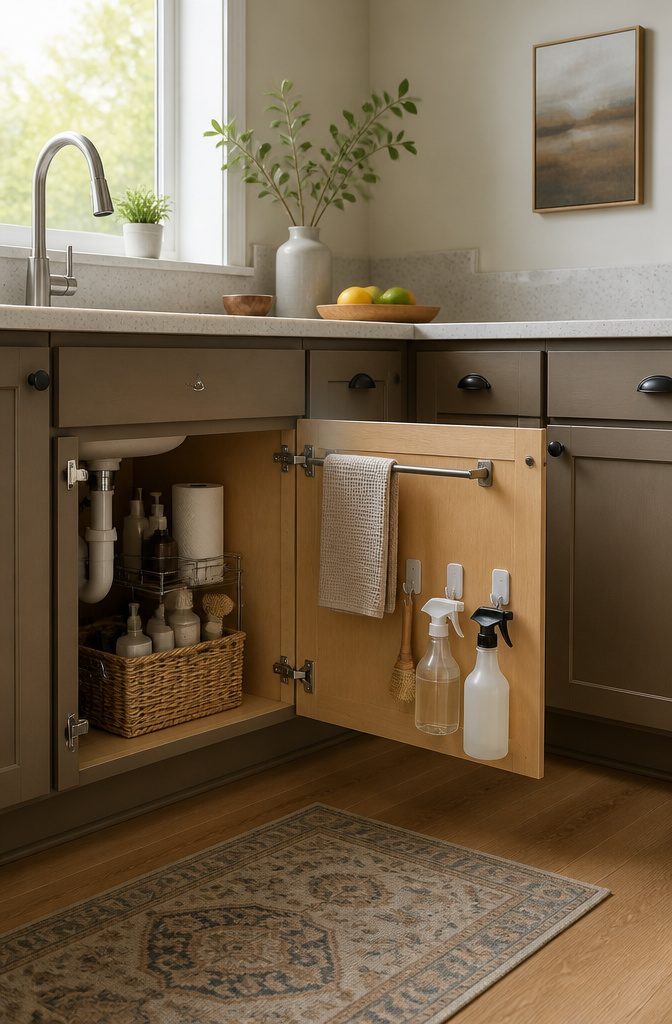
The back of a cabinet door is dead space until it isn’t. A slim towel bar screwed to the inside of the kitchen sink door gave me a spot for the dish towel that used to pile on the counter, and a few adhesive hooks hold spray bottles clear of the plumbing below. Check door clearance before you mount anything; a bottle that sits too proud will keep the door ajar or scar the frame. In tighter bathroom cabinets, this same strip of door real estate works for dishwashing gloves or a grocery bag dispenser, freeing the interior for bulkier items like toilet paper stacks or a small trash bin. The mistake I watched a friend make was skipping the clearance test: her organizer looked fine until she closed the door and heard plastic crack against the frame.
Decanted Containers
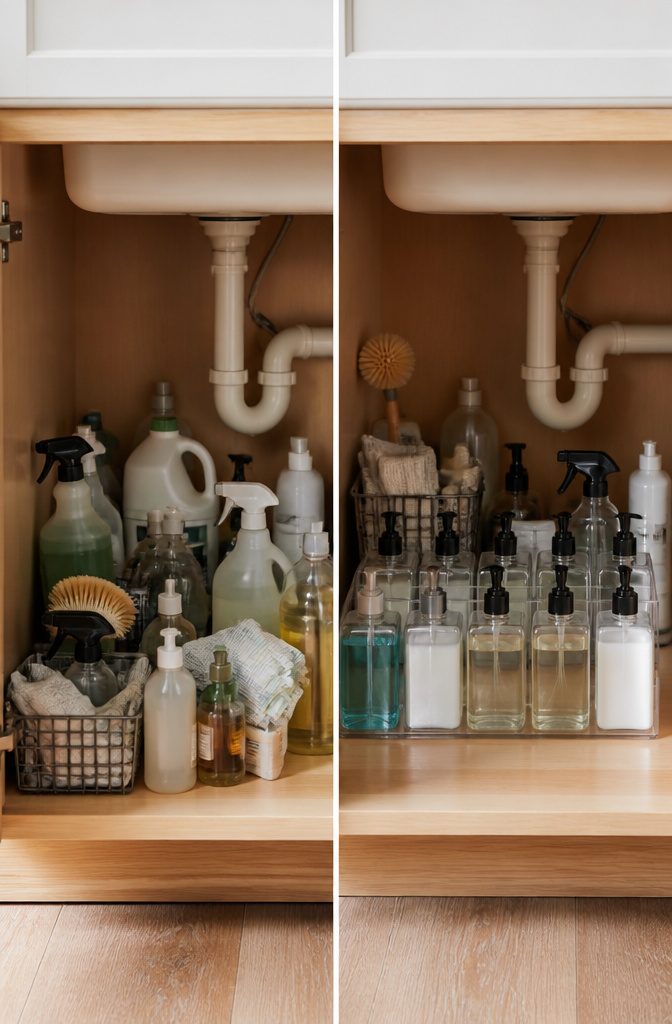
The original bottles under my kitchen sink used to look like a crowd at a concert, every pump and trigger facing a different direction, nothing sitting flat against its neighbor. Matching shapes store more predictably than original bottles with pumps and triggers pointing every direction, so I finally decanted everything into uniform containers. Tall cylinders for dish soap and all-purpose cleaner, squat jars for scrubbing powder, each one labeled with what it cleans and where it belongs. The visual calm was immediate. Where I used to see a jumble of competing colors and logos, now I see a grid that tells me at a glance when something is running low. For the bathroom, the same principle applies. Too many shapes and labels create clutter even when everything is technically organized. I keep the decanted set inside a large divided bin that pulls out as one unit when it is time to clean. The whole system cost under thirty dollars for bottles and labels, and the time investment was one Saturday morning.
Rolling Organizers
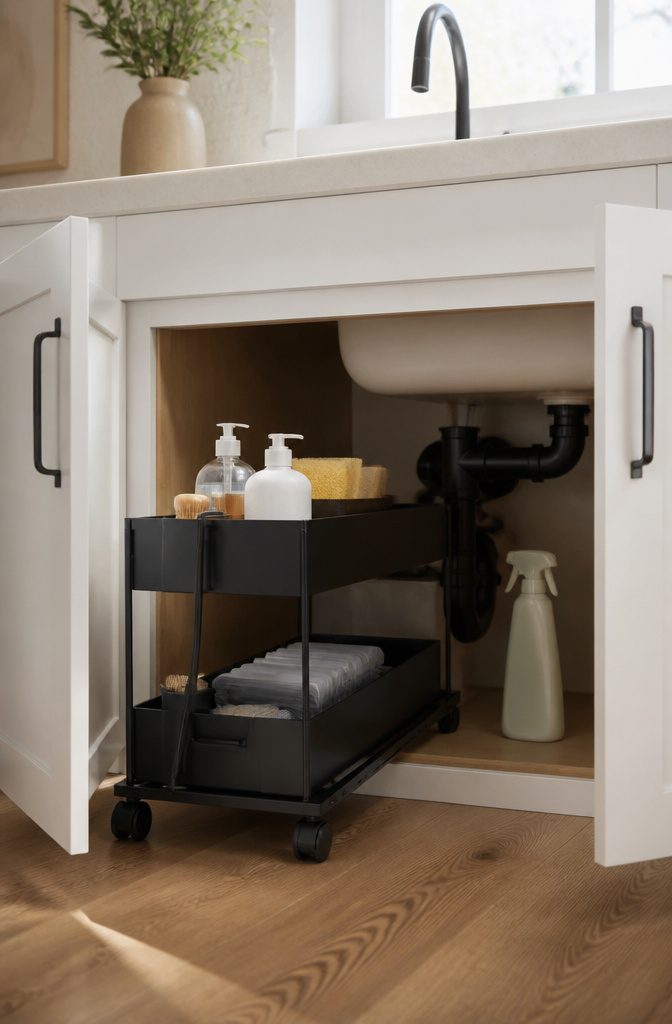
Rolling organizers bring the back of a deep cabinet to you instead of sending you after it. The unit sits on small wheels or foam feet and slides forward in one motion, which means no more kneeling to fish backward behind the drainpipe for that one bottle of stainless steel polish. I like them best for flat items or backup supplies: stacks of sponges, spare dish soap, the second box of garbage bags. A tall daily-use bottle that needs to come out twice a day will wear out your patience fast, and the rolling motion can tip things if the weight sits high. The ones with adjustable dividers earn their keep, though. A divider up front can hold small garbage bags in a dedicated slot so they do not drift into the cleaners every time you pull the tray out. For the things you reach for weekly, not hourly, rolling organizers turn the full depth of the cabinet into usable space without the usual excavation.
Choosing Right Fit
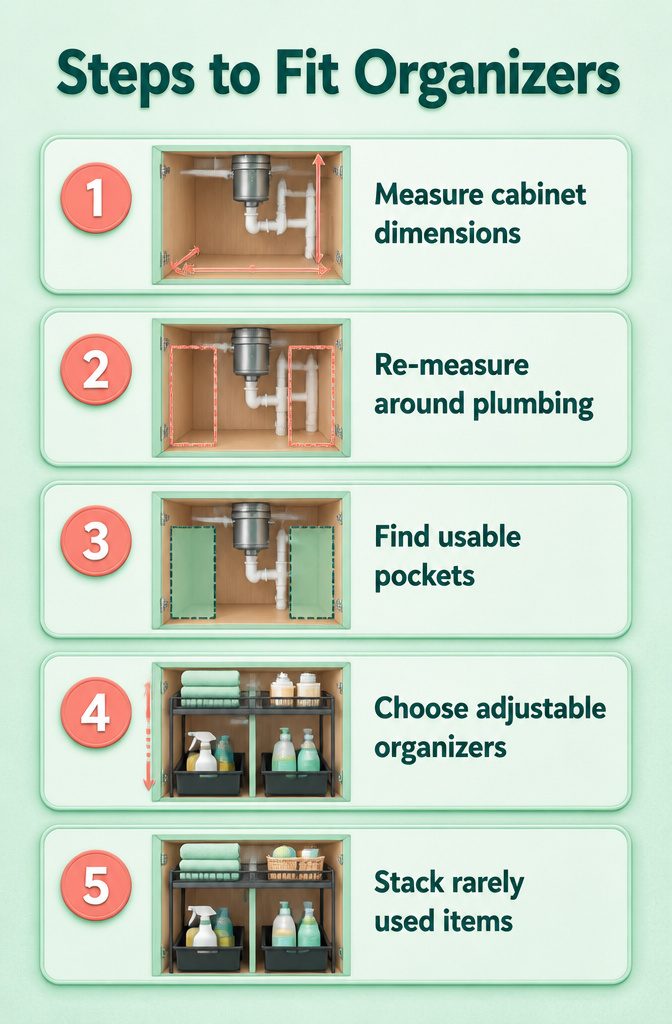
The pipes and disposal unit are fixed landmarks, so organizers have to fit around them, not the other way around. Measure the full width, depth, and height of the cabinet interior, then remeasure around the plumbing to find the usable pockets on each side. Vertical space above the pipes is usually where the real storage lives.
A two-tier adjustable-height organizer can straddle the gap if the footprint clears your disposal, with a deeper pull-out drawer below for cleaners and a shallower one above for towels or smaller supplies. Stack only what you reach for rarely; daily-use items left on a bottom bin mean constant unstacking that undoes the system.
Declutter First
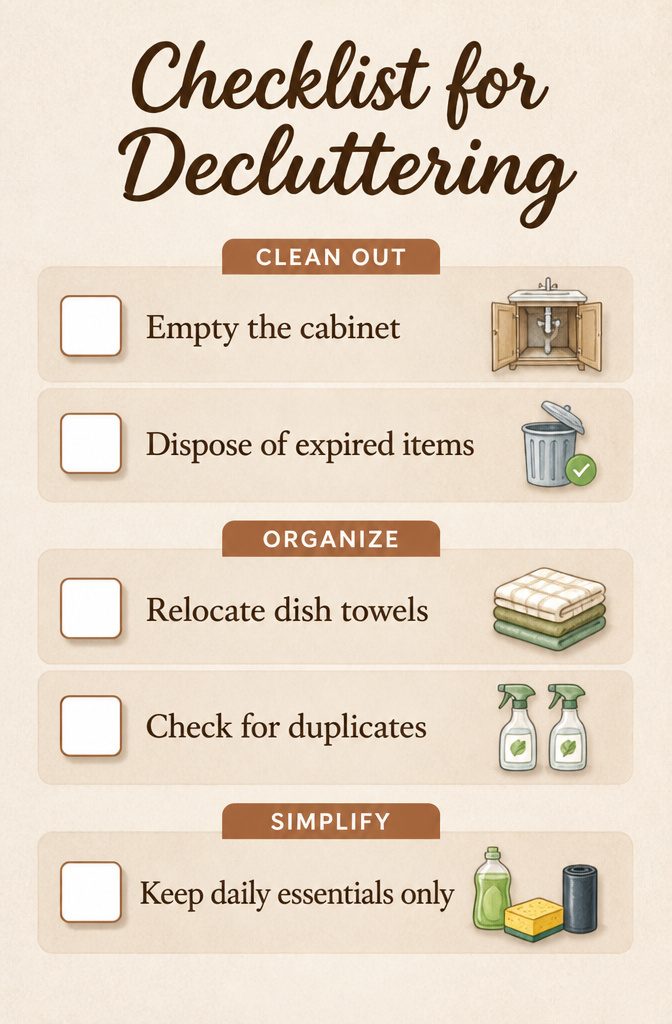
The first time I pulled everything out from under my kitchen sink, I found three half-empty bottles of the same all-purpose cleaner and a box of dishwasher pods for a machine I had replaced two years earlier. Prime real estate under a sink should be reserved for what you actually touch in a normal week: dish soap, sponges, trash bags, the spray bottle you reach for after dinner. That awkward cabinet, with its pipes and its depth and its tendency to collect moisture, is not the place for backup stock or just-in-case items.
Toss the empties and the expired, relocate the dish towels to a drawer if they have been camping there, and be honest about duplicates. The less that lives in this space, the less it fights you every morning. Store what supports your daily routine, not what you think belongs there because it is cleaning-adjacent. A near-empty cabinet is easier to organize than a full one, and easier to keep that way.
Customize to Your Routine
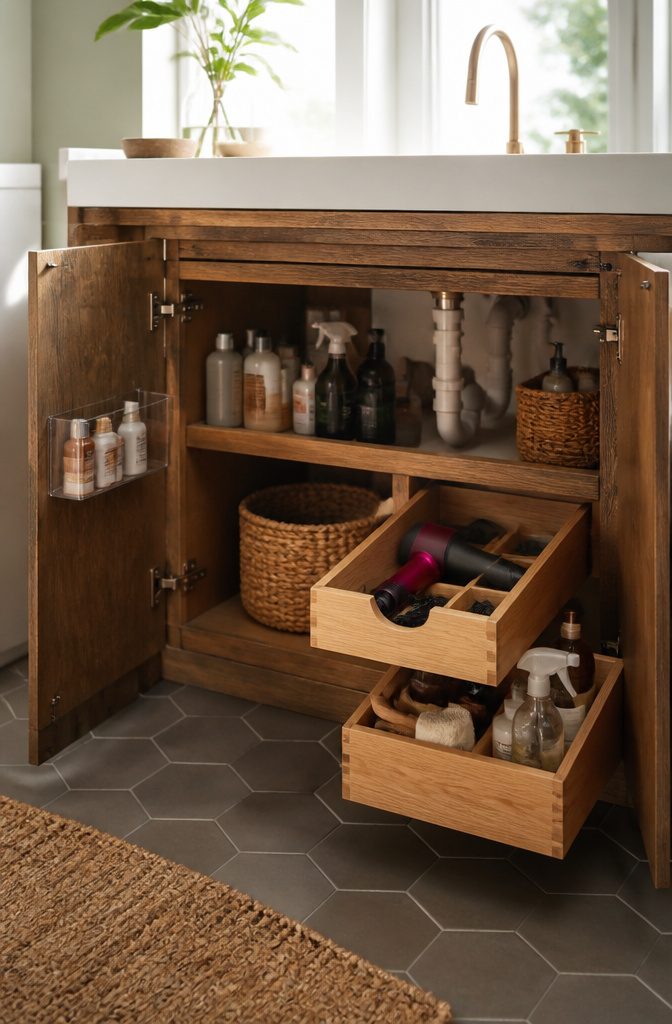
The space under your sink works best when it holds what you actually reach for, not what a magazine says belongs there. In my bathroom, that meant claiming a drawer for my hair dryer and straightener instead of letting them tangle on the counter. The cabinet became my first-aid station too, bandages and thermometer right where I stand every morning.
Kitchen sinks reward the same thinking. Dishwasher pods sat loose on top of pull-out drawers because that was the motion that matched my routine: grab a pod, load the machine, move on. A plastic caddy with a handle corrals the spray bottles I carry to other rooms. I left the steel wool in its own drawer after finding four half-empty boxes scattered through the cabinet.
The pipe bulge under my sink nearly killed the whole plan. A unit I had measured carefully still needed snaking past those feet that lifted it just enough to catch. My partner helped angle it in, and now that tight fit is the backbone of the storage. Measure the width, but also the height at every point, because pipes do not sit where the drawing shows them.
What lives there can be unconventional. Kids’ pajamas in the bathroom speed bedtime. Pet food by the kitchen sink if that is where you fill the bowl. The only mistake is buying the bins before you know the habit.
Frequently Asked Questions
What are the best ways to organize under the sink?
Pull-out drawers, stackable bins, and deep baskets are the most reliable options. A two-tier pull-out drawer works around plumbing and brings everything forward in one motion. Stackable bins build upward where pipes block horizontal space, and deep baskets with open tops keep tall bottles upright and visible from above.
How do I protect the bottom of my under-sink cabinet?
Lay down a waterproof silicone liner with a raised lip around the edge. It catches spills and leaks before they reach the wood, and lifts out for rinsing. If you use rolling organizers on top, pick a flat surface liner since textured patterns stop wheels from tracking smoothly. Absorbent waterproof liners cost less and trim to fit odd shapes, but they lack the lip that contains a real leak.
What should I store under my sink?
Only what you touch in a normal week: dish soap, sponges, trash bags, and the spray bottle you reach for after dinner. This awkward space with its pipes and moisture risk is not the place for backup stock or just-in-case items. Toss empties and expired products, relocate dish towels to a drawer, and be honest about duplicates before you organize anything.