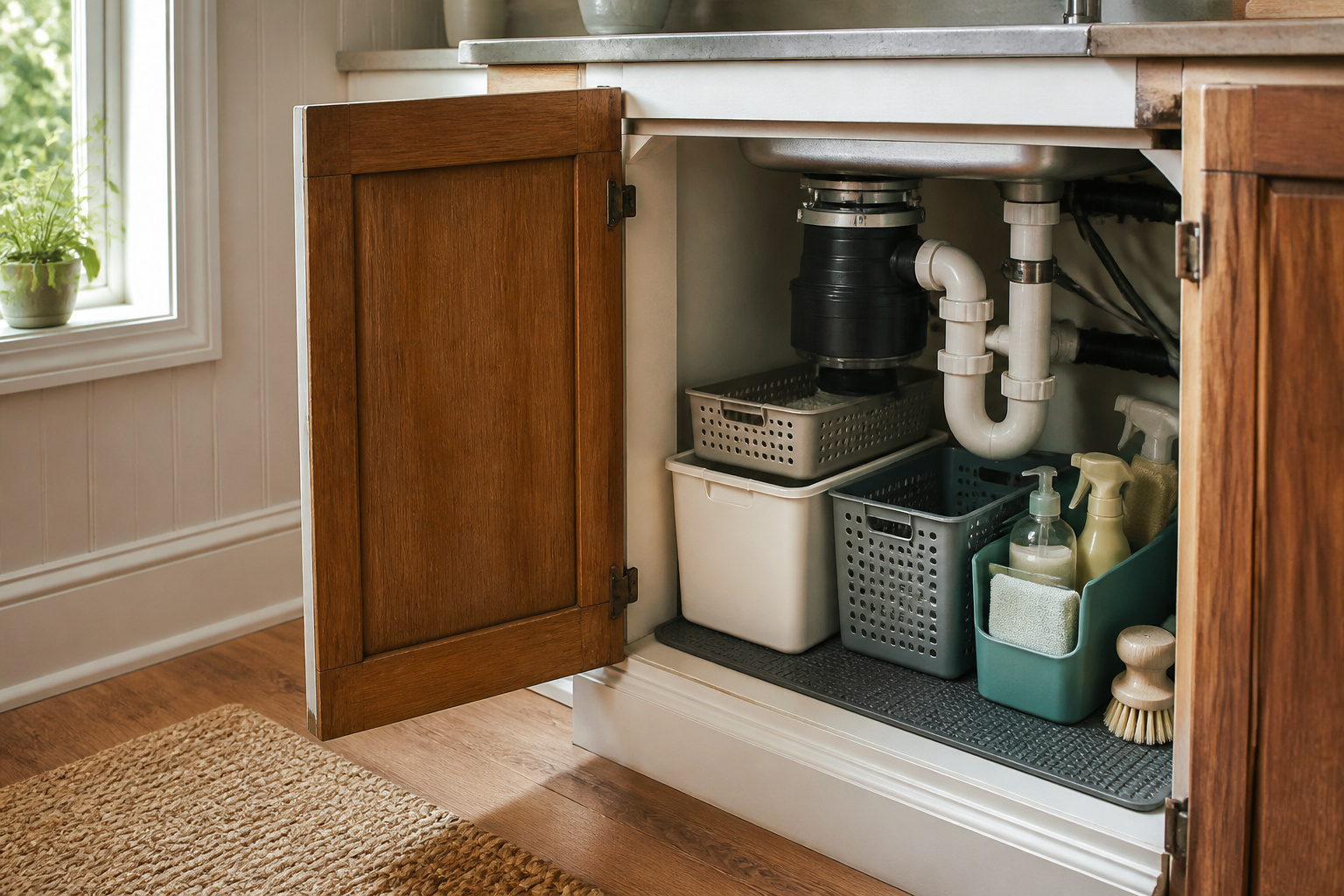
Organizing under the kitchen sink means working around pipes and plumbing that standard bins simply cannot accommodate. The real challenge is that most people buy storage before they measure the six- to eight-inch clearance gaps beside their garbage disposal, then end up with frames that sit two inches proud of the door. Start with a waterproof silicone liner with a raised lip; it rolls out as-is and contains actual leaks before they warp the cabinet base, but you need a smooth surface if you plan to add rolling organizers later.
Start With a Protective Liner
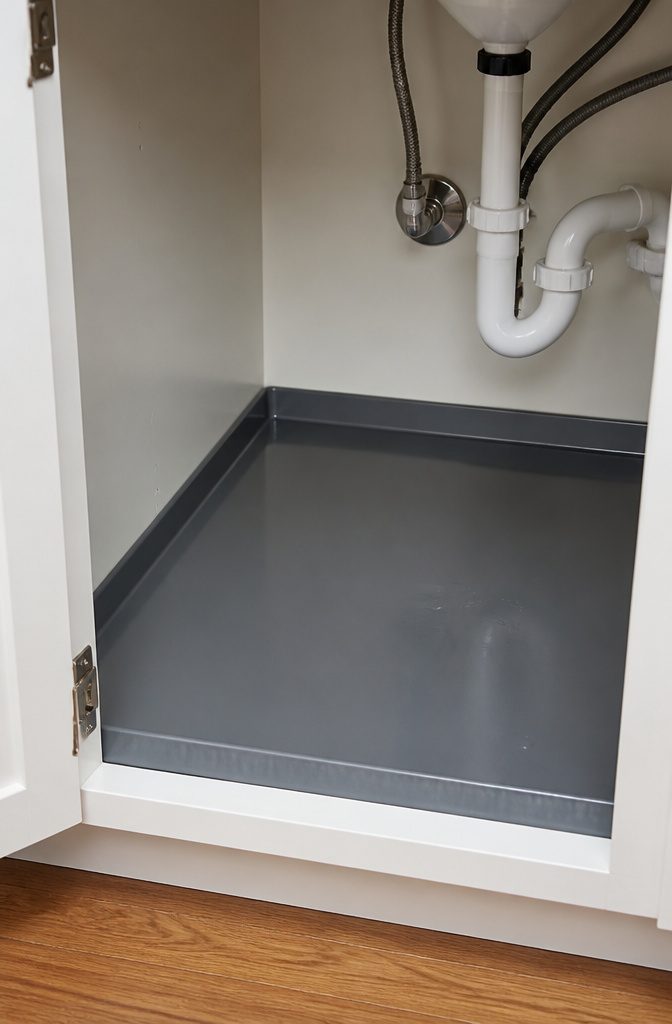
The first time I reorganized under my kitchen sink, I skipped the liner entirely. Six months later, a slow drip from the faucet supply line warped the cabinet base before I even noticed it. Now I start every under-sink project with a waterproof silicone liner with a raised lip around the edge, made specifically for sink cabinets. That lip contains actual spills and plumbing leaks instead of letting them seep into the corners.
Silicone liners roll out as-is and wipe clean, though you’ll want one without a heavily raised pattern if you’re planning rolling organizers. The smooth surface lets wheels track properly. If your cabinet has pipes coming up through the bottom, these are flexible enough to cut around.
For non-standard cabinets, a waterproof shelf liner or an absorbent waterproof liner works too. You trim it to fit odd shapes, and it costs less upfront. The tradeoff is no containment lip, so a major leak still spreads. A corner sink cabinet with an irregular footprint basically forces this choice, since molded liners rarely match. Either way, putting something down before the first drip saves the aggravation of replacing particle board that has bubbled and softened.
Declutter Before You Buy Anything
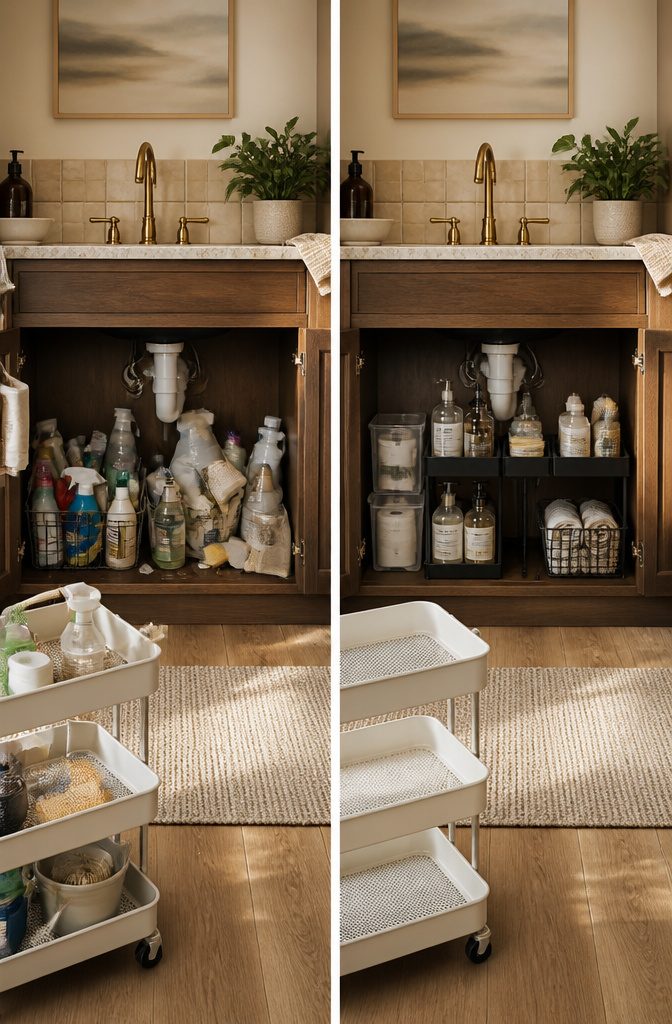
Buying organizers before you know what you are actually storing is the fastest way to waste money and still have a mess. The plastic bins and tension rods look promising in the store, but they fit the stuff you do not need instead of the stuff you do.
Pull everything out and check the dates. Half the bottles under most sinks expired two years ago, especially the specialty cleaners bought for one job and forgotten. That granite polish from the old apartment, the backup dish soap that turned cloudy, the trial-size bottles collected from hotels: they all look like essentials until you line them up and realize the only thing you reach for weekly is spray cleaner, dish soap, trash bags, dishwasher tabs, and a sponge.
The goal is not to own less for its own sake. It is to know what everyday use actually looks like so the storage you eventually buy matches the volume and shape of those few items. Keep the just-in-case stuff elsewhere, or admit you will buy a new bottle when the need actually arrives. The space under the sink is too awkward, too dark, too prone to leaks to serve as a general storage annex.
Once the purge is done, what stays deserves the prime real estate up front. Less-used supplies can go toward the back or higher up, but only if they truly earn the spot. If you are constantly pulling something out, make sure it is easy to grab without rearranging half the cabinet. Pretty organization is fine, but functional organization is what survives a real Tuesday night cleanup.
Work Around the Plumbing
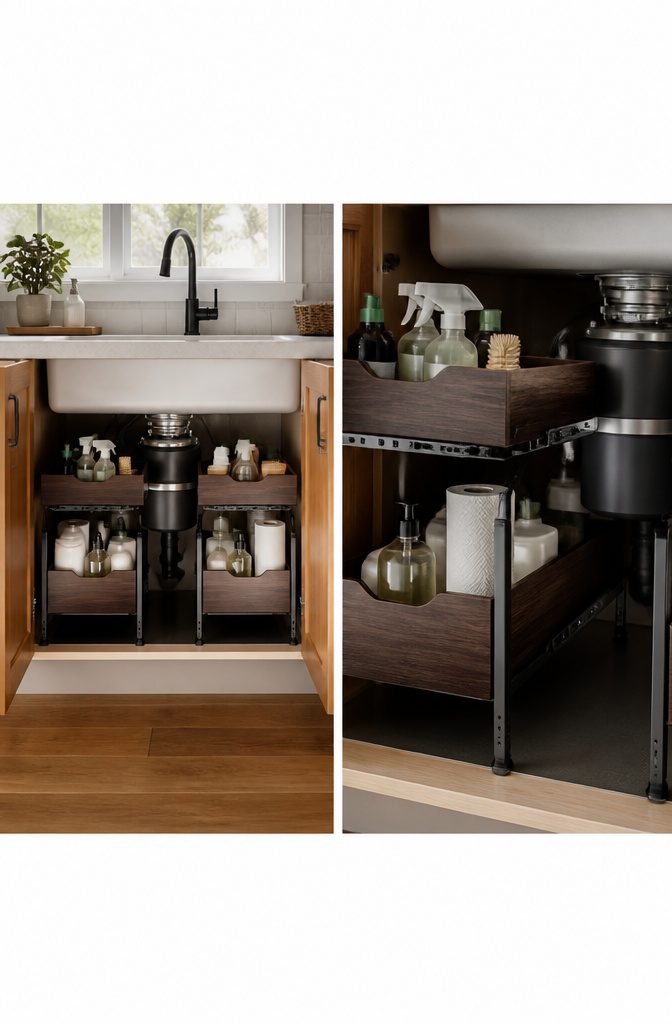
Standard bins fail under a sink because they do not account for the garbage disposal bulging dead center or the cluster of supply lines behind it. Specialty organizers are built around that reality: two-tier units with pull-out drawers sit on legs that straddle the disposal, and the shelf above it is cut shorter or mounted higher to clear the housing. The difference is not just a smaller footprint. These pieces have adjustable-height shelves and U-shaped notches so you can fit them to your exact pipe layout rather than hoping the plumbing happens to line up.
Measuring matters more here than anywhere else in the kitchen. The disposal itself is rarely the obstacle; the gap around it is. Most guides mention that gap without explaining what to do with it. The usable space sits in front of the disposal and in the narrow channels beside it, sometimes only six to eight inches wide. A two-tier organizer with a shallow top drawer and a deep bottom one puts the bulky items where the clearance is tallest and keeps the small stuff accessible without moving bottles around the pipes. The key is measuring the vertical clearance at three points: left of the disposal, right of it, and in front, since the housing slopes and the shelf height that clears the back may scrape the front.
Stability is the other feature that separates these from a plastic bin on the floor. Drawers that pull out fully when loaded with a gallon of cleaner need a frame that does not tip, and that requires either a back rail screwed to the cabinet wall or a wide enough base to counter the weight. If your cabinet has no back panel to anchor to, the wider-base option is the safer bet, even if it eats two more inches of floor space.
Pull Everything Forward
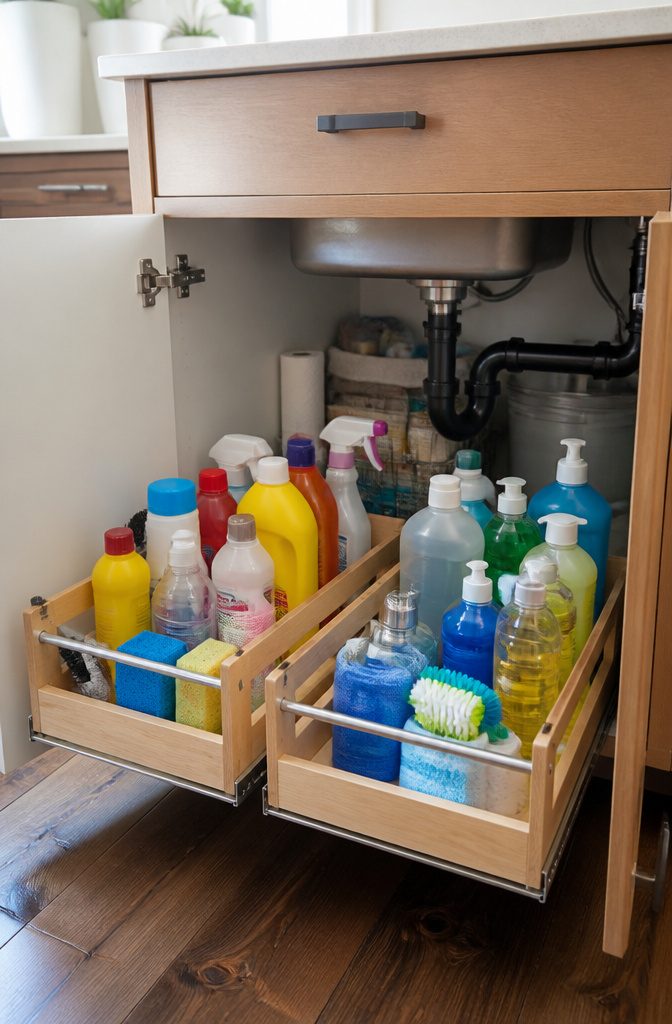
Depth is the enemy under a kitchen sink. That cavern behind the drainpipe swallows spray bottles whole, and the only way to win it back is to pull everything forward on wheels or sliders.
Rolling organizers with adjustable dividers keep dish soap and cleaners from shifting mid-pull, and the dividers let you leave a fixed slot for garbage bags up front so they do not migrate. Two-tier pull-out drawers work around center plumbing if you need towels on top and heavier bottles below; the weight sits low, so nothing tips when the drawer extends. I would stack a third drawer only if the top surface stays useful, because dishwasher pods left loose on a flat shelf beat decanting into yet another bin you have to lift.
Wheels versus sliders comes down to what your cabinet will tolerate. A unit with feet that lift it even slightly can snag on the cabinet frame or pipe protrusion, so measure the full height including any base, not just the basket. Width matters too, but the real fight is often vertical: pipes that fall between the side bars in plan view become an obstruction once you try to slide the frame underneath.
Stack What Stays Put
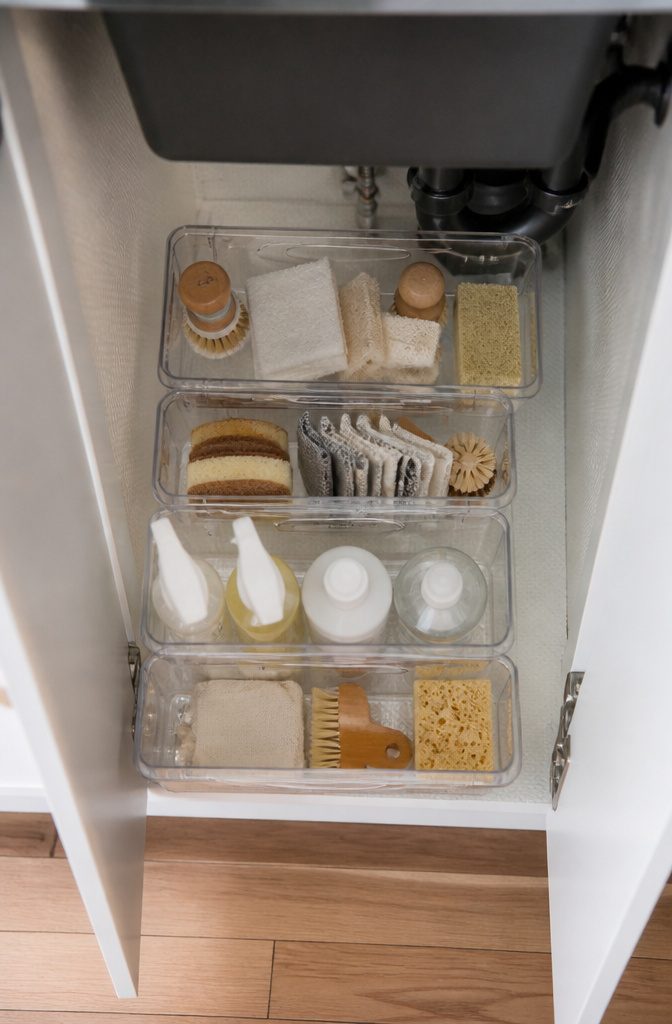
Clear stackable drawers are where the vertical space under a sink actually pays off. The two sizes that keep coming up are 4.5 inches and 6.75 inches, both acrylic and both worth knowing before you buy.
The shorter 4.5-inch drawers fit the stuff that tends to scatter: sponges, steel wool pads, magic erasers. That height keeps them shallow enough to slide out past most P-traps without catching. The 6.75-inch size holds taller bottles or a stacked supply of dish tabs, and you need to know which you have before you commit, because mixing them blindly wastes the whole point.
Clear matters more here than in a pantry because you are crouched, half-blind, reaching past a garbage disposal you would rather not touch. Solid bins turn that moment into guesswork and usually overbuying. With clear acrylic, you see the last three sponges before you add a tenth to the cart.
What I stacked wrong the first time was assuming height alone solved it. I put a tall bin on the bottom and a short one on top, which meant the top drawer lip blocked the bottom from opening all the way. Bottom sits heavier and taller; top stays lighter and shorter. That is the order that actually slides.
Use the Door
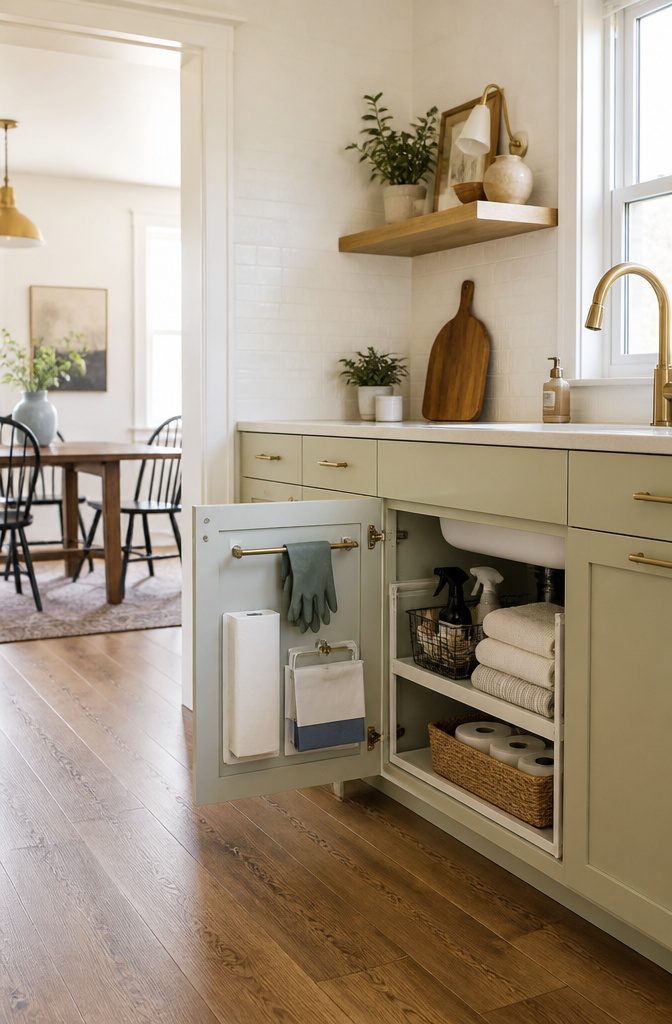
The back of the cabinet door is the first place I look for extra inches, but what hangs there has to be lighter than what sits on a shelf. My own hard lesson came with a wire rack loaded with glass cleaner and a full bottle of degreaser. The adhesive strips held for about three weeks, then let go at 6 a.m. on a Tuesday. Now I keep spray bottles on a slim towel bar mounted with screws into the door itself, and I limit door storage to things that weigh almost nothing: dishwashing gloves on a small hook, a grocery bag dispenser, the dish towel while it dries.
Dishwasher pods and trash bags ended up on my door because they are exactly the right shape and heft for it. A clear two-tier organizer keeps the pods on top and trash bags rolled below, both visible the second the door swings open. The pods sit loose, not in their cardboard box, which saves the depth that box would steal from the cabinet interior. My sister uses a similar setup from the same line, hers with a dedicated trash bag dispenser base and smaller containers on top for pods and steel wool pads.
The tradeoff is real. Door-mounted storage puts daily items at eye level and frees the cabinet floor for bulk paper towels or refill jugs, but every pound out there is a pound the hinges and mounts have to carry indefinitely.
Two-Minute Monthly Reset
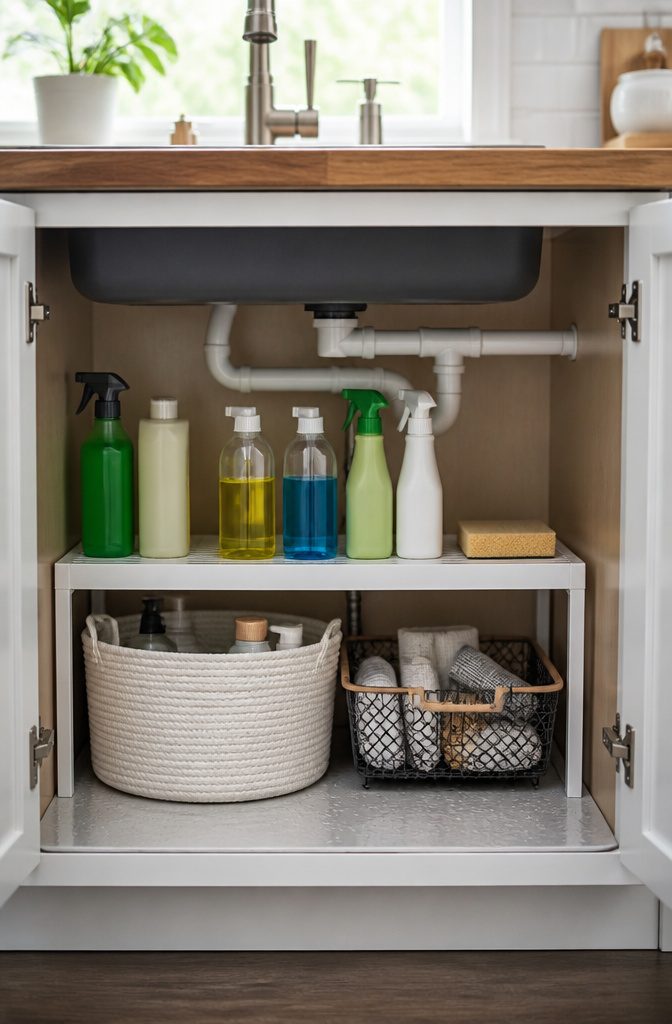
The real enemy of an organized under-sink cabinet isn’t the mess you see on Saturday morning; it’s the five-second decision to shove a rogue sponge behind the spray bottle on a Tuesday night. That single lazy move trains the whole system to collapse.
A 2-3 minute monthly reset is the corrective habit. The trigger is simple: the moment you notice something sitting where it doesn’t belong, or when you reach for a cleaner and knock over two others. Instead of pushing through the annoyance, stop. Return the displaced item to its home, straighten anything that shifted, and wipe the liner if there’s a drip. The mat catches spills that would otherwise glue bottles to the cabinet floor.
This small rhythm keeps the organizing system from creeping back into chaos every six months. Skip it for a month and you get mild clutter; skip it for three and you’re back to excavating the entire cabinet to find the dish soap. The reset costs almost no time because it happens before disorder compounds.
Why Order Matters
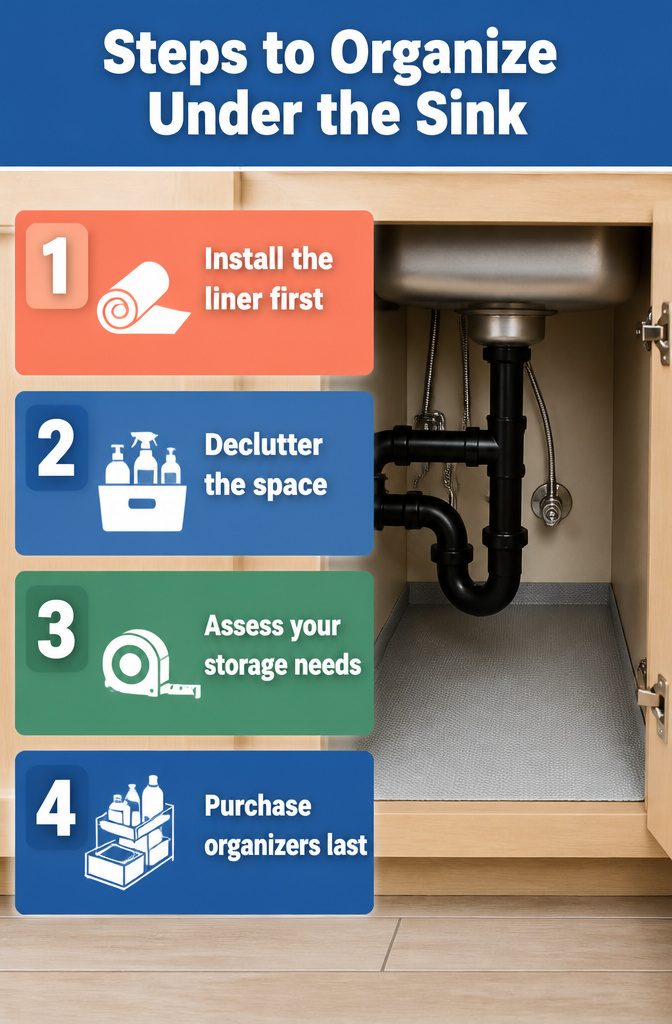
Most "under the kitchen sink ideas" articles throw every tip into a pile and let the reader sort it out. The result is someone buying a three-tier organizer before they know whether their pipe layout will even allow it, or laying down a liner that gets cut to shreds because they installed the shelf hardware first.
Liner goes down before anything else touches the cabinet floor. Water finds the lowest point. Once you have boxes and sliders in place, you’re working around them with a razor knife and hoping the adhesive catches on dusty wood. Done first, the liner is one clean rectangle with edges that actually seal.
Decluttering follows the liner for the same reason. You need to see the full footprint empty to know what you’re really storing, not what you assumed you were storing. That empty cabinet is your measuring tape. With it bare, you can spot the slope of the floor, the exact drop of the P-trap, the inches where a tall bottle would clear the shutoff valve. Those measurements decide whether a pull-out caddy or a simple bin makes sense, so buying happens last.
The competing articles treat these as "helpful tips to mix and match." They aren’t. Skip the sequence and you end up with a organizer that sits two inches proud of the door frame, or a liner pieced together like a quilt around pipes you should have mapped first.
Types of Organizers That Actually Fit
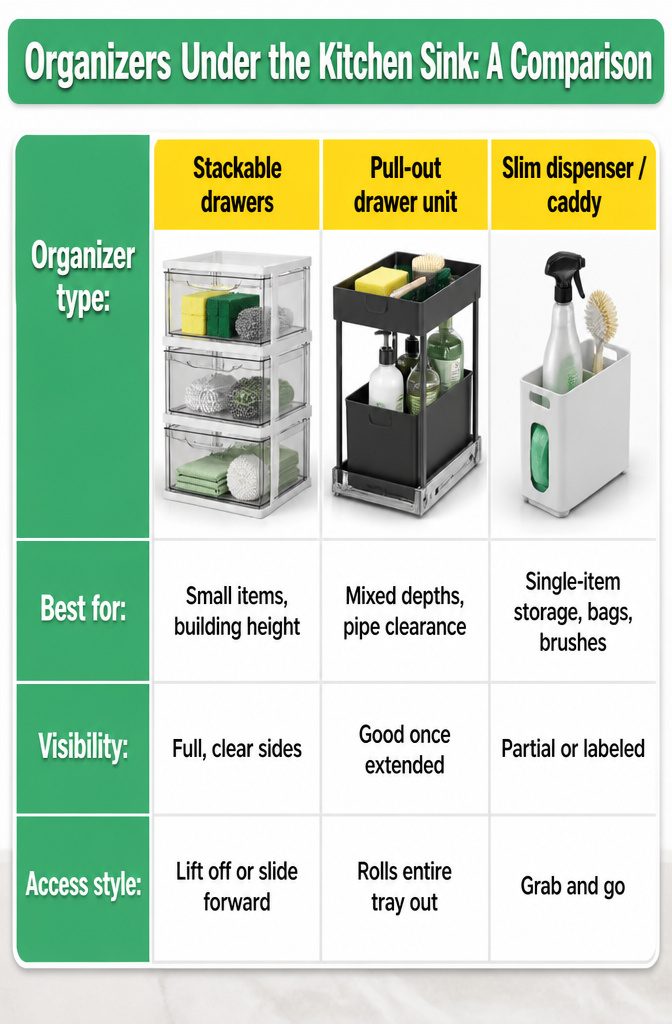
The space under a kitchen sink is deeper than it looks and oddly shaped around pipes, so the organizer that wins for you depends on whether you fight for vertical height or pull-out access. Stackable drawers, for instance, let you use the full cabinet height and keep sponges or steel wool visible at a glance, which helps avoid buying duplicates. A pull-out unit with shallow trays on top and a deep bin below does the same vertical job but adds the benefit of rolling forward so nothing hides behind the pipes. Rolling carts or slim dispensers work better for single items, like a spring-loaded bag holder or a waterproof caddy for scrub brushes, because they travel with the task instead of staying fixed.
| Organizer type | Best for | Visibility | Access style |
|---|---|---|---|
| Stackable drawers | Small items, building height | Full, clear sides | Lift off or slide forward |
| Pull-out drawer unit | Mixed depths, pipe clearance | Good once extended | Rolls entire tray out |
| Slim dispenser / caddy | Single-item storage, bags, brushes | Partial or labeled | Grab and go |
What convinced me, reading through a dozen of these setups, is that rigid pull-out frames often force a compromise: one source had to abandon the top shelf piece entirely because the cabinet was too short to use it. If your space is under 14 inches of usable height, skip the fancy frame and stack instead.
Customize to What You Actually Own
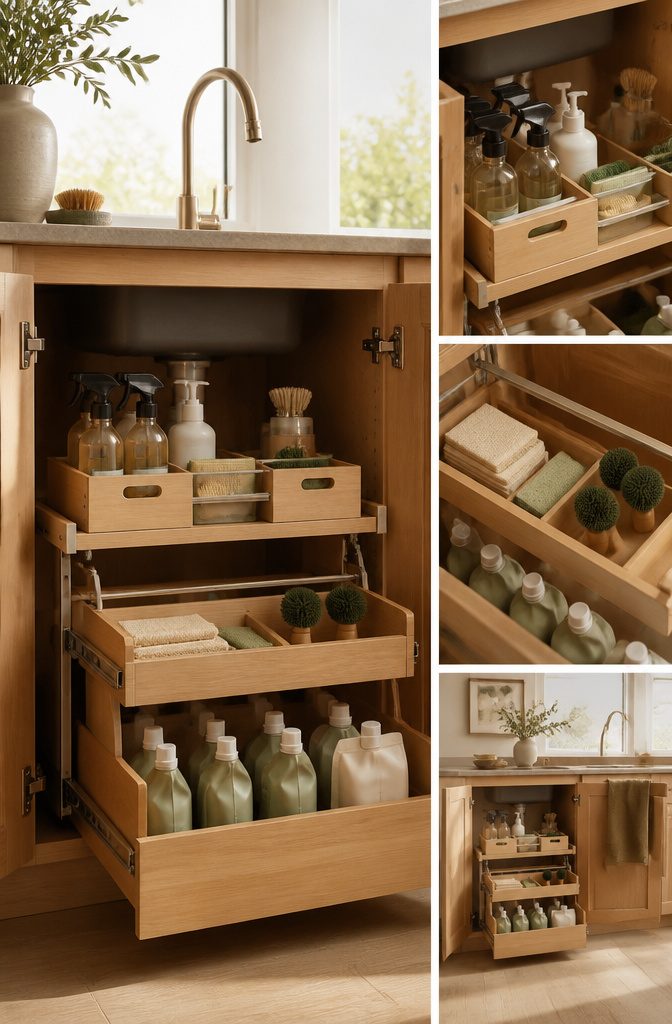
The soda can holder sitting in your pantry right now might be the exact thing your scrub brushes need. Mine turned out to be waterproof, long enough for even the longest bottle scrubbers, and flat on top so I could stack another organizer over it. That last part mattered more than I expected; vertical real estate under a sink is usually wasted because people shop for single-function bins and stop.
A slim, spring-loaded bag dispenser works the same way if you keep grocery bags for reuse. The spring keeps bags at the top instead of letting them sink to the bottom where you forget them.
For the plumbing itself, a two-tier adjustable-height organizer with pull-out drawers changes what fits. The large bottom drawer can hold cleaners, the smaller top one dish towels, and the height adjusts around your garbage disposal and pipes rather than fighting them. The sturdiness is the detail worth checking in reviews; a full drawer of spray bottles tips cheap units forward when you pull.
The real move is buying for the plumbing you have, not the cabinet you wish you had. Measure the clearance front and back of your pipes, then match that to the product depth.
Frequently Asked Questions
How do I organize under my kitchen sink?
Start with a waterproof silicone liner that has a raised lip to catch leaks, then declutter everything before buying any organizers. Work around your plumbing with specialty two-tier units or stackable drawers, and finish by adding lighter items to the cabinet door. The order matters: liner first, then purge, then measure, then buy.
What are the best organizers for under the kitchen sink?
Rolling organizers with adjustable dividers keep daily cleaners within reach without digging. Clear acrylic stackable drawers in 4.5-inch and 6.75-inch heights build vertical space while keeping contents visible. For mixed items, a pull-out drawer unit with shallow trays above and a deep bin below rolls everything past the pipes. Door-mounted slim racks work for lightweight items like gloves or grocery bags.
How can I maintain organization under my sink?
Set a 2-3 minute monthly reset. When you notice something out of place or knock over bottles reaching for a cleaner, stop and return displaced items to their homes, straighten what shifted, and wipe the liner if needed. Catching disorder early keeps it from compounding into a full excavation project.