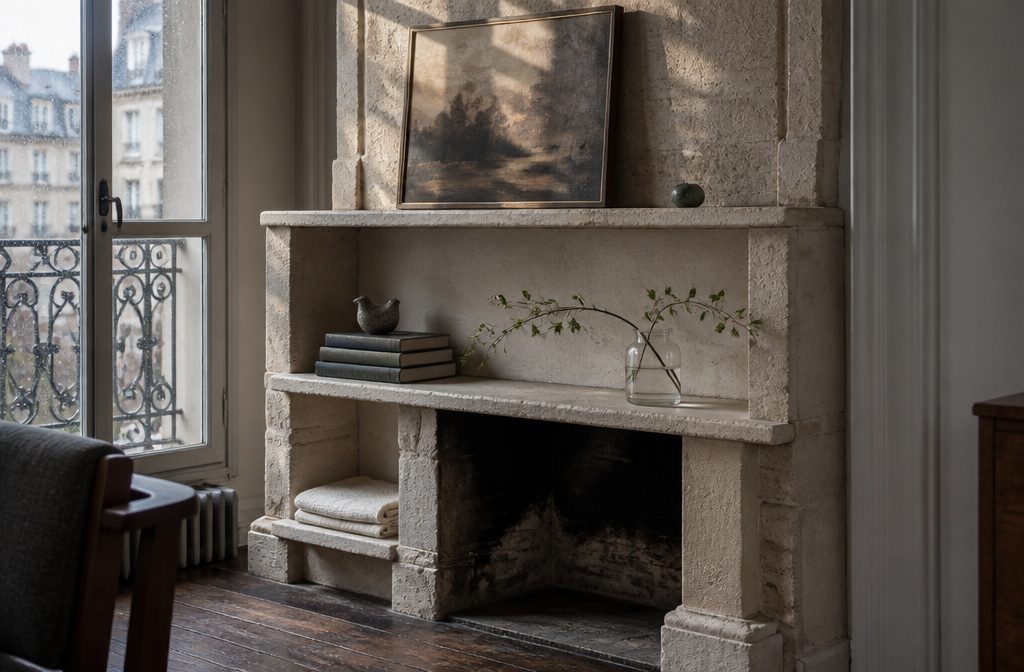
Fireplace shelves that look finished rather than staged come down to restraint and repetition: two to three core colors layered across heights, objects that mix personal pieces with sculptural forms, and enough negative space that each item registers on its own.
The mistake is filling every surface, which turns a display into clutter no matter how expensive the objects are.
1. Build a Cohesive Color Palette
Build a Cohesive Color Palette
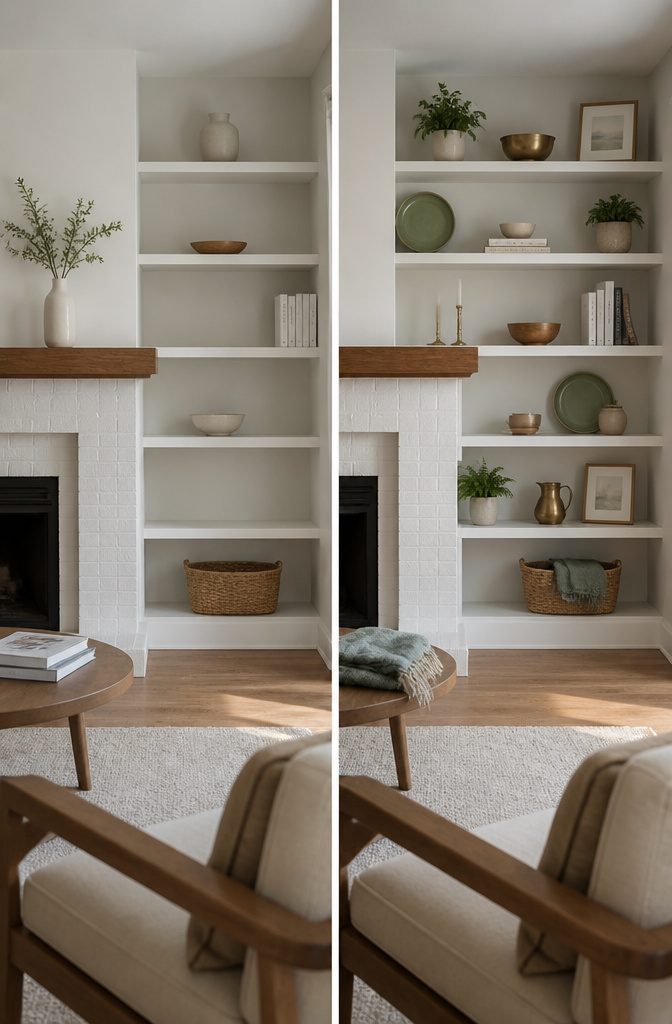
Repeating a small group of colors across the shelves and mantel makes the whole fireplace area feel connected instead of scattered.
Choose two to three core colors with one or two accent shades, then let those tones show up in different objects on different shelves. Green, blue, black, and warm earth tones all work well for this.
If you’re painting the back of the shelves, something like New York State of Mind by Benjamin Moore can anchor the palette and tie the shelving to the fireplace surround.
I find it easier to start with neutrals like white, black, beige, or wood tones, then add one standout color for contrast. Sage green, navy, or brass will give you that pop without fighting the rest of the display.
Scattering colored plates across multiple shelves instead of grouping them all on one pulls the eye through the arrangement and keeps the color from landing in a single visual weight.
The mantel should echo whatever you choose for the shelves, repeating at least one color or material so the two areas read as one composition.
2. Vary Height, Scale, Shape, and Texture
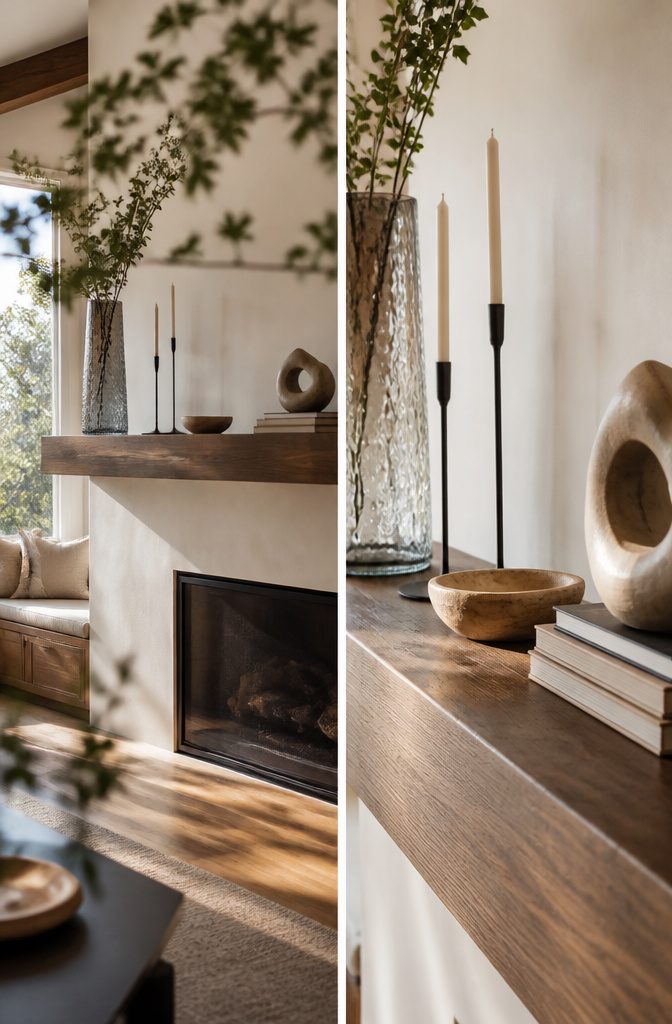
Mixing tall candlesticks with short bowls or stacking books to lift smaller pieces gives the shelves rhythm instead of a flat line. When everything sits at the same height, the eye has nowhere to go.
A tall vase on one side balanced by stacked books and a small sculpture on the other creates the kind of visual pull that keeps a display from feeling static.
Different materials matter just as much. Glass next to metal, ceramic beside wood—each surface catches light differently and adds texture the eye registers even from across the room.
A shelf filled entirely with smooth pottery reads monotonous no matter how you arrange it. Vary the finish and the form, and the collection starts to feel collected rather than bought all at once.
Horizontal and vertical pieces working together prevent that assembled look. A tall sculptural object anchors one end, shorter grouped items fill the middle, and the contrast between the two gives the arrangement dimension.
Negative space between groups lets each piece register on its own instead of blurring into a crowded line.
3. Layer Objects
Layer Objects
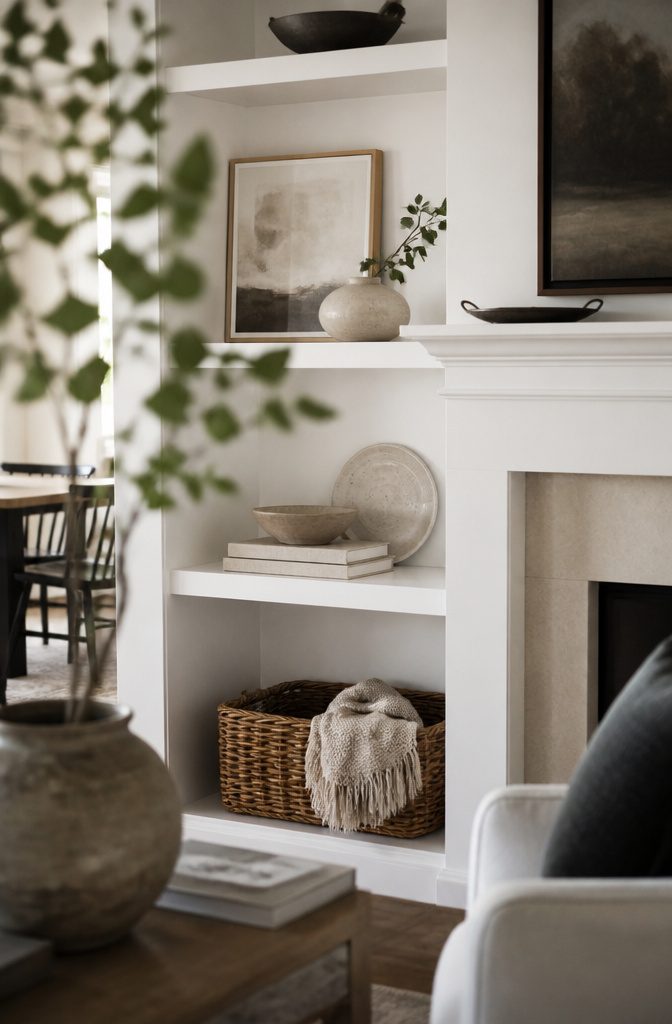
Placing a framed piece of art leaning against the back of the shelf, then setting a smaller vase or candle holder in front of it, turns a flat arrangement into a composition with foreground and background.
Stack a few design books, then top them with a decorative bowl or small accessory. That simple move adds dimension and makes the shelf feel intentional rather than static.
Plates work well as backdrops for objects and add height when you need it.
Smaller plates look good propped behind books or used to lift a single decorative piece. You can also layer smaller frames in front of larger ones for a casual, collected look.
A small abstract print on the top or middle shelf gives you a backdrop that pulls the whole arrangement together without dominating the space. The depth comes from overlap, not from filling every inch.
4. Use Books as Display and Support
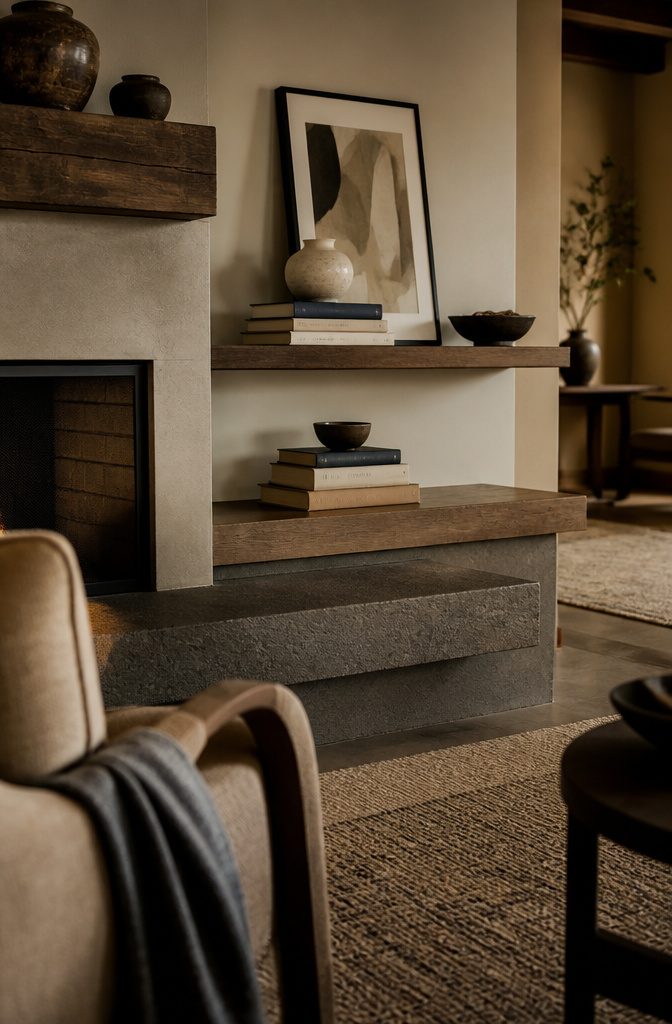
Books stack horizontally to anchor a shelf and lift smaller objects — two to four at a time works without toppling.
The horizontal run gives you a flat surface for a small vase or a framed photo, and the spine colors either tie into your palette or disappear entirely if you flip them.
Vertical books can frame a piece on either side, but I find the stacked approach more useful when shelf space is limited and you need height without drilling or adding stands.
Thrift stores carry coffee table books for around $2 each, which makes this one of the cheapest ways to fill a fireplace shelf that still looks considered.
Art, travel, garden and design titles hold up visually even when they are not recent, and you can rotate them seasonally if the mood shifts.
The budget stretch happens when you need enough to fill multiple shelves — ten books at two dollars is still twenty dollars, but that is low compared to most décor that takes up the same footage.
5. Mix Decorative Objects with Personal Pieces
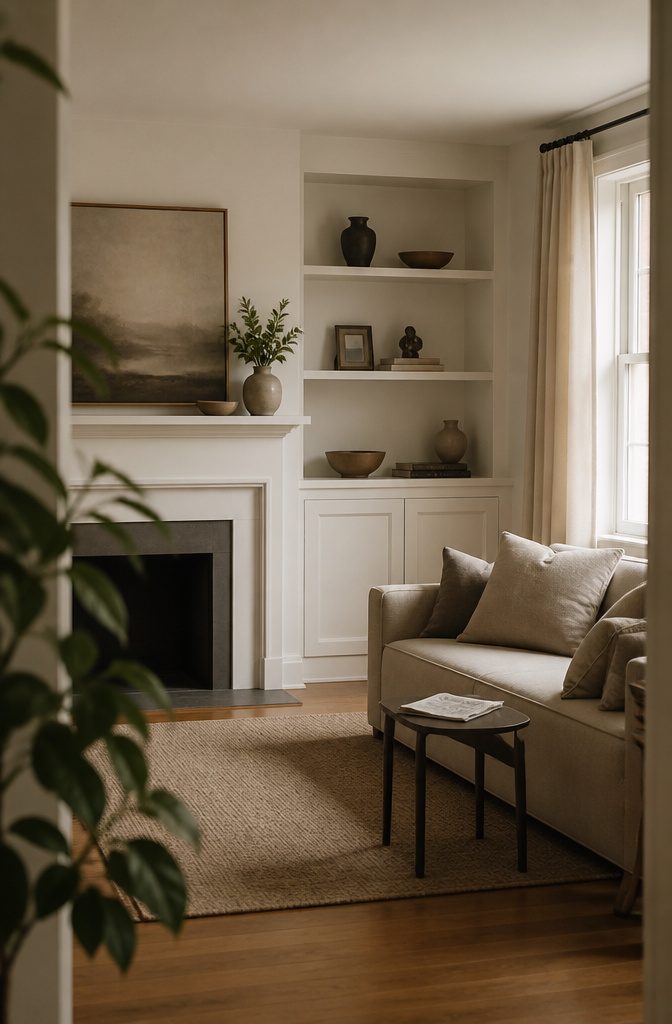
The shelves that feel most finished are the ones that combine decorative objects with a few personal pieces.
A framed photo, a keepsake from a trip, or a piece of hand-thrown pottery gives the display a reason to exist beyond looking styled.
I mix sculptural objects or vintage finds with one or two items that mean something, and that small shift makes the arrangement feel less rehearsed.
The mistake is filling every inch.
Curating matters more than volume. A few personal touches surrounded by clean, neutral design elements read better than a crowded shelf where nothing stands out.
Framed art prints, heirlooms, or travel souvenirs work well when they share the space with simple forms rather than competing with them. A display that feels lived-in without looking cluttered comes from editing as you go.
6. Bring in Natural Elements
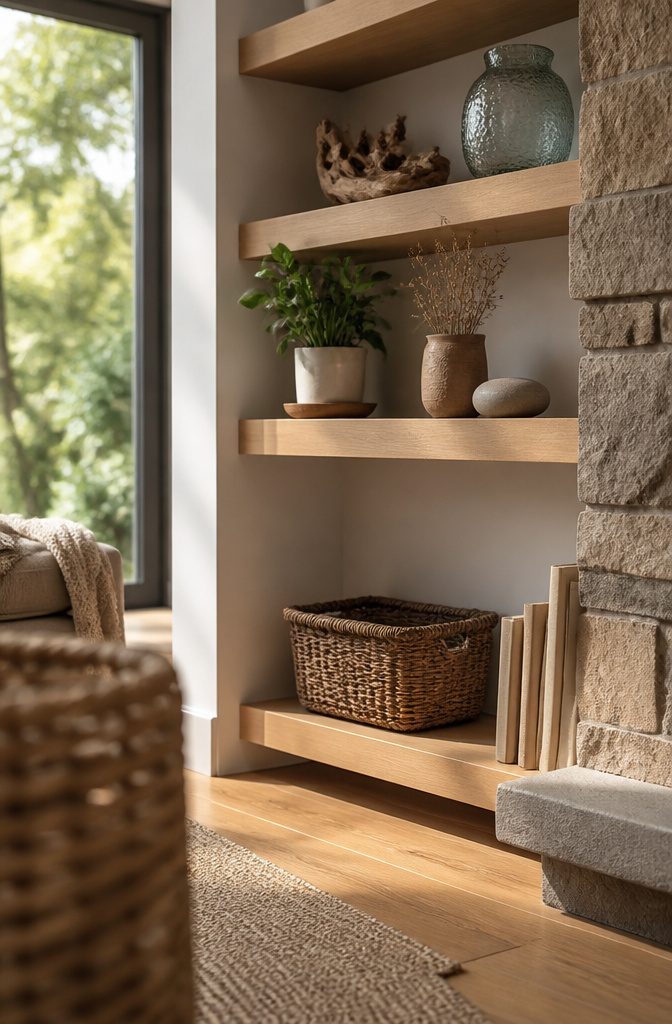
Natural materials add softness to shelves that otherwise lean hard and architectural. Wood, clay, stone, and woven fibers warm the arrangement without fighting the fireplace itself, which already brings plenty of weight to the corner.
A potted plant or a handful of dried stems breaks up the geometry.
If you’re not keeping anything alive, faux greenery works just as well—most people won’t look close enough to tell, and it won’t drop leaves on the books below.
Small woven baskets tuck into open shelves when you need to hide remotes or chargers, and the texture alone justifies the space they take.
Glass catches light in ways solid objects don’t. Artisan-made textured glass vases or alabaster vases and candle holders layer well because they read as deliberate rather than decorative filler.
Pair one with driftwood or a smooth river stone, and the shelf starts to feel collected instead of arranged all at once.
The mix matters more than any single piece: greenery next to stone, wood grain next to glass, something alive-looking next to something carved.
7. Add Art or Mirrors
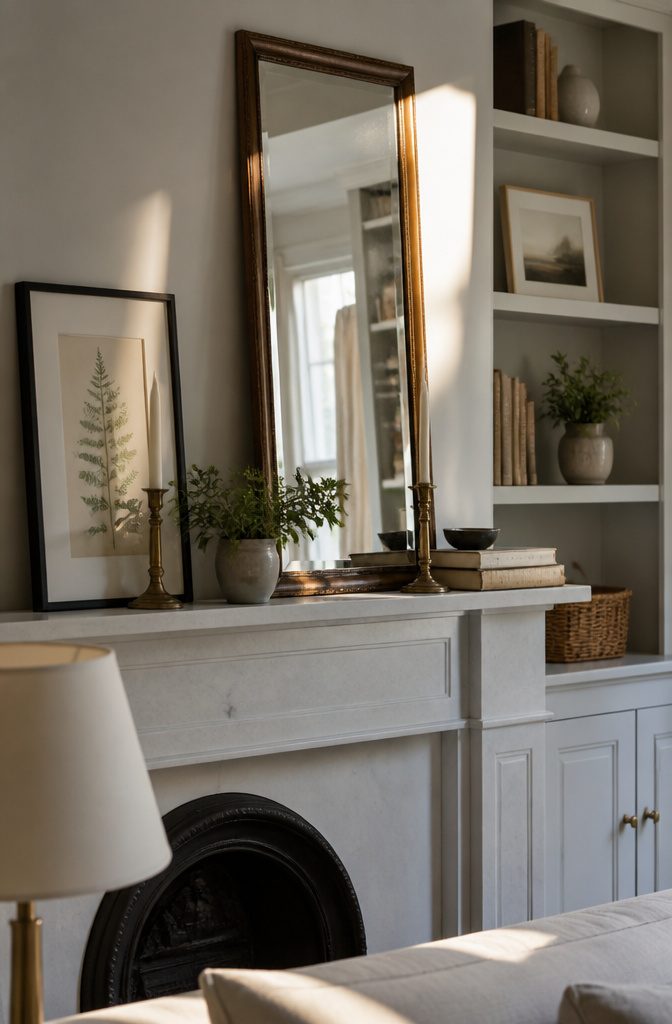
Add Art or Mirrors
A framed piece leaning on a shelf acts as a backdrop for smaller objects in front of it, and a mirror does the same job while reflecting light back into the room.
I usually set a small abstract print or botanical piece on the middle or top shelf, then layer candlesticks or plants against it. The frame grounds everything behind it without covering much of the shelf surface.
Mirrors work especially well when the room doesn’t get much natural light. A floor-size mirror leaning on the mantel paired with a smaller version of the same design creates height and dimension at once.
If the shelves sit in alcoves on either side of the fireplace, a mirror on one side balances framed art on the other and ties the wall together.
Vintage framed pieces are often light enough to hang on a Command hook if you’d rather mount them on the wall above or beside the shelves instead of leaning them.
The leaning version feels more casual; the mounted version reads cleaner if the shelves already hold a lot of small objects.
8. Leave Negative Space and Avoid Clutter
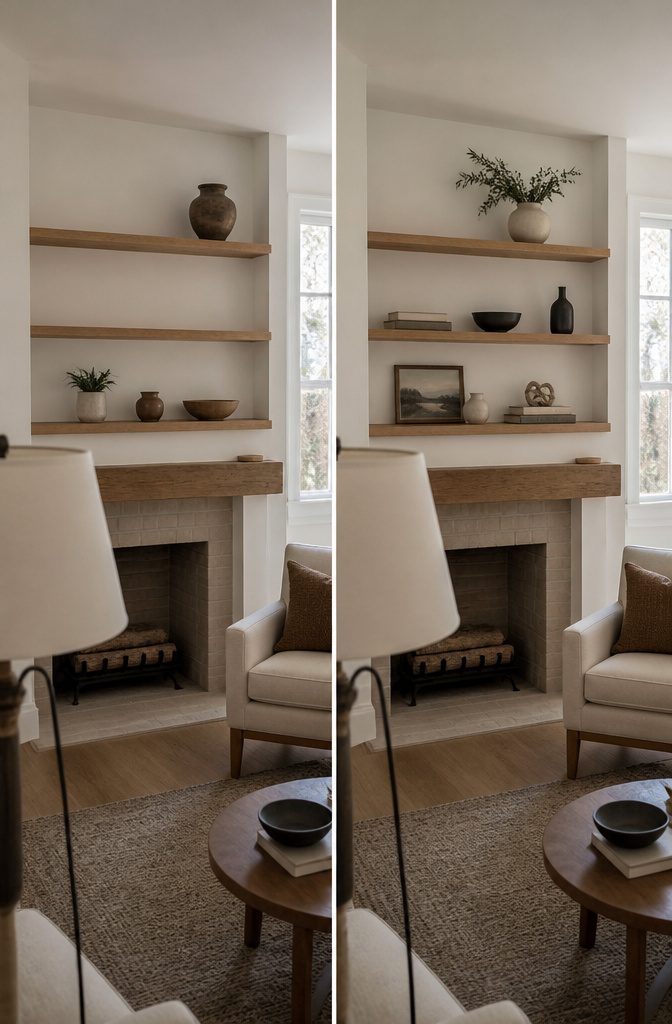
Open areas on the shelf matter more than most people expect.
Leaving room between objects lets each one register instead of blending into a wall of stuff. I’ve noticed the mistake most often when someone feels obliged to fill every surface: the shelves end up crowded, and nothing stands out.
Fewer pieces carry more weight. Grouping in odd numbers helps—three objects together read as intentional, where two can feel accidental and five starts to compete for attention.
Step back across the room and check whether any shelf feels too heavy. If you’re squinting to separate one item from the next, pull a few off.
The breathing room isn’t wasted space. It’s what makes the arrangement look edited rather than accumulated, and it gives the eye somewhere to rest between the pieces you actually want noticed.
9. Add Lighting
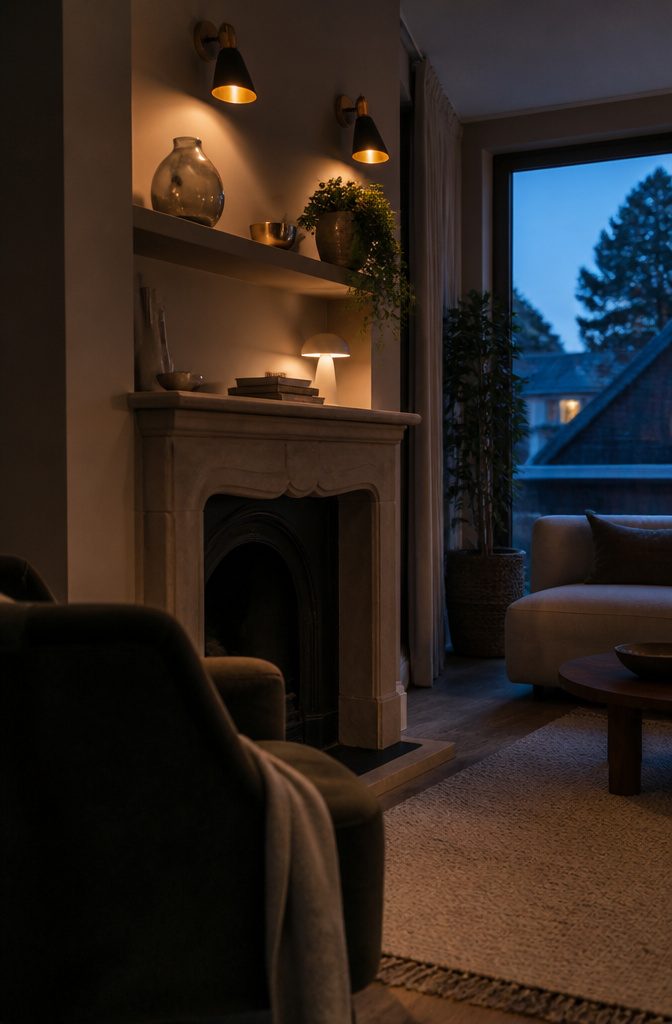
Lighting changes what you see on fireplace shelves after the sun drops, and it decides which objects hold attention when someone walks into the room.
Sconces above the shelves throw light downward and pick up edges, especially on glass or metal.
Small accent lamps tucked between stacks work the same way on a tighter scale. I’ve found that battery-powered puck lights behind tall objects create depth without visible cords, which matters if the shelves sit far from an outlet.
Candles in artisan holders add flicker that catches reflective surfaces, though they’re ornamental more than functional.
For built-in options, handcrafted LED-lit floating shelves from suppliers like J Thomas Home embed the source into the shelf itself, so the glow comes from underneath rather than beside.
That approach highlights what sits on top and keeps the fixture invisible. The downside is less flexibility: you can’t move the light once the shelf is mounted, so placement has to be right the first time.
10. Refresh the Display Seasonally
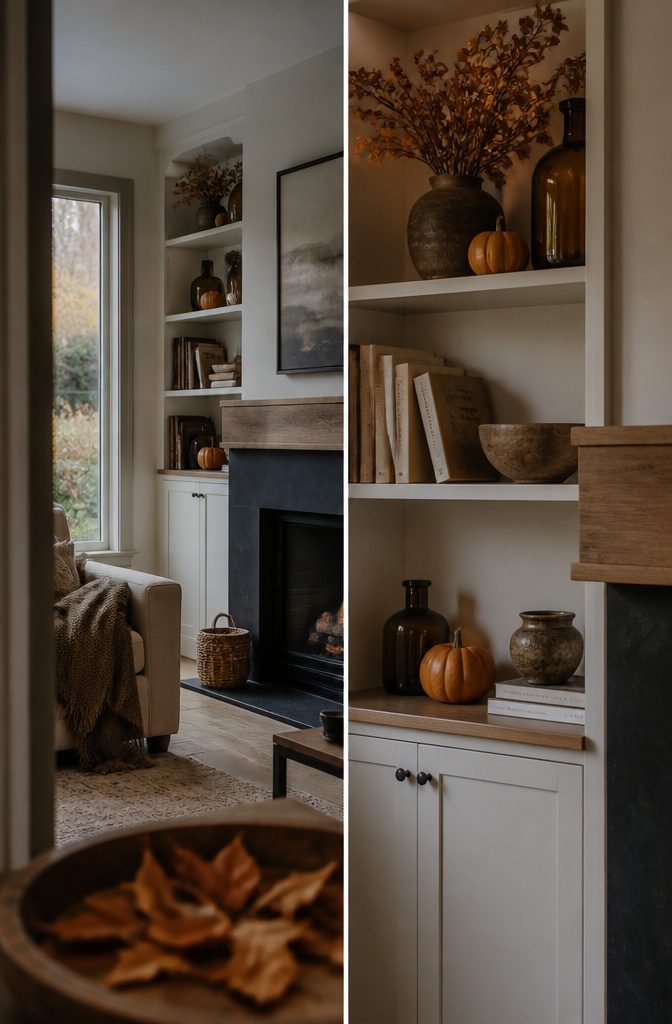
Swapping in seasonal pieces keeps fireplace shelves from looking locked in place without the work of a full restyle.
Rotate décor a few times a year rather than leaving the same arrangement up for twelve months. In fall, that might mean swapping a few books for small pumpkins or amber glass.
Holiday décor can take over one or two shelves while the rest stay neutral. Spring flowers in a low vase bring color back without crowding out everything else.
Books are easy to rotate because they take up space and shift the mood without looking forced.
Pull a few that match the season’s palette or flip them spine-in for a cleaner backdrop when brighter objects need the attention. Refresh what catches the eye first, not everything on the shelf.
What to Put on the Shelves
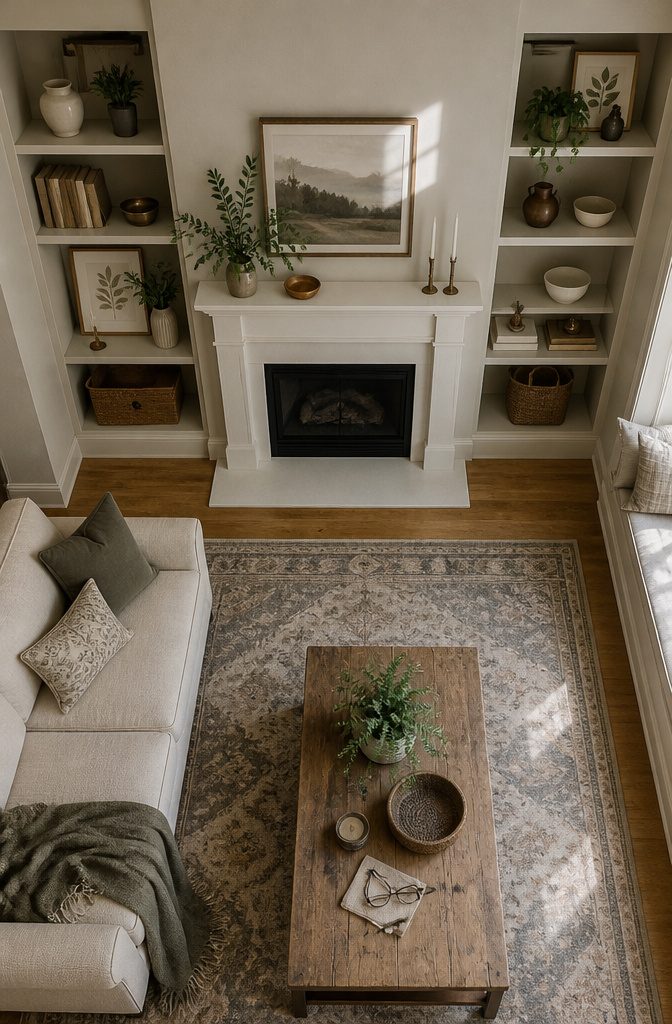
The shelves themselves decide what makes sense to put on them. Books stack horizontally to anchor a shelf or stand vertically between bookends.
Vases work in two sizes—tall ones filled with greenery or flowers, small ones left empty as sculptural pieces. Here’s what holds up:
- Framed photos or art prints: Lean them rather than hanging, which layers the display and makes swaps easy.
- Plants and greenery: Fresh or faux, both add life. Potted plants in neutral containers keep the focus on the green.
- Candles in varied holders: Tealights, votives, hurricanes—they add warmth without taking up much depth.
- Bowls and trays: Use them to corral small objects or leave them empty as accents. Brass, ceramic, and wood all work.
- Decorative objects with texture: Hand-thrown pottery, sculptural pieces, or vintage finds that reflect your taste. Repeat one material—glass, stone, brass—across shelves to tie the arrangement together.
- Baskets and boxes: Store everyday items out of sight while keeping the shelf surface polished. Woven or fabric-lined both work.
- Travel souvenirs and keepsakes: A few personal pieces make the shelves feel lived-in, but curate them. Too many overwhelm the eye.
The mix should balance display with personality, and in some cases, storage. A shelf that only decorates misses the chance to hold what you actually use.
Use Baskets and Boxes for Hidden Storage
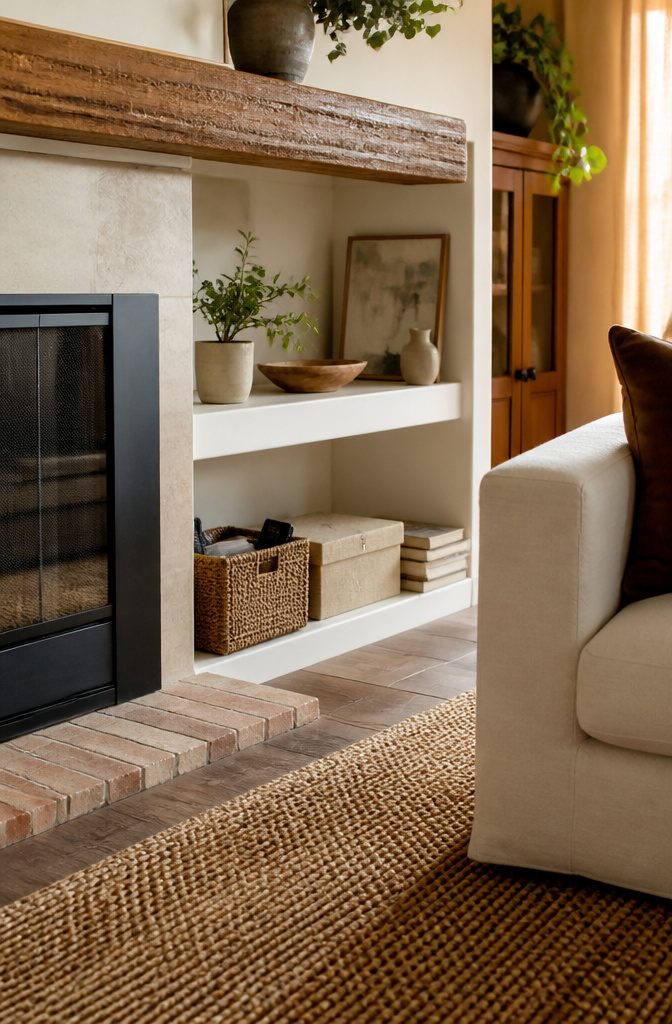
Baskets and boxes keep everyday items within reach without breaking the display.
Toss remotes, matches, or charging cables into a woven basket on a lower shelf, and the storage looks deliberate rather than cluttered. The texture of woven baskets adds visual interest while hiding whatever you need close at hand.
Treat baskets and boxes as part of the composition rather than afterthoughts. A lidded linen box tucked beside a stack of books still reads as polished, and you can pull what you need without disturbing the arrangement around it.
I keep this approach for any shelf that sits near high-traffic zones, where functional items pile up fast.
The alternative is letting the clutter sit out in the open, which makes even a well-styled shelf look messy within a day or two.
Frequently Asked Questions
How to style a fireplace shelf?
Start with 2 to 3 core colors repeated across the shelves, then mix heights by pairing tall candlesticks with short bowls or stacked books.
Layer objects by placing smaller pieces in front of framed art or plates, and leave open space between groups so each item registers on its own.
Natural materials like wood, clay, and greenery soften the arrangement, and swapping a few pieces seasonally keeps the display from feeling static.
How can I decorate shelves on each side of my fireplace?
Repeat at least one color or material on both sides so the two areas read as one composition.
Balance tall objects on one side with grouped shorter items on the other, and scatter decorative plates or colored pieces across multiple shelves instead of grouping them all in one spot.
Use framed art or a mirror on one side to offset books and sculptural objects on the other, and leave breathing room between items so the arrangement feels edited rather than crowded.
How to make a shelf look fancy?
Mix materials like glass, metal, ceramic, and wood so each surface catches light differently, then vary the height and scale by stacking books to lift smaller objects or placing tall vases beside low bowls.
Layer a framed piece against the back of the shelf with a smaller vase or candle in front to create depth, and add lighting with sconces or battery-powered puck lights to highlight edges after dark.
Fewer pieces carry more weight than a crowded shelf, so edit as you go and leave open areas between objects.
What is the new trend for fireplaces?
Handcrafted LED-lit floating shelves that embed the light source into the shelf itself are gaining traction, casting a glow upward to highlight décor without visible cords or fixtures.
Mixing natural materials like textured glass, alabaster, driftwood, and woven fibers brings warmth to fireplace displays, and leaning oversized mirrors on the mantel to reflect light back into the room is replacing traditional mounted art.
Seasonal refreshes a few times a year keep the display from looking locked in place without requiring a full restyle.