
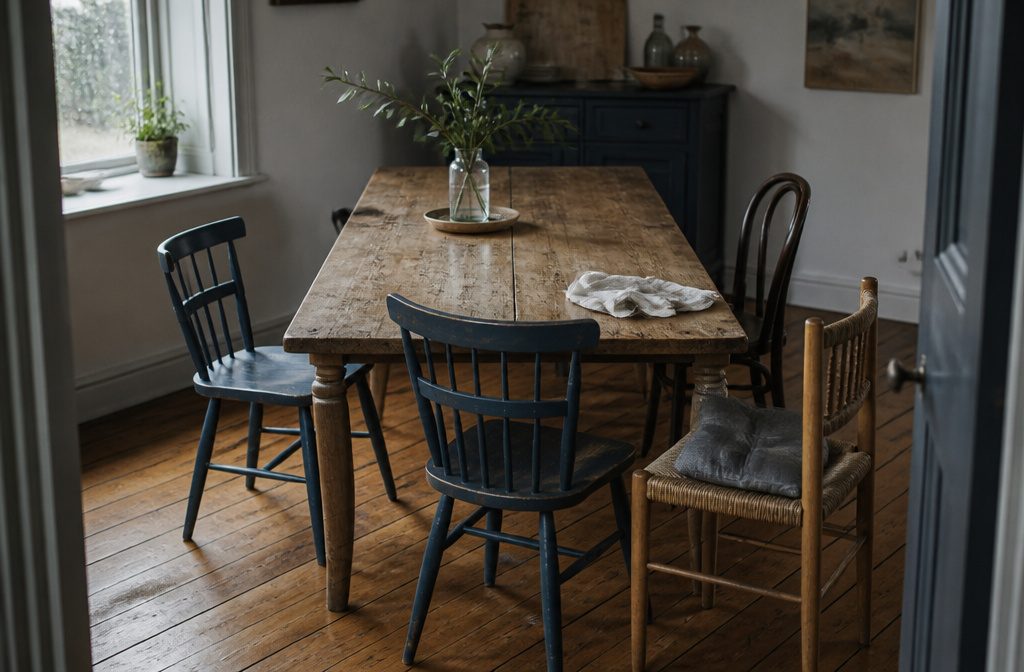
Mixing dining chairs instead of buying a matching set costs nothing extra if you already own some of the pieces, but the arrangement falls apart when seat heights vary by more than two inches or when no single element repeats across the group.
The simplest fix is choosing one visible thread—color, material, or shape—and running it through at least two of the chairs so the mix reads as intentional rather than accidental.
1. Link Different Chairs With a Shared Color, Finish, Material, Fabric, or Shape
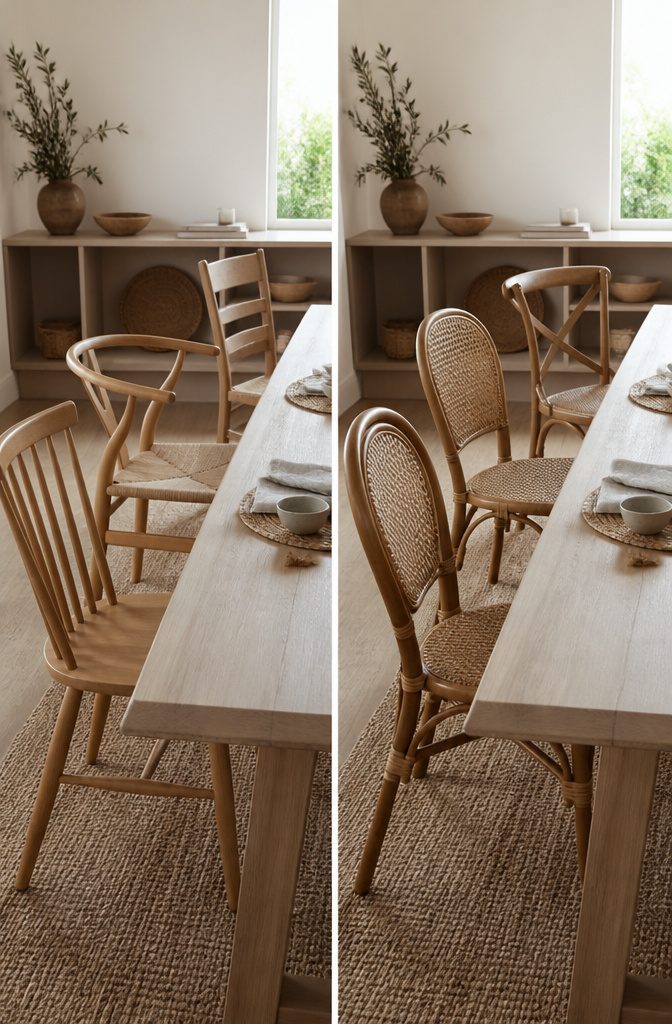
The simplest way to make different chairs feel like they belong together is to repeat one visible element across all of them.
That element can be color, finish, material, fabric, or shape. The same chair model in three tonal shades works just as well as three different chair designs all painted matte black.
I’ve seen the Wishbone chair pulled off this way, bought in three close wood tones and arranged around a single table. The silhouette stays consistent, but the variation in finish keeps the set from reading as too matchy.
You can also flip the approach: keep the color the same and let the chair styles vary.
A vintage wooden chair next to a modern metal one reads cohesive when both are the same color. If you’re working with upholstered seats, matching the fabric across different chair designs ties the group together without forcing identical frames.
Whatever element you choose, repeat each color, style, or shape at least once in the full seating arrangement. A single outlier with no visual echo will read as a mistake rather than a choice.
2. Keep Heights and Scale Compatible
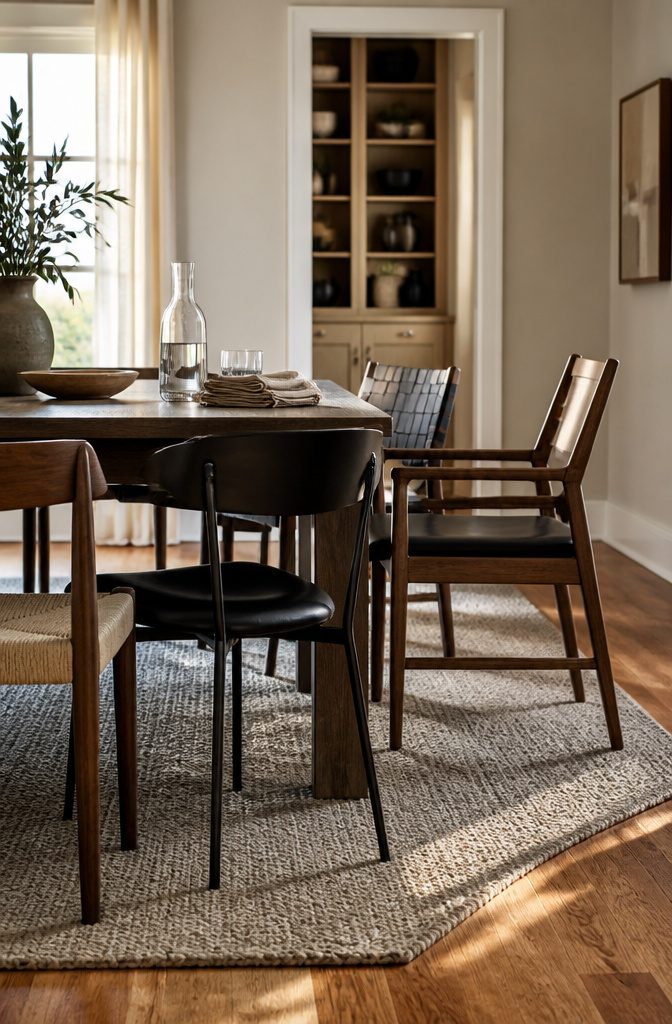
Similar seat heights keep the table from feeling lopsided and the meal from turning awkward. Keep seat heights within 1–2 inches of each other so nobody is craning their neck to pass the bread or struggling to reach their plate comfortably.
Some designers let a taller host chair anchor one end, and that can work if the difference is deliberate and modest, but a spread beyond two inches makes conversation feel uneven and the table look unbalanced.
The other number that matters is clearance. You need 10–12 inches between the seat and the underside of the table for legs to fit without banging knees every time someone shifts.
If your chairs have arms, measure the table apron height before you buy to make sure the arms slide under when pushed in.
I’ve seen beautiful mixes fall apart because the arms caught on the frame and left the chairs stuck out in the middle of the room.
3. Put Statement Chairs at the Table Ends
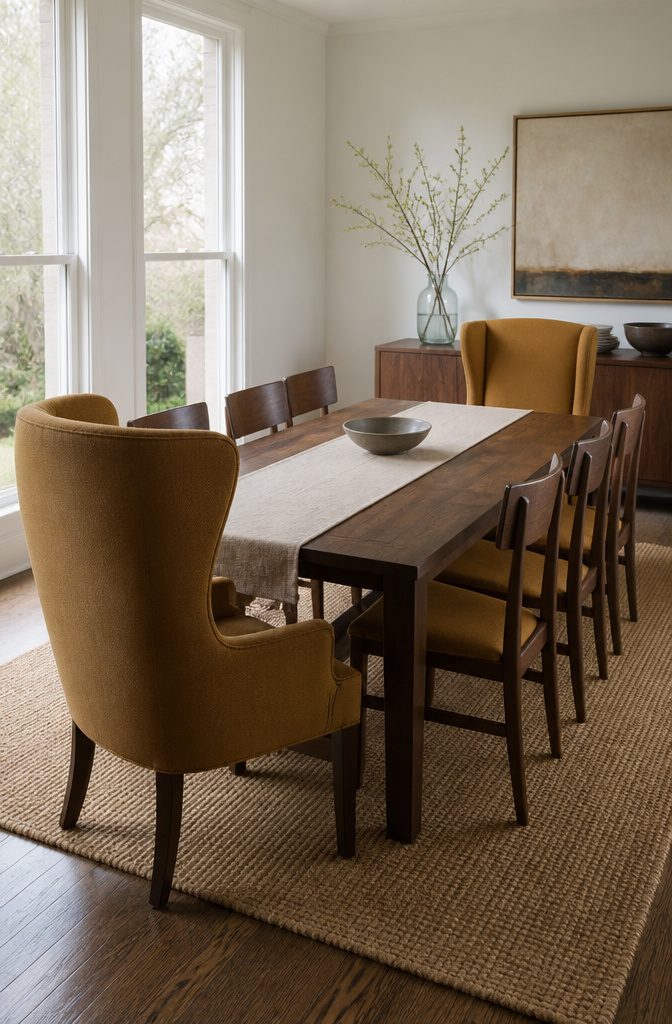
Captain’s chairs, wingbacks, or upholstered armchairs anchor the head and foot of a rectangular or oval table while letting you keep side seating simpler or more uniform. I use this setup when a client wants visual interest without abandoning structure.
The contrast creates a focal point, but cohesion holds if the head chairs share at least one element with the sides: the same wood tone, a matching fabric, or a repeated leg shape.
Wingback accent chairs work especially well at the ends because their height and presence naturally command attention without shouting.
I’ve seen this done with throne-style armchairs upholstered in bold fabric sitting next to plain parsons chairs, and the juxtaposition gives personality to the whole arrangement.
The side chairs don’t need to be identical to each other, but keeping them visually linked prevents the setup from reading as accidental. The head chairs carry the weight; the sides answer them.
4. Mix Materials or Textures
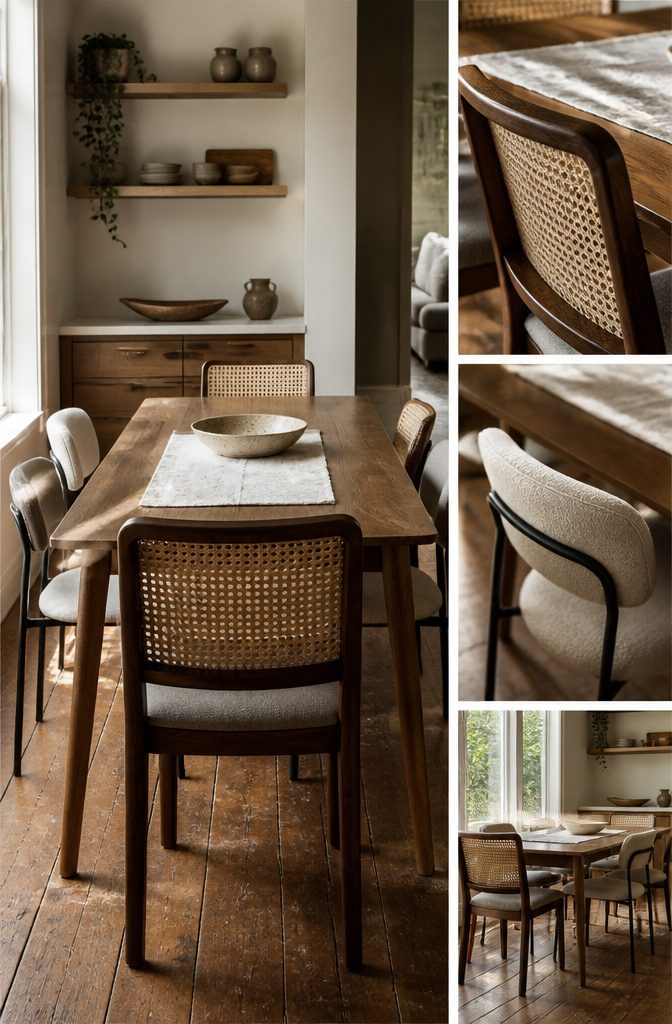
Pairing wood with metal, upholstery with cane, or wicker with woven finishes gives the eye something to notice.
If you have a wood table, an acrylic, plastic, or upholstered chair adds interest without fighting the grain. The contrast works when each texture appears at least twice so the arrangement reads as intentional rather than accidental.
A plush upholstered seat next to a solid wood chair balances comfort with warmth, and the two materials hold their own ground. Cane or woven backs bring lightness to heavier finishes.
Repeating a bold material or shape twice anchors the mix. The eye needs somewhere to land, and repetition gives it that anchor without demanding uniformity across every chair.
5. Balance Visual Weight
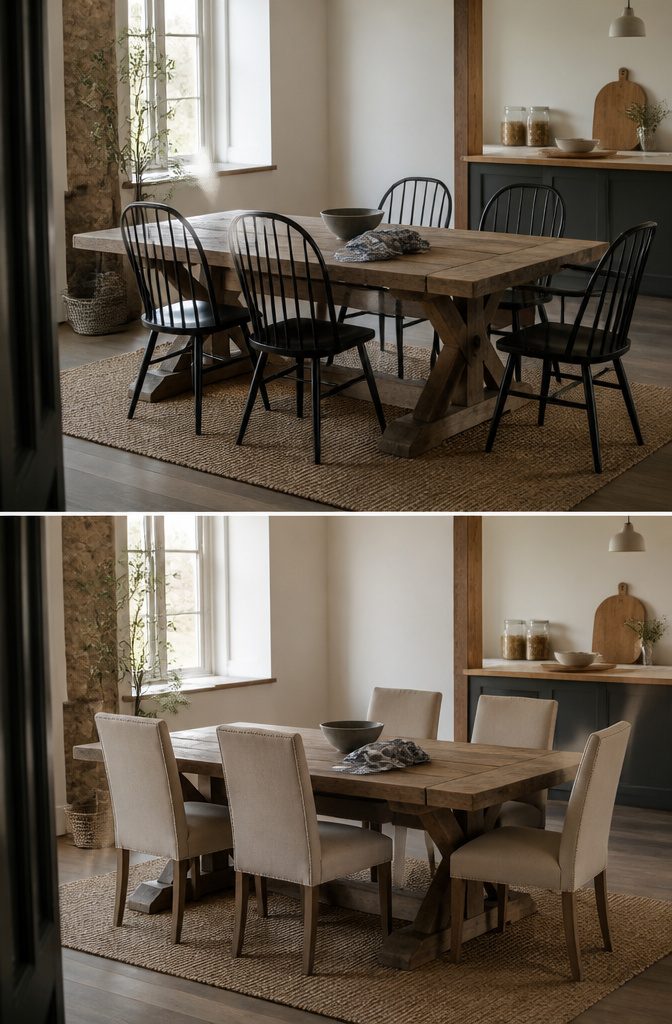
Visual weight decides whether your dining room feels balanced or bottom-heavy, and the table’s heft sets the rule.
A thick farmhouse table or solid concrete top reads heavy, and surrounding it with upholstered bucket chairs or wide-backed dining chairs compounds the problem. The room starts to feel closed in.
Pair that kind of table with chairs that have open backs or slim profiles instead. Spindled Windsor chairs, ladder-back designs, and metal-frame side chairs all let light through and keep the mass from piling up.
The opposite works when the table itself is light.
A glass top or thin metal-legged table can handle fully upholstered chairs or plush velvet seating without dragging the space down. The chairs anchor what would otherwise float.
Margaret Naeve used this thinking in a small Houston breakfast nook, where scale and open space mattered more than usual.
She mixed Egg Collective side chairs and a stool with a BDDW ladder-back chair around an Eero Saarinen marble-topped table, contrasting the high chair with the low stool to let the arrangement breathe.
That balance of heights and open profiles kept a tight corner from feeling crowded.
6. Mix Eras or Styles With Purpose
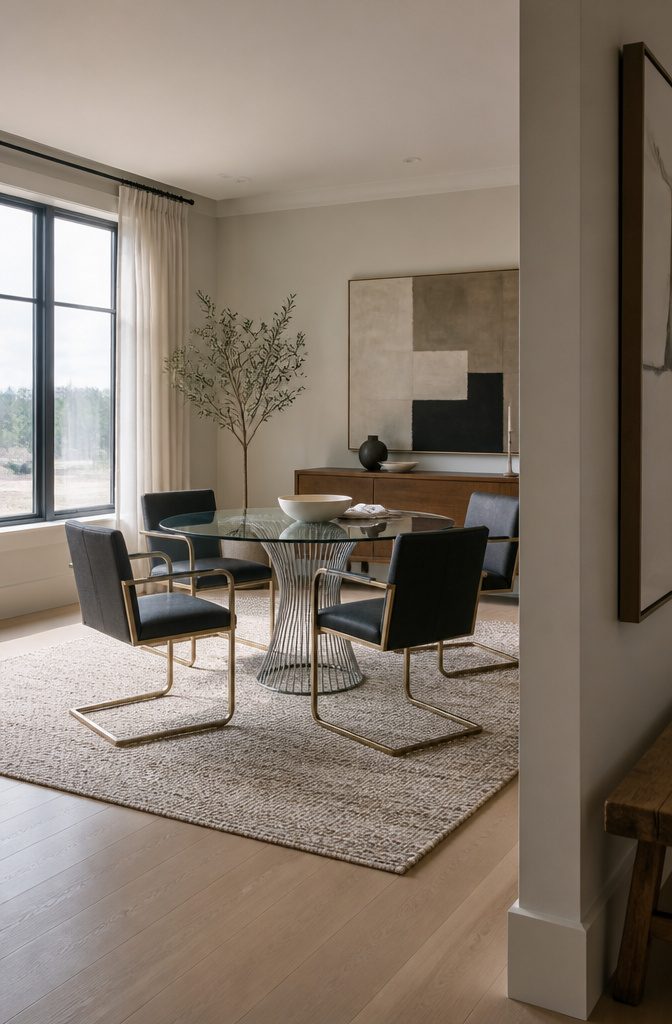
Mixing furniture from different periods can make the room feel like it was put together over time instead of ordered in one afternoon.
The contrast is what gives the arrangement personality, but only if the pieces still share something you can see across the table. Architectural Digest pointed to a setup that stayed cohesive because the pieces worked as counterweights:
Layering pieces from different eras creates a sense of timelessness and excites curiosity.
That principle shows up clearly in a glass table paired with vintage Milo Baughman chairs. The round, transparent surface highlights the strong lines and dark upholstery of the chairs without competing for attention.
The pairing reads as deliberate rather than random because both pieces respect the same clean geometry, even though they come from different decades.
I’ve found that mixing modern chairs with a traditional table works the same way: the contrast adds an eclectic layer, but you need one visual thread holding them together, whether that’s material, proportion, or finish.
7. Use Pairs or Repeated Shapes
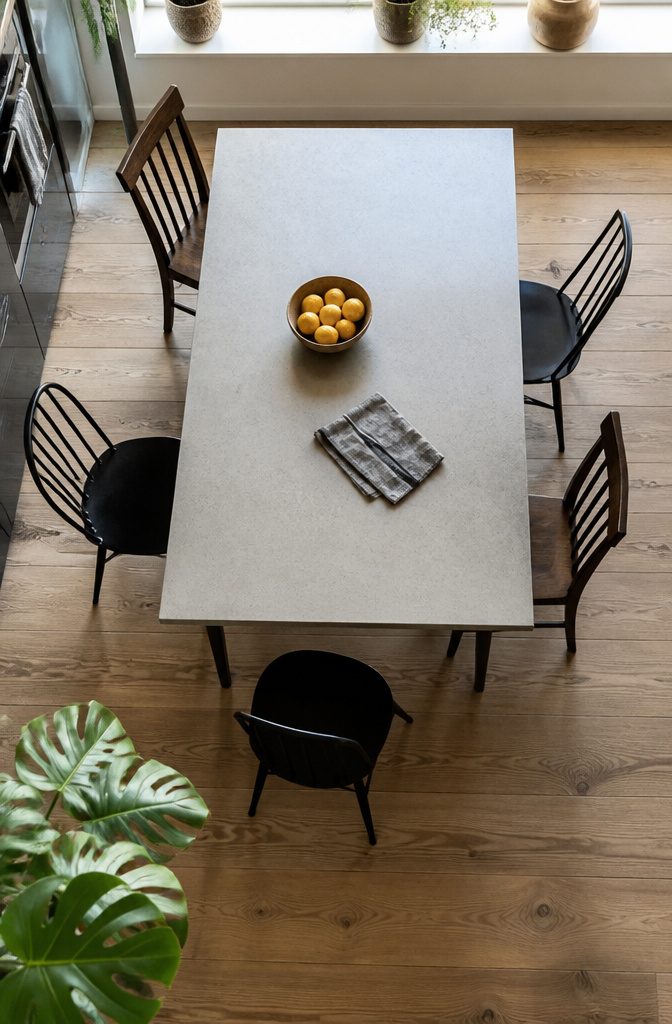
Repetition is what makes a mismatched set read as intentional rather than accidental.
Pairing two of the same chair gives the group structure, and the arrangement feels like a choice you made instead of whatever was left in the garage. The pairs need similar visual weight, though.
Light and airy works with light and airy, bulky with bulky. A slat-back wood chair next to a narrow metal frame looks right because both keep a slim profile.
A wide upholstered side chair next to that same metal frame looks like they were never supposed to be in the same room.
Beyond pairs, repeating a single element across different chairs holds the group together.
If three chairs are different woods and finishes but all have curved backs, the shape ties them in. If every other color and style varies, that one repeating detail is enough to signal the mix was deliberate.
8. Connect Chairs to the Rest of the Room
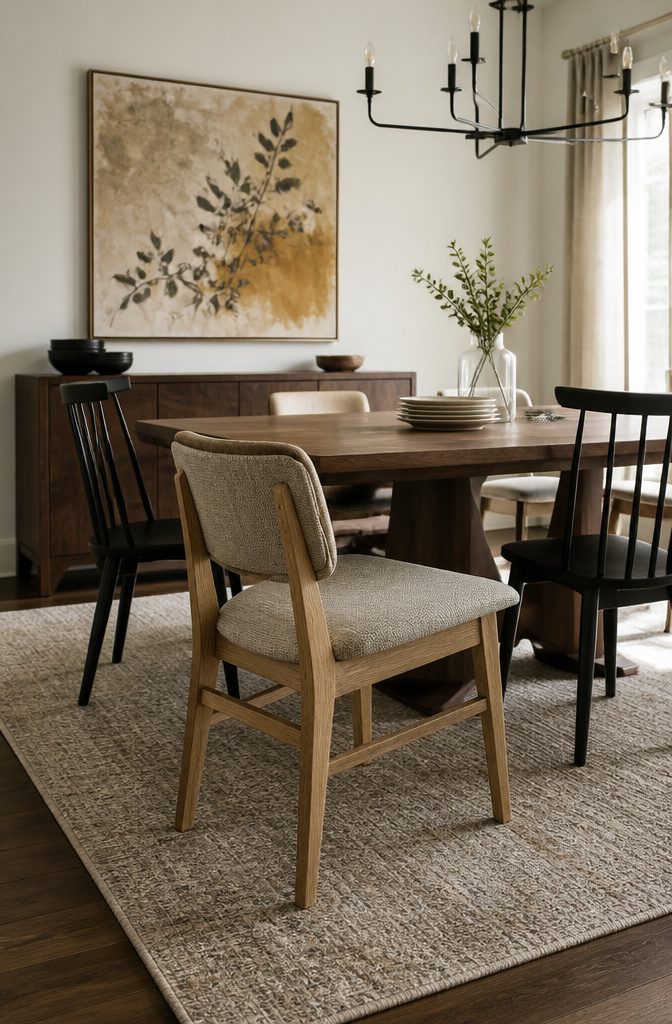
Chairs should coordinate with the room’s finishes, not just with the table. If your chandelier has black in it, bring in a black dining chair to tie them together.
That same thinking works with artwork, curtains, rugs, or wallpaper. Connect the seating to everything else, not chairs to wood grain.
When the room is already busy with pattern or color, keep the chairs simpler. I’ve seen dining areas with bold wallpaper and loud fabrics on every chair, and the result is visual noise.
One has to give. If you’re committed to patterned wallpaper or a graphic rug, pull chair colors from those finishes but keep the upholstery quieter.
Art can serve as the starting point for the furniture palette. In one dining room, the wall color was selected to back the art collection, and the furniture took its cues from the paintings.
Brass, walnut, and ochre finishes mirrored the palette and warmed up cool gray walls. That approach gives you permission to be specific about color and material, because you’re drawing from something already in the room.
9. Add a Bench, Banquette, Couch, or Settee
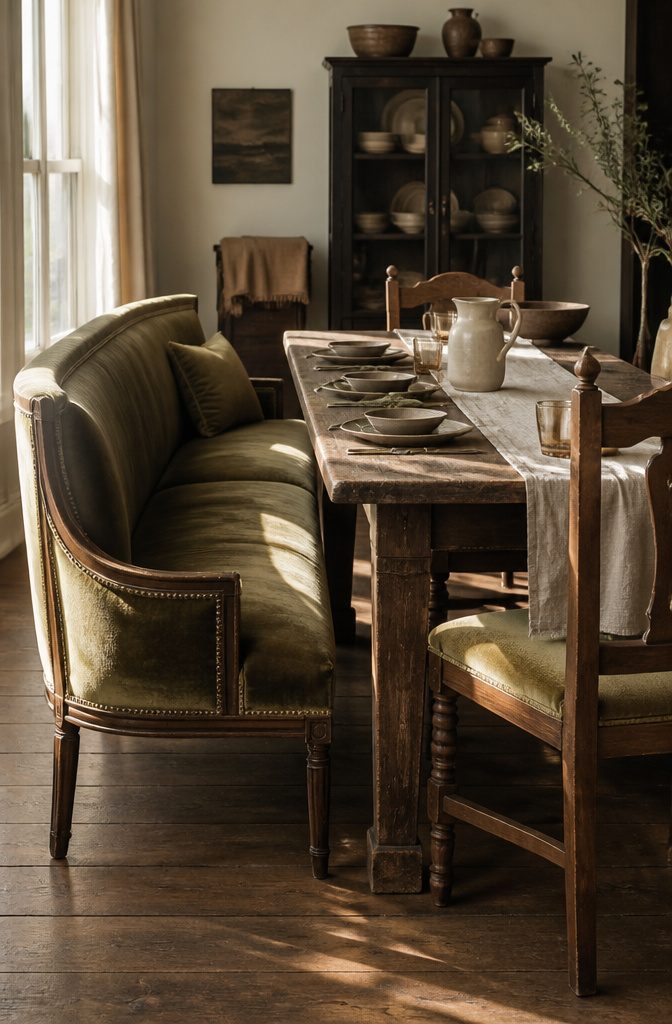
Benches, settees, and banquettes let you seat more people without crowding the visual line, and linking them to your chairs through fabric, finish, or compatible height keeps the arrangement from feeling split.
Windsor Smith surrounded an 18th-century Irish table with a velvet settee and antique chairs with a caramelized oak patina, connecting them through that shared aged-wood finish rather than matching forms.
When one designer needed to maximize seating in a narrow Beverly Hills dining room, a double-wide banquette solved it, and upholstering the dining chairs in the same textile as a few of the banquette pillows tied the whole arrangement together.
A bench works the same way. Match the wood and stain to your table, or echo the upholstery fabric from your accent chairs, and the bench reads as part of the set even though the silhouette is completely different.
Height matters more than shape: keeping a couch or bench seat at the same height as your chairs prevents one side of the table from feeling lopsided and lets everyone talk without adjusting position.
10. Vary Upholstery Fabrics or Patterns
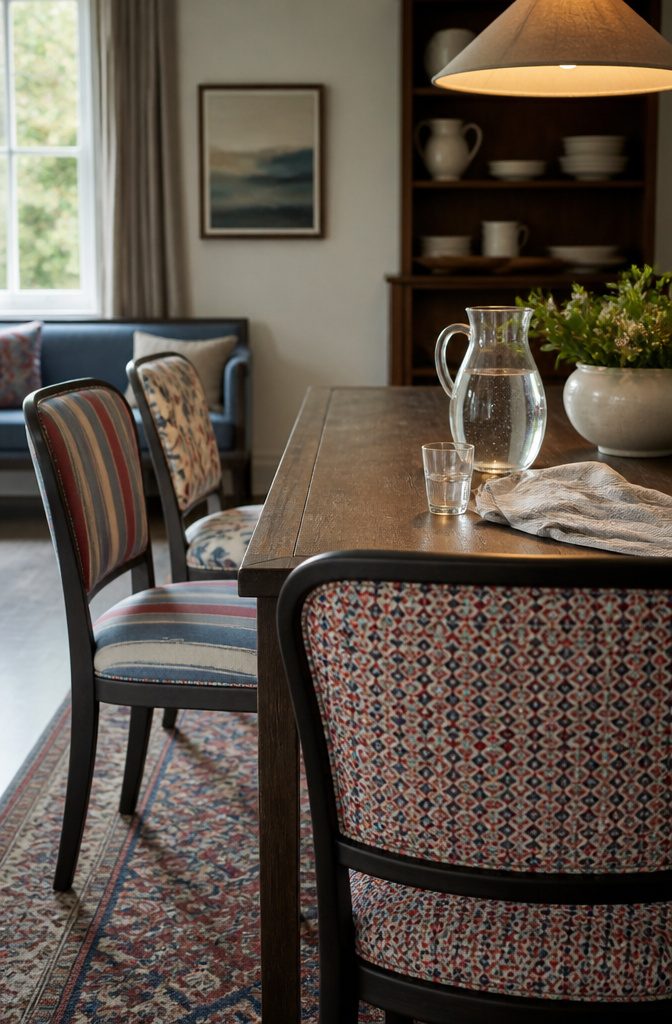
Fabric is where the mix gets interesting. Keeping three different fabrics unified through shared colors gives you freedom to change texture and pattern without the table looking scattered.
In a Bridgehampton dining room, one designer upholstered chairs in three different Jean Paul Gaultier fabrics that each pulled from the same red and blue palette already present in the room’s settee.
The fabrics acted as connectors rather than surprises, tying the chairs to what was already there.
The same logic works at larger scale. Eight different chair styles can sit together without chaos if you unify them with one lacquer color or a single printed fabric run across all the seats.
The variety comes from the frames, not from competing upholstery stories. I like this approach when the chairs themselves have strong lines or mixed provenance, because the fabric becomes the organizing principle the eye can follow.
11. Try a Deliberately Eclectic Mix of Woods, Finishes, and Designs
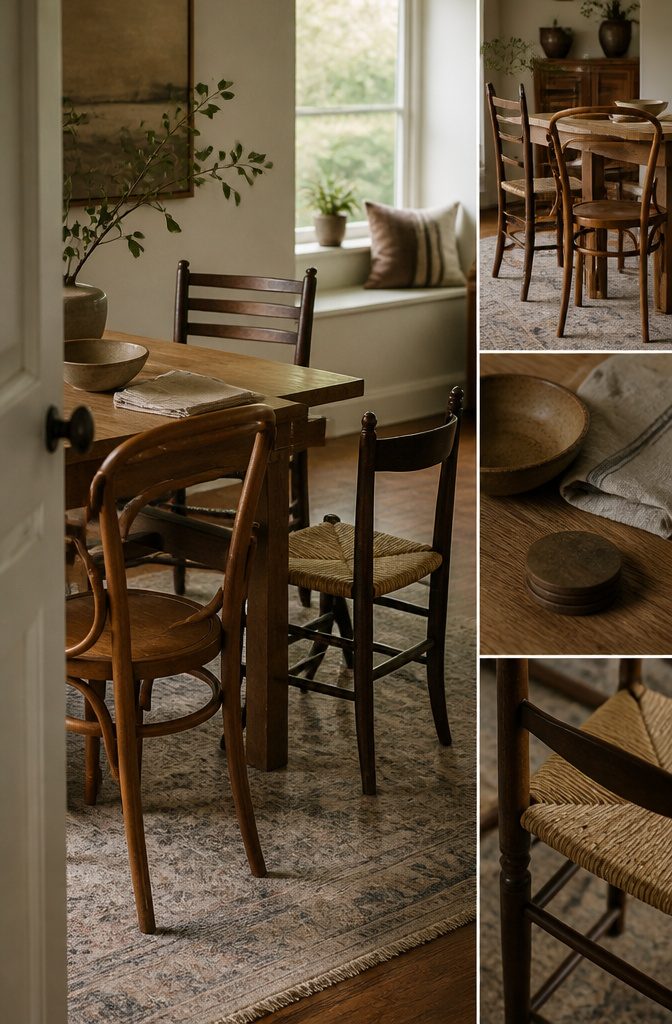
An eclectic mix works when at least one element repeats across the set. That might be color, material, shape, or finish.
The repetition tells the eye the arrangement is deliberate rather than accidental. I’ve found this approach forgiving when you already own a few chairs and want to add others without locking into a single style.
Wood tones don’t need to match exactly. Staying within the same undertone helps pieces relate without looking rigid.
If one chair has walnut legs and another uses a dark stain, they can sit together as long as you’re not jumping from warm honey oak to cool espresso in the same grouping.
Repeating a wood detail somewhere else in the set strengthens the connection.
The same goes for upholstery or shape.
Neutral fabric on two chairs can tie in a curved detail on the table, while wood chairs at the other spots echo that darker stain. Look for visible threads, not uniformity.
12. Start With the Artwork
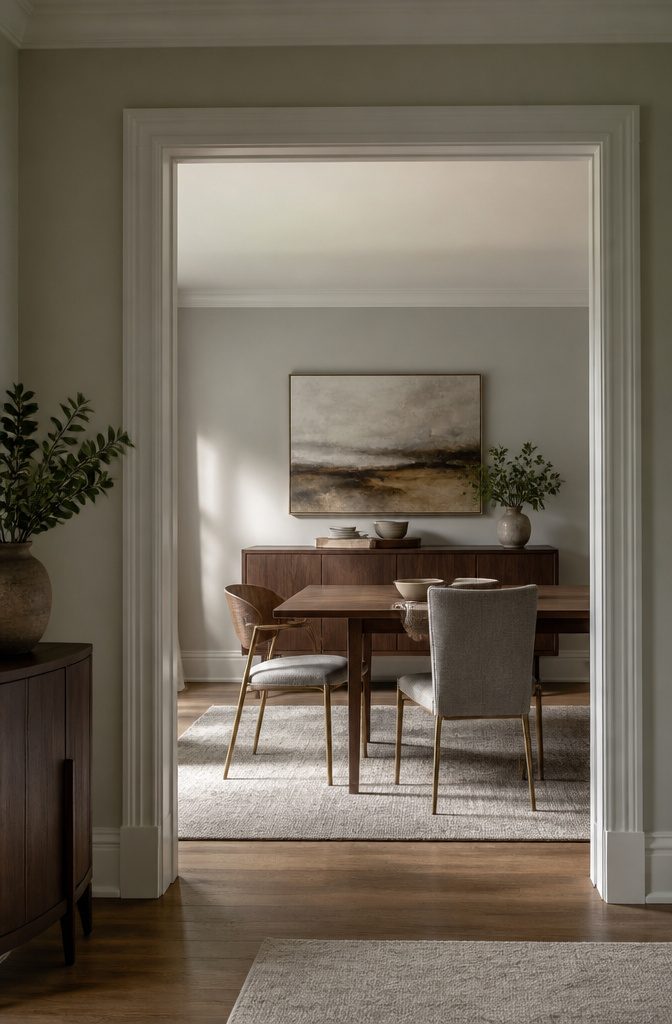
When the dining room already has a standout piece of art, I let it dictate the furniture palette instead of fighting it.
The wall color and the brass, walnut, and ochre finishes in the chairs can echo what’s already on the wall, so the whole scheme feels anchored rather than pulled in several directions.
A cool gray background gives breathing room to warm metal legs or wood backs that mirror the painting’s tones.
I’ve found this approach works especially well when the art sits above a credenza or sideboard, because the dining chairs become part of the same visual story without repeating it exactly.
Use finishes that reflect the palette without trying to match it paint-chip close. That leaves room for the chairs to feel distinct while still pulling the room together.
Start With What You Already Own
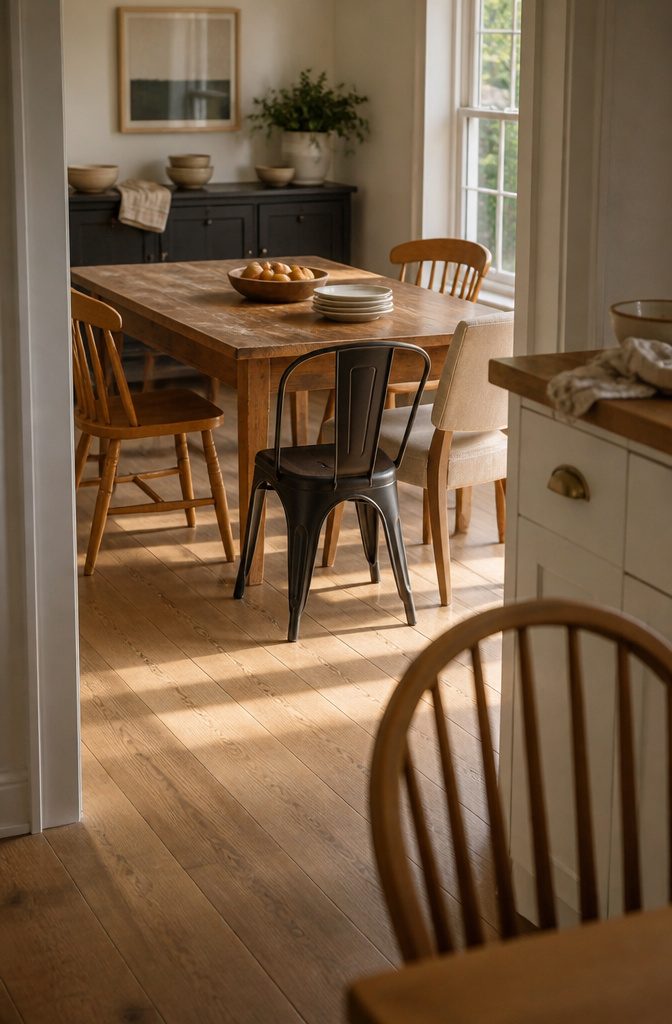
You do not have to start from scratch.
If you already own a dining table you like, keep the table and switch out the chairs. If the chairs you have now are comfortable or practical, replace the table instead.
If you inherited a matching set but want more personality, you can add new chairs to the ones you already own rather than replacing everything at once.
This approach saves money and lets you build the look in stages. A solid wood table with good proportions pairs easily with nearly any chair style, so swapping chairs is often the faster move.
If your chairs fit well and you sit in them often, finding a different table gives you the mix without losing what already works.
Starting with what you own also means you can test combinations slowly instead of committing to a full dining room overhaul in one trip.
Adjust Outliers With Paint, Stain, or Fabric
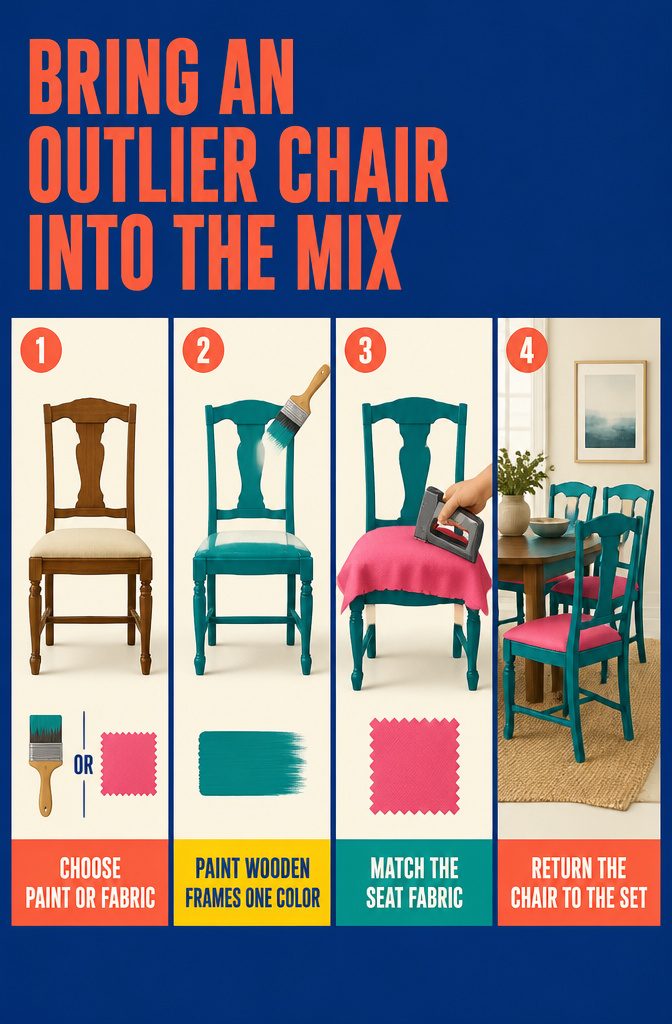
When one chair really doesn’t fit, you can bring it in line by painting it the same color as the others or swapping its fabric.
I’ve seen this work especially well with wooden chairs in different styles. Paint them one color using satin or high-gloss paint, and suddenly the mismatched frames read as a deliberate set.
Teal or hot pink make a statement if the rest of the room stays neutral, but even matte black ties things together fast.
The same move works with upholstery. If you’ve got one chair in the wrong fabric, reupholster the seat to match the dominant color or pattern in the other chairs.
It’s a fix that takes an afternoon and pulls an outlier back into the scheme without replacing it.
Test the Mix Visually
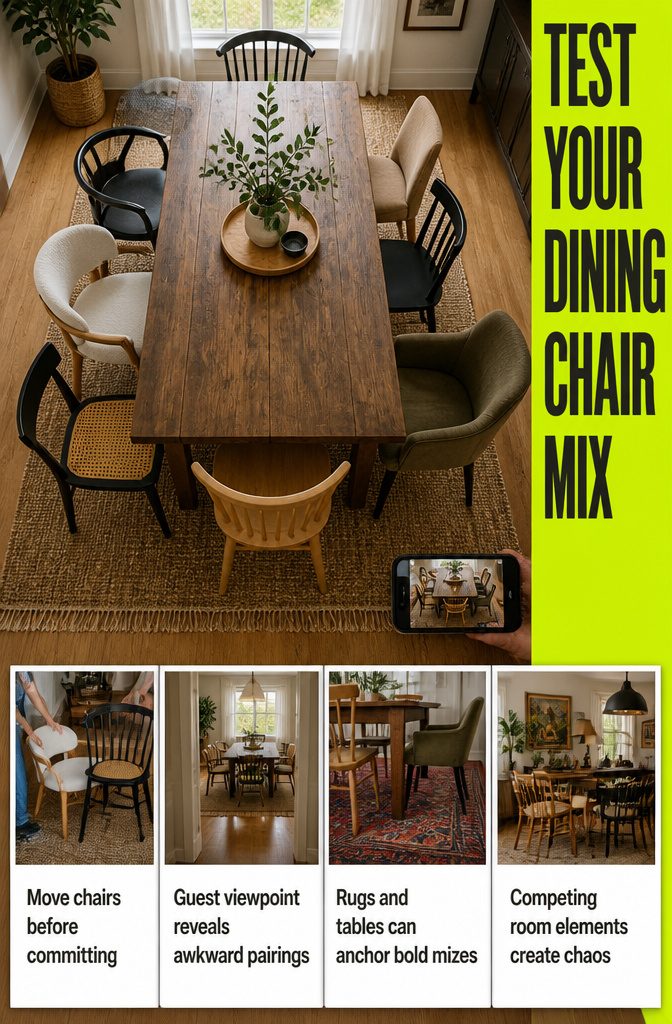
Step back and take a photo once you think the mix is close. The phone screen strips away the room context your brain fills in when you’re standing there, and imbalances that felt fine in person jump out immediately.
A chair that looked intentional in the space can read random in the frame, or the reverse can happen just as easily.
I check combinations in person before committing.
Dragging chairs around the table sounds obvious, but the arrangement you picture rarely matches what you get when the pieces are actually together. Walk into the room the way a guest would.
Sit in each spot. Notice whether the heavier chair on one end pulls your eye too hard, or whether the mismatched pair reads as a choice rather than leftovers.
The room’s other elements matter more than most styling guides admit.
A bold rug or a dark table can anchor a wilder chair mix, but if the walls, lighting, and furniture all compete for attention, even a careful pairing will feel chaotic. The photo helps here too.
If the chairs disappear into the background, the mix works. If they’re the only thing you see, something needs adjusting.
Check Physical Fit Before You Commit
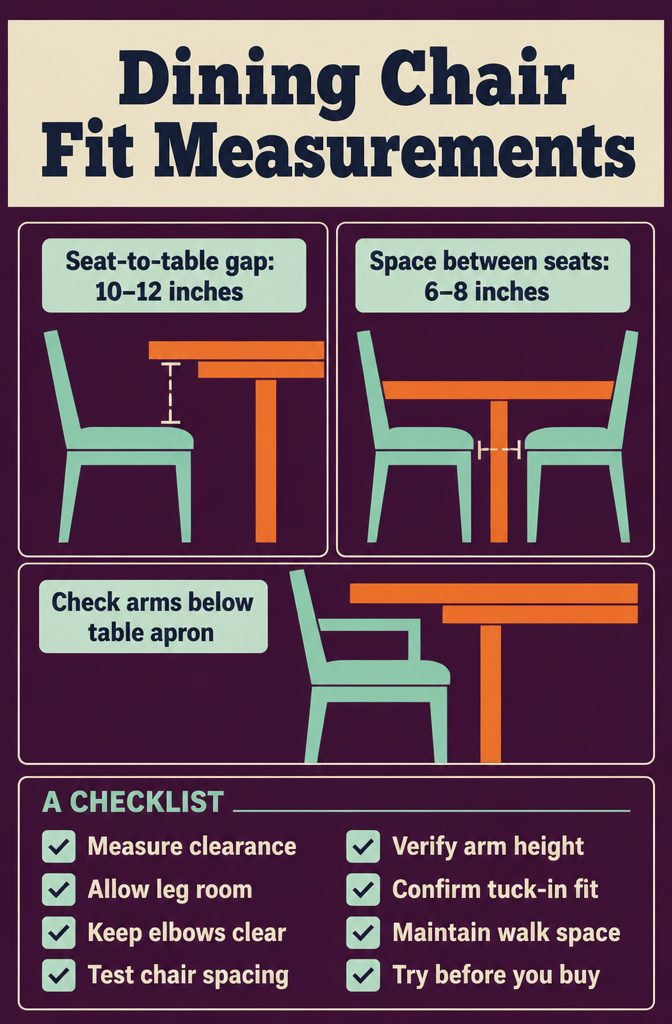
Before you buy the chairs, pull out the tape measure. Visual cohesion matters, but not if your guests can’t sit down comfortably.
- Measure the gap between the chair seat and the table’s underside. You need 10–12 inches of clearance so legs fit without jamming against the apron. Less than that and people spend the meal shifting around trying to get comfortable.
- Leave 6–8 inches of horizontal space between each seat. Any tighter and elbows start colliding mid-meal. I lay the chairs out physically in the room if I’m uncertain, because tape on the floor only tells you so much.
- Check that chair arms slide beneath the table apron when pushed in. Measure the arm height against the apron’s lowest point. If the arms stick out, the chairs can’t tuck in, and you lose walking space around the table every single day.
These measurements hold whether you’re matching a set or mixing five different styles. Get the fit wrong and the prettiest arrangement still fails.
Why I Mix Chairs Instead of Matching Them
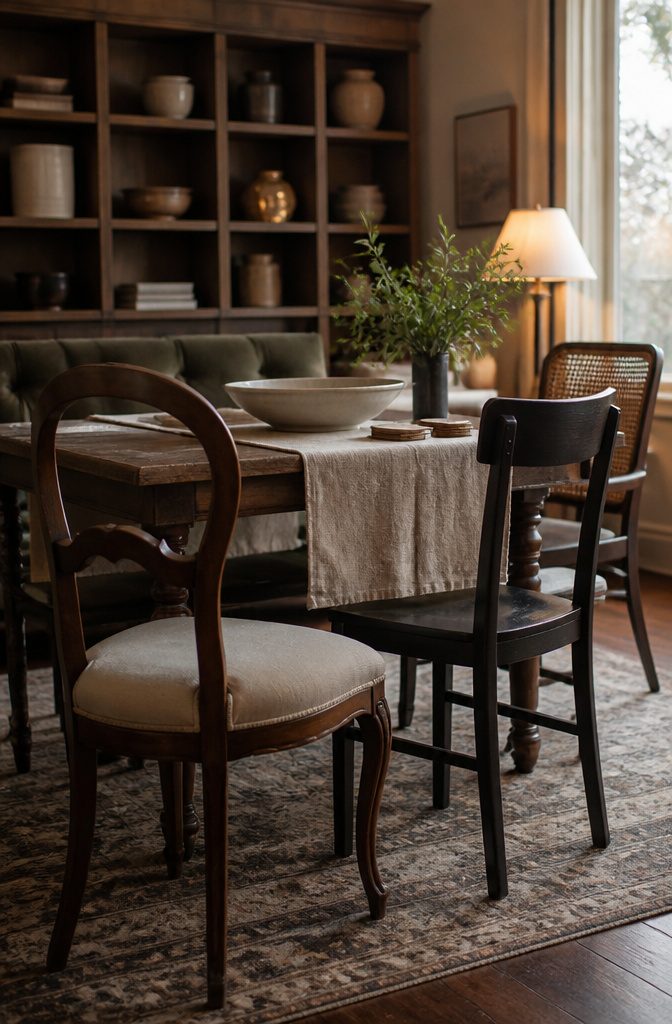
I mix chairs because a room full of matching ones feels like it came straight from a catalog, and the dining area is supposed to look like people actually live there.
When you pull together a few different styles, the space reads as collected over time rather than ordered all at once.
I like the energy that comes from pairing a velvet settee with antique European chairs, or putting three distinct chair styles around the same table.
The mix gives you permission to use inherited pieces, bring in vintage finds, and skip the visual predictability of a set.
The line between curated and hodge-podge is a shared thread. Maybe it’s the same wood tone running through every chair, or all of them finished in black, or caned backs showing up more than once.
That common element keeps the variation from reading as random. I’ve seen designers balance new chairs against vintage ones for exactly this reason: the room avoids looking too brand-new or like hand-me-down central, and instead lands somewhere lived-in and intentional.
Frequently Asked Questions
Do all dining chairs need to be the same?
No. Different chair designs add personality and visual interest to a dining room, provided you repeat at least one element across the set—color, finish, material, fabric, or shape.
A single outlier with no visual echo reads as a mistake rather than a choice. The repetition signals that the mix was deliberate.
Can you have different colored dining chairs?
Yes.
Different colors work when unified through a shared element like wood tone, shape, or fabric texture. You can use the same chair model in multiple colors, or vary both style and color as long as something repeats across the arrangement.
Three different fabrics can sit together if they pull from the same color palette already present in the room.
Can you mix modern chairs with a traditional table?
Yes. The contrast adds an eclectic layer, but you need one visual thread holding them together—material, proportion, or finish.
A glass table paired with vintage Milo Baughman chairs works because both respect the same clean geometry, even though they come from different decades.
The pairing reads as deliberate rather than random when both pieces share something you can see across the table.
Should the dining table wood match the chairs?
No.
Chairs should coordinate with the room’s finishes, not just with the table. Wood tones don’t need to match exactly as long as you stay within the same undertone.
If one chair has walnut legs and another uses a dark stain, they can sit together without jumping from warm honey oak to cool espresso in the same grouping.
Can accent chairs be used as dining table chairs?
Yes. Captain’s chairs, wingbacks, or upholstered armchairs anchor the head and foot of a rectangular or oval table while letting you keep side seating simpler or more uniform.
The contrast creates a focal point, but cohesion holds if the head chairs share at least one element with the sides: the same wood tone, a matching fabric, or a repeated leg shape.
How do you mix and match table and chairs?
Repeat one visible element across all the chairs—color, finish, material, fabric, or shape. Keep seat heights within 1–2 inches of each other so nobody is craning their neck or struggling to reach their plate.
Pair heavy tables with chairs that have open backs or slim profiles, and light tables with fully upholstered seating. Look for visible threads, not uniformity.