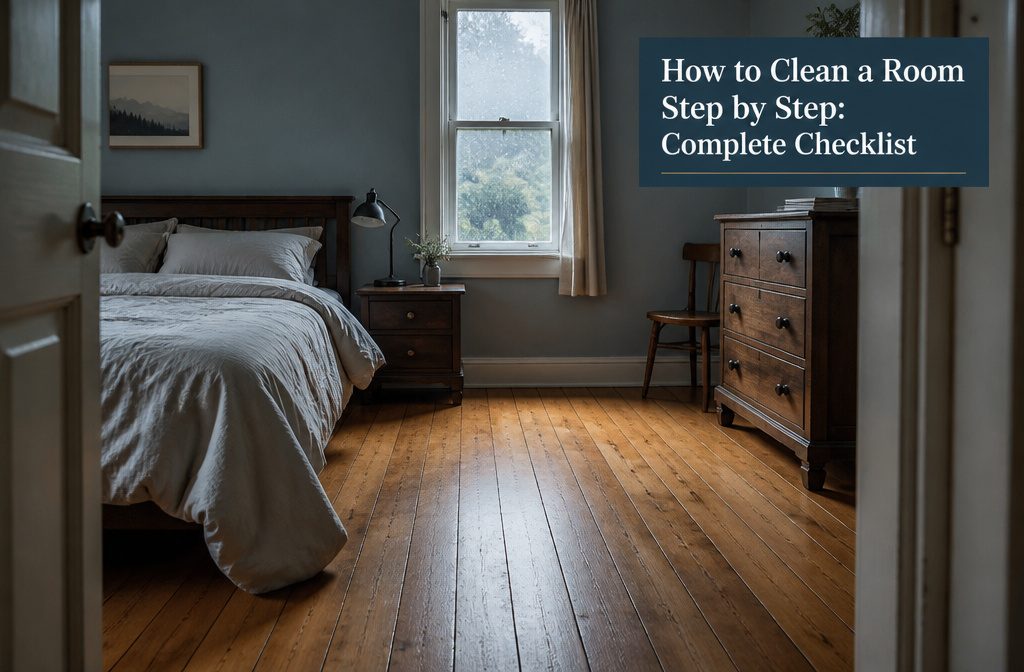
A bedroom cleaned without a system takes twice as long because you’re doubling back to surfaces you already wiped or vacuuming floors that collected fresh dust from above.
Working top to bottom through this checklist—ceiling to baseboards, then floors last—covers a standard room in under an hour and prevents rework.
Mopping before dusting means the floor gets dirty again immediately, but flipping that order keeps every surface clean on the first pass.
Gather Supplies and Clear Clutter
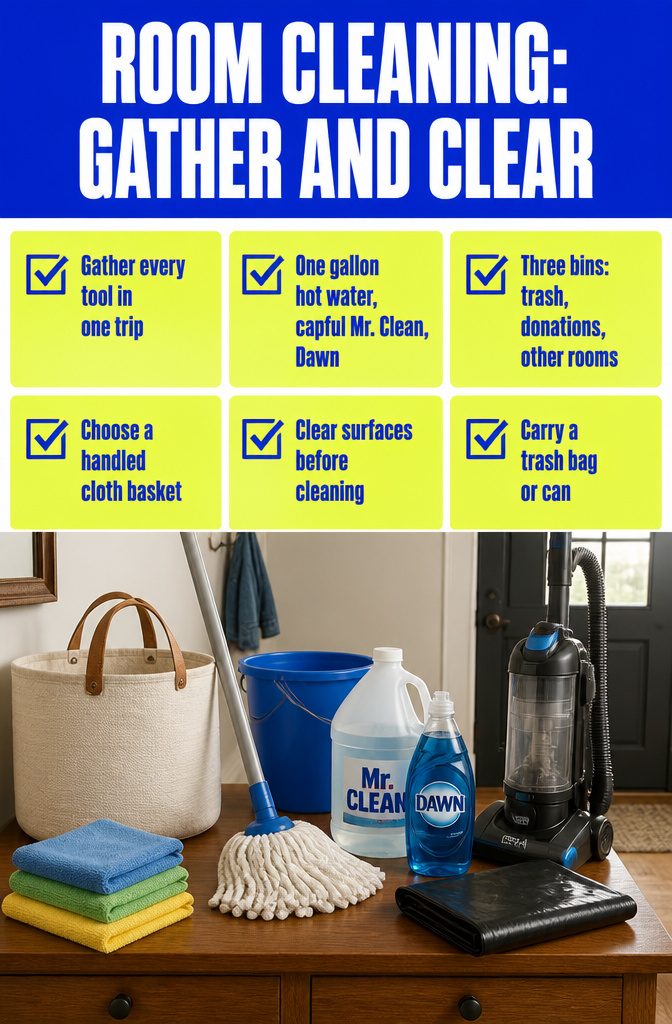
Before you start, collect what you need and clear what’s in the way.
- Gather all cleaning tools in one trip: microfiber cloths, cleaning solutions, a HEPA vacuum, a mop, and a bucket. Mixing one gallon of hot water with a capful of Mr. Clean and a squirt of Dawn dish soap gives you a workable all-purpose cleaner.
- Use a three-bin system for trash, donations, and items that belong in other rooms. A cloth basket with handles holds more and moves easier than a plastic tote.
- Clear all surfaces before you clean them. If something just landed in the wrong spot, put it away now. If it belongs somewhere else in the house, drop it in the basket to return later.
- Remove trash first. A trash bag or small can in hand keeps you from making laps to the kitchen bin.
Once surfaces are accessible, you can clean them without working around clutter.
Strip Bedding and Start Laundry
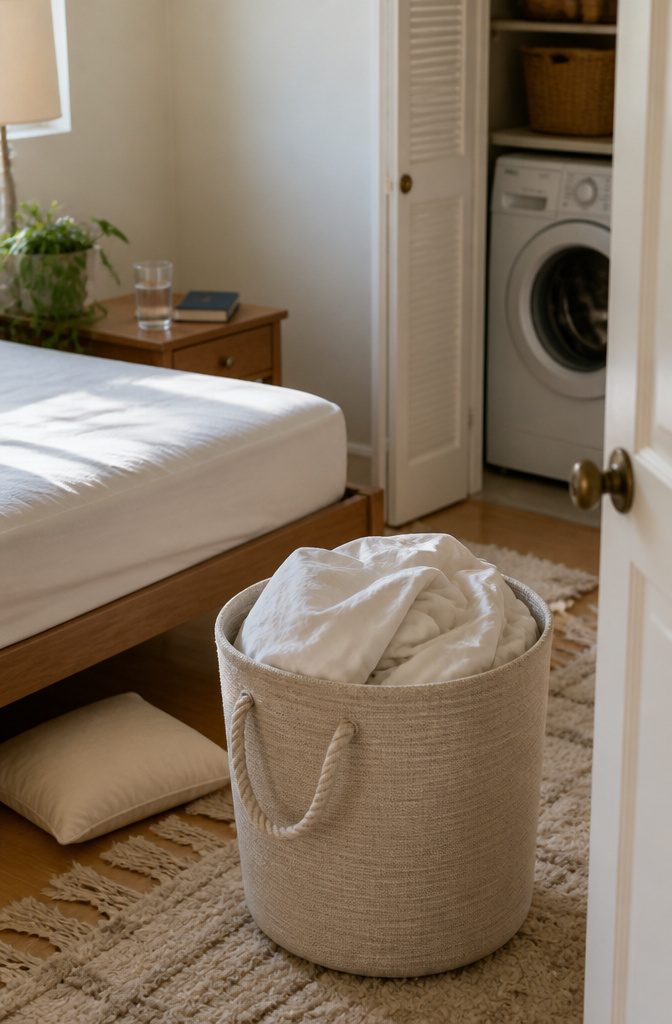
Pull everything off the bed—sheets, pillowcases, duvet—and drop it straight into the hamper along with any dirty clothes lying around.
- Strip the bed completely so the mattress gets air while you clean the rest of the room.
- Load the washer immediately; that way linens finish around the time you wrap up, and you can remake the bed on the first pass through instead of circling back.
- If the hamper lives in the closet, leave it open—you’ll actually use it on rushed mornings instead of piling clothes on the floor.
- Wash bed linens regularly even if you shower before bed; body oils and shed skin build up faster than most people think.
Dust High Areas, Then Work Down
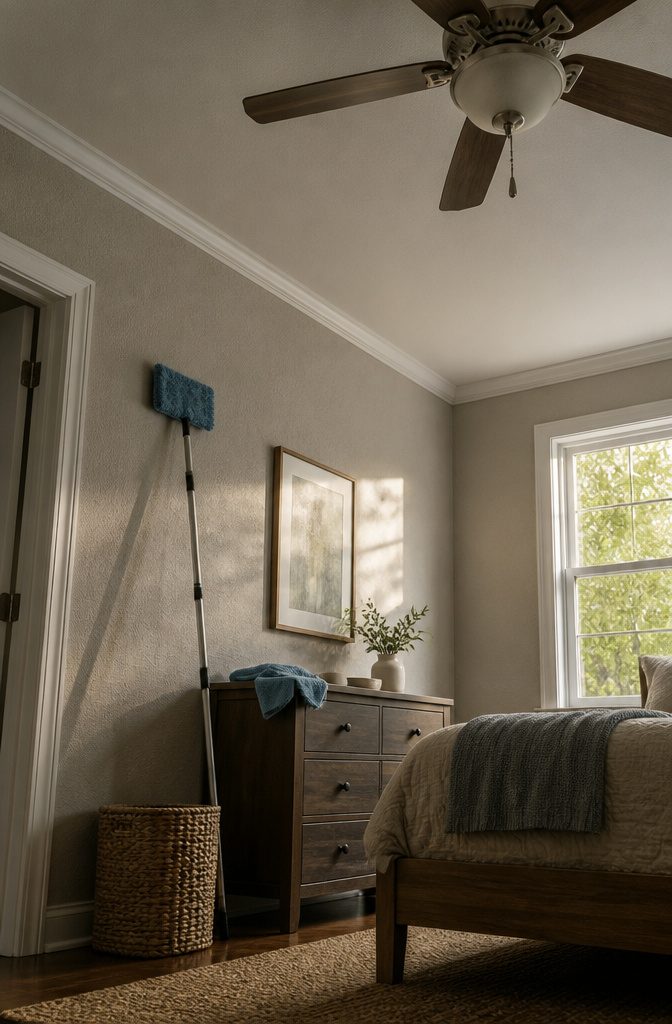
Start at the ceiling and work your way down so dust falls onto surfaces you haven’t cleaned yet. Here’s the sequence:
- Dust the ceiling and all four walls using a microfiber mop in a top-to-bottom and left-to-right pattern so you aren’t covering the same ground twice.
- Clear ceiling fan blades, crown molding, and corners where cobwebs collect using an extendable duster or the nozzle attachment on your vacuum.
- Wipe down door frames, the top edge of doors, and light fixtures with a microfiber cloth.
- If you’re washing walls after dusting, use the same microfiber mop but don’t oversaturate it. Water dripping down the wall leaves streaks and can make a bigger mess on the floor than the dust you started with.
- Finish with light switches and doorknobs using a damp cloth.
Textured walls show dust more than flat ones, so the mop picks up more than you’d expect on a first pass.
Clean Windows, Mirrors, and Treatments
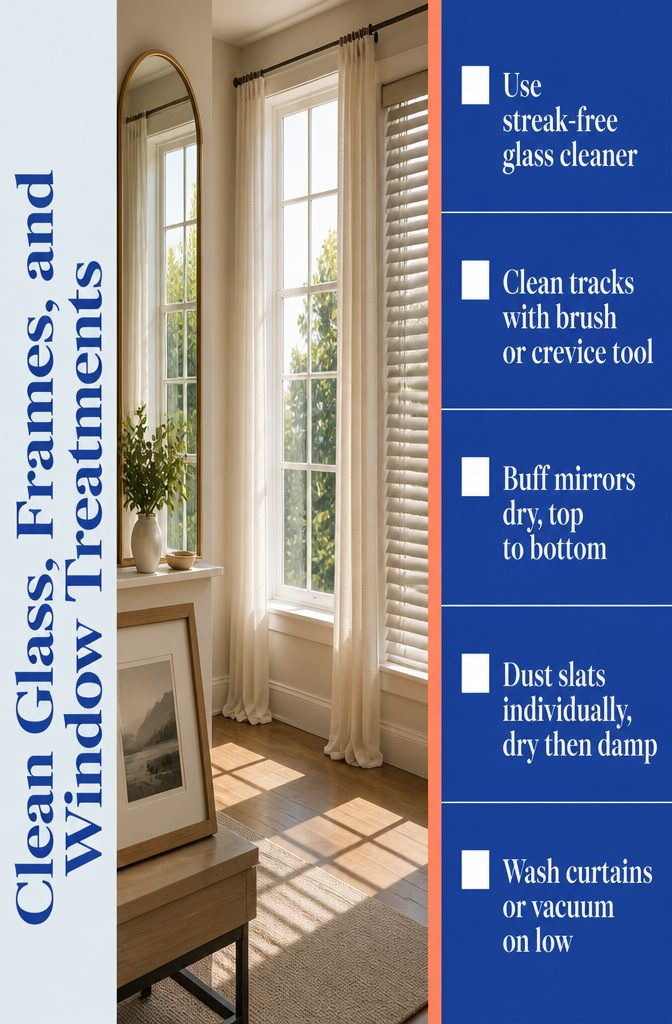
Start at the top of the glass and work down with a microfiber cloth and a streak-free glass cleaner (vinegar-based sprays work well). Clean from one side to the other in overlapping strokes, then buff dry immediately to avoid streaks.
- Wipe down window frames and sills. Dust settles heavily here, and the tracks inside the frame hold grime that blocks smooth operation. A damp microfiber cloth handles most of it; if the tracks are really dirty, a small brush or vacuum crevice tool clears out the debris first.
- Clean mirrors from top to bottom. Use the same glass cleaner and a dry cloth, and work in one direction to catch drips before they streak.
- Dust blinds with a dry microfiber cloth first, then switch to a damp one for stubborn spots. Venetian blinds collect dust on every slat, so I work across each one individually rather than trying to speed through.
- Remove and wash cloth curtains if they’re machine-washable. If they’re not, set them aside for the cleaners. Curtains and pelmets can also be vacuumed on low power with a brush attachment if washing isn’t practical right now.
- Don’t forget glass picture frames. A quick wipe keeps them clear, and they’re easy to miss when you’re focused on the windows.
Wipe Surfaces and High-Touch Points
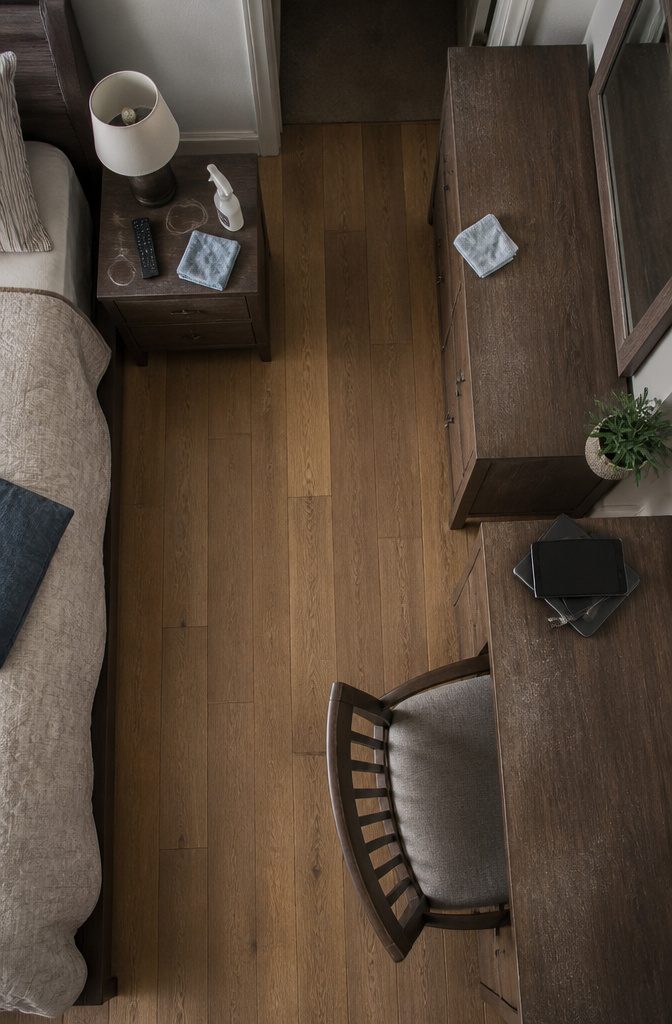
Start by wiping down all flat surfaces: nightstands, dressers, desks, shelves, and the tops of furniture. These collect dust daily and cleaning them improves air quality enough that you notice it the same night.
Priority areas that get touched constantly and hold the most bacteria:
- Light switches — sanitize with disinfectant wipes or a damp cloth
- Door handles and doorknobs — inside and outside, both sides
- Remote controls — wipe down with antibacterial wipes
- Electronics — dust screens, keyboards, and device surfaces
Then move to structural details that trap dust but rarely get attention:
- Chair legs and dresser fronts
- Bed posts and headboards, especially on four-post beds
- Cabinet and drawer pulls
Use a microfiber cloth dampened with an appropriate cleaner for the surface type.
Glass cleaner works for mirrors and screens, dusting spray for wood, antibacterial wipes for switches and handles. Avoid oversaturating the cloth so you don’t leave water streaks.
Clean the Bed and Mattress
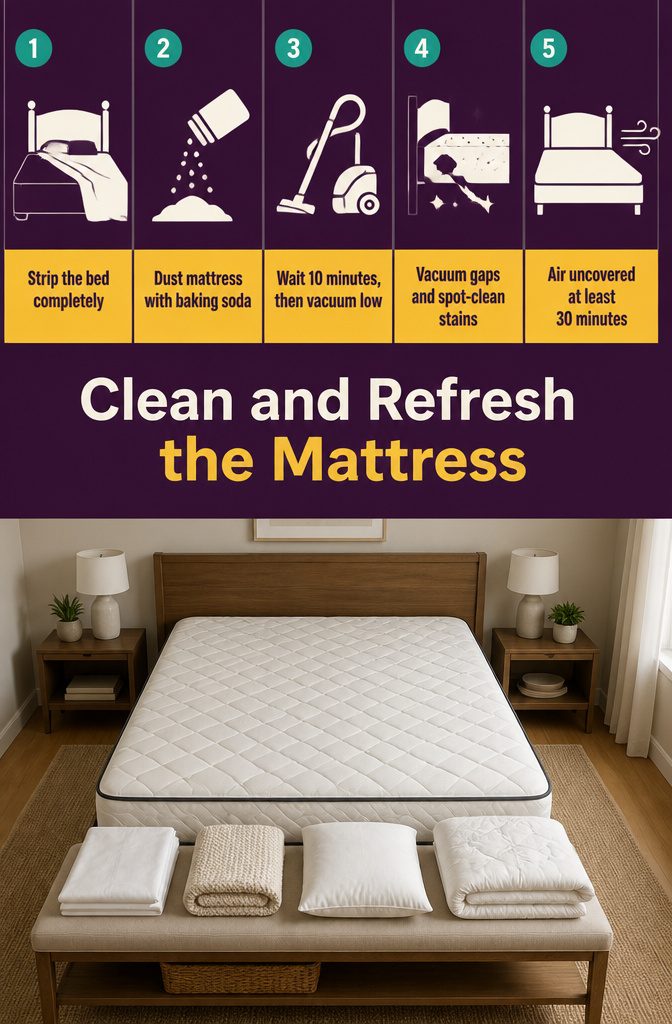
Strip the bed completely and wash sheets every week or every other week.
Blankets and bedspreads go monthly, pillows 2–3 times per year, comforters every 2–3 months. Check tags before throwing anything in; some items need the dry cleaner.
With the bed bare:
- Dust the mattress with baking soda and leave it for 10 minutes before vacuuming on the lowest setting so you don’t damage the fillings.
- Vacuum any gaps between the headboard and mattress.
- Spot-clean stains if needed.
- Flip or rotate the mattress if yours requires it.
- Let the mattress air uncovered for at least 30 minutes before making the bed again.
If you’re washing pillows, toss tennis balls in the dryer to keep them fluffy.
Clean Furniture, Baseboards, and Under or Behind Furniture
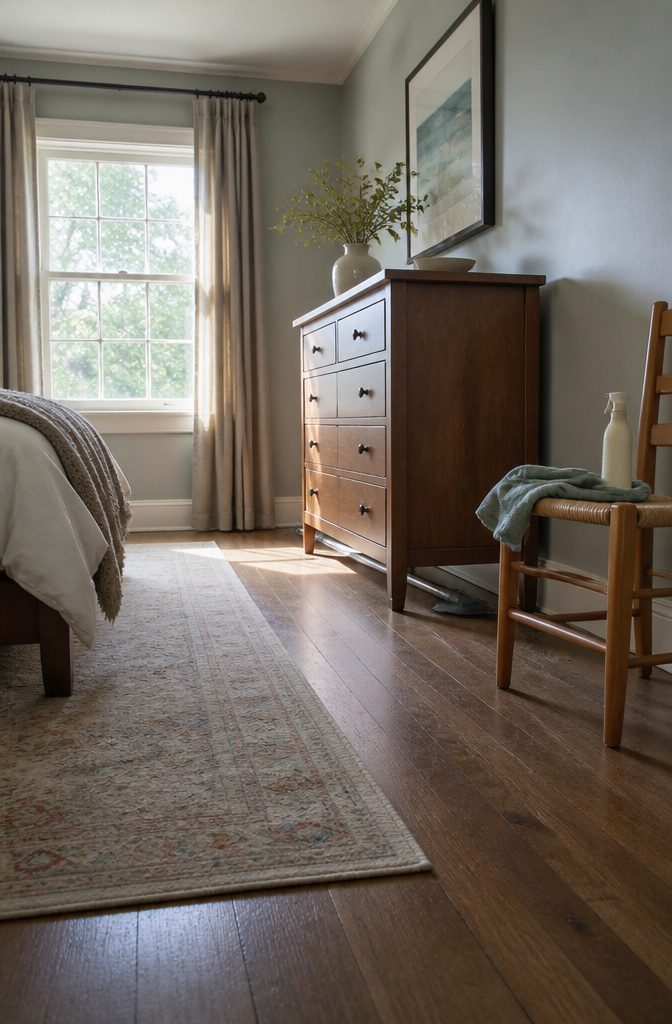
Furniture, baseboards, and the space underneath all get missed when cleaning stays shallow, so pull furniture away from the walls to reach behind and below.
- Dust or polish furniture following the manufacturer’s instructions for the material — the wrong product can damage a finish.
- Wipe down baseboards with a damp cloth to remove scuffs and settled dust while the furniture is pulled out.
- Vacuum or mop under and behind furniture, reaching as far back as possible with a vacuum extension if the piece is too heavy to move safely.
- Push furniture back into place once the floor and baseboards are clean.
Moving furniture while you clean prevents mold, mildew, and moths from settling underneath. Use proper lifting technique or ask for help with heavier pieces rather than dragging them across the floor.
Clean Rugs and Floors
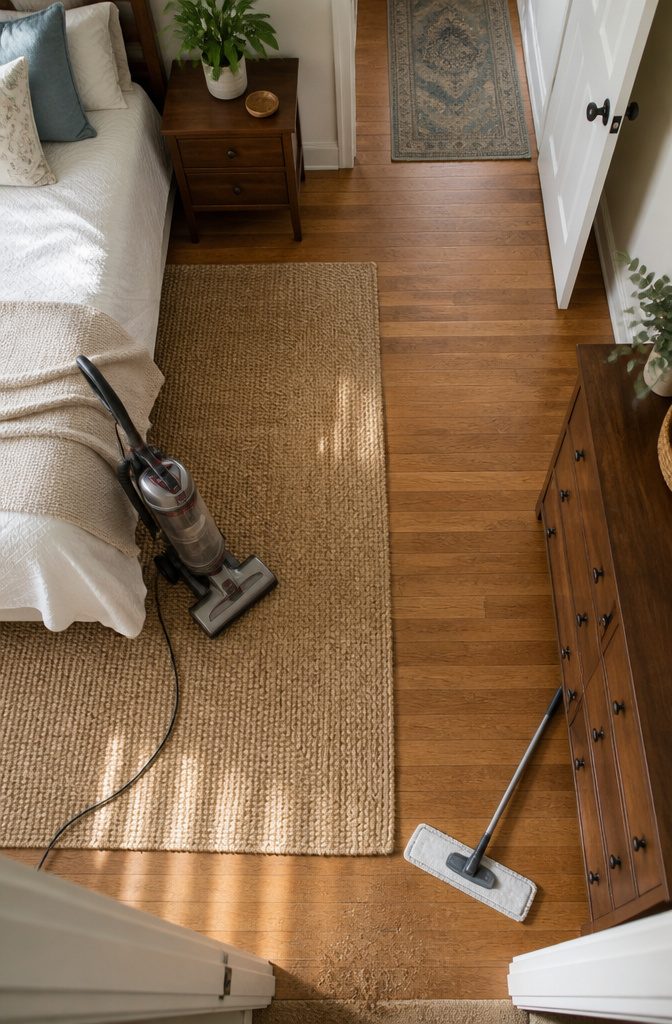
Floors finish the room, and the method depends on what you’re standing on. I vacuum carpet on full power, working the wand as far under the bed and furniture as I can reach without moving them yet.
Hard floors get swept first, then mopped with a cleaner suited to the material—wood, tile and vinyl each tolerate different moisture levels.
Forget advice about starting at the furthest corner of the room and vacuuming your way out and instead vacuum as you enter the room and vacuum as you exit, that way you hit the high traffic spots twice.
That approach covers doorways and the path to the bed twice without adding much time.
The standard method—working from the farthest corner toward the door—still makes sense for mopping, since you avoid stepping on clean, damp floors on your way out.
For rugs, a few options:
- Vacuum in place if the rug is heavy or wall-to-wall.
- Take lightweight rugs outside to beat the dust out, which clears more dirt than vacuuming alone and lets you clean the floor underneath.
- Shampoo or spot-clean area rugs with a carpet cleaner if they need more than surface dust removal.
On hard floors, replace the mop head regularly so you’re not spreading old grime back across the surface.
Put Items Away and Finish
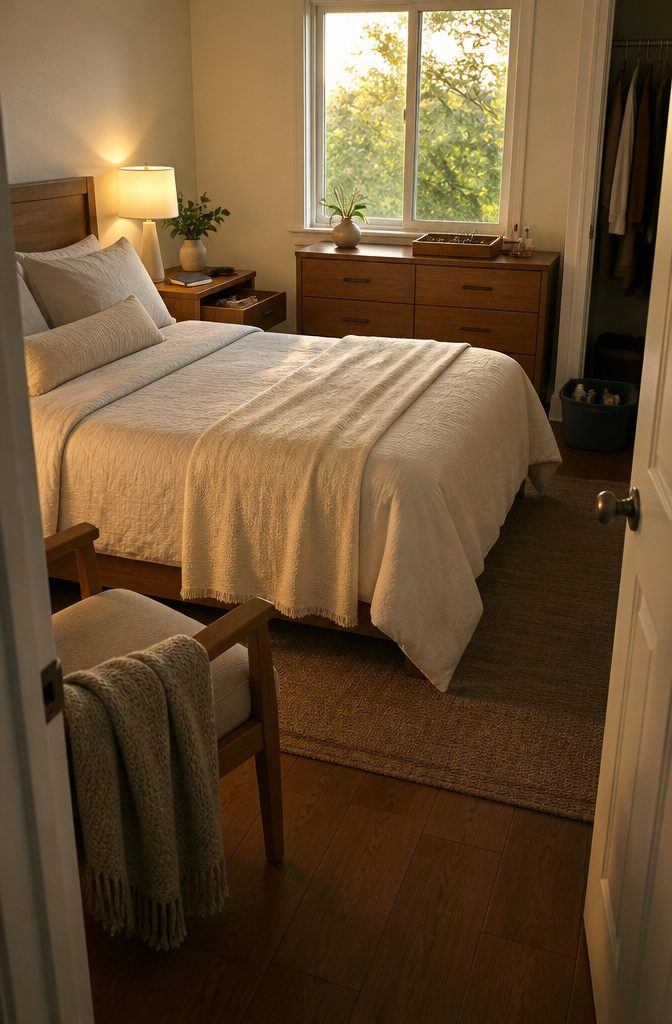
Once the room is clean, put every item back in its proper place. Use these final steps to finish:
- Return clutter to its location. Take anything that belongs in another room to where it goes. Keys, cosmetics, and jewelry go back on the dresser or vanity. Put reading glasses or accessories in a nightstand drawer. Decluttering your surfaces helps create space and improves overall well-being.
- Remake the bed with clean linens. As the other sheets wash, pull a fresh spare set and spread them on the bed. Replace the duvet and finish making the bed. Clean, fresh sheets are what you get for the work.
- Put cleaning supplies away. Return all the supplies to their storage spots. A tray divided into sections on the dresser gives you organized space for keys, cosmetics, and jewelry. A small box in the nightstand drawer holds glasses and small accessories.
- Add fragrance if you want. A candle, diffuser, or linen spray adds a finishing layer once everything is back in order.
- Do a final walk-through. Check that surfaces are clear, the trash is empty, and nothing is left on the floor. Keep only essential everyday items like a hairbrush, medicine, or a book on your vanity or nightstand. The rest should be put away.
Using a System Makes Cleaning Manageable
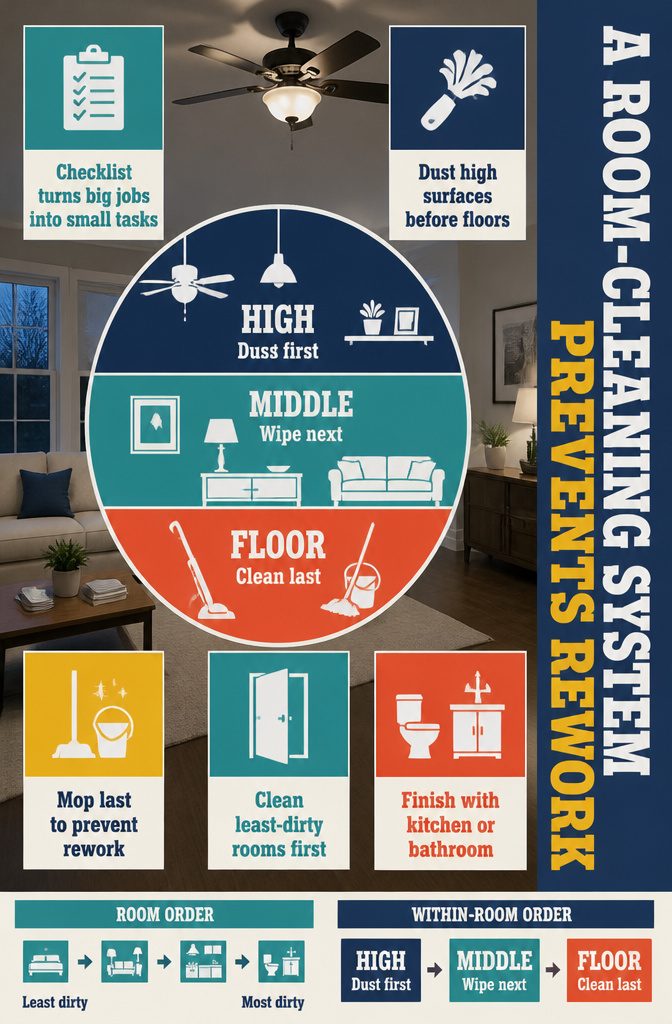
A checklist keeps me from forgetting the same corner every week and makes a big job feel like a series of small ones.
Instead of staring at a messy room wondering where to begin, I work through a list that covers every surface once.
The approach that prevents rework is cleaning from top to bottom, because dust knocked loose from a ceiling fan or light fixture falls straight down onto furniture and floors you might have already finished.
Mopping first and dusting second means the floor gets dirty again immediately.
When cleaning multiple rooms in one session, I start with the least dirty space and finish with the bathroom or kitchen, where grime and moisture concentrate.
That keeps tools and cleaning solutions from carrying heavy soil back into a bedroom or living room.
The top-to-bottom pattern applies inside each room, too. I dust high surfaces, wipe mid-level ones, then vacuum or mop at the end so everything lands where gravity puts it and nothing needs a second pass.
Product Safety and Surface-Appropriate Methods
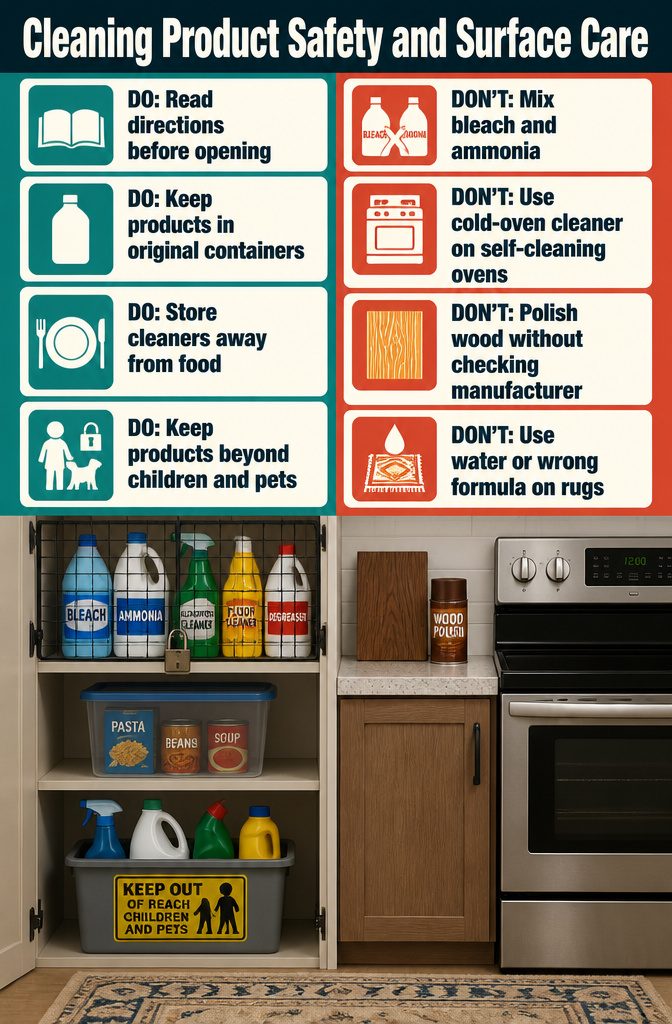
Every cleaning product carries directions on the label, and I follow them before I open the bottle.
The biggest mistake I see people make is mixing products to try to boost their strength. Bleach and ammonia are both safe alone, but mix them and the fumes can send you to the emergency room.
I keep everything in its original container so the label stays with the product, store cleaners away from food, and put them where children and pets can’t reach them.
The second part is matching the product to the surface.
Oven cleaner designed for cold ovens will damage a self-cleaning oven. The wrong polish can ruin wood furniture, and I’ve seen people wreck a finish in five minutes because they didn’t check with the manufacturer first.
For rugs, water and the wrong formula do more harm than the dirt did. I use what the material asks for, not what I happen to have under the sink.
Frequently Asked Questions
What is the best step-by-step way to clean a room?
Start at the ceiling and work down to the floor so dust falls onto surfaces you haven’t cleaned yet.
Gather supplies first, strip the bed and start laundry, then dust high areas, clean windows and mirrors, wipe all surfaces, vacuum or mop floors, and finish by putting items away.
How do you deep clean a messy room?
Clear trash and clutter first using a three-bin system for items to throw out, donate, or return to other rooms.
Once surfaces are accessible, clean from ceiling to floor: dust high areas, wipe mid-level surfaces, then vacuum or mop at the end.
What areas in a room are most often forgotten?
Ceiling fan blades, window tracks, air vents, remote controls, and the tops of picture frames and door moldings collect dust but rarely get attention.
The space under and behind furniture, along with the top edges of doors and light fixtures, also gets skipped in routine cleaning.
What goes on a room cleanliness inspection checklist?
Include high-touch points like light switches, door handles, and remotes, plus low-visibility spots such as the tops of door frames, window tracks, and the area under the bed.
Baseboards, ceiling corners, and the space behind furniture should also be on the list.
What’s the fastest way to clean a bedroom?
Put away clutter, make the bed, remove dishes and cups, wipe down surfaces, and vacuum if time allows. Clearing surfaces first makes the room look tidier immediately, and the rest takes less time when you aren’t working around scattered items.
How often should a bedroom be cleaned?
Do simple tidying daily, clean high-touch surfaces weekly, and handle deep cleaning tasks monthly or quarterly depending on your needs. Wash sheets every 1–2 weeks, blankets monthly, and pillows 2–3 times per year.