Choosing a kitchen faucet takes an hour to measure and compare, but most people skip the step that decides whether the faucet fits: checking how many holes the sink already has drilled.
Faucets are built for 1 to 3 openings, and spout heights range from 3 inches for tight spaces under cabinets to 24 inches for deep farmhouse sinks.
1. Start With How You Use the Kitchen
Before you look at any faucet, walk through how you actually work in the kitchen.
If you cook for a household every night, you need different features than someone who reheats and rinses. A family that fills stock pots needs clearance a single person boiling pasta water does not.
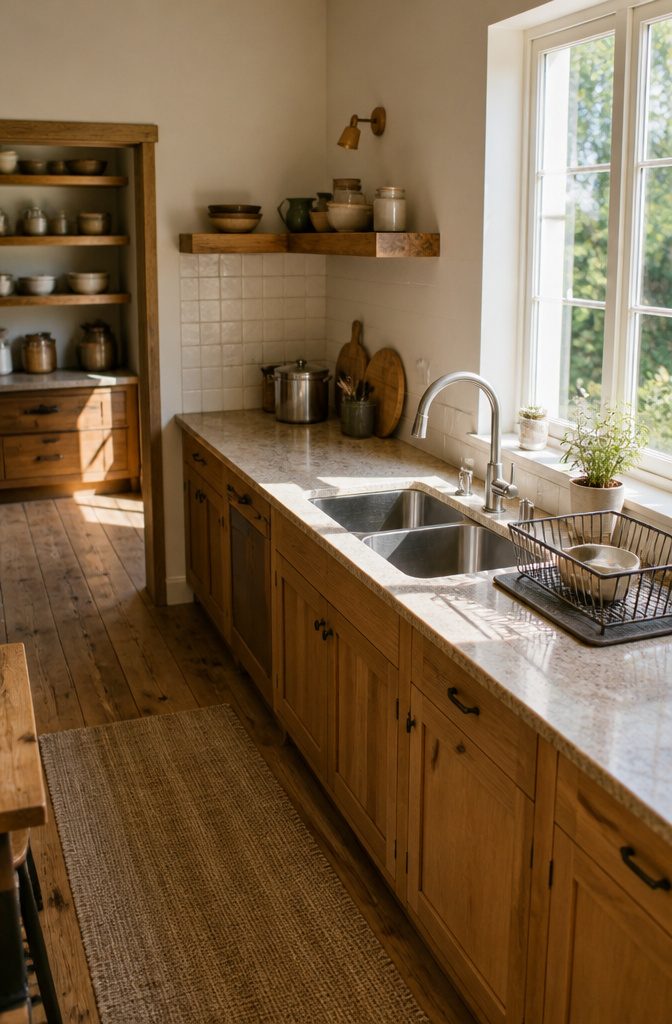
The sink matters just as much: a double-bowl setup changes which spout reach and swivel angle make sense, and an undermount sink sits lower than a drop-in, which shifts how high the spout should stand to feel comfortable.
Counter space around the sink decides whether a pull-down sprayer has room to rest or whether it will knock into a dish rack every time you set it down.
Cabinet depth below determines whether a tall faucet body will fit or hit the back wall. Style ties the choice to the rest of the room, but it comes last.
A modern faucet in a cottage kitchen can work if the proportions and finish make sense with the tile and hardware already there. Function narrows the field first, and appearance picks the winner from what is left.
2. Check Mounting, Holes, and Plumbing Compatibility
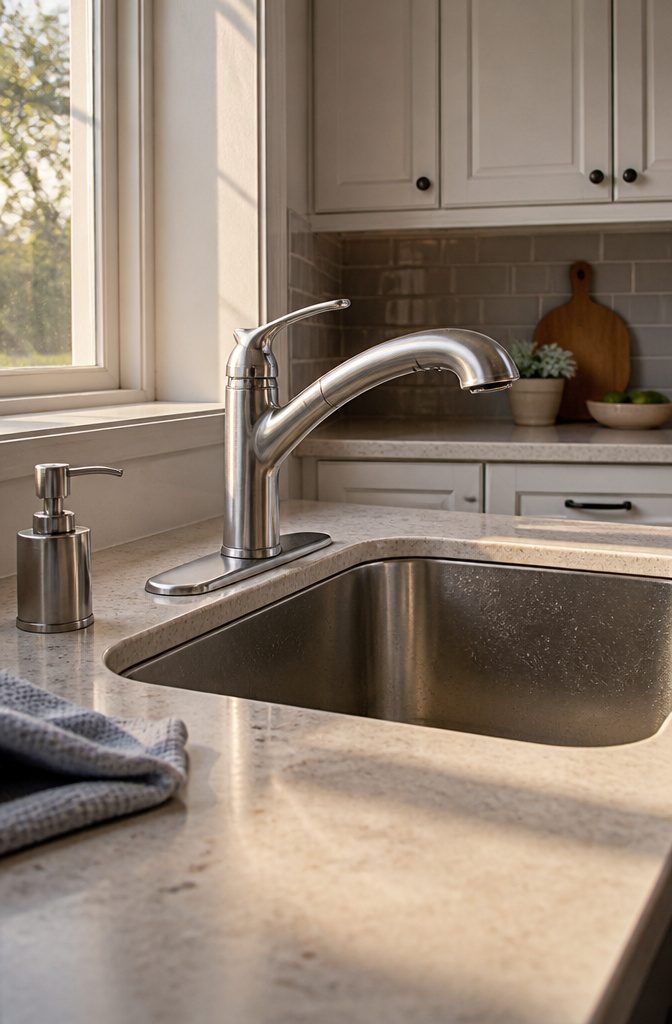
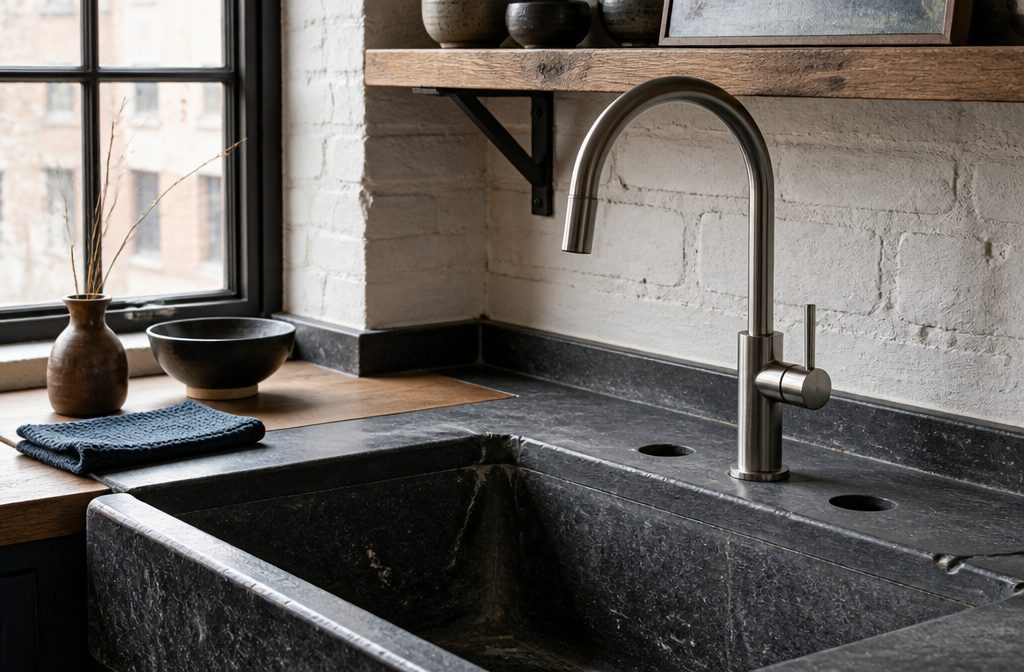
Start by counting the holes already drilled in your sink or countertop.
Most faucets are built for one to three openings, and the number you have determines which models fit without modification. A single-hole faucet installs through one opening and usually includes a pull-down or pull-out sprayer built into the spout.
Faucets with two separate handles typically need three holes: one for the spout and one for each temperature control. If you want extras like a soap dispenser or a side spray, those accessories take up additional holes.
Extra holes left over from an old faucet do not mean you are locked into a matching layout.
A deck plate covers unused openings and gives a cleaner finished look across the sink deck. I prefer this approach when switching from a three-hole bridge style to a single-handle model, because it avoids leaving open holes that collect grime.
Check whether your kitchen is set up for deck-mounted or wall-mounted installation.
Most residential kitchens use deck-mounted faucets, which attach directly to the sink or counter through pre-drilled holes. Wall-mounted models require in-wall plumbing and precise alignment of height and reach, so they fit best in full remodels rather than simple replacements.
3. Match Faucet Type and Controls to Tasks
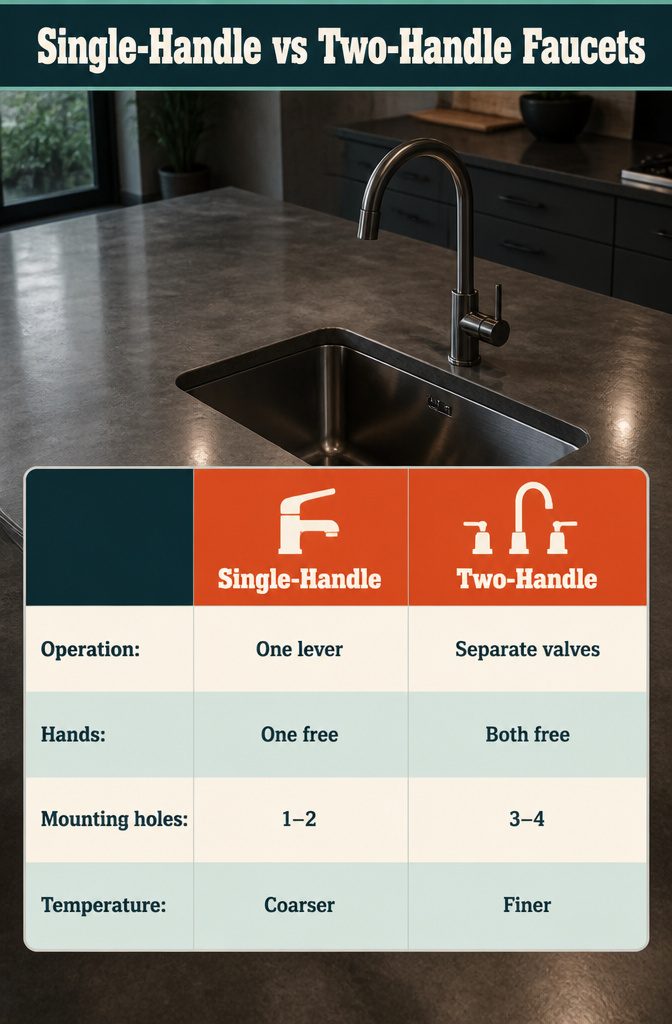
A single-handle faucet controls temperature and water volume with one lever, which makes it faster when you’re holding a pot or have soap on one hand.
It takes up less counter space and usually needs only one or two mounting holes. Temperature control is slightly coarser than with separate hot and cold valves.
Two-handle faucets give you finer adjustment because each valve moves independently, but you need both hands free to dial in the right mix.
They also require more room on the deck—usually three or four holes—and a wider spread between the handles.
I reach for them in traditional kitchens where the look matters as much as the function, and where the sink has the real estate.
Pull-down sprayers move vertically and offer more clearance under the head, which helps when you’re rinsing tall stockpots or baking sheets.
Pull-out models are shorter, so they fit under low cabinets, and the larger spray face covers more surface in one pass. Pull-down wins for heavy cookware; pull-out works better when you need to fill containers sitting next to the sink.
Touchless activation keeps the handle clean when your hands are covered in raw chicken or dough, but look for a manual override so you’re not stuck when the sensor acts up or the battery dies.
4. Fit Spout Height, Reach, and Movement to the Sink
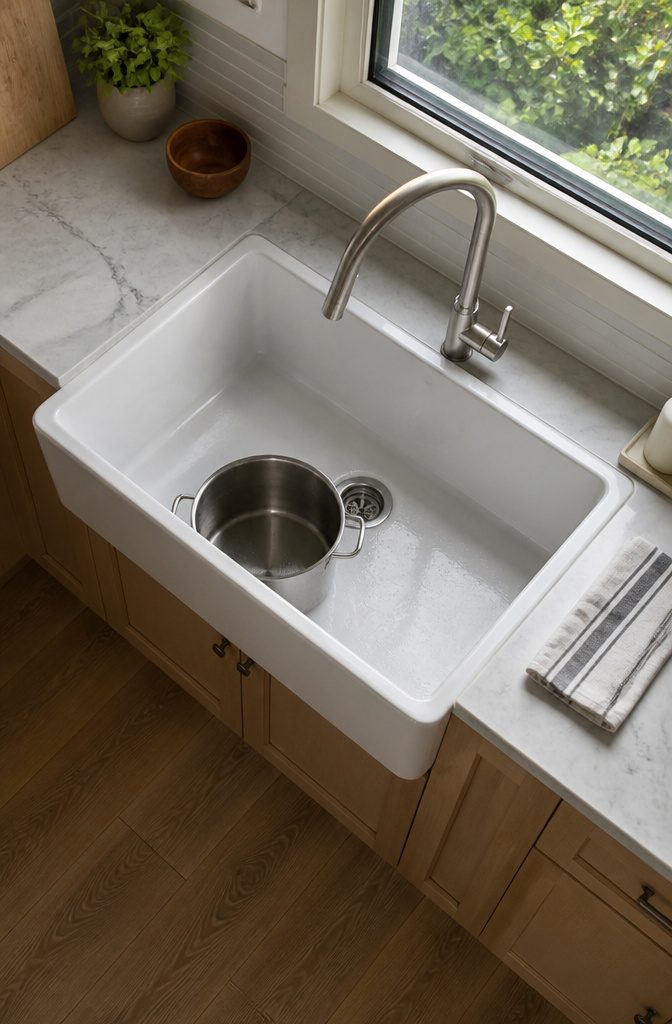
Measure from the faucet’s mounting point to the drain center to find the spout reach you need, then check the vertical space above the sink.
A spout that’s too short lands water near the back edge instead of the center, and one that’s too tall splashes hard in a shallow basin. Both measurements need to match the sink depth, width, and whether cabinets sit overhead.
Standard spout heights range from 3 to 8 inches for low-profile designs that work under upper cabinets or when vertical clearance is tight.
The 8-to-10-inch range handles most single-bowl sinks without drama. High-arc or gooseneck faucets sit at 10 to 16 inches or higher, which gives room to fill stock pots but causes splashback if the sink is shallow.
A deep, large sink can take an 18-to-24-inch faucet without turning the counter into a splash pad.
Spout reach typically falls between 6 and 8 inches for compact sinks, 8 to 10 inches for the practical middle ground, and 10 to 12 inches or more for wide farmhouse basins.
Pair reach with swivel range: 90 degrees gives minimal movement for simple setups, 120 to 180 degrees adds flexibility for single bowls, and 360-degree rotation matters when the spout must serve two bowls or multiple tasks at once.
5. Choose Material and Finish for Durability and Upkeep
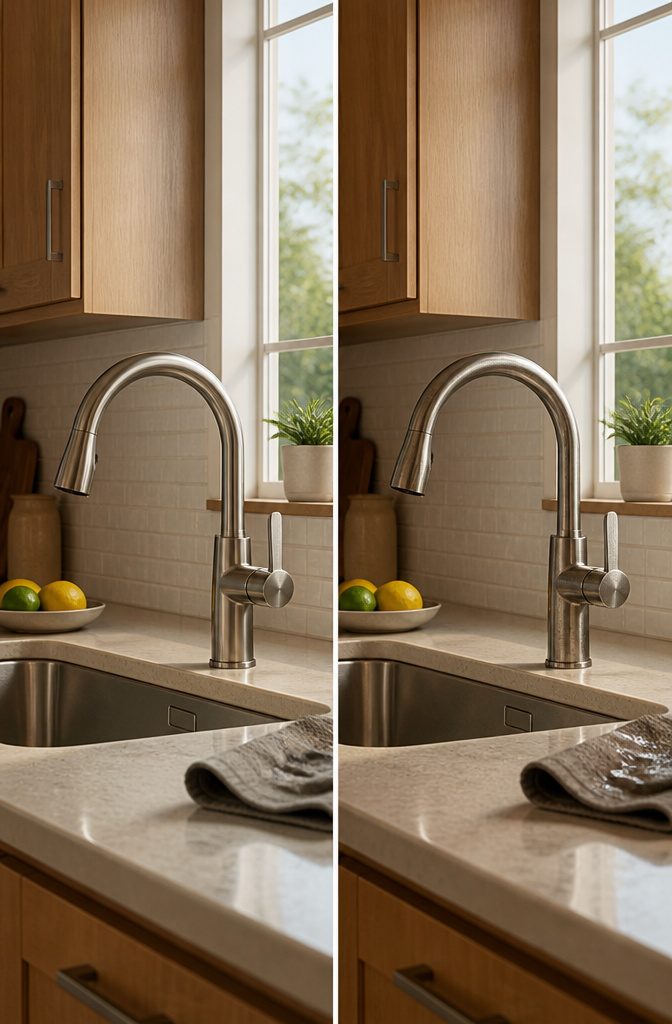
Choose Material and Finish for Durability and Upkeep
The body of the faucet comes down to four materials, and each one trades off cost against how long it lasts under constant water exposure.
Solid brass is the most durable and resists corrosion well, which is why it shows up in higher-end faucets.
Stainless steel also handles moisture and cleaning agents without rusting or staining. Zinc alloy turns up in budget models because it allows for detail work, but it wears faster when water hits it every day.
Some composite faucets mix metal with plastic internals to cut weight and cost, though that means checking the warranty closely.
Finish deserves as much attention as the material under it. Chrome looks clean and handles normal use, but a heavy scouring pad will scratch it.
Brushed stainless hides scratches and water spots better than chrome does. Physical vapor deposition finishes bond metal atoms to the surface and resist scratching in testing, though drain cleaner can stain them slightly.
Matte black became one of the most popular finishes in 2024, and bronze offers a warmer, rustier look if the PVD version is used.
Match the finish to your cabinet hardware for a unified feel, or pick a contrasting one if the faucet is the focal point.
6. Confirm Features and Installation Requirements Before Buying
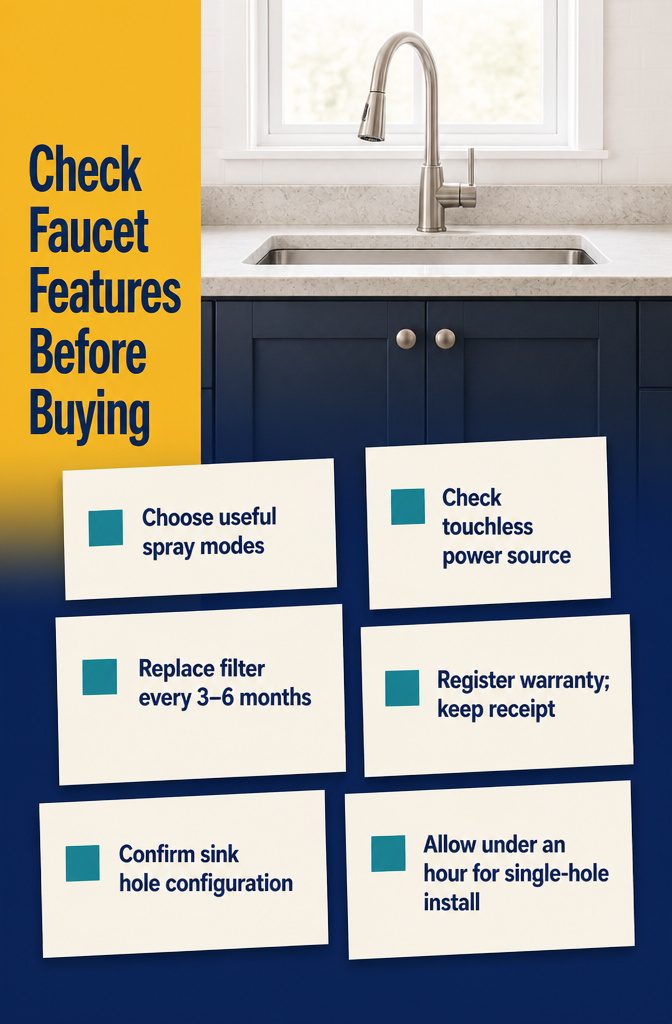
Features narrow down fast once you know what the faucet needs to do.
Spray modes matter if you fill large pots, wash produce, or rinse stuck-on food regularly. A pull-down or pull-out sprayer with toggle or button control handles all three without switching tools.
Touchless controls work well when your hands are raw from chicken or covered in dough, but they require either batteries or a low-voltage connection under the sink, so check the power source before committing.
Built-in filtration cuts a step if you drink tap water, though the cartridges add a maintenance cycle most manufacturers put at three to six months.
Most faucets also come with lifetime warranties (for the original buyer) that cover defects and even finishes.
That warranty holds value only if you register the product and keep proof of purchase, but it means finish wear and internal leaks are covered long after installation. Installation complexity shifts with the feature count.
A single-hole deck-mounted faucet installs in under an hour. Wall-mounted models require precise alignment behind the wall and access to wall plumbing, so plan for contractor time unless you work with copper daily.
If you want a side spray or soap dispenser, verify the hole configuration on your sink or countertop matches what the faucet requires. Custom drilling is possible, but it adds cost and delays the install.
Single-Handle or Two-Handle Operation
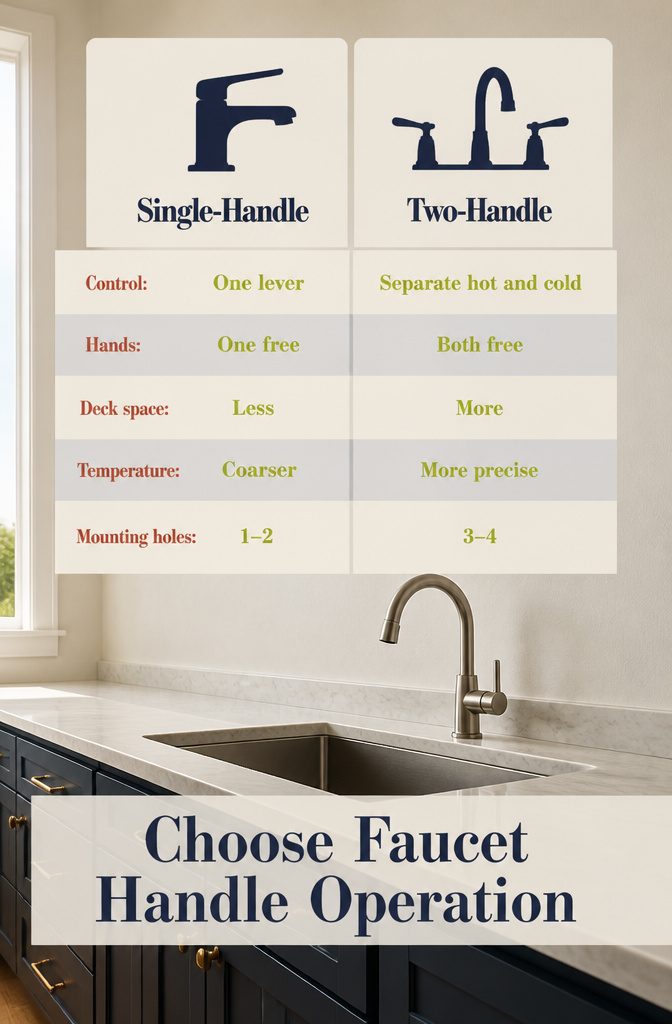
A single-handle faucet controls temperature and flow with one lever, which makes it faster when you have a mixing bowl in one hand or need to adjust the water mid-task.
It takes up less counter space—usually one or two holes instead of three or four—so it fits smaller sinks and tighter layouts without crowding the basin.
You get close to the temperature you want, but fine-tuning takes more fiddling with the lever position than separating hot and cold.
Two-handle faucets give you separate controls for hot and cold water, and that separation makes more precise temperature adjustment possible once you dial in both sides.
The design needs more room, both in hole count and spread across the deck, and you need both hands free to change the mix while the water runs.
I lean toward single handles in compact kitchens where speed and one-handed operation matter more than hitting an exact degree, and two handles in larger setups where the traditional look and finer control justify the extra space and effort.
Pull-Down or Pull-Out Sprayer
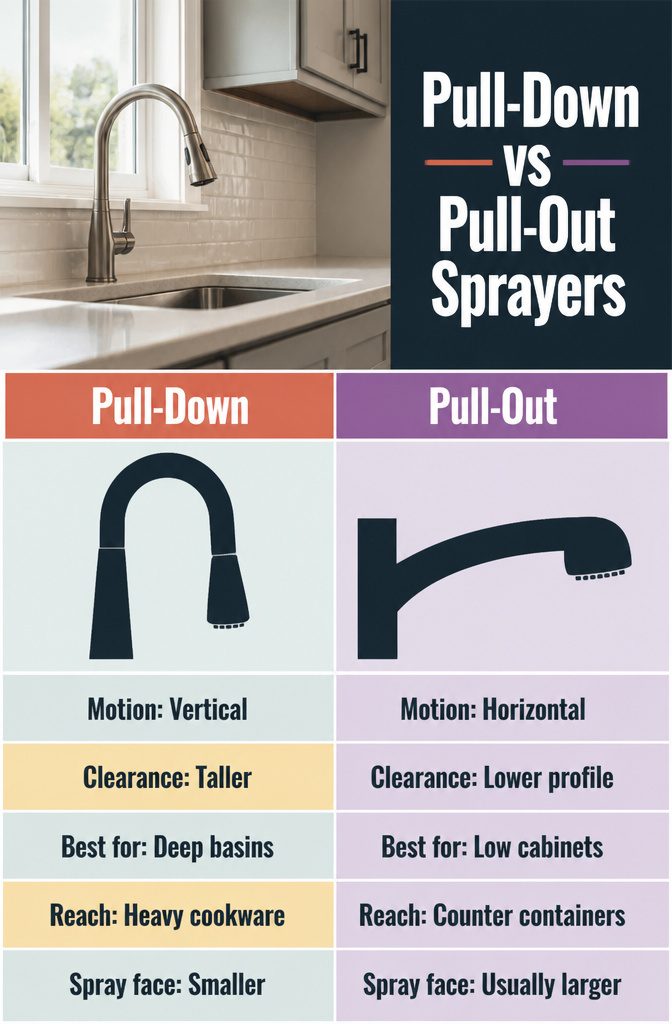
Pull-down faucets extend straight into the sink, suited for deeper basins and kitchens with plenty of vertical clearance.
They work well when you need to wash large pots or baking sheets, because the vertical motion gives you better control over where the water lands.
Pull-out models are shorter and extend horizontally, which makes them the better choice if cabinets sit above your sink or if you’re working with limited overhead space.
The shorter profile also means you can maneuver the spray head out beyond the sink edge when you need to fill containers on the counter.
I find pull-down faucets handle heavy-duty rinsing more efficiently, but pull-out designs give you more flexibility in tight layouts or smaller sinks. The pull-out spray head is usually larger, so you get broader coverage when you need it.
If your sink is shallow or you have a window directly above it, the pull-out wins on clearance. Deep sinks pair better with the taller pull-down design, which prevents splashing and gives you the reach you need without leaning in.
Budget and Long-Term Value
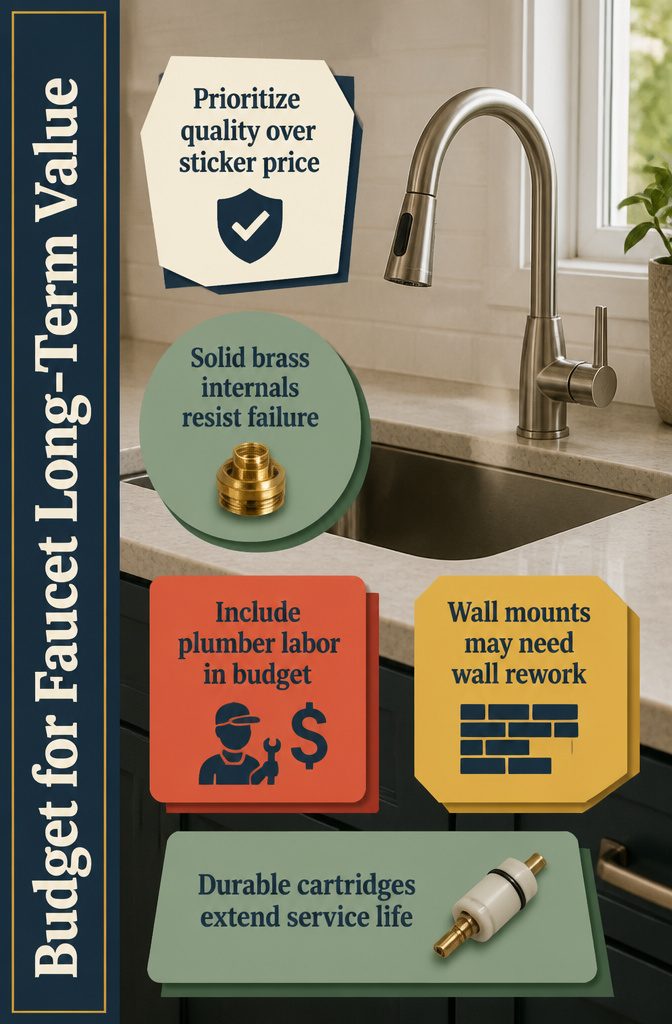
Faucets get more use than almost any other fixture in the kitchen, so quality matters more than a low sticker price.
Cheaper models often lean on lightweight materials and plated finishes that wear through or corrode faster, which means leaks, drips, and an earlier replacement.
I’ve learned to budget for solid construction instead of hoping a bargain holds up. Bronze, brass internals, and durable cartridges reduce the chance of mechanical failure and keep the faucet working smoothly years out.
Installation complexity affects your total spend, too. A standard deck-mount swap is straightforward, but wall-mounted or custom configurations may need a plumber’s time and possibly some rework behind the wall.
When I set a budget now, I account for both the fixture and the labor so there’s no scramble at the end.
The money spent on a well-made faucet with good reviews pays back in reliability, and you won’t be shopping again in three years.
ADA-Compliant Faucets
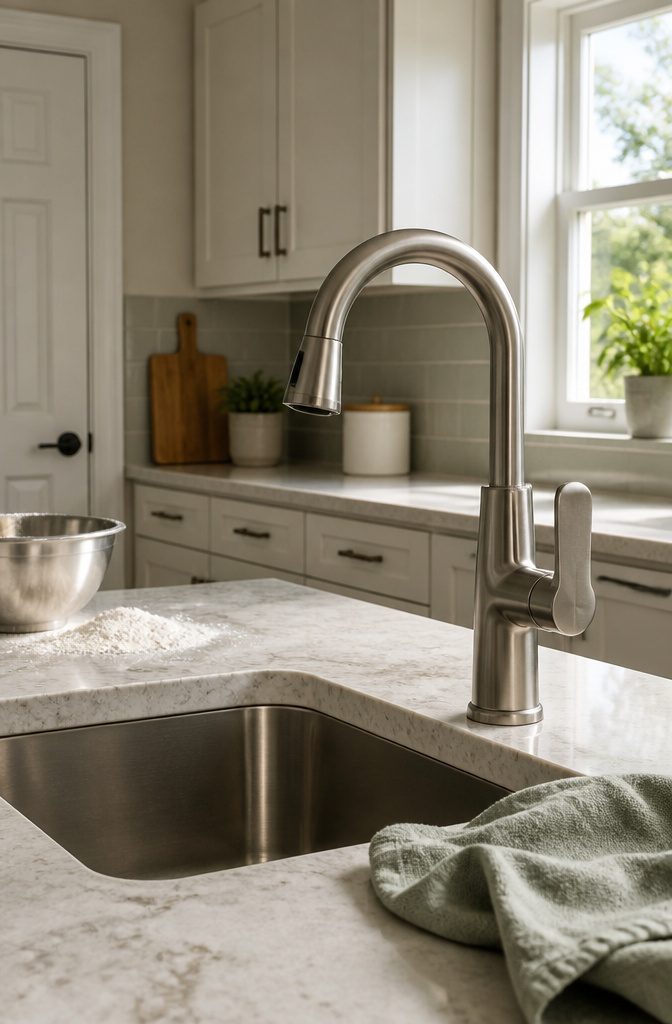
ADA-compliant faucets are built for anyone who needs ease of operation, whether that’s someone with limited hand strength, arthritis, or a temporary injury.
The standard requires operation with one hand and no more than five pounds of force, which rules out tight grips, twisting knobs, and anything that demands a pinch or full palm wrap.
Lever handles, touchless sensors, and single-handle controls all meet the requirement when designed properly.
I point people toward ADA faucets even when compliance isn’t legally required, because the same features that make a faucet accessible also make it easier to use when your hands are full, wet, or covered in flour.
A lever you can nudge with a wrist or forearm works better for everyone in a working kitchen, not just for the person the code was written to protect.
Frequently Asked Questions
How many holes should your kitchen sink have?
Match the faucet to the holes already drilled in your sink, or plan the layout if you’re installing both new.
Single-hole faucets need one opening, two-handle models typically need 3, and accessories like soap dispensers take additional holes. A deck plate covers any unused openings left from an old faucet.
Are single handle or 2 handle faucets better?
Single-handle faucets control temperature and flow with one lever, making them faster when you have one hand occupied and requiring less counter space.
Two-handle faucets give you finer temperature control because each valve moves independently, but you need both hands free and more room on the deck.
Is a pull-down or pull-out faucet better?
Pull-down faucets extend vertically and offer more clearance under the head, which helps with tall stockpots and deep sinks. Pull-out models are shorter and fit under low cabinets, with a larger spray face that covers more surface in one pass.
Pick pull-down for heavy cookware and deep basins, pull-out for tight vertical space or filling containers next to the sink.
What is the ideal spout reach?
Measure from the faucet’s mounting point to the drain center to find the reach you need.
Compact sinks typically need 6 to 8 inches, most single-bowl sinks work with 8 to 10 inches, and wide farmhouse basins require 10 to 12 inches or more. The right reach directs water into the center of the basin instead of near the back edge.
What are ADA compliant kitchen faucets?
ADA-compliant faucets can be operated with one hand and no more than 5 pounds of force, which rules out tight grips, twisting knobs, or anything that demands a pinch.
Lever handles, touchless sensors, and single-handle controls all meet the requirement when designed properly.
They make the faucet easier to use when your hands are full, wet, or covered in flour, not just for those with limited hand strength or arthritis.
Which finish is best for a kitchen faucet?
Chrome looks clean and handles normal use, but scouring pads will scratch it. Brushed stainless hides scratches and water spots better than chrome does.
Physical vapor deposition finishes resist scratching in testing, though drain cleaner can stain them slightly. Match the finish to your cabinet hardware for a unified feel, or pick a contrasting one if the faucet is the focal point.