A small garden feels larger when you cannot see the whole boundary at once, and that happens through partial screening, diagonal layouts, or borrowed views beyond the fence.
The mistake is treating limited space as a reason to plant less: deeper beds with layered heights and repeated color actually make the garden read as more deliberate than scattering narrow strips around the edge.
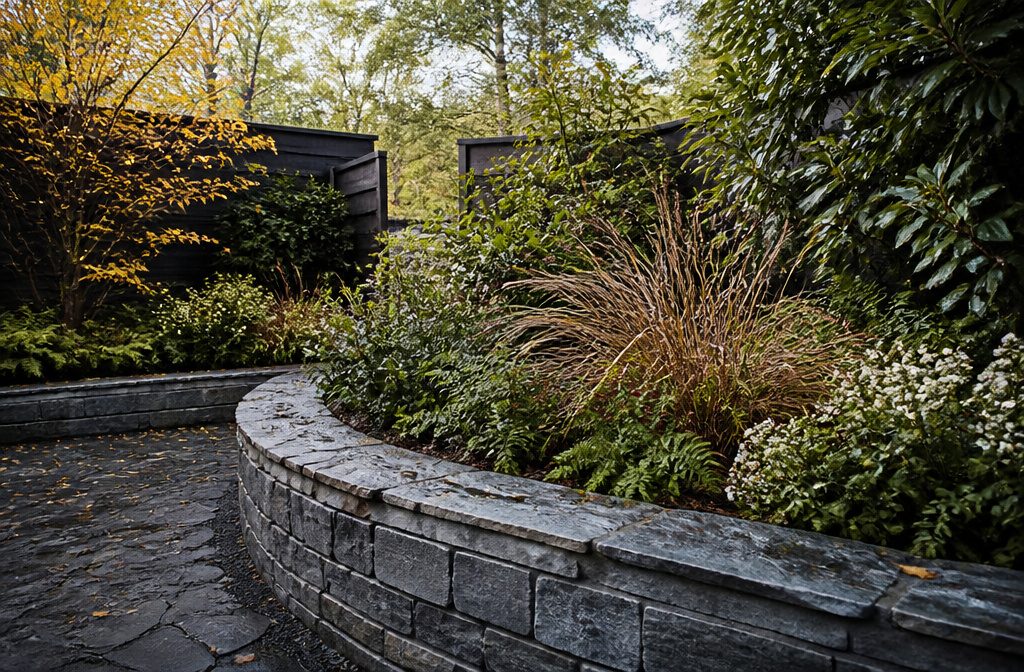
A retaining wall built to 17 inches doubles as seating without adding furniture.
1. Plan Around How You’ll Actually Use the Space
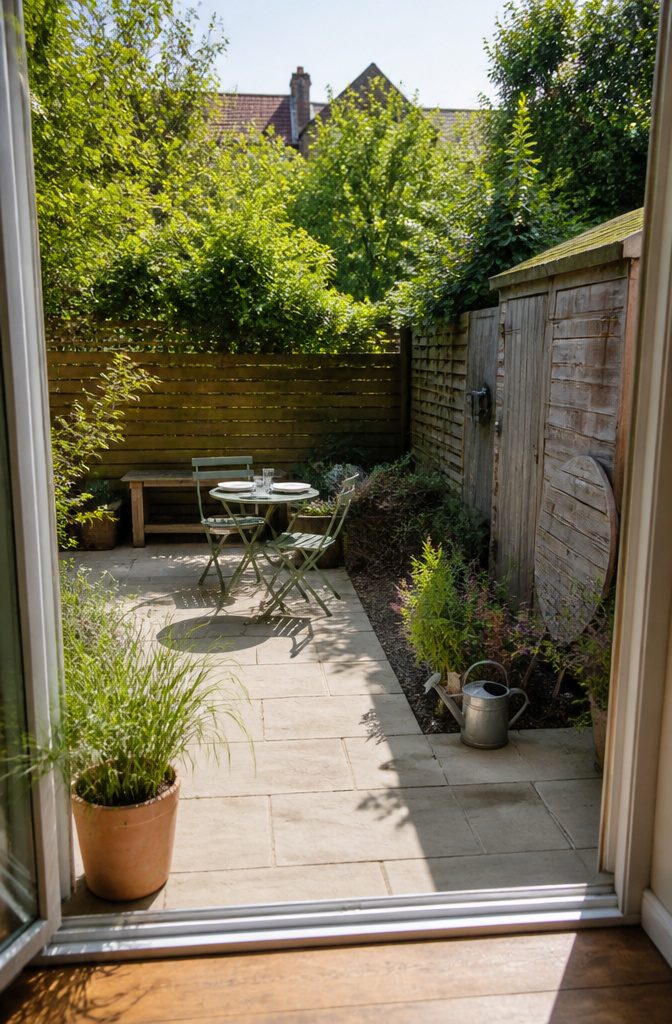
I always ask a household to list exactly how many people use the garden on a normal Tuesday, how many join for weekend meals in summer, and how many show up once or twice a year for something bigger.
The answer tends to be one or two people daily, four to six for regular outdoor dinners, and eight to ten at most for the occasional gathering.
That pattern decides everything: how much fixed seating you install, whether a dining table lives outside year-round or folds away, and how much lawn or planting bed the space can afford.
A garden built for the imagined party that happens once becomes a garden the household doesn’t use the other fifty-one weeks.
Start with the week you actually live, not the event you picture hosting someday, and the layout writes itself around what matters.
2. Use Vertical Space With Trellises, Climbers and Hanging Planters
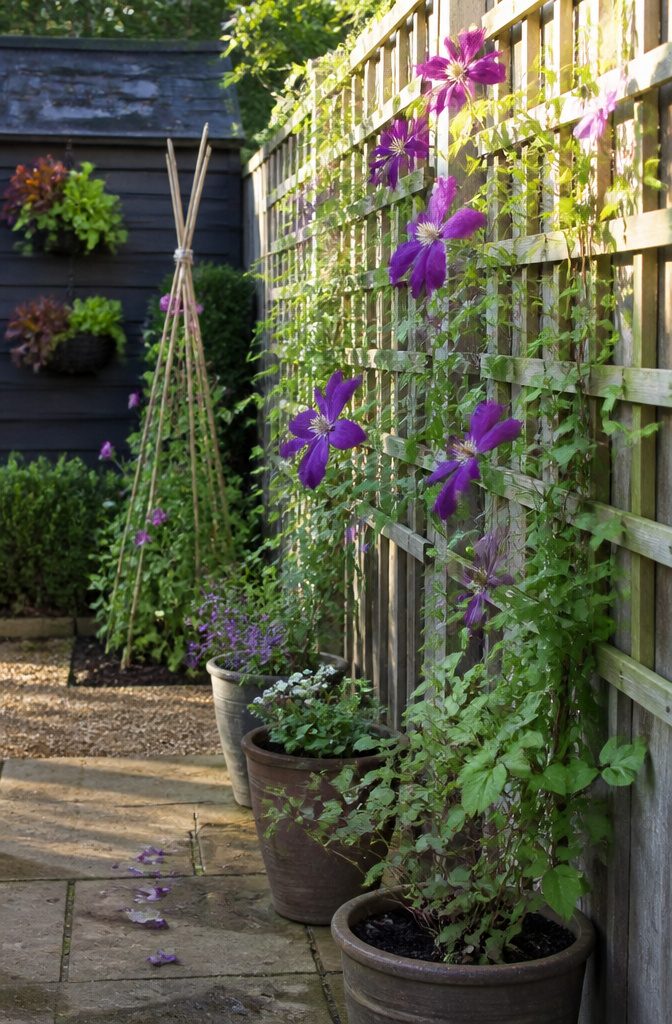
Trellises and climbers let you add greenery without eating into ground space, which matters when every square foot already has a job.
A clematis or jasmine will cover a sunny fence quickly, while climbing hydrangea or chocolate vine work on north-facing walls and shady spots.
The plant grows up instead of out, so you keep the footprint small while still disguising boundaries and adding height.
I prioritize fewer but bigger pots for climbers, since small pots dry out fast and the root system underground ends up as large as the plant above.
Hanging planters take up zero ground space and work well on shed walls or along boundaries. I use them for trailing alpines, herbs, or salad leaves and spinach, all of which have shallow roots and suit the limited soil volume.
For something faster, you can build a teepee with three bamboo sticks tied at the top with string or twine, then grow sweet peas, cucumbers, or nasturtium up the frame.
Green walls or landscape fabric plantings turn a bare vertical surface into usable planting area when the yard itself is nearly nonexistent.
3. Choose Compact Plants or Trained Trees
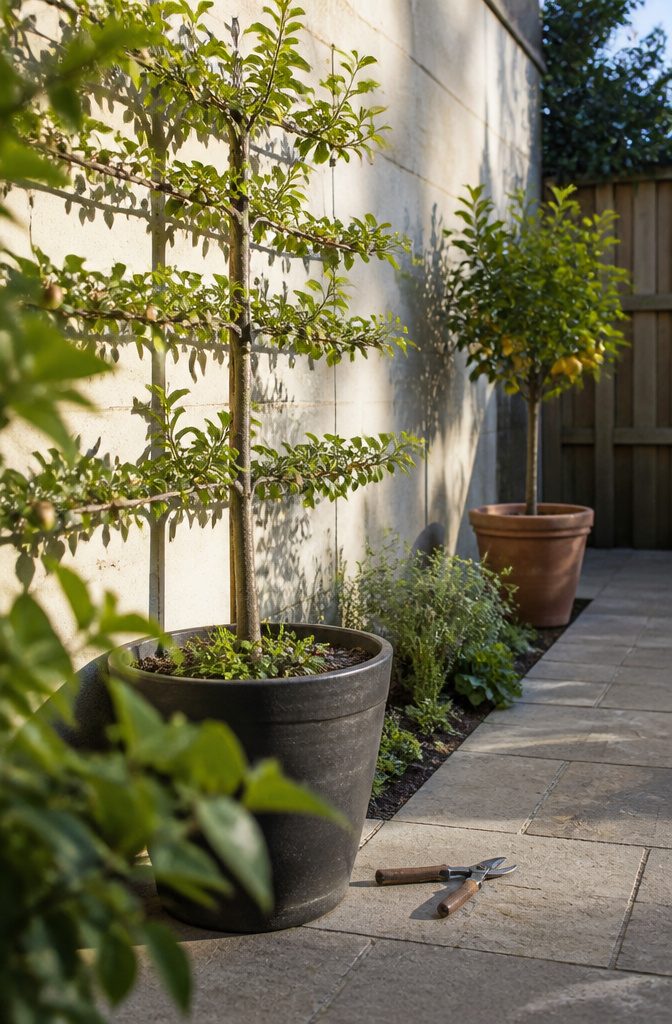
Dwarf citrus trees fit small gardens when you have at least 6 hours of direct sunlight daily.
They grow well in containers and take up far less ground than standard fruit trees, which makes them a practical choice if sunny space is limited.
I find them more forgiving than people expect: as long as the light requirement is met, they tolerate pots without much fuss.
For apples, rootstock matters more than variety. The M27 rootstock produces trees around 1.5 metres tall, which is small enough for a narrow bed or a large container.
Other rootstocks push the tree to 3–4 metres, and that extra height eats space quickly in a small garden. If you want multiple varieties without losing half the yard, M27 is the call.
Trained fruit trees work when horizontal space is tight but you have a wall or fence. Espaliers and fans grow flat against a vertical surface, and cordons run nearly upright, maximizing variety count in a narrow strip.
They need sun and annual pruning, but the pruning is light compared to managing an untrained tree that outgrew its spot.
For ornamental trees that stay compact, Delta-series and Early Bird™ Crapemyrtles grow 5–8 feet and work in borders where a full-size tree would crowd out everything else.
4. Vary Plant Heights and Layer Them
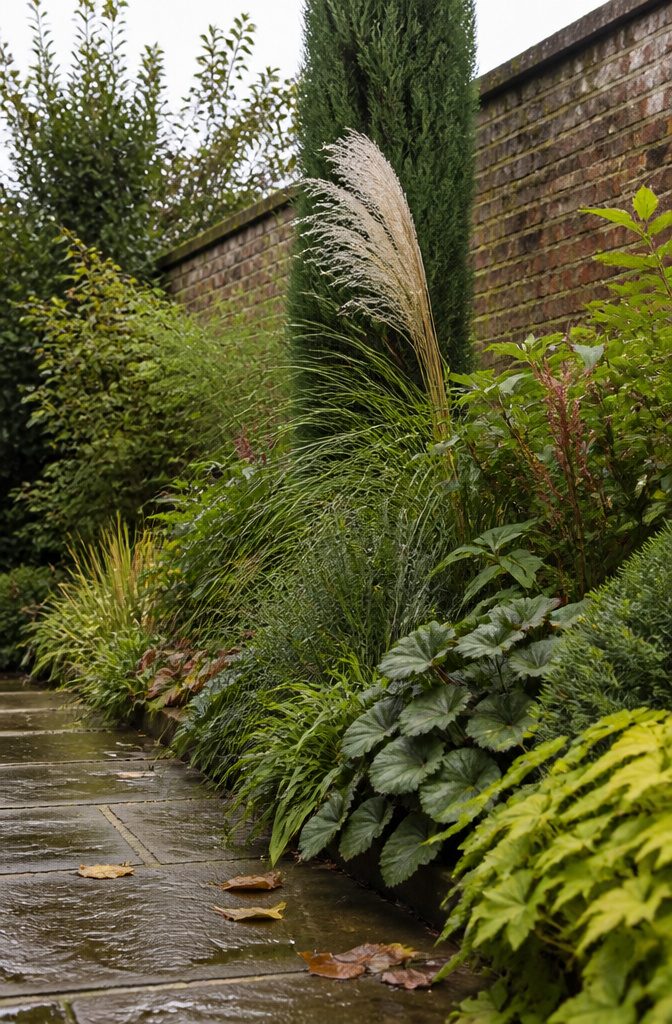
Placing taller plants behind shorter ones creates the depth a small garden loses when everything sits at the same height. I arrange by height so the eye moves through layers rather than stopping at a flat wall of green.
In a narrow bed, that might mean a dwarf fruit tree or columnar juniper at the back, mid-height shrubs or grasses in the middle, and ground covers or compact perennials up front.
The same method works in containers: taller specimens toward the center or rear, then shorter plants cascading over the edge. Without that variation, the garden reads as a single plane no matter how many plants you fit into it.
Layering by height also means every plant stays visible instead of hidden behind something taller, which matters when space is tight and each one needs to count.
5. Limit and Repeat Plant Colors
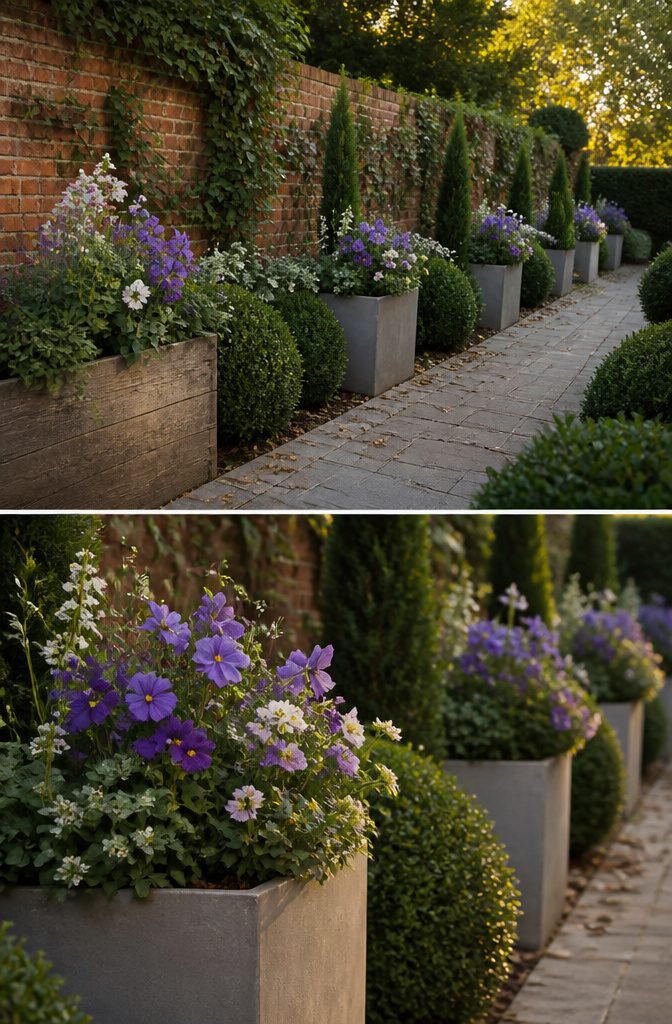
A palette that stays tight to two or three colors plus green keeps a small garden from reading as visual clutter.
When flower beds use one to three colors per area rather than mixing everything, the space feels cohesive instead of scattered.
I like that approach because it lets you repeat the same color in different beds without the garden looking like a catalog page.
Repetition is what pulls it together. Whether it’s three identical containers, a line of box balls along a path, or the same evergreen planted at intervals, that repeated element gives the garden rhythm and makes it feel more deliberate.
The eye moves along the pattern instead of jumping around looking for the next thing. A limited plant palette also makes the garden look more professionally designed, because the structure comes from the plants themselves rather than from novelty.
6. Use Foliage Texture and Seasonal Interest
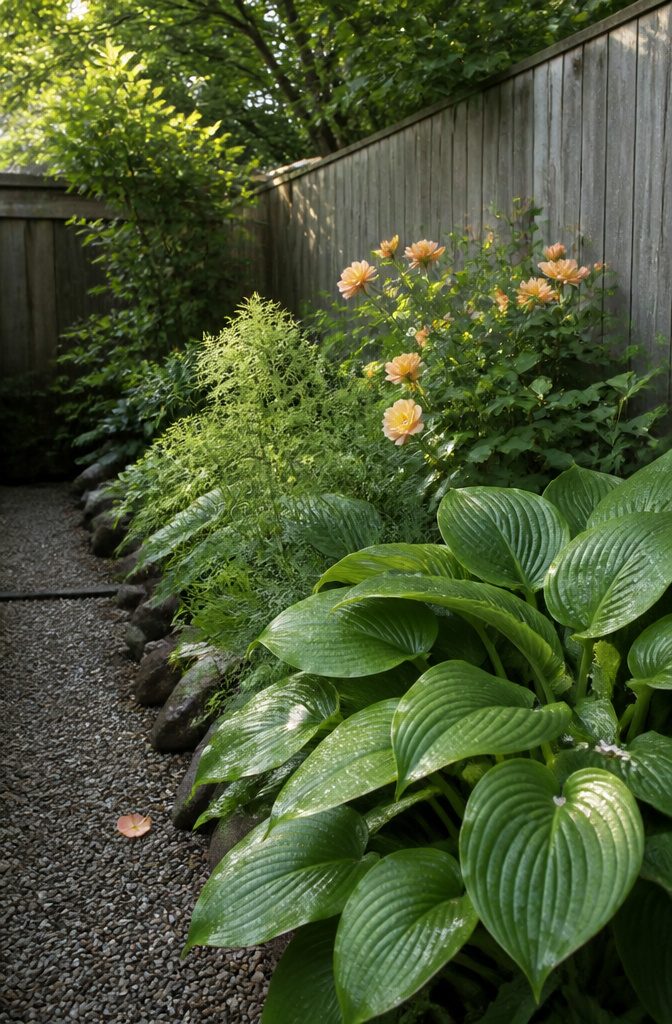
Foliage texture keeps the garden varied when you can’t spare room for short-season color. I focus on contrasting leaf shapes and sizes rather than flowers first, because texture stays interesting all year.
A mix of fine, feathery plants alongside broad or glossy foliage makes the planting feel layered without adding square footage. Discipline keeps this from turning into clutter: I work within a green palette and let shape do the work.
In a tiny space there isn’t room to have plants that are only interesting for a short part of the year, so choose types with a long flowering season.
When flowers do earn their place, extend the season as far as possible.
Rosa ‘Flower Carpet Amber’ flowers for eight months, and Rosa ‘Lady of Shalott’ runs June to October. That kind of span matters when you’re working with six plants instead of sixty.
7. Divide the Garden Into Areas or Rooms
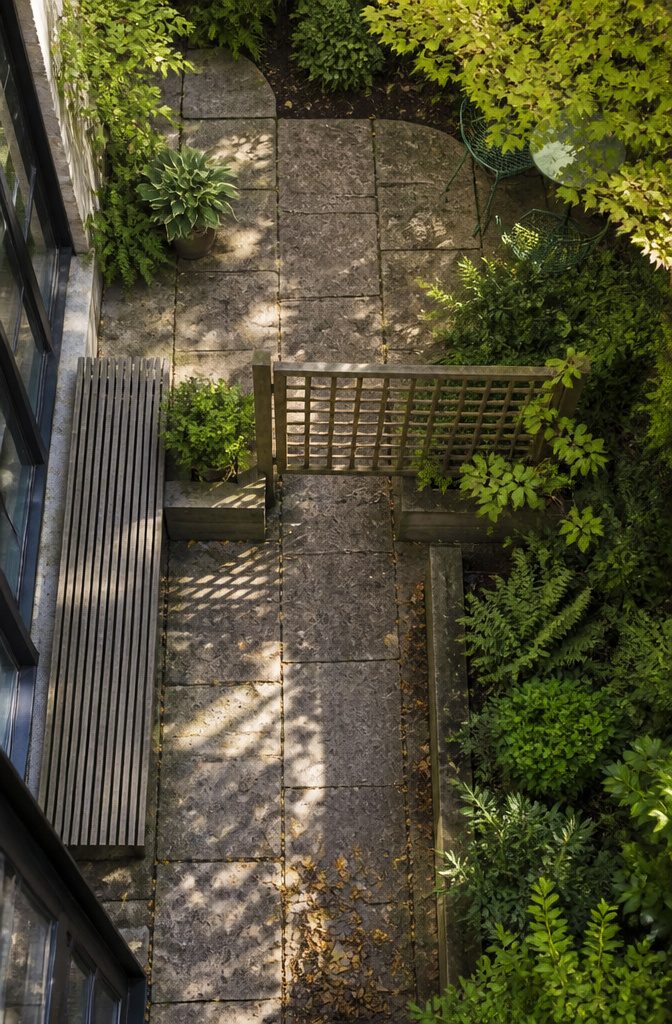
A small garden feels larger when you cannot see the whole boundary at once. If the fence line runs visible from corner to corner, the space reads as boxed in.
Breaking that view with partial screening makes the brain work harder to map the edges, and that effort translates to a sense of more room than the property line actually holds.
I use hedging, a tall vertical plant, or a short run of trellis to mask what sits beyond the first zone.
The division does not need to be solid — just enough to stop the eye from landing on the back fence in one sweep.
In one garden I worked on, three trees placed mid-space blocked sightlines from certain angles, so the layout revealed itself as you moved through rather than all at once from the door.
Dividing a small garden into separate areas works the same way rooms do in a house. An arch, a low hedge, or a series of posts can mark a threshold without shrinking circulation.
Raised beds, built-in benches, and specimen plants give the eye stopping points, which forces it to travel through the space instead of reading it as one flat plane.
More elements, placed with intention, make a garden feel larger rather than smaller.
8. Use Diagonal Layouts or Curved Routes
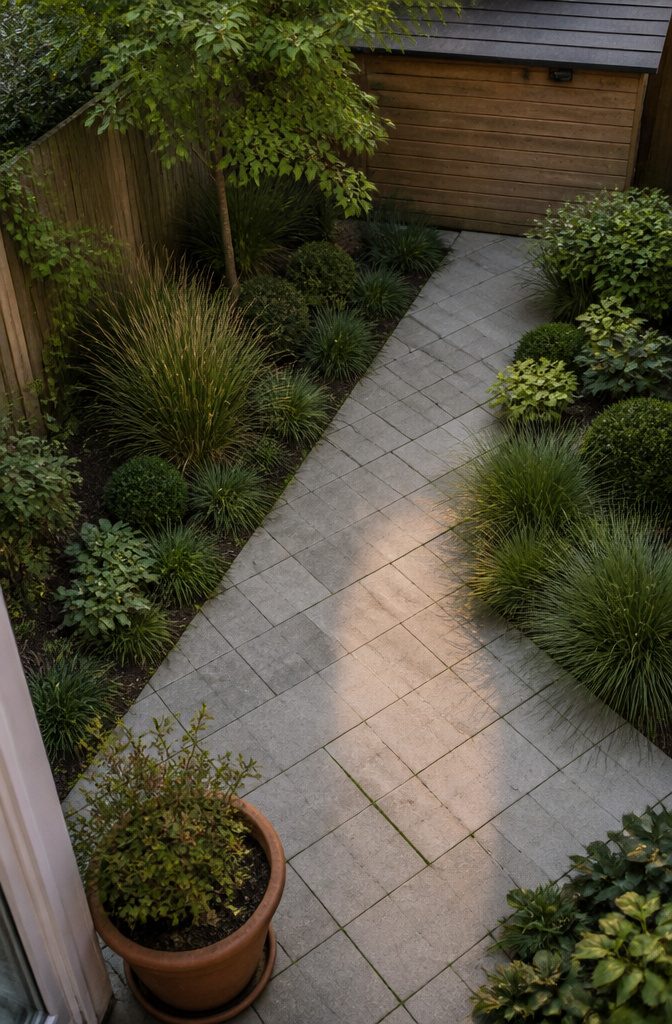
Straight lines are clean, but they’re also the easiest way to make a narrow or shallow garden look exactly as small as it is.
Angling things changes that fast. If you lay the patio and beds on a 45-degree diagonal, you point the eye along the longest sight line the space has instead of straight across the shortest dimension.
That works especially well in suburban gardens that run wide but shallow, where looking straight back emphasizes the shallowest part of the lot.
Curved paths do something similar but softer. They make you move through the space instead of just arriving at the shed or back fence in a straight shot.
Each bend forces a slightly different view, and the extra distance traveled makes the garden feel bigger without adding square footage.
I’d pick curves when the garden already has some established planting to work around, and diagonals when the slate is blank and rectangular.
9. Create Height or Level Changes
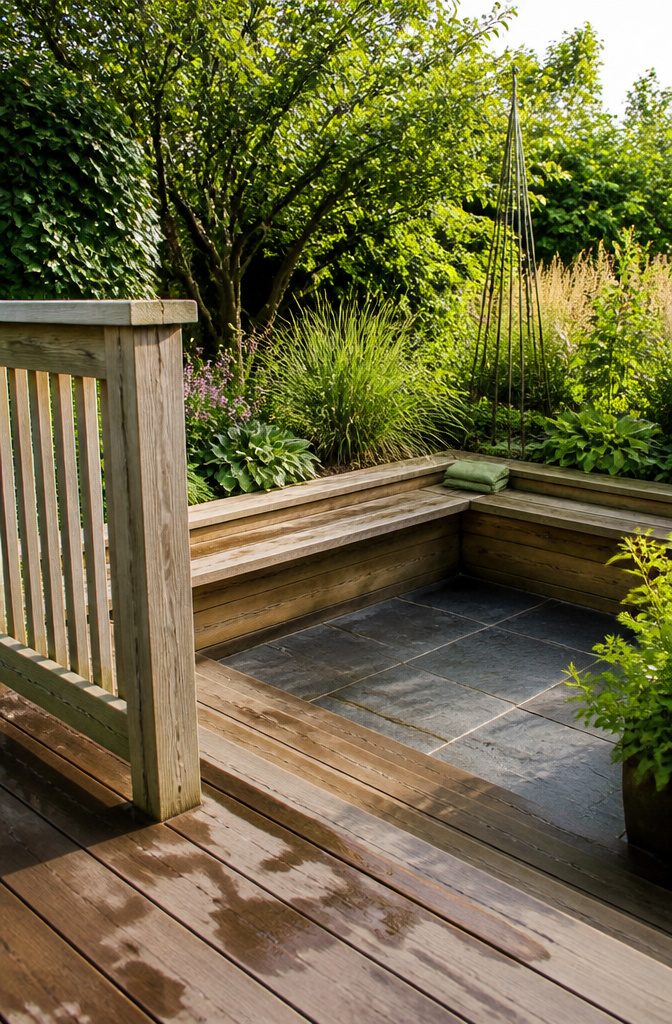
A level change makes a small garden feel like more than one flat room.
Stepping down to a sunken seating area or up to a raised deck slows movement through the space and adds a sense of arrival that flat ground cannot deliver.
Sunken zones paired with steps turn the surrounding borders into raised beds automatically, which adds vertical interest without building anything extra.
Raised beds offer a practical win beyond looks. They improve drainage and skip the tilling that in-ground beds demand, which matters when you’re working with compacted or poor soil.
A raised bed built to approximately 17 inches doubles as seating and eliminates the need for separate benches, saving floor area while creating a built-in feature. Retaining walls at the same height work the same way.
Tall structures pull the eye upward and make the limited ground plane less noticeable. Pergolas, obelisks and carefully chosen trees shift attention toward the sky rather than the boundaries.
10. Make Seating or Walls Serve More Than One Purpose
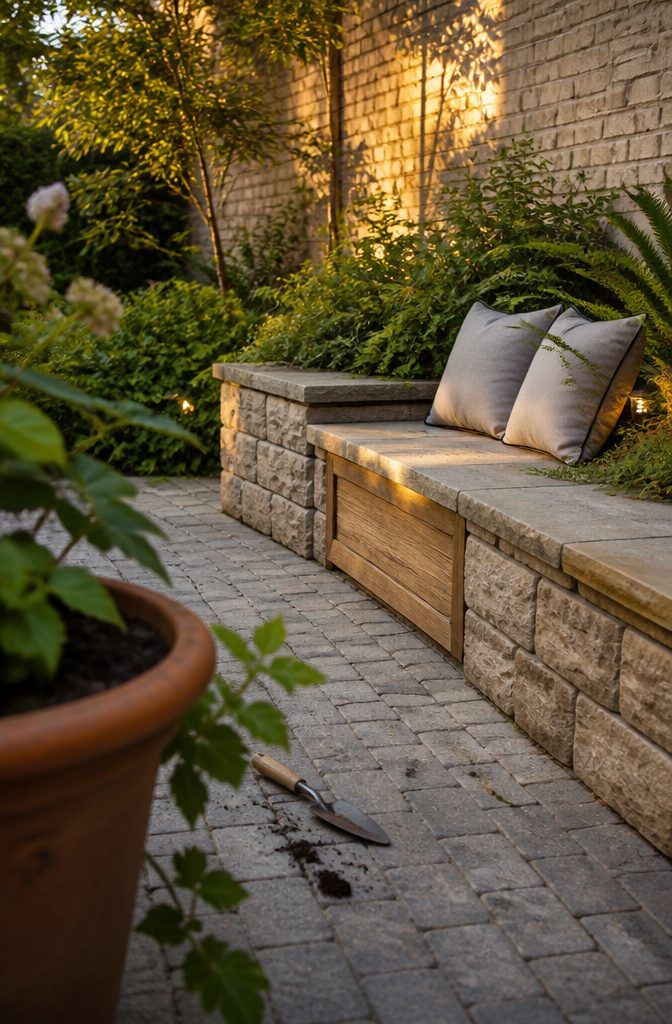
A retaining wall that doubles as seating gives you a place to sit without giving up floor space to chairs.
The move works especially well when you’re already building a level change or raised beds, because the seating can be built into the retaining wall rather than added as a separate structure.
The height should be comfortable for sitting, and you can soften the surface with outdoor cushions.
Storage-height walls work the same way in reverse. Build a low wall around a patio edge or raised bed, make it wide enough to sit on, and hollow out the interior for storage.
The structure defines the space, holds garden tools or seat cushions, and gives you extra seating when you need it without blocking sightlines the way freestanding furniture does.
11. Choose Furniture to Match Actual Use
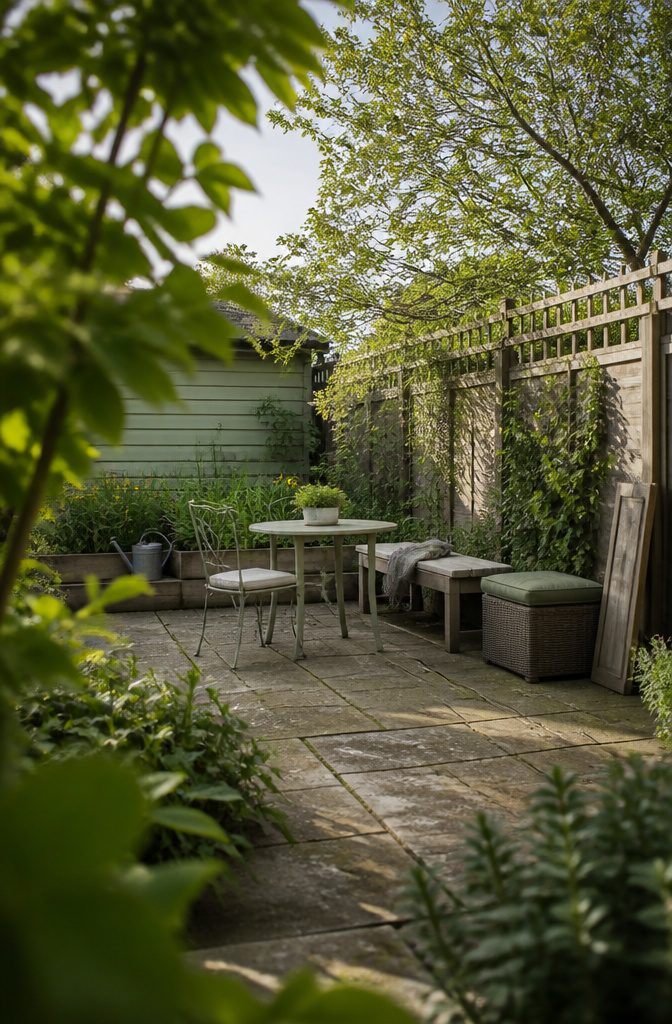
I start by deciding whether a six-person table makes sense when the space actually hosts two people ninety-five percent of the time.
A smaller everyday table paired with a fold-out for the occasional gathering frees up floor space you can use the rest of the year. When the table size is fixed, I allow a metre around it for chair clearance.
Benches use less room than individual chairs, though comfort drops after an hour without a back. That might matter if the garden doubles as a reading spot or somewhere you work outdoors.
Extendable tables let you switch between scales. A low storage box with a cushion becomes an ottoman or extra seating.
Raised beds at seventeen inches high can work as perches when you add a folded blanket. Each piece that covers two roles means one less object competing for space.
12. Make Planting Beds Deeper Rather Than Narrow Strips
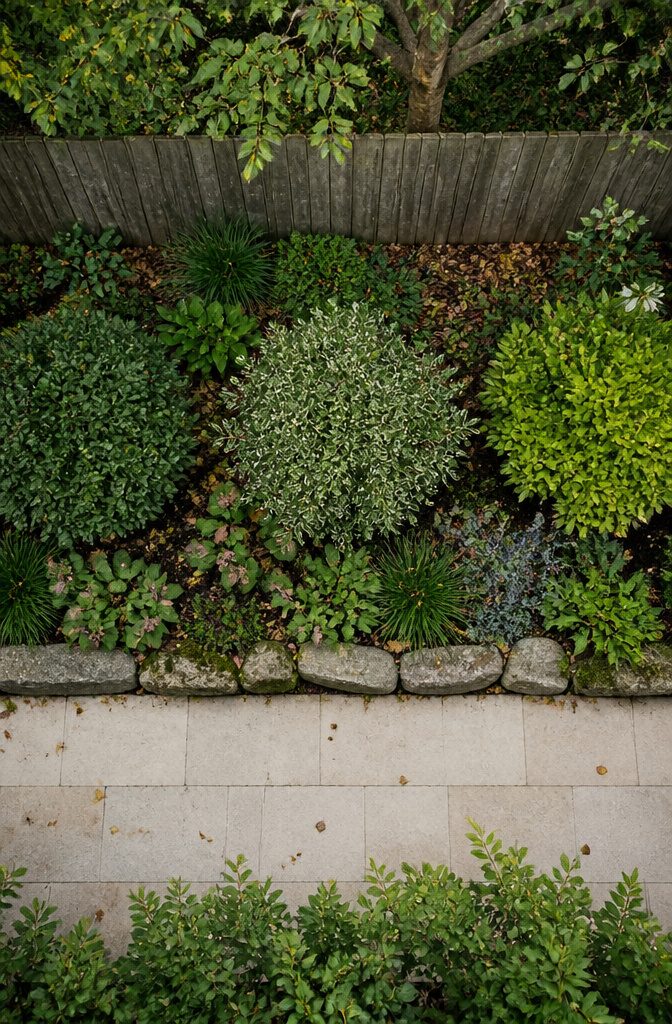
Narrow planting strips along a fence or wall leave no room for anything to reach its adult size. Most perennials grow to 50–70 cm diameter, and shrubs fill 1–4 metres once they are established.
I have seen too many gardens where a 30 cm strip was planted with things that needed ten times that width, and within two seasons the whole bed looked strangled or had to be ripped out.
The planting areas I find work are 2–4 metres deep from front to back, which sounds generous until you picture three shrubs and a few perennials at their actual mature spread.
If the garden is very small, 2 metres might not be possible, but that should be the starting point rather than treating a narrow margin as good enough.
Reducing the lawn or patio to make the planting beds deeper will make the whole garden feel larger, because volume and depth read as space in a way that thin lines never do.
13. Use Cooler Colors or Light Surfaces
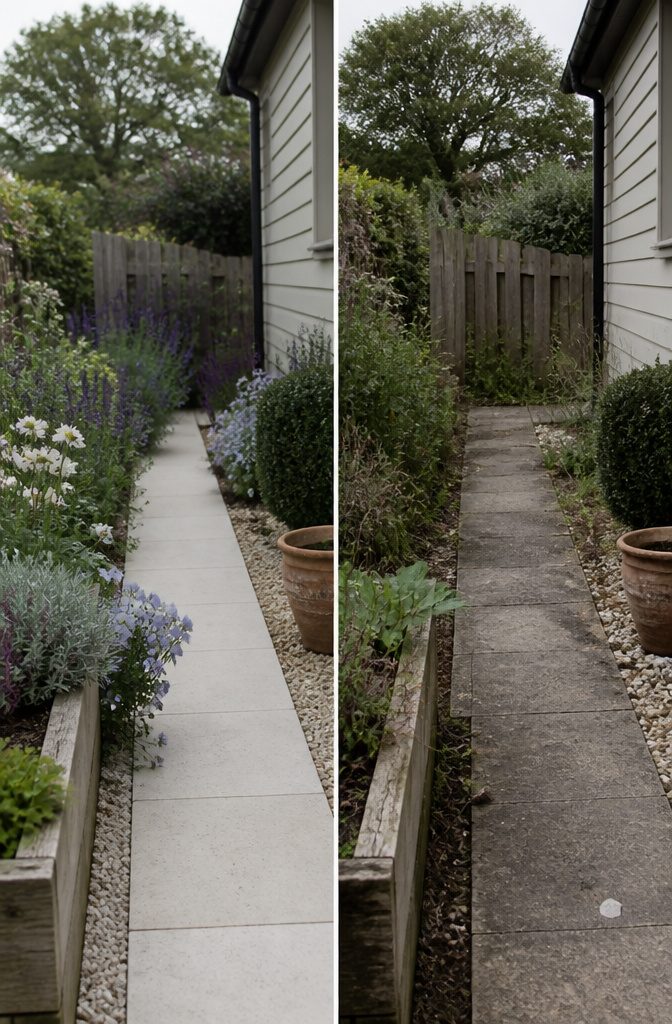
Color choice pulls more weight in a small garden than most people expect. Cooler colors—blues, purples, violets—recede visually, making the back of a bed or border feel farther away than it is.
Warmer colors like red, orange and yellow do the opposite: they advance toward you, so they belong up front if you use them at all.
I lean on that principle when the garden reads cramped, placing deep purples and soft blues at the rear and graduating forward through white or pale yellows. The effect is subtle but real.
Light-colored hard surfaces do similar work.
Pale paving, gravel or painted boundaries bounce more light and make the whole space feel more open, especially when the garden sits on the shady side of the house. Dark materials absorb light and close things in.
A rough guideline worth keeping in mind: aim for something close to 50 percent planting and furniture, 50 percent paving or decking. That balance keeps the garden from feeling either barren or overstuffed.
14. Borrow Views Beyond the Garden
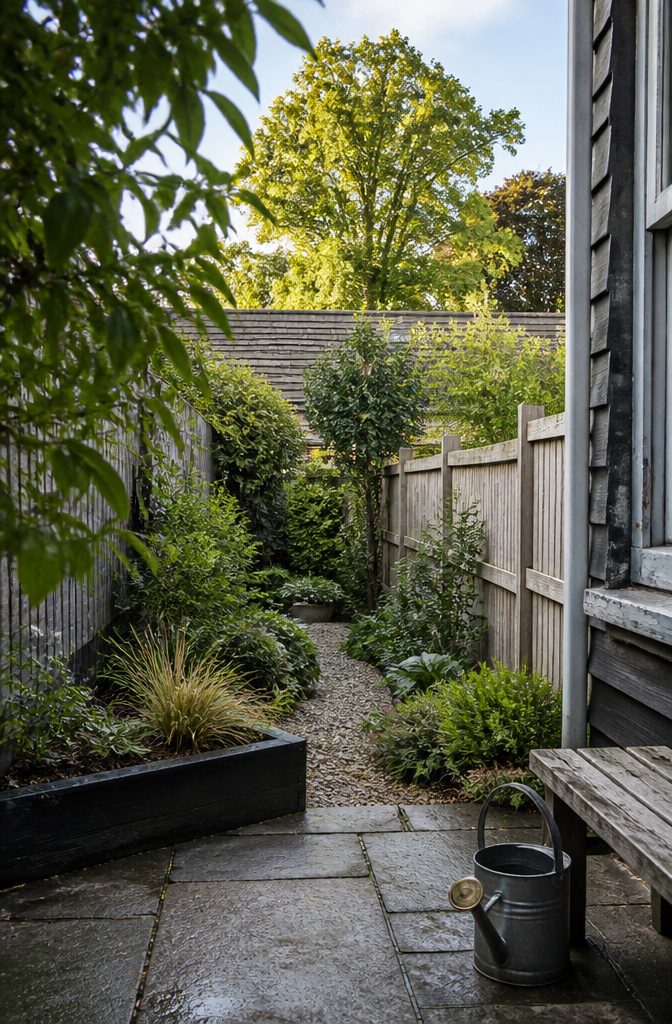
When a small garden sits inside walls or fences, extending sight lines beyond the boundary keeps the space from feeling boxed in. One way to do this is treating the garden as a room that connects visually to the house.
If a window or glass door looks out onto the garden, design the planting and layout so the eye moves from inside straight through to the back.
That line pulls the interior and exterior together, and the garden borrows square footage from the house without changing a dimension.
The same idea works with views outside the property.
A neighbor’s mature tree, a strip of sky above a roofline, or even a distant building can become part of the composition if you frame or align plantings to draw attention outward rather than only down at the ground.
I position lower plants near the edges and leave gaps where something beyond the fence reads as borrowed scenery. The garden still has a boundary, but the view does not stop there.
15. Add a Focal Point or Water Feature
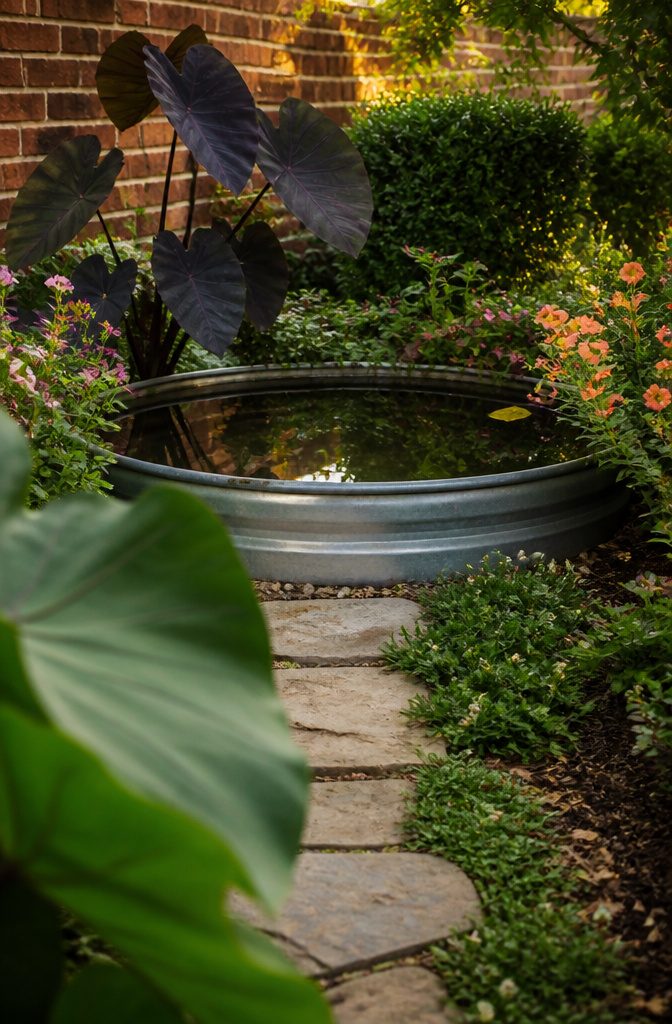
A focal point gives the garden somewhere to go. Without one, the space reads as a strip you walk past rather than a place you arrive at.
A small water feature or a single destination object — a bench, a large planted urn, a simple fountain — draws the eye forward and organizes everything around it.
Water adds movement and sound in a way static objects don’t.
A miniature rock garden or waterfall tucked into a corner brings fluidity and lets you work in water-loving plants like ‘Black Ripple’ Colocasia. The rounded pool softens hard edges.
If digging isn’t an option, a stock tank pond works the same way: drop it in place, plant colorful annuals around the front and sides to break up the metal rim, and you have a no-dig focal point that still registers as intentional.
The mistake is scattering interest everywhere. One strong focal point beats three competing ones.
Pick the spot farthest from the entrance or the corner that feels empty, and anchor it there. Everything else should support it, not fight it.
16. Use Containers Strategically
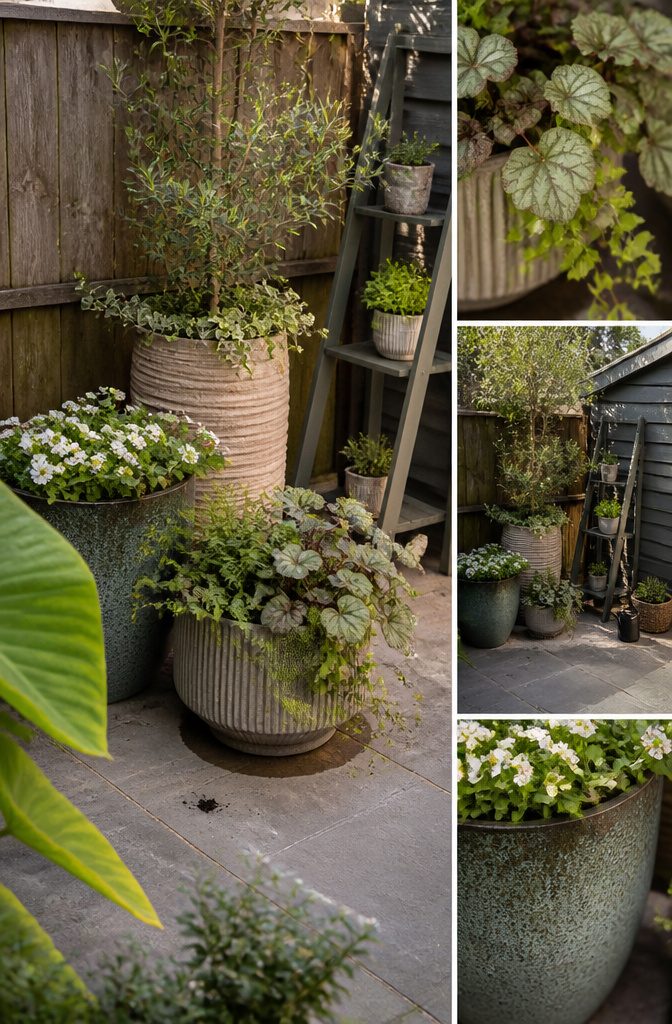
Too many small pots make the ground feel cluttered and the space read smaller than it is.
The fix is grouping containers by height or switching to fewer, larger pots. I’ve found that three or four substantial containers arranged on different levels do more for a small garden than a dozen five-inch pots scattered across the paving.
Ladder-style staging works well when floor space is tight. The narrow footprint takes up less room than standard tiered stands, and the vertical arrangement lets you stack more plants without crowding the ground plane.
In a corner or along a fence, this setup keeps the sightline open while adding depth.
When arranging containers, place the tallest in the back and the shortest in front.
The same logic applies inside a single large pot: tall plants toward the rear, then mid-height fillers, then spillers at the front edge to soften the rim and add movement.
That layered approach makes even a simple container grouping feel considered rather than accidental.
17. Decide Whether Lawn Is Worth the Area
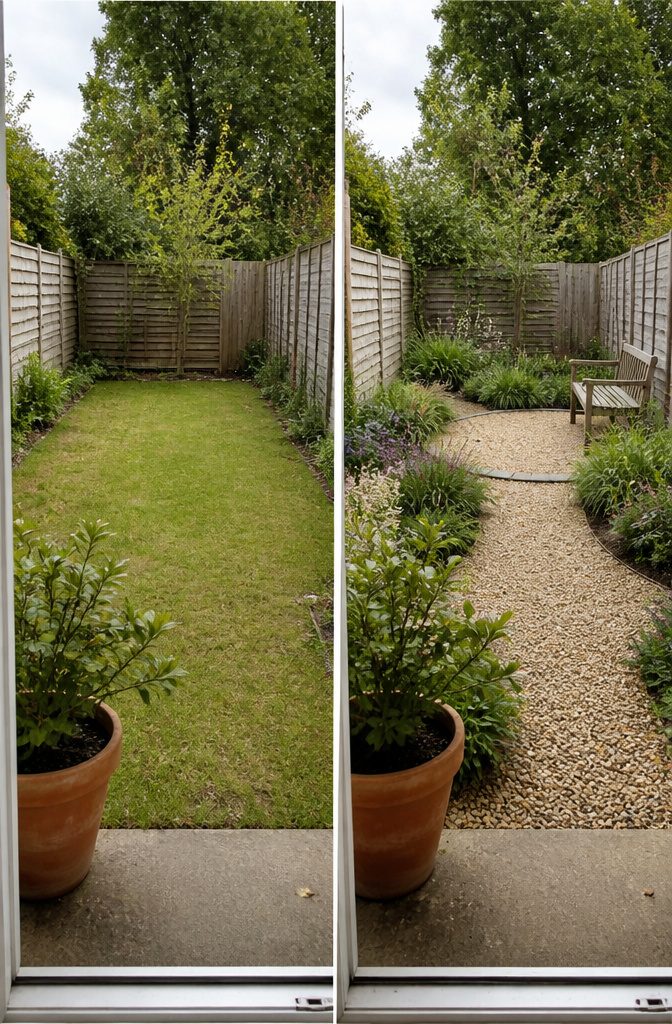
Lawn looks like a default choice until you ask whether you’ll actually use it. If young children need outdoor play space and there’s no park within a few minutes, grass makes sense.
But if a park sits at the end of your road, that area could shift to planting or patio instead of turf you maintain and rarely step on.
Some families put in lawn assuming they’ll use it, then end up heading to the playground most days anyway.
In a very small garden, lawn can also make the space feel smaller by drawing the eye to how much ground you have.
Swapping it for gravel or planted beds opens up more planting opportunities and breaks up the view in ways that read as larger. The maintenance drops too, which matters if the lawn would only ever be a narrow strip.
18. Grow Vegetables Efficiently
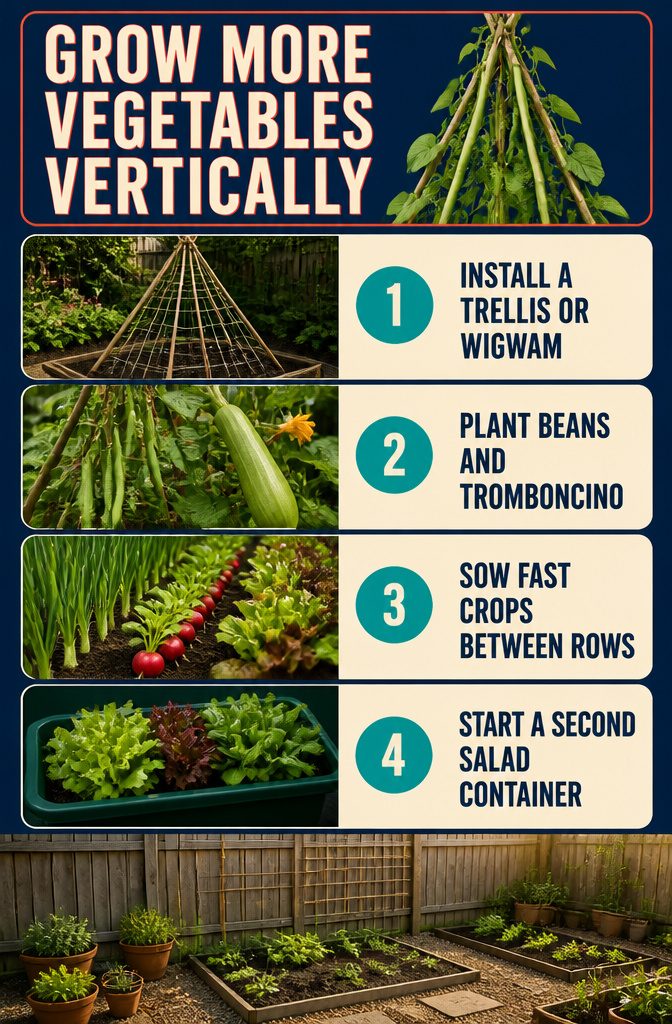
Vertical supports change how much you can harvest from a small plot. Runner beans, French beans like ‘Blauhilde’, ‘Algarve’ or ‘Cobra’, and squash ‘Tromboncino’ climb trellis or a wigwam and take up almost no ground space while still producing plenty.
I grow 500 onions per season in limited beds by keeping rows tight and succession-planting fast crops in the gaps.
Spring onions are ready in eight weeks, spring radishes in four weeks, and salad leaves give you two or three cuts if you sow a second container two weeks after the first.
Varieties like ‘Nantes 2’, ‘Stella’, ‘Fiesta’ and ‘Opal’ stay compact and work in pots. A vertical garden built from landscape fabric or a pallet planted wall-to-wall brings life to a bare fence.
Most fruit and vegetables need around six hours of sunshine daily, so site the plot accordingly. A suggested layout for a family of four uses traditional rows in good soil with full sun exposure.
19. Choose Plants Suited to the Site’s Conditions
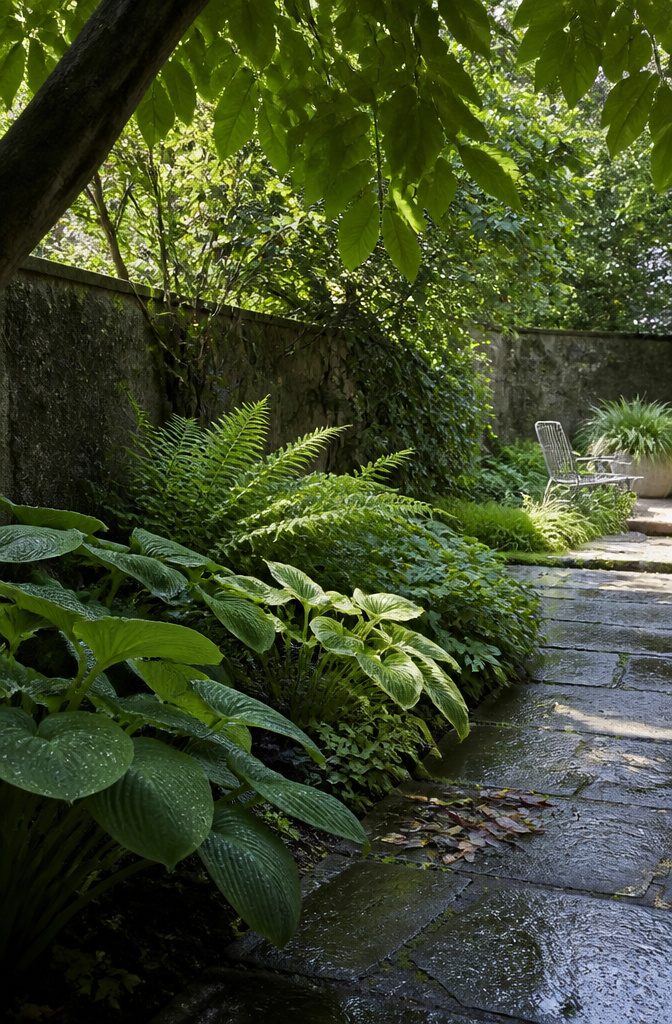
The site probably gets full sun or shade most of the day, and plants forced into the wrong conditions spend the season struggling instead of filling in.
Ferns and hostas handle shade without sulking. Seating areas that capture sun when you actually want to sit outside need plants around them that tolerate sun or partial shade, not woodland species that scorch by July.
Microclimates show up fast in small gardens.
Boundaries and buildings throw shade in predictable patterns, and a few minutes of observation tells you which corner stays dark and which one bakes. Match the plant to what the site offers rather than amending your way around it.
A hosta planted in six hours of direct sun looks worse every year no matter how much you water it, and a sun-dependent perennial in deep shade stretches thin and never flowers the way the tag promised.
20. Add Lighting to Extend Use
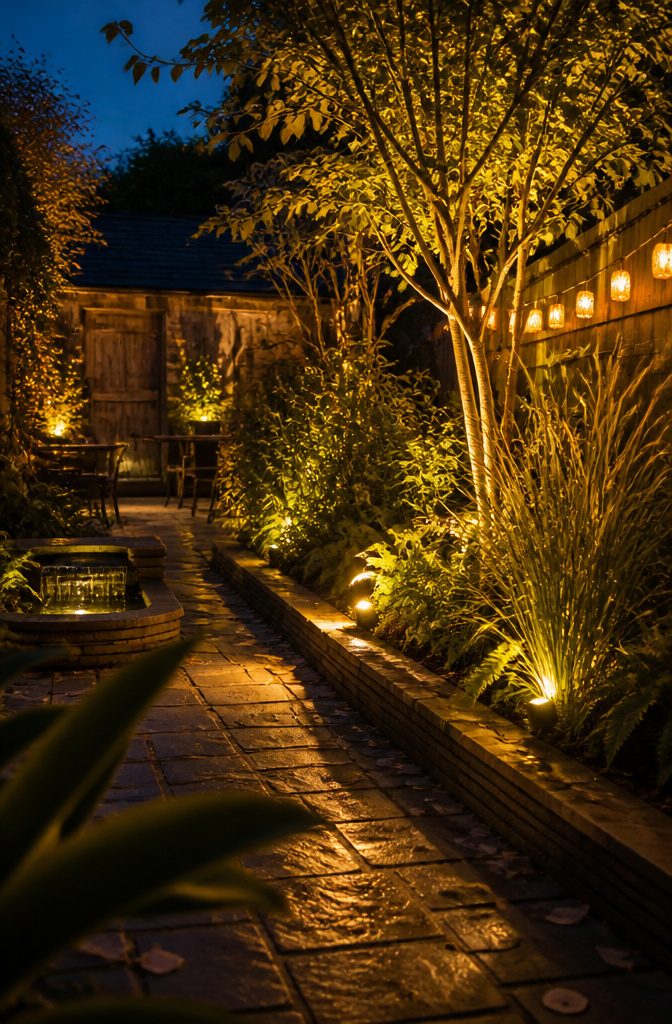
Lighting lets you use the garden after dark and turns features into a deliberate scene. Solar-powered spotlights push into the ground without running wire, and they highlight trees and tall grasses well enough for evening use.
Strings of lanterns or fairy lights cost less and install faster. Choose yellow light over bright white — it reads warmer and does less harm to insects and moths that navigate by natural light.
When you light pathways, the garden becomes a second room at night instead of dead space past dinner.
I position spotlights low, aimed up at structure rather than down from above, because uplighting reads as intentional and downlighting usually just looks like a porch fixture someone forgot.
If the space has a water feature or a retaining wall, lighting emphasizes the depth and makes the boundary feel farther out than it sits in daylight.
Small-Space Vegetable Planning
I grew food in a 1,600-square-foot garden for years, but that scale took real time to manage.
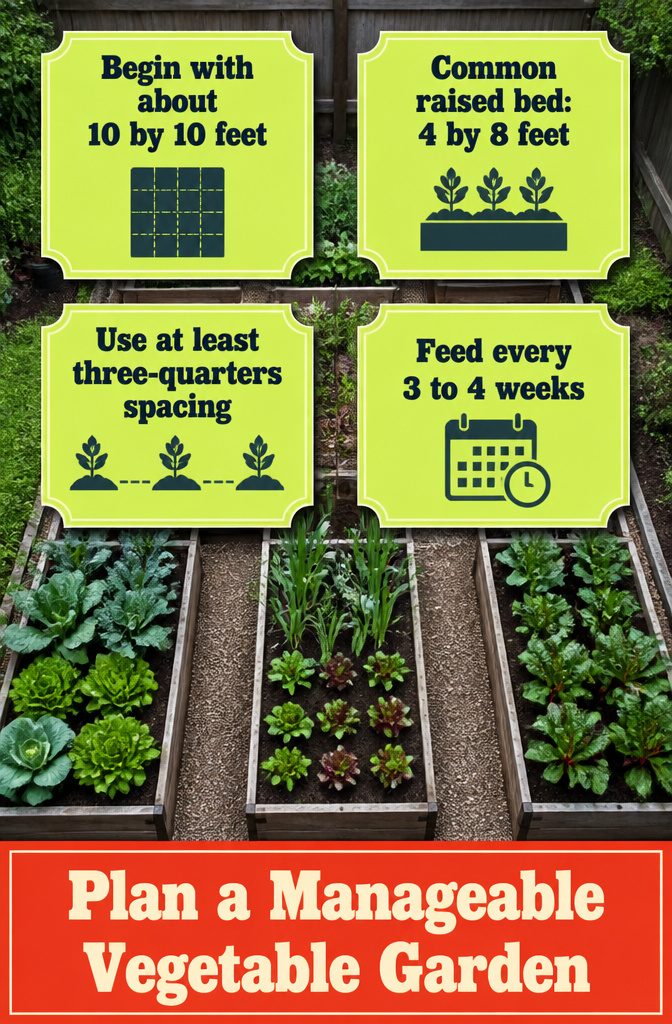
A beginner plot of about 10 by 10 feet delivers plenty if you plant it right, and starting with two or three raised beds keeps the workload realistic.
A 4-by-8-foot bed is common and fits most yards without swallowing the whole space. The standard 20-by-20-foot community-garden plot sounds appealing until weeds take over halfway through July.
Space plants at at least three-quarters of the package spacing: if the label says 12 inches, leave 9. Roots need room, and cramming them in cuts yield more than it saves space.
I feed most plants with compost or fertilizer at 3- to 4-week intervals and crush eggshell pieces under half an inch before mixing them into the soil.
Flowers mixed in with vegetables pull beneficial insects into the garden and add color between the rows.
Grow what your household actually eats, and buy seedlings from farmers who sell varieties that perform in your climate rather than grabbing whatever the big-box store stocked that week.
Design Detail and Maintenance
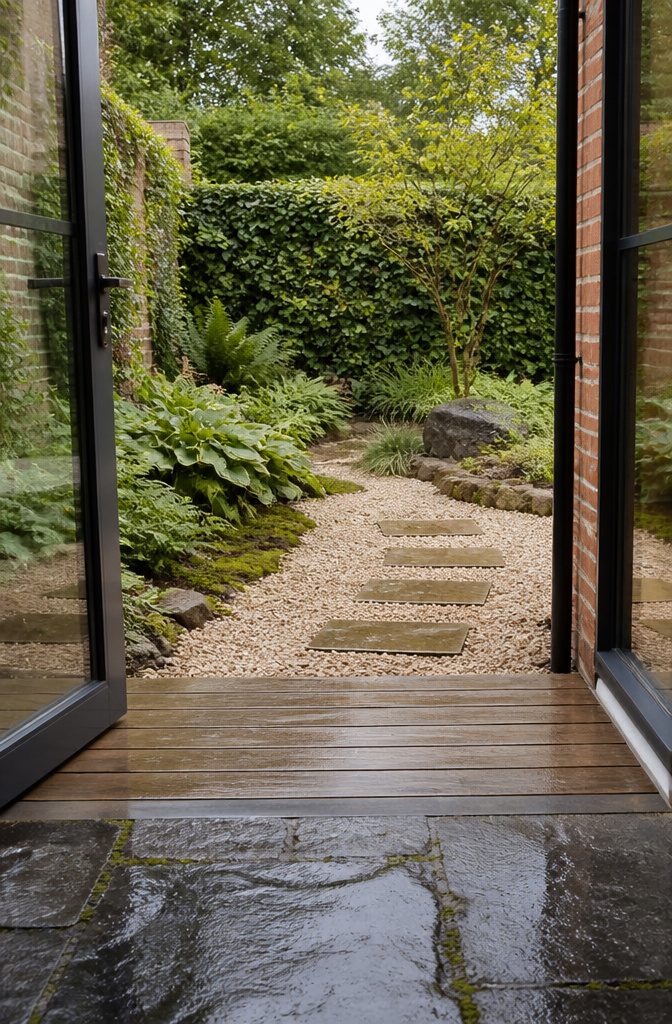
In a small garden, getting proportions right matters more than it does in a large one. When a fence panel is six inches off or a path narrows by a foot, the eye catches it immediately.
I measure twice before I commit to a bed width or a stepping-stone spacing, because there is no surrounding planting to hide the mistake.
Link the garden to the house through materials, color, or level—a gravel that picks up the brick tone, a deck that sits flush with the threshold, or a planter that echoes window trim.
The connection makes both spaces feel deliberate.
Gravel and rock gardens keep costs down and suit shaded or dry sites where grass struggles. Lighting extends the day into evening, and shade plants like hostas, ferns, and Trachelospermum jasminoides fill corners that never see full sun.
For scale, Chelsea Flower Show gardens run 10 by 10 meters, with the largest reaching 18 to 22 meters; the RHS Chatsworth show garden measures 6 by 4 meters.
Small-scale plantings there feature Amelanchier lamarckii, yew, Purple Pixie® Dwarf Weeping Loropetalum, Delta Eclipse™ Crapemyrtle, and ‘Angyo Star’ Fatshedera—all sized for limited ground.
Frequently Asked Questions
What is the best layout for a small garden?
Diagonal or curved layouts work best because they lead the eye along the longest sight line instead of emphasizing the shortest dimension.
Angling a patio and beds at 45 degrees makes a narrow garden feel larger, while curved paths force you to move through the space and reveal different views at each turn.
Break the garden into separate zones so you can’t see the whole boundary at once, which makes the brain work harder to map the edges and creates a sense of more room.
How do you design a small vegetable garden?
Start with 2 or 3 raised beds around 4 by 8 feet each, which keeps the workload realistic while delivering plenty of produce.
Use vertical supports for climbing crops like runner beans and squash to save ground space, and succession-plant fast crops like spring onions (8 weeks) and radishes (4 weeks) in the gaps between slower vegetables.
Choose compact varieties suited to containers and site the plot where it gets at least 6 hours of sun daily.
Do you really need a lawn in a small garden?
Only if you’ll actually use it. If young children need play space and there’s no park within a few minutes, grass makes sense.
But if a park sits at the end of your road, that area could shift to planting or patio instead of turf you maintain and rarely step on.
In a very small garden, swapping lawn for gravel or planted beds opens up more planting opportunities and makes the space feel larger.
How big should a table and seating area be in a small garden?
Size them around the number of people who will actually use the space most days, not the imagined party that happens once a year.
A typical pattern is 1 to 2 people daily and 4 to 6 for regular outdoor dinners, so a smaller everyday table paired with a fold-out for occasional gatherings frees up floor space you can use the rest of the year.
Allow a metre around the table for chair clearance.
What are the three golden rules of garden design?
Create movement through the space with paths that curve or meander instead of running straight. Bring planting into the garden rather than restricting it to beds around the edges, so you’re surrounded by plants as you move through.
Provide a destination point at the end of the journey, like a bench or water feature, which gives you somewhere to go and encourages you to get out into the garden.