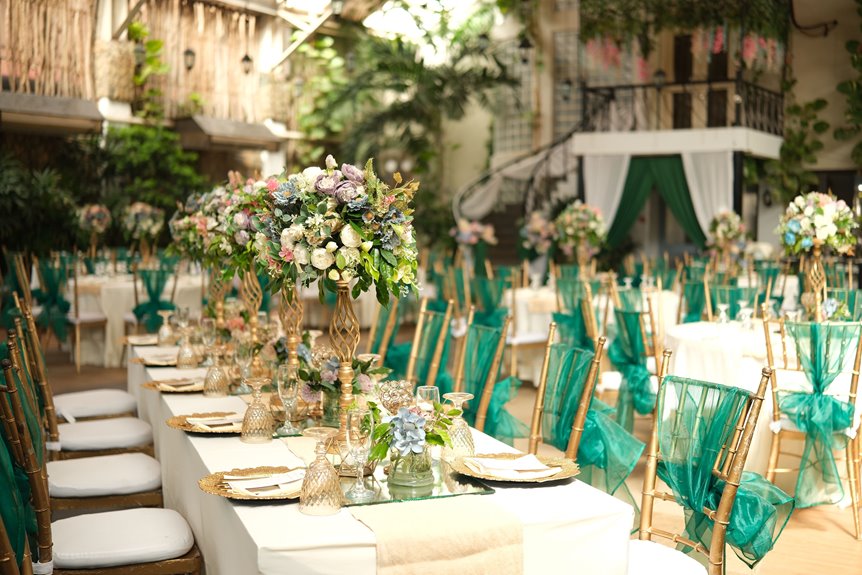
I used to let my dining table collect mail and coffee cups until I realized it sets the room’s whole mood. Now I anchor it with one bold centerpiece, maybe branches in a tall vase or an oversized ceramic bowl, then build around it with three to five low-key pieces that share a color story or material. I mix heights instinctively, slide in practical items like a footed bowl for lemons, and swap things seasonally using what I already own. The setup takes minimal effort and creates an immediate visual impact.
Anchor Your Table With One Bold Centerpiece
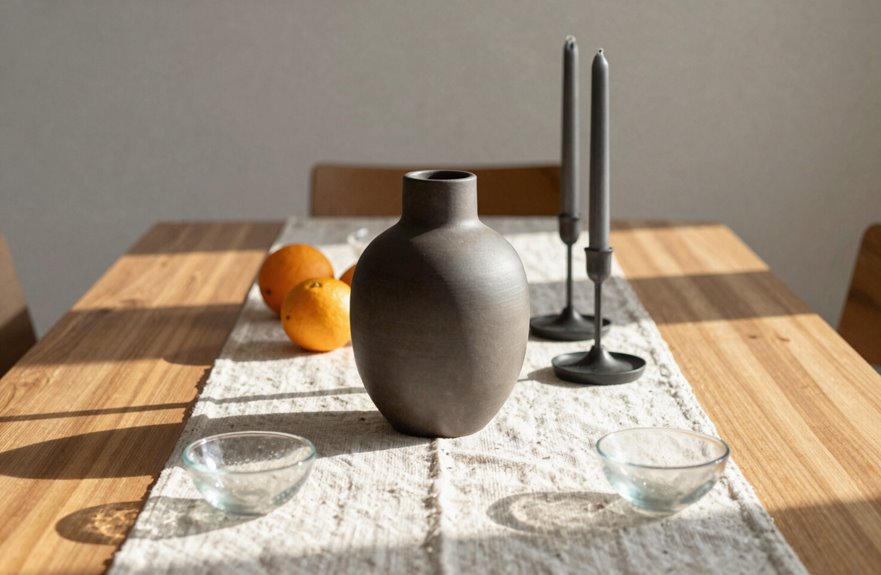
One bold centerpiece creates the strongest focal point. A single large vase with branches, an oversized ceramic bowl, or a long woven planter commanding the center works best. Scattering small items instead leaves them feeling lonely, cluttered, and lost.
One bold centerpiece commands attention; scattered small items feel lonely and lost.
Height matters. Mix tall pieces with shorter surrounding items, perhaps a substantial vase flanked by two low candles. This variation prevents flatness.
A trio of related objects works too, if they’re cohesive. Think three wooden spheres or matching ceramic bottles.
One anchor, intentional and confident, transforms your table. It stops waiting and welcomes you home.
Build a Simple Vignette With 3 to 5 Low-Key Pieces
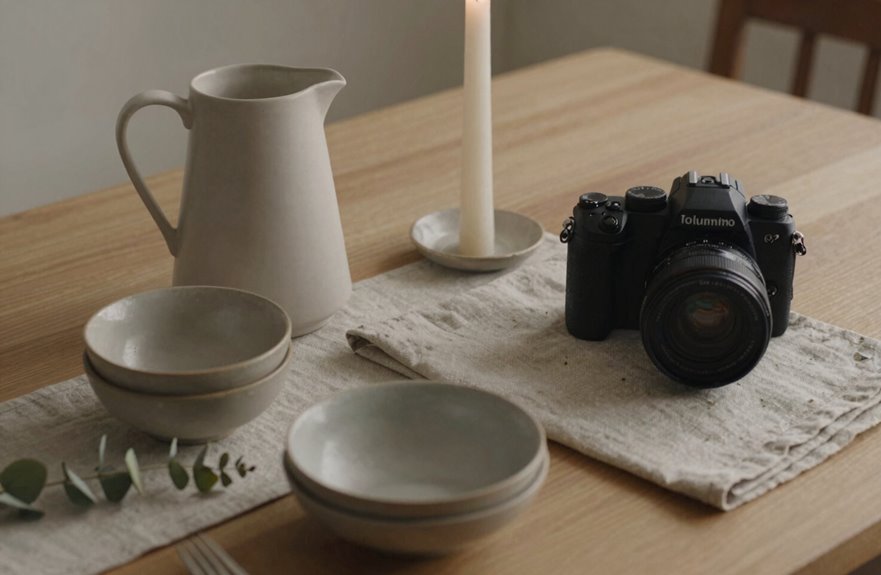
Why overthink it? I create my favorite table moments with just three to five pieces, nothing more. This approach keeps my vignette feeling personal, not staged.
I grab items that share something: three ceramic vases, maybe, or a cluster of mismatched bowls. I mix heights instinctively, letting one piece stand taller while the others nestle nearby. Fresh stems from my yard join a single plate I’ve stacked just so. The magic lives in the imperfection. I nudge things slightly off-center, letting my decor breathe and settle like it belongs there.
Five objects, honest arrangement, zero stress. This is the everyday table I actually want to live with, and yours can feel equally effortless.
Layer Tall, Medium, and Low Items for Depth
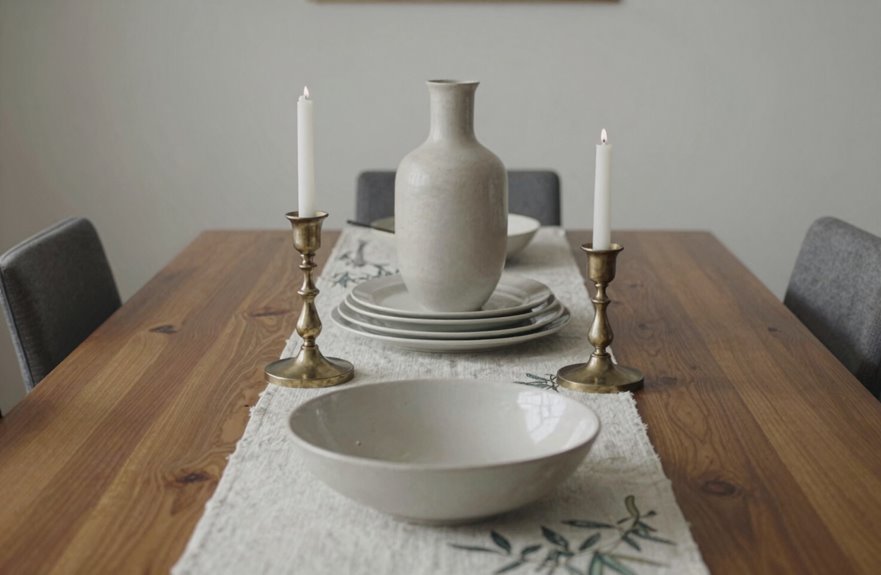
A few well-chosen heights can transform a flat, forgettable table into something that actually draws the eye. I start with one tall centerpiece, maybe a ceramic vase I found at a flea market or an oversized bowl from my grandmother. That vertical element anchors everything. Then I tuck medium pieces nearby: a slender candlestick, a small potted herb, something that doesn’t compete but fills the middle ground. Finally, I slide in low objects at the edges, a footed bowl, a shallow tray, a stack of beautiful coasters, to ground the whole arrangement.
This layering creates depth without clutter. Three heights feel curated, not chaotic. You can cluster similar items (three candlesticks in graduating sizes) or mix unrelated pieces that share a color story. Either way, your eye travels naturally across the display, and the table feels intentional and lived-in.
Keep It Practical for Daily Meals
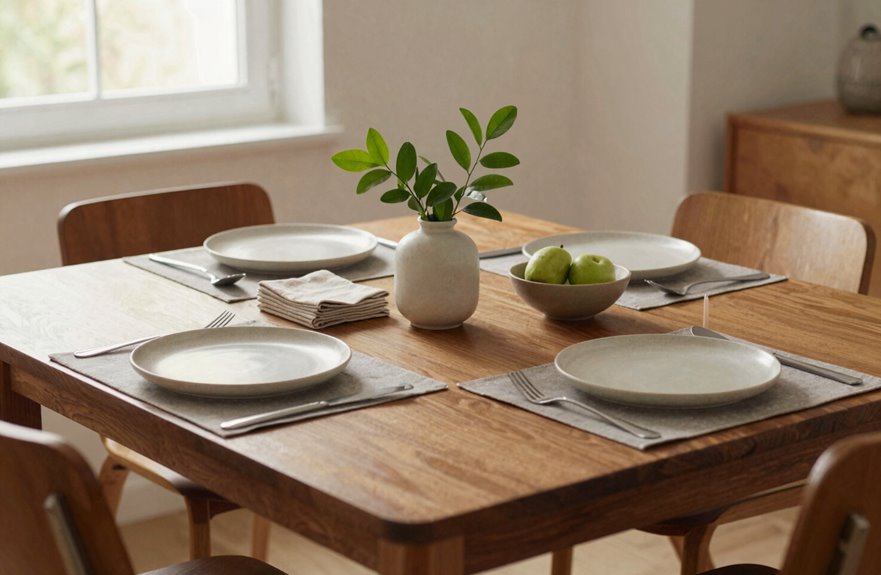
I’ve learned the hard way that a gorgeous centerpiece loses its charm when I’m juggling it, my coffee, and a plate of scrambled eggs every morning. That’s why I stick to pieces that earn their keep: a footed bowl that corrals lemons one day and holds keys the next, or a low stack of hand-thrown plates that looks intentional but slides aside in seconds. The trick is choosing items that clean up fast and actually belong in my daily routine, so the table feels finished without becoming another chore.
Easy Cleanup Choices
How do we make breakfast cleanup feel less like a morning workout. I’ve learned to embrace one bold, uncluttered centerpiece, like an oversized ceramic bowl or footed fruit dish, that creates impact without the fuss. I stick to wipeable materials, skip stacked layers, and keep my arrangement between three and five low-height pieces. When I want life on the table without the labor, I tuck in greenery or greenery-inspired accents, such as fresh eucalyptus or realistic faux stems, that wipe clean in seconds. Nothing staged, nothing formal. A casual, lived-in vignette lets you grab a cloth and move forward with your day.
Functional Beauty Balance
Beyond just keeping cleanup simple, I’m always asking myself if what’s on the table can actually survive real life. A great centerpiece strikes a balance between beautiful and movable, because nobody wants to relocate a sculpture just to eat cereal.
What works in my home:
- One oversized bowl or vase anchors the space without fuss
- Three matching candlesticks, or just two for a looser feel
- Natural vignettes with varied heights, a little greenery, maybe some fruit
- Living elements like fresh herbs that feel welcoming, not staged
I don’t set the table for show. I keep things loose, functional, ready to shift. Real daily meals matter more than perfect staging. That’s the foundation of a house that feels like ours.
Refresh Your Table Seasonally With Everyday Items
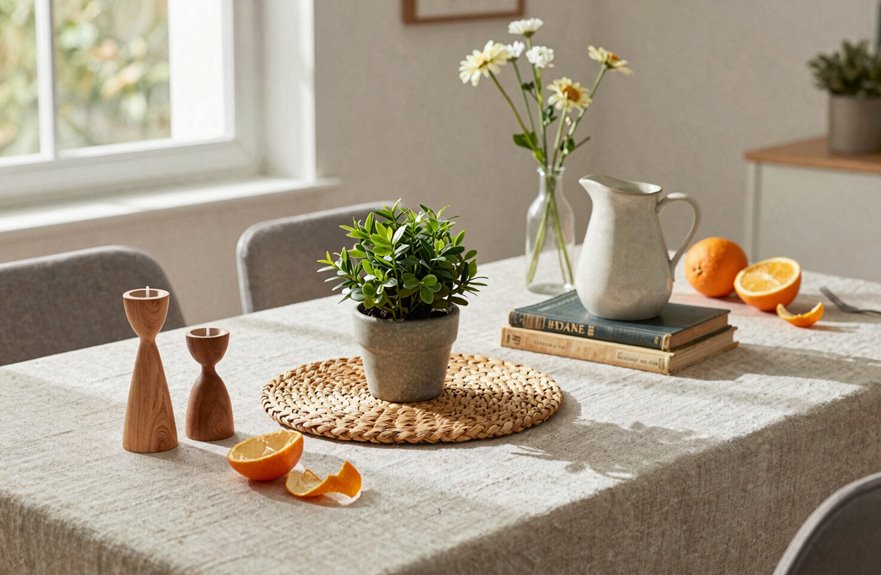
Why let your dining table feel stuck in one season when a few everyday items can shift its whole mood. I refresh mine by swapping one large centerpiece, maybe an oversized ceramic vase in winter, a long woven basket come fall. Sometimes I’ll gather three candlesticks or varied bowls into a small vignette, keeping things relaxed with just two pieces when life’s hectic. I vary heights, tuck in greenery, maybe lemons or dried stems. Fresh flowers up close, faux eucalyptus where nobody’s inspecting too hard. It’s not about perfection; it’s about creating something that feels like us, right now. Your table can evolve without buying anything fancy. Just look around your home. What’s already waiting to tell this season’s story.
Swap Pieces Easily for Flexible Styling
I keep a few core pieces on standby so I can switch things up without starting from scratch. A single oversized bowl or tall vase works as my anchor centerpiece, bold and unfussy. From there, I build small vignettes that feel collected, not staged.
- Swap the centerpiece for a long basket or cluster three related objects: candlesticks, bowls, whatever speaks to you that week.
- Break formality with pairs instead of trios, or let two mismatched pieces chat across the table.
- Layer three to five items at varying heights, always sneaking in something green or a bowl of fruit.
- Repurpose what you own. A soup tureen or a footed fruit bowl means nothing feels too precious or set-dressed.