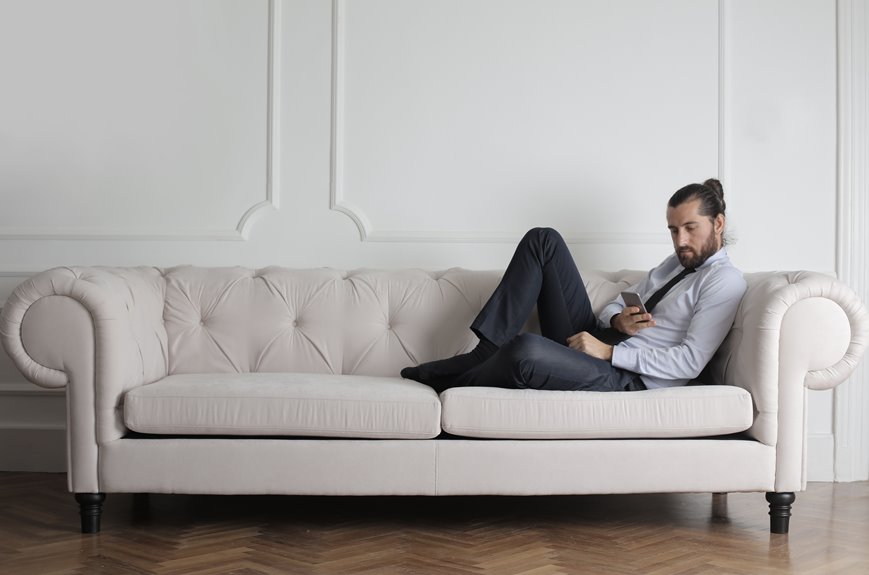
The standard sofa seat height sits at 17 to 19 inches from floor to cushion top. This range keeps most people’s feet flat while keeping knees at or below hip level. I measure from the floor straight up to the front edge of the cushion, never the back, since that’s where your thighs actually rest. Taller folks tend toward 18–19 inches for easier standing, while shorter people often prefer 17–18 inches. Cushion firmness matters too; dense foam can add up to 2 inches of effective height since it barely compresses. When testing in stores, use the three-check method: feet flat, thigh support at mid-thigh, and knees below hip level. If you’re furnishing an apartment or move frequently, lower seats around 30 inches total height make doorways less of a nightmare. Selecting the right seat height requires attention to multiple factors beyond what manufacturers specify on tags.
What Is Sofa Seat Height: and Why the 17–19 Inch Standard Exists
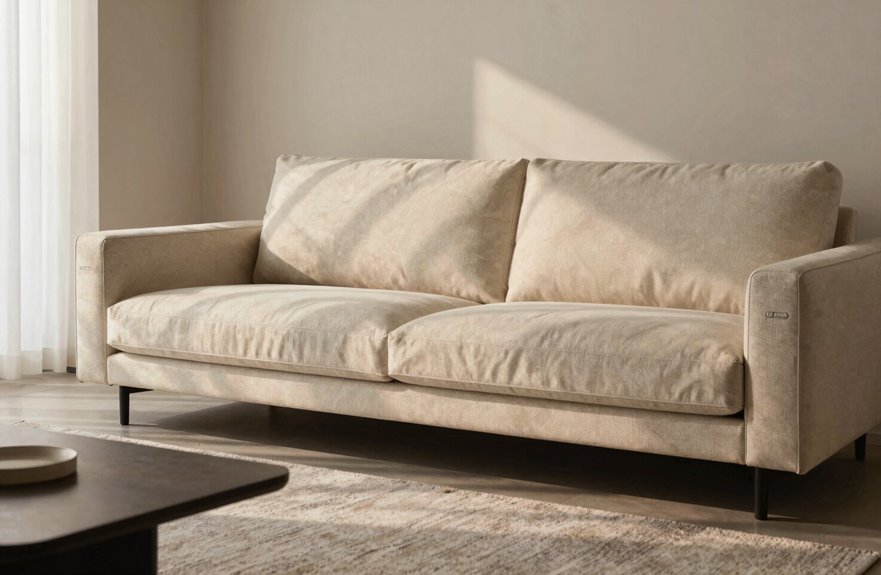
Why does that one sofa feel like sinking into a cloud, while another leaves your legs dangling like a child at the grown-up table? The difference usually comes down to seat height, the measurement from floor to cushion top.
The sweet spot is 17–19 inches. This range allows most people to plant their feet flat, keeps knees at or slightly below hip level, and makes standing up feel effortless rather than athletic. This standard exists for concrete reasons: comfort and accessibility depend on proper proportions.
Taller rooms often demand higher seats, but most traditional and modern pieces stick to that 17–19 inch window. When testing sofas, three things matter: feet down, knees right, back happy. Get the seat height right, and you’ve found your spot.

About Size: Kindly measure your seating area beforehand to prevent any issues due to size discrepancies. The accurate size is crucial for maximizing your comfort and the overall visual appeal. Each package contains 1 seat cushion (19” W x 19” D x 3” T) and 1 back cushion (19" W x 16" H).

14 SIZES TO CHOOSE FROM: W 20 - 28 in, D 20 - 28 in. W 39 - 49 in, D 20 - 28 in. W 59 - 75 in, D 20 - 28 in. W 91 - 110 in, D 20 - 28 in. W 26 - 37 in, D 26 - 37 in. W 37 - 53 in, D 26 - 37 in. W 53 - 65 in, D 26 - 37 in. W 65 - 79 in, D 26 - 37 in. W 24 - 35 in, D 12 - 20 in. W 24 - 35 in, D 12 - 20 in. W 39 - 51 in, D 12 - 20 in. W 55 - 67 in, D 12 - 20 in. W 14 - 18 in, D 14 - 18 in. W 37 - 49 in, D 37 - 49 in.

PERFECT FIT: Stretchy Elastic Edges Hug Backrests 17-21" Wide and Seats 20-33" Wide, Fitting 50-73"L Jackknife Sofa Beds 5-8" Deep for A Snug, Wrinkle-Free Look.
How to Measure Sofa Seat Height (Without Getting It Wrong)
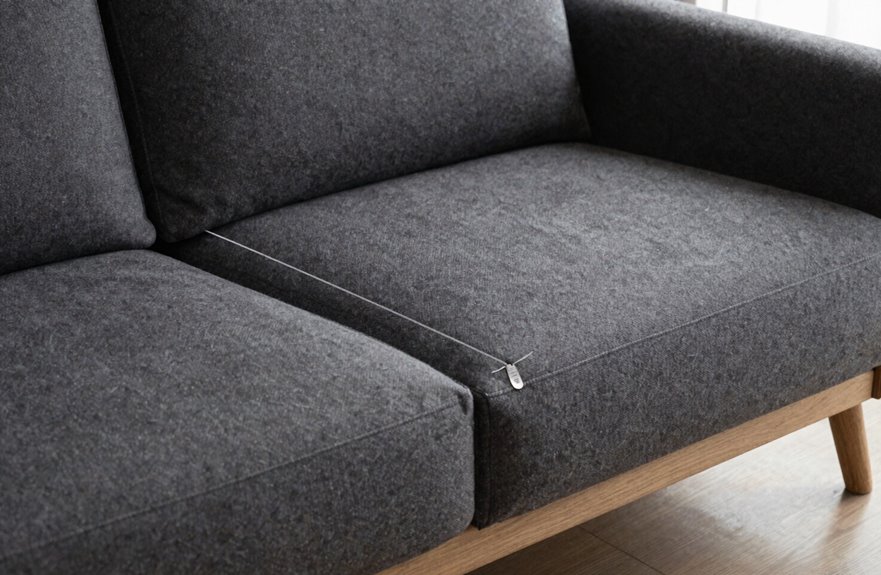
Knowing the 17–19 inch standard is one thing, but getting an accurate measurement in your living room requires proper technique.
I grab my tape measure, sit comfortably on the sofa, and measure from the floor straight up to the front edge of the seat cushion. Not the back, not the middle. The front edge tells the real story. I press the back cushion to its normal spot, keep my tape level and parallel to the floor, and record that number.
| Common Mistake | What I Do Instead |
|---|---|
| Measuring from the back cushion | I measure at the front edge |
| Eyeballing without sitting | I sit first, then measure |
| Letting the tape tilt | I keep it parallel to the floor |
Then I check: feet flat, knees at or slightly below hip level. This confirms proper seating ergonomics.

2-in-1 Convertible Sofa Bed: With two configurations, this convertible sofa bed works as a comfortable boneless couch for daily sitting and lounging, then unfolds into a spacious floor-standing couch bed for movie nights, naps, or overnight guests

2-in-1 Convertible Sofa Bed: With two configurations, this convertible sofa bed works as a comfortable boneless couch for daily sitting and lounging, then unfolds into a spacious floor-standing couch bed for movie nights, naps, or overnight guests

2-in-1 Convertible Sofa Bed: With two configurations, this convertible sofa bed works as a comfortable boneless couch for daily sitting and lounging, then unfolds into a spacious floor-standing couch bed for movie nights, naps, or overnight guests
The In-Store Seat Height Test: 3 Checks Before You Buy
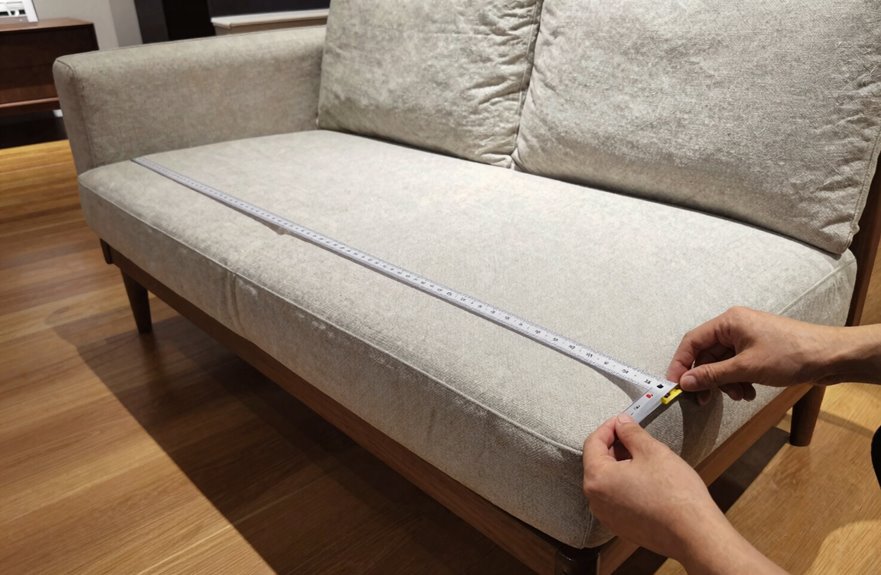
When I’m testing a sofa in-store, I always start with the Feet Flat Check. I sit down, plant both feet firmly on the floor, and make sure my knees sit at or slightly below hip height so I can spring up easily without straining. Next comes the Thigh Support Test: I scoot all the way back and check that the front edge of the cushion, ideally 17–19 inches up, hits somewhere mid-thigh without digging in or leaving my legs dangling like a child’s would at an adult-sized table. These two quick checks reveal far more about comfort than any manufacturer tag, and they prevent purchasing sofas that look attractive but feel poorly designed.

Value Pack: you will receive 12 pcs cushion covers; The size is suitable for most cushions with length 20-27 inch and width 20-27 inch, height 2-7 inch, adapting to different cushion shapes; Note: cushions are not included; Please measure your seat cushion size carefully before ordering to ensure the fit

Easy to Assemble: This couch cushion support for sagging seats can effectively make your couch and chairs more firm; Simply put it under the old sofa cushion; Lift your saggy furniture cushions easily in seconds

Appropriate Size and Sufficient Quantity: you will receive 12 pieces of elastic sofa cushion covers; The size is suitable for most cushions with length 20-27 inch and width 20-27 inch, height 2-7 inch, adapting to different cushion shapes and styles; Cushion slipcovers bulk meet your use and replacement needs; Note: cushions are not included; Please measure your seat cushion size carefully before ordering to ensure the fit
Feet Flat Check
How do I know if a sofa’s seat height will actually work for me once I’m home with it. I start with the feet flat check, right there in the showroom.
I sit back naturally, letting the cushion settle. My feet should rest completely flat on the floor, no tiptoeing or dangling. My knees sit at or slightly below hip level, thighs roughly horizontal. This foundation locks in proper seating posture and protects my lumbar support. If I’m reaching for the ground, the seat’s too high. If my knees ride above my hips, I’ll slump and strain.
Here’s what I watch for:
| What I’m Checking | What It Tells Me |
|---|---|
| Feet flat on floor | Seat height fits my frame |
| Knees at or below hips | Good spinal alignment |
| Thighs horizontal | Even weight distribution |
| Space under knees | Easy standing, no pressure |
I take my time. This test prevents costly mistakes and ensures the sofa will support my comfort and posture at home.
Thigh Support Test
Where exactly does the seat hit my leg, and does it let me stand up without a wrestling match?
I run the thigh support test next. With my foot placement flat and steady, I check if my knees sit at or slightly below hip level. This indicates the sofa seat height is working with your body, not against it. Then I slide my hand behind my knee. There should be a small gap, about two fingers wide, between the seat cushion depth and the back of your leg. No gap means pressure, pain, and that stuck feeling when you try to rise. I also make sure you can sit upright without slumping forward. The optimal range is usually 17 to 19 inches.
Finding Your Personal Sofa Seat Height Sweet Spot
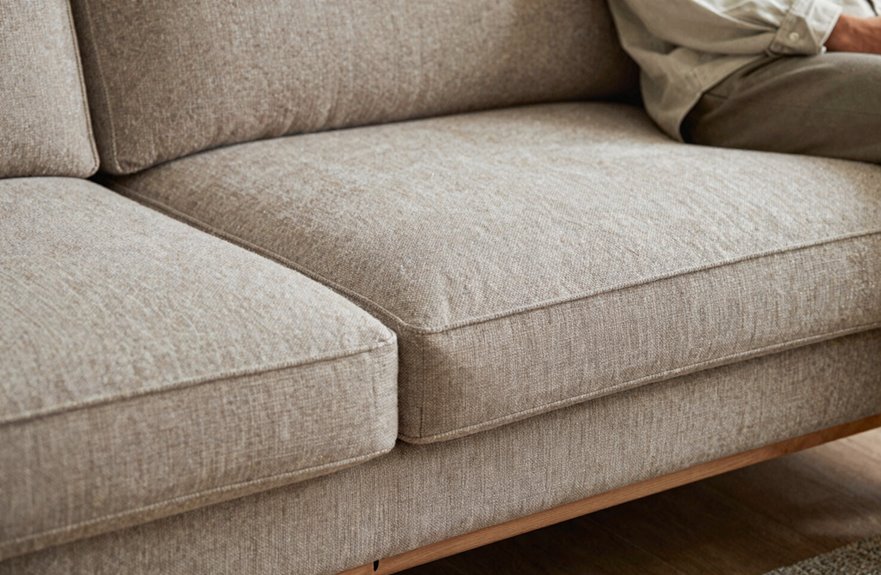
Why settle for “standard” when your own body has so much to say about where you sit? Finding your personal seat height sweet spot means listening to your proportions, not just following the crowd.
Testing in showroom changed everything for me. I sit with feet flat, knees at or slightly below hips, back supported, feeling for that natural, unforced alignment. Taller folks often gravitate toward 18–19 inches for leg-friendly lounging, while shorter friends prefer 17–18 inches for easier standing and maneuvering in tighter spaces.
Seat height and seat depth work as a team. I pair my ideal height with roughly 21–23 inches of depth for balanced, ergonomic comfort. Your living room, your habits, and your body all deserve a say in where you land.
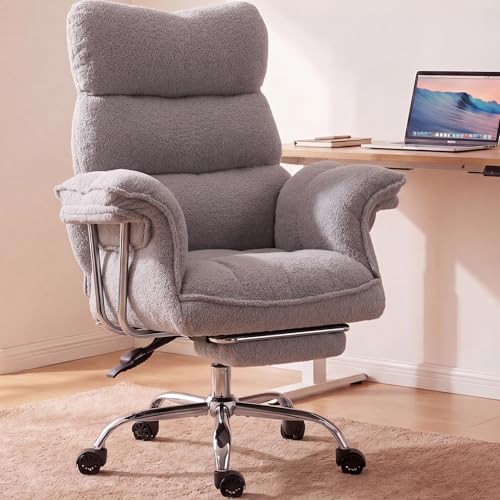
SUPERIOR POCKET SPRING CUSHION- Forget the heat and sag of ordinary sponge seats. Our chair features an upgraded pocket spring core wrapped in high-density foam. This advanced design provides pinpoint support that perfectly conforms to your body curve, promotes air circulation to keep you cool, and ensures the cushion retains its shape for years, not months.

【Assists Hip Replacement Recovery】:This product is a specialized Hip Replacement Recovery Aids designed for postoperative people. Through scientific height adjustment and ergonomic support design, it can reduce hip pressure after surgery, avoid compression on the surgical site, and provide a good sitting environment for hip replacement postoperative recovery.

【PREMIUM MATERIAL & SIZE】 Massage gaming chair is made of premium PU leather and high resilience sponge, which bring more comfortable experience. Breathable, water-resistant and easy cleaning. Product upright size is 31.5"W*31"D*45"- 47.5"H, Size of backrest is 23.5" x 29", Size of seat is 23.5" x 21.5" x 19.5"-22", Height of armrest is 25.5"+2.8", Size of side pouch is 7.5" x 7.5". Black four-stage air rod let the weight capacity up to 350 lbs.
How Seat Depth Changes Your Effective Seat Height
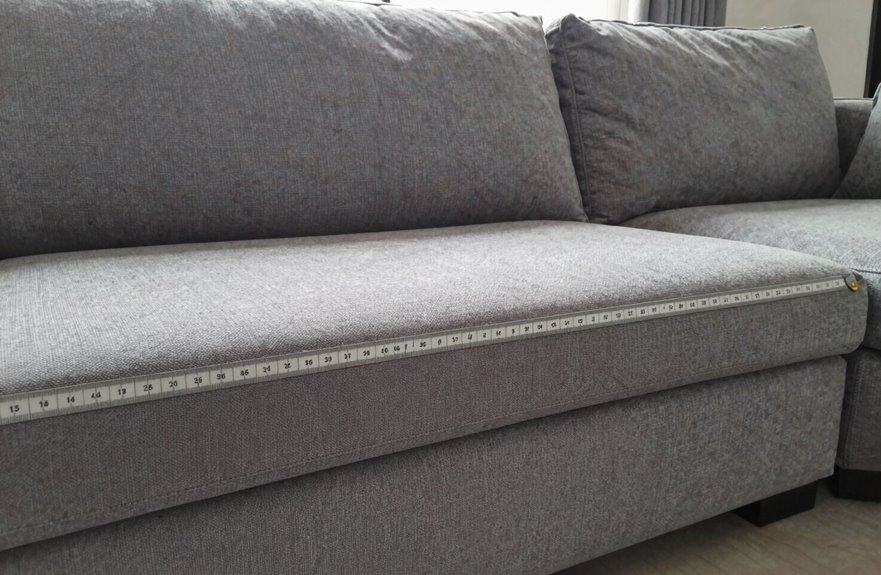
So when I was sofa shopping last year, I discovered something unexpected: I sat on two couches with the exact same leg height, yet one felt like a perch and the other like a pit. The difference was seat depth.
That deeper couch let me settle back with my thighs fully supported, which changed my effective seat height dramatically. With a typical 21–24 inch seat depth paired with standard seat height measurements of 17–19 inches, your knees and hips either align comfortably or fight for balance. I learned to check front-edge-to-back-cushion depth against my leg length, since that determines how high my thighs actually sit.
Cushion firmness also matters. Denser cushions compress less, boosting effective seat height by up to two inches compared to sink-in soft versions. Measure your proportions before purchasing.

This compact 3 seater couch spans 95 inches, delivering generous seating room so three people can sit comfortably without feeling cramped. Its space‑saving footprint makes it perfect for small‑space environments, such as apartments, studios, RVs, bedrooms and living rooms. Offered in 5 versatile color options, its minimalist silhouette pairs beautifully with a variety of home decor styles.

LOW-PROFILE FLOOR SEATING: Seat height is 11.8 in., lower than a standard boneless couch seat of 17 to 19 in.; sits close to the floor for lounging, reading, and gaming; place against a wall for back support

Long Lounge Seating: Stretch out on a 98.4 inch compressed sofa that gives living rooms, apartments, and media spaces a wider place for daily lounging, movie nights, reading, and relaxed home refreshes while keeping the floor sofa profile clear
Sofa Seat Heights That Support Seniors and Limited Mobility
How do you help someone you love get up from the couch without that awkward, arm-flailing struggle? I’ve watched my own mother wrestle with cushions that swallowed her whole, and it broke my heart. The right seat height changes everything for seniors with limited mobility.
| Seat Height | Best For | Knee Angle |
|---|---|---|
| 17 inches | Shorter adults, low-clearance rooms | ~90° (tighter) |
| 18–19 inches | Most seniors needing easier stand-up | ~100° (ideal) |
| 19+ inches | Wheelchair transfers, severe mobility limits | ~110° (open) |
| With walker | Match walker seat, 2–4″ calf clearance | Flexible |
| Deep cushions | Add effective height, test before buying | Check combined effect |
Aim for 18–19 inches. It reduces that painful bend, protects the knee angle, and lets someone push up with dignity intact. Your loved one belongs here, comfortably.

14 SIZES TO CHOOSE FROM: W 20 - 28 in, D 20 - 28 in. W 39 - 49 in, D 20 - 28 in. W 59 - 75 in, D 20 - 28 in. W 91 - 110 in, D 20 - 28 in. W 26 - 37 in, D 26 - 37 in. W 37 - 53 in, D 26 - 37 in. W 53 - 65 in, D 26 - 37 in. W 65 - 79 in, D 26 - 37 in. W 24 - 35 in, D 12 - 20 in. W 24 - 35 in, D 12 - 20 in. W 39 - 51 in, D 12 - 20 in. W 55 - 67 in, D 12 - 20 in. W 14 - 18 in, D 14 - 18 in. W 37 - 49 in, D 37 - 49 in.

14 SIZES TO CHOOSE FROM: W 20 - 28 in, D 20 - 28 in. W 39 - 49 in, D 20 - 28 in. W 59 - 75 in, D 20 - 28 in. W 91 - 110 in, D 20 - 28 in. W 26 - 37 in, D 26 - 37 in. W 37 - 53 in, D 26 - 37 in. W 53 - 65 in, D 26 - 37 in. W 65 - 79 in, D 26 - 37 in. W 24 - 35 in, D 12 - 20 in. W 24 - 35 in, D 12 - 20 in. W 39 - 51 in, D 12 - 20 in. W 55 - 67 in, D 12 - 20 in. W 14 - 18 in, D 14 - 18 in. W 37 - 49 in, D 37 - 49 in.

14 SIZES TO CHOOSE FROM: W 20 - 28 in, D 20 - 28 in. W 39 - 49 in, D 20 - 28 in. W 59 - 75 in, D 20 - 28 in. W 91 - 110 in, D 20 - 28 in. W 26 - 37 in, D 26 - 37 in. W 37 - 53 in, D 26 - 37 in. W 53 - 65 in, D 26 - 37 in. W 65 - 79 in, D 26 - 37 in. W 24 - 35 in, D 12 - 20 in. W 24 - 35 in, D 12 - 20 in. W 39 - 51 in, D 12 - 20 in. W 55 - 67 in, D 12 - 20 in. W 14 - 18 in, D 14 - 18 in. W 37 - 49 in, D 37 - 49 in.
How Sofa Seat Height Affects Your Posture Over Time
Three hours into a movie marathon, I realized my lower back had staged a full revolt. My seat height was all wrong, too low, forcing me to slump forward with no support.
Proper seat height keeps your feet flat, knees bent at hip level, and spine naturally aligned. Too high, your legs dangle and pressure builds behind your thighs. Too low, your hips sink below knee bend, and your lower back curves unnaturally.
Your back cushion works as a team with seat height. Sit fully on sofas and check if your lower back touches support without straining. Small adjustments, such as adding a pillow or choosing firmer cushions, protect posture over years.
Your future self will benefit from getting this right today.

2-in-1 Convertible Sofa Bed: With two configurations, this convertible sofa bed works as a comfortable boneless couch for daily sitting and lounging, then unfolds into a spacious floor-standing couch bed for movie nights, naps, or overnight guests

2-in-1 Convertible Sofa Bed: With two configurations, this convertible sofa bed works as a comfortable boneless couch for daily sitting and lounging, then unfolds into a spacious floor-standing couch bed for movie nights, naps, or overnight guests

Why Apartments Need Lower Sofa Seat Heights
My back finally thanked me for fixing my posture, but then my sofa got stuck in the stairwell. That’s when I learned apartment living demands smarter choices about sofa seat height.
| Challenge | Lower Seat Height Solution | Your Gain |
|---|---|---|
| Tight stairwells, narrow elevators | Reduced vertical profile | Easier pivoting, less wall-scraping |
| Cramped rooms, low ceilings | 32–34 inch back height | Open sightlines, visual breathing room |
| Frequent moves, rental life | Lighter legs, modular frames | Better maneuverability, flexible arrangements |
I’ve wrestled enough furniture around corners to know standard sizing doesn’t always fit our reality. Lower seat height transforms impossible moves into manageable ones. Sectionals with reduced profiles slide through doorways without leaving paint marks on the walls.
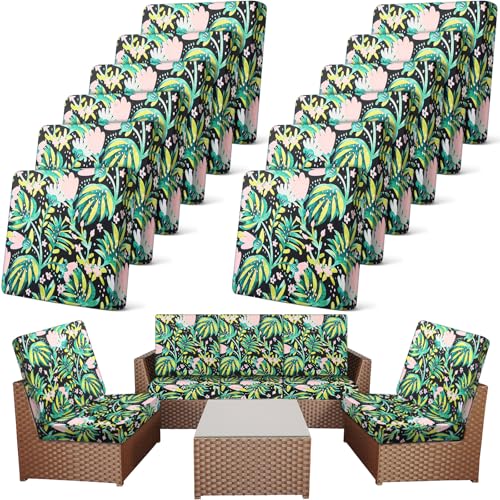
Value Pack: you will receive 12 pcs cushion covers; The size is suitable for most cushions with length 20-27 inch and width 20-27 inch, height 2-7 inch, adapting to different cushion shapes; Note: cushions are not included; Please measure your seat cushion size carefully before ordering to ensure the fit

Facilitate Easy Raising: The recliner cushion for elderly measures in 20 x20x4 inches. It is specifically crafted to assist the elderly in effortlessly getting up from their recliner chairs. Also for adults who frequently sit for extended periods of time, they can consider using this cushion to alleviate neck and back discomfort while maintaining proper posture.

Easy to Assemble: This couch cushion support for sagging seats can effectively make your couch and chairs more firm; Simply put it under the old sofa cushion; Lift your saggy furniture cushions easily in seconds
Seat Height Coordination: Matching Your Sofa to Chairs and Tables
Where do you even begin when your sofa, chairs, and tables all need to coordinate? Seating coordination starts with small numbers making a big difference.
Aim for a 1–2 inch gap between your sofa seat height and chair seat height. This keeps everyone’s knees at similar angles, so no one feels like they’re at the kids’ table. For table height, keep your sofa seat height about 2–3 inches below the surface for easy knee clearance without awkward reaching.
In a living room, a 34-inch traditional sofa paired with taller-back chairs creates visual balance. For lower modern spaces, drop closer to 30 inches. When dining areas blend in, use 16–18 inch coffee tables as your reference point. The process becomes straightforward once you measure twice.
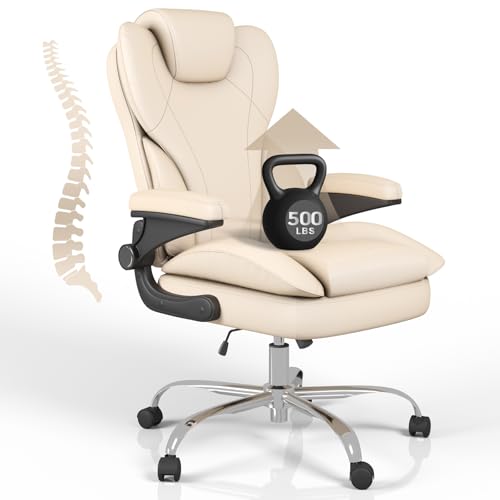
【Feel Supported, Stay Productive】This big and tall ergonomic office chair adopts science-inspired backrest structure. It fits naturally along the curves of your spine, neck, shoulders and lumbar area to deliver optimized body support during long hours sitting. Tall backrest, extended side panels and high-density sponge create cozy sofa-like enveloping seating experience

OVERSIZED UPGRADED L-SHAPE BONELESS COUCH – 3-Seater + Ottoman Layout: This 107" boneless couch is designed as a large 3 seater lounge with an extra ottoman, giving your living room a relaxed L-shape feel for movie nights, reading, and everyday family downtime.

Cloud Couch Delivers Cloud-like Comfort: Enjoy the generous 26-inch seat depth and 30-inch ottoman—significantly deeper than others, perfect for stretching out or curling up. The dual-layer cushions combine high-resilience foam with plush filling for lasting luxury. Eight adjustable back cushions and two detachable armrest pillows provide personalized support. The ergonomic design reduces pressure points, ensuring long-lasting comfort for everyone—ideal for extended lounging sessions
Sofa Seat Height Mistakes That Ruin Comfort (And How to Fix Them)
I’ve measured twice, bought once, and still ended up with a sofa that made me feel like I was climbing out of a hole every time I stood up. That’s the trap of ignoring seat height.
Too low, and you’ll struggle with standing ease, your knees protesting every exit. Too high, and your legs dangle, killing comfort, straining joints. Neither feels like home.
For proper ergonomic posture, your feet should rest flat, knees at or slightly below hip level. In mixed-height households, 18 inches hits the sweet spot. It’s accessible for most people and comfortable for lounging.
Stuck with a bad fit. Don’t replace it yet. Add a 2 to 4 inch cushion or slide a small ottoman underneath. Small tweaks create noticeable comfort improvements.

LOW-PROFILE FLOOR SEATING: Seat height is 11.8 in., lower than a standard boneless couch seat of 17 to 19 in.; sits close to the floor for lounging, reading, and gaming; place against a wall for back support

Sleek Floor-Level Seating: Designed to sit flush against the floor, this mini couch for bedroom creates a sleek, low-profile aesthetic. The legless structure offers a modern look that seamlessly upgrades compact areas, providing cozy seating without overwhelming your room layout

LOW-PROFILE FLOOR SEATING: Seat height is 11.8 in., lower than a standard boneless couch seat of 17 to 19 in.; sits close to the floor for lounging, reading, and gaming; place against a wall for back support