
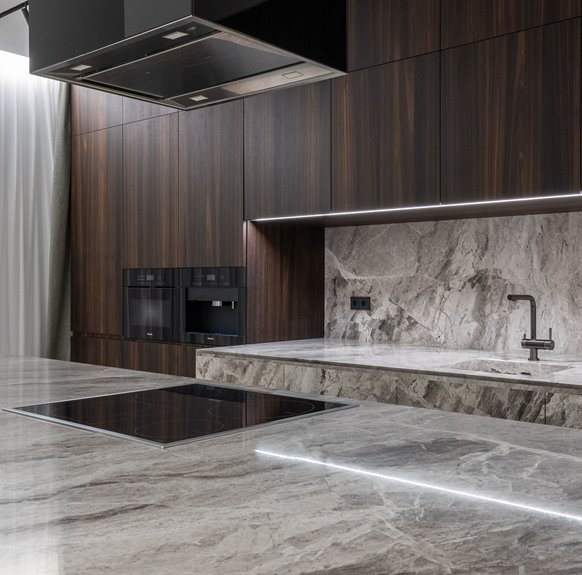
Quartz resists scratches and heat up to 680°F, making it ideal for busy kitchens where pans and daily messes are common.
Solid surface handles heat poorly but repairs easily. DIY buffing fixes most scratches, whereas quartz chips require professional repair.
Daily care means soap and water for both, though solid surface needs occasional polishing to maintain its shine.
Solid surface works best for seamless bathroom sinks with invisible seams, while quartz performs better in kitchens for durability and resale value.
Quartz is 90% stone with bold veining; solid surface is one-third resin, softer, with subtle, uniform color. The specific differences help you match each surface to your actual life.
Quartz or Solid Surface: Which Handles Daily Wear Better?
How do you actually live in your kitchen? I’m guessing you’re not gently placing coasters under every coffee mug.
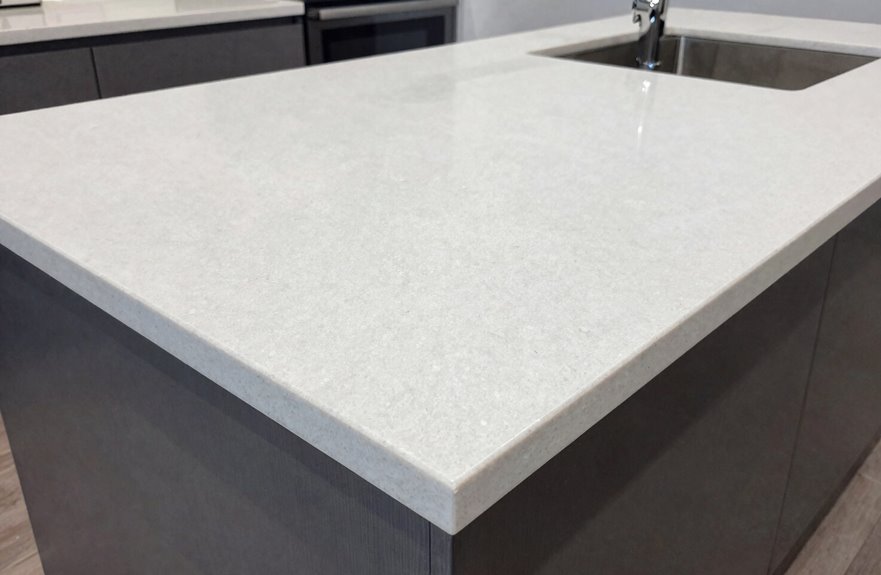
When I compare countertop materials for real life, I look at daily wear first. Quartz wins on durability. It’s harder, so scratches don’t haunt you. I’ve watched friends wince at every knife slip on solid surface, knowing those marks add up.
Quartz wins on durability. It’s harder, so scratches don’t haunt you.
Solid surface offers invisible seams and easier repair; I can buff out minor damage myself. Quartz demands professional help for chips.
Maintenance differs too. Solid surface needs more attention, yet forgives mistakes. Quartz shrugs off abuse but holds grudges when damaged.
Your choice depends on priorities: choose solid surface for flawless appearance with simple repair, or choose quartz for rugged resilience with visible seams.
Hot Pans and Countertops: What Each Surface Can Actually Take
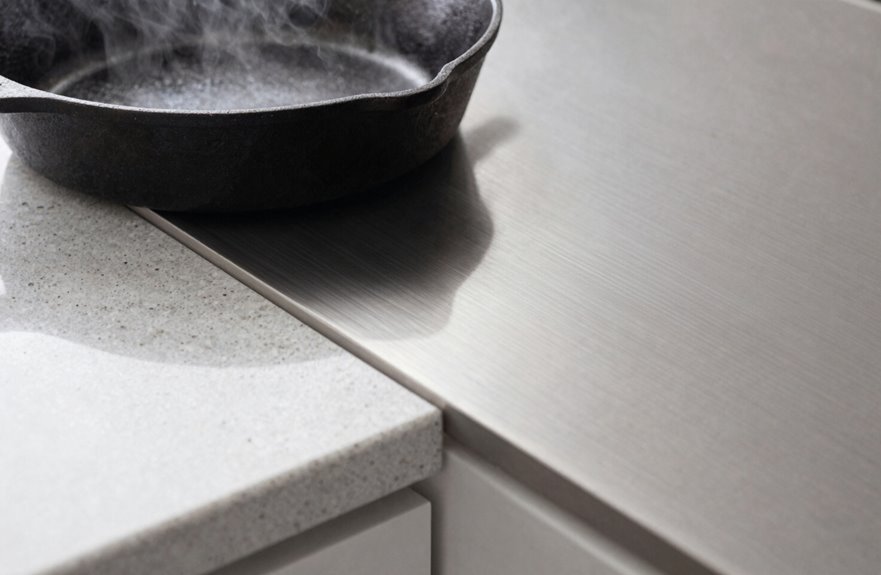
Since I’ve already burned one too many cutting boards in my lifetime, I pay close attention to what happens when hot pans hit countertops. This guide covers what I’ve learned about keeping kitchen surfaces safe.
Quartz countertops handle heat better, up to about 680°F, making them more forgiving if you’re juggling multiple dishes. Solid surface materials are not as heat-resistant. I’ve seen scorching and deformation happen faster than expected, especially when boiling kettles sit directly on the material.
A simple trivet saves both surfaces from heat damage and should be used as standard practice. Solid surface materials benefit less from heat resistance overall, which limits how hard you can push them during big cooking sessions. For busy kitchens, quartz simply holds up longer and requires less concern about heat damage.
The Real Maintenance Difference: Set-and-Forget vs. Buff-and-Polish
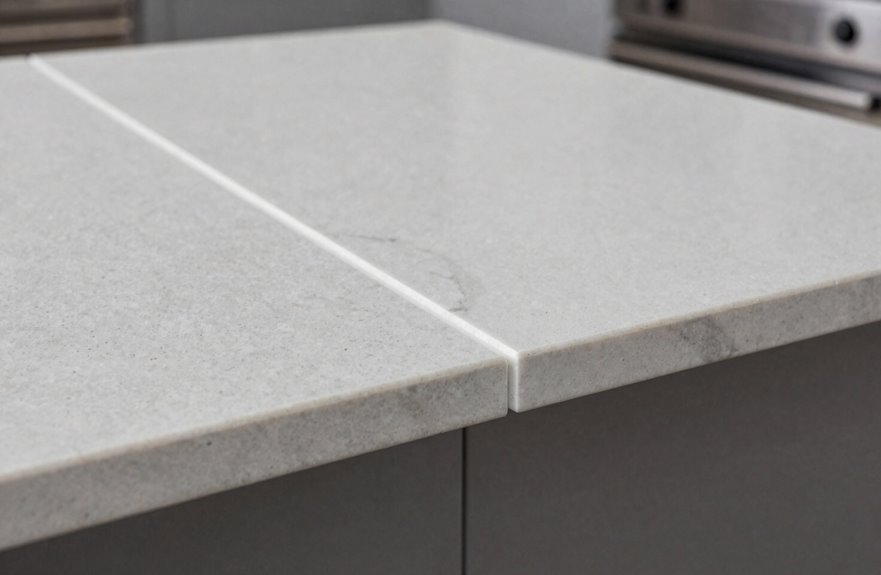
Heat resistance matters, but how much work you’re signing up for afterward matters just as much. Both materials are non-porous and sealing-free, which eliminates the need for annual chemical sealant applications. The key difference emerges in ongoing maintenance.
| Aspect | Quartz | Solid Surface |
|---|---|---|
| Daily care | Soap, water, done | Soap, water, done |
| Keeping shine | Nothing extra needed | Buff-and-polish sessions |
| When damaged | Professional restoration likely | DIY scratch repair possible |
Quartz maintenance is genuinely set-and-forget. I wipe mine down and move on. Solid surface maintenance requires periodic polishing to maintain appearance. Over time, that polishing reduces thickness and can create vulnerabilities.
Staining resistance favors quartz. Long-term durability also favors quartz. I’ve sanded out solid surface scratches before, but avoiding that task entirely is preferable.
Kitchen or Bathroom? Where Each Material Actually Works Best
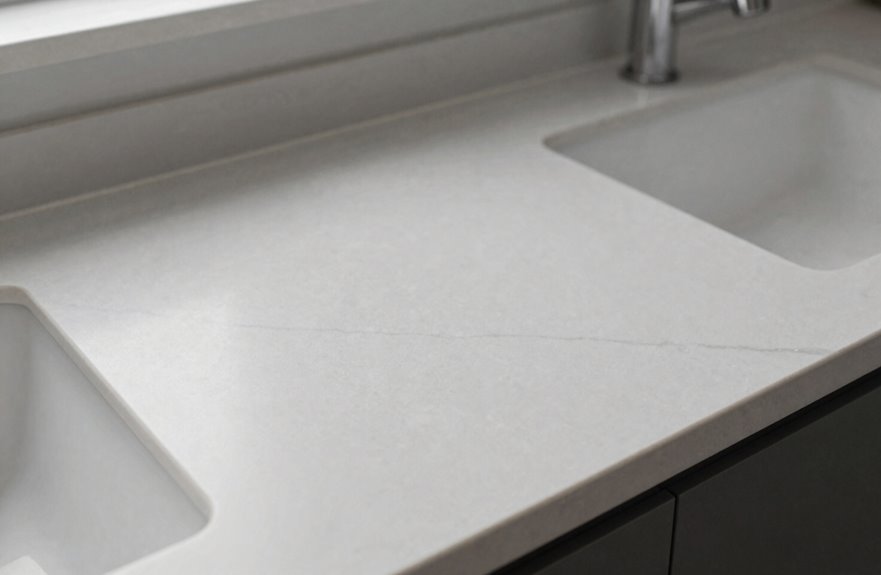
Where you install these materials matters almost as much as which one you pick.
Location matters as much as material selection when choosing your countertop surface.
For your kitchen, quartz is the practical choice. The durability handles dropped pans, the heat resistance forgives forgotten trivets, and the low-maintenance, stain-proof surface performs well when red wine spills at midnight. It boosts resale value, too, since buyers recognize the lasting quality of stone surfaces.
In the bathroom, solid surface offers distinct advantages. The near-invisible seams create a seamless, integrated look with the sink and counter flowing together. It is softer and more prone to scratches, but easily repairable. Occasional maintenance and a quick polish keeps the surface in good condition.
Choose quartz where life gets messy and hot. Choose solid surface where seamless beauty and budget-smart adaptability matter most.
What’s Inside (and Why It Matters): Composition Breakdown
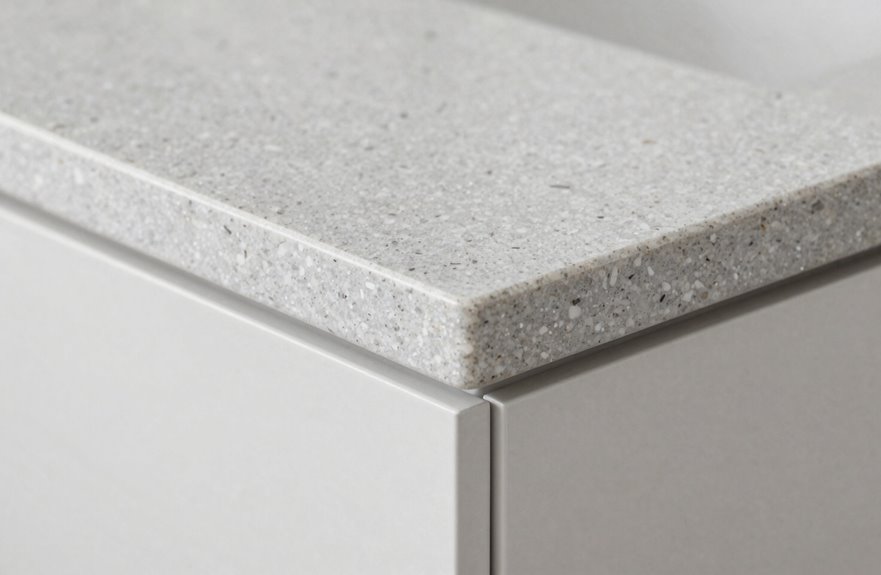
What actually goes into these countertops, and why should you care? Quartz composition blends 90–95% ground natural quartz with polymer resin and pigments, creating that signature quartz hardness, Mohs 7, nearly scratch-proof. Solid surface composition relies on aluminum trihydrate mixed with acrylic or polyester resins, yielding a softer, more forgiving surface.
| Feature | Quartz | Solid Surface |
|---|---|---|
| Manufacturing | Slab-based, like natural stone | Mold-cast, seamless possibilities |
| Resin content | Lower (~5–10%) | Higher (~33%) |
| Appearance | Bold veining patterns | Subtle, uniform coloring |
The molding process shapes everything. Quartz slabs offer dramatic veining patterns, while mold-cast solid surface accommodates integrated sinks without visible seams. Your lifestyle determines which composition works best for your home.