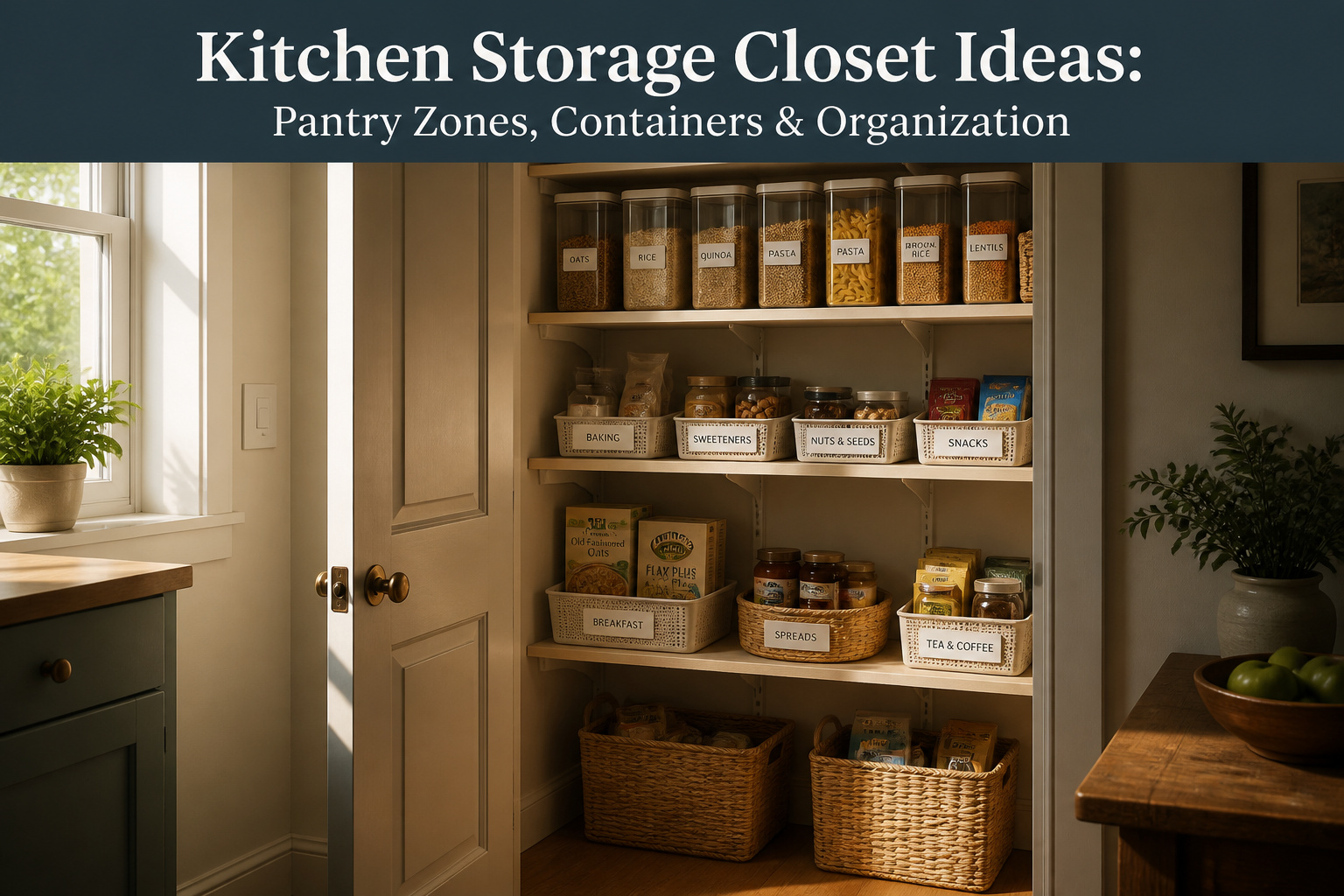
A kitchen storage closet is a small reach-in pantry that keeps dry goods behind a single door, usually with fixed or wire shelving and no walk-in floor space. The catch is that every inch has to work harder: a buried bag of flour or a duplicate box of cereal can derail dinner prep because there is nowhere for clutter to hide. The fix that paid off fastest in my own closet was sorting everything into zones, breakfast goods in one spot and baking supplies in another, so I stopped buying a third open bag of oats because I could finally see what was already there.
Create Pantry Zones
The first time I sorted my pantry into zones, I found three open bags of oats and a box of cereal I had bought twice because I could not see what was already there. That is the problem zones solve. Breakfast foods live in one spot, baking supplies in another, grains and pasta together, snacks grouped by type. You are not filing for fun; you are building a mini grocery store where everyday items sit at eye level and rarely used categories migrate up high or down low.
This layout cuts waste in two ways. You see what you have before you shop, so you stop buying duplicates. And you notice the bag of flour or the can of beans before it expires, because it sits with its own kind instead of hiding behind taller boxes. Meal prep speeds up too. Grabbing pasta, sauce, and a side stops being a hunt through random shelves; each category has its home.
The number of zones depends on what you actually eat. If you bake once a month, that zone stays small. If snacks disappear fast, they get more real estate. Adjustable shelving helps here, letting you raise or lower a shelf to fit the categories you use most.
Clear Containers
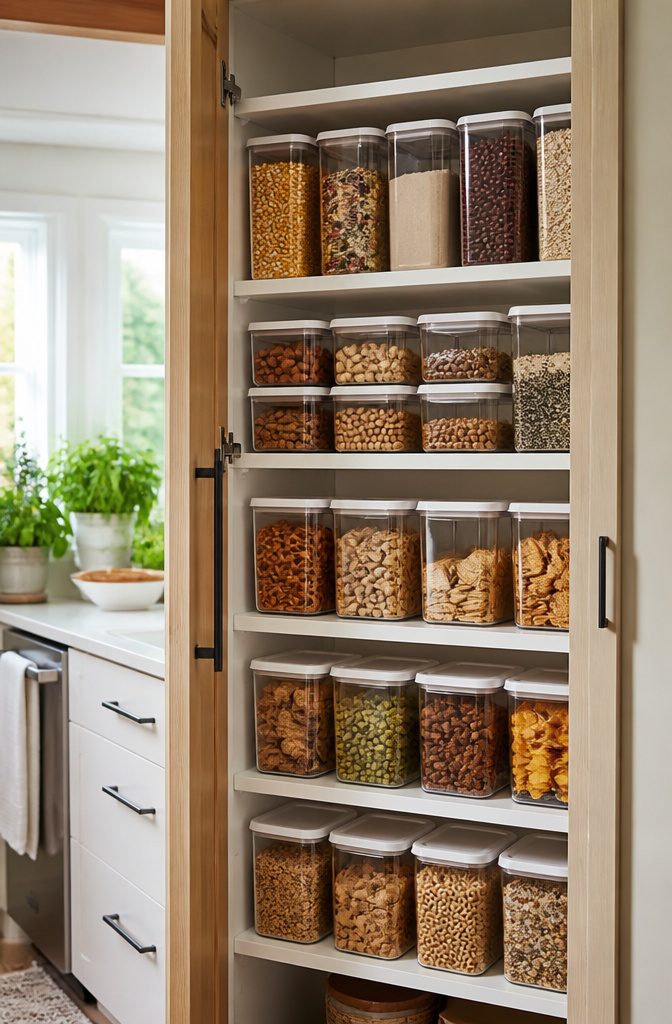
Decanting dry goods into clear, airtight containers saves space and lets you see exactly what you have at a glance. In a closet-style pantry, that visibility matters even more than in a walk-in, because every square inch is working harder and a buried bag of flour can derail dinner prep.
The space savings are biggest with bulky cardboard boxes. Granola, nuts, oats, and snacks like goldfish or bars lose their oversized packaging and stack into neat, uniform edges. Not everything needs the treatment. Zip-bag protein powder or oats already in a sturdy canister can stay put, and items you buy only occasionally are not worth the transfer. For the staples you reach for weekly, though, the upfront effort pays back every time you open the door.
Lazy Susans
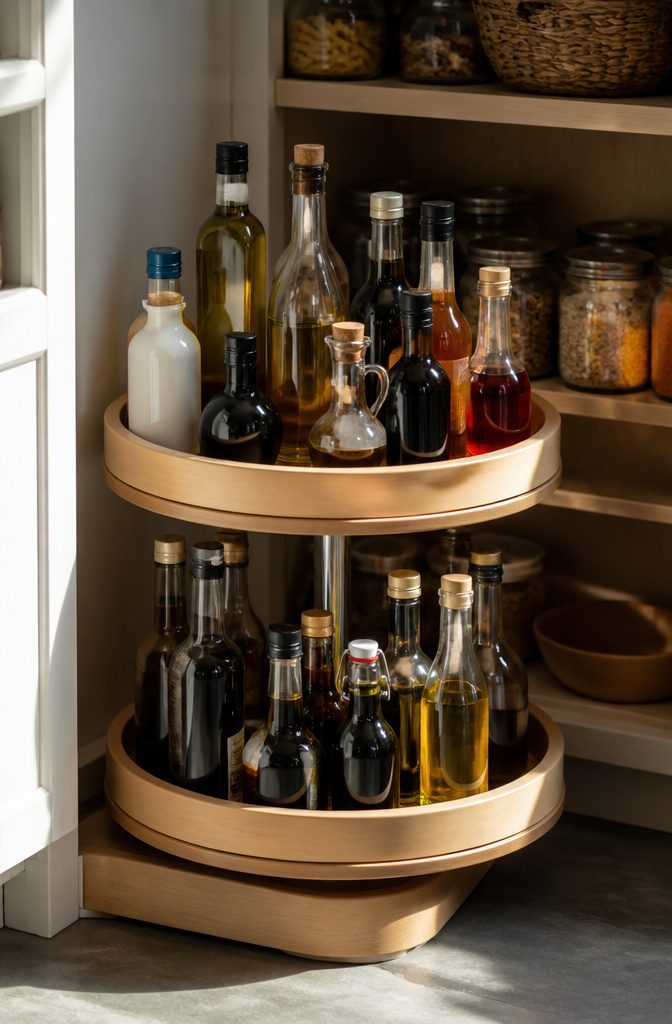
A lazy Susan in the corner of a small pantry turns dead space into something you actually use. Bottles of oil, vinegar, and sauces stand in a ring on the turntable, and one spin brings the back row to the front. Without it, those same bottles slide behind cereal boxes or bags of rice and stay there until they expire.
The deep corner is where most pantry storage goes to die. Shelving alone leaves a triangle of reach that short arms or crowded shelves make almost impossible. A lazy Susan fills that triangle and spins the contents out to where you can read the label.
In a small pantry, this is non-negotiable. Square footage you cannot reach might as well not exist, and renting usually means you are not installing custom pull-out corner hardware. The turntable is the renter’s fix: set it on the existing shelf, load it, and the problem is solved for under twenty dollars.
Over-the-Door Storage
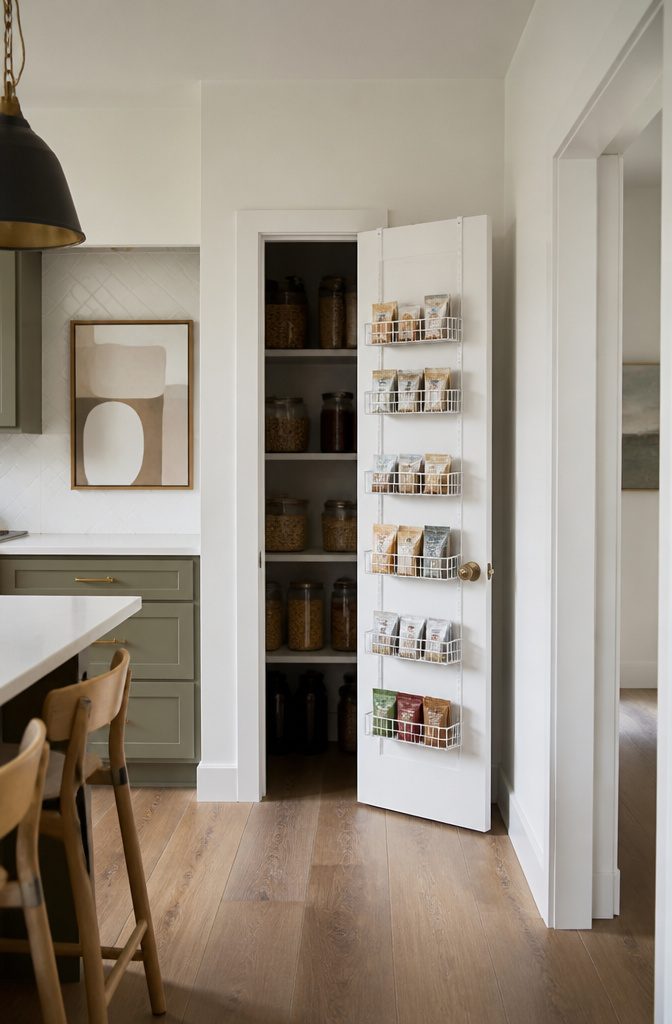
The back of the pantry door is prime real estate that most renters leave empty. Lightweight items live here best: spice packets, foil and wrap boxes, snack bags, or cleaning cloths. Anything under a pound per hook keeps the hardware from tearing out of a hollow-core door, and even sturdier solid doors have limits once you start loading multiple tiers.
Over-the-door racks with shallow baskets work better than deep wire shelving, since a door that won’t close defeats the purpose. The motion of opening and closing will shift contents, so tall narrow bottles or loose packets need a lip or rail to stay put. In a rental, adhesive hooks rated for a few pounds save your deposit better than screw-mounted brackets, though renter’s insurance won’t cover a door you damaged chasing extra storage.
Vertical Storage
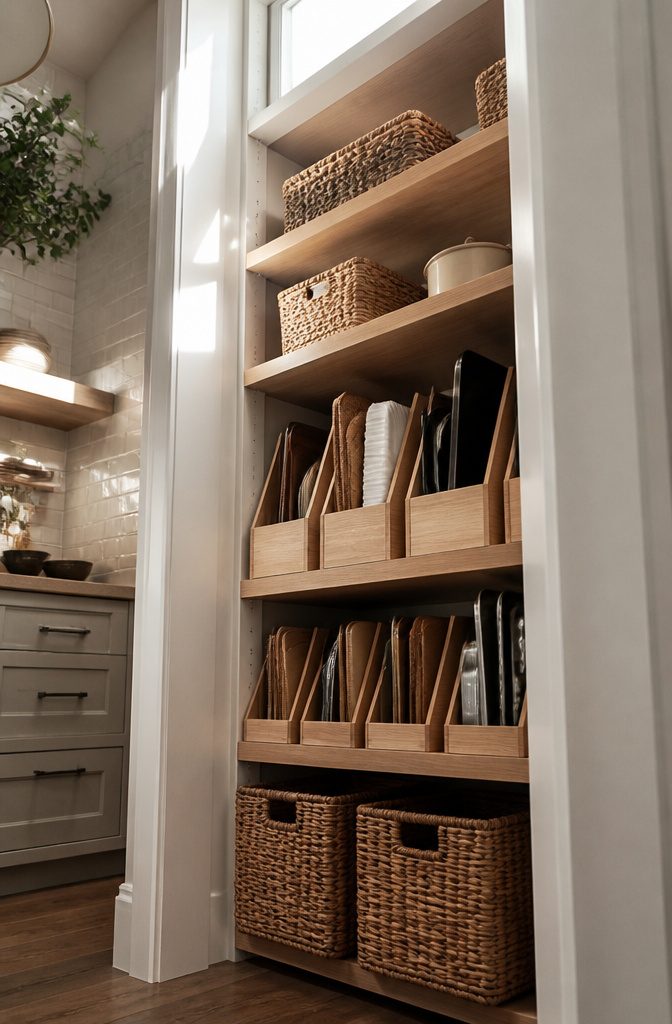
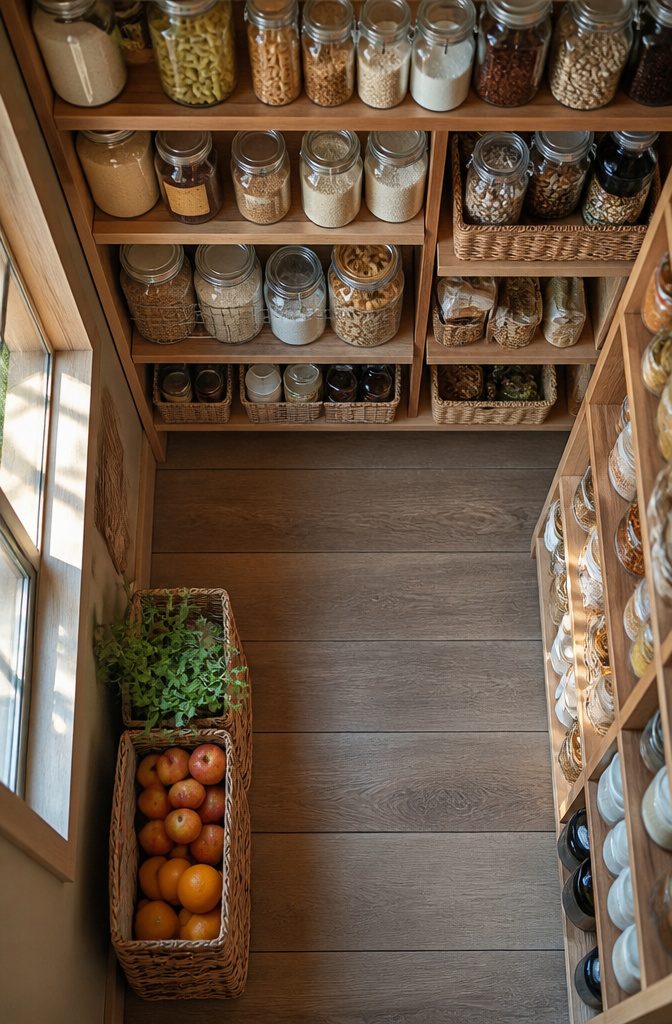
Vertical space is everything in a kitchen storage closet, since floor-to-ceiling room is usually there but rarely used well. Wire shelves leave gaps where small items tip or fall through, so wooden boxes or baskets on those upper levels keep loose things contained and pull down easily when you need them.
Adjustable pantry shelves with durable support hardware let you move a shelf up or down as your storage shifts. Tall cereal boxes one month, shorter cans the next; the shelf height follows what you actually bought instead of leaving a foot of dead air above every row.
The place vertical storage really earns its keep is with baking sheets and trays. Standing them upright in a divided slot, rather than stacking them flat, ends the mess of pulling out the whole pile to reach the half-sheet pan at the bottom. Each piece slides out on its own. The same upright trick works for cutting boards and serving trays, anything wide and thin that otherwise becomes a teetering stack.
Labels
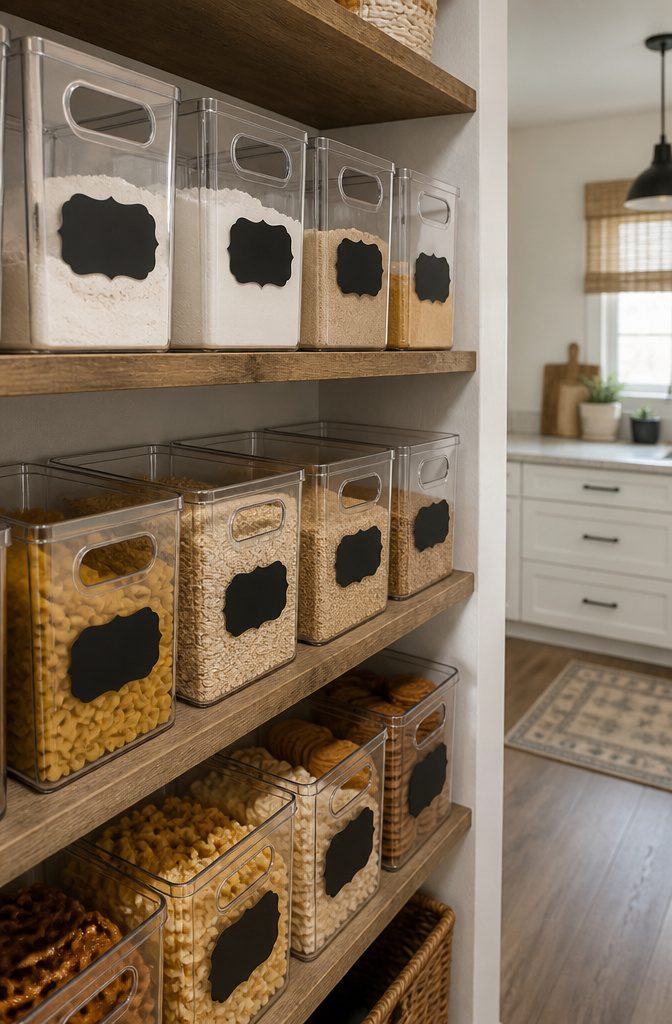
A label that peels off in six months is worse than no label at all, so the adhesive matters as much as the words. I’ve settled on chalkboard stickers with a real paint-pen, not actual chalk, after watching grease dust turn handwritten chalk into a gray smear above the stove. Paint pens leave a matte finish that stays readable through humidity and the occasional splash.
The placement is where most systems quietly fail. A bin label on the front works fine until you stack two bins deep on a shelf, then you’re pulling out the front one to read what’s behind. Labels on the lid edge, visible from above, solve this without any extra reaching. For wire shelving, a tag hanging through the front grille reads from the aisle and survives when you slide the bin out.
What convinced me, reading through how people actually maintain these setups, is that labeling works best when it names the category, not the exact contents. "Baking" lasts through a dozen refill cycles; "flour, sugar, brown sugar" needs rewriting the second you swap in coconut sugar or run out of one. The category stays true, and the small mental step of opening the bin is faster than relabeling.
Baskets and Bins
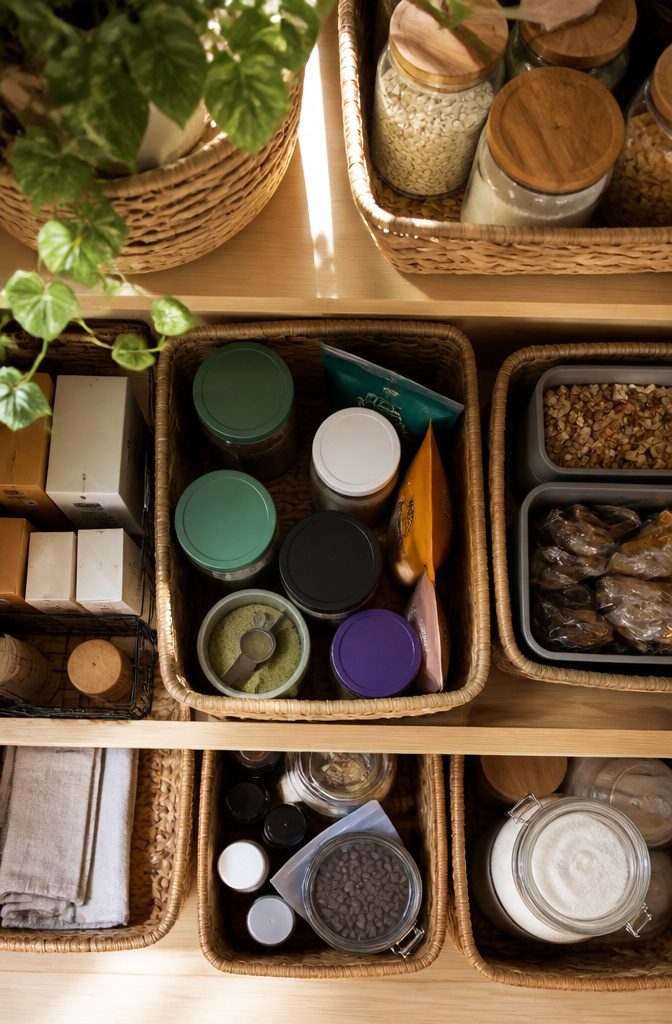
Loose items are the first thing that turns a pantry into chaos. Baskets keep them from spreading across shelves and becoming visual noise you stop seeing entirely. I learned this the hard way after years of protein-bar wrappers and half-empty chip bags colonizing every corner.
The smoothie basket changed my morning routine. It holds every powder, add-in, and supplement I use, and the whole thing comes out in one motion when I fire up the blender. No more hunting for chia seeds behind the pasta boxes. The same logic works for baking supplies, snack packs, or anything else that arrives in awkward packaging and tends to wander.
Backstock bins serve a similar purpose. Extra boxes of cereal, backup bags of coffee, duplicates from warehouse runs: they go straight into a labeled bin instead of getting shoved wherever they fit. Everything stays contained, and you can actually see what you own before buying more. Clear visibility is what prevents that moment of discovering three open bags of the same flour six months apart.
Battery Lighting
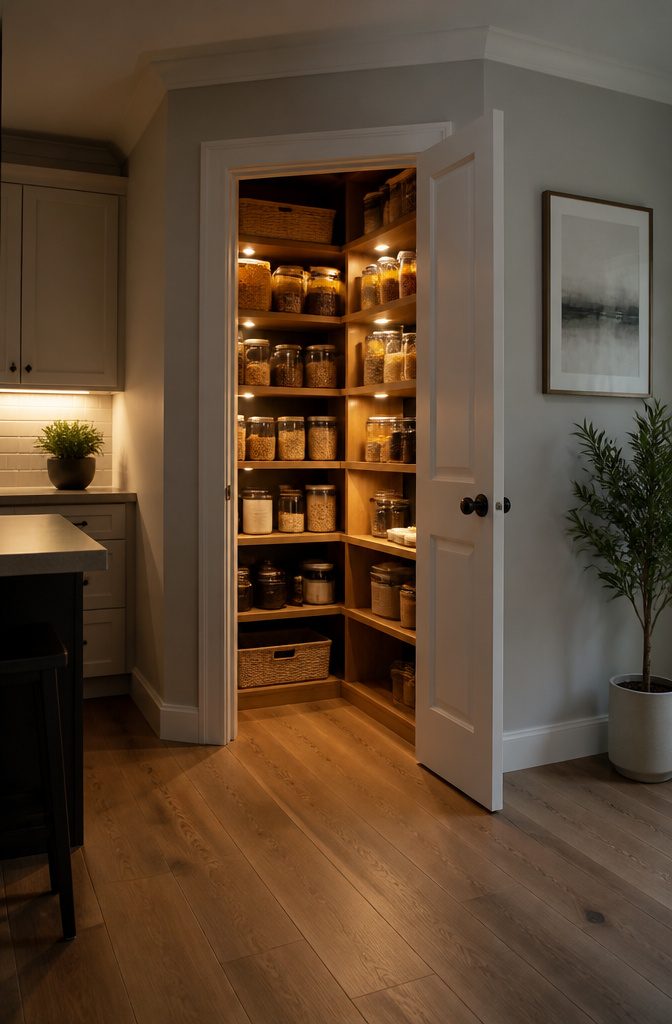
A pantry without a window turns into a guessing game every time the kitchen overhead light is off. Battery-powered lights fix this, but the wrong sensor placement makes them more annoying than helpful.
Motion sensors aimed at the door frame trigger when someone walks past in the hallway, not when you actually need light inside the closet. The better setup puts the sensor where it sees your hand reaching for a shelf, so the light comes on for the task, not for every passing shadow. Small adhesive puck lights work for this because they mount under each shelf lip and aim straight down at what you are trying to read.
Battery life depends on how often the pantry opens. In a busy kitchen, standard AA cells in a motion-activated puck typically run three to four months before dimming. The lights that stay on with a manual switch last longer but defeat the purpose when your hands are full of groceries. Rechargeable lithium pucks with daylight sensors skip the battery swap entirely, though they cost more upfront and need a charging spot somewhere in the routine.
Warm white around 3000K keeps food colors recognizable. Anything bluer and a red sauce label starts looking brown, which is the wrong kind of pantry surprise.
Regular Maintenance
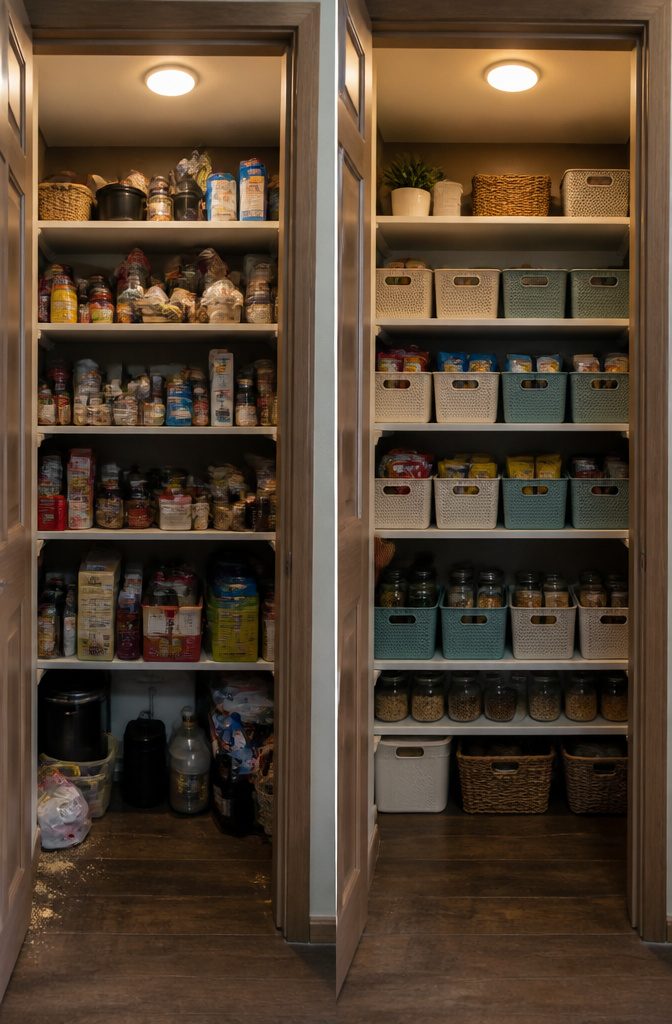
The system that actually holds up is a simple calendar, not a one-day overhaul you never repeat. A weekly reset and a monthly expiration check keep the space from sliding back into chaos. Once a week, usually right after unpacking groceries, walk the shelves and put anything that wandered back into its zone. The can of beans that got shoved behind the cereal, the snack bag left open on the counter, the duplicate jar of salsa bought because the first one was buried. Ten minutes of this saves the Sunday-afternoon dread of facing a closet that looks nothing like the Pinterest board.
Once a month, flip through the row and check dates. Anything past its prime gets tossed; anything you bought for one recipe and abandoned gets donated before it becomes a science experiment. The first few times, the waste stings. After that, you start buying differently. Fewer aspirational ingredients, more of what actually rotates.
The payoff is quieter than a reveal photo. It is opening the door at 6:47 p.m. and knowing where the rice is without thinking.
Why Organization Matters
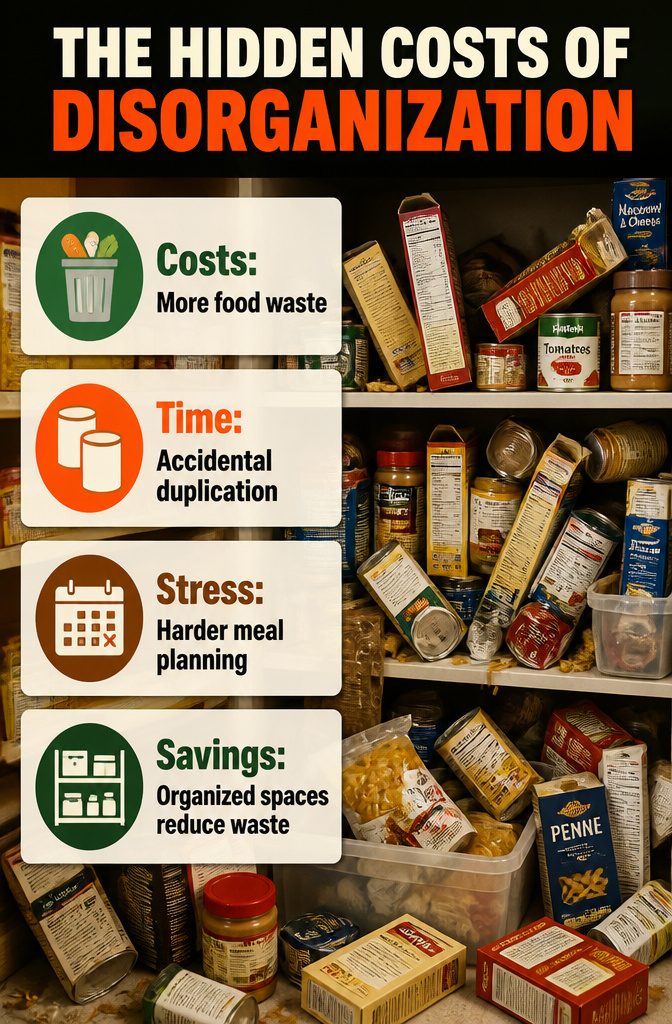
A disorganized pantry costs more than the few minutes it takes to find the cumin. Every extra box and duplicate can adds up, and when you cannot see what you already have, you buy it again. The sources agree on this: the average kitchen storage closet hides enough forgotten food to make meal planning harder than it needs to be.
The hidden cost is food waste. Three expired boxes of pasta shoved to the back, a can of tomatoes you bought twice because the first one vanished. Small pantries turn chaotic fast, and the chaos makes meal prep stressful instead of routine. An organized space does the opposite. You see what you have, you use it, and you stop overbuying. For anyone working with a weekend timeline and a real budget, that savings alone pays for the bins and labels.
Storage Solutions Beyond the Basics
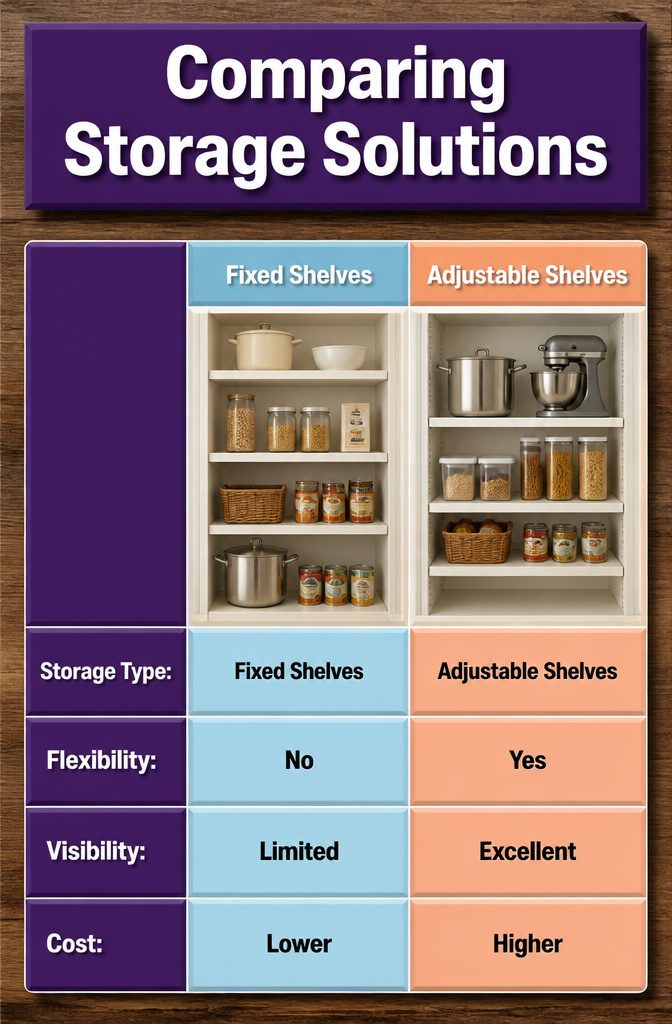
The wall of fixed shelves in our last rental’s pantry taught me why adjustable shelving pays off the first time you need to fit a tall mixer or a stockpot you didn’t plan for. Fixed heights leave dead air above short items or force awkward tilting for tall ones. A system that moves in one-inch increments lets you rebuild the layout as your stash changes, which it will.
Pull-out drawers solve the visibility problem that deep cabinets create. Cans and boxes migrate to the back, expire, and get rediscovered during spring cleaning. Drawers bring the back row to you. They cost more than basic shelving, but the waste they prevent in forgotten food adds up faster than most people track.
Custom cabinetry ties these pieces together into a layout that actually fits your space rather than fighting it. Standard units leave gaps beside the water heater or chop around a window. A design built to your measurements turns those odd corners into usable spots. The result looks intentional because it is; nothing reads "afterthought" like a freestanding rack crammed into a gap it was never meant for.
Small Pantry Tactics
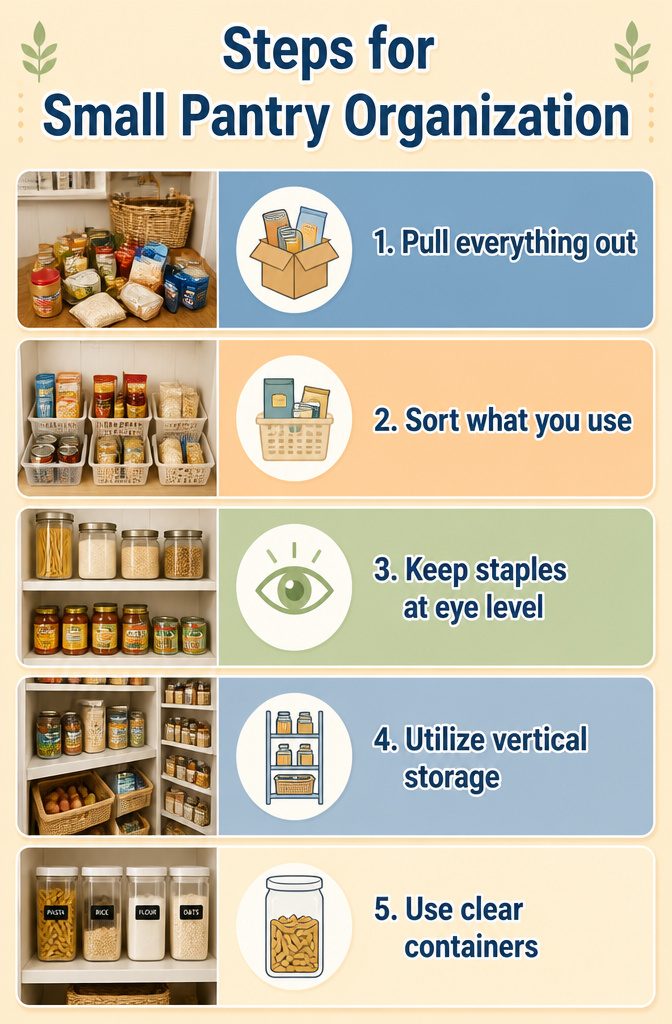
A small pantry forces you to decide what earns the space. I started by pulling everything out and sorting into what I actually cooked with versus what had migrated to the back and stayed there. Pantry staples you reach for weekly belong at eye level. Grouping the keepers into clear categories, baking supplies in one zone and canned goods in another, makes the whole closet feel larger because nothing hides.
Vertical storage is where the real square footage hides. Adjustable shelving lets you stack taller items overhead and keep everyday ingredients within easy reach. Narrow sections work for spices or slim cans without wasting the gap between wider shelves. Pull-out drawers or baskets at the bottom keep staples from disappearing into corners.
Clear containers finish the job. Being able to see how much pasta or rice is left prevents the duplicate-bag problem that clutters small spaces fast. A lazy Susan on a middle shelf spins oils and vinegars into view so nothing gets forgotten.
Frequently Asked Questions
How do you organize a pantry with very little space?
Focus on pantry staples you actually reach for weekly, group everything into clear categories like baking supplies and canned goods, and use vertical storage with adjustable shelving to squeeze more out of every inch. Clear containers prevent duplicate bags of flour or pasta from cluttering the space, and a lazy Susan on a middle shelf keeps oils and vinegars from getting lost in corners. The payoff is opening the door and knowing where things are without thinking.
Is it worth decanting food in a small pantry?
Yes, especially in a closet-style pantry where every square inch works harder. Decanting bulky staples like granola, nuts, and oats into clear, airtight containers removes oversized packaging and stacks them into neat, uniform edges you can see at a glance. The upfront effort pays back each time you open the door and spot exactly what you have without digging.
What’s the best way to organize a closet pantry?
Treat it like a mini grocery store: everyday items sit at eye level, rarely used categories migrate up high or down low, and heavier or bulky items go lower where they are easier to lift. Group similar items into zones so breakfast foods, baking supplies, grains, and snacks each have their own home. Add over-the-door storage for lightweight extras and battery lighting so labels stay readable in the dark.