
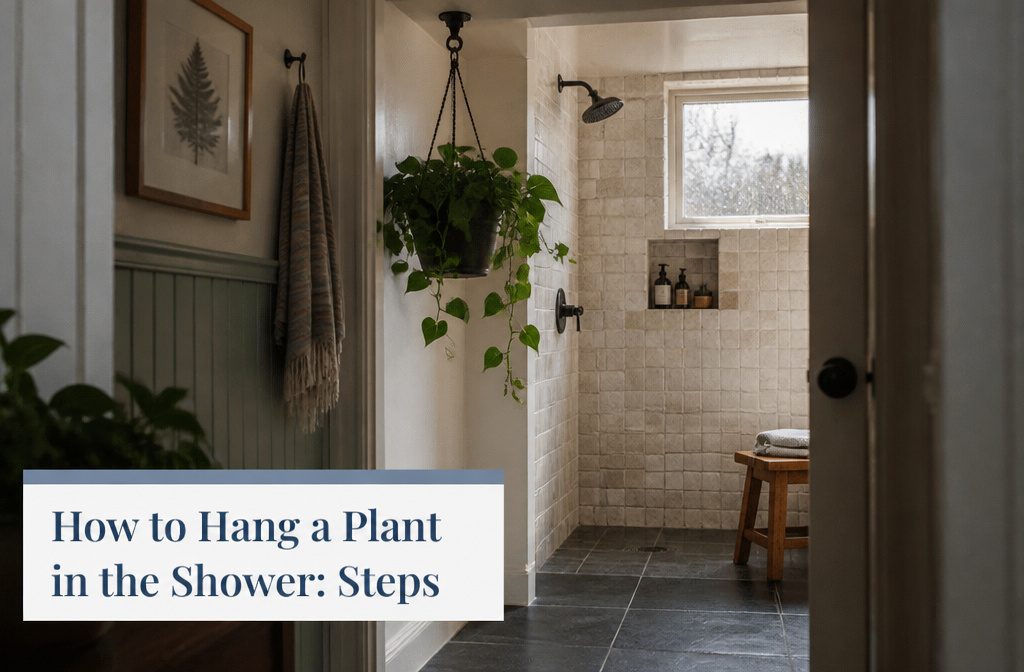
You’ll hang a plant in the shower by securing a hook to the ceiling or wall stud, choosing a humidity-tolerant trailing plant like pothos or Boston fern, and positioning it where steam reaches but direct spray does not.
The step people skip is checking the hook’s weight rating against a wet planter, which matters because soil gets heavier after watering and adhesive hooks rated for five pounds won’t hold it.
1. Choose a Plant That Handles Bathroom Humidity and Light
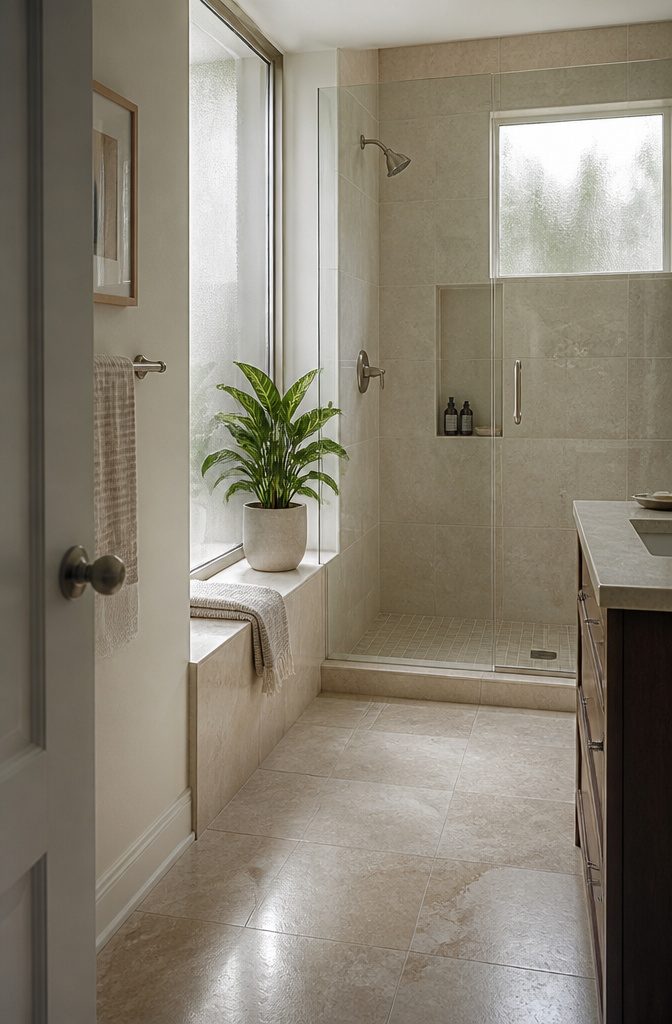
The plant needs to handle high humidity and low light at the same time. Bathrooms stay damp longer than other rooms, and most of them don’t get strong natural light even when there’s a window.
Snake plants, pothos, ferns, and Chinese evergreen all tolerate those conditions without struggling. I look for plants that won’t drop leaves or rot when moisture hangs in the air for hours after a shower.
Avoid anything bred for dry climates. Cacti and most succulents fail in bathrooms because they’re built for low moisture and bright sun, and a steamy room with diffused light gives them neither.
The mistake shows up as soft stems or slow decline rather than sudden death, but the plant never recovers.
If the bathroom has a window, placement on the sill buys you more light and opens up options like peace lilies.
Without one, stick to plants that evolved for forest floors or tropical understory, where indirect light is all they ever see.
2. Pick a Hanging Plant and Lightweight Planter
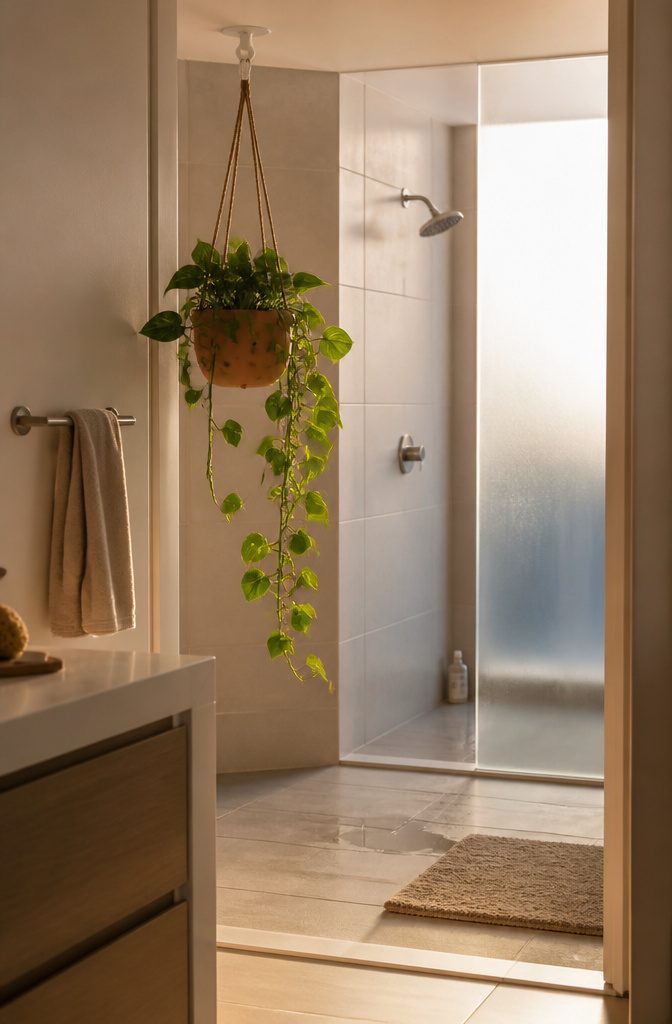
The plant you pick needs to handle steam and low light without protest. Pothos, English ivy, and Boston fern all hold up in bathroom conditions, because they tolerate both humidity and indirect light.
Pothos and ivy send out long trailing vines that look right in a hanging setup, while Boston fern adds soft fronds that suit a shower corner where diffused light reaches through frosted glass or a high window.
Hanging planters are a great option for bathrooms with limited counter or floor space.
That matters when you are choosing the planter to hang it in.
Smaller, lightweight plants pair better with hanging hooks that do not need studs behind them, and self-watering planters cut down the number of times you have to climb up and water.
If you go with terra cotta, make sure it has drainage holes, because root rot starts fast when water sits trapped in the base.
3. Find a Ceiling or Wall Location and Secure the Hook
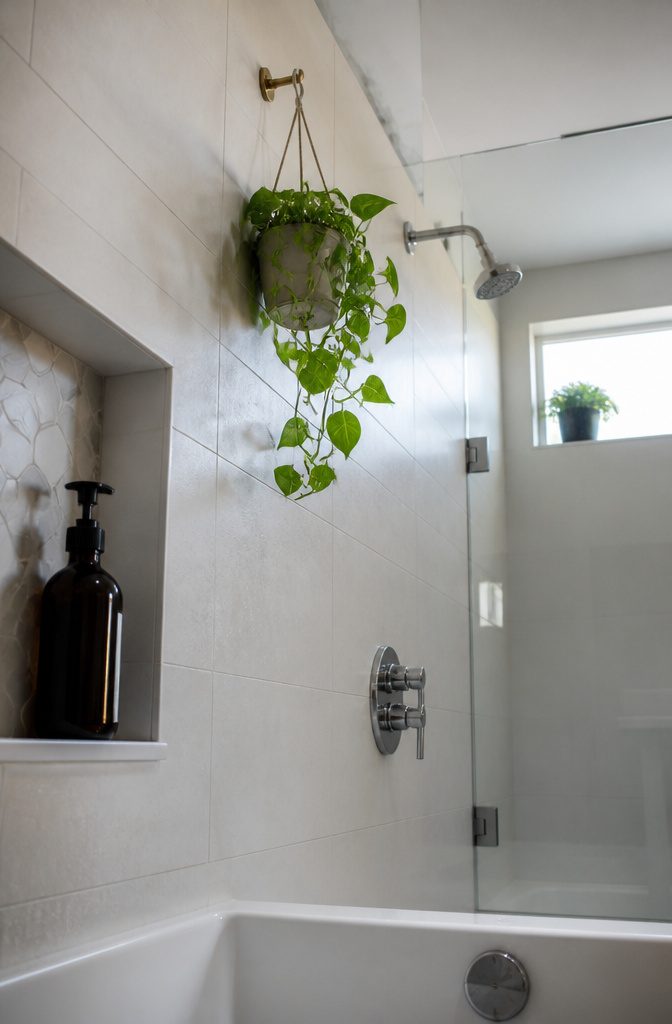
The ceiling is the most reliable place to hang a plant in a shower, especially when there’s no shelf space and the risk of knocking it down is real.
Secure the hook into a wall stud if you’re mounting on the wall, or use heavy-duty removable adhesive if drilling isn’t an option.
A stud gives you the strength to hold a planter without sagging or pulling free over time. Removable adhesive works for lightweight setups, but I’d check the weight rating before trusting it with anything heavier than a small trailing pothos.
Position the hook where the plant won’t be in your way when you reach for shampoo or step out of the tub.
Ceiling hooks clear the spray zone better than wall mounts, and they let trailing plants hang naturally without brushing your shoulder every time you move.
If you’re going for a wall-mounted hook instead, place it above eye level so the greenery stays visible without crowding the functional space below.
4. Hang Away From Direct Spray and at Eye Level
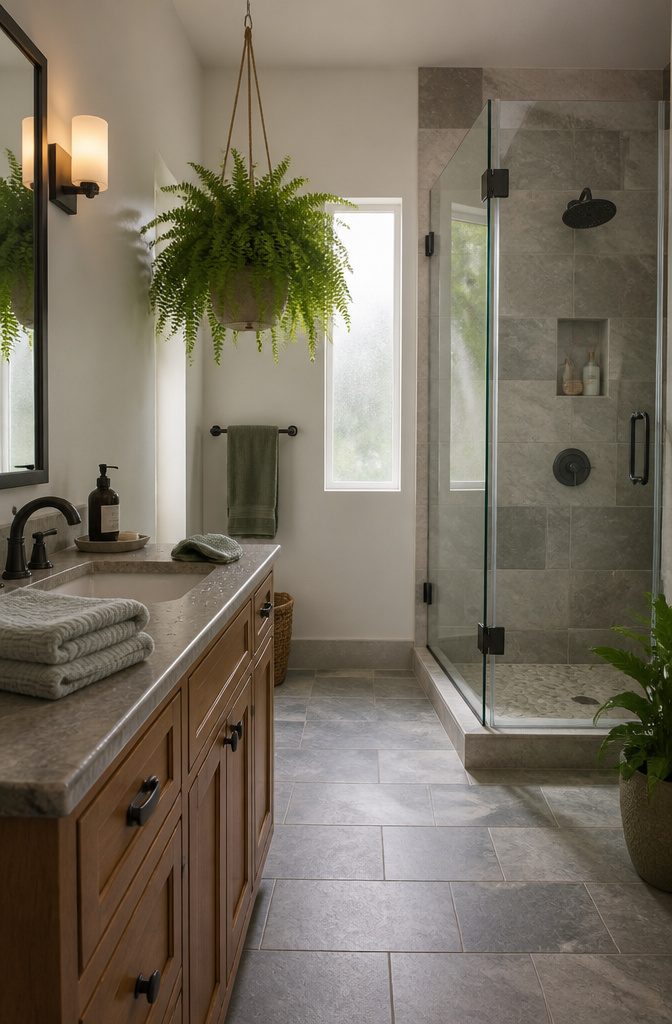
Hang the plant away from direct shower spray to avoid constant soaking, which can damage foliage even on humidity-loving species.
Position it at eye level so you actually see the greenery instead of just the bottom of the pot, and if the bathroom has a window, grouping a few hanging plants nearby amplifies the jungle effect without cluttering the floor or counter.
Eye level also makes watering and trimming reachable without a stepstool.
I keep hanging plants to the side of the shower stall or over the vanity where steam reaches them but water doesn’t, which gives them the humidity they want without the mechanical beating they don’t.
5. Train Vines and Add Grow Lights if Needed
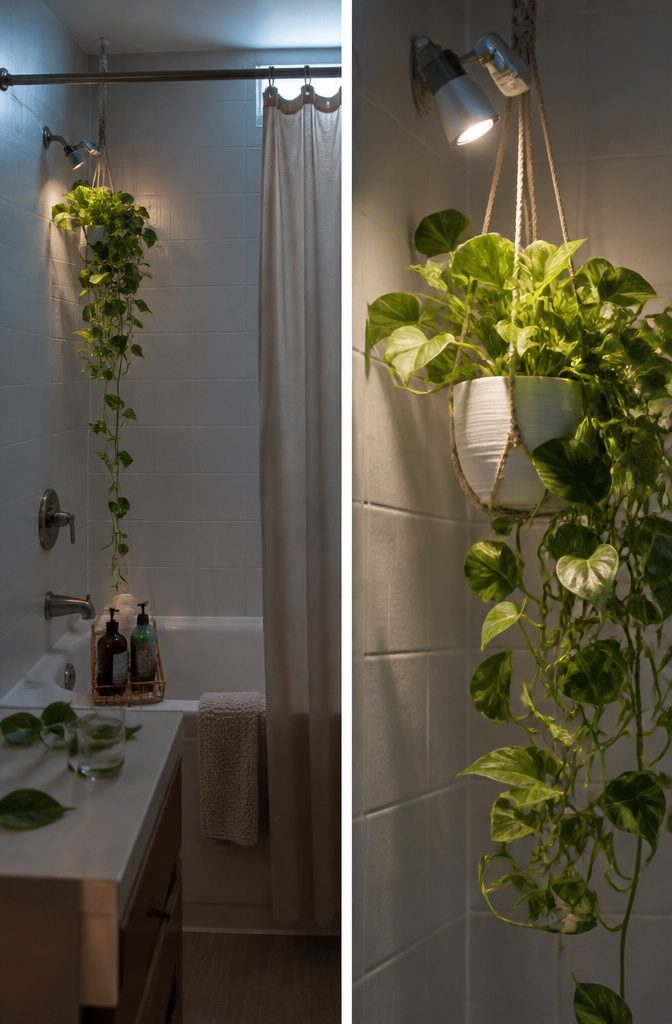
Once vines start growing, you can let them trail naturally down the wall or guide them around a small hoop or trellis tucked into the planter.
I prefer leaving most trailing plants loose in a shower because they soften hard tile better when they move freely, but training a pothos or philodendron around a wire form keeps the length tidy if the plant starts reaching the floor.
Either way, trim back vines every few weeks to stop them from blocking the showerhead or wrapping into hardware.
If the bathroom gets less than four hours of indirect light each day, a small clip-on grow light mounted to the ceiling or wall above the plant can fill the gap.
The bulb doesn’t need to run all day; six to eight hours is usually enough to keep foliage full.
Position the light so it points down toward the canopy rather than at the wall, and pick a model rated for damp locations if overspray can reach it.
Other Bathroom Placement Options Beyond Hanging
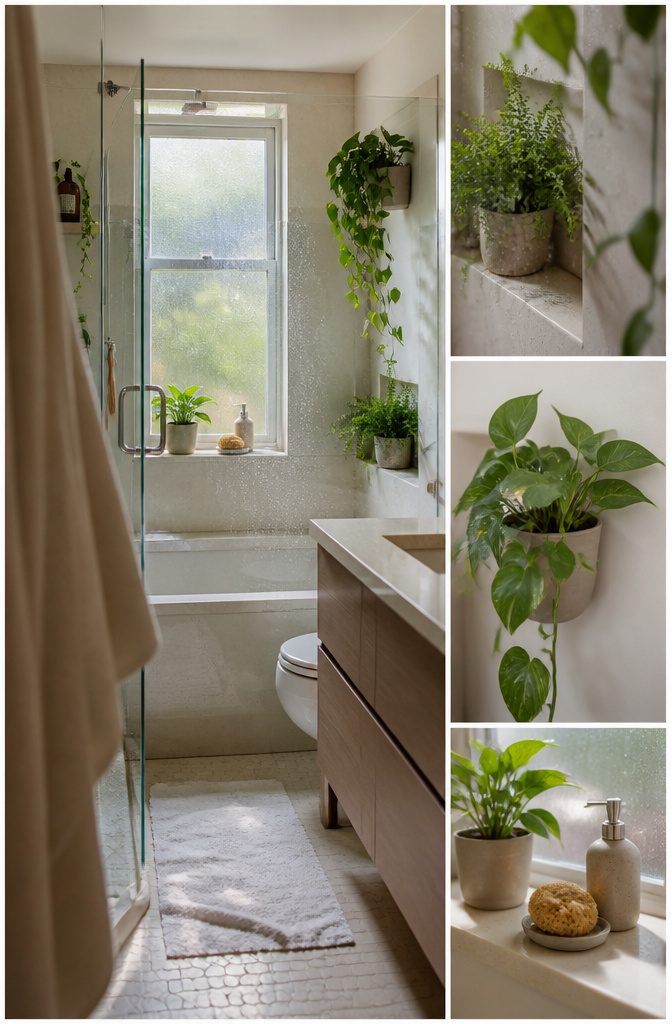
Not every plant needs to hang.
If ceiling hooks won’t work or the spot you have in mind sits outside the shower itself, place plants on shelves, counters, windowsills, or wall-mounted planters where humidity still reaches them but water spray does not.
- Windowsills give natural light and distance from direct water.
- Shelving units let you layer small pots at different heights; leave enough vertical space between shelves so foliage can spread.
- Built-in ledges around the tub or along walls hold succulents or potted ferns without drilling new holes.
- Counters and vanities work for slow-growing plants that stay compact and won’t crowd the sink.
- Shower corners at floor level keep a plant inside the humid zone but out of the direct stream.
- Wall planters or living-wall kits mount vertically near a freestanding tub, opposite the mirror, or beside a glass enclosure for a dramatic look without taking counter space.
- Plant stands lift a pot off the floor and add height where shelving does not exist.
Choose the spot based on how much light the plant needs and how close you want it to water without letting spray hit the leaves directly.
Prune and Prevent Mold Once the Plant Is Up
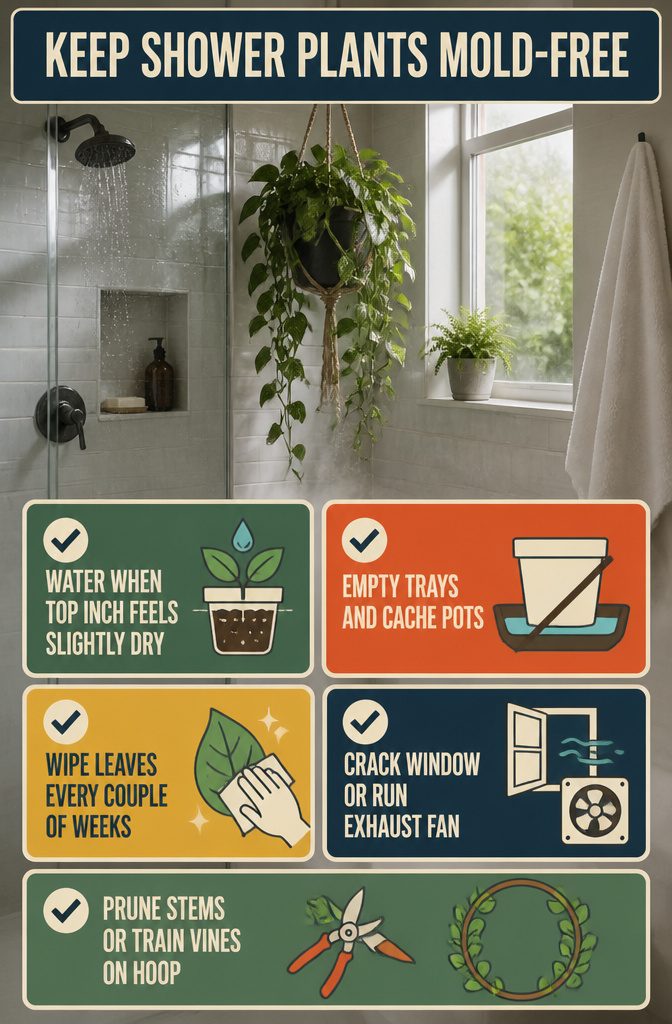
Once the plant is settled, a few small habits keep it looking good and stop mold from creeping in:
- Water only when the top inch of soil feels slightly dry. The shower’s humidity slows evaporation, so plants need less water than you’d give them in a drier room.
- Do not let water sit in trays or cache pots. Stagnant water invites rot and encourages mold to spread across the soil surface.
- Wipe the leaves down every couple of weeks to remove dust and any soap residue that drifts over from the shower.
- Give the bathroom some airflow. Crack a window or run the exhaust fan after a shower to prevent moisture from building up on surfaces.
- Prune trailing stems as they outgrow the space, or train vines around a wire hoop if you want a fuller shape without the tangle.
Plants that naturally handle humidity, like pothos, ferns, or air plants, tend to stay cleaner and healthier with less fuss.
Which Plants Work in a Shower and Which Do Not
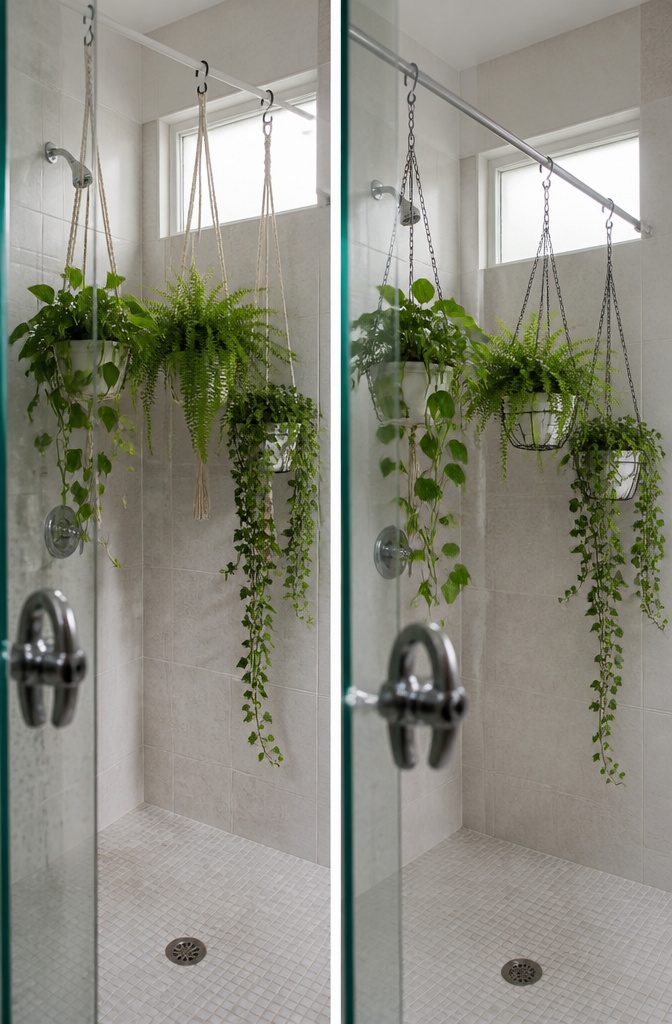
Pothos, English ivy, and Boston ferns are the three I see most often hung in showers, and for good reason: all three handle high humidity without complaint.
Pothos drapes well, tolerates low light, and grows fast enough that you’ll notice progress within a month.
English ivy is hardier in fluctuating conditions and clings naturally if you let it climb, which gives you more flexibility in how you train it.
Boston ferns bring volume and softer texture, but they need indirect or diffused light and will scorch if a window puts direct sun on them.
Spider plants and orchids also work when humidity is high, and I’ve used both in bathrooms where the shower gets regular use.
For a corner shelf inside the stall, aloe vera or bamboo can handle the conditions as long as you keep them out of direct spray—aloe especially does not want soggy soil, even if it tolerates some moisture in the air.
Skip anything labeled low-light sensitive or drought-loving. Cacti and most succulents fail in a shower environment because the moisture never lets up, and plants that need bright, dry conditions will decline quickly no matter where you position them.
Frequently Asked Questions
What plant is hung in the shower?
Pothos, English ivy, and Boston fern are the most common choices for hanging in a shower.
All 3 handle high humidity and low light without struggling, and pothos and ivy send out trailing vines that suit a hanging setup. Position the plant away from direct spray so constant water doesn’t damage the foliage.
Can plants survive in the shower?
Yes, plants that tolerate high humidity and low light survive well in showers.
Snake plants, pothos, ferns, Chinese evergreen, and English ivy all handle bathroom conditions without dropping leaves or rotting. Hang them away from direct spray where steam reaches them but water doesn’t.
Can ferns be put in the shower?
Yes, ferns thrive in showers because they need high humidity and prefer indirect light.
Boston fern is a popular choice for hanging setups, adding soft fronds that suit a shower corner. Keep it out of direct spray to avoid constant soaking that can damage the foliage.
How can I prevent mold growth on bathroom plants?
Water only when the top inch of soil feels slightly dry, since shower humidity slows evaporation.
Don’t let water sit in trays or cache pots, wipe leaves every couple of weeks to remove soap residue, and run the exhaust fan after showers to prevent moisture buildup.
Plants like pothos, ferns, and air plants stay cleaner with less maintenance.
What flower can be hung in the shower?
Peace lily works well in a shower because the warm, moist air helps keep its soil hydrated.
Most shower plants aren’t flowering species, but peace lily can bloom fairly often when given enough indirect light. Position it on a windowsill or shelf if the bathroom has natural light.