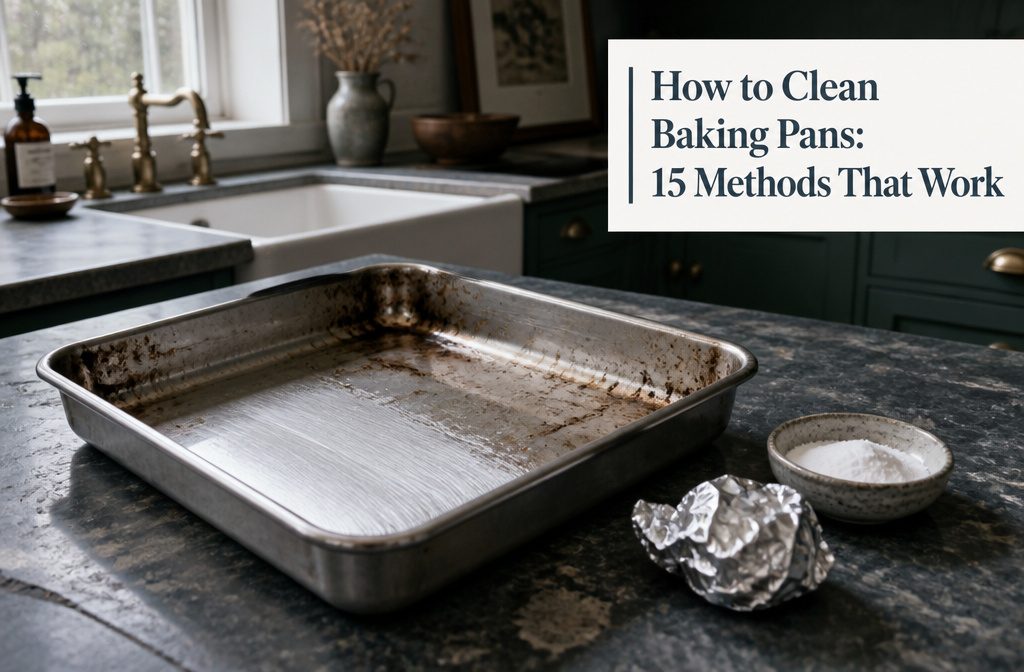
Most baked-on grease lifts with baking soda and dish soap in under an hour, but nonstick pans need gentler proportions to avoid scratching through the coating.
The method that works fastest depends on what the pan is made of. Bon Ami scrubbed with crumpled foil clears stainless steel in minutes, but the same combination ruins nonstick surfaces in a single pass.
1. Baking Soda With Vinegar
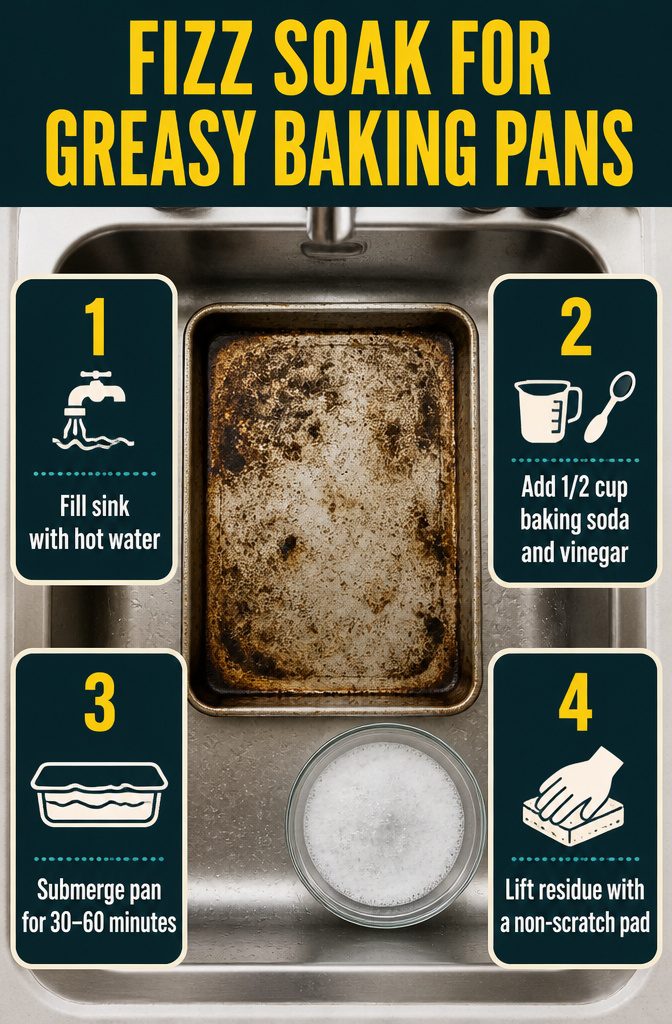
Baking soda and vinegar create a fizzing reaction that loosens baked-on grease and stains without the scrubbing effort of baking soda alone.
For uncoated pans, fill the sink with hot water and add 1/2 cup baking soda and 1/2 cup distilled white vinegar, then submerge the pan for 30 to 60 minutes.
The soak softens the grime enough that a non-scratch pad lifts most of it away.
Nonstick pans need gentler proportions: spread 2 teaspoons baking soda and 1 cup vinegar directly on the surface and let it sit for 30 minutes, then wipe with a soft cloth and warm water.
The vinegar cuts through mineral deposits and grease while the baking soda works as a mild abrasive, so the combination handles stubborn residue that water and dish soap leave behind.
I reach for this when a pan has sat too long between cleanings and needs more than a quick scrub.
2. Baking Soda With Dish Soap
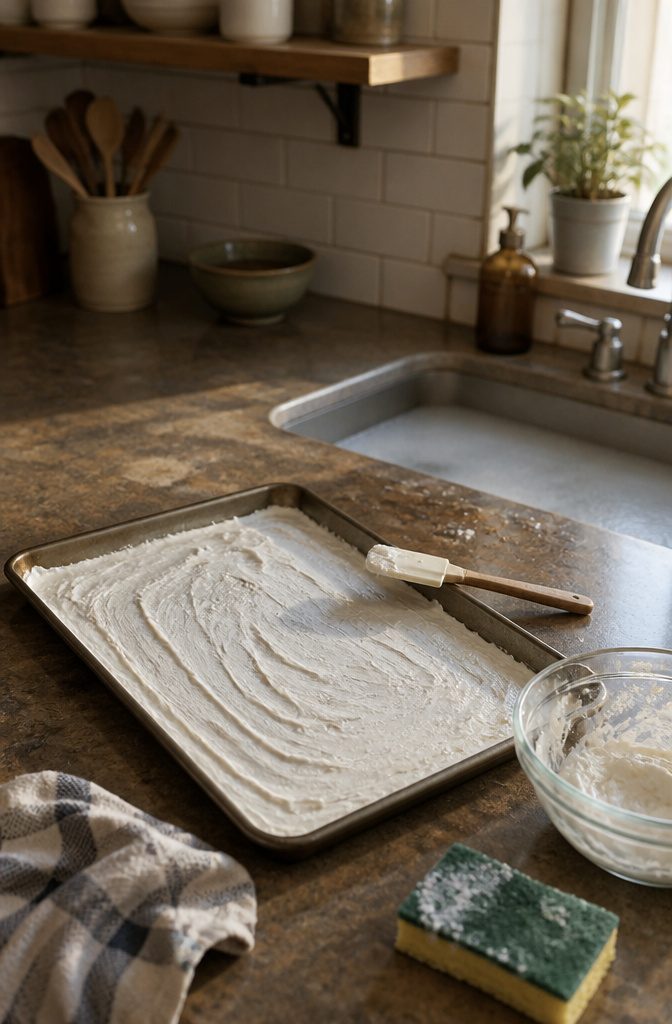
A spreadable paste made from ¾ cup baking soda mixed with enough Dawn dish soap to reach paste consistency tackles stuck-on mess without much scrubbing.
The method works best if you pretreat the pan in warm, soapy water for about an hour first, scraping off loose bits before you apply the paste.
Spread it evenly across the cooking surface with a spatula, then let it sit.
Five minutes is enough to see results, but letting the paste work for thirty minutes will cut the effort further when you rinse and brush it off in concentric circles.
The whole thing costs less than a dollar in ingredients and leaves the pan as clean as it has been in months. I’d use this one when the stain looks bad but the pan itself is still worth saving.
3. Baking Soda Alone
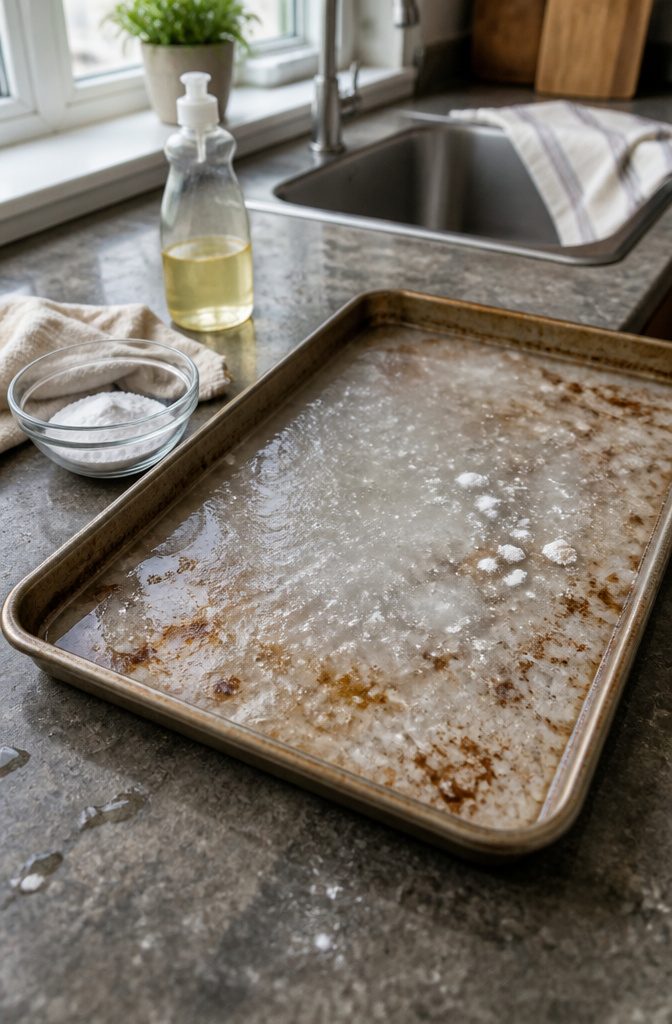
Baking soda on its own handles most baked-on buildup without scrubbing.
Pour hot water over the pan to cover the stained areas, then sprinkle a few tablespoons of baking soda across the surface. The water softens the grease while the baking soda sits on top doing its work.
Let that sit for an hour. I know an hour feels long when the pan is just sitting there, but the wait is what loosens everything without force.
After the hour, use a soft cloth to wipe away what lifted. Most of the burned mess comes off without any real pressure.
Finish by washing the pan with warm water and mild dish soap, then rinse and dry with a clean towel.
The method works because baking soda is mildly abrasive in paste form but gentle enough that it will not scratch nonstick or aluminum finishes, and the hot-water soak does the heavy lifting before you ever touch the surface.
4. Ammonia Vapor
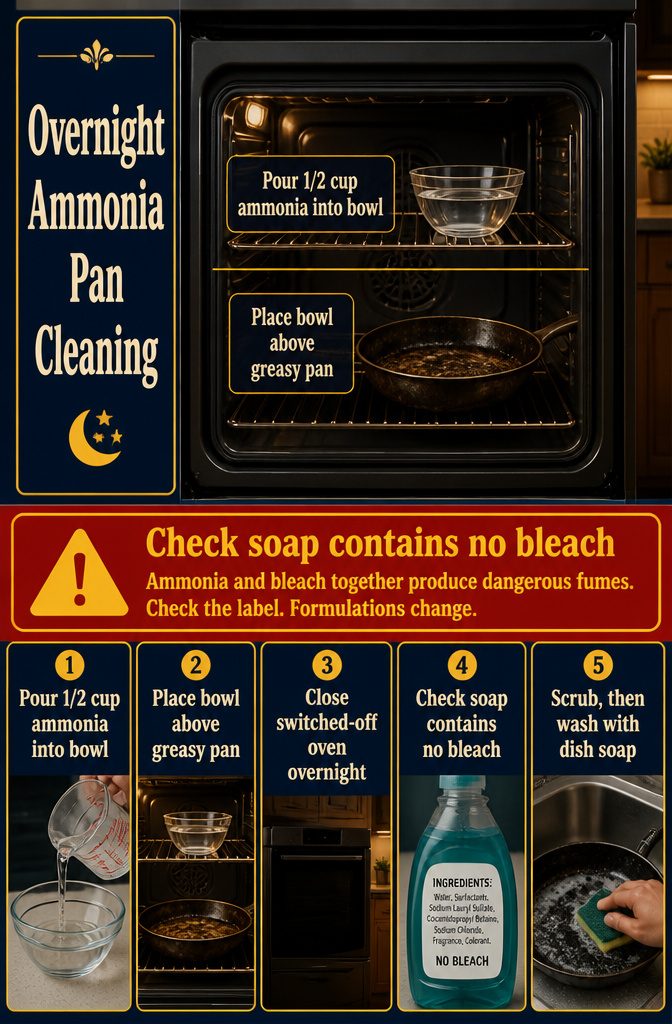
Ammonia vapor loosens burnt grease without scrubbing first.
Pour half a cup of ammonia into a bowl, set it on the top rack of a switched-off oven, and place the greasy pan on the bottom rack. Close the door and leave everything overnight.
The fumes do the work while you sleep. In the morning, scrub the pan with a non-scratch pad and water, then wash it normally with dish soap.
One warning matters here: make sure the dish soap contains no bleach. Ammonia and bleach together produce dangerous fumes, and the combination is common enough in household cleaners that checking the label is not optional.
I read the ingredients on every bottle before I use this method, even ones I’ve used before, because formulations change.
The same vapor that cleans the pan will also loosen grease on the oven walls and door, so wipe those down with a microfiber cloth while you’re at it. It’s free cleaning you didn’t ask for.
5. Bon Ami With Crumpled Foil
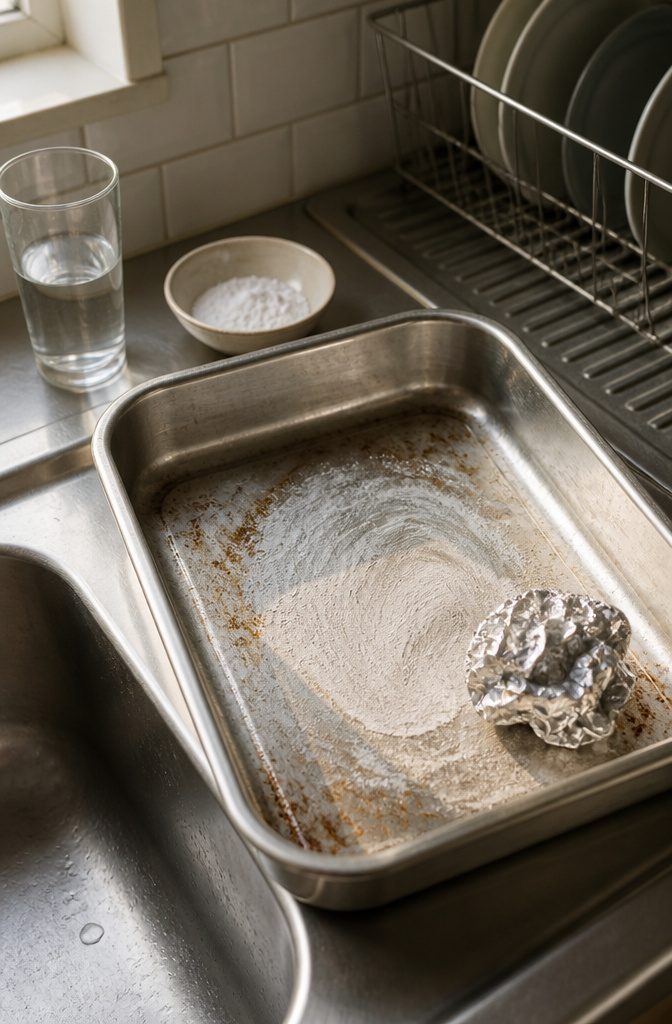
Bon Ami powder mixed with water and scrubbed with crumpled aluminum foil is faster and more effective than baking soda on stainless-steel pans with baked-on grease.
Mix the powder into a paste, spread it over the stain, then ball up a sheet of foil and scrub in circles.
The foil acts as an abrasive without the sharp edges a sponge pad leaves behind, and Bon Ami’s formula cuts through carbon without needing the soak time baking soda asks for.
This only works on uncoated stainless steel or aluminum; never use foil on nonstick or coated pans, because even gently crumpled foil will scratch through the surface layer.
If the pan has any coating at all, skip this method entirely and reach for something softer.
6. Baking Soda With Hydrogen Peroxide
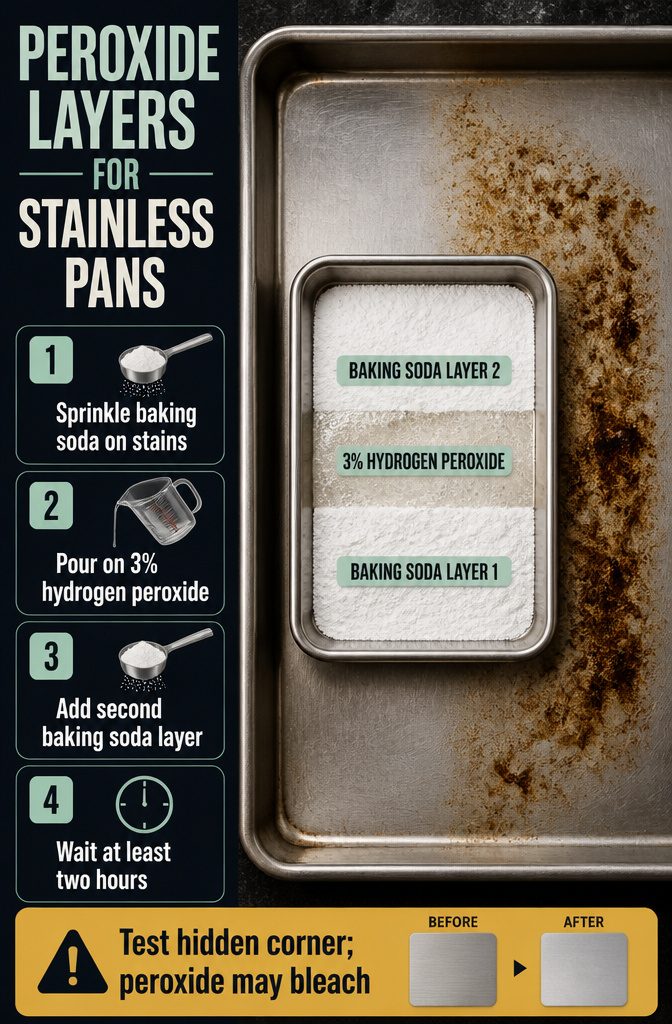
I’ve used this combination on stainless-steel baking sheets with baked-on grease that wouldn’t lift with soap alone, and the layering matters more than the soak time.
Sprinkle baking soda over the stained areas, pour 3 percent hydrogen peroxide on top, then add a second layer of baking soda. Let it sit for at least two hours.
The peroxide activates the baking soda and loosens the debris enough that a sponge takes most of it off without scrubbing hard. For stubborn spots, I repeat the process once.
Hydrogen peroxide is not food-grade and does bleach some metals, so test it on a hidden corner of the pan first. If the finish changes color or texture, stick with straight baking soda or switch to a gentler pairing.
After wiping away the loosened grime, wash the pan with dish soap, rinse thoroughly, and dry. The method works fastest on stainless steel; other materials may react badly to the peroxide’s bleaching action.
7. Hot-Water Soak With Dish Soap and Baking Soda
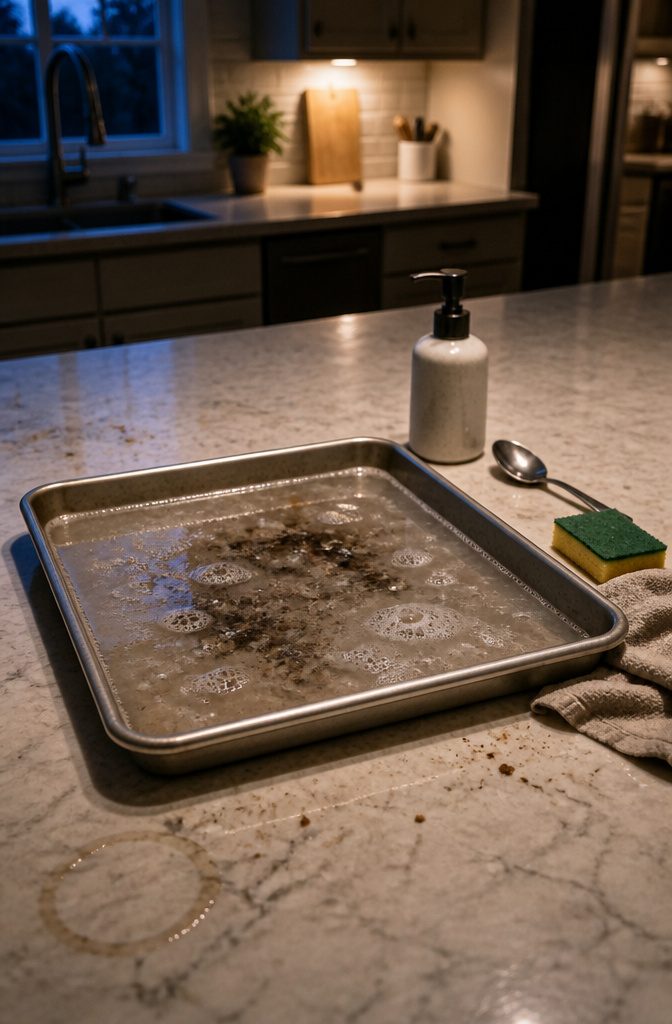
When baked-on carbon and grease won’t budge with scrubbing alone, an overnight soak with hot water, dish soap, and baking soda softens even severe scorch marks enough to wipe away.
Fill the pan with the hottest tap water you can get, add about a tablespoon of baking soda and a few drops of dish soap, then leave it to sit for at least eight hours.
The combination works by letting the alkaline soda break down fats while the soap lifts them, and the long contact time does the heavy work so you don’t have to.
In the morning, most of the residue will wipe off with a sponge or soft cloth, and a quick wash finishes the job.
This method takes patience but almost no effort, which makes it worth considering before moving to anything more abrasive or chemical.
8. Steam or Hot-Water Softening
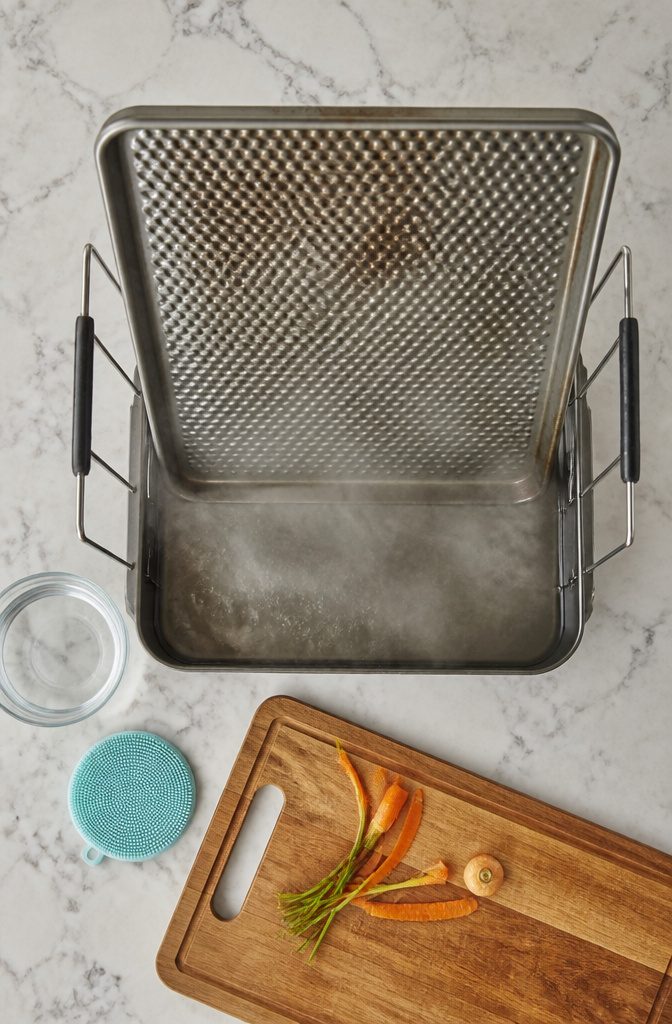
Heat is often enough to pry loose what scrubbing cannot budge.
Heat water to 60°C (140°F), pour it into a tray, and suspend the baking sheet above it for 10–15 minutes; the steam softens baked-on grease so that it wipes away instead of clinging.
If the residue sits stubborn after that, a straight hot-water soak of 15–30 minutes gives it time to break down on its own.
I prefer the soak when the buildup is thick and I have other things to do; the steam method wins when speed matters, because fifteen minutes is usually long enough to loosen what a silicone scrubber can finish.
After either treatment, a rice-grain scrub reaches into grooves and scratches without damaging the surface, and it works especially well on pans with texture or dimpling where cloths skip over the low spots.
9. Cornstarch Paste
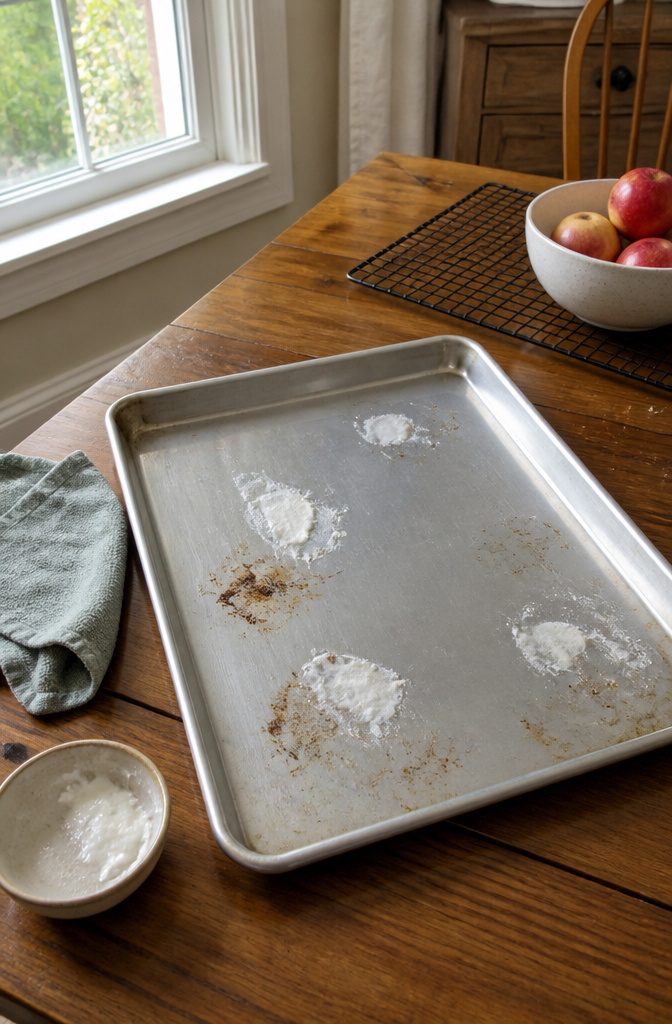
Cornstarch mixed with water lifts baked-on sugars without scrubbing through the metal underneath. The paste works because cornstarch absorbs moisture from residue while the starch granules gently grip the caramelized layer, loosening it from the pan surface.
Mix 2 tablespoons of cornstarch with 1 teaspoon of water, rub the paste over the sticky spots, and leave it for 20 minutes.
After the time is up, wipe with a damp cloth or sponge. The pan comes away cleaner and brighter without the elbow work that rougher abrasives demand.
This method shines on stainless steel and aluminum pans where sugar has baked on from cookies, roasted fruit, or glazed chicken. It does less for heavy grease or carbonized oil, which need stronger chemistry or more heat to break down.
I reach for cornstarch paste when the pan is mostly clean but has a few sticky patches left behind, not as a first pass on a heavily fouled sheet.
10. Club Soda Fizz
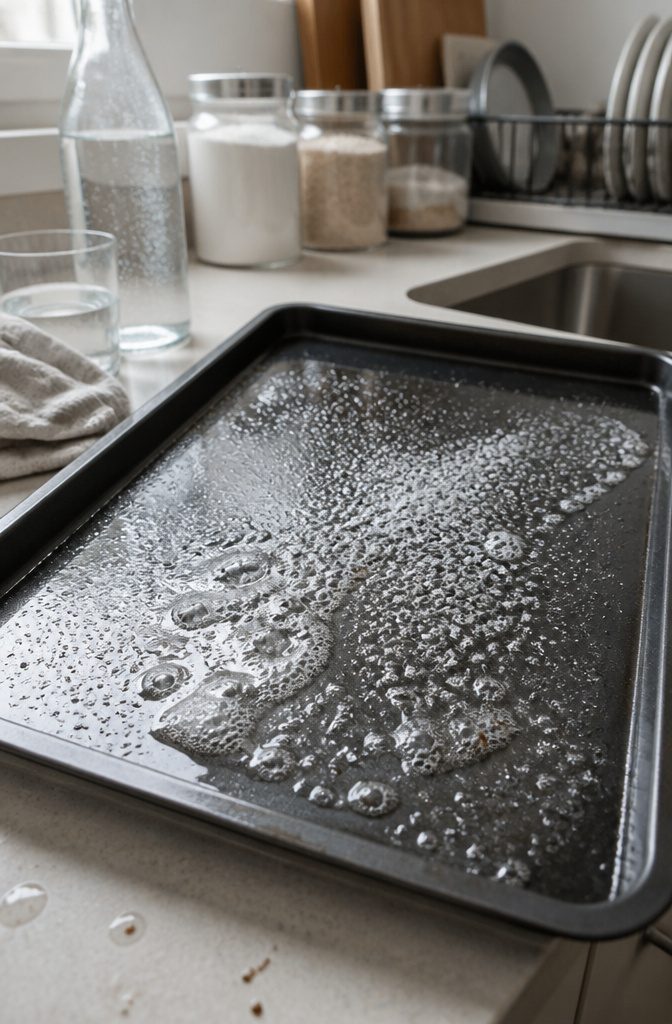
The carbonation in club soda does some of the work for you.
Pour it straight over greasy patches on the pan and let it fizz for 5–7 minutes. The bubbles lift grease and trapped food particles without scrubbing, which makes this one of the gentler methods for nonstick or worn surfaces.
I reach for it when I’m dealing with grease that hasn’t fully carbonized yet, the kind that’s sticky but not black.
It works best on fresh or lightly cooked-on residue.
Once grease has baked through multiple cycles, the carbonation alone won’t break it down. But for everyday baking mess, especially butter or oil that pooled during roasting, club soda clears it faster than plain water.
Wipe with a soft cloth after the fizz dies down. If any spots remain, a second pour usually finishes the job without needing abrasives.
11. Uncooked Rice Scrub
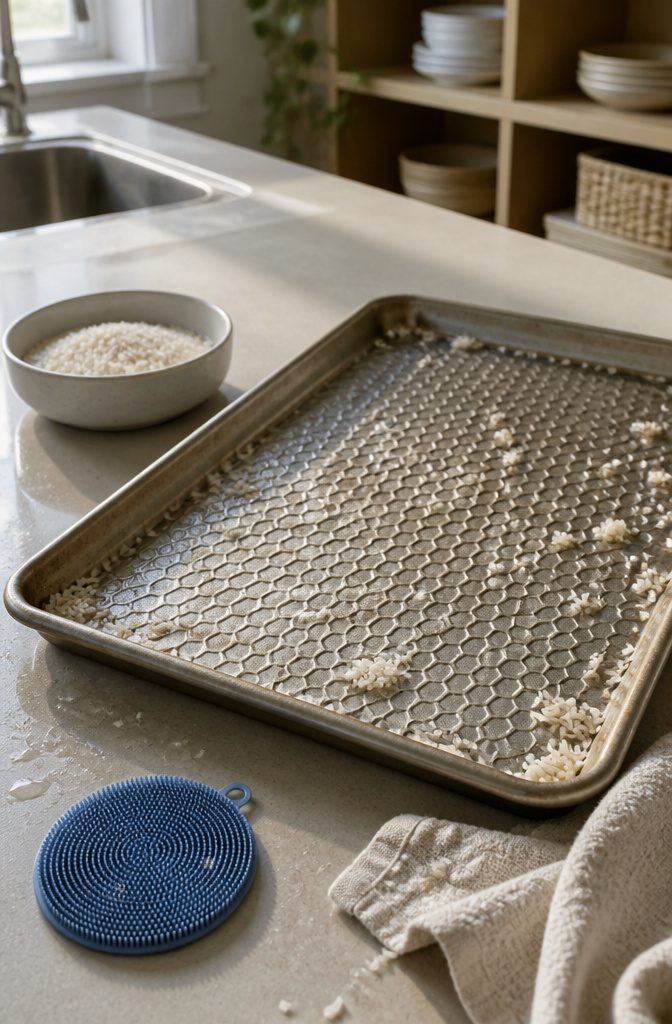
Uncooked rice works as a fine abrasive for grooves and textured pans after you’ve soaked the sheet in hot water for fifteen to thirty minutes.
The idea is simple: dampen a handful of rice grains, then scrub them across the surface the way you would with a sponge.
The grains are firm enough to lift stuck-on grease without scratching nonstick coatings or aluminum, and they reach into ridges better than a flat scrubber.
I reach for this method when the pan has detail work or a honeycomb texture that traps grease.
A silicone scrubber does most of the flat work, but rice gets into the corners without the kind of pressure that would bend the metal. This method takes longer.
You’ll use more rice than feels efficient, and the cleanup takes an extra minute to rinse away the grains. Still, it’s gentler than anything with grit you’d buy, and it’s already in the cabinet.
12. Olive Oil and Coarse Salt Buff
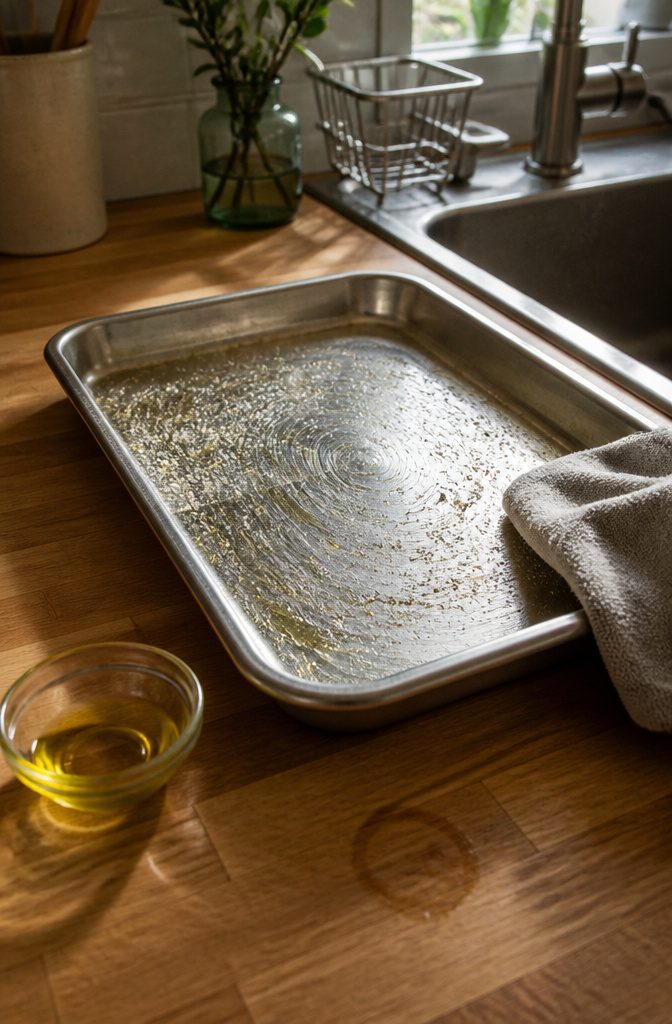
Thin grease films that won’t come off with soap sometimes respond better to oil and coarse salt worked together like a paste.
The oil lifts the residue without stripping the pan, and the salt provides just enough abrasion to buff it away without scratching.
I’ve found this works particularly well on stainless steel when the problem is a slick film rather than carbonized patches.
The method takes about ten minutes. Sprinkle coarse salt over the greasy area, add a small amount of olive oil, and rub in circles with a microfiber cloth.
The cloth matters more than you’d think: paper towels shred, sponges hold too much oil, and anything rougher risks marring the surface. You’ll feel the grease loosen as the salt grinds through it.
Rinse with warm soapy water when the film is gone, then dry completely. This isn’t the right approach for baked-on stains or burned sugar, but for light buildup that survived the first wash, it clears the surface without harsh chemicals.
13. Freezer Treatment
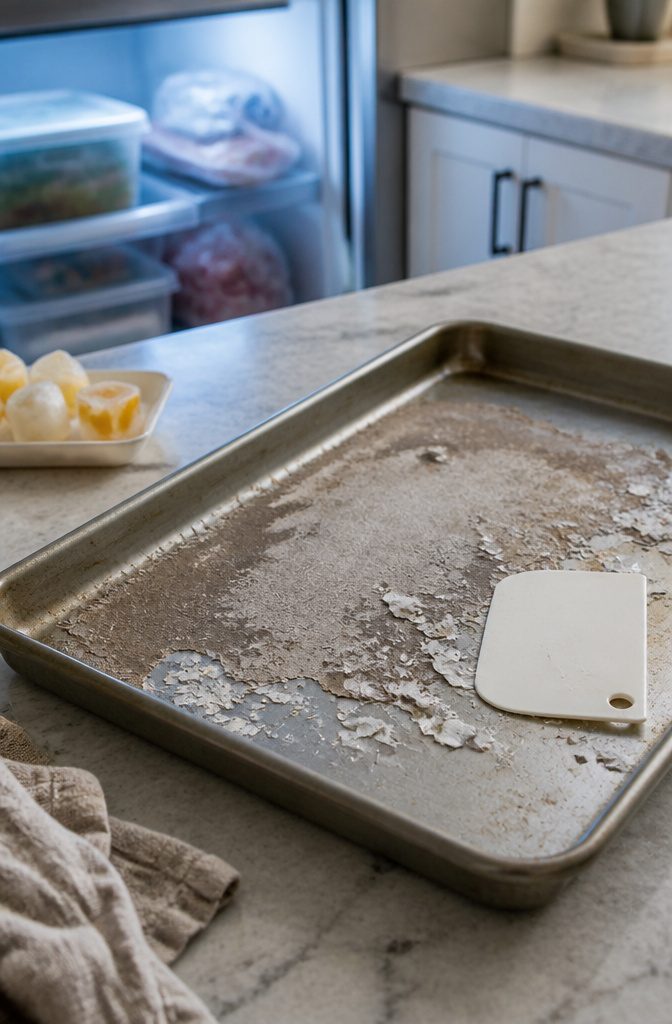
Hardened residue lifts more easily when cold makes it brittle. Place the pan in the freezer for one to two hours, then use a spatula or plastic scraper to pop off the loosened bits before washing.
If time matters, thirty to sixty minutes often does the job, though thicker buildup needs the full two hours to turn brittle all the way through.
The same cold can handle grease that won’t budge. Freeze lemon or orange juice in an ice-cube tray, then rub the frozen cubes over greasy spots.
The acid cuts through fat while the ice keeps everything rigid enough to scrape away cleanly, and the citrus leaves less residue than vinegar.
14. Fabric-Softener-Sheet Soak
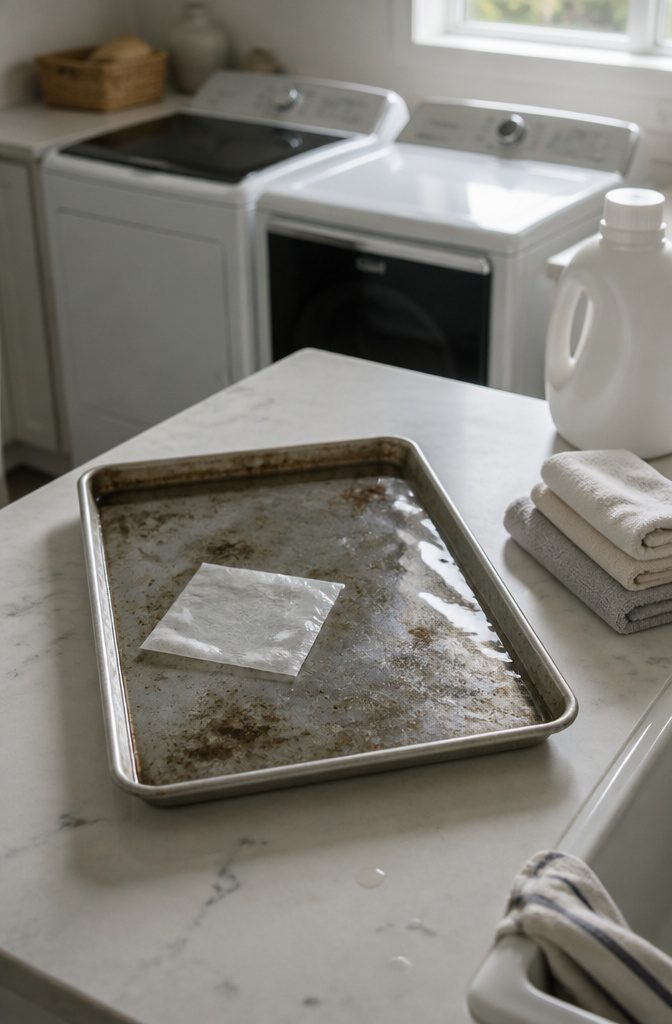
A reader reported soaking a dirty pan overnight in warm water with a fabric softener sheet laid on top. The dryer sheet supposedly loosens baked-on residue the same way it breaks down fabric stiffness in the laundry.
I have never tried this one myself, but the logic seems to be that the surfactants in the sheet soften grime while you wait.
The method needs no scrubbing up front, which makes it appealing for pans with stubborn spots that other soaks have not touched.
Fill the pan with enough warm water to cover the stained area, drop in one sheet, and leave it several hours or overnight. Afterward, the residue is supposed to wipe away with less effort.
It costs more and goes through sheets quickly. Dryer sheets are not designed for cleaning cookware, and you are using a single-use product for a job that dish soap and baking soda handle without adding to the trash.
If you already have the sheets and a pan that other methods missed, it might be worth one test. I would not stock them just for this.
15. Oven-Cleaning Cycle
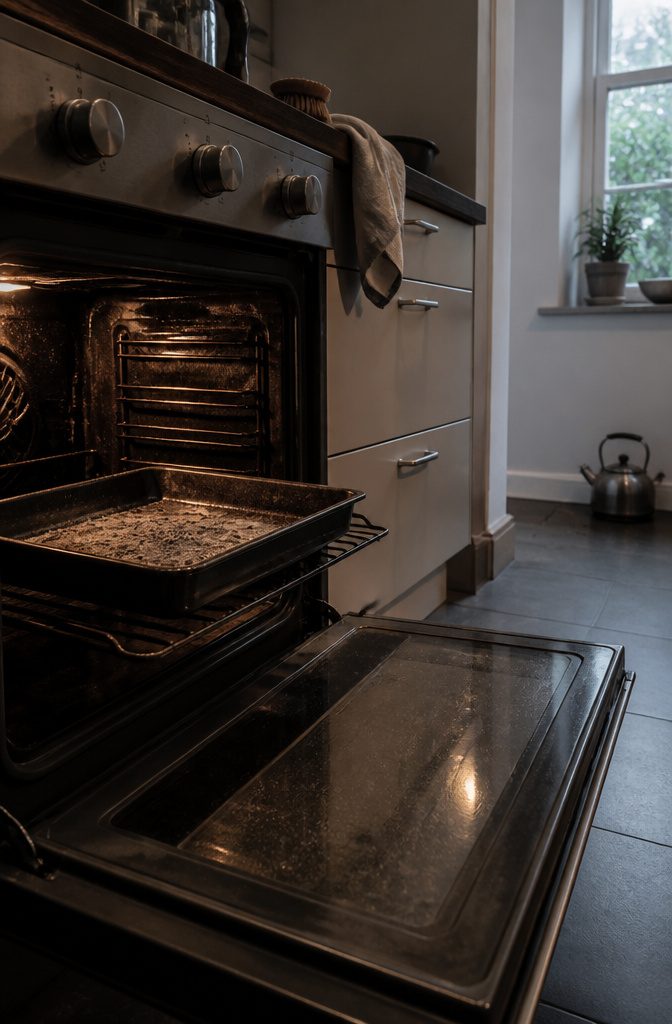
Several readers report leaving pans inside the oven during its self-cleaning cycle, which runs at temperatures around 900°F for two to four hours.
The heat turns residue to ash that you wipe out once the oven cools, and the method requires no scrubbing or soaking time upfront.
I consider it a last-resort option rather than a regular one, because that level of heat can warp thin aluminum pans, discolor nonstick coatings, and sometimes damage the finish on even heavy-gauge steel.
Oven racks themselves are usually safe, but check your oven manual before running the cycle with anything inside.
If a pan is already warped or the coating is compromised, the cleaning cycle will make both worse. For pans you use often and want to keep in good shape, gentler methods win out.
Choosing Methods by Pan Material
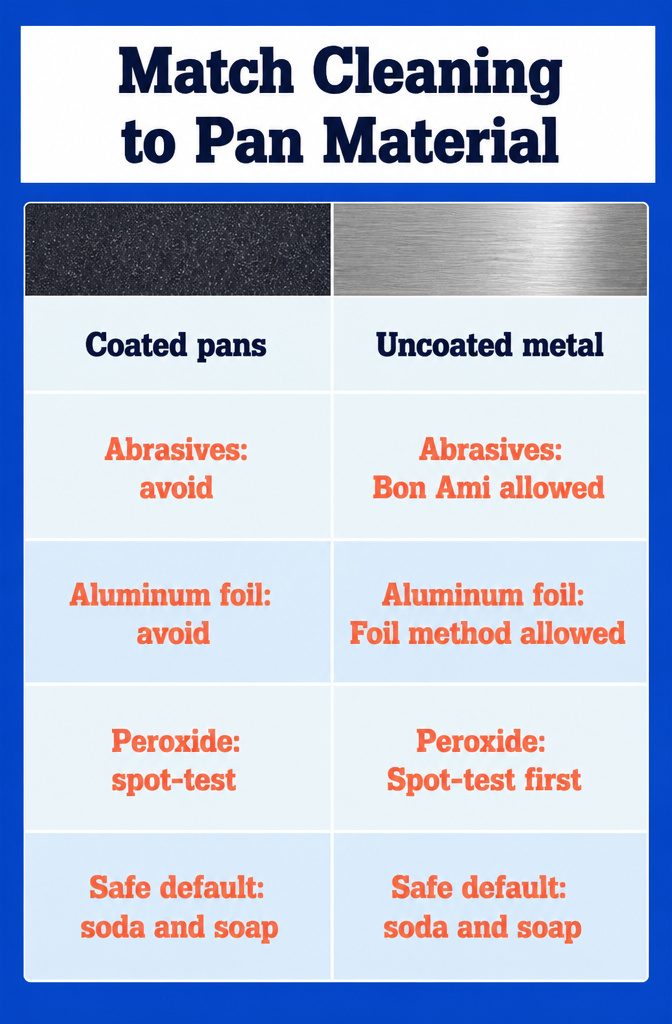
Not every cleaning method works on every pan.
The most important divide is between nonstick or coated surfaces and uncoated stainless steel or aluminum. Coated pans scratch easily, so any technique that calls for abrasive scrubbing or crumpled aluminum foil is off-limits.
I see people try the Bon Ami and foil method on nonstick sheets all the time, and it ruins the coating in a single pass. That combination belongs only on uncoated metal, where you can bear down without damage.
Hydrogen peroxide has bleaching properties, which means it can etch or discolor certain finishes if you skip the spot test.
Before you spread it across a whole pan, try a small corner first and wait a few minutes to see how the metal reacts.
Acidic cleaners pose a similar risk on sensitive surfaces. The safest default is baking soda and dish soap, which work on nearly everything without the chemistry gamble.
Reducing Future Buildup
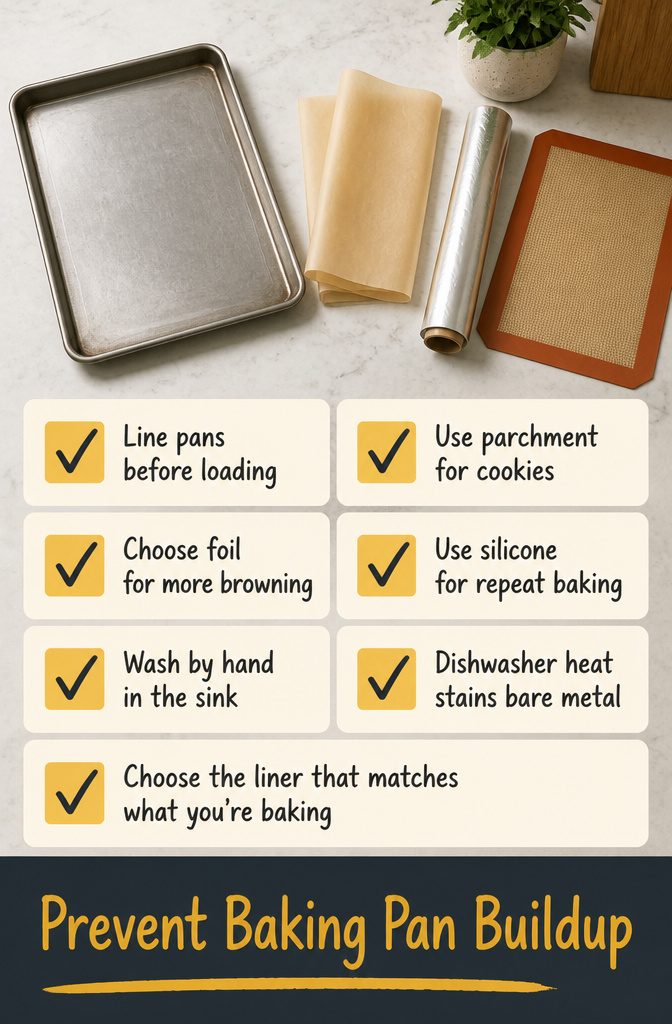
Prevention makes more difference than any scrub. A few habits keep you out of the heavy-duty cleaning cycle in the first place:
- Line pans with parchment paper, aluminum foil, or silicone mats before you load them. The barrier keeps fats and oils off the metal entirely, and you pull the liner instead of scrubbing carbon.
- Wash pans by hand in the sink rather than running them through the dishwasher. The high heat and harsh detergent in a dishwasher accelerate staining and discoloration on bare metal.
- Choose the liner that matches what you’re baking. Parchment works for cookies and pastries, foil for anything you want a little browning on, silicone for repeated low-mess use.
I reach for parchment on nearly every sheet pan job now, and the difference in cleanup time is immediate.
When a Pan Is Beyond Cleaning
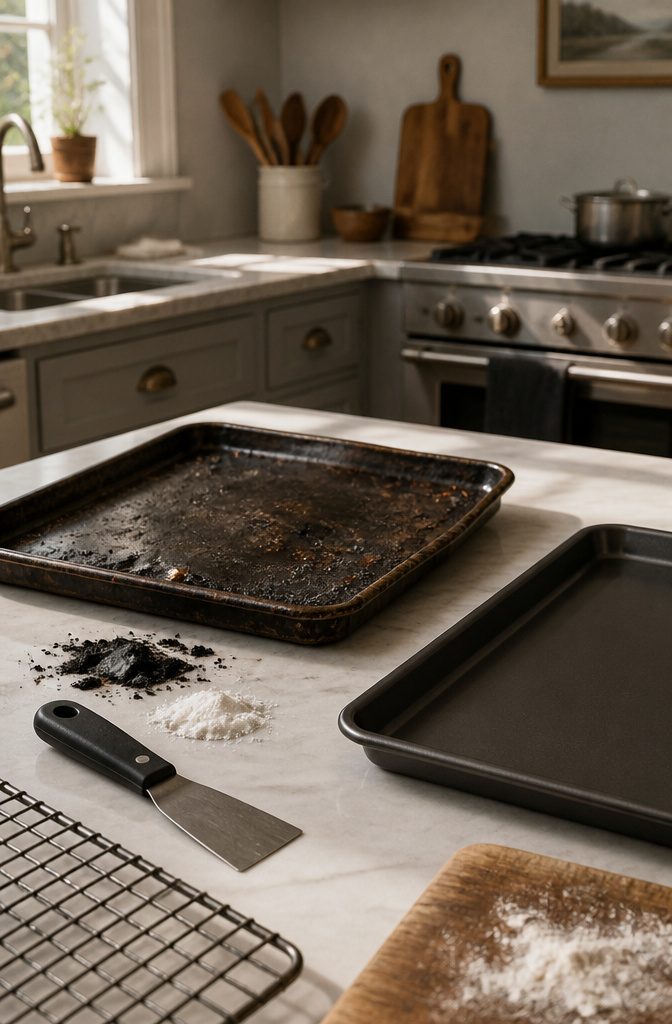
Sometimes a pan has earned its retirement.
I’ve worked through every method on this list on a sheet pan that looked like it had survived three decades of broiler duty, and after the fourth round with baking soda paste I had to admit the carbonized layer wasn’t coming off without taking half the surface with it.
If the residue won’t budge after two serious cleaning attempts, replacement is usually cheaper than the time you’ll burn trying to save it.
Warping is another line worth drawing: a pan that rocks on the counter or pools liquid to one side won’t bake evenly no matter how clean it looks, and no amount of scrubbing fixes that.
Carbon steel pans around half a millimeter thick make solid replacements when you’re ready to move on.
They season well, handle high heat without complaint, and cost less than most restaurant-grade aluminum. A fresh pan also means you can start with better maintenance habits instead of fighting years of baked-on neglect someone else left behind.
Frequently Asked Questions
Can you use baking soda and vinegar to clean baking pans?
Yes. For uncoated pans, soak them in hot water with 1/2 cup each of baking soda and vinegar for 30 to 60 minutes.
The vinegar cuts grease and mineral deposits while baking soda acts as a mild abrasive, loosening residue that soap alone cannot handle.
Nonstick pans need gentler treatment: use 2 teaspoons baking soda and 1 cup vinegar applied directly to the surface for 30 minutes.
What is the best way to remove burnt grease from baking sheets?
Start with an overnight hot-water soak using dish soap and a tablespoon of baking soda. The long contact time softens even severe scorch marks so they wipe away without heavy scrubbing.
For faster results, a baking soda paste with dish soap works well after a one-hour warm-water presoak, or steam the pan above 140°F water for 10 to 15 minutes to loosen the grease before wiping.
How do you clean heavily stained baking sheets without damaging them?
Match the method to the pan material. Coated and nonstick surfaces need gentle options like baking soda paste or club soda, never abrasive scrubbing or foil.
Uncoated stainless steel or aluminum can handle Bon Ami powder with crumpled foil or hydrogen peroxide layered with baking soda. Always test acidic or bleaching cleaners on a hidden corner first to check for discoloration.
Is it safe to use aluminum foil to scrub baking sheets?
Only on uncoated stainless steel or aluminum pans.
Crumpled foil paired with Bon Ami powder cuts through carbon faster than baking soda without leaving sharp scratches. Never use foil on nonstick or coated surfaces because even gently crumpled foil will scratch through the coating in one pass.
How often should baking sheets be cleaned to prevent buildup?
Wash them after every use to stop grease and residue from baking on.
Lining pans with parchment paper, foil, or silicone mats before each use keeps fats off the metal entirely, which cuts deep-cleaning needs to once every few months instead of every week.
Hand-washing works better than the dishwasher, which accelerates staining with high heat and harsh detergent.
How to clean baking sheets in the oven?
You can leave pans inside during the oven’s self-cleaning cycle, which runs at around 900°F and turns residue to ash you wipe out after cooling.
This method requires no scrubbing but risks warping thin aluminum pans and discoloring nonstick coatings, so treat it as a last resort for pans already in rough shape. Check your oven manual before running the cycle with anything inside.
Can I put cookie sheets in the dishwasher?
You can, but hand-washing in the sink works better. The high heat and harsh detergent in dishwashers accelerate staining and discoloration on bare metal, leaving pans duller after repeated cycles.
Washing by hand with warm water and dish soap preserves the finish and gives you direct control over stuck-on spots.
How to prevent baking pans from rusting?
Dry pans completely after washing instead of leaving them to air-dry.
Water left on bare metal, especially carbon steel or uncoated aluminum, will oxidize and form rust spots within hours. Store pans in a dry place and avoid stacking them while damp.