
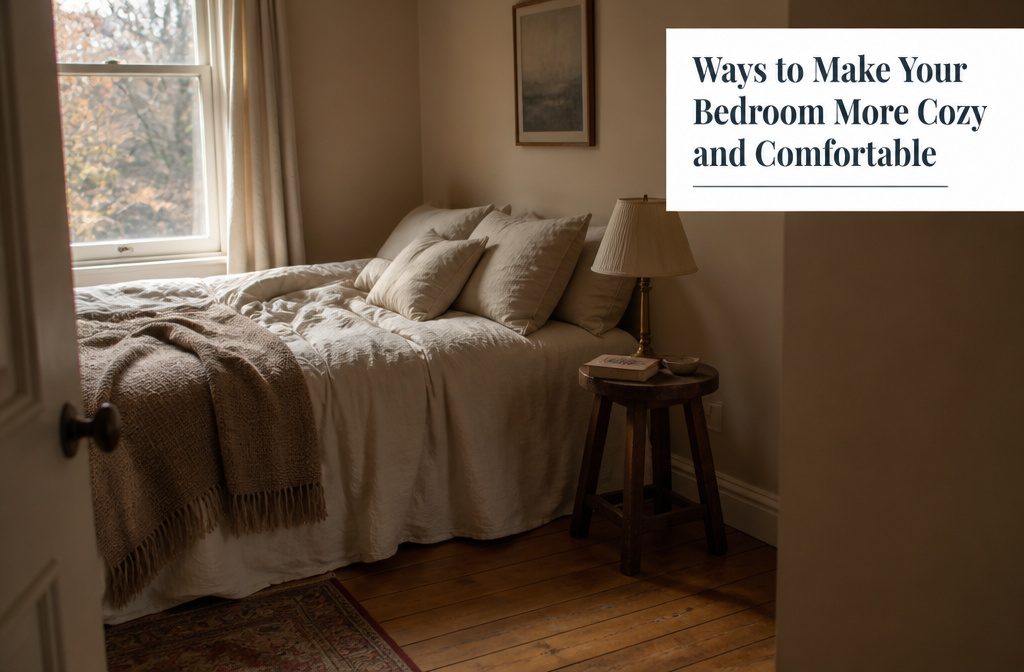
A bedroom that feels cozy depends less on how much you layer and more on which layers you choose: soft bedding over scratchy, warm light instead of overhead glare, and enough order that the space reads calm instead of chaotic.
The shift shows up faster than most people expect.
A thread count between 300 and 500 gives you breathable softness without trapping heat, and swapping a single overhead bulb for bedside lamps at 2700K to 3000K changes how the room feels the moment you walk in at night.
1. Make the Bed Feel Inviting with Layered Bedding
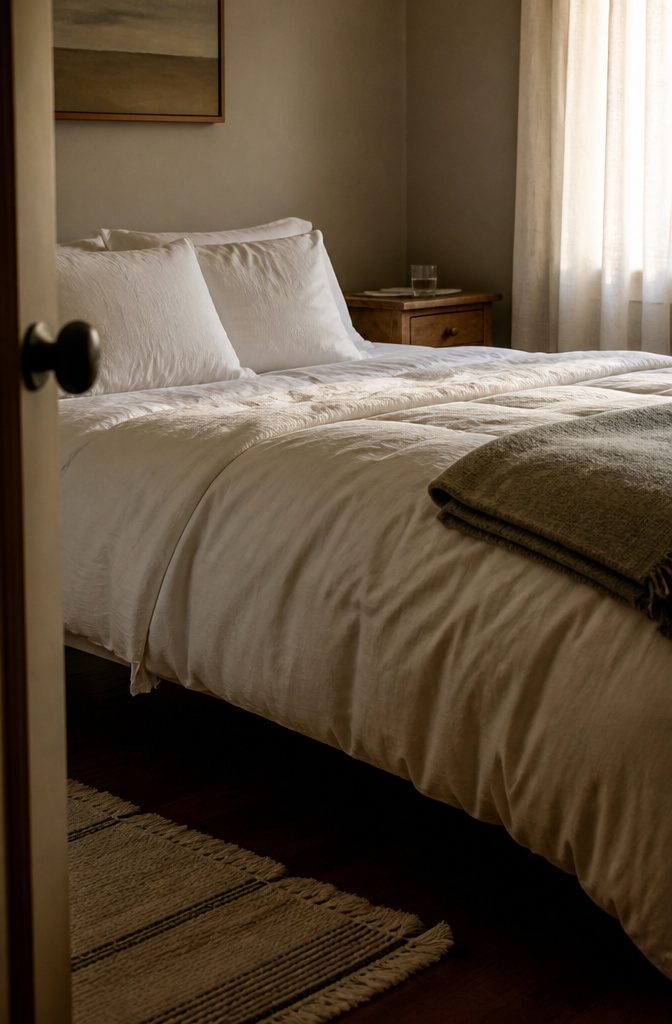
A bed that looks and feels inviting starts with breathable sheets in a thread count of 300–500, which gives you softness without trapping heat.
Cotton works year-round, and I prefer it over synthetics because it gets better with washing instead of pilling after a month.
The next layer is a fuller comforter or duvet, which gives the bed loft and makes the whole room feel more finished.
A quilt can add shape if you like a flatter look, but a comforter with some weight reads as more deliberate.
Two sleeping pillows keep the setup simple. More than that and the bed starts to look staged instead of used.
If you want texture, a folded blanket at the foot of the bed does more than a stack of throw pillows, and you can actually pull it up on cold nights. The fabrics matter more than the number of layers.
Flannel or quilted cotton adds warmth in winter; linen or bamboo keeps things cooler in spring and summer. I swap between the two rather than piling everything on at once.
2. Use Warm, Soft Lighting Instead of Overhead Bulbs
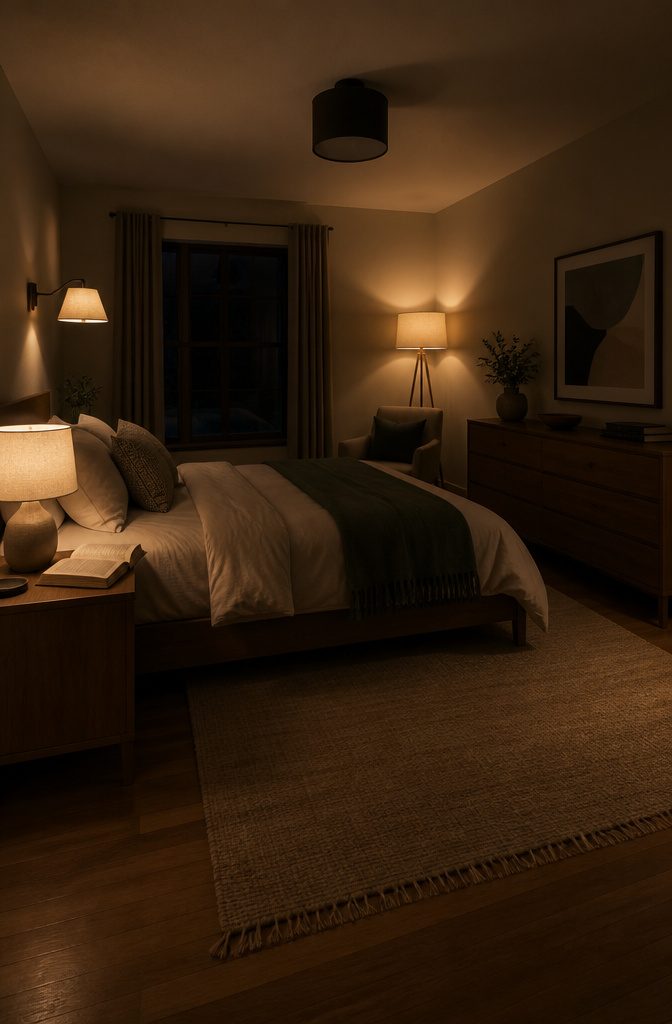
Overhead light feels too bright for a bedroom most nights, and switching to layered lighting at different heights makes the whole room softer.
I put warm bulbs in bedside lamps, add a floor lamp in the corner, and save the ceiling fixture for mornings when I need full visibility to get dressed.
The difference shows up immediately: instead of one harsh source washing out the room, you get pockets of light that feel closer to how a room looks by candlelight.
Warm white bulbs work better than cool white before sleep.
The National Sleep Foundation notes that bright light affects sleep timing, so I stick with 2700K to 3000K bulbs in any fixture near the bed. A fabric shade softens the glow further and keeps the light easier on your eyes.
If one side of the bed has no room for a table, a wall-mounted lamp saves surface space and keeps the same warm effect without crowding the nightstand.
3. Add Soft Textures Through Throws and Pillows

Throws and pillows do most of the work of making a room feel soft.
A bed layered with cotton or linen throws in warmer months and heavier wool or fleece when the temperature drops changes how the room feels without redecorating.
The swap is simple, and owners on Reddit mention it enough to suggest it actually gets used.
Materials matter more than quantity. Cotton stays lightweight and breathable, wool brings warmth, fleece adds softness, and linen keeps things relaxed.
I reach for neutrals most of the time—beige, gray, white—because they hold the calm the room needs, but a single throw in emerald green or deep navy adds just enough contrast without making the bed feel busy.
Pillows work the same way. Adding one or two decorative pillows in different textures gives the bed depth, but piling on too many makes it harder to actually use.
A throw draped at the foot of the bed is enough to make the space feel less staged, more like someone lives there. That small detail reads warmer than most people expect.
4. Choose a Calm or Warm Color Palette
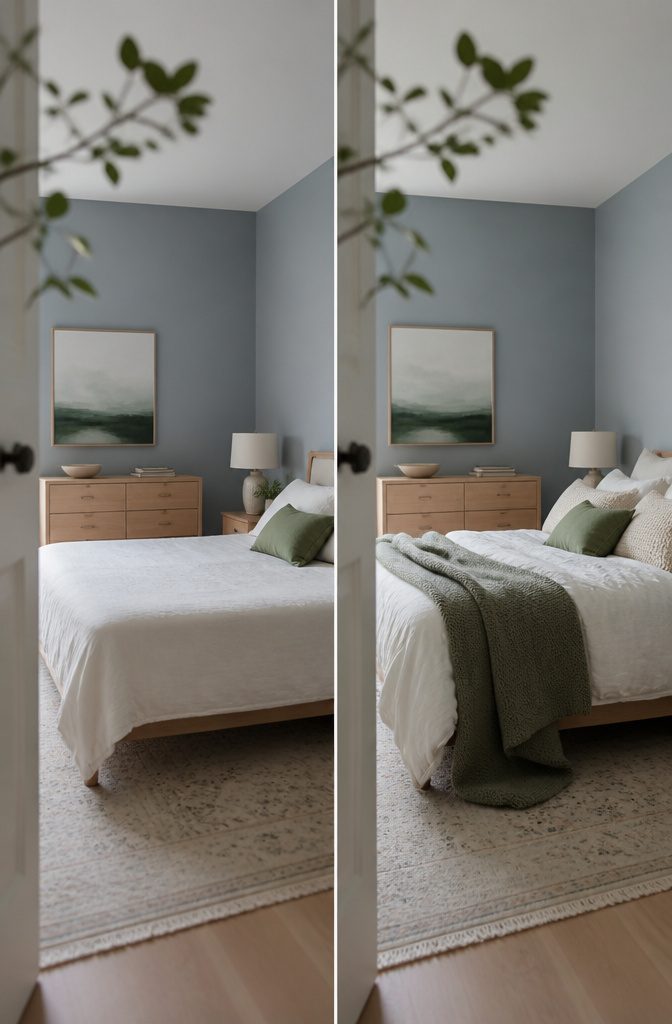
Color decides whether a bedroom feels restful or restless before any other layer goes in.
I start with 60 percent main color, 30 percent secondary, and 10 percent accent — the wall carries the largest share, furniture and larger textiles hold the middle, and smaller decor picks up the accent.
The rule keeps the palette from splitting into too many directions at once.
Soft neutrals anchor most of the bedrooms I work on: warm whites, taupe, muted green, and dusty blue all support a calmer mood without making the room feel dim.
A 2018 university study found that students sleeping in blue rooms felt calmer and slept better than those in warmer tones, which tracks with what I see when clients swap out a bold wall for something cooler.
Cream and oatmeal are safer if the room will change hands or if future updates need flexibility.
Dark colors can work when the space is used mostly at night — deep green, warm brown, charcoal — but balance darker walls with lighter bedding so the room does not feel too enclosed.
5. Add a Rug for Warmth Underfoot
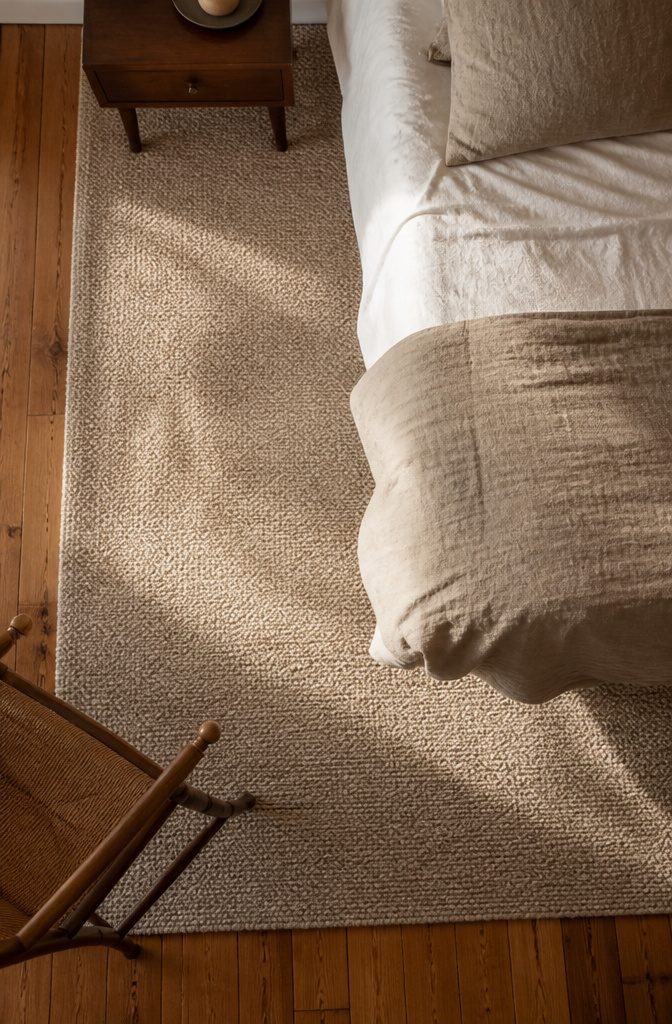
A rug softens the step between bed and floor, and that small change registers the moment you swing your feet down in the morning.
Hard floors—tile, hardwood, laminate—conduct cold and echo sound; a rug absorbs both. The difference is especially clear in winter or in rooms over unheated basements, where bare flooring can feel punishing even through socks.
For a double, queen, or king bed, a rug around 170 × 240 cm gives enough coverage to extend past the footboard and out to the sides, so you land on fiber instead of cold surface when you get up.
That size also anchors the bed visually, which matters in rooms where furniture otherwise floats against pale walls. A smaller rug disappears under the frame and reads more like an afterthought than a layer of comfort.
Material changes how the rug performs. Wool holds warmth and wears well under repeated foot traffic; cotton and viscose feel softer but mat down faster in high-use lanes.
Pile height affects comfort more than most people expect—low pile is easier to vacuum but offers less cushion, while deep pile gives that sinking-in feeling that makes a bedroom feel finished.
6. Reduce Clutter and Keep the Room Organized
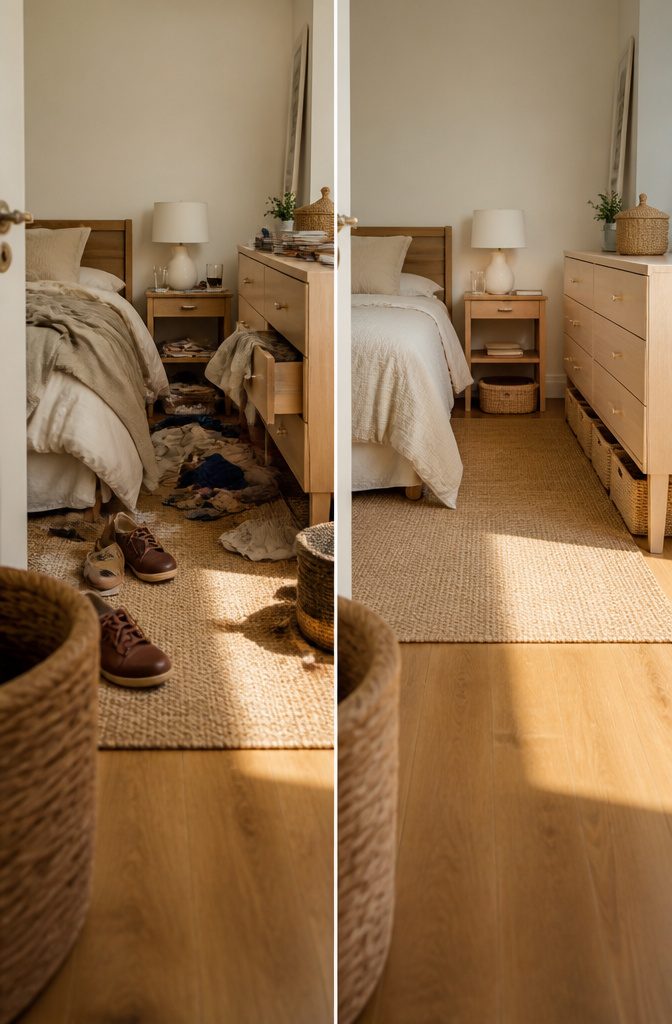
Reduce Clutter and Keep the Room Organized
A messy bedroom gives your brain more to scan when you’re trying to wind down.
A St. Lawrence University study linked cluttered bedrooms with higher anxiety and poorer sleep, which tracks with what you notice in your own room: papers on the nightstand, a laptop on the dresser, bills stacked by the lamp.
Move out anything that doesn’t belong in a bedroom—computers, work documents, mail. Keep only what you need or what genuinely makes you happy.
Making the bed each morning is the simplest reset.
It takes two minutes and gives the room a baseline of order that holds through the day. Beyond that, let go of objects that no longer serve you or bring you any real pleasure.
Woven baskets, decorative boxes, and under-bed storage keep what’s left out of sight without adding visual noise. An organized space reads calmer, and calm is what you’re after.
7. Add Personal Art, Photographs, or Meaningful Objects
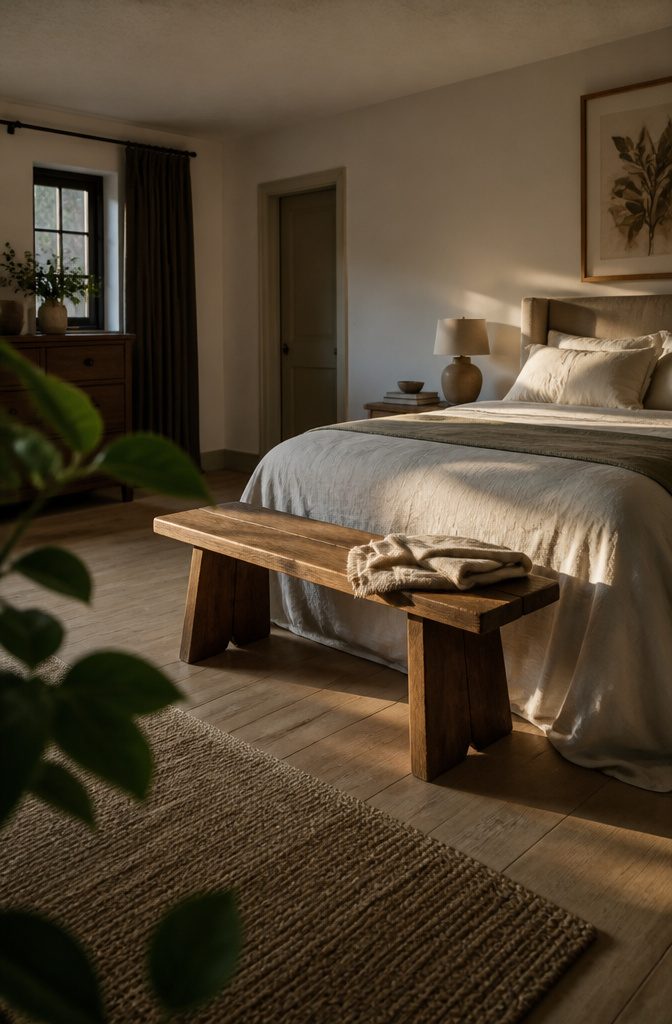
A room stops feeling generic when you put something in it that belongs only to you.
Small unframed prints above a nightstand can matter more than anything bought to match the bedspread. They’re images I chose, not because they go with a color scheme, but because I wanted to see them first thing in the morning.
One distinctive piece is often enough.
A mirror with an interesting frame, a lamp you found at an estate sale, a wooden bench that used to sit in your grandparents’ hallway—any of these can anchor a bedroom and make it feel like it reflects you rather than a catalog.
The point is not to fill every surface with objects, but to include at least one thing that would be impossible to replicate in someone else’s space.
A wall of framed photos works the same way: the faces and moments are yours, and that specificity is what makes the room feel lived in instead of staged.
8. Create a Reading Nook or Relaxation Corner
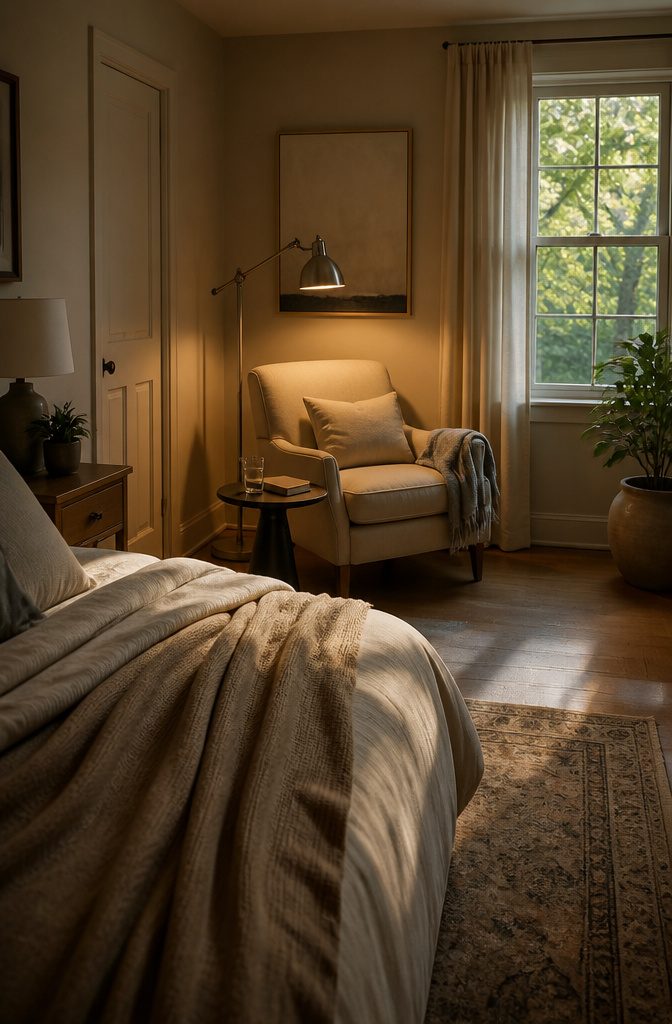
A spot for reading or just sitting quietly shifts how a bedroom feels at both ends of the day.
I carve out five minutes there each morning and again before bed, and the difference is noticeable: the room stops being just a place to sleep and starts feeling like somewhere I actually want to be.
The setup is simple—a chair or cushioned bench, a small side table, and a light source positioned so you can read without squinting.
A corner near a window works well if the room has one, but any wall with enough floor space will do.
The chair matters more than most people expect.
A rigid dining chair will push you back out into the rest of the house; something with a back that tilts slightly and a seat deep enough to settle into makes the corner feel like a destination.
The table holds a book, a water glass, or whatever small thing you reach for in those moments.
The light should be warm and focused—an adjustable reading lamp outperforms overhead fixtures because it puts light exactly where you need it without flooding the whole room.
9. Bring Plants or Natural Materials Into the Room
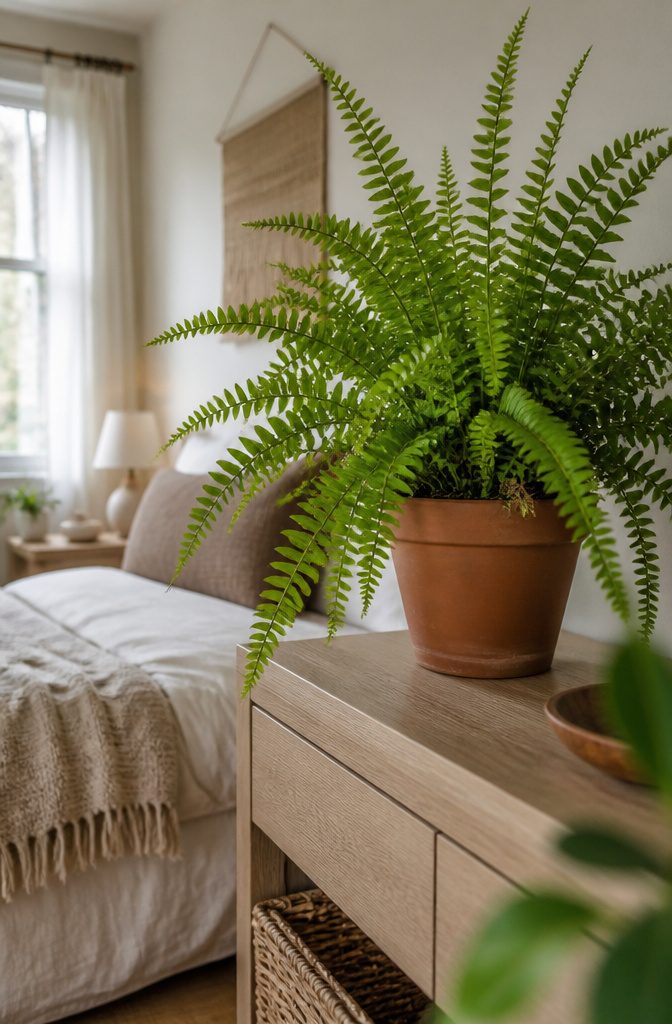
Plants bring a visible softness to a bedroom, and they freshen the air in a way synthetic decor cannot match. A Boston fern or a snake plant on a nightstand or dresser adds calm without adding clutter.
Match the plant to the room’s conditions. If the bedroom stays warm and gets decent natural light, more options survive; if it runs cool or the windows face north, choose something hardy.
Check the room’s light and temperature before you pick a plant that needs what it cannot get.
Natural materials do similar work across bedding and window treatments. Cotton, wool, cashmere, and linen all feel better against skin than synthetics, and they regulate temperature more evenly through the night.
A linen duvet cover or a wool throw reads warmer even when the thermostat stays the same, and the texture alone makes the room feel finished.
10. Use Curtains or Shades to Control Light and Privacy
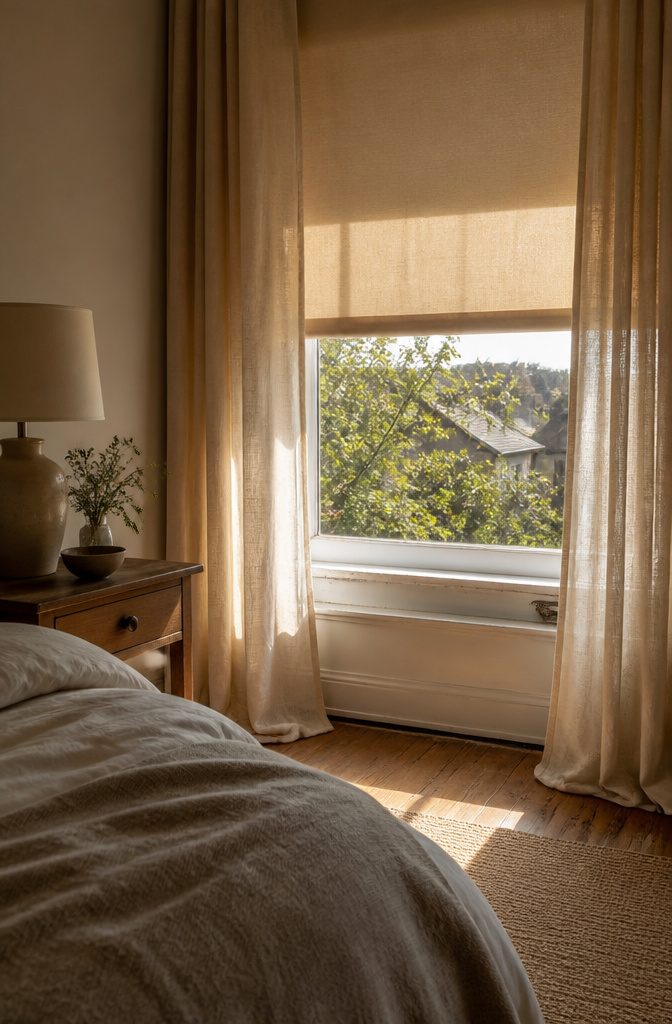
Window treatments sit right at the center of what makes a bedroom work: they manage how much light reaches the room, when you can block it completely, and whether people outside can see in.
Curtains add softness to hard window frames and bring fabric into a space that might otherwise feel all angles and surfaces. That softness matters when most of the room is bed, walls, and floor.
Blackout shades handle darkness more precisely than curtains alone. If you need gentle daylight during the day and full coverage at night, a shade that switches between filtering and blocking light gives you both without adjusting hardware twice.
Layering works when the window faces a street or a nearby home: the shade controls the glass area, and curtains soften light around the frame while finishing the look.
Streetlights, porch lights, and early sunrise all push light into the room when you don’t want it, and decor by itself won’t fix that.
A room-darkening shade cuts the problem at the source, but if you still want morning light, choose one that adjusts by section instead of staying fully closed all day.
11. Add Fragrance with Candles or Diffusers
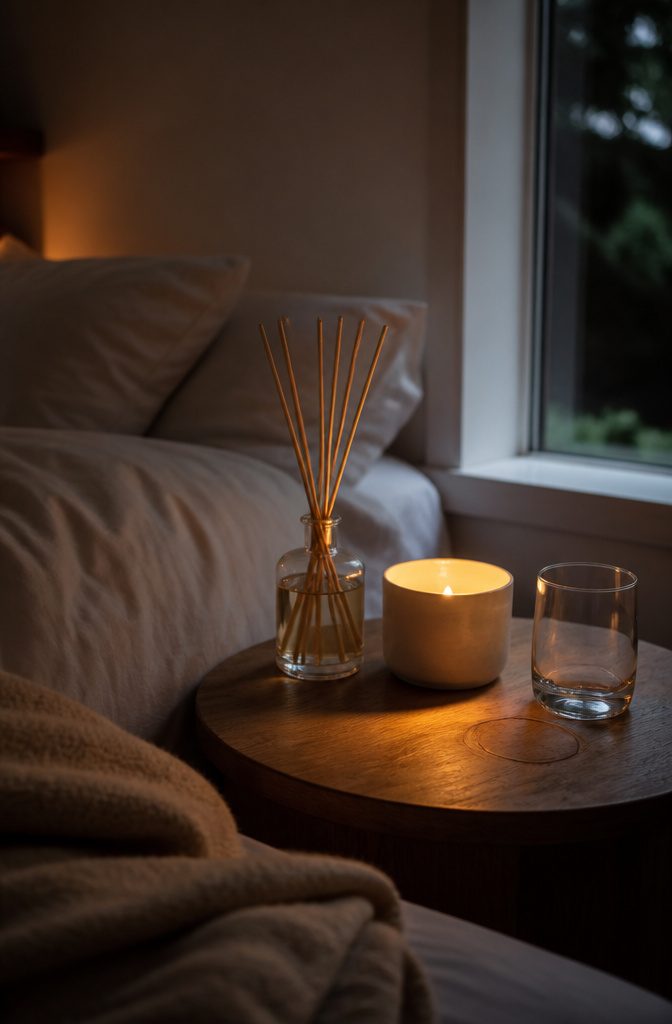
Scent shapes atmosphere in ways most other details can’t, and candles or diffusers add warmth without taking up floor space or requiring installation.
A lit candle brings a flicker that makes the room feel more intimate on cold evenings, and the fragrance layer gives the space a sensory signature that overhead lighting or bedding alone won’t touch.
Electric diffusers and reed diffusers distribute scent more evenly, but candles work better for warmth rather than consistency.
The scent itself matters more than the format.
Light, floral notes like mimosa, hyacinth, or tonka bean stay in the background without overwhelming a small bedroom. Richer base notes like cedarwood, moss, or vanilla work when the room is larger or when you want something grounded and smoky.
Lavender and eucalyptus lean calming, which suits a space meant for sleep. Keep the room ventilated if you burn candles regularly, and never leave them unattended.
12. Add a Headboard or Wall Detail Behind the Bed
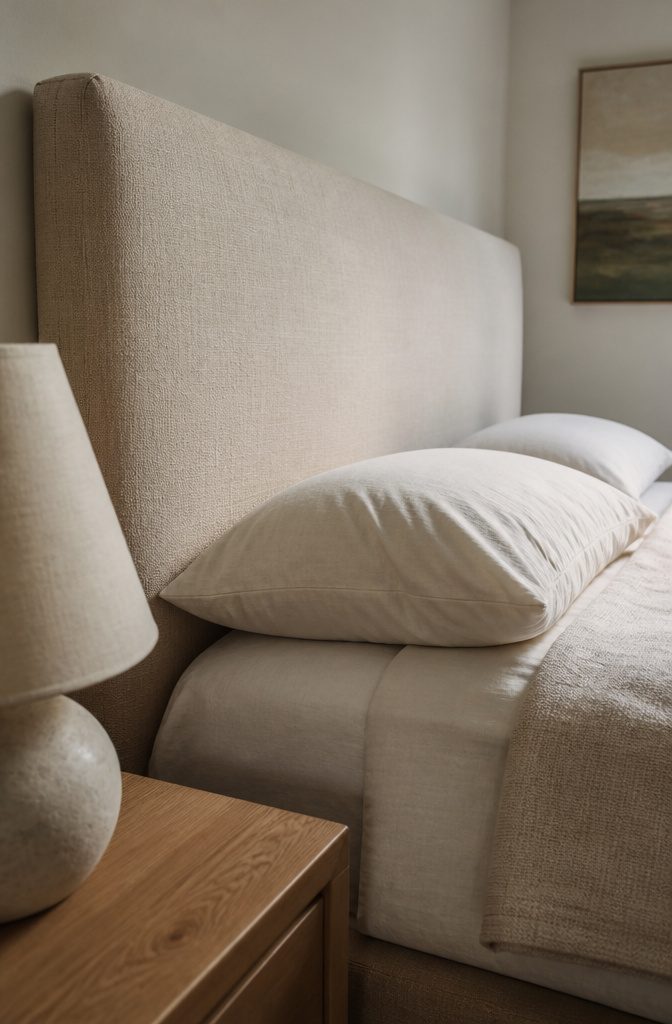
A headboard or wall detail gives the bed area a clear shape and makes the room feel finished instead of half-done.
Upholstered styles add softness, while wood brings warmth, and either one grounds the bed visually instead of letting it float against blank wall space.
I lean toward upholstered headboards when the rest of the room runs hard surfaces, because the fabric softens the whole corner.
If you rent or want something temporary, a fabric panel, peel-and-stick wall detail, or one large framed print works without drilling into studs.
Size matters more than decoration style here. A wall piece that sits too small makes the bed look unfinished, so choose something close to the bed width so the whole area feels planned.
A simple wall detail also helps plain white walls by giving the bed area focus without adding another storage piece or chair that crowds the floor.
Change Textiles with the Season
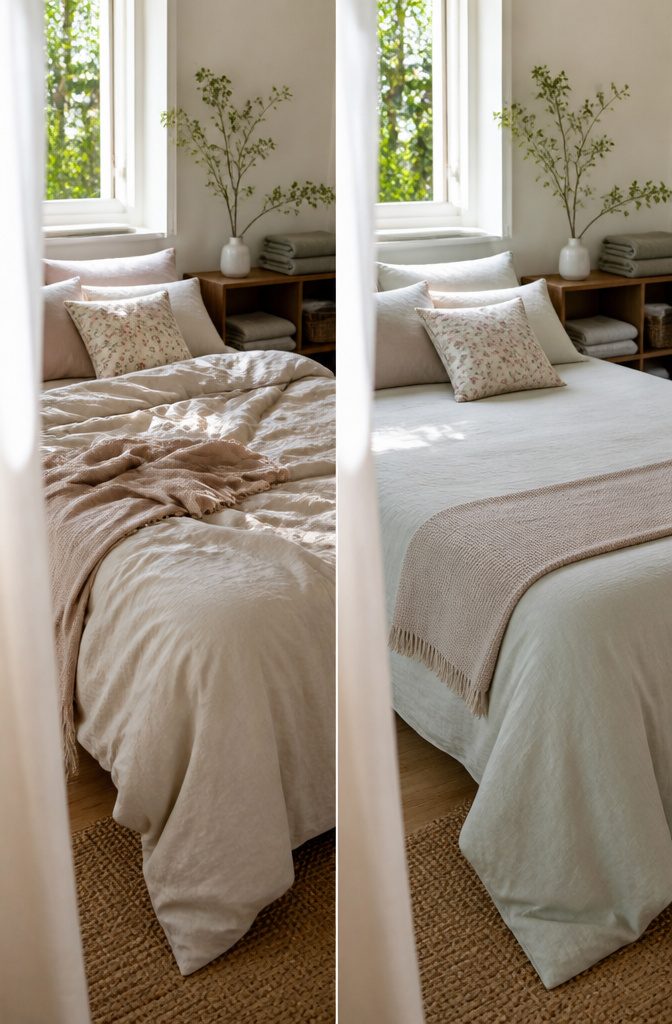
Rotating fabrics by season keeps a bedroom from feeling static. Switch to linen or bamboo sheets in spring and summer when breathability matters more than insulation, then swap them for flannel or wool when the temperature drops.
The material shift changes how the bed feels the moment you sit on it, which is exactly what makes a room feel thoughtfully set up rather than left the same all year.
Throws and blankets follow the same pattern. Lightweight cotton or woven layers work through warm months, while heavier knit or faux-fur throws add softness and warmth once fall arrives.
I keep the swap simple: one throw draped across the end of the bed, changed twice a year, does more for the room’s feel than a stack of decorative pillows that never move.
Color shifts with the textiles. Pastel tones and florals suit spring bedding, while deeper shades like plum, rust or navy ground the room in colder months.
Changing the palette through soft furnishings is faster and cheaper than repainting, and it lets the room respond to the light outside instead of fighting it.
The 80/20 Rule for Bedroom Decorating
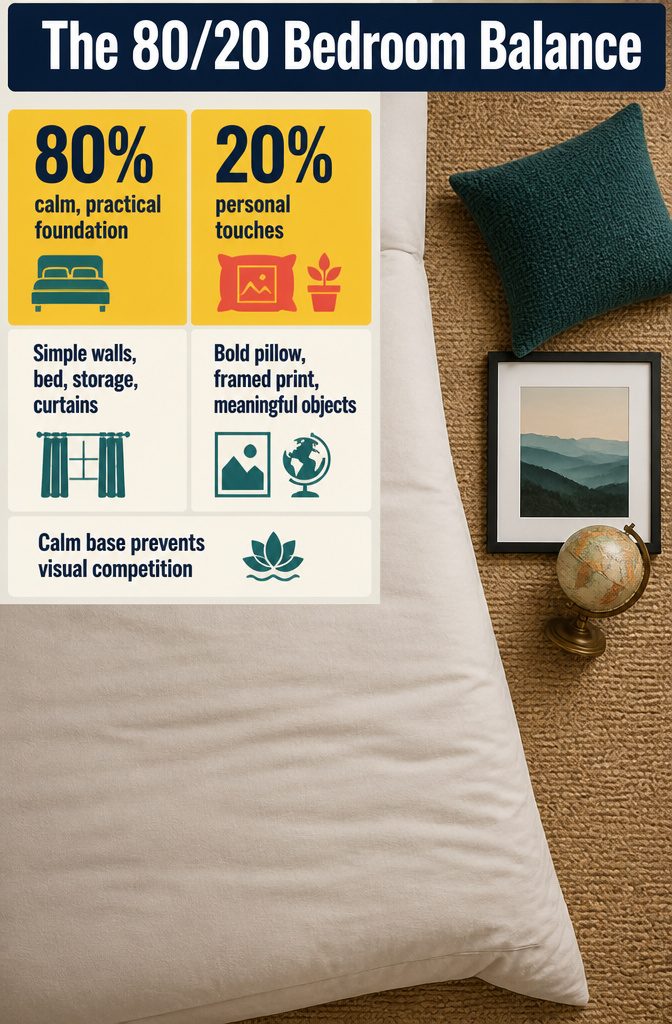
Most bedroom decisions should feel like background, not decoration.
The 80 percent calm, 20 percent personal split keeps the room restful while still letting color, art, or decor show character. Eighty percent means the walls, bed frame, storage, curtains and most surfaces stay simple and practical.
The remaining twenty is where preference lives: a bold pillow, a framed print above the bed, a shelf with objects that mean something to you.
I find this balance works because the practical majority does the actual job of comfort, and the smaller personal layer keeps the room from feeling like a hotel.
Without the calm foundation, every decision fights for attention. Without the personal fraction, the room has no warmth.
Frequently Asked Questions
What is the fastest way to make a bedroom feel more comfortable?
Start with the bed: add breathable sheets in a 300–500 thread count, a fuller comforter, and a textured throw at the foot. The upgrade takes minutes and changes how the whole room reads.
What colors make a bedroom feel cozy?
Soft neutrals like warm white, taupe, muted green, and dusty blue create a restful mood without making the room feel dark. A 2018 study found that students in blue rooms felt calmer and slept better than those in warmer tones.
What is the 60/30/10 rule for bedrooms?
Use 60 percent main color, 30 percent secondary, and 10 percent accent. The wall carries the largest share, furniture and larger textiles hold the middle, and smaller decor picks up the accent.
What is the 80/20 rule in bedroom decorating?
Keep 80 percent of the room calm and practical, with 20 percent for personal style. The practical majority handles comfort, while the smaller personal layer keeps the room from feeling like a hotel.
Are comforter sets better than quilt sets?
Comforters look fuller and read as more deliberate; quilts give a flatter, more tailored look. Many people prefer comforters in winter and quilts when the temperature rises.
What bedding material is best for comfort?
Cotton works year-round because it breathes well and gets softer with washing instead of pilling. Linen and bamboo keep things cooler in spring and summer, while flannel or wool adds warmth in winter.
Do throws really make a bedroom feel better?
Yes.
A throw draped at the foot of the bed adds softness and texture, and you can pull it up on cold nights instead of leaving it decorative. One throw does more than a stack of pillows that never move.
Can a minimalist bedroom still feel cozy?
Yes.
Use soft textures, warm lighting at different heights, and enough bedding layers to keep the bed from looking flat. The room stays simple but feels lived in.
Is having plants in the bedroom a good idea?
Yes.
A Boston fern or snake plant on a nightstand adds calm and freshens the air without adding clutter. Match the plant to the room’s light and temperature before you buy.