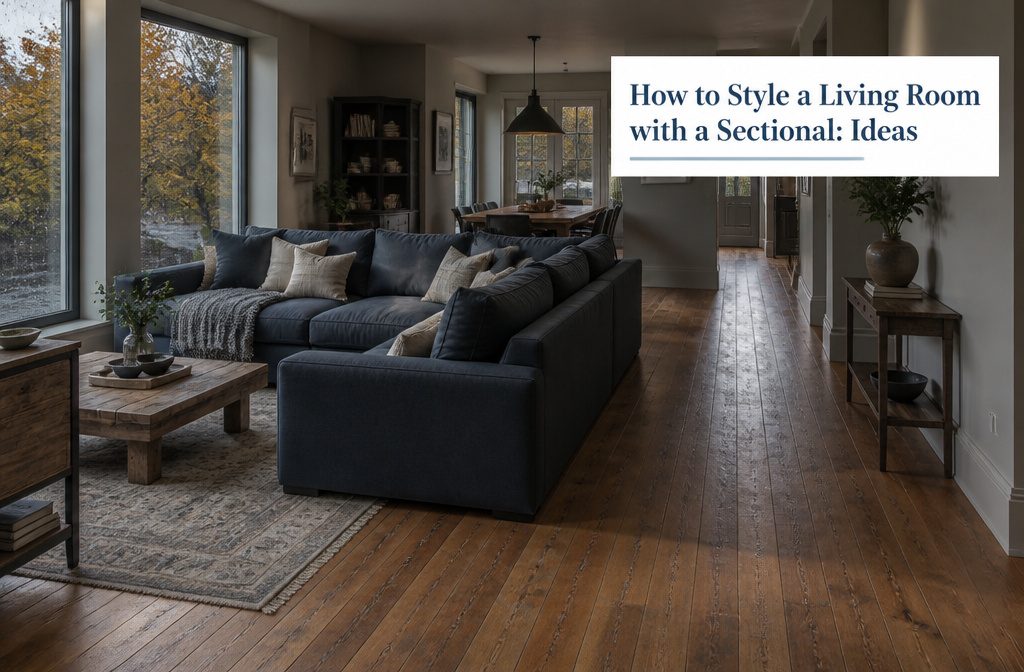
A sectional styled right fills the room without crowding it, and most people get the placement wrong.
The mistake is pushing it flat against the wall in an open floor plan, which wastes the chance to use the back as a zone divider.
Floating the sectional even a few feet forward separates living from dining without blocking sight lines, but only if you keep 36 inches clear behind it for traffic.
1. Choose a Sectional Size and Shape That Fits the Room and How You Use It
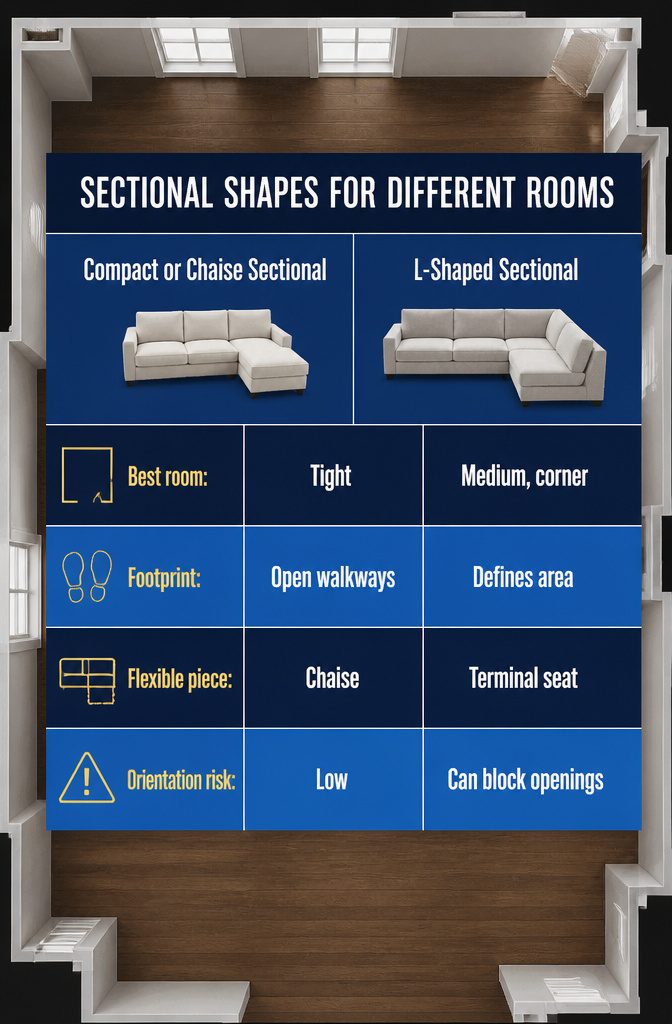
A compact or chaise sectional fits rooms where floor space is tight. The chaise adds a lounging spot without the bulk of a full L-shape, and some come with hidden storage underneath if you need it.
Compact models keep walkways open and leave visible floor, which makes the room feel larger than it is.
L-shaped sectionals work in corners and medium-sized rooms. The separate terminal piece can function as extra seating or be rearranged when the layout changes.
I look at the chaise direction before buying, because the wrong orientation blocks a doorway or window. L-shapes define a living area in an open floor plan without walling it off.
U-shaped sectionals suit larger rooms and regular gatherings. They create a conversation pit that seats more people than any other configuration, but they need space to breathe.
A U-shape in a small room eats every available inch and leaves no circulation. If the room can hold it, a U-shape is the most inviting layout for groups.
2. Place the Sectional to Keep Traffic Paths Clear
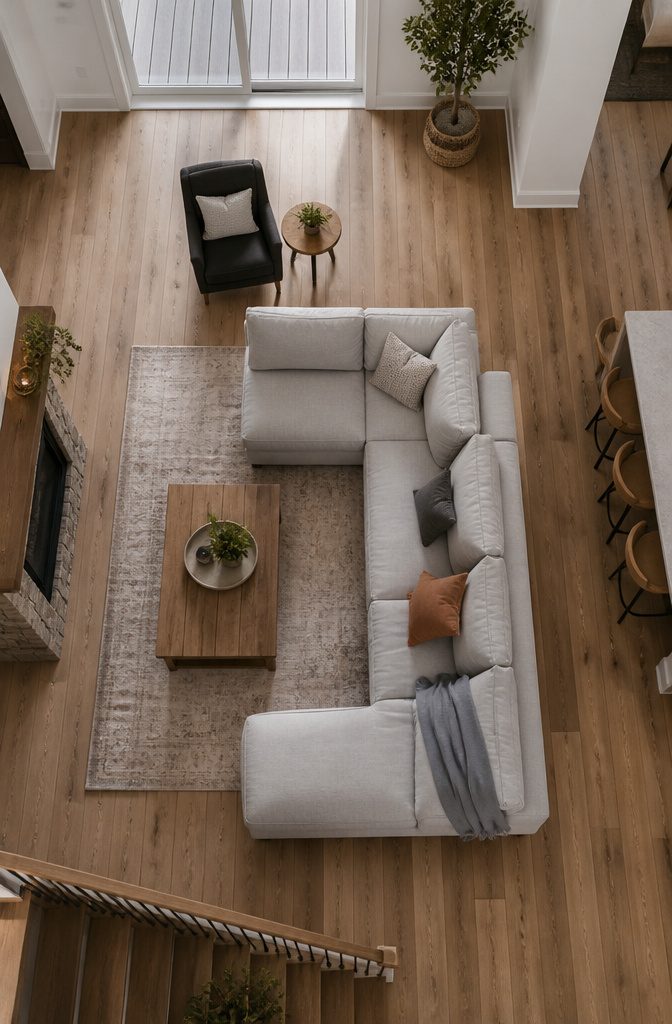
In a small room I put the sectional straight into the corner. That holds 30 to 36 inches of clear walkway through the center, which is the minimum someone needs to move through without turning sideways.
Corner placement also opens up floor space for a coffee table and keeps circulation from cutting through the seating itself.
In an open plan I float the sectional forward instead of jamming it against the wall.
Pulling it even a few inches off the back wall creates breathing room, and in larger spaces I use the back of the sectional as a zone divider between living and dining areas.
I ground the exposed back with a narrow console and a pair of lamps so the piece reads finished from both sides.
The float only works if the sectional has exposed legs or a clean back profile, because cheap backing fabric or visible zippers ruin the effect when seen from the dining side.
3. Use the Sectional to Define the Living Area in an Open Floor Plan
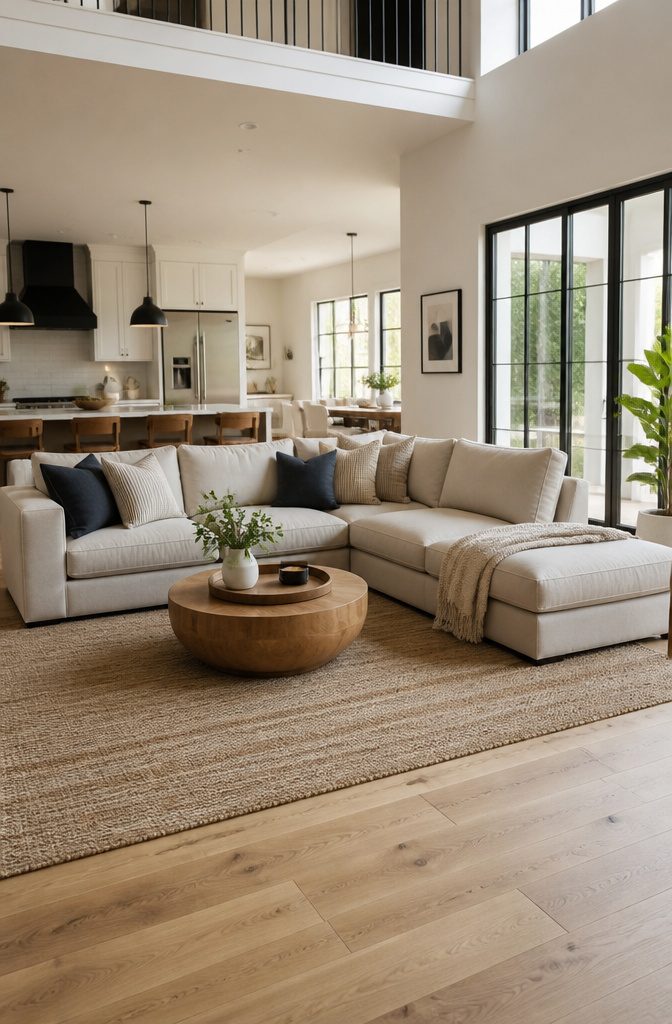
In an open floor plan, floating the sectional a few feet away from the wall turns the sofa into a boundary between living and dining without blocking sight lines.
The back of the sectional marks where one zone ends and another begins, and the room stays open because nothing tall cuts across it.
I ground the back with a narrow console table.
The console gives the back of the sectional a finished look when you walk into the room from the kitchen side, and it solves the styling problem most people ignore: a sofa back with visible zippers or cheap backing fabric reads unfinished the moment someone sees it from behind.
A pair of lamps on the console, a few plants, and suddenly the division feels deliberate instead of accidental.
The trick only works if you protect walkways. I keep at least 36 inches clear between the back of the sectional and whatever sits behind it, because anything tighter forces people to turn sideways every time they pass through.
4. Arrange Seating Around a Focal Point
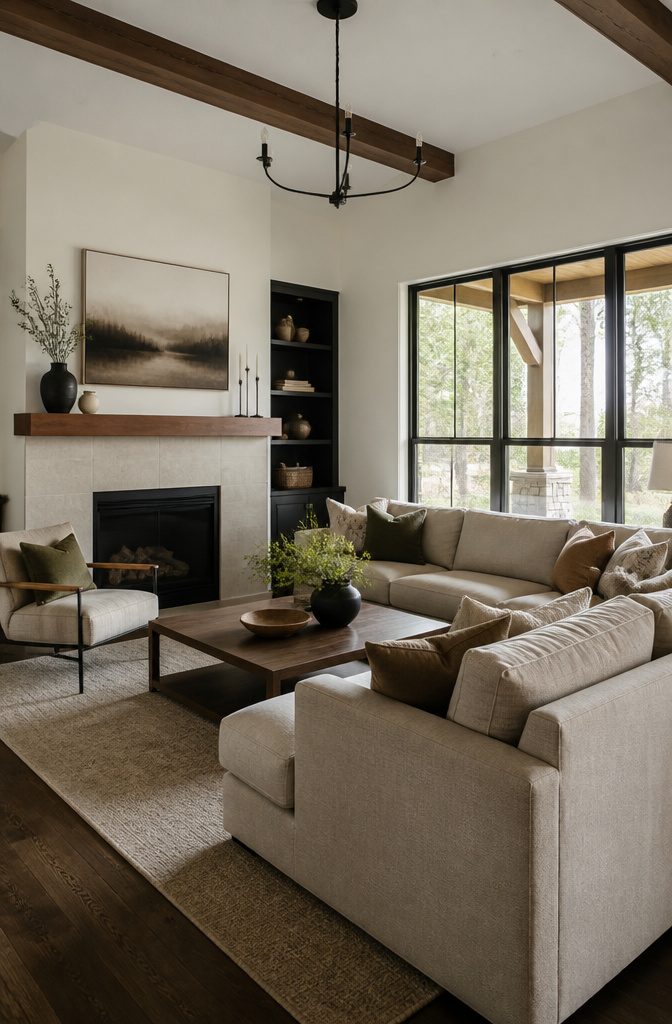
A fireplace, a TV, or a good window view decides where the sectional belongs. Position the long edge perpendicular to a fireplace rather than placing it directly in front of the hearth.
That keeps the firebox visible and the conversation angled inward instead of lined up like theater seating. The perpendicular setup works whether you center the sectional across from the fireplace or slide it to one side in a narrow room.
A TV wall pulls the same weight. Face the sectional toward the screen, and check that the sightline from the chaise end stays comfortable without neck strain.
In rooms with a strong window view, angle the sectional to take advantage of the natural light and whatever is outside worth looking at.
All three focal points anchor the room the same way: they give the seating a reason to face one direction, and the rest of the layout follows.
5. Anchor the Seating Group With a Rug
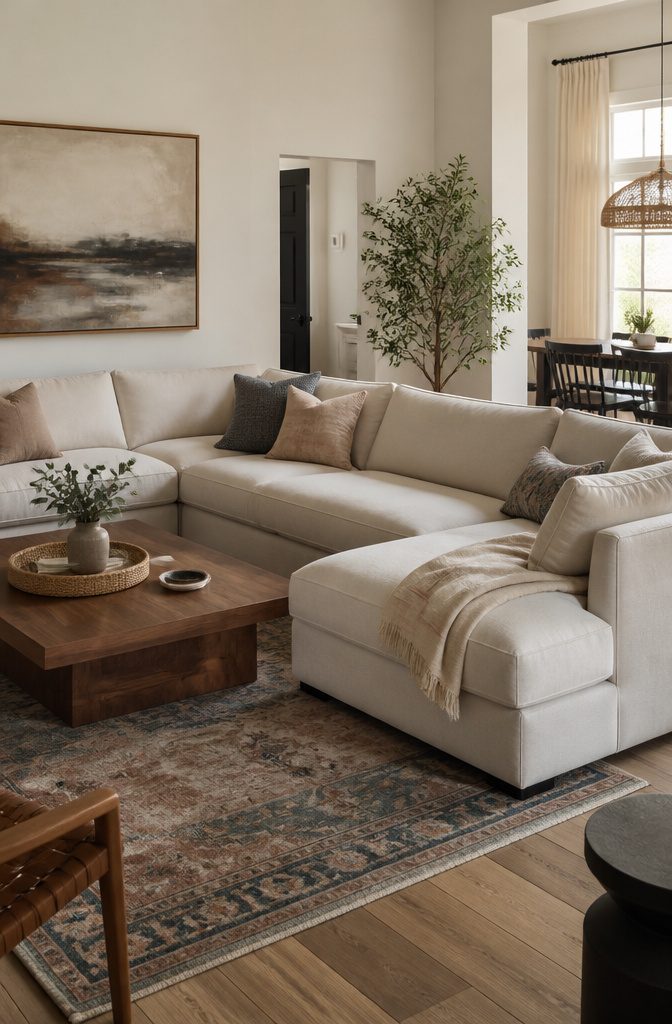
A rug that touches the sectional on all sides looks like a mistake.
The rug needs to be large enough that at least the front legs of the sectional rest on it, with about 18–24 inches of overhang past the edges of the seating.
That buffer visually anchors the whole arrangement instead of leaving the sectional floating in the middle of the room.
The most common error I see is a small rug tucked under the coffee table alone. It disconnects the sectional from the rest of the space and makes the layout feel accidental.
In a larger room, the entire sectional can sit within the rug boundaries. In a tighter space, front legs on and back legs off still reads as intentional.
If the sectional already carries strong pattern or color, a quieter rug in warm neutrals or a subtle vintage-inspired design keeps the room balanced.
A simple sectional can handle more pattern in the rug. Natural woven textures work well in either case.
6. Pair the Sectional With the Right Coffee Table
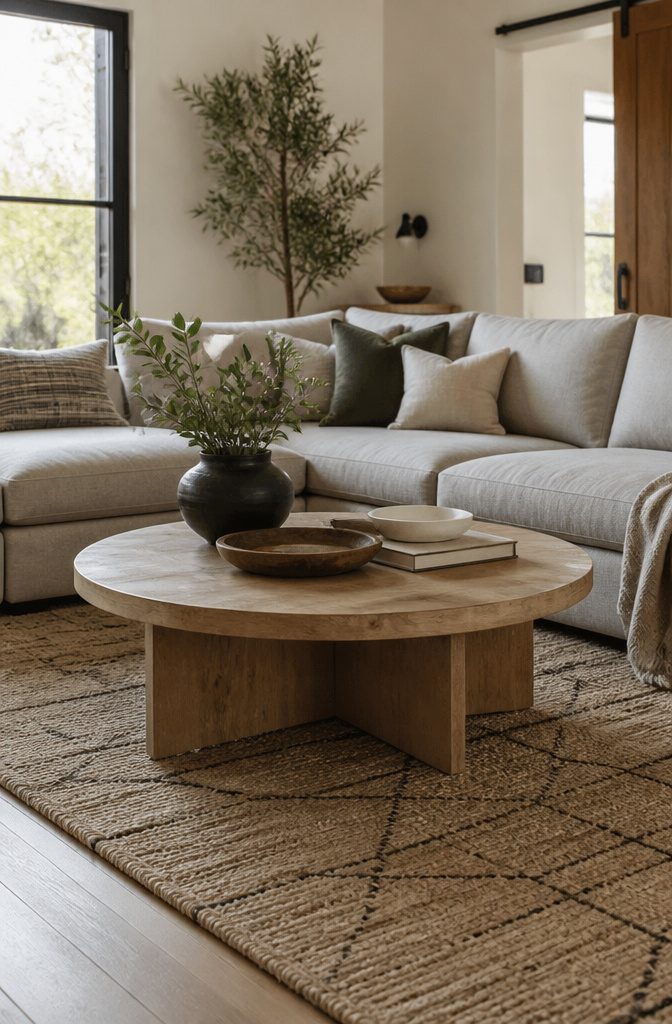
The coffee table you put inside a sectional arrangement controls how the whole setup reads, and the shape of the seating decides the shape that belongs there.
A round table softens the geometry of an L-shaped sectional and makes it easier to move around the open side.
Larger U-shaped sectionals can take a substantial round table or a square one placed in the center, because the extra footprint has somewhere to go.
Keep 16 to 18 inches between the sofa edge and the table. That gap lets you stretch your legs and move past without feeling boxed in, but keeps the surface close enough to set a drink down without leaning.
The table length should run roughly two-thirds the length of the sofa face it sits against, and the height should land within 4 inches of the seat cushion so reaching for what’s on top feels natural instead of awkward.
I usually keep the styling light once the proportions are right. A small stack of books, one tray, or a single vase gives the table a finished look without removing the function it’s there for.
7. Balance the Sectional With Additional Seating Where Space Allows
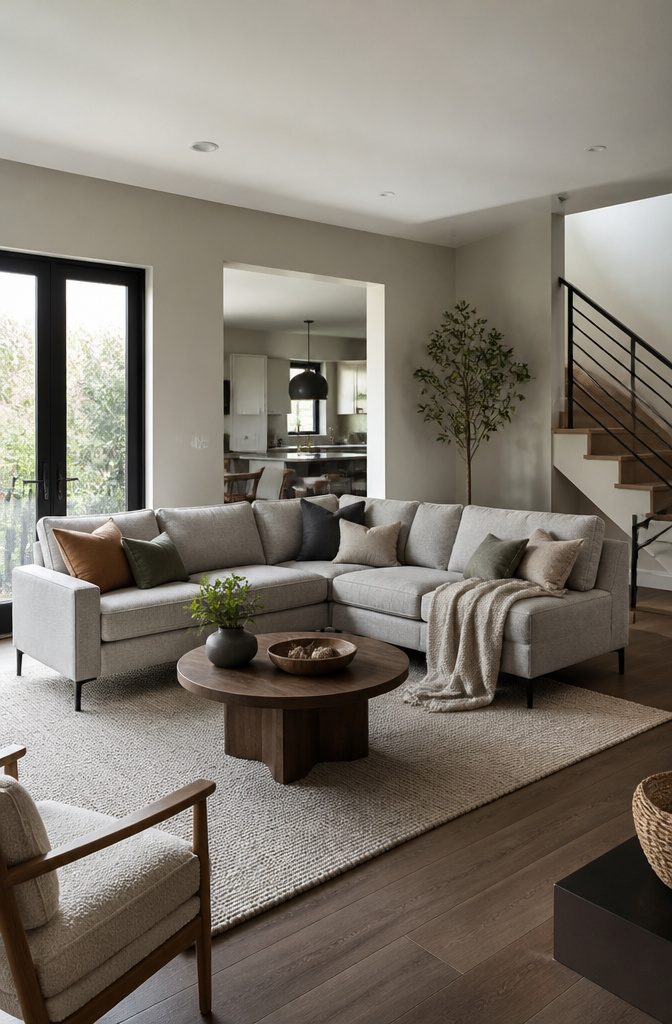
A sectional is a solid block of furniture, and in a larger room it can sit too heavy on one side unless something balances it.
I add one or two accent chairs opposite the chaise to even out the visual weight and keep the conversation zone from feeling lopsided.
The chairs I reach for have exposed wood or metal legs that let the floor show underneath.
That lightness matters when the sectional already occupies so much mass. I angle them slightly inward toward the coffee table so people stay oriented to the group rather than facing the walls.
In one room I saw fixed, a heavy matching loveseat came out and two swivel chairs went in.
The swivel let people turn toward the TV or back to the conversation, and that flexibility made the space work for daily use instead of just looking arranged.
For a very heavy U-shaped sectional, vertical lift helps too. Tall art or a bookcase near the seating pulls the eye up and keeps the low sofa from squatting in the room.
8. Add Pillows and Throws for Comfort and Texture
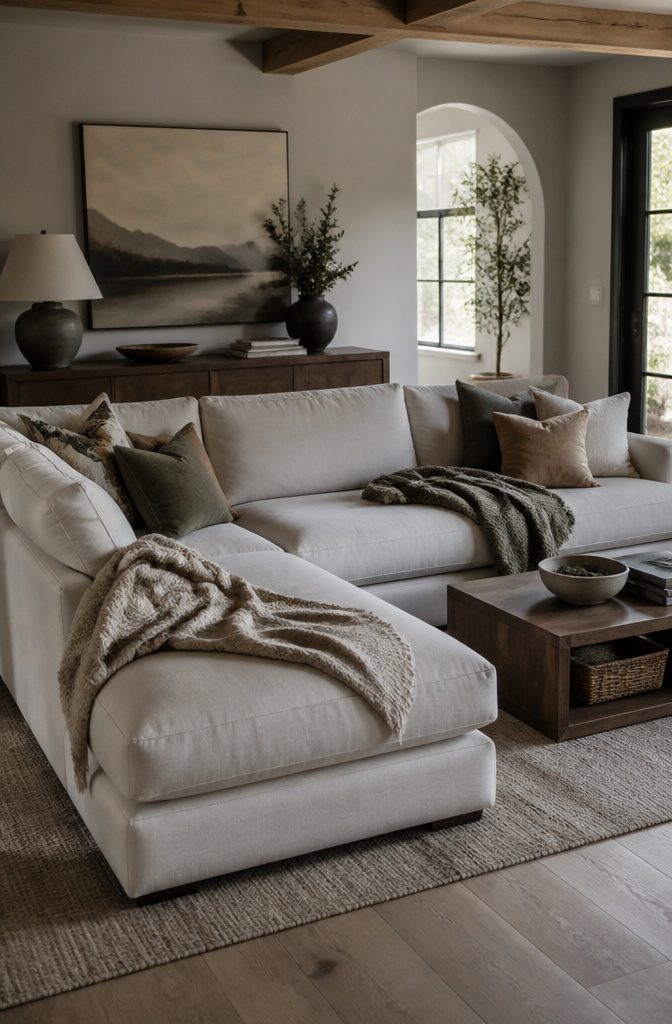
Pillows and throws are where texture shows up fastest. I usually layer three to five pillows in different sizes—a 22-inch square in back, an 18-inch in front, maybe a lumbar or bolster to break the rhythm.
Mix fabrics: a velvet pillow next to linen, a chunky knit throw over both.
You want depth, not coordination. A solid next to a pattern reads more deliberate than five matching prints.
The coffee table in one of the examples sits low and dark, which keeps a heavily pillowed sectional from looking top-heavy.
In another setup, the boucle fabric and layered throws build softness without adding color, so the room stays quiet. That works when the sectional itself carries enough visual weight.
What doesn’t work is overcrowding.
If you can’t sit without moving four pillows, pull two off. A throw folded lengthwise over one arm looks styled; three throws piled in the corner looks like laundry day.
9. Pick a Color Scheme That Supports the Mood You Want
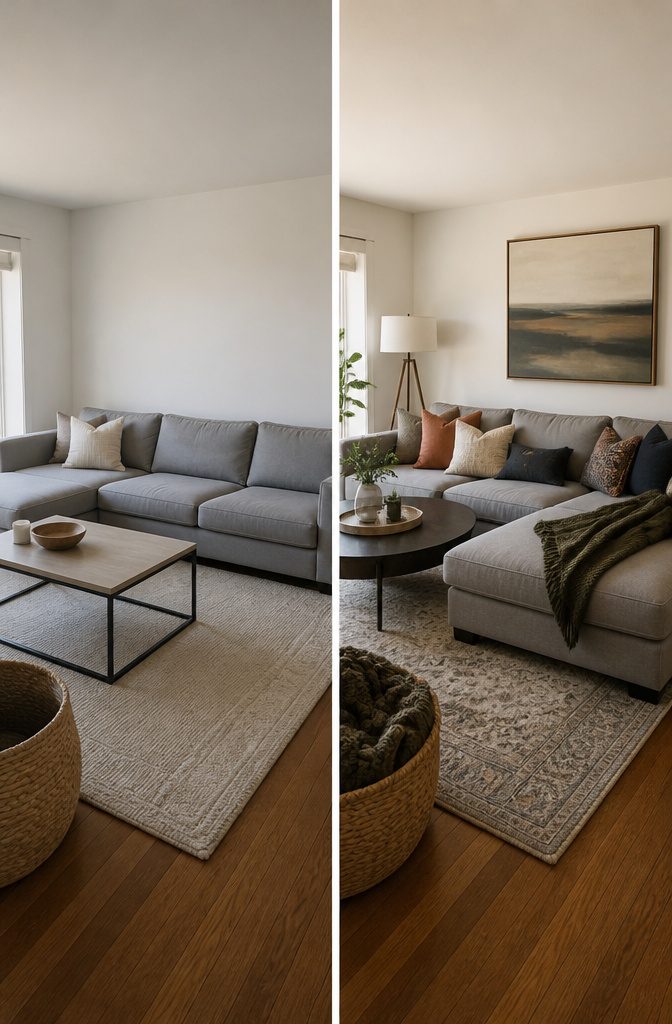
The color palette you choose sets whether the room feels calm, energetic, or open. Soft, neutral tones provide comfort and calmness, and they work especially well when the sectional itself is a large visual mass.
Sherwin Williams Agreeable Gray is a chameleon light gray that looks warm or cool depending on the light, and it pairs cleanly with Sherwin Williams Extra White on trim. That combination keeps the room bright without feeling stark.
Light gray brightens a compact room instantly.
Charcoal gray adds drama and weight in a large room. I pair gray with beige, cream, or warm white to keep it calm, and I add teal or burnt red to keep it from feeling flat.
Winter whites help keep the ambiance serene if you prefer a quieter space. A monochromatic scheme where the sectional matches or complements the wall color minimizes visual clutter and gives the illusion of a larger space.
10. Layer Textures to Add Visual Interest
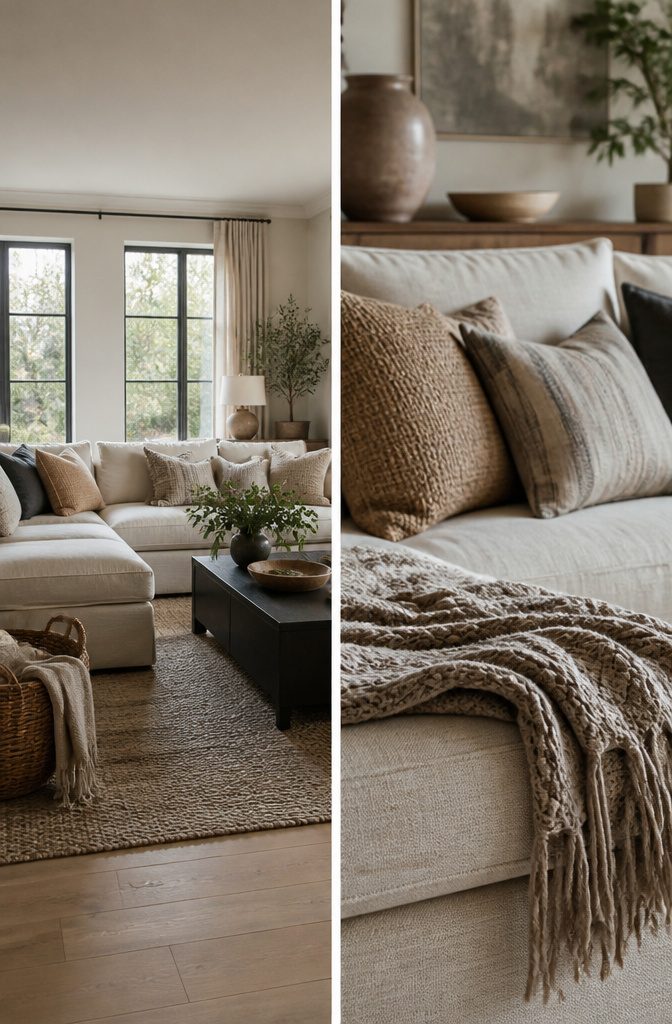
Texture gives the room depth without taking up floor space.
If the sectional upholstery is smooth, bring in contrast with a knitted throw, linen cushions, or a soft boucle pillow. A woven rug beneath the sectional adds another layer, and natural wood furniture introduces warmth when fabric dominates the room.
The restraint matters more than the variety.
Too many decorative cushions make the sectional look cluttered instead of comfortable. I keep things monochromatic when the sectional is large, letting the texture of individual pieces provide interest rather than color.
The linen look of the sofa, the leather of an ottoman, and a natural fiber rug near the door create richness without fighting for attention.
Similar tones help offset the size of a sectional, allowing it to blend rather than anchor every sightline in the room.
11. Use Lighting to Improve Mood and Openness
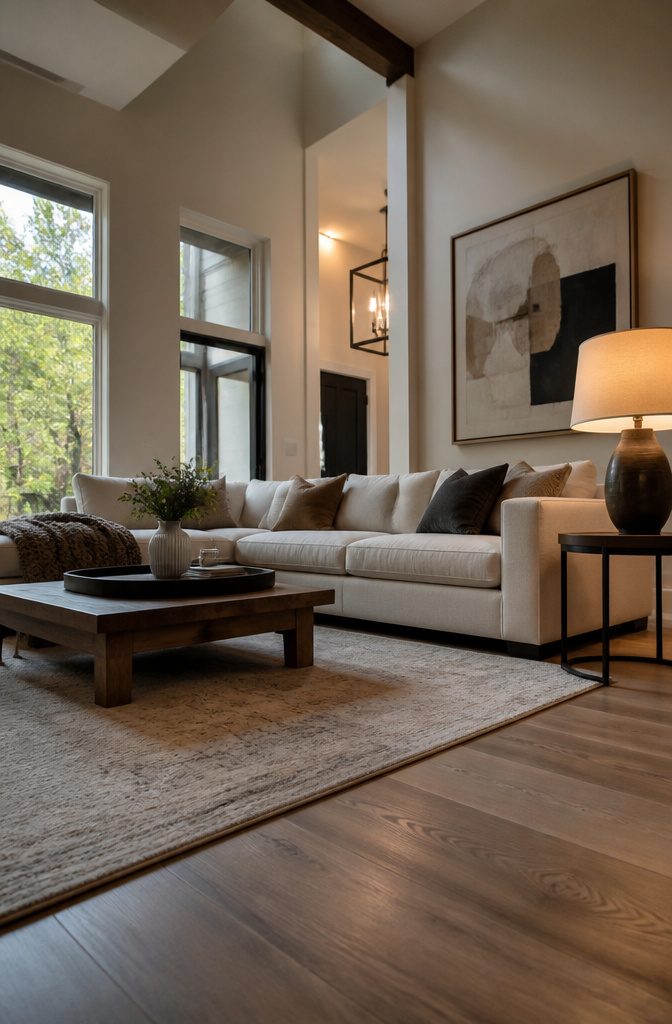
Natural light wins before any lamp gets plugged in.
If the sectional sits near a window, leave that path clear rather than filling it with end tables or tall plants that block the view and cut the room off from daylight.
A room that gets good morning light feels larger and more inviting without any added cost, and positioning furniture to preserve that light path matters more than most lighting upgrades.
When natural light runs out or the room has none to start with, layered artificial light keeps the space from feeling flat.
A floor lamp beside the sectional creates a warm pool of reading light, and a table lamp on a side surface adds another source at a different height.
Warm-colored bulbs soften neutral upholstery and textured fabrics in a way overhead fixtures rarely manage. At night, switching off the ceiling fixture and relying on lamps around the sectional makes the room feel more intimate instead of clinical.
Spotlights on a dimmer add ambient mood lighting without taking up floor space, and LED strips behind the TV bring a modern feel to the wall the sectional faces.
The variety means each evening activity gets the light level it deserves rather than forcing one bright setting on everything.
12. Keep Decor Restrained So the Room Does Not Feel Crowded
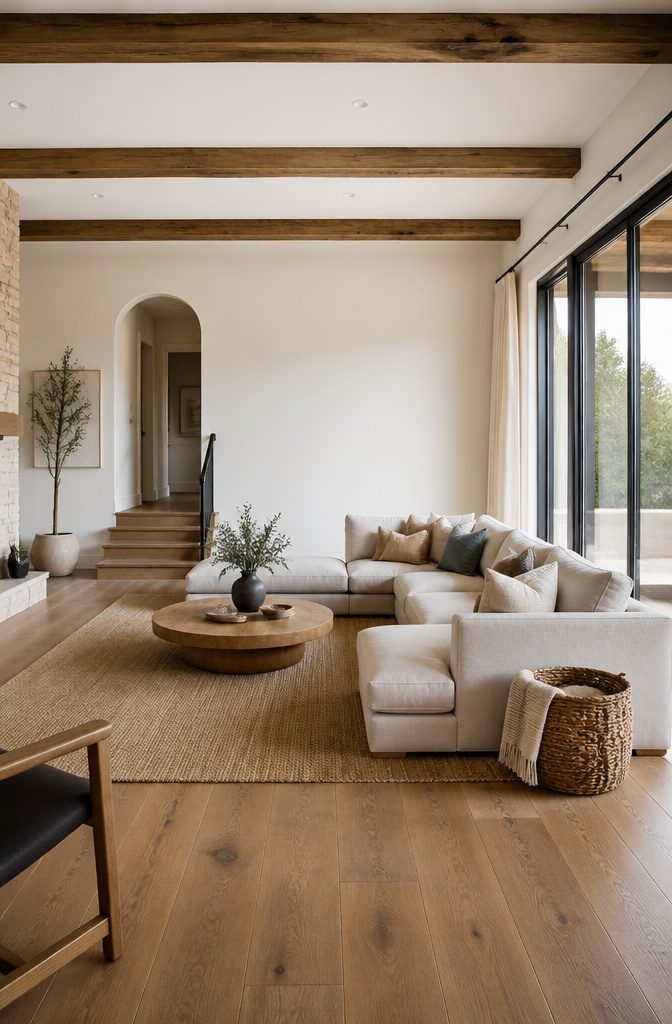
A sectional already fills a lot of visual space, so the furniture and accessories around it need to stay light.
I keep additional pieces to a minimum: a coffee table, maybe one side table, and a floor lamp if the room needs it.
Piling in extra chairs, oversized end tables, or large decorative objects in every corner makes the layout feel like an obstacle course instead of a place to sit. Empty space around the sectional is what lets the room breathe.
The same restraint applies to walls.
Using only one or two pieces of wall art keeps the space from feeling cluttered and more open. In a room where the sectional dominates, a single large frame or one framed piece with a hanging plant is enough.
Too much pattern or too many small frames competing for attention undo the calm a sectional is supposed to create.
I also limit throw pillows to what actually gets used. A couch buried in cushions looks styled but stops being comfortable the moment someone sits down.
Understanding Left-Arm Facing and Right-Arm Facing
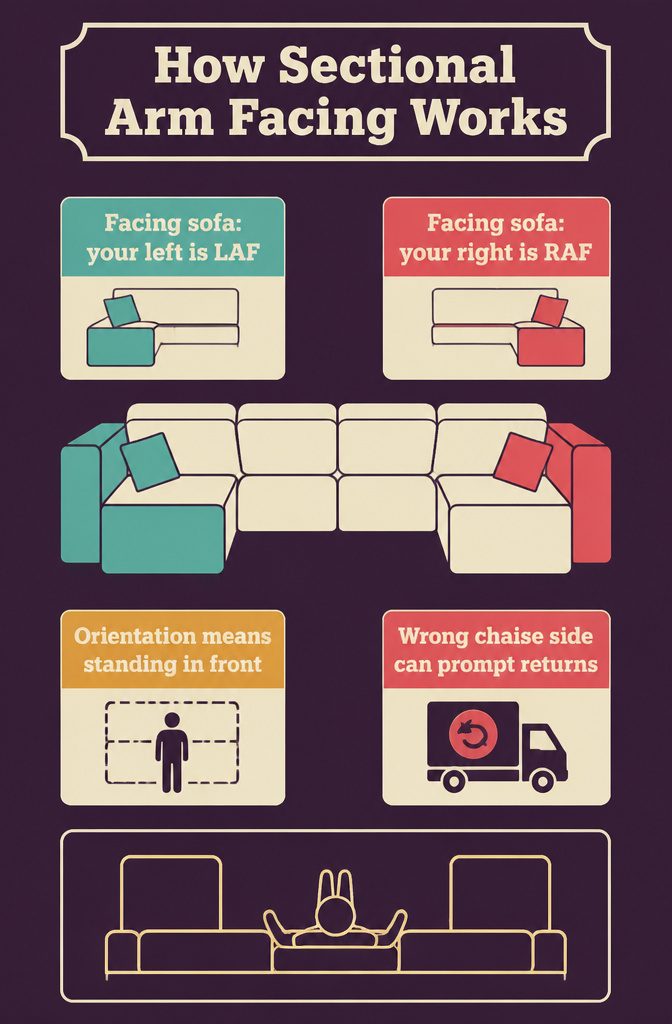
When you stand in front of the sectional and face it directly, the arm on your left is left-arm-facing (LAF) and the arm on your right is right-arm-facing (RAF).
This trips up a lot of people, because the natural instinct is to think about where the arm sits when you’re actually sitting on the sofa.
That orientation is backward. The term describes what you see looking at the piece, not what you feel sitting in it.
Getting this right matters when you order, because a RAF chaise delivered to a room planned for LAF puts the long end on the wrong wall.
I check the orientation against the room layout before confirming any sectional configuration, and it saves returns every time.
Choosing Upholstery for How You Live

The fabric you choose matters more than almost any other finish in a living room, because a sectional covers so much surface area and takes real wear.
Performance fabrics are the most practical choice when children, pets, or heavy traffic are part of the picture. Look for a double-rub count of at least 30,000, which tells you the material can handle friction without pilling or breaking down quickly.
Microfiber performs well here and wipes clean easily, though it can show oils from hands and hair over time. Leather holds up better over the long run and develops a patina that hides wear instead of announcing it.
Velvet looks rich but belongs in rooms where people sit gently and spills are rare. Linen breathes well and softens with age, but it stains unless treated, and wrinkles are part of the deal.
I prefer leather or treated microfiber in family rooms and save velvet for formal spaces that see use once or twice a week.
Frequently Asked Questions
How do I know what size sectional is right for my room?
Measure your room and use painter’s tape on the floor to map the sectional’s footprint before buying.
Keep at least 30 to 36 inches of clear walkway through the center, and measure doorways to confirm the piece can be delivered without issue. The right size leaves visible floor space around the seating so the room can breathe.
What type of sectional is best for a small living room?
A compact or chaise sectional fits rooms where floor space is tight. The chaise adds a lounging spot without the bulk of a full L-shape, and compact models keep walkways open while leaving visible floor.
Can you put a sectional sofa in a small living room?
Yes. A single compact sectional or reversible chaise often uses a small room more efficiently than combining a traditional sofa with multiple chairs, because it takes advantage of the corner and leaves more open floor.
What coffee table works best with a sectional?
A round table softens the geometry of an L-shaped sectional and makes it easier to move around the open side.
Larger U-shaped sectionals can take a substantial round table or a square one placed in the center, with 16 to 18 inches between the sofa edge and the table.
Where should a sectional be placed with a fireplace?
Position the long edge perpendicular to a fireplace rather than placing it directly in front of the hearth. That keeps the firebox visible and the conversation angled inward instead of lined up like theater seating.
What is the difference between Left-Arm Facing and Right-Arm Facing?
When you stand in front of the sectional and face it directly, the arm on your left is left-arm-facing (LAF) and the arm on your right is right-arm-facing (RAF).
Getting this right matters when you order, because a RAF chaise delivered to a room planned for LAF puts the long end on the wrong wall.
What is the difference between an L shaped and a U shaped sectional?
An L-shaped sectional has two sections at a right angle and works in corners and medium-sized rooms. A U-shaped sectional has a central sofa with two wings that create a conversation pit, and it suits larger rooms and regular gatherings.