I’ve squeezed guest beds into studios where every inch counts, and sofa beds waste more space than they save. Daybeds with trundles give you two sleep surfaces without bulky mechanisms, while Murphy beds vanish into walls to free up desk space. Floor futons and roll-up beds store in closets with zero footprint. Loft’s Two Pack stacks twin mattresses with a lift-top seat, Burrow’s Shift folds horizontally to queen size, and Loaf’s Bed in a Bun bundles everything. Match thickness to use: 6-7 inches for trundles, 8-10 for wood frames, 4-6 for floor versions. Cost, assembly difficulty, and expected guest frequency will determine which option works best for your space.
How to Choose Between Sleeper Types: 6 Questions That Decide for You?
When I first started hunting for a sleeper solution for my cramped guest room, I felt paralyzed by options: daybeds, Murphy beds, chaises with hidden compartments, all promising the same thing. You need to ask yourself what actually matters: floor space, flexibility, or hidden storage.
If you’re desperate for square footage, Murphy beds disappear completely. Need dual function. Daybeds with trundles work overtime. Craving built-in storage. Sectionals with lift-up compartments let you stash spare linens.
Don’t skip the mattress either. I’ve slept on thin, flimsy ones that ruined my back. Foam or hybrid options transform guest comfort. Finally, weigh configurability against budget. Custom fabrics feel indulgent, but simple frames under £150 get the job done.

VERSATILE DAYBED WITH TRUNDLE DESIGN: This day bed with trundle is designed for maximum flexibility, featuring a pop-up trundle with locking wheels. Easily convert it into two twin beds or combine them into a spacious king-size bed. It provides a comfortable seating area during the day and extra sleeping space at night. Ideal for small spaces, bedroom, living room, guest room, or kids' room, this twin daybed with trundle effortlessly adapts to your needs
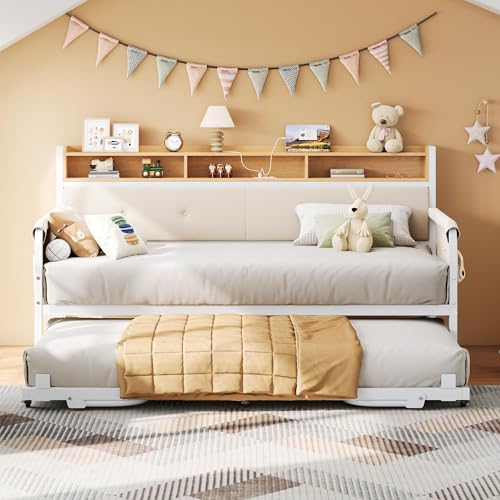
Excellent Versatility: This sofa bed offers unmatched flexibility by easily transforming from two single beds into a spacious king-size bed. Whether it's for daytime lounging or accommodating overnight stays, this versatile design ensures it can seamlessly adapt to meet your varying needs with ease and convenience

【Adorable Visual Charm】Featuring a classic gingham pattern and stylish button-tufted backrest, this daybed brings warm, cozy vibes to your bedroom. It acts as a lovely focal point and a relaxing nook for peaceful sleep and daily lounging.
Daybeds With Trundles vs. Sleeper Sofas: Which Handles Guests Better?
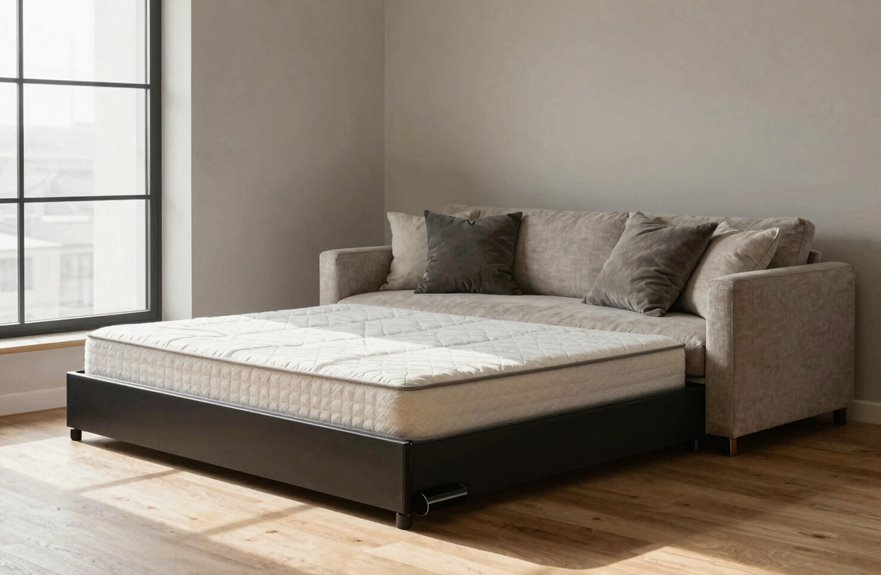
I’ve wrestled with this exact dilemma in my own guest room, where every square foot counts and nobody wants to sleep on a lumpy mattress. Daybeds with trundles give you two separate sleep surfaces, such as the FYESDAL’s twin-mattress stack or Oliver’s sleek pull-out, without the sofa-to-bed conversion hassle. However, you’ll sacrifice that true “living room” look. Sleeper sofas like the Sabai Eclipse keep your space looking polished for daily use, but their foam mattresses can leave guests with sore backs after a weekend stay.

【Reinforced Support for Stronger Weight Bearing】 Additional under-bed support bars combined with four extra support legs reinforce the platform from underneath, improving weight distribution and delivering stronger, more reliable support for daily use while reducing long-term stress on the bed surface
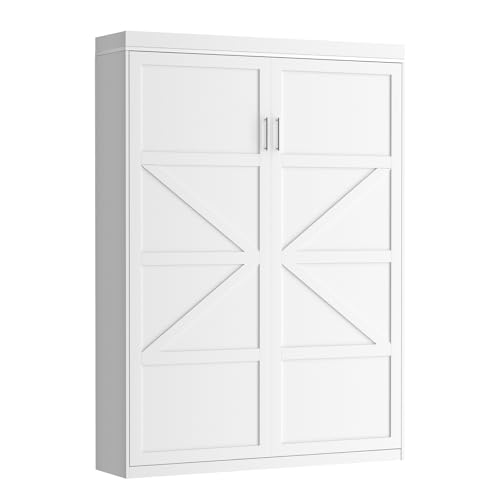
Durable Materials and Strong Support:This queen Murphy bed is built with industrial-grade MDF, plywood, and a reinforced metal frame for long-term durability. The slatted mattress base provides balanced support and improves airflow. The structure supports up to 1,000 pounds and fits most standard queen mattresses sized 60 by 80 inches and no thicker than 12 inches including pillows

【Dual Functionality】Bed & Storage Cabinet, maximize your space effortlessly with our Murphy bed's dual functionality. Use it as storage cabinets when folded, or unfold it into a comfortable bed when needed, ensuring clutter-free spaces
Space Efficiency Comparison
How exactly do you squeeze a guest bed into a space that barely fits your coffee table? I’ve wrestled with this puzzle in my own studio, and I’ve learned that space efficiency isn’t about magic. It’s about smart choices.
Daybeds with trundles are ideal for tight quarters. They deliver dual-purpose seating plus a hidden second bed without the bulky mechanism of traditional sleepers. Here’s what makes them effective:
- The FYESDAL frame tucks storage underneath, reclaiming every inch
- Bed in a Bun masquerades as a footstool until guests arrive
- Trundles slide out smoothly, no strenuous lifting required
- Separate mattresses mean you control quality and thickness
Sleeper sofas demand permanent floor space for their folded mattress. Daybeds adapt to your layout. You gain flexibility, storage, and breathing room; all valuable when square footage is limited.
Guest Comfort Levels
Most guests won’t tell you they slept poorly. They’ll yawn through breakfast and decline a second cup of coffee. I’ve learned this from experience, which is why I take mattress types seriously now.
Daybeds with trundles give you flexibility: sofa by day, real bed by night. The Bed in a Bun and Two Pack Daybed even tuck in storage. Trundle mattresses are often thin, which is a notable limitation.
Sleeper sofas have improved significantly. Newer models pack memory foam or hybrids, and a true queen sleeper (60 x 72 inches) beats a cramped futon for guests who want to stretch out.
Test in showrooms before purchasing. Feel the transition, check the thickness, and imagine your mother-in-law waking up there. Her comfort at breakfast reveals how well you’ve chosen.
Why Murphy Beds Work Best for Home Offices That Sometimes Host
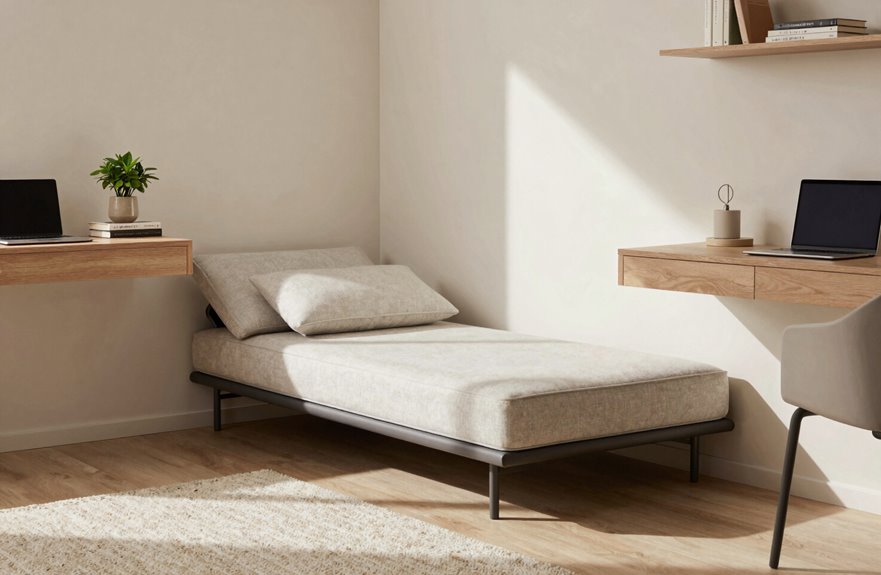
I’ve found that Murphy beds completely transform how I use my cramped home office, folding flat against the wall so I’ve got room for my desk, chair, and that stack of books I swear I’ll read. When friends stay over, I just pull the bed down in seconds without shoving furniture around or inflating air mattresses at midnight. It’s the only setup I’ve tried that keeps my workspace feeling open and purposeful Monday through Friday, then converts into a proper guest room without any heavy lifting.

【COMFORTABLE FABRIC】:The Japanese floor mattress features a high-quality peachskin fabric outer layer. It has an ultra-soft, silky touch. Breathable and skin-friendly, it keeps you comfortable without stuffiness. Durable and fade-resistant, it stays soft wash after wash.
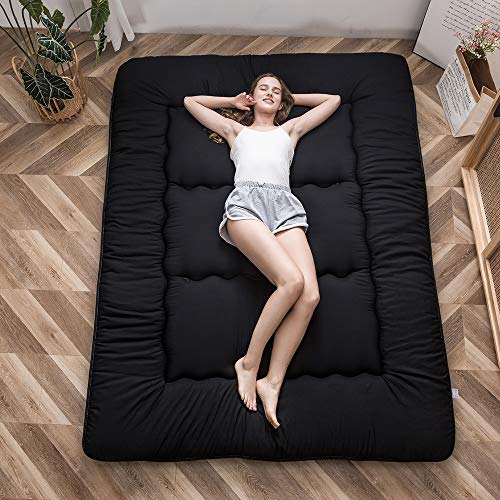
IMPORTANT NOTICE: Please Dry The Floor Mattress Under the Sun Firstly, it will be recovered more quickly in the sunshine. Please kindly be noticed that we compress the futon mattress into a storage bag for transportation, so please allow at least 2-3 days to recover the thickness

Comfortable Fabrics and Premium Filling: The outer layer of the futon mattress is made of high-quality dutch velvet , which feels soft and silky to the touch, offering a luxurious and premium feel while being thick and durable. The interior is filled with carefully selected high-quality shredded memory foam.This allows it to bounce back and regain its shape quickly, ensuring it stays in good condition while achieving the right balance of softness and firmness,bringing you the most comfortable sleeping experience.
Desk-to-Bed Conversion
Where exactly are your overnight guests supposed to sleep when your spare room doubles as your home office? I’ve faced this puzzle myself, and a Murphy bed solved it effectively.
This space-saving furniture folds into a cabinet, reclaiming your floor for spreadsheets by day. When my sister visits, I pull it down in seconds. No moving desks, no apology tours about the couch.
What makes this work:
- You keep your dedicated workspace intact; nothing shuffles around
- The room transforms for yoga, crafts, or Zoom calls between guest stays
- That pull-down mechanism operates smoothly when friends arrive tired
- You can host guests on an actual bed instead of an air mattress
Measure twice, though. I learned path clearance matters when my first choice wouldn’t fit through the door.
Wall-Mounted Efficiency
Three things happen when you mount a bed on the wall: you gain back your floor, you keep your sanity, and your guests stop texting you complaints about their backs.
I’ve lived this transformation. My wall-mounted Murphy bed folds into sleek cabinetry by morning, revealing space for my desk, yoga mat, and sanity. The mechanism takes seconds. Pull down, and my office becomes a guest room. No more choosing between workspace and hospitality.
Built-in storage flanking the bed holds linens, books, and the random detritus of adult life. I planned carefully: measured wall space, ensured folding clearance, and selected a cabinet depth that wouldn’t swallow the room. The result feels intentional, not improvised. A home that adapts with you, rather than against you, requires this kind of deliberate planning.
Multi-Function Workspace
A Murphy bed turns the impossible into routine: one room, two lives, no compromise. My cramped studio transforms from focused workspace to cozy guest suite in seconds.
Murphy beds accomplish this by folding cleanly into the wall, reclaiming that precious floor real estate. Your desk gains breathing room. Your files stay organized. No more playing Tetris around a mattress that dominates the space.
Building a true multi-function workspace requires attention to these details:
- Pull the bed down in one smooth motion when guests arrive; no heavy lifting, no awkward apologies about the couch
- Pair yours with a wall-mounted desk that stays put; continuity matters for your workflow
- Stash quality bedding in the cabinet itself; this prevents midnight searches for linens
- Choose integrated lighting so your office functions as an office, not a bedroom in disguise
Roll-Up Futons and Floor Beds: The Zero-Footprint Guest Solution
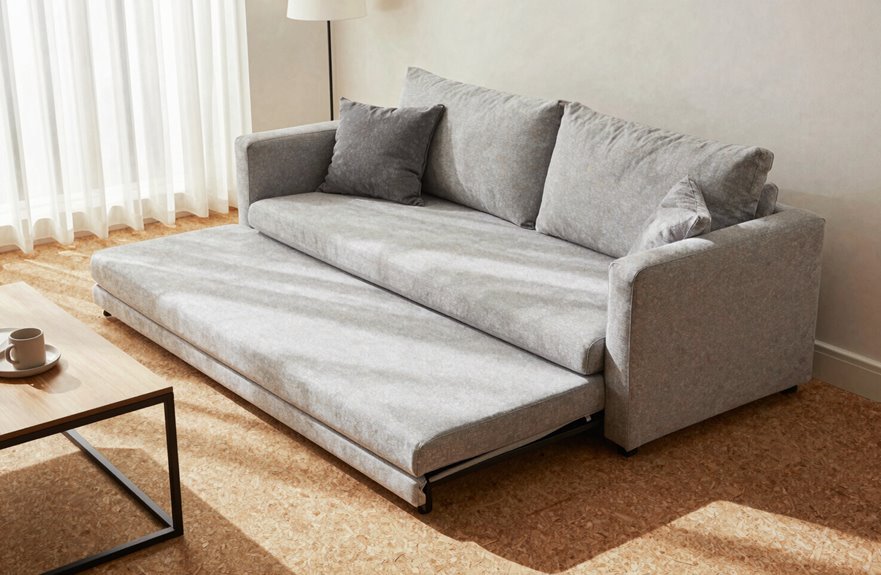
Why let a guest bed dominate your living room year-round when you could roll it up and tuck it away like a yoga mat. I’ve embraced roll-up futons and floor beds for this reason; they’re the zero-footprint solution my tiny apartment needs.
| What I Love | What to Watch For |
|---|---|
| Stores in a closet, instantly frees floor space | Needs a smooth surface underneath |
| Solid wood frame options feel substantial, not cheap | Thinner mattresses suit shorter stays |
| No assembly headaches when guests arrive | Cotton fills compress over years |
| Portable enough for camping or movie nights | You’ll want washable covers |
| Marketplace finds keep budgets friendly | Measure your storage spot first |
I slide mine under the bed, forgotten until friends visit. It provides functional guest accommodation without consuming permanent living space.

LAYOUT FREEDOM – YOUR SOFA, YOUR RULES: Stop being stuck with a one-way sofa. This modular system gives you serious rearranging power – go U‑shape for movie nights, L‑shape for game days, or push it all together into a giant sleep surface for surprise guests. Change it up whenever your mood (or your floor plan) changes.

DURABLE WOOD-METAL CONSTRUCTION: Crafted with a sturdy combination of wood and solid metal, this reversible sectional sofa is upholstered in soft 270g polyester fabric and filled with plush foam for enhanced comfort and resilience. Featuring metal springs for added support, it has a generous weight capacity of up to 606 kg / 1336 lb.

MULTI-BOX DELIVERY: Your couch ships in multiple boxes. Boxes may arrive on different days—please allow all packages to arrive before assembly
Storage Ottomans and Sleepers-in-Disguise: Hidden Options Worth Considering
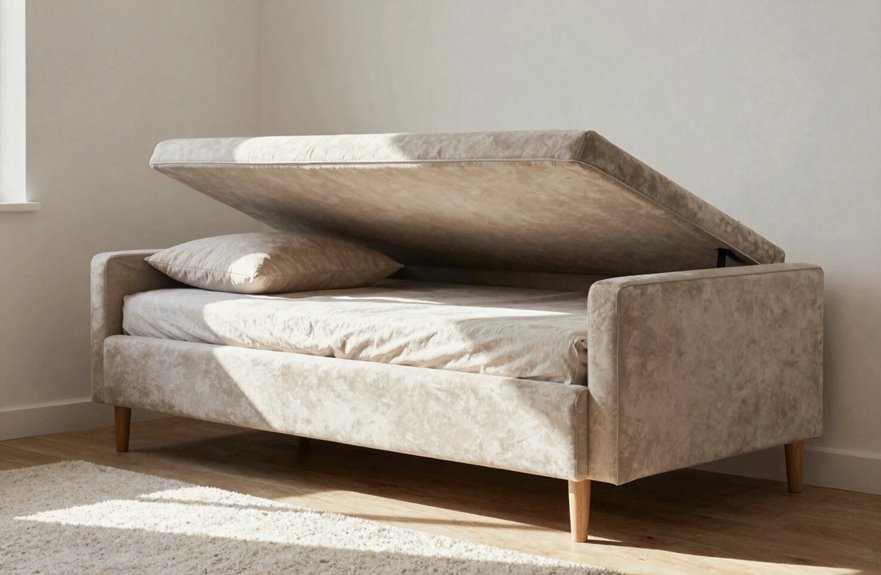
Roll-up futons work wonders, but sometimes I want furniture that earns its keep full-time. Pieces that hide their secret until I need them solve this problem.
A sleeper sofa with hidden storage addresses two needs at once: seating by day, sleeping by night, and storage space for linens. The right piece integrates seamlessly into your room rather than feeling like a compromise.
- Loaf’s Bed in a Bun masquerades as a footstool with mattresses tucked inside. Pick your fabric and hide your bedding.
- Interior Define’s Sloan Chaise lifts up for storage and unfolds to queen size. Position the chaise left or right depending on your layout.
- Loaf’s Two Pack Daybed stacks twin mattresses. Lift the top to create a seat while maintaining the textured appearance.
- Burrow’s Shift folds horizontal and pops out to queen size. It assembles without difficulty and takes up minimal floor space.

Upgraded 2-in-1 Double-layer Design: This mattress topper is a combination of a 2 Inch Gel Memory Foam and 3 Inch quilted Mattress Pad Cover, with high-quality snow fluff replacing fiber filling. The plush and soft mattress adds an extra layer of comfort for relieving pain and sleeping on your side, while offering strong support, bringing you a cloud-like comfort

EXTRA SOFT & THICK: Our twin pillowtop mattress pad packs 800gsm of down alternative fill into a box-stitched, no-shift design that ensures every gram of plush fill stays evenly distributed. No clumping, no flat spots – just consistent, cloud-like cushioning and pressure-relieving support every night.
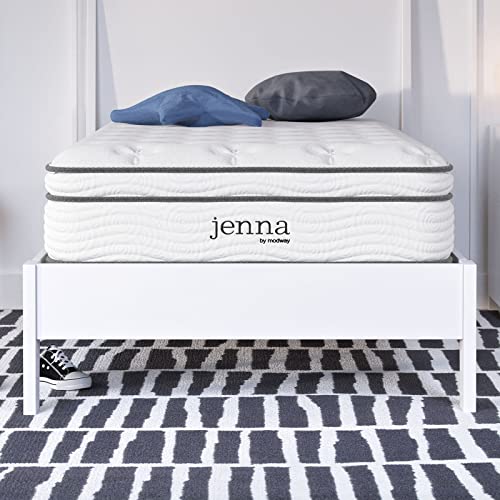
Set Up: Simply take your mattress out of the box and enjoy watching it decompress. Jumping, walking, and sleeping on your mattress can speed up the process.
Daybeds, Futons, and Floor Beds: Matching Thickness and Support to Your Guests
How do you balance a piece that works as seating and still gives your guests actual sleep? Daybeds and futons demand the right thickness and support, or your friends wake up cranky.
Daybeds with trundles transform beautifully. Pick a medium-firm, two-sided mattress that handles both sofa and bed duty. Integrated storage underneath keeps linens handy without cluttering your tiny space. For futons, a roll-up floor version or solid wood frame saves precious square footage, but don’t skimp on mattress quality. Too thin, and guests feel the slats. Thicker foam or hybrid layers make all the difference.
| Setup | My Go-To Thickness |
|---|---|
| Daybed (no trundle) | 8 inches |
| Daybed with trundle | 6-7 inches |
| Wood frame futon | 8-10 inches |
| Floor futon | 4-6 inches |
| High-use guest space | 9+ inches, hybrid core |

TWIN TO KING DAYBED - Convert this twin size bed frame into a king-size bed with our Alaterre daybed with trundle. Simply add two twin size mattresses (not included) that are 4-6” thick, creating a complete sleep setup, with no box spring required.

SPACE-SAVING SOLUTION: This multifunctional trundle daybed effortlessly converts from a twin-size sofa bed to a spacious king-size bed frame with a smooth-rolling trundle—just pull it out, no complicated assembly required! Perfect bed frame for small spaces like compact living rooms, guest bedrooms, or home offices, optimizing your living space without sacrificing comfort

2-in-1 Daybed with Trundle: This twin daybed features a lift-up trundle bed with smooth casters that stores neatly, pulls out easily, or raises into place. Use it as a cozy sofa bed by day, then convert it into two twin beds or a larger sleeping surface
What These 6 Sleeper Solutions Cost (And Where to Save or Splurge)
A few hundred pounds can either get you a bare-bones frame or a complete guest-ready setup. The FYESDAL sleeper sofa from Ikea at £140 lets you add under-bed storage later, but you’ll need to source mattresses separately. Additional extras add up quickly.
Loaf’s Bed in a Bun starts at £595 with everything included. Selecting fancy fabric will increase the cost.
Feather and Black’s Oliver at £375 pairs with their £195 guest bed, slotting together into a super king. This modular approach offers flexibility.
For £995, Loaf’s Two Pack provides two tufted mattresses with a clever top-half lift. Under-bed storage is built in.
- Ikea’s FYESDAL: budget frame, source mattresses and storage separately
- Bed in a Bun: complete package included; premium fabric upgrades available
- Oliver combo: purchase guest bed later when needed
- Two Pack: upfront investment eliminates future guest bed purchases

Space-Saving: Perfect for compact living, this murphy wall bed is folding from wardrobe to bed in seconds. Fold it up to free floor space and keep your room open and clutter-free. Ideal for small apartments, bedrooms, guest rooms, and home offices

Complete Queen Horizontal Murphy Bed Frame Kit: Includes a tubular steel mattress platform, cambered wood slats, two-stage gas springs, and mounting hardware for building a horizontal queen wall bed with an integrated support frame.

2-in-1 Murphy Bed: Fold it into a cabinet when not in use, then easily convert it into a comfortable bed for overnight guests. Ideal for small apartments, guest rooms, home offices, and multifunctional spaces. Gold ring handles add a warm farmhouse-inspired accent to the rustic finish.