
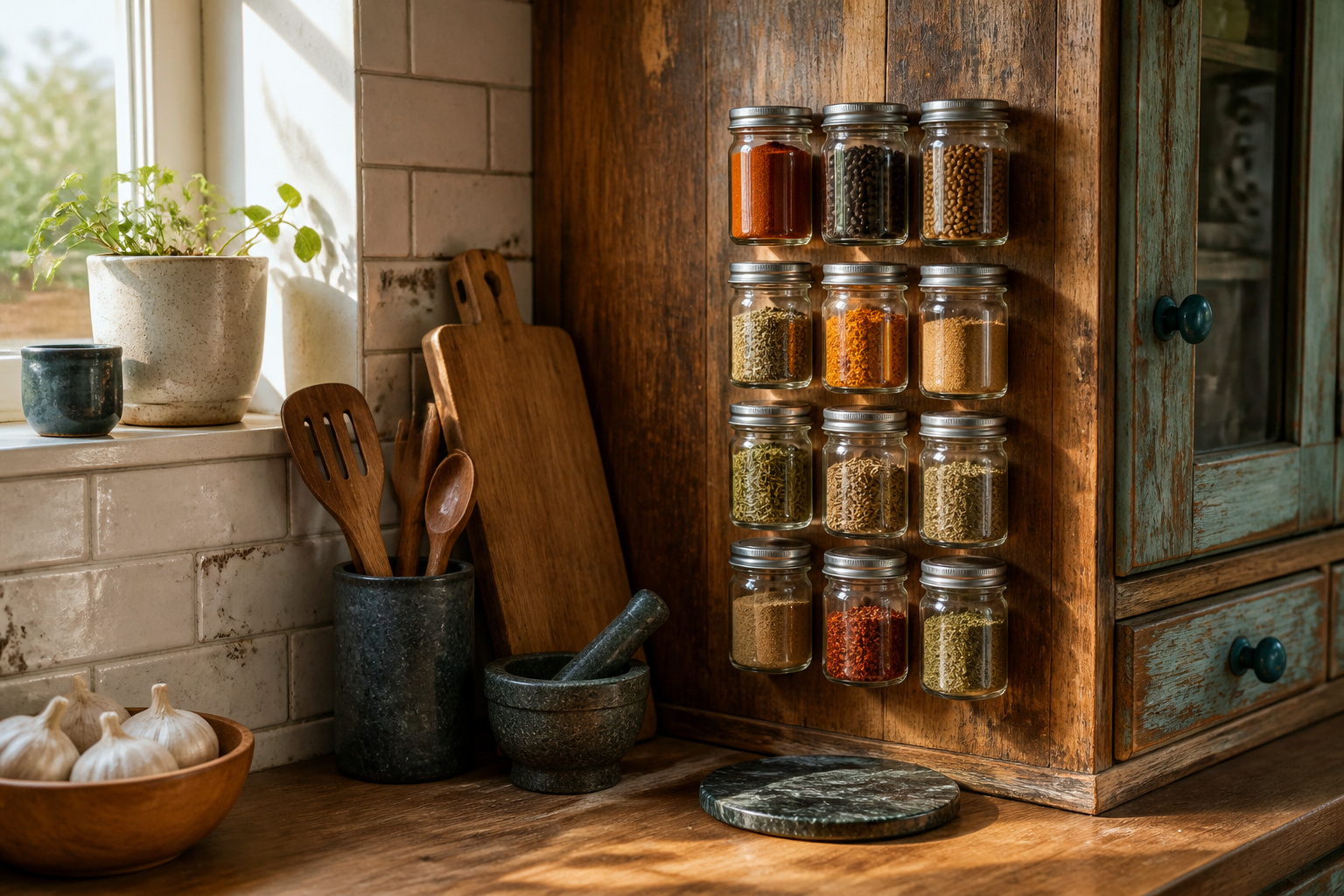
A magnetic spice rack is a wall-mounted or refrigerator-mounted storage system that holds spice containers in place with magnets rather than shelves or drawers. The difference between one that stays up and one that dumps your cumin on the tile comes down to magnet strength and the glue holding it, not the rack itself. A 15-millimeter neodymium disc rated N52 pulls about 2.4 kilograms, enough to keep a full jar stuck even after you bump it loading groceries.
Steel Sheet and Tin DIY Rack
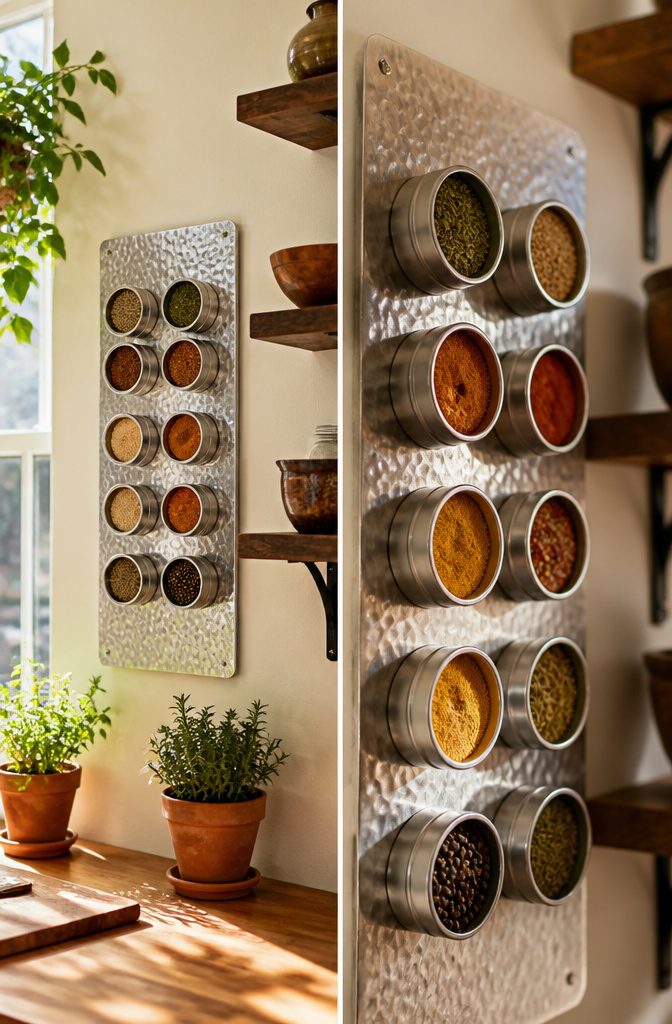
A sheet of 22-gauge steel cut to 11 inches by 30 inches gives you enough real estate for a dozen or more spice tins without dominating a small kitchen wall. Plain steel runs about $10 at a local metal shop or hardware store, and another $5 for Rust-Oleum spray paint keeps rust away while letting you choose hammered, matte, or color finishes that match your cabinets instead of your appliances.
The metal shop can drill corner holes for screws; that is the mount I would trust with four ounces of peppercorns pulling downward for months. Adhesive strips or construction glue work only on perfectly flat walls and still risk a slow peel under constant weight. Screws through those pre-drilled holes, anchored into studs or with wall anchors where needed, turn the steel into fixed architecture.
The tins themselves need their own magnets if they do not come with them built in. Rare earth magnets, 15 millimeters across, hold whole spices that standard magnets drop. Epoxy bonds magnet to tin base; anything less than industrial-strength glue surrenders to the pull.
Refrigerator Magnetic Jars
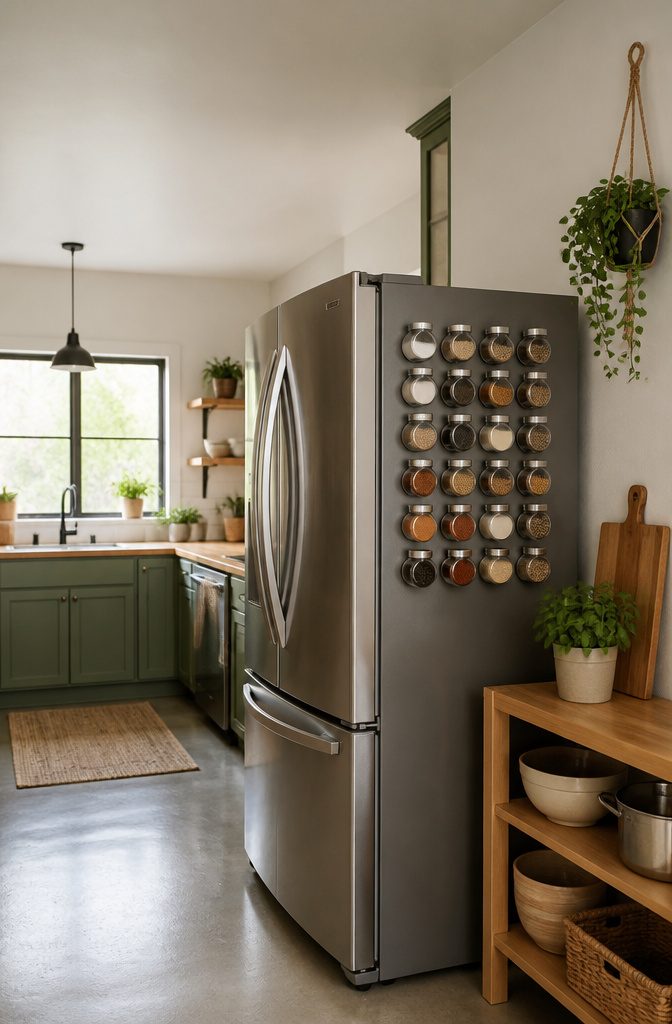
The side of a refrigerator is usually the easiest place to start because most are magnetic, though not all stainless steels are magnetic so a quick test with any fridge magnet saves disappointment later. I like this approach for rentals because the jars come down in minutes when the lease ends, no spackle or paint matching required.
Weight becomes the real limit. One magnet per jar often fails, as plenty of people have learned when a full jar of pork rub hit the floor. Two or three magnets on the base, or running magnets down one side, tends to hold better without looking cluttered. The pull in a shear position, where the jar hangs vertically rather than sticking flat, is weaker than the straight pull rating on the package, so plan conservatively.
The jars themselves can be any small container with a flat bottom or side for the magnet, though clear ones let you see when cumin is running low. Gluing the magnet directly works, or magnetic paper cut to size sticks without the mess of hot glue. Superglue holds firmer but commits you permanently; foam rings help level the base so the jar sits flush against the metal.
Organization by frequency of use matters more here than on a wall-mounted rack. The front edge at counter height gets salt, pepper, and garlic powder. Lesser-used spices migrate toward the back or down the side where you forget them until a recipe calls.
Clear-Lid Magnetic Tins
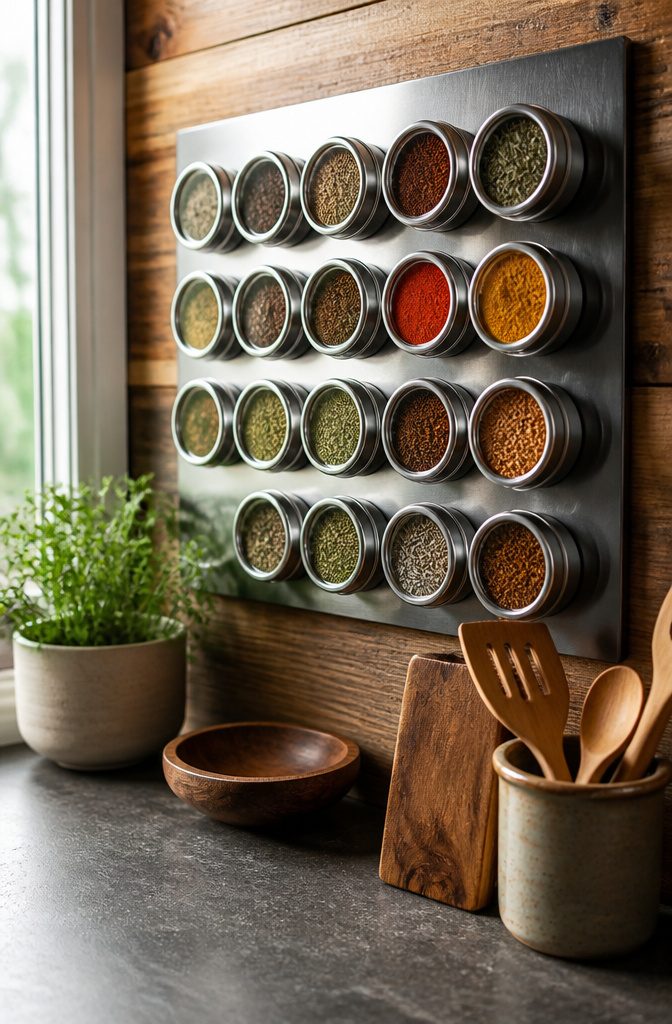
Clear-lid magnetic tins hold enough for a few weeks of regular cooking without crowding the work surface. Three to five ounces fits a half-cup or so of most ground spices, which is the sweet spot between running out mid-recipe and having jars sit so long the flavor fades.
The see-through top matters more than I expected when I first tried this setup. Standing at the stove with oil already heating, you spot paprika or cumin in one glance instead of pulling three labeled jars to read the sides. That visibility shaves real time off weeknight cooking, especially when the timing between spices is tight and you cannot afford a misread.
Grouping by type helps even more. I keep baking spices together, savory ones in another cluster, and heat sources in a third. After a few meals the hand learns where each zone sits, so the eyes barely need to engage. Fast cooks build that muscle memory fast, but only if the tins themselves make the first identification easy. Opaque lids force an extra step every single time, and that friction adds up when you are cooking on instinct and a twenty-minute timer.
Neodymium Magnet Strength
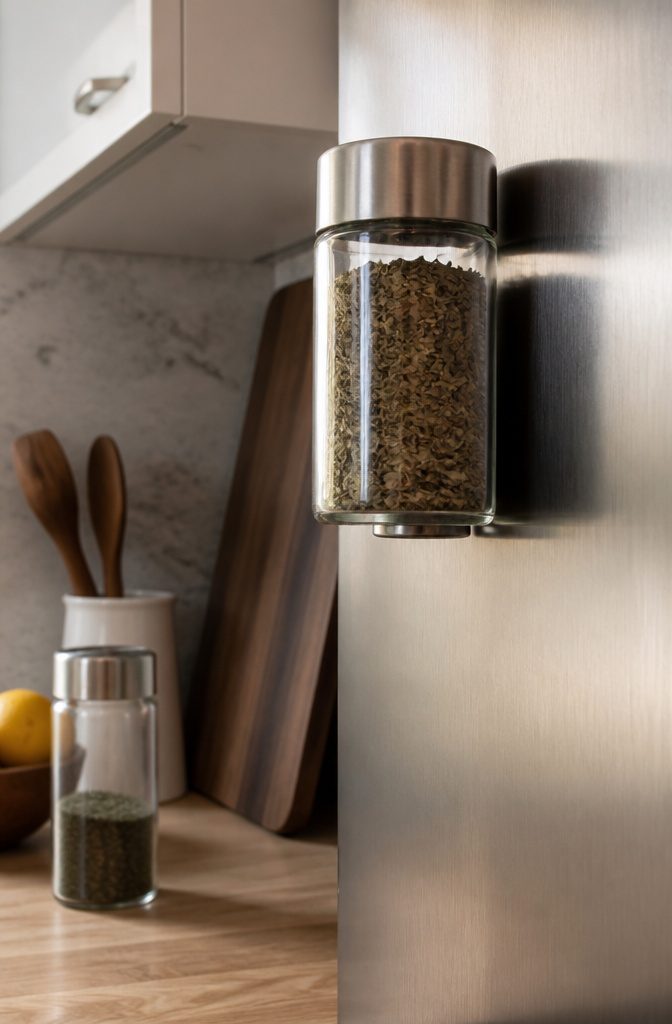
Standard magnets will let a full jar hit the floor. Neodymium discs fix that. A 15 mm diameter by 2 mm thick neodymium magnet carries roughly 3–5 kg of pull strength, which is enough to keep a steel-lidded glass jar stuck to a fridge door even after you bump it loading groceries.
The grade matters. An N35 magnet of that same size only pulls about 1.8 kg, while an N52 reaches 2.4 kg. For anything heavier than dried herbs, the stronger grade is worth the small price jump.
Before you commit, test the hold with the jar empty, then fill it with the actual spice. Ground cumin weighs more than dried basil, and the last thing you want is a domino cascade off the fridge when you close the door too hard. If the magnet stays but the jar flies, the bond between magnet and lid failed, not the magnet itself. Skip glue dots. Go straight to a heavy-duty super glue and let it cure fully before you load it up.
Labeled Jars for Looks
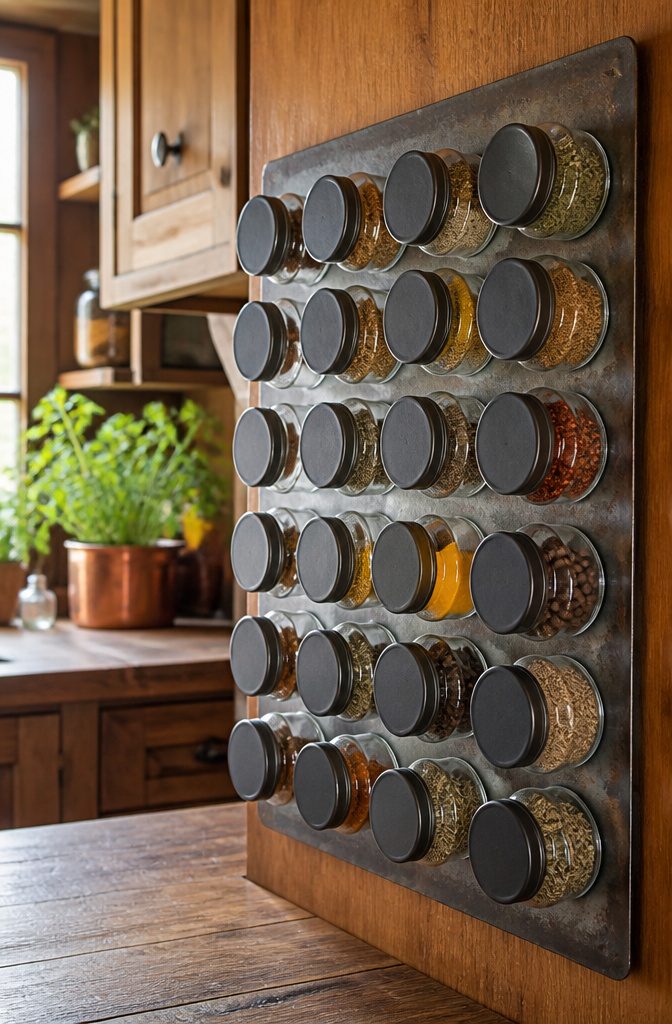
A vintage Dymo label maker turns spice jars into something that looks intentional rather than improvised. Paper labels taped on work fine, and a marker that writes on glass is even simpler, though it rubs off with enough handling. The real payoff comes in an open kitchen where guests can see your storage while you cook. Matching labels pull scattered jars into one visual unit, which matters more on a steel sheet or fridge door than it ever did inside a cabinet. Chalkboard paint on metal lids gives you a way to relabel when you finish one spice and reuse the tin for another, which helps if you buy in bulk or change blends seasonally. One tradeoff worth knowing: the labels that ship with jar sets look tidy at first, but the adhesive stickers on the magnets themselves may need reinforcement. Hot glue holds better long-term, though it is not the neatest look if the jar bottom ever faces outward. For purely visible storage, the label becomes half the point.
Materials You Actually Need
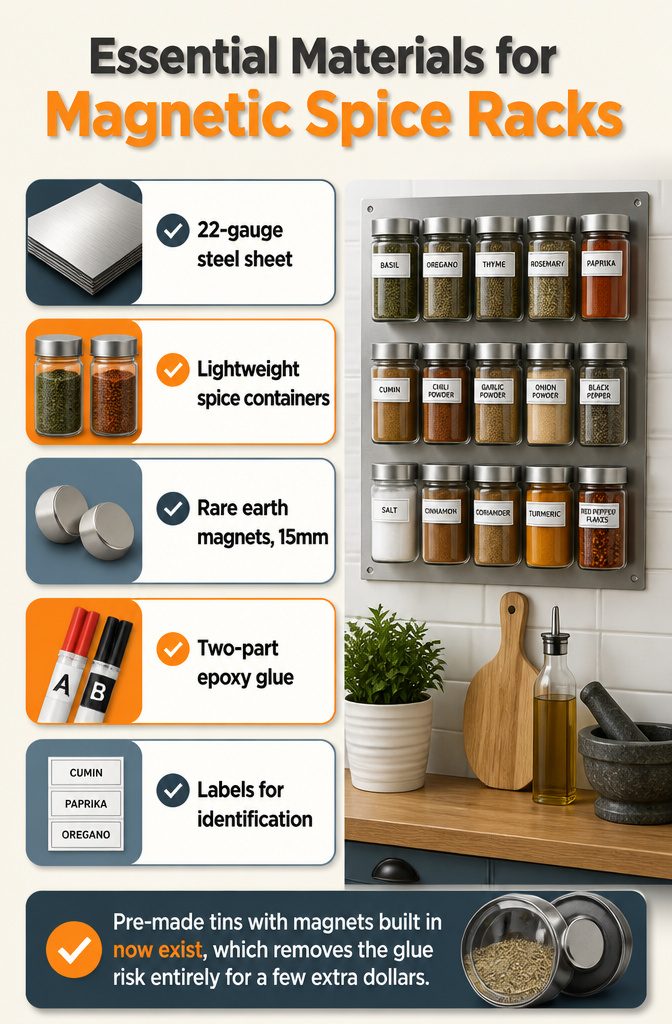
A magnetic spice rack lives or dies on the glue holding the magnet to the jar, not the magnet itself. Rare earth neodymium discs rated N35 or N52 will hold several pounds of weight; the failure point is almost always the adhesive letting go mid-reach.
Here is what actually goes on the shopping list:
- 22-gauge steel sheet as the wall base. A local metal shop can cut it to cabinet size and drill corner holes; expect to pay around $10. If you want it to match stainless appliances, specify 304 or 400 series stainless, since most stainless grades won’t attract a magnet at all.
- Spice containers that are lightweight, food-grade, and hold 3 to 5 ounces. Clear lids save you from opening twelve tins to find the cumin.
- Rare earth magnets, 15 millimeters in diameter. N52 pulls about 2.4 kg; N35 pulls about 1.8 kg. Either handles a full tin; weaker standard magnets will not.
- Two-part epoxy or industrial-strength super glue. Skip hot glue and glue dots entirely. One hard fridge slam and your pork rub becomes floor rub.
- Labels, because even clear lids look identical at 6 a.m.
Pre-made tins with magnets built in now exist, which removes the glue risk entirely for a few extra dollars.
Mounting Without Regret
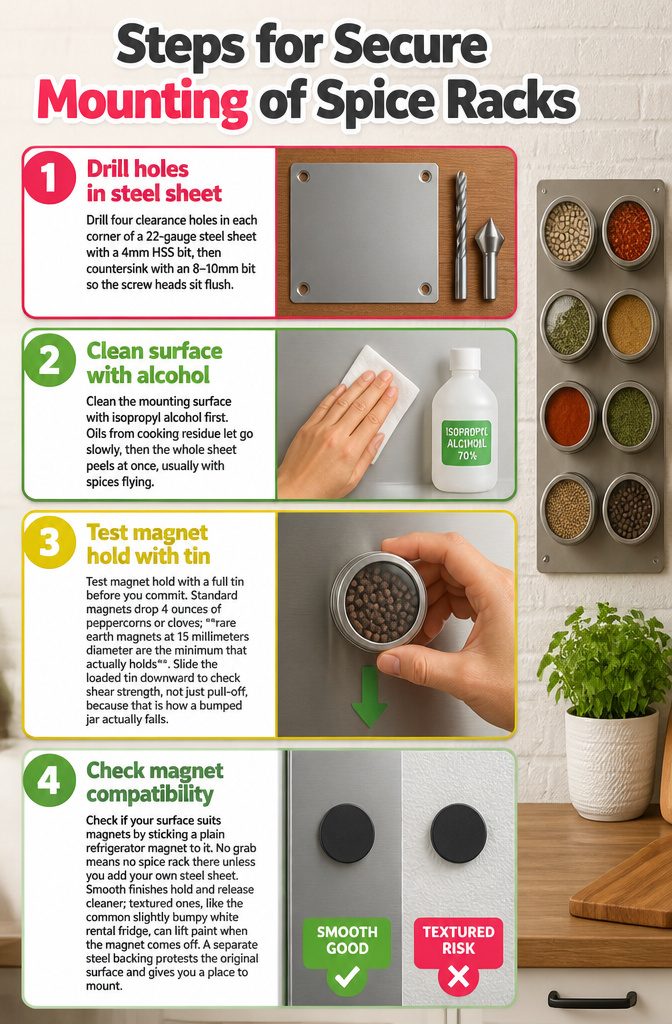
- Drill four clearance holes in each corner of a 22-gauge steel sheet with a 4mm HSS bit, then countersink with an 8–10mm bit so the screw heads sit flush. Grab adhesive plus screws holds better than either alone, especially on the thin walls common in rental units.
- Clean the mounting surface with isopropyl alcohol first. Oils from cooking residue let go slowly, then the whole sheet peels at once, usually with spices flying.
- Test magnet hold with a full tin before you commit. Standard magnets drop 4 ounces of peppercorns or cloves; rare earth magnets at 15 millimeters diameter are the minimum that actually holds. Slide the loaded tin downward to check shear strength, not just pull-off, because that is how a bumped jar actually falls.
- Check if your surface suits magnets by sticking a plain refrigerator magnet to it. No grab means no spice rack there unless you add your own steel sheet. Smooth finishes hold and release cleaner; textured ones, like the common slightly bumpy white rental fridge, can lift paint when the magnet comes off. A separate steel backing protects the original surface and gives you a place to mount.
Grouping Spices So You Find Them
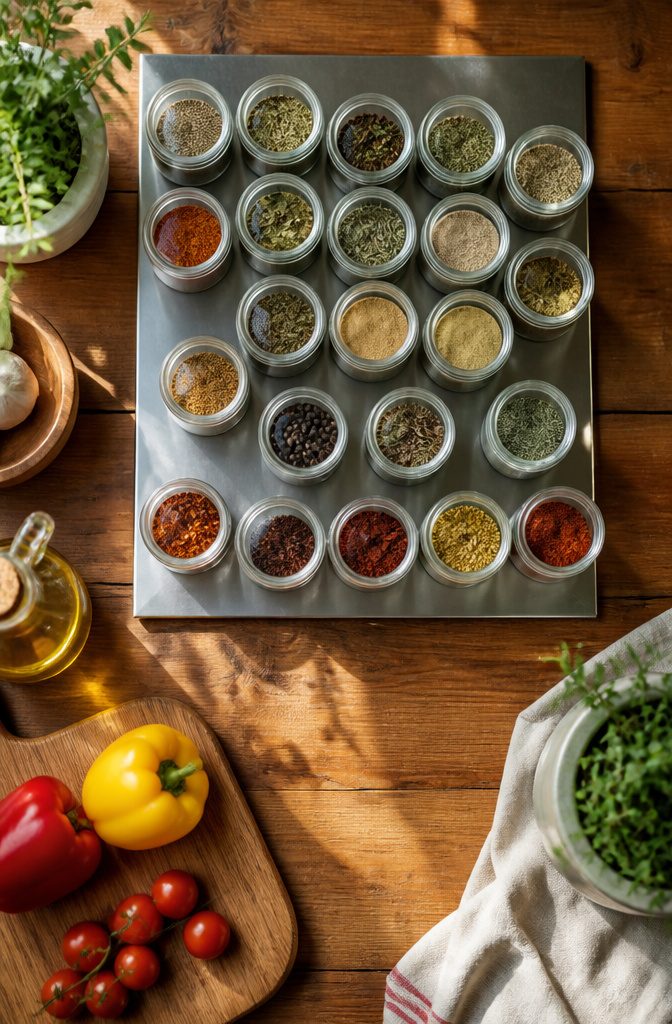
Alphabet order looks tidy on a shelf, but your hand reaches for cumin three times a week and for allspice maybe twice a year. Grouping by how you actually cook saves the constant scanning.
The setup that convinced me, reading through a dozen of these builds, runs hot spices low and closest to the stove, Italian herbs in the middle cluster, and the single-use bottles up top where they stay visible but out of the way. Someone who bakes might flip that entirely and keep cinnamon and nutmeg at eye level instead.
Clear lids help, but similar colors still trip you up. Basil and oregano look nearly identical through acrylic; a quick side label or keeping them in the same fixed order fixes that without extra design work. The real test is whether you can grab what you need without reading anything at all.
Proximity matters as much as grouping. A steel plate mounted within arm’s reach of where you stand to cook beats a prettier location across the kitchen. One builder noted that seeing the full collection out in the open stopped the duplicate purchases that used to happen when jars hid in a cabinet.
Frequently Asked Questions
What materials do I need for a magnetic spice rack?
You need a 22-gauge steel sheet, lightweight food-grade spice tins that hold 3 to 5 ounces, rare earth neodymium magnets 15 millimeters in diameter, two-part epoxy or industrial-strength super glue, and labels. Pre-made tins with built-in magnets now exist if you want to skip the gluing step.
How do I install a magnetic spice rack?
Drill four corner holes in the steel sheet with a 4mm bit, countersink with an 8–10mm bit so screws sit flush, then mount with screws into studs or wall anchors. Clean the surface with isopropyl alcohol first; cooking residue lets adhesive fail slowly. A combination of adhesive plus screws works best on thin rental walls.
What type of magnets should I use?
Use neodymium rare earth magnets, 15 millimeters across. An N52 grade pulls about 2.4 kg, while N35 pulls about 1.8 kg. Standard magnets cannot hold 4 ounces of whole spices like peppercorns and will drop them. Test with a full jar before you commit, checking shear strength by sliding the tin downward, not just pull-off strength.