
I mix a generous squirt of Dawn into warm water, grab a soft sponge and microfiber cloth, then tackle cabinets in this order: dry dust first to avoid mud, scrub with the grain using my soapy sponge, rinse with a clean damp sponge, and dry immediately to prevent water marks. Two minutes per door removes years of cooking grease without harsh chemicals. Hardware and stubborn spots require a separate approach.
Best Ways to Clean Greasy Kitchen Cabinets (Tested and Ranked)
Why do we keep pretending a quick wipe will fix years of bacon grease buildup? I’ve tested cabinet cleaning methods so you don’t have to waste your Saturday.
Dawn dish soap wins. Mix a few drops with warm water, grab a sponge, and watch years of grime surrender in two minutes. Follow with a microfiber cloth for a streak-free finish.
Pledge Everyday Cleaner works fast too, though you’ll scrub harder near the stove. Murphy Oil Soap feels traditional and smells nice, but the residue rinse is annoying.
Skip the vinegar soak. It takes forever and your kitchen reeks. Baking soda paste helps, yet struggles on serious buildup. Stick with Dawn and warm water for the best results.
What You Need to Clean Greasy Cabinets
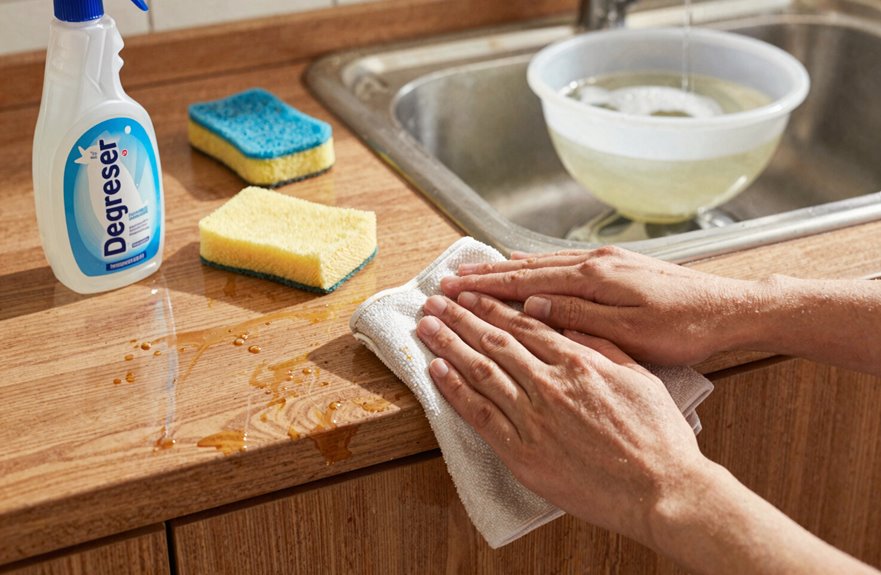
I’ve settled on Dawn and warm water as my go-to. Having the right tools makes the difference between a quick Saturday morning job and an all-day ordeal. I keep stocked the following for tackling greasy cabinets: a medium bucket, soft sponge, spray bottle with adjustable nozzle, and plenty of microfiber cloths. Six to eight drops of Dawn dish soap cuts through years of cooking residue without stripping finishes.
| What I Grab | Why It Matters | The Feeling |
|---|---|---|
| Warm water + Dawn | Dissolves grease without harsh chemicals | Relief, like finally exhaling |
| Microfiber cloth | Traps grime, won’t scratch | Pride in protecting what I own |
| Spray bottle | Controls moisture on cabinet doors | Confidence I’m doing this right |
I wipe along grain, then dry after cleaning. This prevents water marks and surface damage.
Dust and Prep Cabinets for Washing
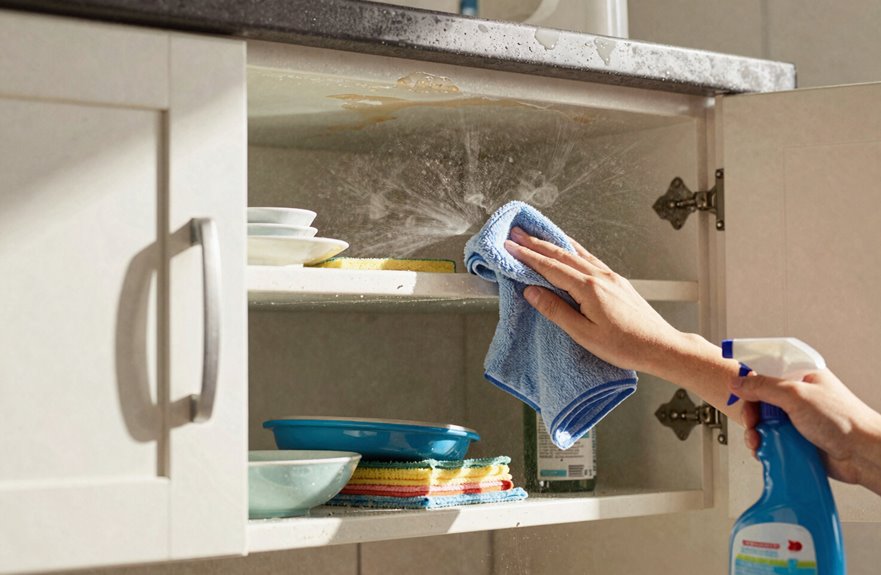
A dusty cabinet is just waiting to become a muddy mess once water hits it, so I always start with a dry wipe-down. I grab a microfiber cloth, nothing fancy, just the soft kind that actually grabs dust instead of pushing it around, and work my way across every surface. Top to bottom, left to right, because gravity’s real and I’m not cleaning twice.
For prep, I loosen the hardware so I can reach those greasy pockets hiding behind knobs and pulls. I fill my bucket, set out my soft sponge, and double-check I’ve got everything within arm’s reach. You don’t want to drip across the kitchen mid-wipe. Once the cabinets are dust-free and accessible, I’m ready to tackle the real cleaning.
Mix the Best Cleaning Solution for Your Cabinets
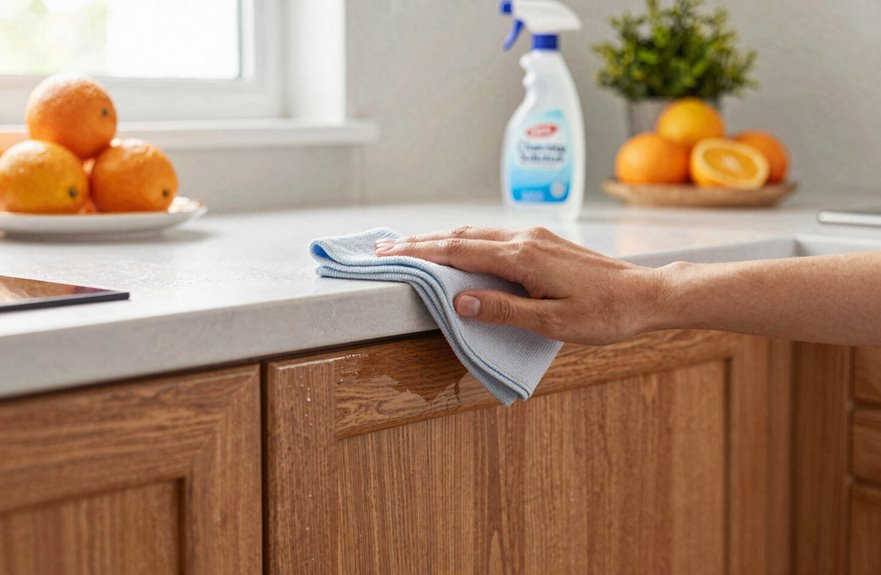
So what’s actually worth mixing up? I’ve tested the options, and Dawn dish soap and warm water work best. No vinegar, no fancy castile soaps; just this grease-cutting solution that melts through years of buildup in about two minutes per cabinet.
For cabinet cleaning, squeeze a generous squirt of Dawn into a bowl of warm water. Get your sponge sudsy and start scrubbing. The grease removal happens almost effortlessly. Dawn’s surfactants break down oils that have accumulated for months. This is the fastest, strongest cleaning method available.
The next step matters: wipe down surfaces afterward with a clean, damp sponge. This prevents your kitchen cabinets from feeling sticky. Use this same mix for DIY backsplash cleanup as well.
Scrub, Rinse, and Dry for a Streak-Free Finish
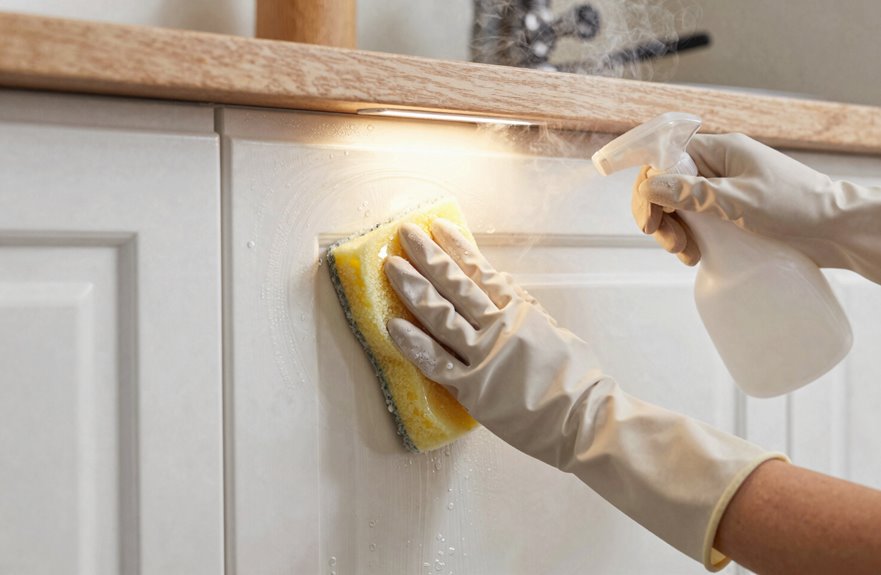
Now that your cleaning solution is ready, it’s time to apply it. Grab your sponge, dip it into your Dawn dish soap and warm water mixture, and start scrubbing the cabinet fronts. The grease removal happens visibly. Work thoroughly but gently without rushing.
The key step most people miss: rinse with a clean, damp sponge, wiping in the direction of the grain. Then dry immediately with a microfiber cloth. A streak-free finish requires this step. Pay special attention to fingerprints around knobs and pulls, where hidden grime accumulates. Finish with one final buff using your microfiber cloth. Your cabinets will look spotless again.
Keep Kitchen Cabinets Clean Between Deep Washes
I keep my cabinets looking fresh with quick daily wipe downs using a spray bottle of warm water and a few drops of Dawn, hitting those fingerprint magnets around handles and knobs. Once a month, I remove the hardware entirely, give it a proper soapy wash and buff, then tackle both sides of each door with a damp cloth to rinse away any residue. I always finish with a dry microfiber cloth. Skipping this step once left me with water marks I noticed for weeks, so the final drying step prevents visible water damage.
Daily Wipe Downs
Why let yesterday’s spaghetti splatter become tomorrow’s scrubbing marathon. Daily wipe-downs save me from wrestling with greasy cabinets later.
- Keep a spray bottle of warm water with 3–4 drops of Dawn dish soap ready for quick maintenance cleaning
- Hit high-touch spots, cabinet handles, knobs, and stove-adjacent surfaces, with a non-abrasive sponge while cooking and after
- Dry everything with a microfiber cloth to prevent water marks and protect the finish
I wipe spills immediately, never letting grease buildup settle in. This takes two minutes, not two hours. Your future self standing in a clean kitchen with coffee in hand will benefit from skipping the deep scrub. Small habits produce measurable results.
Monthly Surface Cleaning
Daily wipe-downs handle the surface chaos, but once a month I give my cabinets a proper once-over before grime settles in for the long haul. Monthly surface cleaning keeps my greasy kitchen cabinets from becoming a bigger project than I’ve got time for.
I grab my microfiber cloth and a grease-cutting cleaner, nothing fancy, just something that actually works. I wipe the cabinet exteriors thoroughly, paying extra attention to knobs and drawer pulls where my family’s fingerprints love to accumulate. I learned through experience to avoid vinegar and ammonia on finished wood, as both strip the finish I’ve worked hard to maintain.
I hit both sides of each door, then dry with microfiber to prevent water spots. The process takes twenty minutes and keeps everything looking fresh.