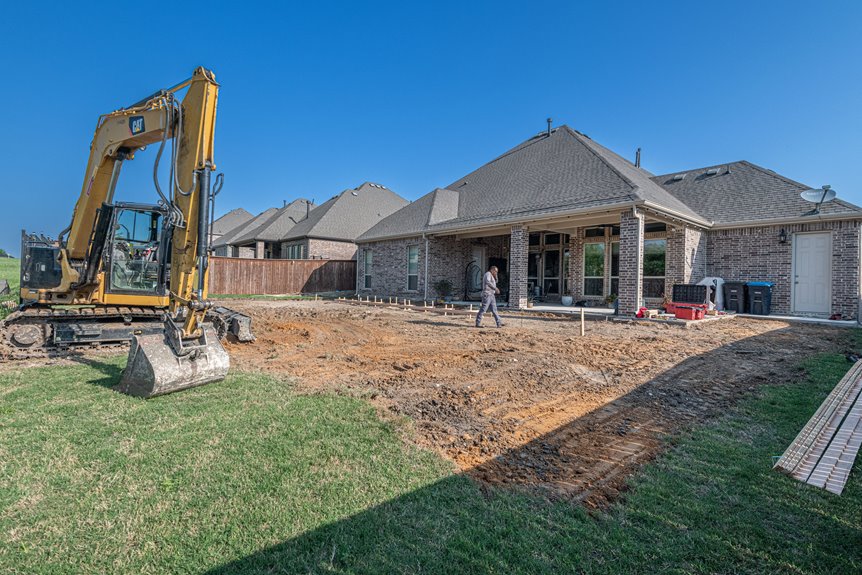
I finished my own backyard in stages, starting at about $10,000 for irrigation, plants, and mulch. Basic but complete. You can hit $20,000 with denser planting, a water feature, and multiple seating spots.
At $50,000, you’re looking at pavers, outdoor kitchens, and mature trees. The $75K to $125K range brings composite decking, hot tubs, and custom hardscaping. Labor eats the biggest slice with kitchens and fire pits, not materials. Start with drainage and irrigation, phase the rest, and you’ll avoid expensive rework later. The budget breaks down across these priority stages.
What’s Included in a “Finished” Backyard
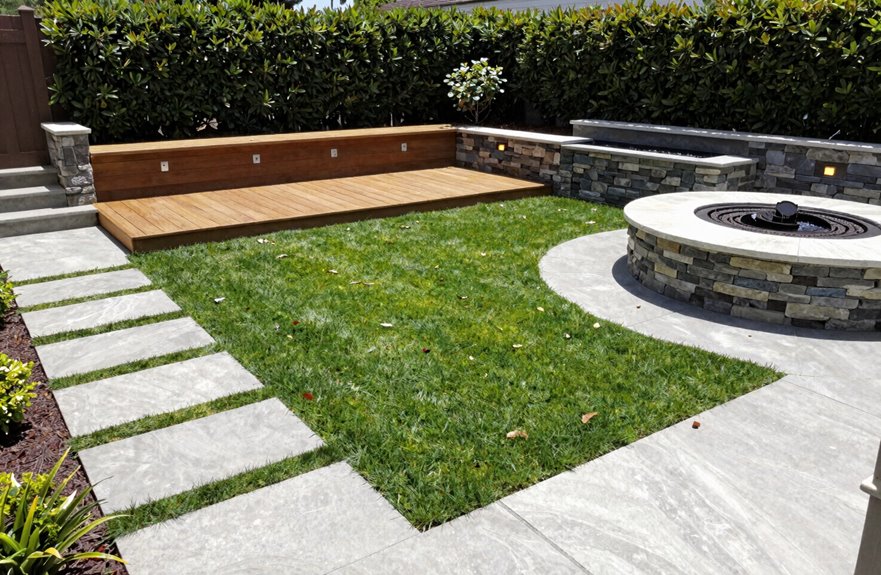
When I first started planning my own backyard overhaul, I thought “finished” meant throwing down some sod and calling it a day. A truly finished backyard demands more intention.
Your backyard renovation cost hinges on what you actually include. For most of us, that means irrigation, strategic lighting, softscaping, and hardscaping; patios, decks, pavers that ground the space. I learned to add demolition, weed removal, and fencing explicitly, as they will surprise your budget otherwise.
Skipping the design phase cost me nearly $8,000 in change orders. Now I insist on mapping every element first, whether through online tools or a professional. Phase-based planning helps too. Add that pergola later when funds replenish. This approach creates something lasting that adapts to your financial timeline.
Backyard Finishing Costs: $10K to $125K Real Examples
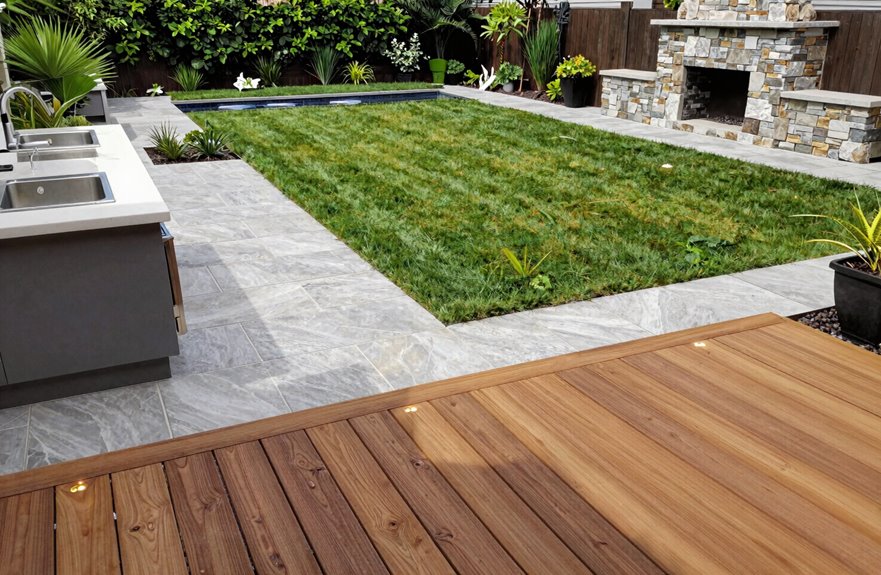
I’ve seen backyards evolve on budgets across this entire spectrum, and I’m ready to walk you through exactly how your dollars transform the space. We’ll explore three real tiers: the $10K essentials refresh (plants, gravel, smart irrigation), the $20K layered experience (seating zones, water features, that perfect fire pit), and the $50K–$125K fully realized outdoor living room with kitchens, mature trees, and hardscaping that rivals your interior square footage. Each level builds on the last, so you can spot where your priorities land, whether you’re stretching every dollar toward greenery or investing in pavers and pizza ovens.
Real Cost Examples
How much does it actually cost to transform a backyard from “meh” to magnificent? These numbers come from real yards.
At $10,000, you’re getting foundational work: irrigation and site prep run about $3,000, planting another $3,500, with bark mulch bringing texture for $2,000.
Double that to $20,000 and suddenly you’ve got density. Lusher planting costs around $8,500, a second seating area, prefab steppers, and maybe a modest water feature.
At $50,000, you get new pavers underfoot, an outdoor kitchen suitable for actual cooking, basic lighting, and mature trees with presence. These spaces function as gathering spots.
When cost climbs toward $125,000, you’re orchestrating upgraded kitchens, pergolas, hot tubs, and outdoor showers. Your yard becomes a destination property.
Budget Tier Breakdown
Those real examples paint a picture, but let’s break down what you’re actually buying at each price point so you can plan realistically.
- $10K: Plants, gravel, mulch, irrigation. Simple, green, done.
- $20K: Dense planting, second seating spot, water feature, prefab steppers. More room to breathe.
- $50K: Pavers, outdoor kitchen, basic lighting, mature trees. Outdoor living starts here.
- $75K: TimberTech deck, bigger kitchen, artificial turf, extended planting. This is where it gets serious.
- $125K: Oversized concrete squares, river rock, hot tub, outdoor shower. The full backyard makeover fantasy.
Your budget shapes every choice. Knowing this cost breakdown early prevents costly revisions and scope creep. Start where you are. Build what you need. Grow from there.
Material vs. Labor: How Backyard Finishing Budgets Split
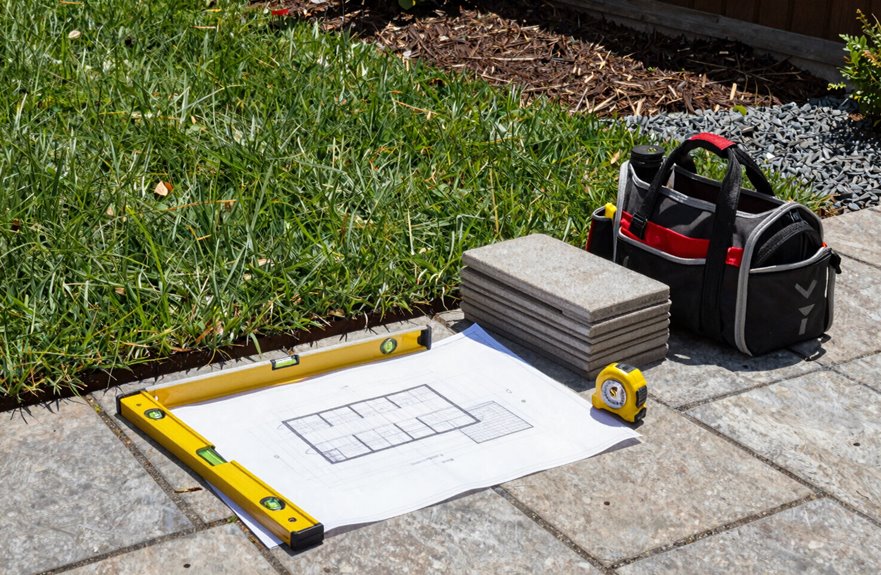
Where does your backyard budget actually go? Understanding the labor and materials cost split transforms how you plan.
For backyard finishing, materials often dominate foundational work. That 10-by-10 concrete patio costs three to six thousand dollars, mostly rock and pour. Wood decking runs five to ten grand for modest square footage. With outdoor kitchens, fire features, and covered pavilions, labor becomes the primary expense driver. A basic grill station starts around $6,300, but luxury installations require skilled labor that significantly increases costs.
Friends frequently make budget mistakes by pricing pavers while overlooking permits. They imagine DIY savings, then discover electrical codes require professional installation. The key distinction is this: materials form the foundational structure, while labor manages the technical complexity. Recognizing which is which positions you to negotiate effectively with any contractor.
Phase Your Build: Spread Costs Over Multiple Seasons
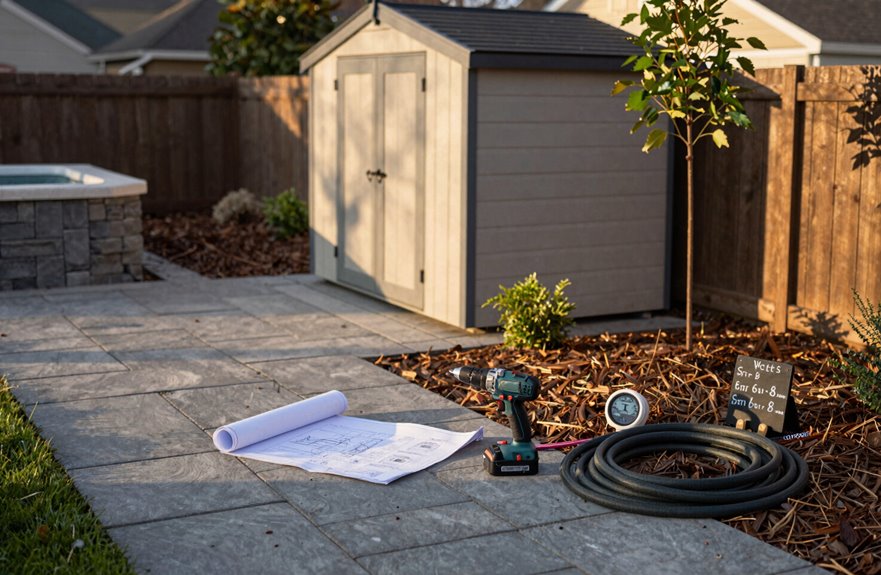
I’ve learned the hard way that trying to finish everything at once usually means cutting corners or maxing out credit cards, so I break my backyard into strategic phases that match my cash flow. Start with the critical stuff: irrigation lines, proper drainage, and basic lighting. Ripping up finished patios later to fix flooding creates expensive do-overs that are worth avoiding upfront. Once those essentials are locked in, you can time bigger splurges like an outdoor kitchen or cedar pergola for seasons when your budget has more flexibility. Designing flexible spaces now prevents costly reconfiguration when phase two rolls around.
Strategic Timing Advantages
Why rush a backyard transformation when you can build it piece by piece? I learned this lesson after watching neighbors stress over massive loans for one-shot renovations. Phase planning changed everything for me. It’s how we built our outdoor space without sacrificing vacations or sleep.
Smart scheduling matters. I locked in seasonal pricing discounts by booking hardscaping in late fall when crews needed work. Essential features came first: irrigation, lighting, the patio foundation. Later phases added the fun stuff. When my husband changed jobs, we welcomed budget shifts instead of panicking.
Phasing works because:
- Spread cash flow across years, not months
- Snag off-season contractor rates
- Design multi-use spaces that grow with you
- Adapt when life throws financial curveballs
- Watch your backyard evolve with your family
Essential First Phase
My *Cost planning* trick: Lock in weather-dependent hardscaping during optimal seasons, then pause. You’ll stagger payments, dodge contractor crunches, and actually live with each phase. Build the bones right. The fun stuff, decks, kitchens, fire features, comes when you’ve got breathing room and no regrets.
Cut Costs Without Cutting Corners: 6 Tactics
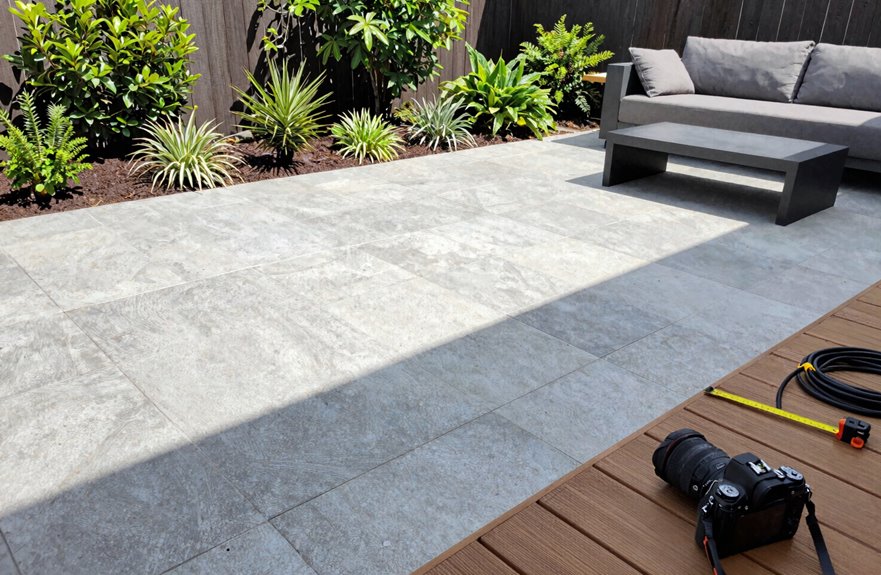
How do you shrink a backyard budget without ending up with something you’ll regret every time you step outside? Smart cost reduction starts with intentional backyard design, not cheap shortcuts.
Smart cost reduction starts with intentional backyard design, not cheap shortcuts you’ll regret every time you step outside.
- Phase your build. Tackle irrigation, lighting, and hardscaping first, then layer in that outdoor kitchen later.
- Reuse what you’ve got. Those old stepping stones and gravel paths still have plenty of life.
- Choose wisely in materials selection. Stamped concrete mimics natural stone beautifully, and pressure-treated wood reduces long-term maintenance costs.
- Build your budget with a real design phase to spot trouble early. Slopes, pools, and demolition costs add up quickly.
- Use a cost calculator and free consultations to ground your numbers in reality before shovels hit dirt.
How to Get an Accurate Backyard Finishing Quote
You can trim your budget six ways from Sunday, but it won’t mean much if your contractor’s quote turns out to be a rough guess dressed up in fancy formatting. Precision starts with clearly defined scope and budget, since costs swing wildly. A 200 sq ft wood deck runs $5,000–$10,000, while a modest concrete patio sits at $3,000–$6,000.
Insist on line-item breakdowns covering design, permits, hardscaping, and every other piece. No hidden surprises and no vague estimates. Bring photos and measurements to cost calculators to get realistic numbers in under ten steps. Phasing helps manage cash flow without compromising quality.
Most importantly, only work with licensed design-build firms. Their quotes reflect real durability, code compliance, and craftsmanship that keeps your backyard functional and attractive for years to come.