
I’ve learned that choosing patio doors starts with watching how you actually live: where you haul groceries, where morning coffee lands, whether you need swing room or a track that hugs the wall. I measure twice with a tape, test clearance with a broom handle, then match the configuration to my traffic. Single doors work for tight spots, French doors add visual interest, and bi-fold doors create open sightlines when you want walls to disappear.
Budget-wise, I weigh upfront costs against year-twenty headaches. Vinyl is cheap but requires replacement, while fiberglass costs more upfront but resists damage for decades. Climate dictates glass choices. Low-E coatings protect against UV exposure, and triple-pane glass performs better where winters are severe.
I’ve botched one DIY install and learned flashing sequence matters. The correct order is sill pans, weep holes, and proper drainage. Installation done wrong leads to water damage and structural problems.
Buyers notice seamless indoor-outdoor flow and lower energy bills. These factors outweigh curb appeal alone. When you examine daily rhythms and long-term resilience, your choice becomes clear.
Start With Your Space: Layout and Daily Traffic Patterns
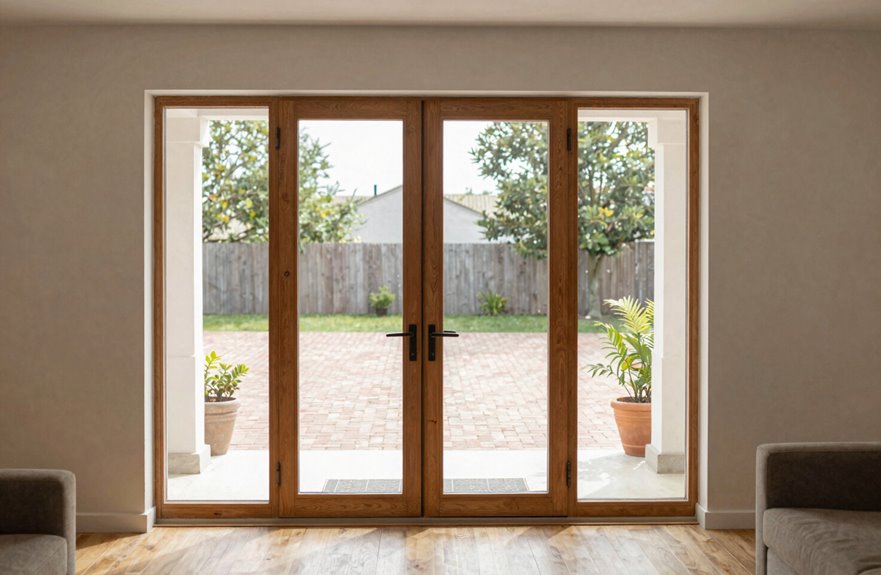
How do you know which door will actually work in your space? The answer lies in mapping your space layout and watching how you actually move through it.
Start by tracing your daily traffic patterns. Where do you pace with morning coffee, haul groceries, or host friends spilling onto the deck? That pattern reveals everything. Measure your opening width precisely, then test swing clearance by swinging a broom handle to visualize arcs. No room? A track system gliding horizontally saves precious floor space.
Consider door configurations that match your rhythm: single egress for quiet mornings, dual access for family chaos, or dramatic expanses for gatherings. Prioritize indoor-outdoor flow that feels effortless, not engineered. Your home should embrace how you live, not fight it.
Choose Your Door Type: Sliding, French, or Bifold Patio Doors
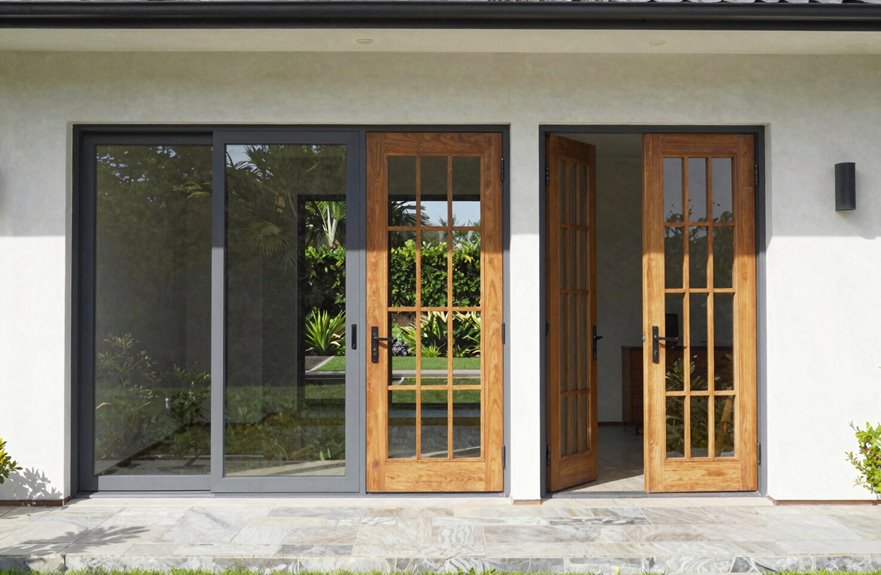
I’m weighing how each door type balances space efficiency with style versatility because these two factors often pull in opposite directions. Sliding doors hug the wall and free up your floor plan, while French doors swing wide and bring that classic, open-armed elegance found in older homes. Bifold and multi-slide systems split the difference by folding or stacking away completely, though you’ll need the wall depth and budget to accommodate their mechanics.
Space Efficiency Comparison
The space between your sofa and that sliding glass door you’re dreaming about is where space efficiency matters most. Sliding patio doors became my preferred choice for tight layouts; they glide horizontally with no swing radius needed, making them perfect for cozy living rooms.
Sliding patio doors maximize every square foot. Bi-fold patio doors demand stacking space but reward you with dramatic openings. Multi-slider and pocketing designs practically erase walls when you’ve got room to spare.
Hinged French doors bring classic charm but need clearance; I’ve knocked my shin on an outswinger before. Wall-opening options range from efficient to expansive. Your choice depends on priorities: seamless flow or saving every inch.
Style Versatility Options
What separates a house from a home you’ve truly settled into? It’s often those details that reflect you: your pace, your gatherings, your morning coffee rituals.
Style versatility matters because different door types serve different spaces and lifestyles. Sliding patio doors suit compact city homes; they glide horizontally, saving precious floor space while flooding rooms with light. French patio doors swing wide for that classic, welcoming gesture at garden parties. Bi-fold doors accordion back completely, suddenly transforming your kitchen into the patio. Multi-slide doors take it further, with panels stacking away into walls.
Customization lets you choose finishes, hardware, and glass that reflect your personal style. Visit showrooms, touch samples, and imagine your life unfolding through each frame.
Set Your Budget First: Material Costs and Upgrade ROI
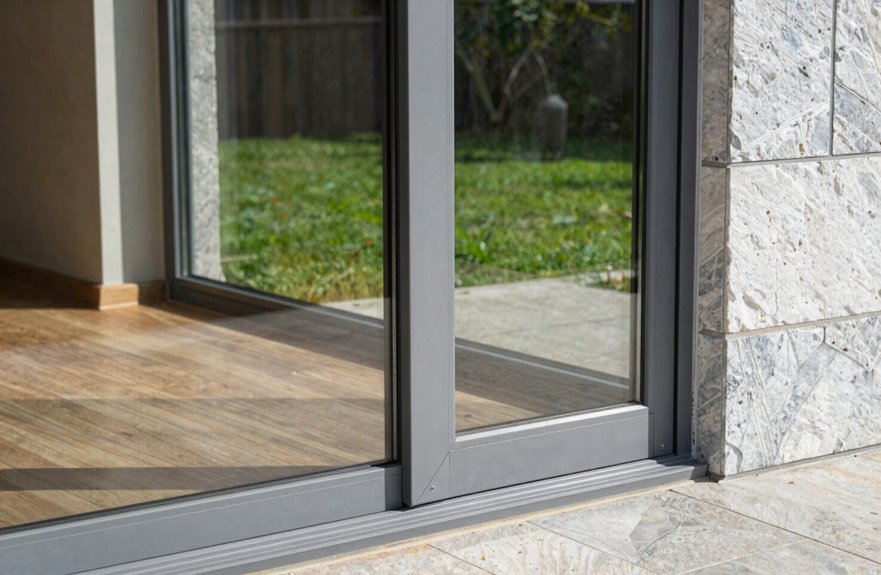
Before you fall in love with that wall of folding glass doors, let’s talk numbers, because budget reality and aesthetic appeal don’t always align. Solid budget planning starts with understanding what drives patio door cost: material costs, installation complexity, and those tempting upgrades.
Here’s my breakdown. Vinyl vs wood fiberglass. Vinyl is your budget-friendly entry point, while wood and fiberglass cost more upfront but reward you with durability, beauty, and better ROI. Neighbors often face significant replacement bills five years down the road with lower-quality options.
Factor installation complexity into your math. Full-frame replacements demand deeper pockets than simpler retrofits. But don’t stop at sticker price. Weigh energy savings, comfort, and resale value. That premium door might pay for itself over time through reduced energy costs and increased home value when you sell.
Size It Right: Measuring Openings for Maximum Glass
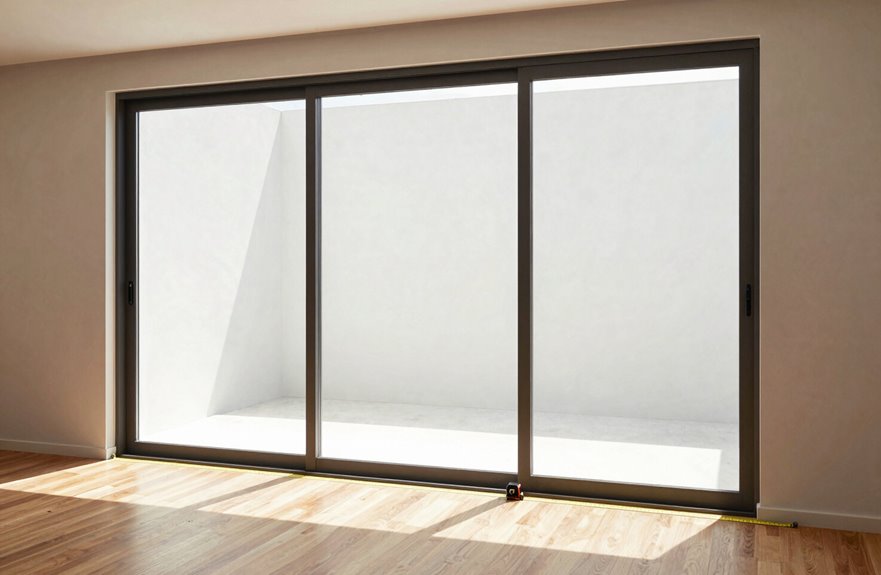
Where exactly do you want all that glass to go? I learned this the hard way during my own renovation: I fell in love with a gorgeous folding system before checking my opening measurements. This was a significant mistake.
Start with opening width and height. These numbers determine your door configurations: sliding for tight spaces, French doors if you have swing room, or bi-folds when you want that wide-open feeling. I measure twice, always, because panel layout changes everything.
For maximum glass, wall-pocket designs are the optimal choice. Panels simply disappear into the wall, merging indoors and out. They do demand precise installation planning. Custom framing, structural headers, timing with your contractor; every detail matters. Get this right, and you’re not just installing doors. You’re claiming your view.
Pick Your Material: Wood, Fiberglass, or Vinyl for Your Climate
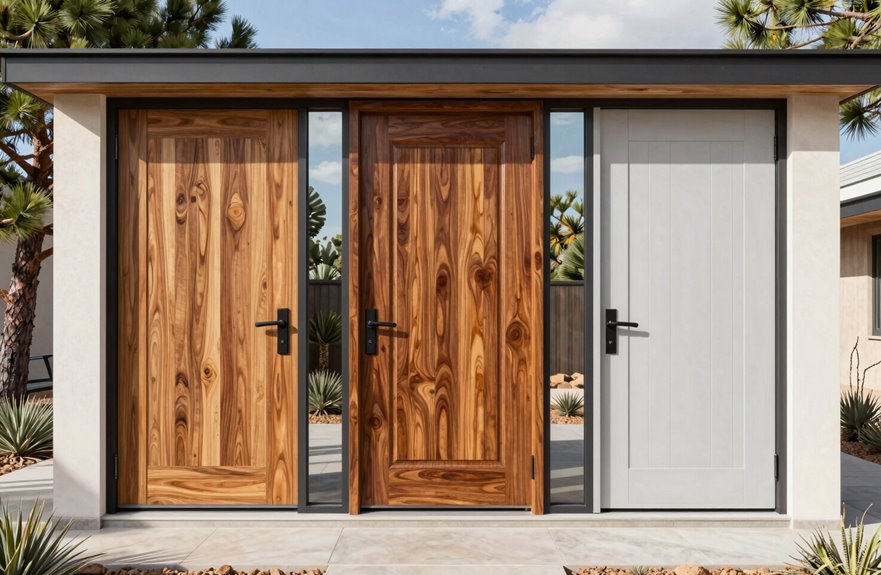
Once you’ve nailed down the size and configuration, the real decision is what these doors are actually made of.
Wood gives you that warmth and character we all crave, but it requires significant maintenance. EverWood finish can help extend its lifespan.
Vinyl is your budget-friendly option with low maintenance and solid energy efficiency. However, it can struggle with serious climate variation, expanding and contracting more than desired in areas with temperature fluctuations.
Fiberglass, specifically Ultrex, is a durable framing material that resists temperature swings, pairs well with Low-E glass, and delivers excellent insulation without the upkeep wood demands. For most climates, it offers the best long-term value.
Select Glass: Privacy Ratings, UV Coatings, and Light Control
I’m looking at glass options now. Privacy, UV protection, and light control are what separate a door you’ll love from one you’ll curse every afternoon. I learned this the hard way when my old west-facing patio doors turned my living room into a greenhouse and bleached my sofa in two summers. Low-E coatings, tinted glass, and even integrated blinds can solve these problems. You need to match the solution to your specific situation, which I’ll walk you through right now.
Privacy Glass Options
For your patio doors, privacy glass offers more than concealment from neighbors. It’s about balancing openness with seclusion.
Explore obscurity patterns such as etched, frosted, or decorative grilles that allow daylight to enter while blocking external views. You’ll need to balance light transmission with discretion; some patterns preserve brightness without compromising privacy.
Pair your privacy glass with a Low-E coating. This combination reduces glare and significantly improves energy performance. This pairing keeps rooms comfortable year-round without excessive thermostat adjustments.
UV coating deserves consideration as well. Extended sun exposure fades furniture and finishes over time. UV protection prevents this deterioration and extends the lifespan of interior furnishings and decor.
UV Protection Coatings
While privacy glass keeps prying eyes out, sunlight causes its own kind of damage. UV coatings block harmful rays that fade hardwood floors, artwork, and vintage rugs. Low-E coatings take it further, reflecting heat back inside during winter and bouncing it away in summer, boosting energy efficiency year-round.
Check the Solar Heat Gain Coefficient on the label. Lower numbers work better in hot climates; higher ones suit colder regions. Triple-pane glass with UV-blocking layers minimizes heat transfer, reduces glare, and protects interior furnishings and finishes. This combination of features addresses the practical requirements of climate control and material preservation.
Light Control Features
How do you want your patio doors to feel—like a wide-open welcome or a carefully curated glimpse? Privacy ratings let you dial visibility up or down, from crystal clear to softly obscured.
Low-E glass offers significant benefits. Its UV coatings protect furnishings from fading while maintaining interior brightness. The key advantage is managing solar heat gain without reducing natural light.
Checking SHGC ratings makes a measurable difference. Lower numbers mean less heat enters through south-facing doors. Pair this with multi-pane options, double or triple glazing, and you achieve effective light control plus improved winter insulation.
Layering these features according to your climate creates patio doors that serve your specific needs rather than functioning as an afterthought.
Lock It Down: Multi-Point Systems and Smart Security Upgrades
Where exactly does your patio door leave you vulnerable? For me, it was the single flimsy latch that rattled in windy weather, an invitation I didn’t mean to extend.
What I’ve learned about genuine protection differs from the feeling of it.
Multi-point locking transforms your door from a swinging panel into a fortified barrier. These systems engage at several points along the frame simultaneously. That satisfying thunk when everything clicks into place means you’re not relying on one small mechanism anymore.
Smart security takes this further. Remote locking allows you to secure the house from your car when you’re halfway down the driveway. Status monitoring alerts you if someone, like a teenager, leaves the door unlocked. Reinforced frames of aluminum or fiberglass boost intrusion resistance dramatically.
These door enhancements serve a practical purpose. Your home will provide the protection you need.
Waterproof Your Sill: Drainage Systems and Climate-Specific Flashing
I’ve seen too many patio doors fail not from the glass or the frame, but from water sneaking in where you’d never think to look. That’s why I always recommend Hydrolock sill protection on inswing options. It actively channels water away and seals it out before it becomes your problem. Pair that with climate-resistant flashing methods and a smart drainage system beneath the sill, and you’re installing a door that defends against every storm your region can throw at it.
Hydrolock Sill Protection
Why does water always seem to find its way into the places we least want it? Soggy thresholds are a common problem, and Hydrolock sill protection solves it effectively.
This redesigned fiberglass sill improves water management by directing rain away from your threshold, not toward it. Your drainage system gets a serious upgrade, pushing moisture out before it can enter. This transforms door performance in wet climates, eliminating worry during storms.
| Feature | Benefit |
|---|---|
| Redesigned channeling | Directs water outward, naturally |
| Fiberglass construction | Resists rot, warping, wear |
| Integral drainage paths | Reduces pooling, ice buildup |
| Flashing compatibility | Seamless weather resistance |
With proper flashing designs, Hydrolock enhances weather resistance through freeze-thaw cycles. It creates a dry, protected entryway where you can enjoy your view without water damage concerns.
Climate-Resistant Flashing Methods
Although we’ve already tackled the sill itself, the armor that surrounds it deserves attention because even the best-designed sill can fail if it’s not properly flashed. Poor installation can undermine a quality product like a Hydrolock sill.
Your rough opening needs climate-specific flashing integrated at every layer. Start with weatherproof flashing compatible with Ultrex fiberglass framing. This maintains your moisture barrier without creating thermal bridges that bleed energy.
The installation sequence is critical: flashing, sill pan, flashing tape. Skipping a step invites water intrusion into your walls.
The drainage channel serves as your escape route for any water that penetrates the system. Continuous weep channels carry infiltrated water away from your threshold, protecting the structure beneath.
Drainage System Integration
How does water actually leave your sill when it shows up uninvited? Watching rain pool where it shouldn’t reveals the importance of proper drainage integration.
What actually protects your home:
- Weep holes that direct water away before it accumulates
- Drainage channels guiding water runoff like ushers at a concert
- Hydrolock sill technology that creates a barrier against moisture
- Flashing integration working with weather-resistive barriers to redirect the deluge
Your sill drainage needs proper slope and climate-specific flashing. In freeze-thaw regions, inadequate flashing integration fails spectacularly. Correct installation creates a dry threshold that functions as a home should, preventing water intrusion and protecting the structural integrity of your door assembly.
Cut Energy Costs: ENERGY STAR Ratings and Frame Insulation
When I replaced my patio doors last spring, my energy bill dropped noticeably, and I’ve been paying closer attention to labels ever since. ENERGY STAR certification made the difference. For genuine energy efficiency, I look at frame insulation first. Ultrex fiberglass, for instance, conducts heat 5,000 times less than aluminum, meaning my living room stays comfortable without the HVAC working overtime.
Then there’s the glass itself. Low-E coatings reflect summer heat while trapping winter warmth. Pair those with triple-pane glazing and argon fills between the panes, and heating and cooling savings reach 10–15%. I also match the glass specs to my climate: higher SHGC values up north, lower ones down south. These choices deliver measurable savings.
Match Your Home: Exterior Colors, Interior Finishes, and Hardware
Why settle for doors that clash with everything you’ve built? I replaced my patio doors last spring and discovered how crucial this alignment is. Your exterior color should echo your home’s soul: bold black for modern lines, warm tones for traditional roots. I matched my interior finishes to my oak floors using EverWood, though Siteline composites tempted me with their durability.
Your hardware choices significantly affect your overall design. I chose Cambridge curves over Northfield’s crisp edges because they aligned with my style.
What creates that cohesive aesthetic you’re after:
- Frame material that weathers decades without betraying you
- Grille patterns speaking your home’s architectural language
- Wood species or alternatives honoring your interior story
- Colors and finishes that make guests feel they’ve arrived somewhere intentional
These choices transform a door into your door.
Installation Day: DIY Risks, Pro Hiring Checklists, and Timeline
Where exactly do you draw the line between saving money and inviting disaster? DIY risks often outweigh savings. Misaligned frames, gaps in door sealing, and voided warranties are common problems for homeowners who attempt installation themselves.
Professional installation offers more than convenience; it provides structural protection. Pros ensure level, square fits that stop drafts and water intrusion. They navigate building codes, manage flashing, and safeguard warranty coverage for performance and durability.
Professional installation delivers structural protection, stopping drafts and water intrusion while safeguarding warranty coverage for lasting performance.
Your timeline depends on your approach. Pocket installations wrap up quickly, minimizing disruption. Full-frame replacements take longer but address structural concerns and maximize efficiency. Climate, door type, and panel configuration all affect complexity and sealing requirements.
When hiring, verify experience, request references, and confirm the installer handles permits. The right installer delivers proper installation with results that perform reliably over time.
Will Buyers Pay More? Resale Value by Door Type and Market
Curb appeal is the quiet handshake your home offers before anyone steps inside. When buyers walk through, they’re not seeing doors. They’re imagining their lives unfolding there.
Market demand has shifted dramatically. Here’s what actually moves resale value:
- Energy efficiency that whispers “lower bills” before you do
- Door materials like fiberglass or vinyl with Low-E coatings; buyers feel the quality
- Multi-panel configurations that dissolve walls between in and out
- Installation quality so seamless that buyers assume the home was built around it
Sliding patio doors remain the practical choice for value. In competitive markets, however, a European slim frame or bi-fold wall system can establish emotional connection and command a higher offer.
Maintenance Reality: Year 5, 10, and 20 Care by Material
Because I once assumed my patio doors would care for themselves, I learned that every material has its own maintenance requirements, some more demanding than others.
By year 5, I’m wiping down glass tracks quarterly and checking weatherstripping for cracks. Vinyl expands and contracts, requiring regular attention. Fiberglass framing demands little; just silicone spray and a quick inspection suffice.
Come year 10, vinyl needs seal replacement and possibly hardware tightening. My fiberglass doors still glide smoothly, insulation remains intact, and paint holds strong.
At year 20, vinyl often fails and replacement becomes necessary. Fiberglass framing proves resilient, weatherstripping has been swapped once, and glass tracks need only dusting. The higher upfront cost proves worthwhile. Friends have replaced vinyl twice while mine continues performing well. Material selection determines whether doors age gracefully or require early replacement.