Decorating a dining room starts with the table and radiates out from there, but the choices that make the room feel finished are the ones that answer how the household actually uses the space.
The mistake that derails most layouts is clearance: you need at least 36 inches around the table for chairs to pull out, and 42 to 48 inches where people walk behind seated diners.
1. Choose a Table and Layout That Fit the Room and Its Use
The table is what everything else in the room answers to, so getting the shape and size right matters more than the finish.
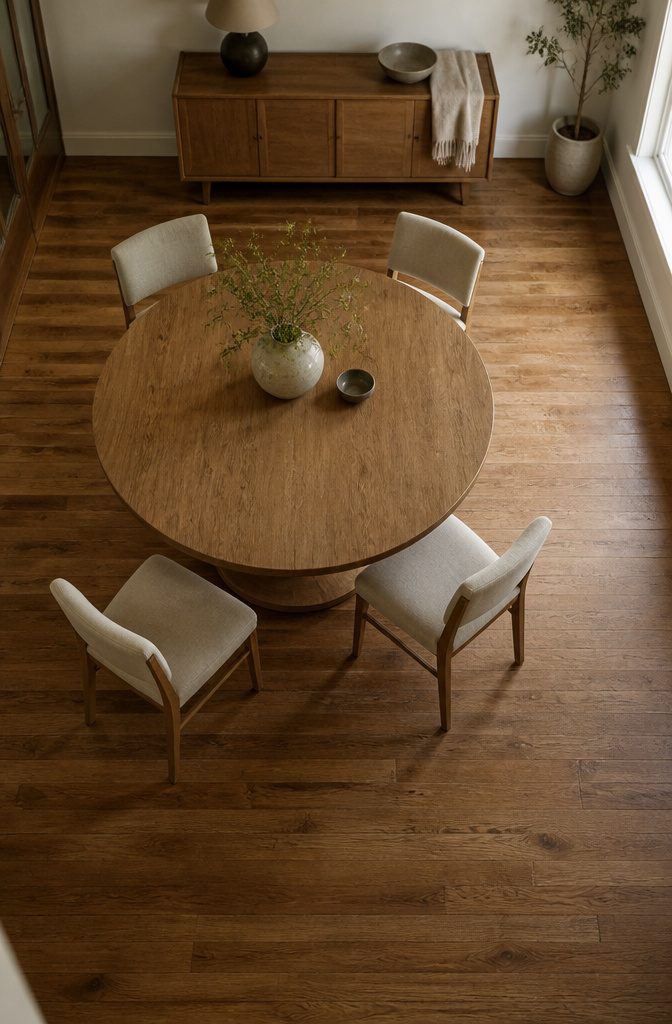
Rectangular tables suit long rooms and larger households. Round tables work better in square rooms and make conversation easier because nobody ends up stuck at a corner.
Oval splits the difference: you get the length without the sharp corners that catch your hip when you squeeze past. Square tables seat four comfortably, but much beyond that and the reach across the middle gets awkward.
Leave at least 36 inches of clearance around the table for chairs to pull out and for someone to walk past.
Where people regularly walk behind seated diners, bump that to 42–48 inches. If the table sits near walls or other furniture, keep at least 3 feet between the edge and anything solid, and 4 feet for main passageways.
An extendable table with leaves solves the problem of wanting space day to day but needing more seats when guests show up.
Most dining tables sit 28–30 inches high, so chairs should measure about 18 inches from the ground to leave roughly 12 inches between the seat and the table surface.
2. Pick Comfortable Seating That Suits How You Gather
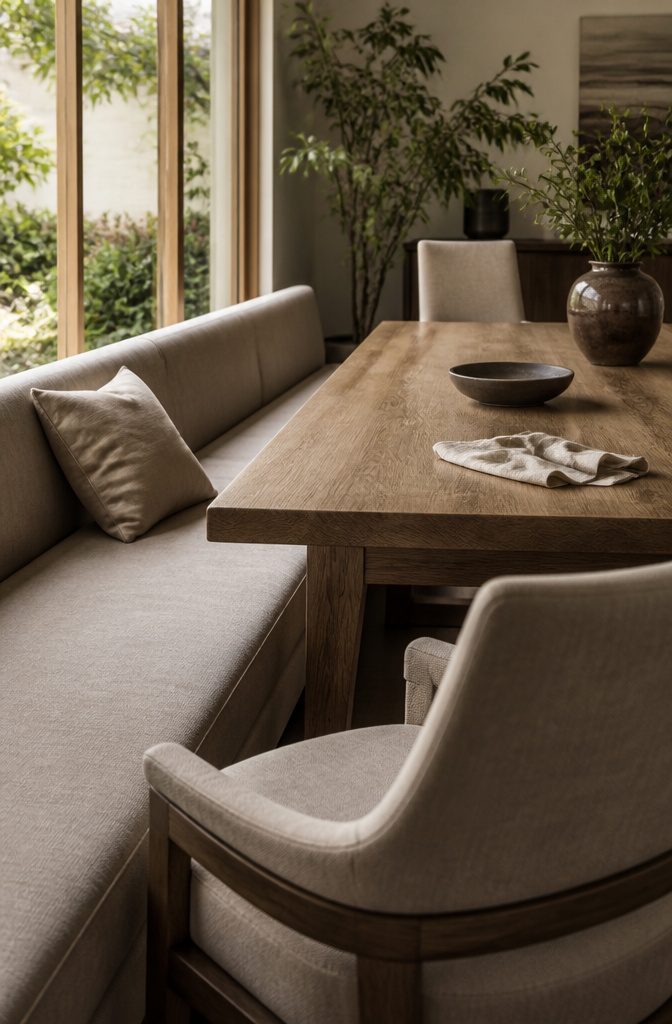
Chair height matters more than most people think. Aim for seat height about 18 inches from the floor, which leaves roughly 12 inches between seat and table and keeps meals comfortable past the first course.
Chairs with arms need an extra 7 inches of clearance to the table apron, which rules them out on some tables entirely.
Give each person at least 24 inches of elbow room; tighter than that and lingering over dinner stops feeling worth it.
Benches and banquettes pack more people into less floor area, especially when the room tucks into an alcove or when a breakfast nook fills a corner window.
Fixed seating makes casual use harder. Mixing seating types adds character without looking mismatched as long as the scale stays consistent.
One move I like: scale the end chairs up by 25 percent. The larger silhouette anchors the table and gives the room a finished look without changing anything else.
Budget $100 to $150 per chair for durable, stylish options.
Decent options start around $60; past $250 the return on comfort drops fast. If money is tight, spend less on side chairs and more on the pair at the ends.
3. Make Lighting a Feature and Layer It for Mood
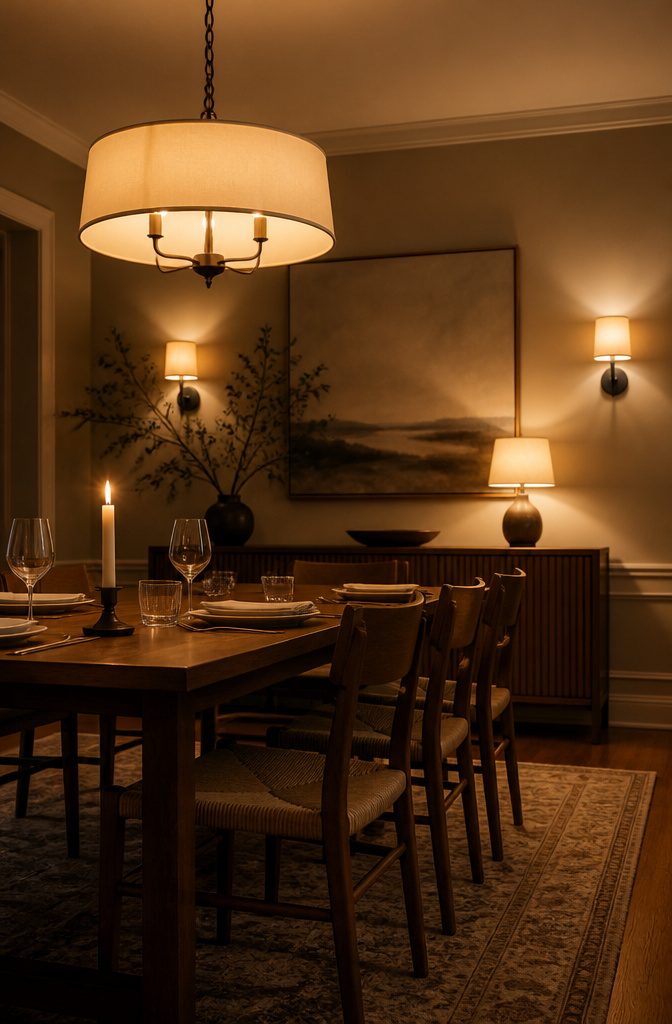
A chandelier or pendant over the table operates as the room’s focal point, and the difference between one that feels right and one that hovers awkwardly comes down to hanging height.
On an 8-foot ceiling, I measure 30 to 36 inches from the tabletop to the bottom of the fixture, adding 3 inches for every extra foot of ceiling height.
Too low and guests lean around it all night. Too high and it drifts up there looking unsure which table it belongs to.
Single overhead lighting flattens a room fast.
Layer in wall sconces for soft side glow, drop a small lamp on the sideboard, and install a dimmer on the main fixture. The dimmer itself costs under $20 and shifts mood further than almost anything else at that price.
Weeknight homework wants brightness. A slow Saturday dinner wants it dialed down near candlelight.
For proportion, a 42-inch table suggests a 28- to 32-inch chandelier. The fixture should feel anchored to the table, not borrowed from another room.
4. Choose Colors, Paint, or Wallpaper to Set the Mood
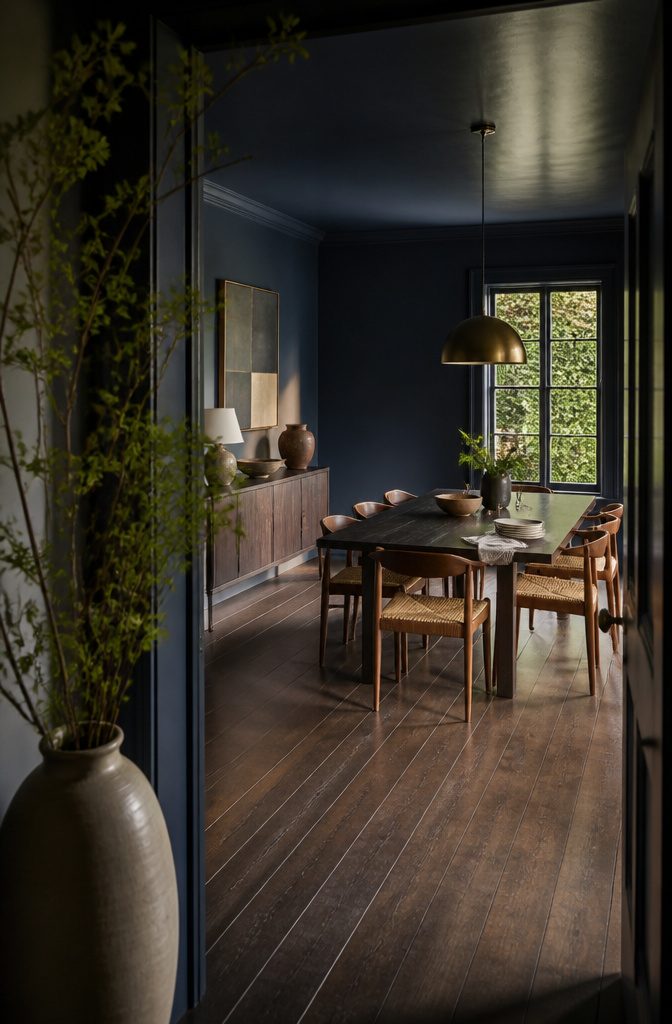
Color sets the tone faster than anything else you put in a dining room, and the move that keeps paying off is going dark.
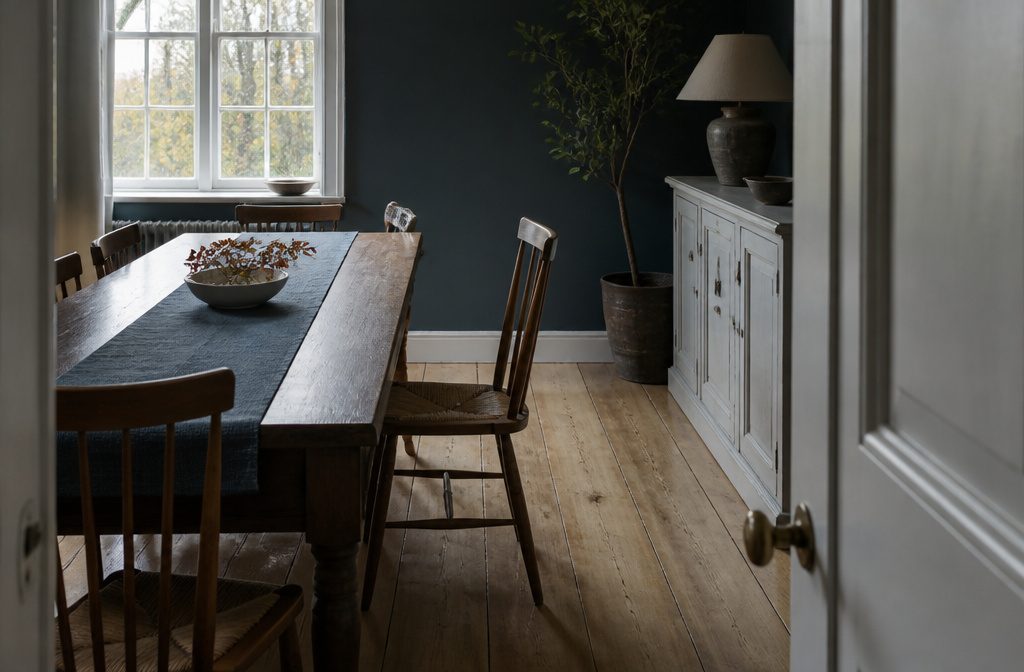
A deep navy, a smoky charcoal, or a shade like Taiga SW 9654 or Aleutian SW 6241 wraps the room in a way that feels intimate when the lights drop and the table fills up.
The dining room is the one place you can use bold color without living in it for hours at a stretch, so the risk is lower than it sounds.
For ceilings, an eggshall or satin finish holds up better than flat and catches just enough light to keep the room from feeling closed in.
Wallpaper delivers pattern and texture in one pass, which is why small dining rooms respond so well to it.
A single accent wall behind a sideboard anchors the room without eating floor space. Named options like Floral Bliss, Clark Plaid Wood Lawn Green, Betty White Palm Leaves Camel Floral, and African Art Deco Shell show the range available.
Premium paper, peel and stick, natural grasscloth, faux grasscloth, and Type II vinyl each suit different budgets and install speeds.
If one wall feels timid, wrap the whole room. You move through a dining room quickly enough that a pattern that would exhaust you in the living room just reads as confident here.
5. Add Storage or Display for Dishes and Serving Pieces
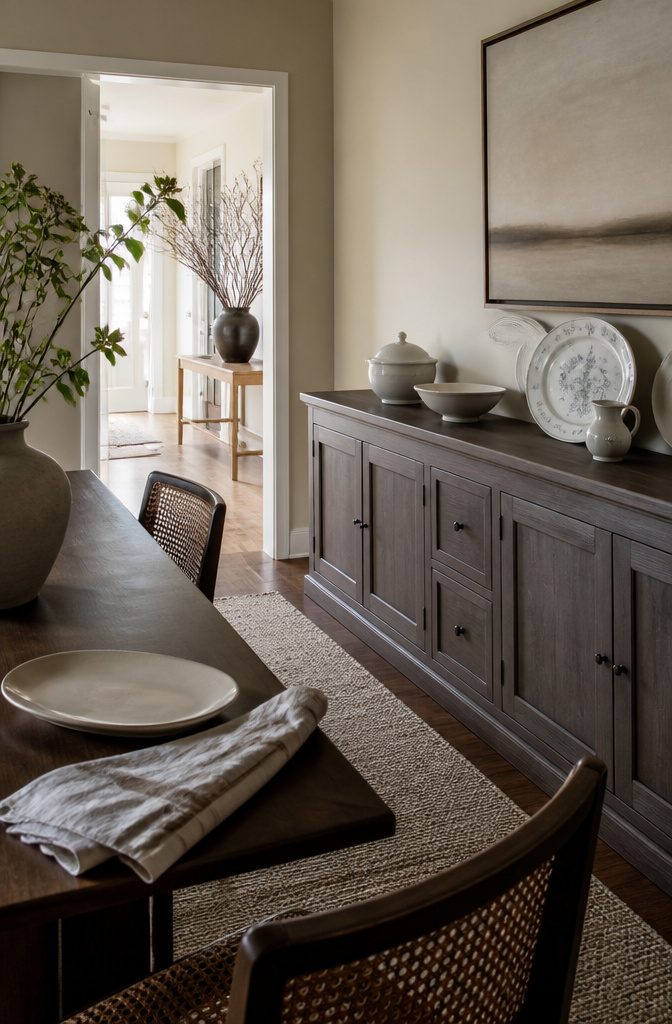
Storage in a dining room keeps dinnerware, serving pieces, and linens close at hand while adding to the room’s finished look.
Buffets and sideboards handle the bulk of what most households need: the stack of serving platters, table linens, glassware, and the board games that end up here when the table doubles as a desk.
A piece like the Moriville dining-room server in grayish brown sits low enough that it anchors the space without blocking sightlines, and closed storage hides daily clutter better than open shelving in a room that gets heavy use.
Smaller dining rooms benefit from storage that doesn’t dominate the floor.
Tall hutches and china cabinets fill vertical space well in rooms with high ceilings, but in a compact room they feel overbearing and make circulation tighter than it needs to be.
Floating shelves or wall-mounted plate racks offer similar capacity with almost no footprint, and they let you put heirloom china or ceramic serving pieces on display instead of burying them in a basement.
6. Use Rugs to Ground the Dining Area
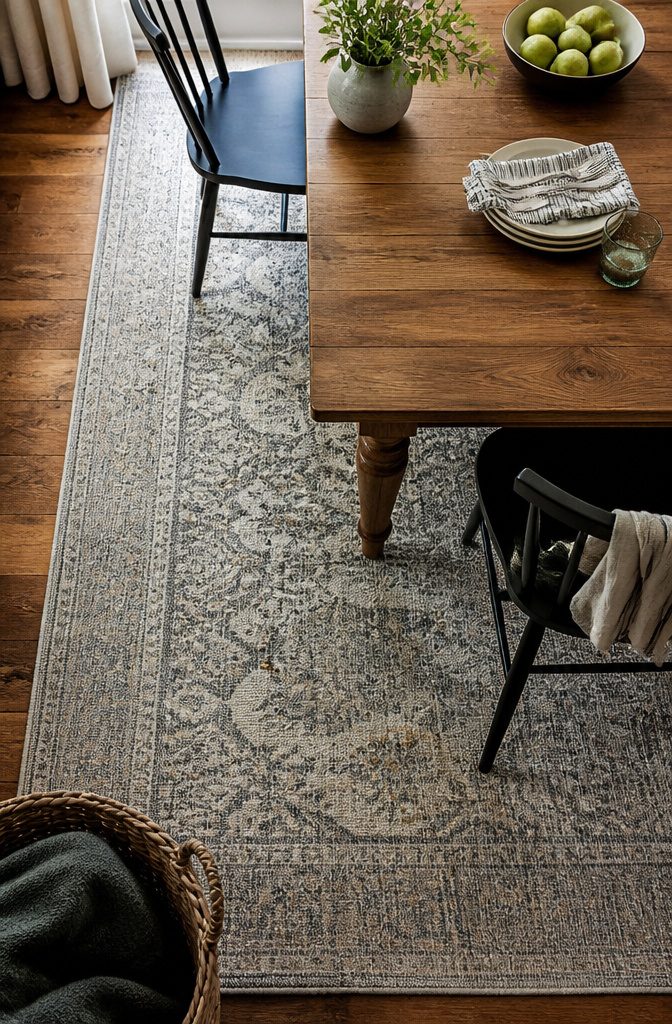
A rug pulls the dining area into focus and adds a layer of texture and warmth that a bare floor leaves out.
The clearance number that decides whether the rug actually works: at least 24 inches beyond the table on all sides, far enough that a pulled-out chair stays entirely on the rug instead of catching on the edge mid-sit.
That snagging is the most common sizing mistake, and you feel it the instant a back leg hooks the border.
Material choice follows how hard the room gets used.
Pets, children, and daily spills mean low-pile or flatweave rugs clean more easily than thick pile, and patterned options forgive stains better than solid ones. The Elderland washable rug is one option that handles real wear without needing professional cleaning.
If you want to add a custom pattern on a tighter budget, an 8-by-10-foot rug can take block-print stenciling with about a quart of satin-finish interior paint and a foam brush; wash the stencil every other use to keep the pattern clean.
7. Decorate Walls With Mirrors, Artwork, Plates, or a Gallery Wall
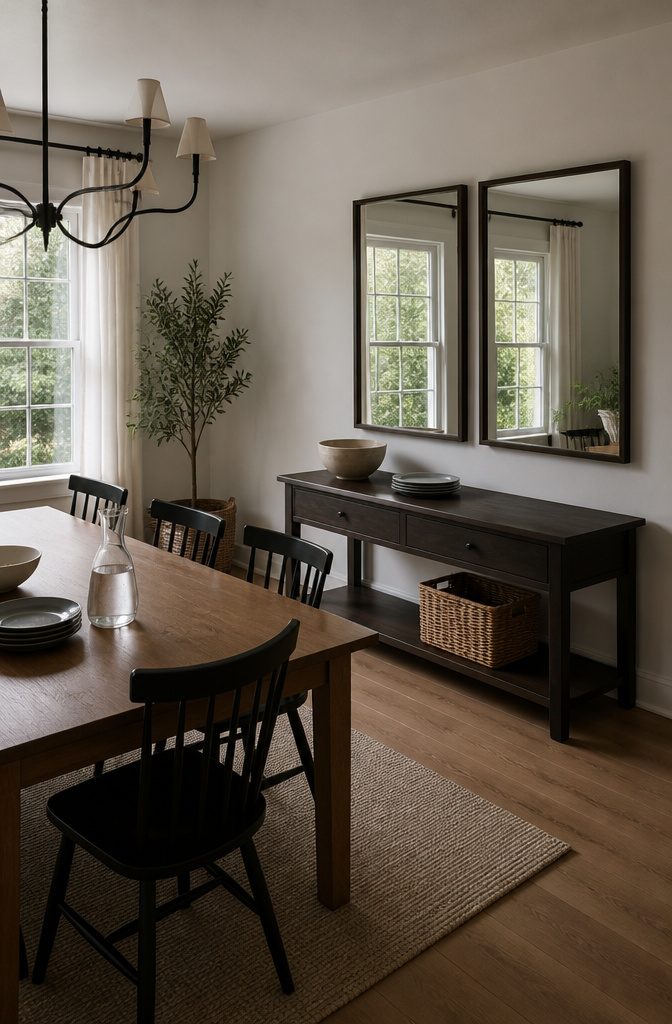
Walls in a dining room fill with personality faster than any other surface, and the right approach depends on what the space already has.
A mirror opposite a window reflects daylight back into the room and makes a small dining area feel wider, which matters more than the frame style.
I hang framed mirrors in pairs when the wall is long and narrow, or a single large one when the room needs a focal point that doesn’t compete with the table.
Gallery walls work here because people sitting at a meal actually look at what’s in front of them. I start with the piece I like most, then build outward, leaving about two or three fingers’ width between frames.
Decorative plates mixed with art and one odd object—an enamel sign, a woven piece—keep the arrangement from reading as a grid. Lay everything on the floor first so you’re not guessing with nails already in the wall.
For single pieces of wall art, center the frame about five feet from the floor. If you’re grouping multiple pieces, treat them as one block and center that block at five feet.
St. Antoine wallpaper by Farrow & Ball adds pattern without needing frames at all, and it covers more wall in less time than hanging a dozen things individually.
8. Add Table Décor Like a Centerpiece, Runner, or Flowers
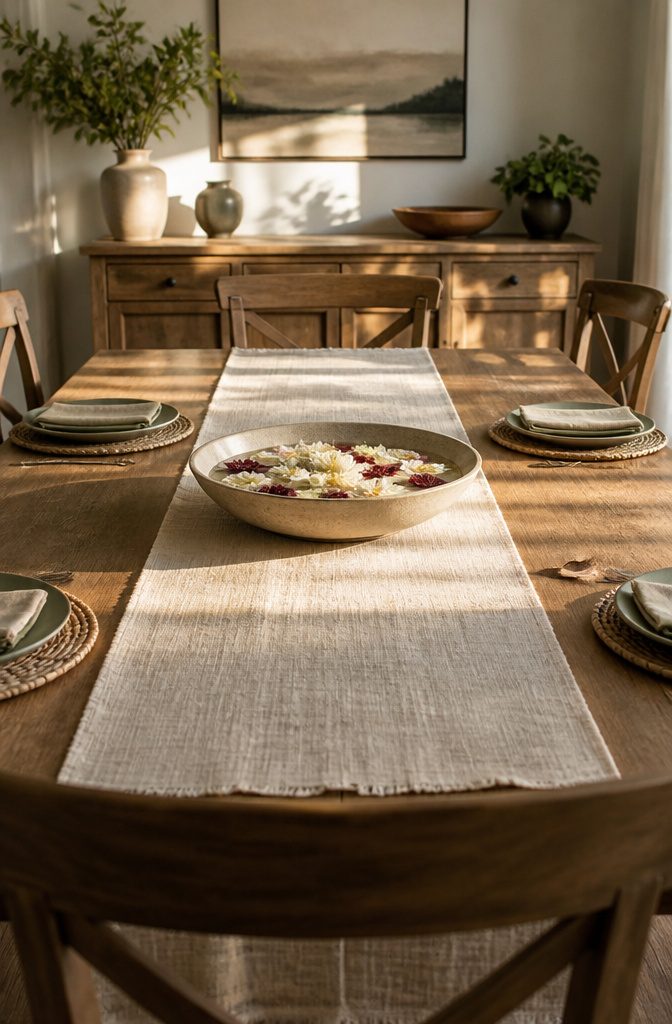
A centerpiece pulls the table together, but only when it sits low enough to see across.
Conversations stop the moment someone has to crane around a tall vase or a stacked arrangement. I keep anything in the center below ten inches if people are sitting down, and that includes flowers.
A low bowl with floating blooms, a cluster of pillar candles on a tray, or a shallow dish with seasonal finds all work without blocking sight lines.
A runner changes the mood faster than any other single piece. Linen reads relaxed and faintly coastal; stiffer cotton or woven jute tips the room toward modern farmhouse.
The runner drops color and texture straight down the middle while the table surface still shows through, and swapping it out with the seasons shifts the entire space for the price of one piece of fabric.
Pair it with placemats and napkins in complementary tones, or keep the runner alone and let the wood do the rest.
Flowers and natural elements add texture without much effort. Mums and pumpkins work for fall; greenery in a simple vase keeps the table finished year-round.
Mixing soft and hard materials makes the display more interesting than one material alone. Small swaps handle seasonal changes better than full overhauls.
9. Mix Materials, Patterns, and Wood Tones to Add Texture
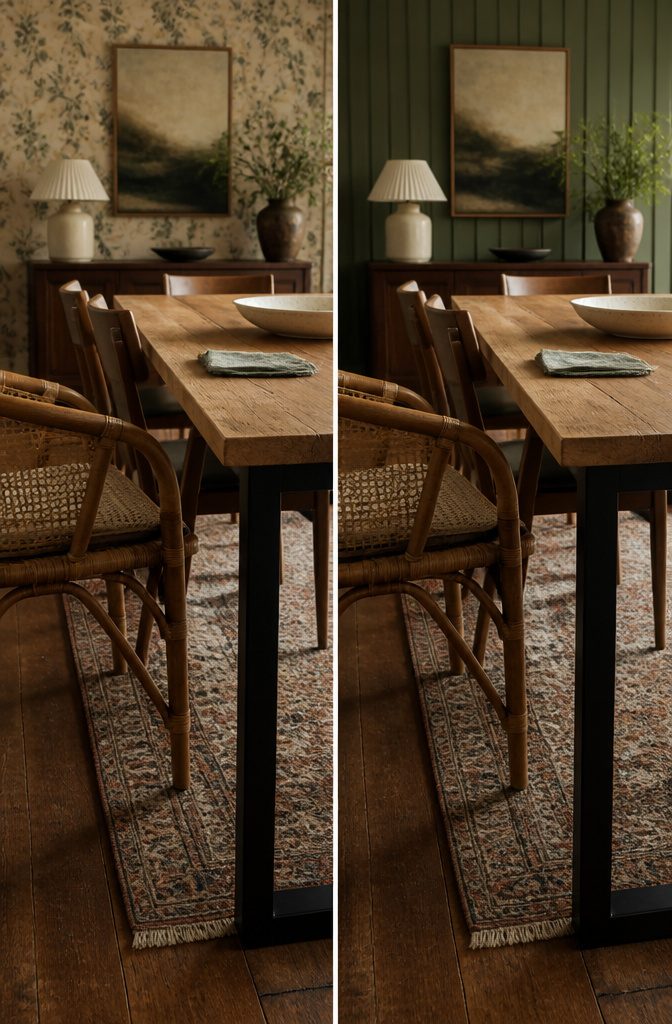
Mix Materials, Patterns, and Wood Tones to Add Texture
A perfectly matched dining set feels safe until it feels flat. What gives a room depth is mixing materials, patterns, and wood tones rather than buying everything from the same collection.
A 7-foot table built from IKEA black metal legs and a reclaimed wood top pairs industrial hardware with organic texture, and that contrast alone does more for the space than any single finish could.
I’ve seen rooms come alive when someone adds a stone table next to soft brown leather chairs, or pairs wood paneling with a metal pendant overhead.
Mixing wood tones is fine as long as the undertones align.
Walnut, oak, and rattan all carry warmth, so they layer well together. The same goes for patterns: a floral wallpaper and a geometric tablecloth can sit side by side if they share a color family.
Coordinate choices with the room rather than treating every piece as a separate decision. One shared thread across the furniture makes the mix read as intentional.
10. Use Curtains or Window Treatments to Soften the Room
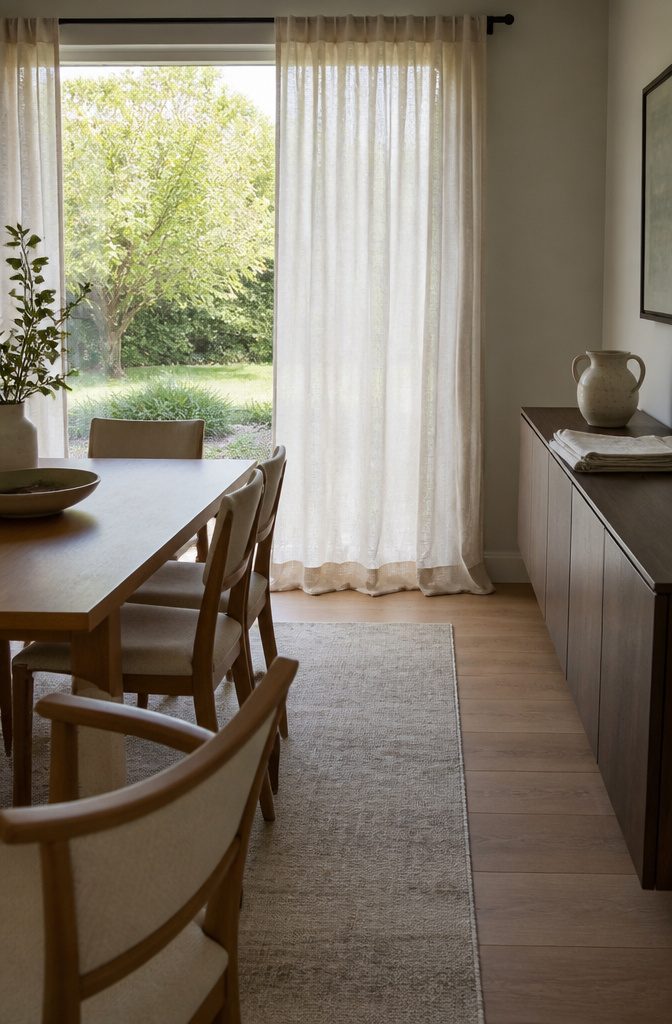
Curtains bring softness and color into a room where fabric is otherwise scarce.
In a dining room, you don’t have the throw pillows or upholstered furniture that fill a bedroom or living room, so window treatments become one of the few ways to introduce texture and warmth.
I reach for them when the space feels too hard-edged or when the color scheme needs something to tie it together.
Sheer curtains work well if you want to keep natural light coming in while still softening the window frame. They give the room a lighter, more casual feel and make the space comfortable for daytime meals.
Heavier drapes add more weight and can introduce deeper color, which is useful if the rest of the room skews neutral and you want one element to anchor the palette.
The curtain you choose should tie into the colors already present—pulling a shade from the rug, the chairs, or the wall. That connection makes the room feel finished rather than assembled from unrelated pieces.
11. Add Plants or Other Natural Elements
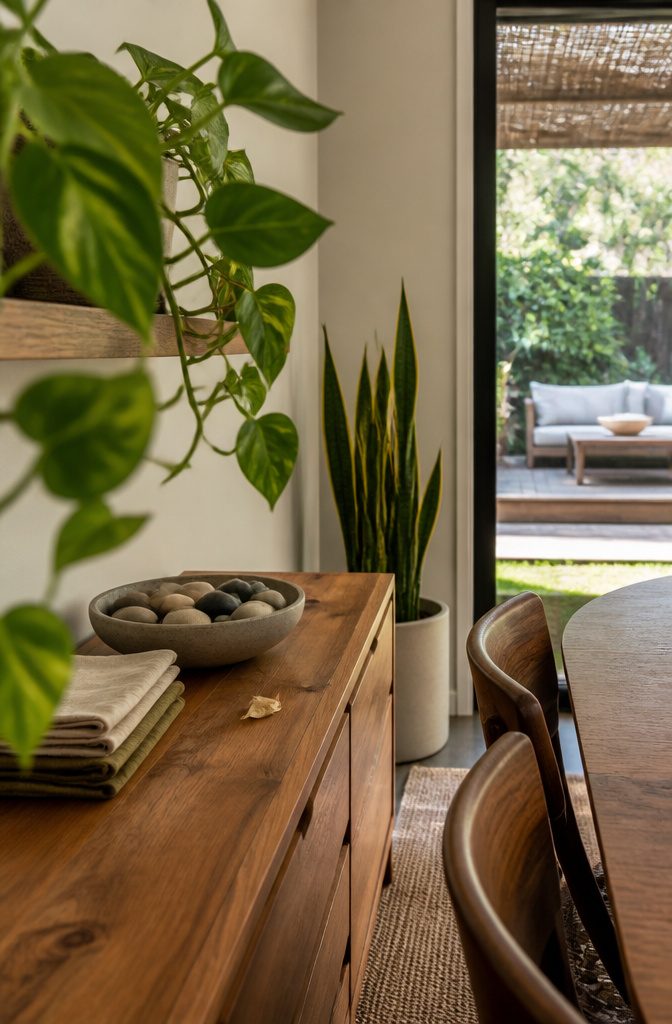
Plants bring life and texture into a dining room without requiring much floor space or budget.
Snake plants and pothos are two reliable choices because they tolerate neglect and adapt to different light conditions. Snake plants handle low light especially well, so they work in rooms with small windows or north-facing exposure.
Pothos trails nicely from a shelf or hangs near a window, and both plants survive if you forget to water them for a week or two.
Natural elements can shift with the season if you rotate what sits on the table or sideboard.
Branches in spring, dried grasses in fall, pinecones in winter. The rotation keeps the room from looking static, and most of these materials cost nothing if you collect them yourself.
A bowl of river stones or a piece of driftwood adds weight and contrast without competing with the rest of the room’s palette.
12. Choose a Style That Reflects Your Household’s Needs
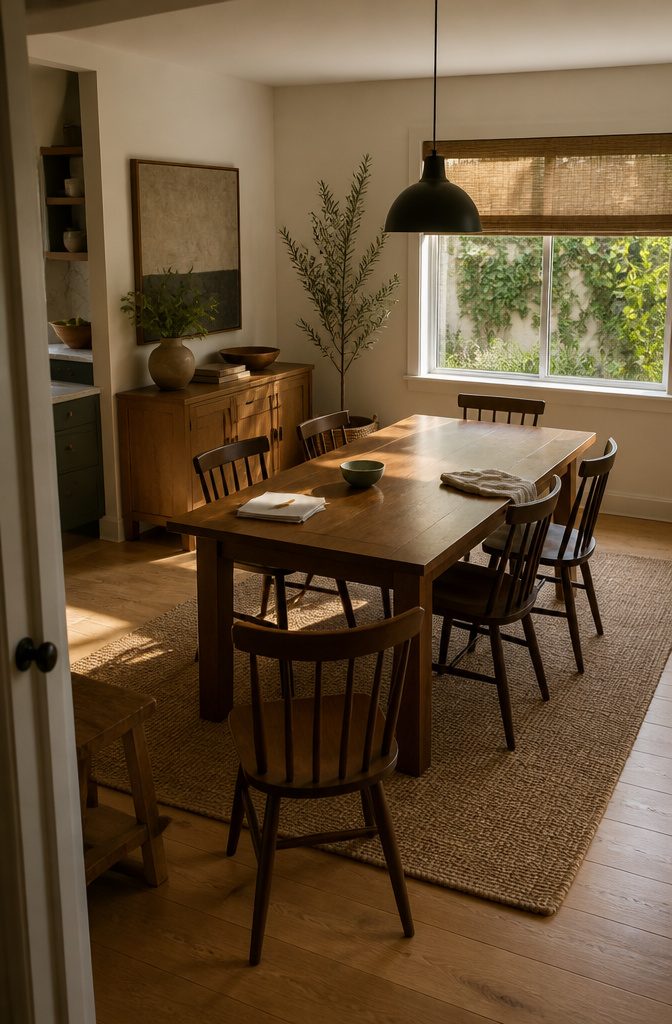
The dining room you want depends on what actually happens at the table. If the room holds weeknight dinner and homework spread, durable surfaces and comfortable seating matter more than formal polish.
A space used for hosting or weekend meals can lean toward statement finishes and bolder color. Rooms pulling double duty as workspace or game tables benefit from flexible layouts and storage within reach.
Named styles — modern, farmhouse, traditional, coastal, minimalist, Japandi, eclectic — are less about trend and more about matching the house and how often you entertain.
Plenty of people combine them. A modern setup with a few farmhouse textures shows up as often as a single clean style.
Dining rooms are coming back with more risk in the design. Rather than serving only meals, they’re spaces where children do homework, someone works from home, or small meetings happen around the table.
The table itself has shifted from something to cover with a tablecloth to a central feature designed to be seen.
One 18th-century farmhouse in upstate New York painted a once gilt-gold chandelier with white primer, added understated wallpaper, a 19th-century Danish painting, and antique wall sconces — the kind of bold, layered approach that fits how dining rooms are being used now.
Small-Room Adaptations That Work on a Real Budget
Small-Room Adaptations That Work on a Real Budget
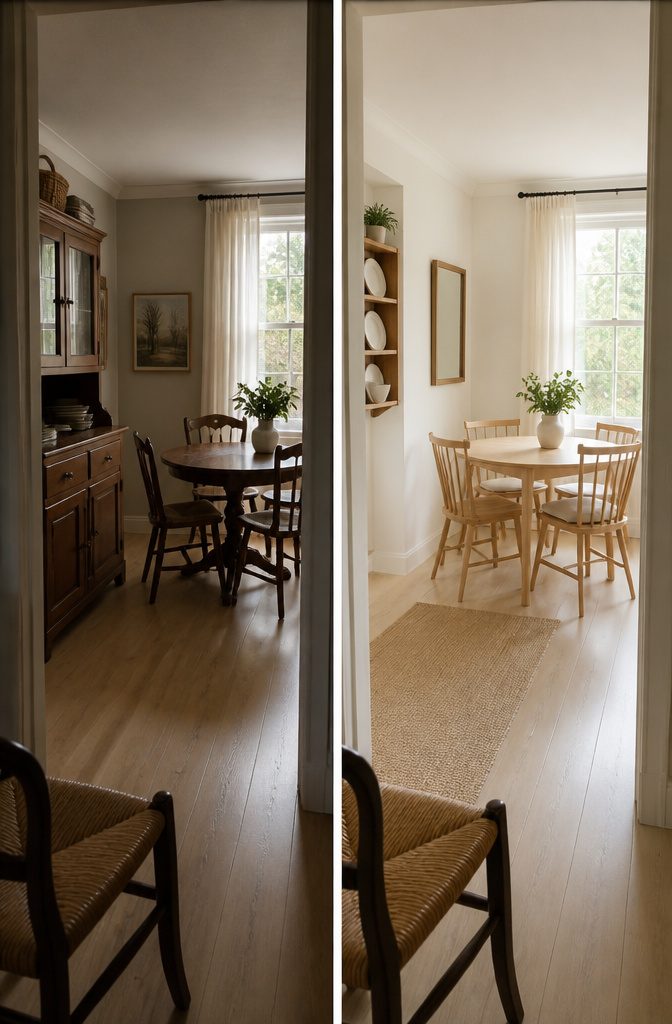
Smaller furniture and light colors make a tight dining room feel open without spending much. A round table with four chairs fits a small or square space better than a rectangle, and the lack of sharp corners buys you circulation.
Another approach splits the difference: use two smaller tables instead of one large one, which lets you push them together when you need the length or separate them when you don’t.
Mirrors scattered on one wall reflect light and make the room feel instantly brighter.
Pair them with sheer curtains or drapes to let natural light in, and the space reads twice as large. Vertical storage keeps dishes and serving pieces off the counter without claiming floor area you need for chairs.
Budget-focused updates skip the furniture entirely. Re-cover seat cushions, swap out a light fixture, add a new table runner, or sand down a wooden table and finish it in a bold lacquer color.
Small changes like these can shift the mood of a space without requiring a full redesign, and most cost less than replacing a single chair.
What the Room Needs to Function for Your Household
What the Room Needs to Function for Your Household
Before you pick paint colors or shopping lists, figure out how the household actually uses this room.
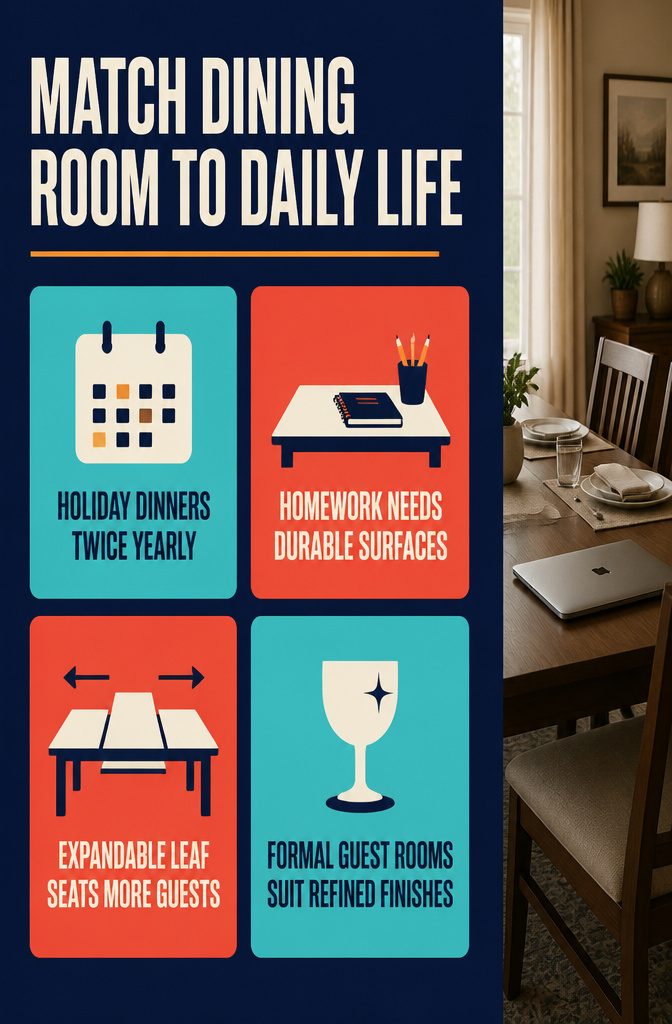
A dining room that hosts holiday dinners twice a year needs different furniture than one where kids spread homework across the table every afternoon or someone takes video calls at noon.
I’ve seen people choose elegant upholstered chairs that look right but fail after a month of everyday family meals, and formal tables that sit empty because the real gathering happens in the kitchen.
The function shapes everything. A room that doubles as a workspace or game night spot benefits from durable surfaces and flexible seating.
If you entertain often or host large gatherings, the table size matters more than the style. An expandable leaf gives you the option to seat more people without the table dominating the room year-round.
On the other hand, a formal space reserved for guests can lean into refined finishes and statement pieces that wouldn’t survive daily use.
Defining the purpose first prevents you from decorating a room that looks good in photos but doesn’t fit the household’s actual rhythm.
Frequently Asked Questions
What are the dining room trends for 2026?
Dining rooms are being used more flexibly for work, homework, meetings, and meals rather than only formal gatherings.
The table itself has shifted to a central design feature meant to be seen instead of covered with a tablecloth, and people are taking more risks with bold color, layered materials, and statement pieces.
What looks good in a dining room?
A table and seating form the foundation, then layer in overhead lighting, a rug sized to extend past pulled-out chairs, and storage for dishes and linens.
Add artwork or a mirror, a low centerpiece, and curtains or plants to bring in texture and warmth.
What can I use instead of a dining table?
A stone-topped table, reclaimed wood beams sanded and stained, a repurposed library table with benches, or a reclaimed door all work as alternatives. Tabletops made from quartzite, marble, or enameled metal offer different materials beyond standard wood finishes.
How do you build a perfect dining room?
Start by figuring out how the household will actually use the room: everyday meals, hosting guests, homework, or workspace.
That function shapes every other choice, from durable surfaces for daily use to refined finishes for a formal space reserved for entertaining.
How do I make the most of a small dining room?
A round table with four chairs fits a small or square space better than a rectangle, and the lack of corners improves circulation.
Mirrors reflect light and make the room feel larger, vertical storage keeps dishes off the floor, and sheer curtains let natural light in without blocking the window.
What are some budget-friendly dining room ideas?
Re-cover seat cushions, swap out a light fixture, add a new table runner, or sand and refinish a wooden table in a bold lacquer color.
These small changes shift the mood of the space without replacing furniture, and most cost less than a single chair.
What are some popular dining room decor styles?
Modern, farmhouse, traditional, coastal, minimalist, Japandi, and eclectic are common named styles. Most people combine elements rather than sticking to one clean category, and the best choice depends on how the household uses the room and how often you entertain.
What are dining accessories?
Runners, placemats, napkins, candles, vases, trays, pitchers, and bowls handle the table itself. Mirrors, art, and sconces dress the walls, while plants and seasonal natural elements add texture without requiring much floor space or budget.
What are the four types of tables?
Rectangular, round, oval, and square. Rectangular suits long rooms and larger households, round works better in square rooms and makes conversation easier, oval splits the difference with length but no sharp corners, and square seats four comfortably.
What do you put in the middle of your dining room table?
A centerpiece that sits below 10 inches so people can see across the table.
A low bowl with floating blooms, a cluster of pillar candles on a tray, or a shallow dish with seasonal finds all work without blocking sight lines during conversation.