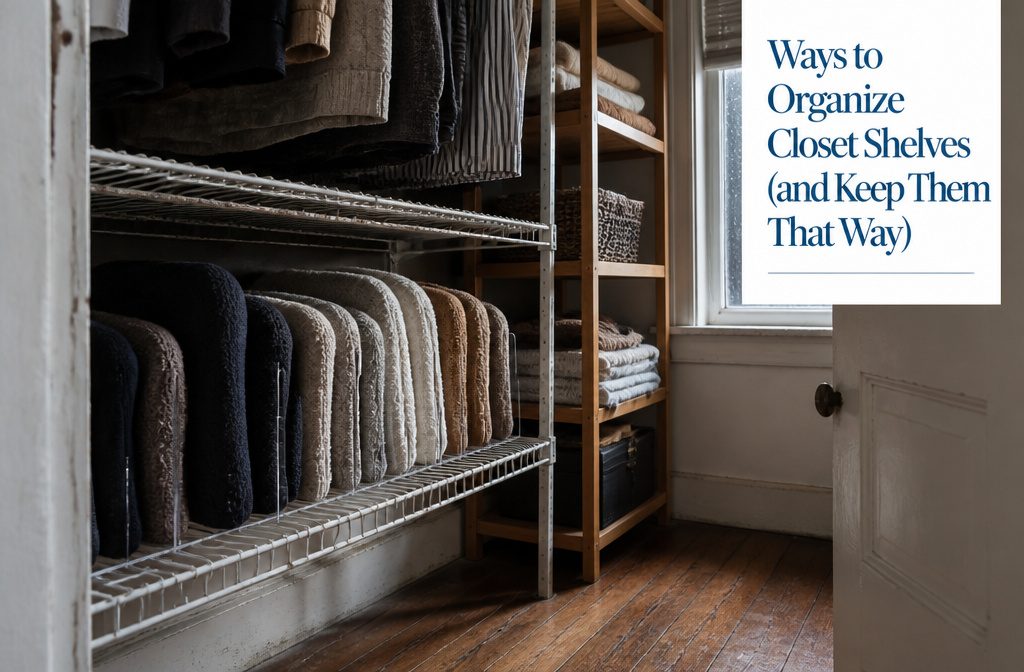
Closet shelving runs from freestanding bamboo units a renter can lift out in minutes to installed systems that cost around $1,000 for a professional install.
The difference is whether you need spots or scaffolding. Wire dividers in 12-inch and 16-inch widths grip wire shelving without hardware, holding sweater stacks upright, and acrylic versions work the same way on solid wood or melamine shelves.
1. Add or Adapt Shelving to Suit the Space
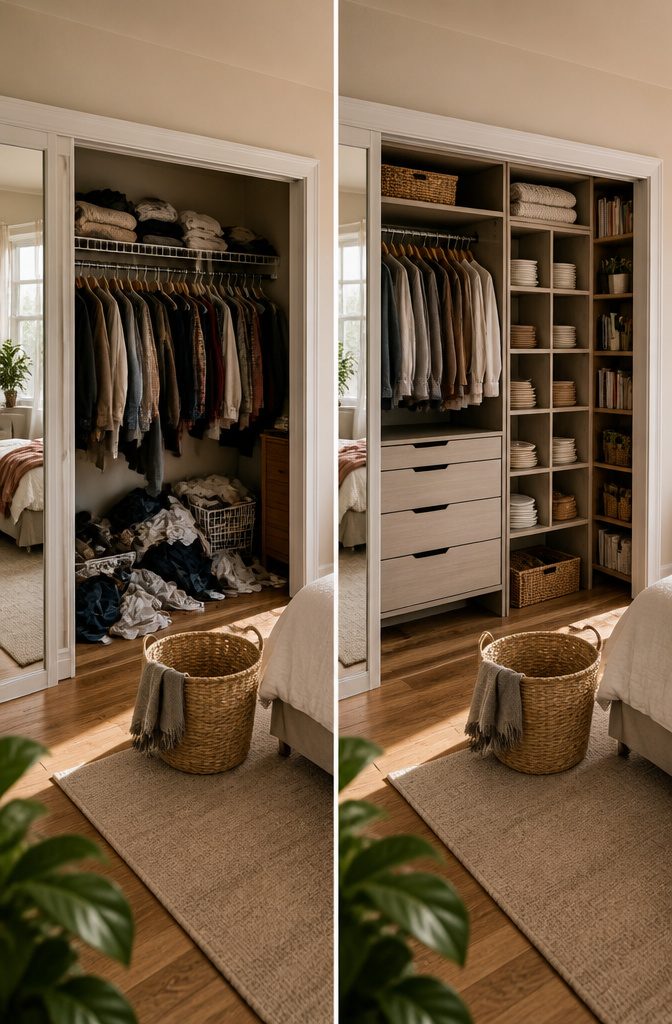
If you want serious change, an actual closet system gives you the scaffolding to multiply storage without piling everything on the floor.
I’ve watched IKEA’s PAX system and The Container Store’s Elfa system turn closets from guessing games into working layouts.
PAX runs on wardrobe frames you fill with hanging rods, drawers, and shelves; Elfa hangs from a top track with vertical rails that hold adjustable components.
One makeover doubled the shelving and added 60 percent more hanging space without touching the walls. Professional installs cost around $1,000 through a closet company, and even DIY kits run several hundred.
Smaller fixes work when you need spots, not systems. An 8-cube organizer fits dinner plates without stacking sets together, and you can drop H-shaped dividers into the cubes to split them further while keeping hanging space on one side.
Adjustable wall shelves let you move things up or down as what you own changes. Small bookcases and floating shelves fill vertical gaps, and renters who can’t drill can use bamboo shelves that sit without hardware.
2. Divide Existing Shelves and Create Separate Storage Zones
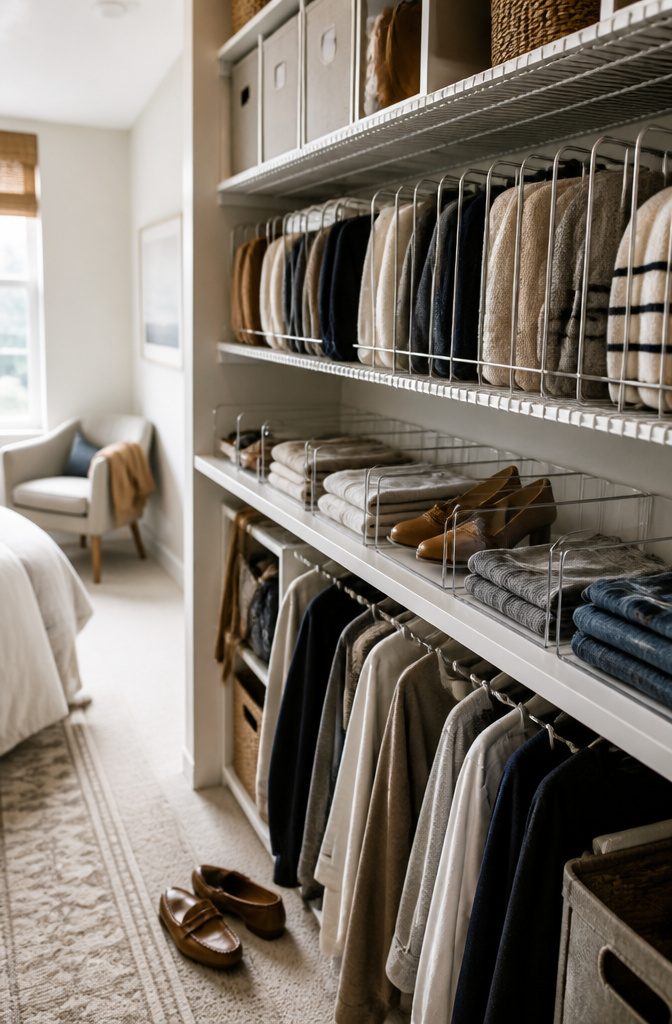
Shelf dividers stop the sideways drift that turns neat stacks into a heap.
Wire dividers in 16-inch and 12-inch widths slip through the slots of wire shelving and grip the front and back edges with pressure prongs, holding sweaters, sweatshirts, and small bags upright without hardware.
Acrylic dividers work the same way on solid wood or melamine shelves. The 12-inch size fits standard 12-inch-deep closet shelves; the 16-inch handles deeper runs.
Beyond dividers, think in zones.
Assign one shelf to folded clothes, another to shoes, a third to bags and accessories. Cube inserts and bins carve a long shelf into smaller territories so each category has a fixed address.
When everything lives in the same spot, you stop hunting and the system holds without constant attention. I notice the difference most on the top shelf, where bins with labels keep seasonal items from bleeding into daily rotation.
3. Use Vertical Space and Add Shelf Levels
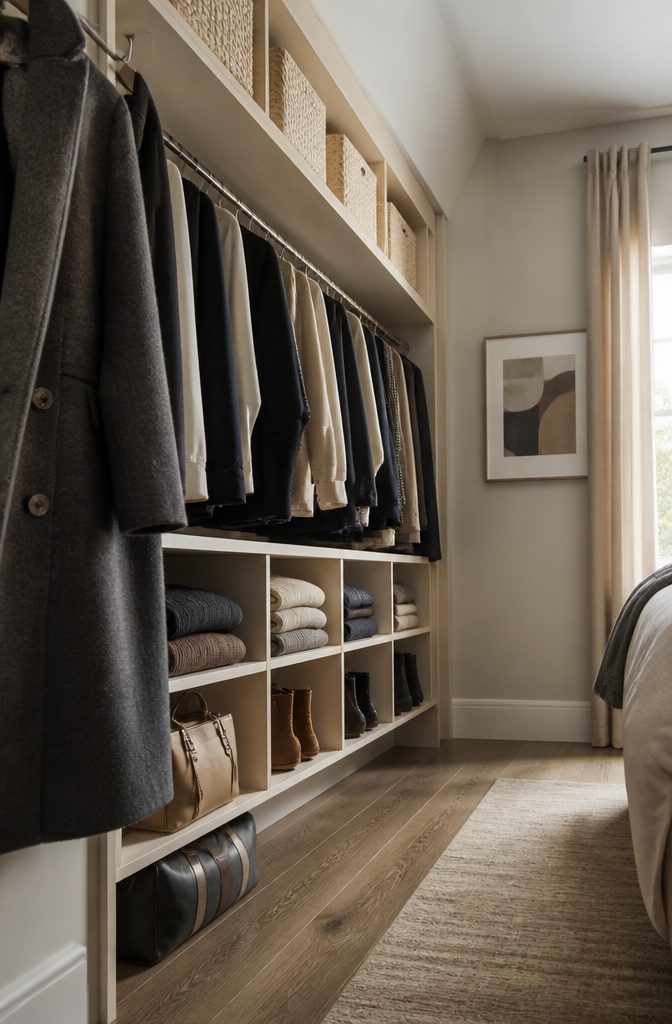
Closets with high ceilings often leave a foot or more of empty air above the rod or below it, and that wasted vertical space is usable storage the moment you add a shelf or a second layer.
In a closet with 10-foot ceilings, placing bins on an upper shelf creates room for travel accessories, extra bedding, or shoes worn only a few times a year.
Lightweight woven bins hold their shape without snagging contents, and bin clip labels make it easy to grab the right one at a glance.
Below the hanging rod, stackable open cubes or bins divide folded clothes, handbags, and shoes without sprawling across a single surface. Adjustable shelving takes this further by letting you change the height as storage needs shift.
Multi-tiered systems put everything from floor to ceiling within reach, and in practice that means fewer items piled or left in the back where they disappear.
4. Contain and Label Shelf Contents
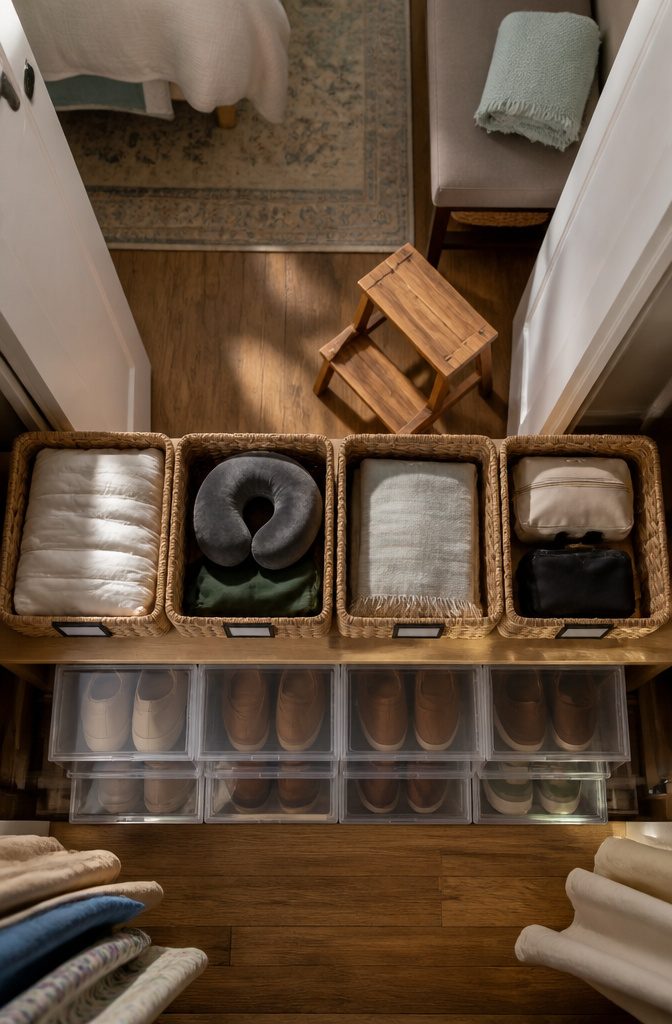
Contain and Label Shelf Contents
Bins and baskets keep shelf contents separated and easy to grab. I use rectangular water hyacinth baskets on top of hanging shelves because they’re lightweight and fit four across the width of a standard closet.
If you need something, you pull the whole basket down rather than digging through loose items. These work well for napkins, napkin rings, or extra flatware, and the same baskets handle travel accessories or bedding on higher shelves.
Labeled bins matter when storage sits high. At nine feet or higher, you can’t see what’s inside without a step stool, so bin clip labels that attach to the front edge tell you which container to reach for.
I keep tall heels, seasonal bedding, and anything used a few times a year in labeled woven bins on top shelving. The bins hold their shape without rough edges that snag fabric.
Boxes with hinged front openings work for shoes you wear often because you can access each pair without unstacking the whole column. Clear stackable boxes let you see contents at a glance, which cuts down the labeling work.
5. Store Infrequently Used or Seasonal Items Higher or Out of the Way
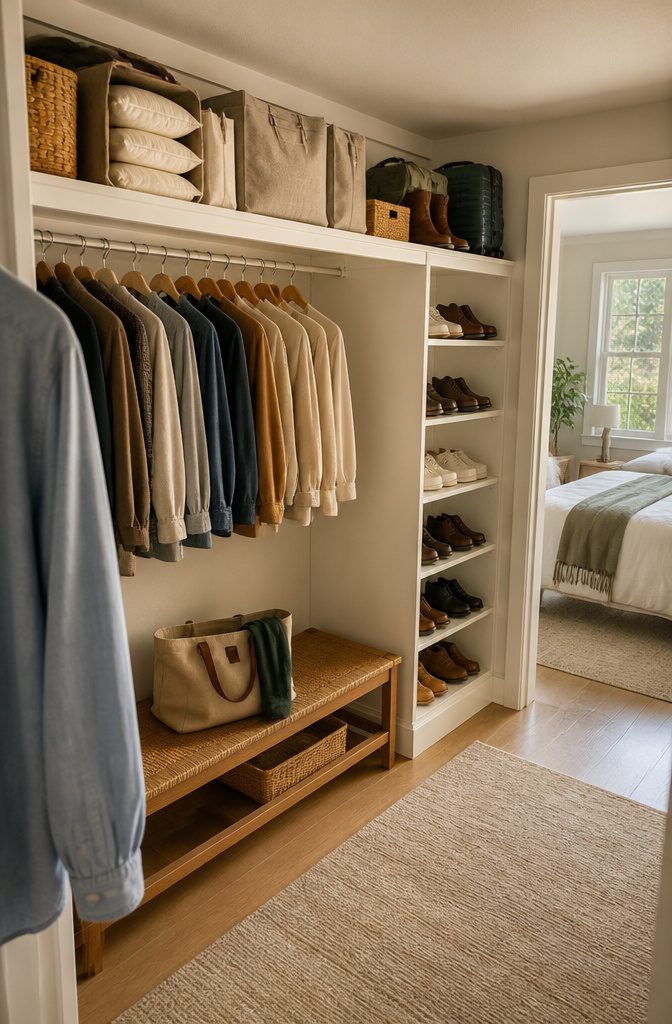
Store Infrequently Used or Seasonal Items Higher or Out of the Way
The top shelf is where bedding you don’t touch daily belongs.
A set of 4 bedding storage bags works well for this, with each bag holding 3 sleeping pillows or multiple quilts and blankets. Handles on both sides make them easier to pull down when you need them.
In humid climates, toss a reusable desiccant pack into each bag before storing it, because the upper part of a closet runs warmer than the rest of the space in summer months.
High shelves and bins also suit seasonal clothing, travel accessories, and shoes you wear only a few times a year.
If you have 9-foot ceilings or taller, there’s often unused space at the top of the closet. Lightweight woven bins with bin clip labels keep things sorted and visible at a glance.
What you reach for constantly belongs front and center. What’s purely seasonal can sit further out of reach, freeing the lower shelves for everyday use.
6. Improve Shelf Access and Visibility
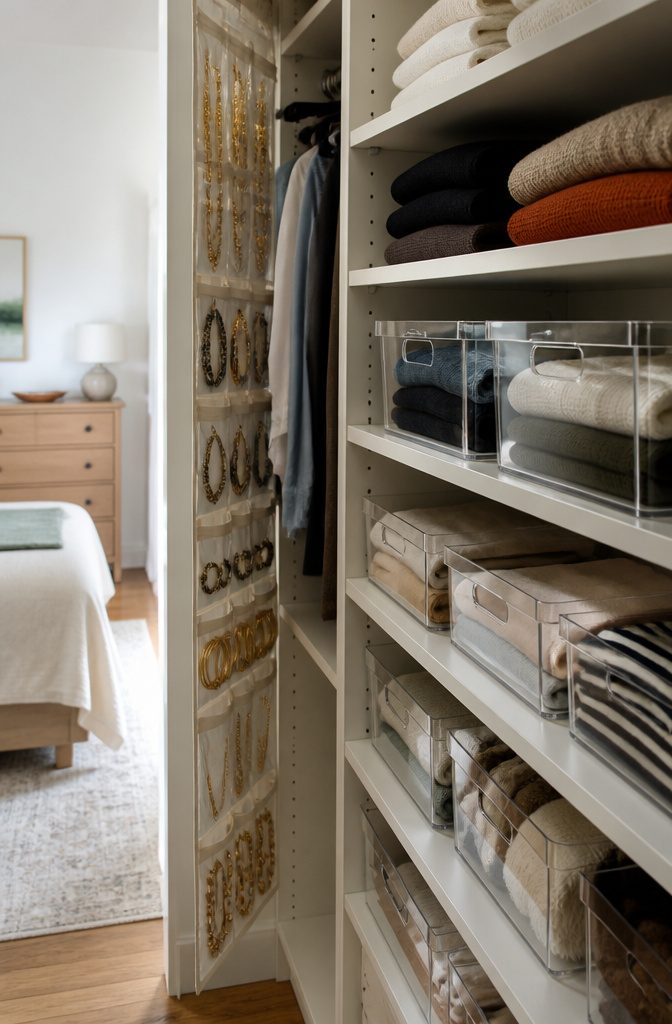
Spacing shelves too far apart wastes height, but spacing them too close traps anything taller than a folded shirt.
I adjust shelf placement so each level holds what actually lives there, leaving just enough clearance to slide items in and out without catching the lip.
If most of what sits on a shelf is six inches tall, the next shelf goes seven or eight inches above it, not twelve.
That keeps more storage in the same vertical run and stops wasted air from taking over the closet.
Deep shelves push things to the back where they disappear. Clear containers solve that problem because you see what is inside without pulling everything forward.
A double sided hanging jewelry organizer with 75 or more clear pockets fits a lot of jewelry in almost no floor space, and every piece stays visible instead of tangled in a drawer.
The same logic applies to bins on upper shelves: if you cannot see through the container, whatever is inside eventually gets forgotten.
Renter-Friendly, Removable Shelving
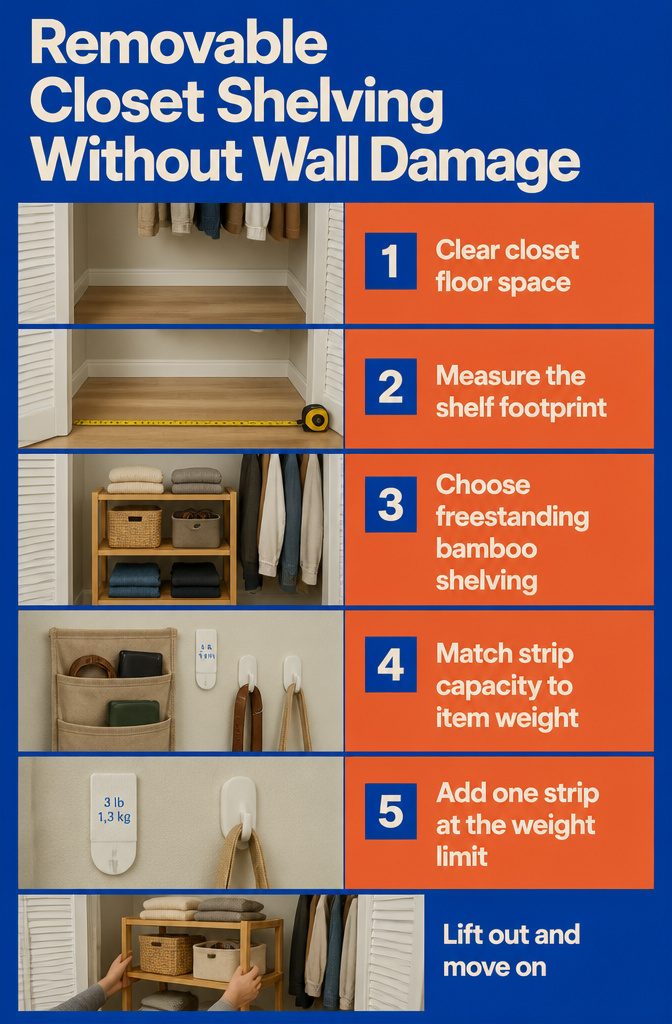
Freestanding bamboo shelving units slip into the closet without screws or anchors, which matters when your lease says no permanent changes.
I’ve seen compact three-tier bamboo units hold folded sweaters, bins of accessories, and stacks of jeans without wobbling, and they lift out in minutes when you move.
A unit wide enough to be useful takes up floor space you might need for hanging clothes or shoes, so measure the footprint before you buy.
Command strips and removable hooks work for lightweight organizers, small bins, and tool holders on the closet door or wall.
The strip size has to match the weight you’re hanging; overloading a medium strip with a heavy organizer pulls it off the wall and damages paint when it goes.
I count the ounces, check the strip’s rated capacity, and use one extra strip if the item sits at the limit.
Command makes hook-style tool holders that grip the wall without nails, and they’re worth keeping for belts, bags, or anything with a loop that fits the hook diameter.
Customizing for Unusual or Changing Storage Needs
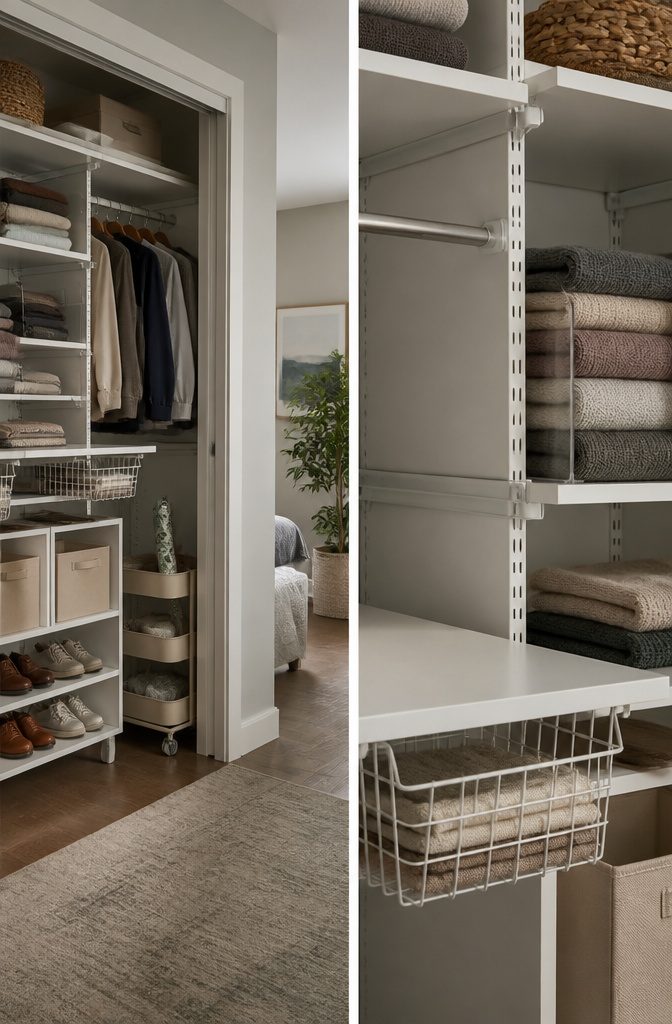
Some closets need more flexibility than fixed shelves can give, either because the contents change or because the shelf spacing was never quite right in the first place.
- Adjustable shelving systems let you move brackets up or down when storage needs shift. I’ve seen these save a linen closet where towels one year became craft supplies the next. Most mount to wall standards with clips that hold each shelf independently.
- Tension-rod mini shelves sit between existing shelves to split the vertical gap. A tension rod with a flat basket on top doubles one shelf level into two without screws or brackets, and renters can remove them on move-out day.
- Under-shelf baskets hook onto the underside of a shelf and hang down into the open space below. Wire versions are common; they hold small items that would otherwise sit loose on the next shelf down.
- Rolling carts make sense when you need temporary overflow or want to pull an entire category out to another room. I roll one out for gift wrap or off-season clothes that don’t earn permanent real estate.
- Acrylic or wooden shelf dividers keep stacks vertical. Slide them into place on a deep shelf, and sweater stacks or dish piles stay separated instead of collapsing into each other. Some clip on; others wedge by tension.
Cube organizers fit into hanging closets when you want a grid for a large collection.
Add fabric bins or wire baskets to turn open cubes into drawers. PVC pipe cut to length works as boot shapers or rolled-item dividers if you want function over finish.
Closet Editing and Upkeep
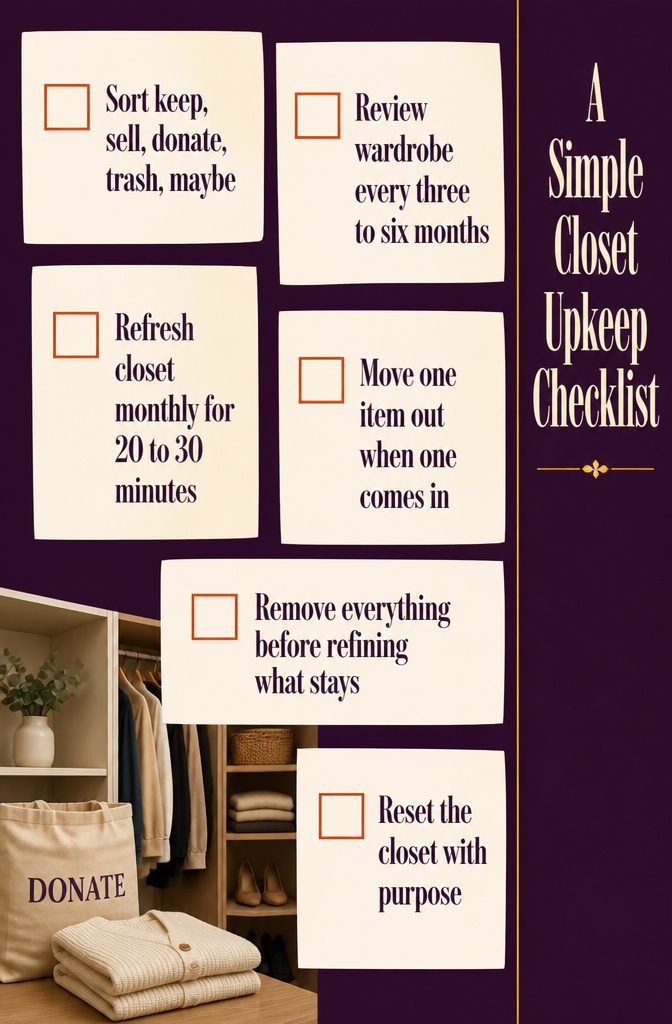
Organization lasts when it matches what you actually do. That sounds simple, but it’s the difference between a closet that stays functional and one that slides back into chaos in six weeks.
The Reset Method, developed by closet organizer Bazail, walks through this in stages: remove everything from the closet, refine what stays, and reset it with purpose.
Before you organize anything, you have to understand what you actually have and whether it makes sense for your life.
— Coveteur
That means sorting into five categories: keep, sell, donate, trash, and maybe.
The maybe pile matters, because indecision is half the reason unworn clothes stay put. Once the edit is done, a wardrobe review every three to six months keeps the system from collapsing under new purchases.
The one-in one-out rule helps between those edits: every time something new comes in, one item moves to the donation pile.
Between those deeper reviews, a 20 to 30 minute monthly refresh catches the drift before it turns into a full mess again.
Frequently Asked Questions
How can I create a custom closet that meets my specific needs?
Start by installing an adjustable system like IKEA’s PAX or The Container Store’s Elfa, which let you configure shelves, drawers, and hanging rods to fit what you own.
Professional installation runs around $1,000, but DIY kits cost several hundred and give you the same flexibility.
If a full system is out of budget, add freestanding cube organizers, adjustable wall shelves, or small bookcases to fill vertical gaps and create zones for different categories.
What are some tips for organizing a small closet?
Use vertical space by adding shelves above and below the hanging rod, leaving just enough clearance to slide items in and out without catching the lip.
Divide long shelves with wire or acrylic dividers to keep stacks upright, and assign each shelf a fixed category so everything has a home.
Bins and baskets on upper shelves handle seasonal items, while stackable cubes or open containers on lower shelves separate shoes, bags, and folded clothes without sprawling across a single surface.
What are the best ways to store clothes and shoes?
Store seasonal clothes and shoes you wear only a few times a year on the top shelf in labeled woven bins, where they stay out of the way but easy to identify.
Hang delicate or wrinkle-prone items on the rod, and fold casual garments on shelves divided by category. For shoes you reach for often, use boxes with hinged front openings so you can grab each pair without unstacking the whole column.
How to set up closet shelves?
Space shelves so each level holds what actually lives there, leaving just enough clearance above to slide items in and out.
If most of what sits on a shelf is 6 inches tall, the next shelf goes 7 or 8 inches above it, not 12.
Divide shelves with wire or acrylic dividers to keep stacks separated, and assign each shelf a zone so folded clothes, shoes, and accessories each have a fixed spot.
What is the best way to arrange wardrobe shelves?
Put what you reach for constantly front and center on lower shelves, and move seasonal items or anything used a few times a year to the top.
Use bins and dividers to create separate zones for folded clothes, shoes, bags, and accessories so each category has its own address.
Clear containers on deep shelves let you see what is inside without pulling everything forward, and labeled bins on high shelves tell you which one to grab without a step stool.