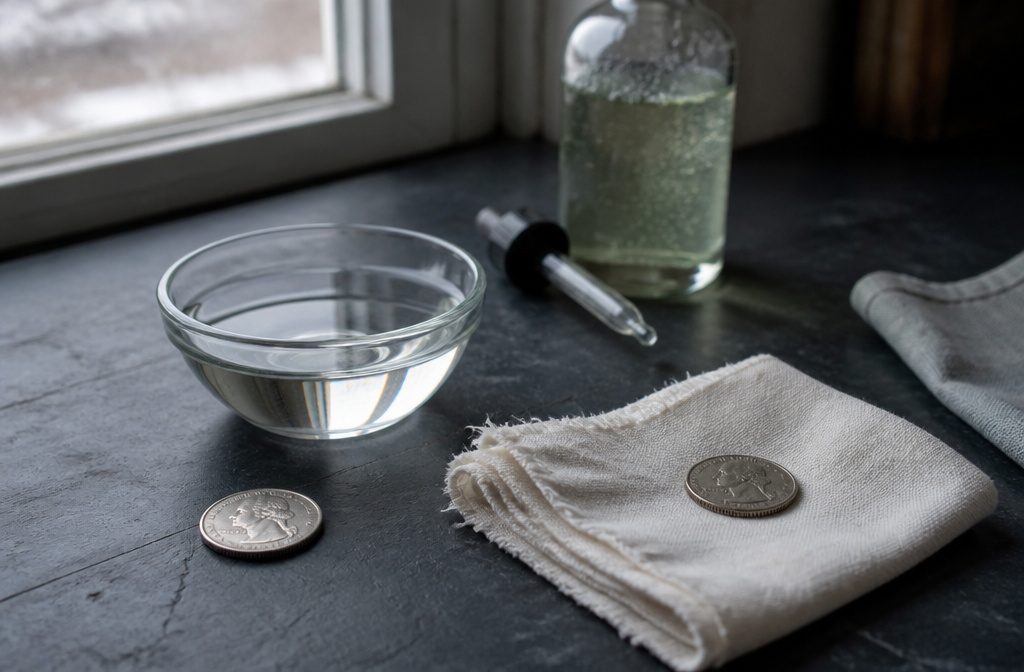
Cleaning a quarter takes distilled water, mild dish soap, and about five minutes of gentle work per coin. The stage most people get wrong is deciding whether to clean at all.
Pre-1965 silver quarters and any coin with collector value should never be cleaned, because removing natural patina leaves surface marks that grading services like PCGS and NGC identify immediately, replacing a numerical grade with a permanent Details designation that reduces value.
1. Decide Whether the Quarter Should Be Cleaned
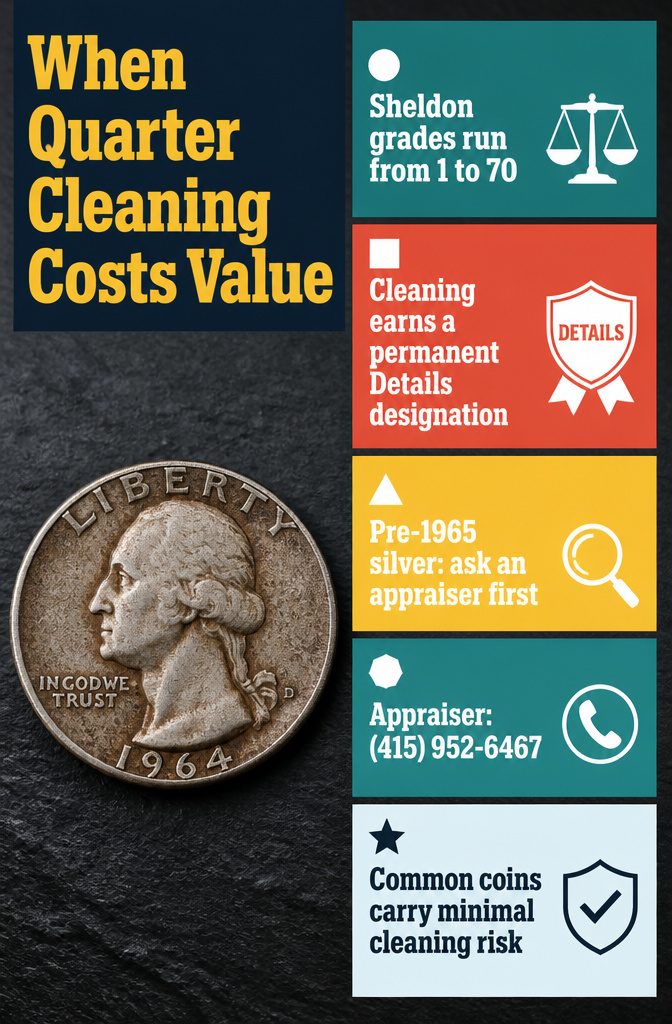
Not every quarter belongs in a cleaning routine. For coins with collector value, cleaning removes original patina and leaves surface marks that grading services identify immediately.
PCGS and NGC assign a Details designation to cleaned coins rather than a standard numerical grade, and that designation permanently reduces the coin’s standing in the collector market.
The Sheldon Scale runs from 1 to 70, and a coin’s grade directly determines what it sells for. A cleaned coin loses that grade and keeps the Details tag forever.
Pre-1965 silver quarters and any coin you suspect might be collectible deserve a professional opinion before you touch them.
You can reach an appraiser at (415) 952-6467 to check whether the quarter has value worth protecting. For common circulation coins with no collector premium, gentle cleaning carries minimal risk because there is no numismatic value at stake.
If you find yourself staring at a dirty coin and wondering whether it should be cleaned, the safest answer is to ask first. Once the patina is gone, it does not come back.
2. Prepare Your Hands, Work Area, and Supplies
Prepare Your Hands, Work Area, and Supplies
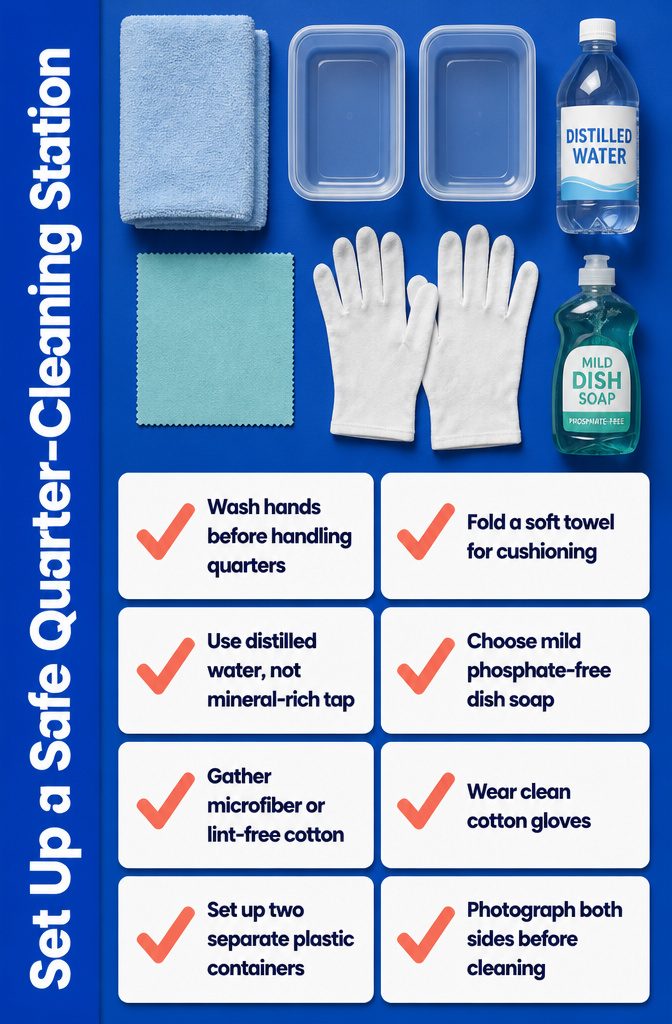
Start by gathering distilled water, which matters because tap water carries minerals that speed up corrosion.
You also need mild phosphate-free dish soap, a soft microfiber or lint-free cotton cloth, clean cotton gloves, a shallow plastic container, and a soft towel.
Wash your hands before handling the quarters.
Lay down a soft towel on your work surface, folding it a couple of times to add cushioning. This gives the coins a clean place to dry and catches them if one slips.
Set up two separate plastic containers: one for the soapy bath and one for the distilled-water rinse.
Use plastic, not glass or metal, because harder surfaces can scratch coins. Disposable food containers work perfectly here.
Before you touch anything with soap or water, photograph both sides of each quarter. That record lets you track changes and gives you documentation if you need a professional to evaluate the coin remotely later.
3. Soak or Wash Gently
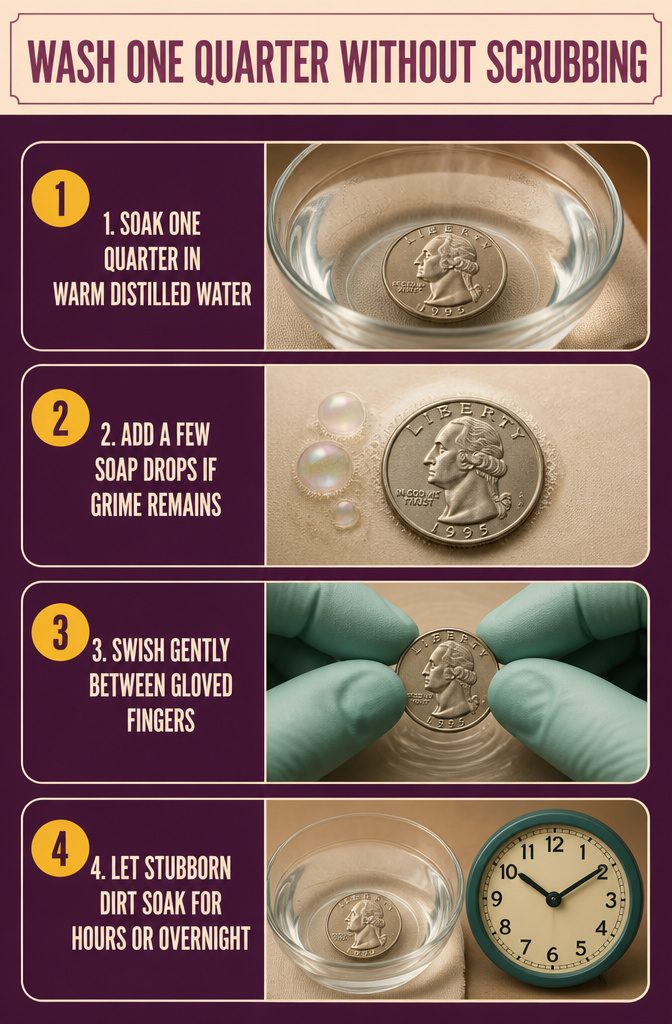
I clean quarters one at a time in warm distilled water, moving any grime gently from the center outward toward the edges.
This direction matters: working outward lets you wipe debris off the rim with your thumb without dragging it back across the coin’s face.
For surface grime a plain water soak won’t shift, I add a few drops of mild phosphate-free soap to the warm distilled water and let the coin sit for a few minutes, then swish it lightly or rub between gloved fingers.
Never scrub. As numismatic conservator Alison Whyte notes, scrubbing valuable coins damages their surfaces and destroys collector value.
If you’re cleaning multiple quarters, resist dropping them all in at once: coins bumping together in the container scratch each other, and those marks are permanent.
For coins that don’t need soap, a distilled-water soak of several hours or overnight loosens dirt safely without any mechanical contact at all.
4. Rinse Thoroughly
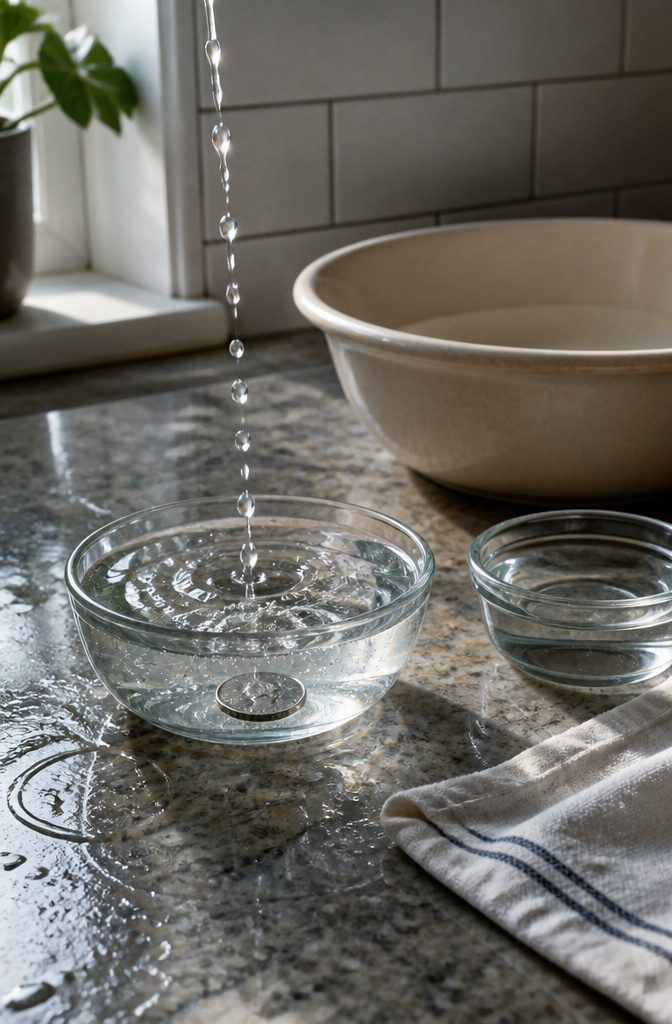
After you scrub and wipe the quarter, hold it by the edges and rinse it under warm running water to wash away soap residue.
Then dunk it in distilled water for a final rinse. Distilled water removes chemicals that tap water may have left on the surface — most water is treated with fluoride, which can react with the metals in the coin.
If you don’t have distilled water on hand, hot running tap water can replace it, though distilled is better when you can get it.
Swish the quarter in the distilled water for a few seconds, still holding by the edges, then you’re ready to dry.
5. Dry the Quarter
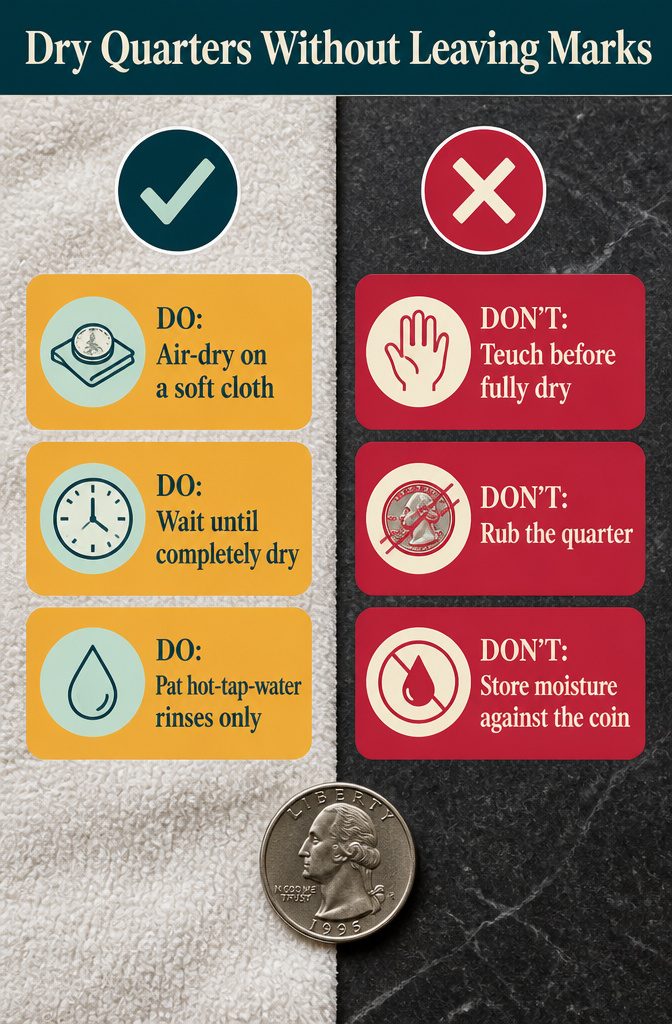
Air-dry the coin after a distilled-water or vinegar rinse. Place it on a soft cloth or towel and leave it alone until the surface is completely dry.
No patting, no touching. The water will evaporate on its own without leaving marks.
If you had to use hot tap water for the rinse, you’ll need to pat the quarter dry with a soft cloth or lint-free tissue to avoid spotting.
Pat only. Rubbing leaves hairline scratches that show up immediately on polished surfaces, and those marks don’t come out.
I recommend patting any coin that might have collector value, even if you used distilled water. A microfiber cloth works well here because it won’t shed fibers onto the surface.
Let the quarter air-dry completely before you handle it again or put it back into storage. Moisture trapped against the coin can cause new spots or tarnish, so waiting an extra twenty minutes is worth it.
6. Repeat as Needed and Store Safely
Work through the rest one coin at a time, but if something particularly stubborn needs more time in the water, move it to its own container so you don’t drop another coin in and scratch both surfaces.
Keep each piece isolated until it’s finished.
Before you put anything away, check that the quarters are completely dry. Any moisture left behind can cause spotting or worse over time.
Once they’re dry, handle by the edges only. Your fingerprints carry oils that etch metal, and the damage shows up later when it’s too late to fix.
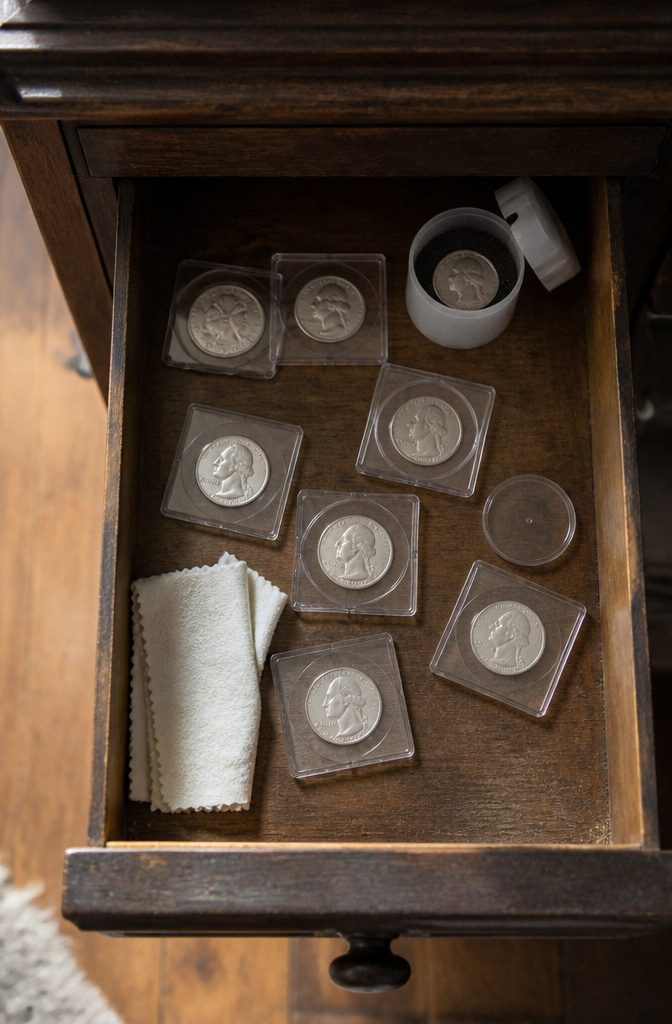
Store in acid-free, PVC-free holders.
The soft plastic flips that contain PVC release a green residue that attacks the metal, so look for products labeled as safe for long-term coin storage. Protective pouches and capsules both work.
Keep them in a cool, dry place with stable temperature, away from attics, garages, or anywhere humidity swings. Direct light speeds up toning on silver, so a drawer beats a shelf.
What Protects Collector Value and Patina
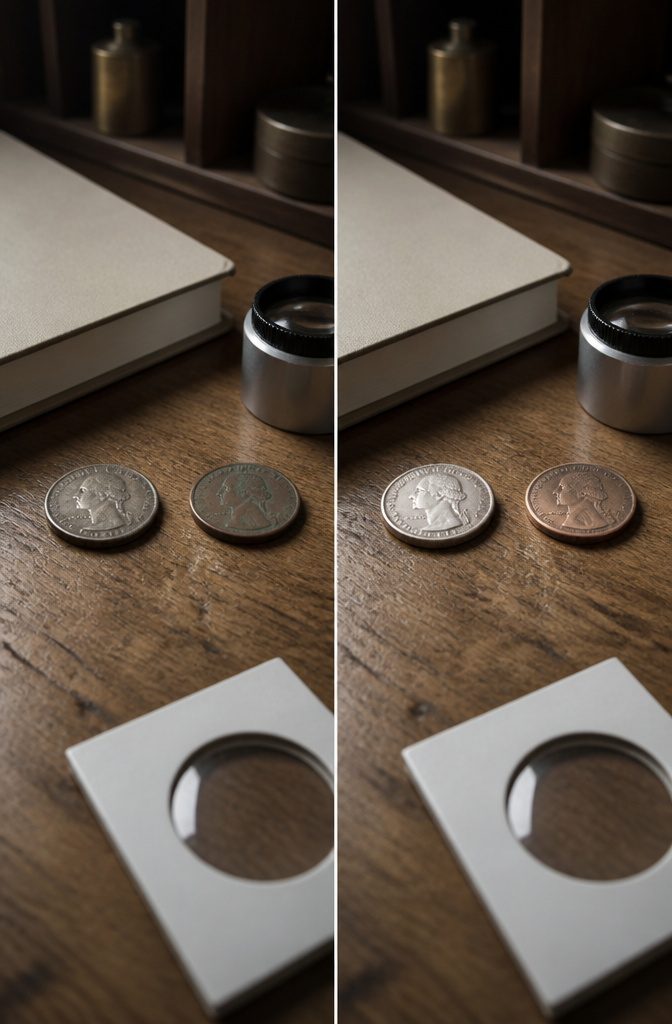
Natural patina matters to collectors, and removing it can do more harm than dirt ever could.
The dark toning on old silver and the brown or green surface on old copper develop naturally over decades as metal reacts with the environment.
Collectors prefer coins with original undisturbed patina, and professional grading services identify cleaned coins immediately, often assigning a Details designation that permanently affects value.
Tarnish is oxidized metal, not dirt, so soap and water alone will not remove it.
For any coin with collector significance, cleaning exposes raw metal beneath a surface that took years to form. For common non-collectible quarters with no premium at risk, gentle cleaning has minimal impact.
If a quarter might be valuable, take it to a professional who can decide whether cleaning is worth the risk. Some natural toning can actually increase value, and without those signs of age, authenticity becomes harder to prove.
Handling Quarters to Avoid Surface Damage
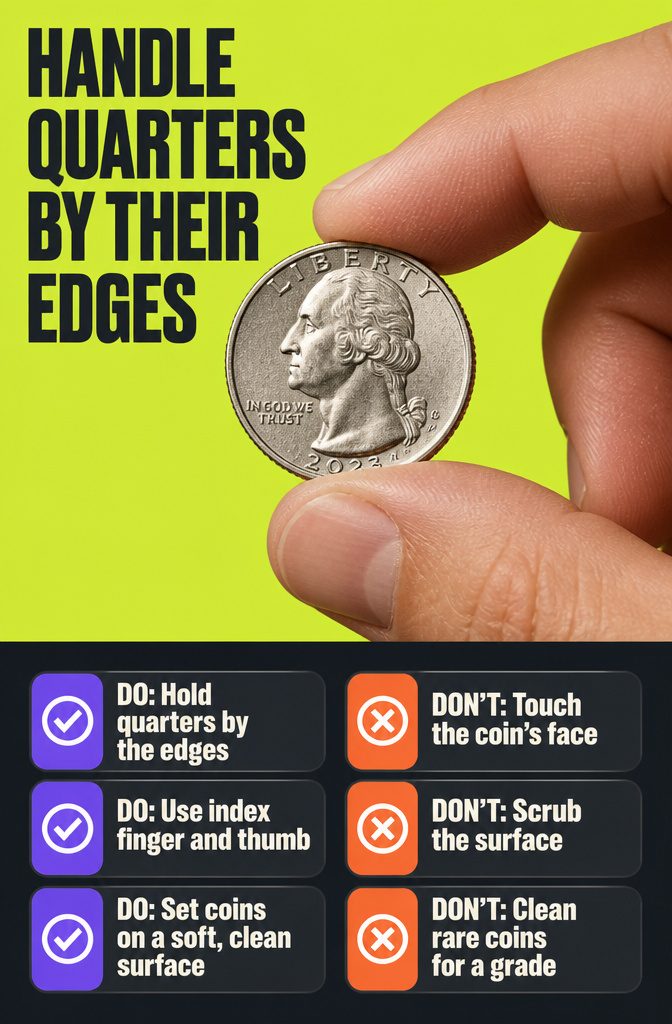
The risk of damage from cleaning is real, and most of it happens the moment you touch the surface.
Even the softest cloth leaves microscopic scratches called hairlines across a coin’s face. Under magnification, hairlines are immediately visible to a trained eye, and they cannot be removed.
Every cleaning attempt adds more. Professional graders at PCGS and NGC identify cleaning in seconds by looking for hairlines running across the surface, luster that breaks inconsistently under a tilted light, and natural toning that is absent or uneven.
A cleaned rare coin receives a Details designation rather than a numerical grade, which is why scrubbing should be avoided entirely.
Handle quarters by the edges only, holding them between your index finger and thumb to keep skin oils and acids off the surface. If you need to set one down, use a soft, clean surface rather than a hard counter.
Frequently Asked Questions
Should you clean old coins?
Clean only coins with no collector value.
Cleaning removes original patina and creates hairlines that professional grading services identify immediately, resulting in a Details designation that permanently lowers the coin’s standing. If a quarter might be collectible, get a professional opinion before you touch it.
How can you tell if a coin has been cleaned?
Look for hairlines across the surface, luster that breaks inconsistently under tilted light, and toning that is absent or uneven. Professional graders at PCGS and NGC identify cleaning in seconds by checking for these marks under magnification.
What is the safest way to clean old copper coins?
Start with distilled water.
For stubborn corrosion on non-collectible copper, olive oil is a gentler next option. Never scrub, because mechanical contact damages surfaces and destroys collector value on coins with numismatic significance.
Is soap and water safe for cleaning old coins?
Mild phosphate-free soap and distilled water are safe for confirmed non-collectible coins. Do not use them on any coin with possible collector value without a professional evaluation first, since cleaning removes original surfaces that collectors prize.
Should I clean coins before selling them?
No.
Leave coins in their original condition and let the buyer assess them. Cleaning removes patina that took decades to form, and collectors prefer undisturbed surfaces over polished metal.
Will Coke clean dirty coins?
Coke is acidic and will strip tarnish, but it also removes original patina and exposes raw metal beneath.
For any coin with collector significance, acidic cleaning methods cause permanent damage that grading services penalize. Stick to distilled water for non-collectible quarters.
How can I check if my old coins are worth anything?
Call an appraiser at (415) 952-6467 to check whether the quarter has value worth protecting.
Pre-1965 silver quarters and any coin you suspect might be collectible deserve a professional opinion before cleaning, since once patina is gone it does not come back.
What can I use to clean old quarters?
Use distilled water and mild phosphate-free dish soap for common circulation coins with no collector premium.
Work one coin at a time, rinse with distilled water, and air-dry on a soft cloth. Never scrub or rub, since those actions leave hairline scratches that show up immediately on polished surfaces.
Is WD-40 good for cleaning coins?
No. WD-40 is a petroleum-based lubricant that leaves residue on metal surfaces and can trap moisture, which causes new spotting or tarnish over time.
Stick to distilled water and phosphate-free soap for non-collectible quarters, and consult a professional before cleaning anything that might have value.