Garden décor ranges from $5 painted rocks to custom steel sculptures, and the decision comes down to whether the piece fits the scale of your house and the footprint you’re working with.
Most outdoor furniture and planters won’t survive a season unless the material can handle rain and sun without warping or rusting. Powder-coated aluminum, teak, and all-weather wicker last, and marine varnish extends the life of indoor pieces moved outside.
1. Use Garden Art, Ornaments, or Sculptures
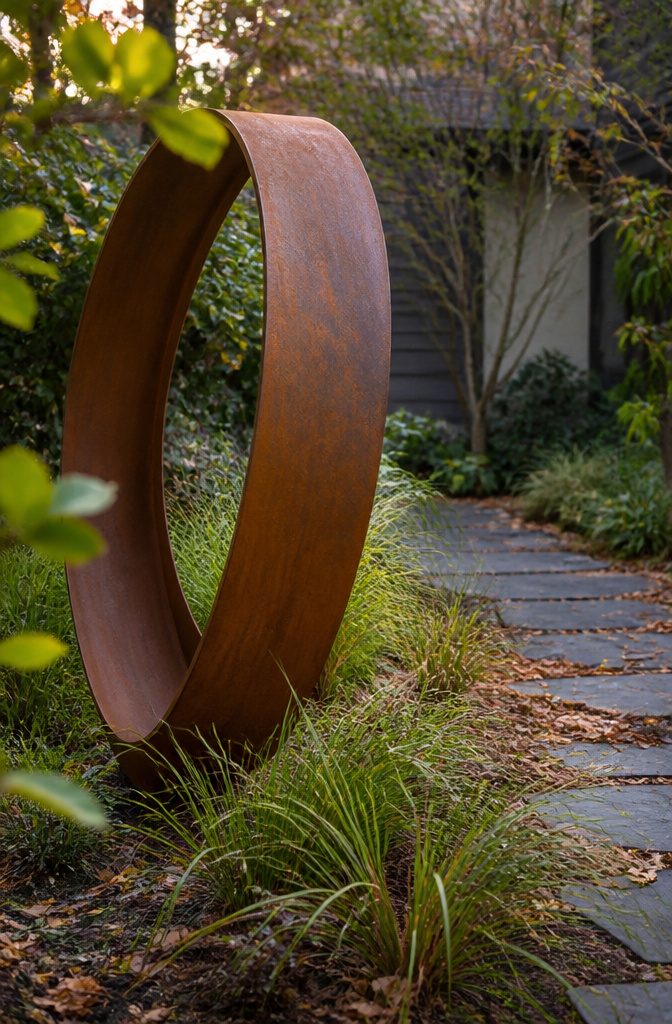
Garden art and sculptures turn empty corners into places someone actually looks at. Metal pieces in Corten steel or aluminum hold up outdoors without maintenance, and the abstract shapes or animal figures land differently than plants alone.
Painted rocks work at the opposite end of the budget scale—bright, easy to move, low upkeep—and they read best clustered at an entrance or along a pond edge rather than scattered everywhere.
Driftwood brings texture if the garden leans coastal or natural, and an old wagon wheel fits when the style already runs rustic.
Scale decides whether a piece anchors the space or just looks misplaced. A sculpture needs to hold its own next to the house, not disappear against the siding or overwhelm a small bed.
I match height and visual weight to the surrounding plantings and keep the material cohesive with what’s already there—steel near modern architecture, wood or stone in cottage settings.
One strong focal point does more than three smaller ones fighting for attention.
2. Add Seating and Relaxation Areas
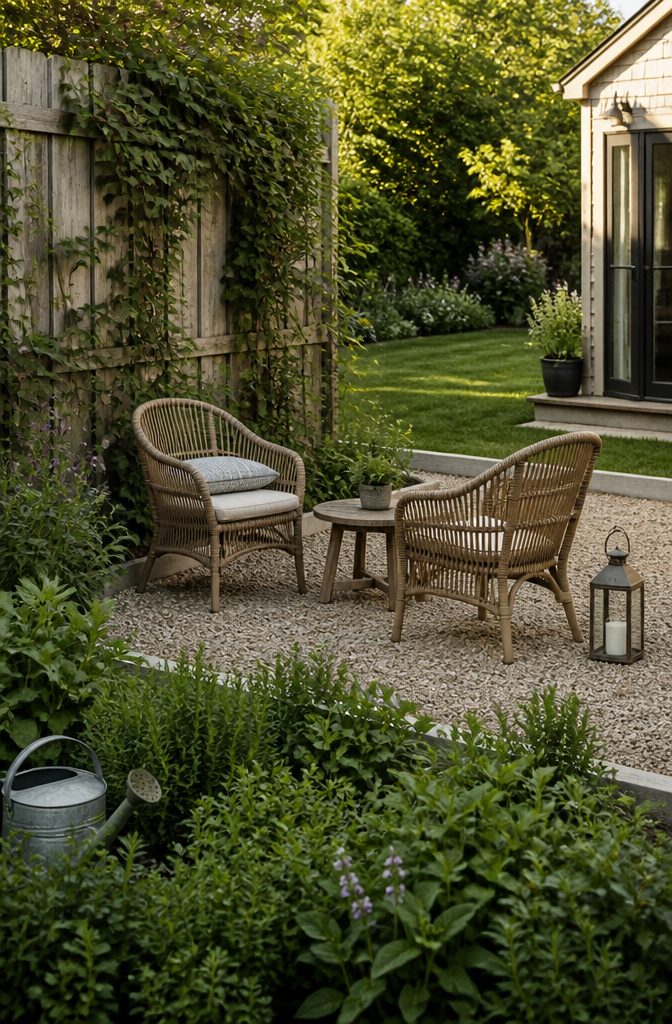
The first step in making a garden usable is deciding where you’ll actually sit.
A bench near the back fence creates a reading spot, a pair of chairs turns a corner into conversation space, and a hammock strung between two trees handles solo relaxation.
Outdoor dining needs a table and chairs scaled to the number of people you want to feed, not just what fits. Even a small garden should have somewhere to stop and look at what you planted.
Create what you can now. Then sit out there and think about what you’re going to do next summer.
That approach keeps you from guessing at what the space needs before you’ve lived in it through a season.
Materials matter more outside than in. Powder-coated aluminum, teak, and all-weather wicker hold up better than untreated wood or fabric that soaks through.
A garden swing needs an outdoor cushion to be comfortable, and wicker chairs meant for indoor use can take marine varnish if you want to extend their life.
Furniture also defines outdoor rooms when you arrange it with intention rather than shoving it against a wall.
3. Use Lighting to Extend Evening Hours
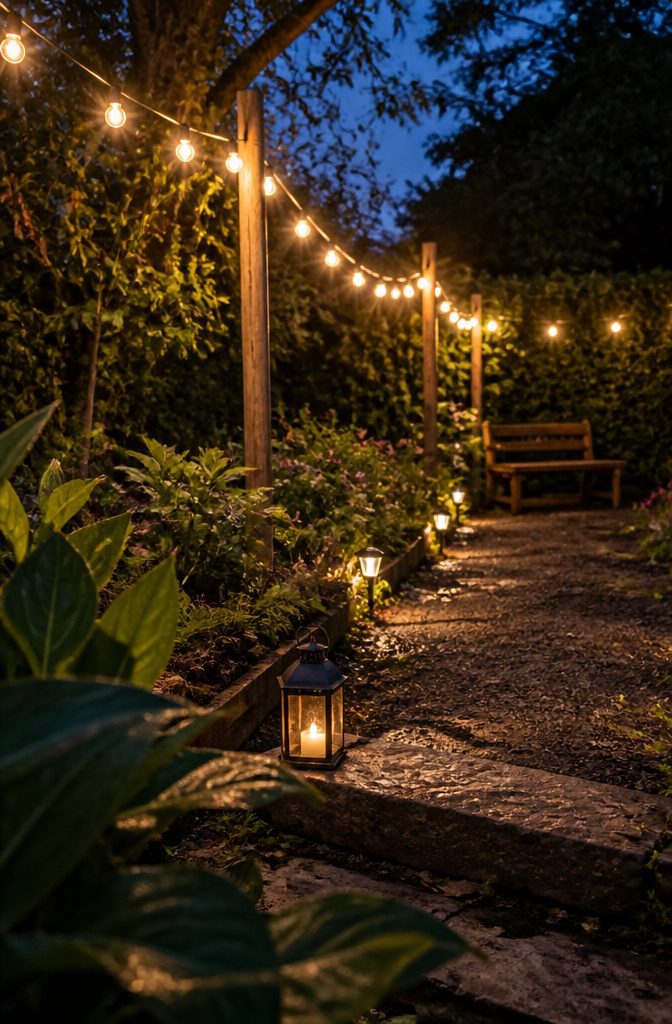
Lighting changes how much time you actually want to spend outside after dark, and most garden lighting today requires no wiring at all.
Solar lights with rechargeable batteries can line pathways or tuck into beds without digging trenches or calling an electrician. The batteries charge during the day and turn on automatically at dusk, which makes them easy to set and forget.
Low-voltage landscape lighting systems run on a transformer plugged into an outdoor outlet, and while they need a little more setup, they give steadier brightness and more control over beam direction.
String lights are what I reach for first when I want atmosphere rather than visibility. Hung overhead between posts or along a fence, they soften the whole space and make it feel like somewhere you’d linger.
LED well lights and spotlights work better when you want to highlight a tree, a sculpture, or an architectural feature.
Some systems now connect to smartphone apps, so you can adjust brightness or timing without walking back outside. Lanterns, whether battery or solar, add warmth to tables and steps without running any line at all.
4. Add Water Features
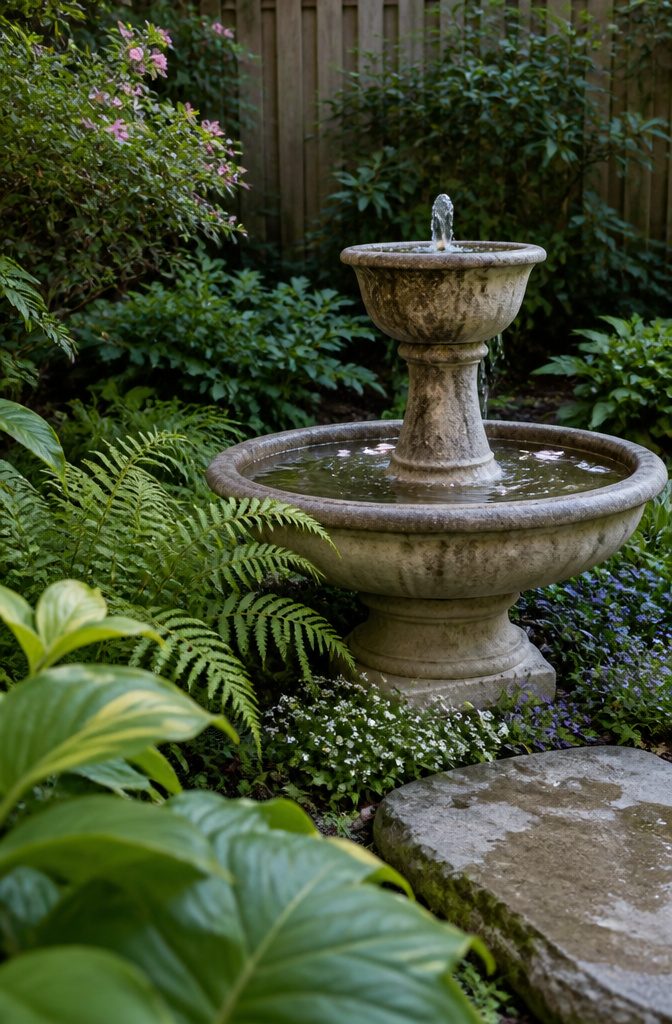
Water adds movement and sound without much upkeep once the feature is in place.
A birdbath is the simplest option: set a shallow basin on a pedestal or low stand, refresh the water at least once a week, and birds will use it regularly.
Moving water doesn’t attract mosquitoes the way still water does, so a small fountain with a recirculating pump keeps larvae from settling.
I’ve seen repurposed 1920s drinking fountains work beautifully in older gardens where the weathered metal fits the tone better than a glossy new basin.
Fountains vary widely in volume. A single-tier fountain with a gentle flow stays quiet enough for a seating area, but multiple tiers and falling water amplify the sound quickly.
If a fountain runs too loud, reducing the pump flow softens it without stopping the movement. Ponds and waterfalls take more space and planning, but they bring wildlife and a focal point that other features can’t match.
5. Decorate Entrances and Mark Garden Areas
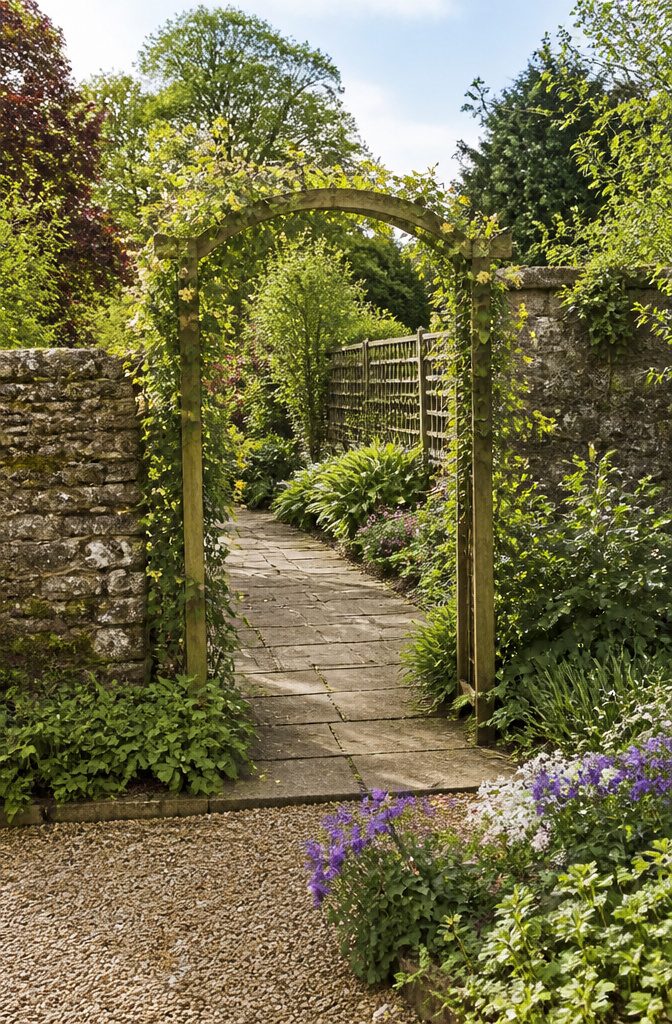
Gates and arches mark the transition from one area to another, and when placed over a path or at the garden’s entrance, they give the eye a clear place to stop.
I use them when the garden needs a sense of arrival, not just access.
Materials run from metal to wood to bamboo, and style matters less than the proportion: an arch that feels too small for its opening looks apologetic, one that’s wider and tall enough to pass under comfortably reads as intentional.
Covering these structures with climbing plants like roses or honeysuckle softens the frame and adds vertical growing space.
Pergolas and arbors do similar work but read heavier. A pergola over a seating area creates a ceiling without walls, which helps define the room when you’re working with open lawn.
Arbors often incorporate benches or planters, and those work best when the structure sits at a junction between two different zones—bright landscaping near the house, shadier ground farther out—so the pause feels earned.
Stone pathways tie the spaces together. Flat, small stones set in sand hold up well, need almost no maintenance, and let you lay the route yourself with a shovel and an afternoon.
Gravel paths work the same way but feel less finished unless you edge them with pavers or steel.
A row of homemade trellises along one side of the garden adds privacy and vertical interest without the commitment of a fence, and if you plant passionfruit or another vining crop, the structure earns its footprint twice.
6. Use Bird-Friendly Features
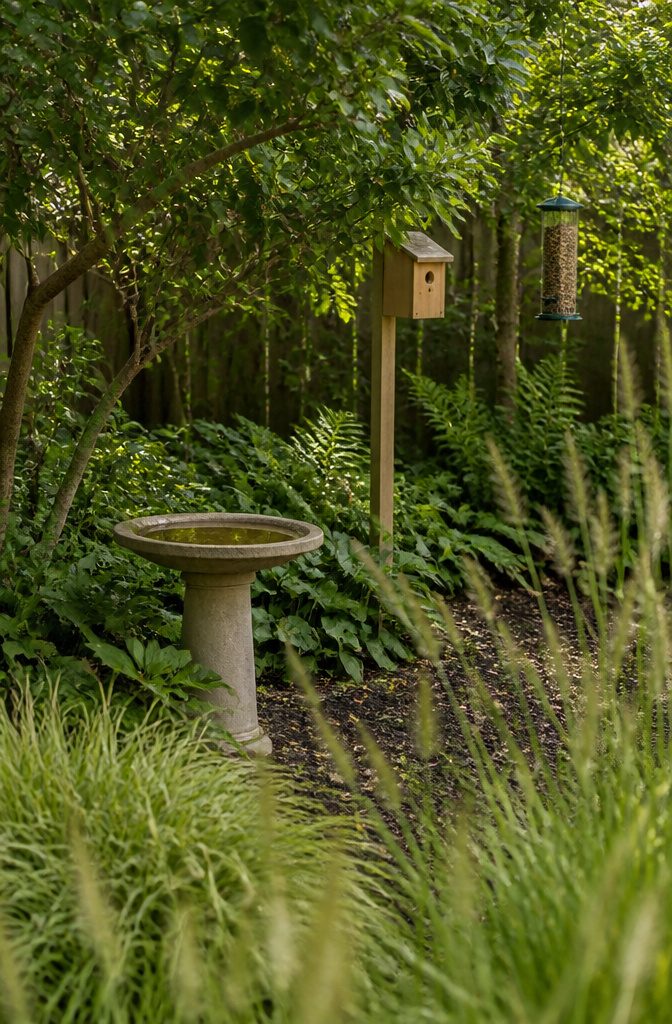
Birds show up when you give them what they need, and the three things they look for are food, water, and somewhere safe to nest.
A feeder stocked through the seasons keeps them coming back, and a birdhouse or nest box gives them a reason to stay.
I place feeders where I can see them from inside but far enough from windows that reflections won’t confuse the birds mid-flight.
Water matters more than most people realize. A birdbath needs fresh water at least once a week, more often in summer when algae builds fast.
A shallow dish on a pedestal works better than a deep bowl, because small birds won’t use water they can’t wade into safely.
If you have room, a small recirculating fountain or pond adds movement, which catches their attention faster than still water. Just keep it clean—stagnant water stops attracting birds and starts breeding mosquitoes instead.
7. Display Plants in Containers or Repurposed Objects
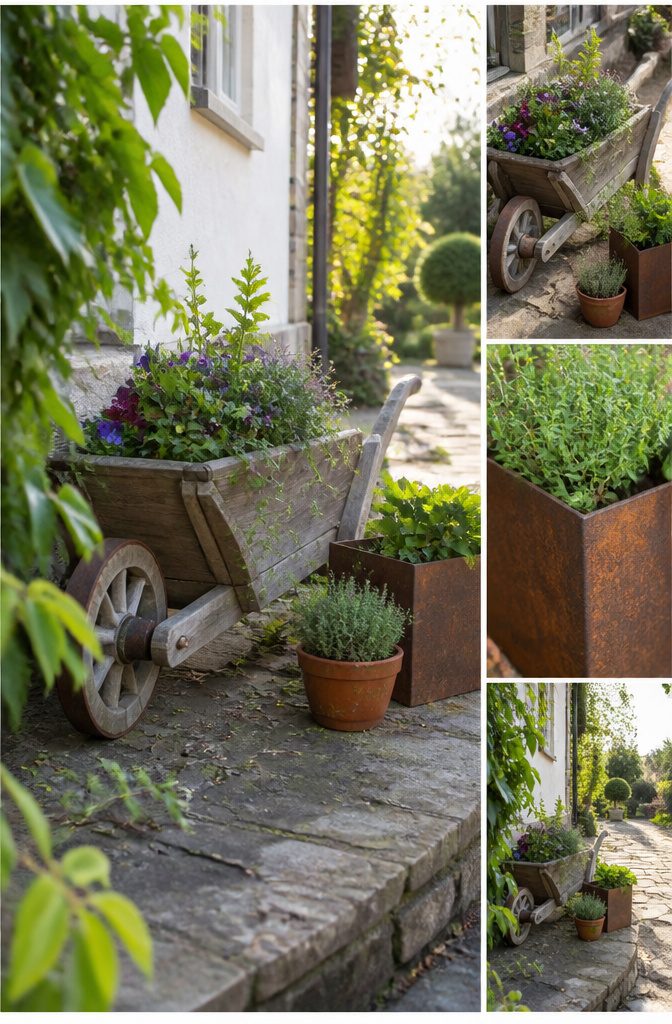
A planter doesn’t have to be purpose-built. I’ve seen wheelbarrows filled with soil and seasonal flowers near entryways, old drinking fountains turned into succulent displays, and vintage watering cans holding herbs on a patio step.
The advantage is visual interest without much cost—most planters under $25, and the repurposed ones often come free.
Drainage matters: rusty baskets, hollowed logs, and wooden crates need holes drilled in the bottom, and metal containers should be treated or sealed so they last outdoors.
Terra cotta and concrete work when you want classic shapes, but Corten steel planters develop a rust-colored patina over time that suits a modern or industrial garden.
Group a few different heights and materials together rather than matching them. Hanging planters add another layer if you have an arbor or fence to work with.
8. Add Color Through Pots, Furniture, and Flowers
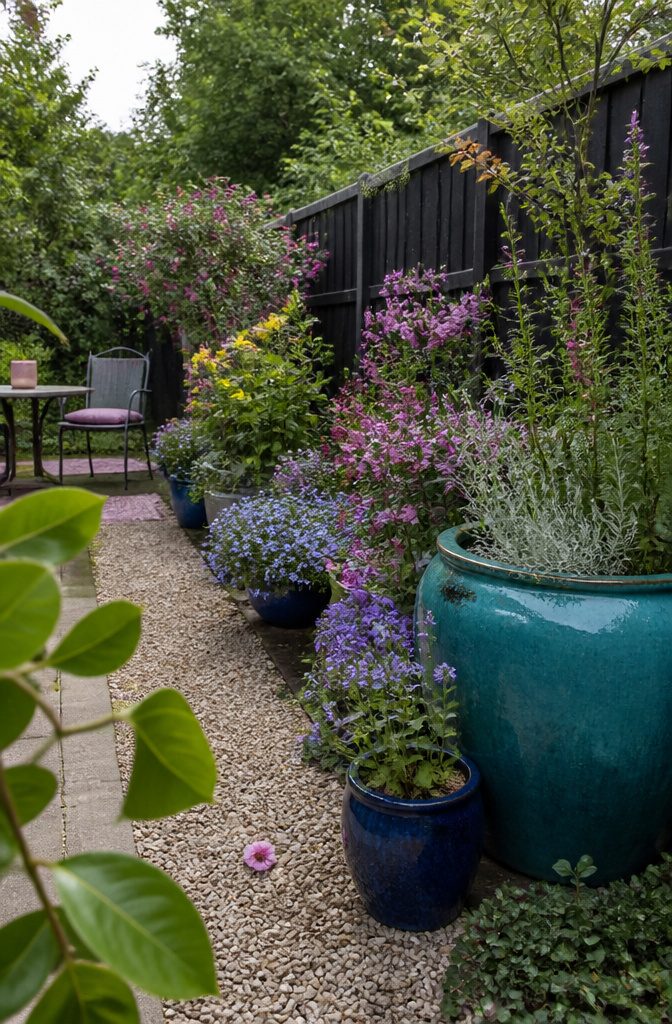
Color changes a garden the fastest, and it doesn’t all have to come from the ground. Begonias and lantana do work, but so do painted arbors, teal ceramic pots, and a weather-resistant coat on a fence that’s gone gray.
Black fences especially have become common lately, and they make anything planted in front of them look sharper.
The choice I see most often is whether to stick with a limited palette or mix colors freely.
A few purples, pinks, and yellows repeated through the space create rhythm. Blue pots, then blue pillows, then more blue in the border plants.
That repetition pulls the eye through and makes the garden feel planned. Mixing every color works too, but it reads playful rather than restrained, and you need to commit to it.
A few well-placed colorful elements beat a mass of competing hues.
One large teal pot flanking a door does more than six small mismatched ones scattered around. Group pots of varying sizes but similar colors if you want cohesion without sameness.
9. Create Vertical Interest
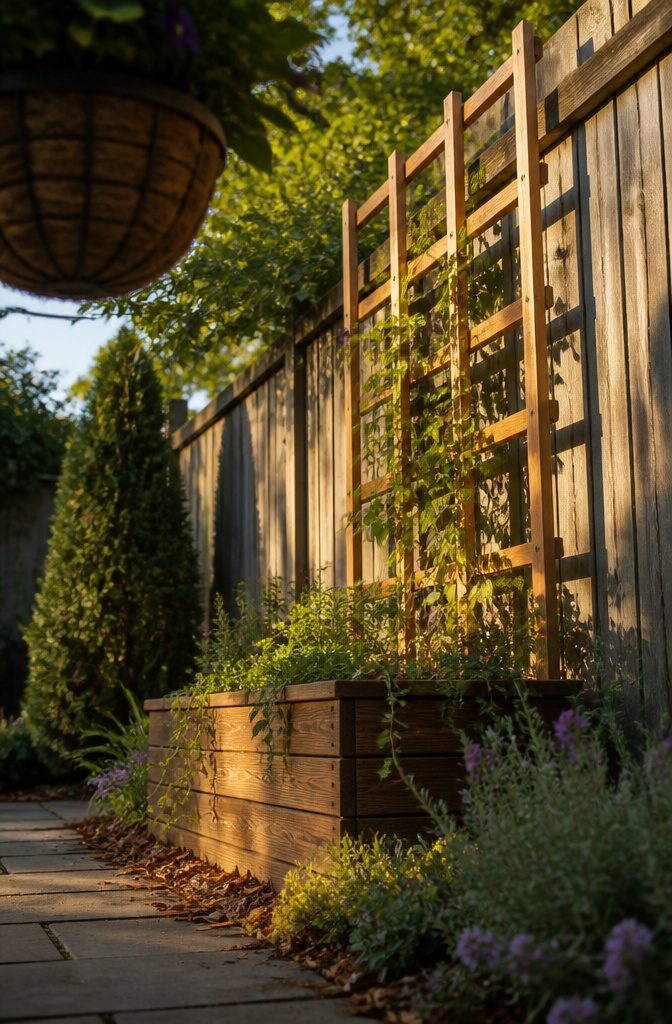
Climbing plants and trellises let you layer height without losing ground space, which matters when the footprint is fixed.
A simple wood or metal trellis mounted to a fence or wall gives clematis, jasmine, or morning glory somewhere to climb, and the vertical coverage reads as fullness even when the bed below stays sparse.
I drill pilot holes, drive galvanized screws through the trellis frame, and finish exposed wood with marine varnish so moisture doesn’t rot the structure in two seasons.
Hanging baskets work the same way: they pull the eye up and fill air that would otherwise sit empty.
Use heavy-duty hooks rated for wet soil weight, not the lightweight versions that bend after one storm. Elevated plant stands and tiered shelving add another layer without construction.
The effect compounds when you mix heights, so a clematis on a trellis behind a waist-high planter behind a low spreading perennial gives you three planes where a flat bed gives you one.
10. Choose a Style That Fits the Home and Garden
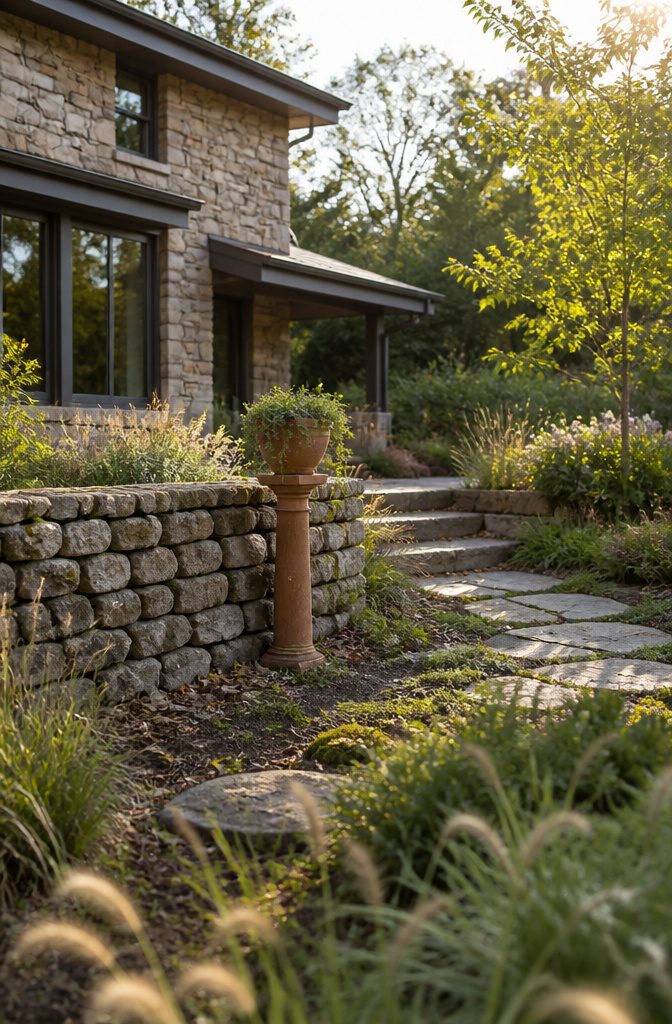
The simplest way to narrow down your decorating options is to start with the architectural style your home already has. If your house shows rustic stone cladding, that same material can work for garden walls or pathways.
The repetition makes the transition from indoors to garden feel intentional rather than random. Iron urns and terra-cotta pedestals suit a home with traditional detailing; smooth concrete planters and steel furniture fit a modern exterior.
Scale decides whether the piece reads as decoration or clutter.
A large home can carry substantial ornaments without looking crowded. A smaller house benefits from lighter, more delicate pieces that don’t fight the building for attention.
One approach worth considering: live in the space for a season before you commit to permanent additions.
You’ll notice where the light falls, which areas you actually use, and what the garden needs rather than what looked appealing in a catalog.
11. Use Sound Through Water or Wind
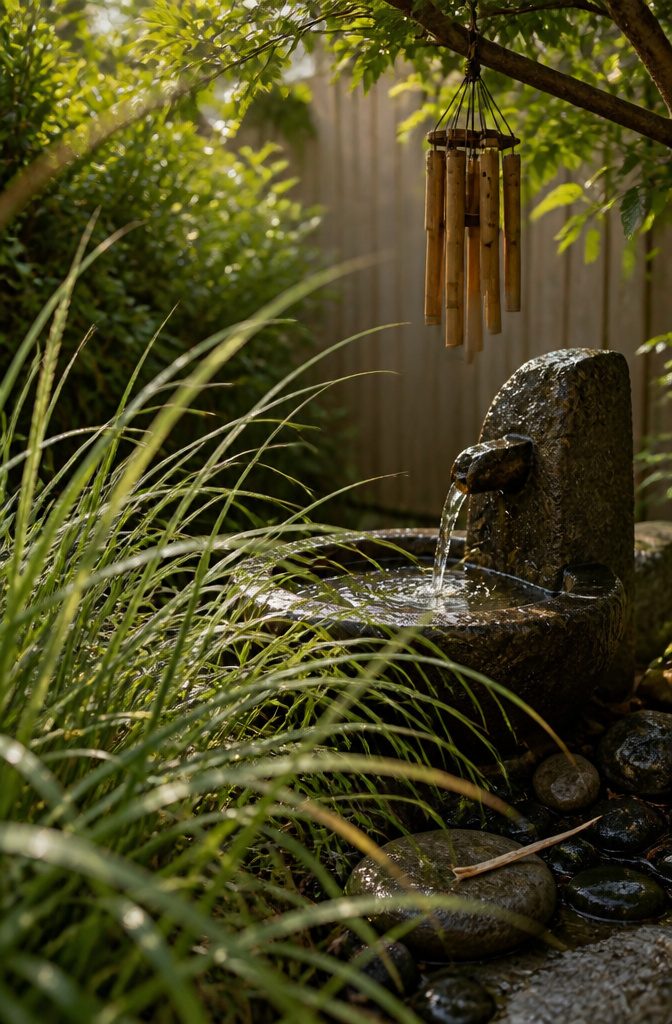
Sound layers into a garden more easily than most people expect. Water features and wind chimes are the two most reliable routes, and they work differently enough that many gardens can hold both.
A fountain with adjustable flow gives you control over volume; if the sound reads too loud for the space, a simple tube clamp on the supply line brings it down to something that feels calming rather than intrusive.
The farther water falls and the more tiers it crosses, the louder it gets, so match the fountain style to the intimacy of the spot.
Wind chimes vary by material. Small metal chimes produce a light, twinkling tone; larger wooden chimes sit lower and deeper.
Rain chains are quieter but still audible when it rains, and they double as a visual detail along a downspout. Grasses and bamboo add rustling movement in even a light breeze, and they cost nothing to run.
For music, a portable Bluetooth speaker like the Sonos Move lets you bring a playlist outdoors without wiring anything in. The Move also syncs over WiFi if you already run a multi-room setup indoors.
12. Repurpose Found or Old Objects
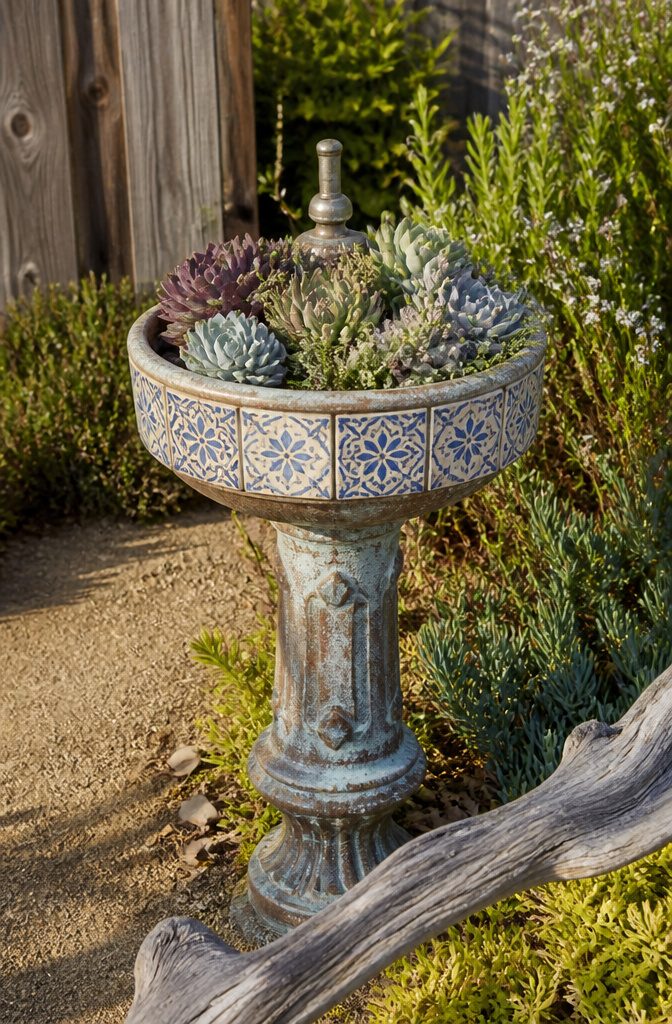
Repurposed and salvaged pieces bring history into the garden without needing a trip to the store.
The Bealls, who turned a rolling acre in Southern California into a planted retreat, worked a 1920s drinking fountain into the design as a succulent planter, complete with original Malibu art tile.
The fountain reads as garden sculpture first and container second, which is what makes the choice stick.
Driftwood works the same way: lean a weathered piece against a fence or use it to frame a bed, and it adds shape before it adds nostalgia.
Wagon wheels and old metal watering cans fall into the same category—they earn their place by shape and patina, not sentiment alone.
Creating a garden like this takes years, as the couple behind a fifth-acre urban homestead in California found, so start with one or two pieces that matter and let the collection build as you find things worth keeping.
13. Add Fragrant Plants Near Paths or Seating
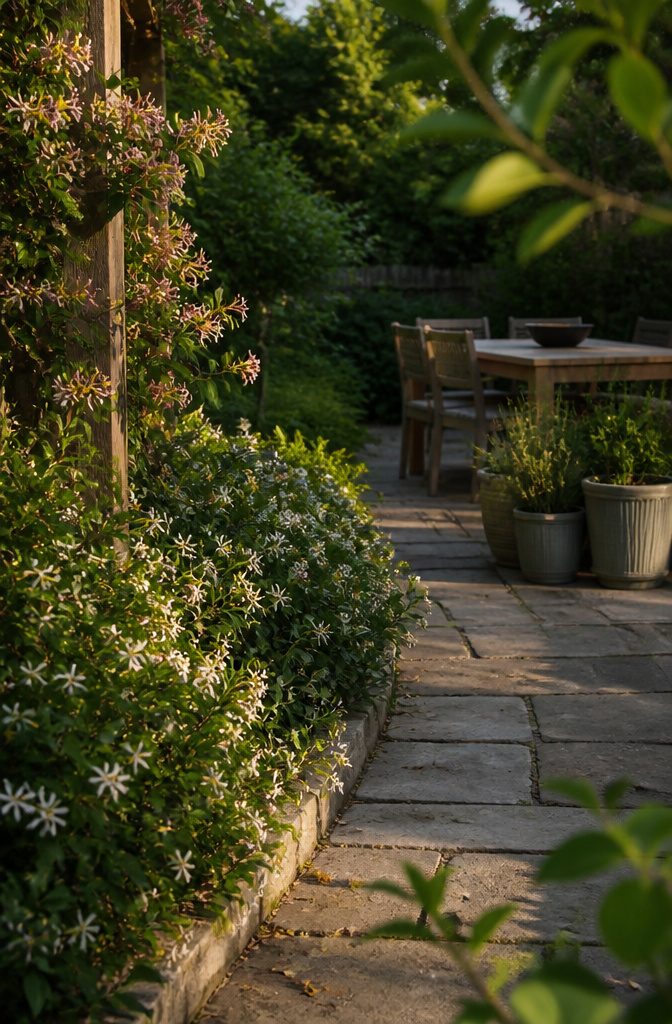
Fragrant plants belong where you’ll actually walk past them or sit long enough to notice.
I put strongly scented varieties near seating areas and along pathways, where movement stirs the air and carries the scent. Herbs work well for this because they give you aroma and kitchen use in one planting.
In one garden I read about, honeysuckle and jasmine sit at the entryway, so visitors smell them immediately.
Lemon blossoms were grouped near large herb containers, and night-blooming cereus opened its flowers around the main dining table, adding scent exactly when the space was in use during evening meals.
The mistake is planting too many strong scents close together.
Balance heavy fragrances with subtler ones so the space doesn’t overwhelm, and think about who uses the garden most. Not everyone tolerates the same intensity, and a path lined entirely with jasmine can feel like too much by midsummer.
14. Mix Textures, Materials, and Shapes
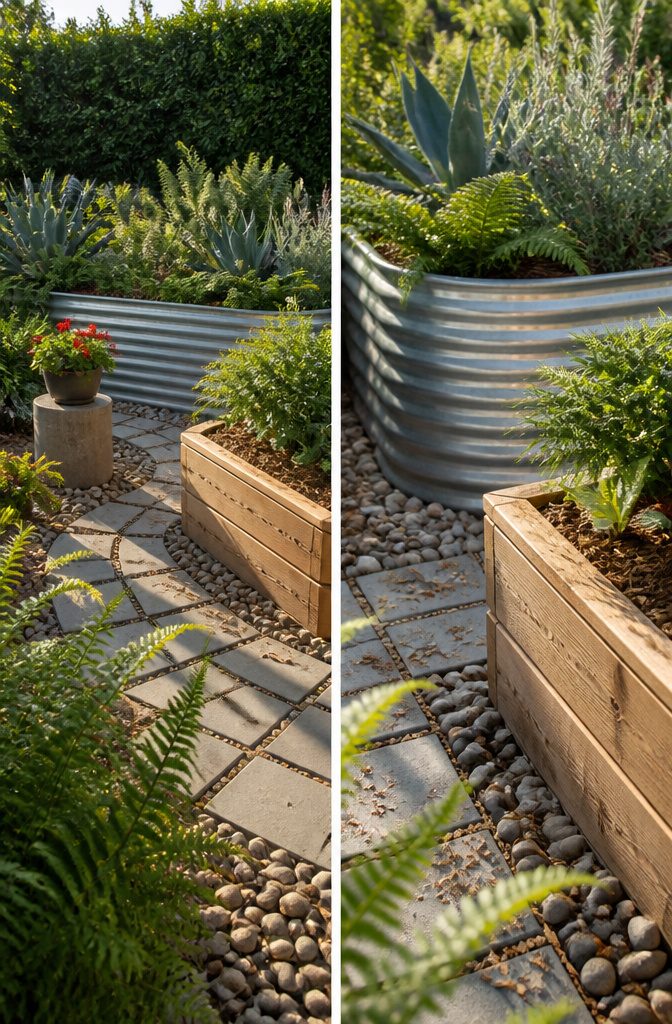
A garden that holds your attention past the first look layers materials and forms instead of repeating them. I pair curved river rock with angular pavers, wood planters with metal raised beds, gravel paths near bark mulch borders.
The combination reads as intentional rather than collected by accident when the materials sit close but not mixed—gravel and wood chips work nearby, but pouring them together just muddies both textures.
Height matters as much as surface. Raised beds lift planting areas above ground level, and you can build those beds from stone blocks, galvanized steel, or traditional wood depending on the look you want.
I arrange beds in a U-shape or herringbone when the space allows it, because an interesting footprint pulls the eye through the garden rather than stopping at the first bed.
Pedestals do the same job for container plants—they bring short specimens up to eye level so a compact geranium gets the same presence as a tall ornamental grass.
Plant groupings gain depth when you vary leaf structure, height, and bloom time within the same bed.
Flowy ferns balance structured cacti; stately agave offsets softer perennials. Group plants with similar water and light needs together, because that makes maintenance straightforward and lets you rotate arrangements seasonally without losing anything to mismatched care.
15. Attract Pollinators and Other Wildlife
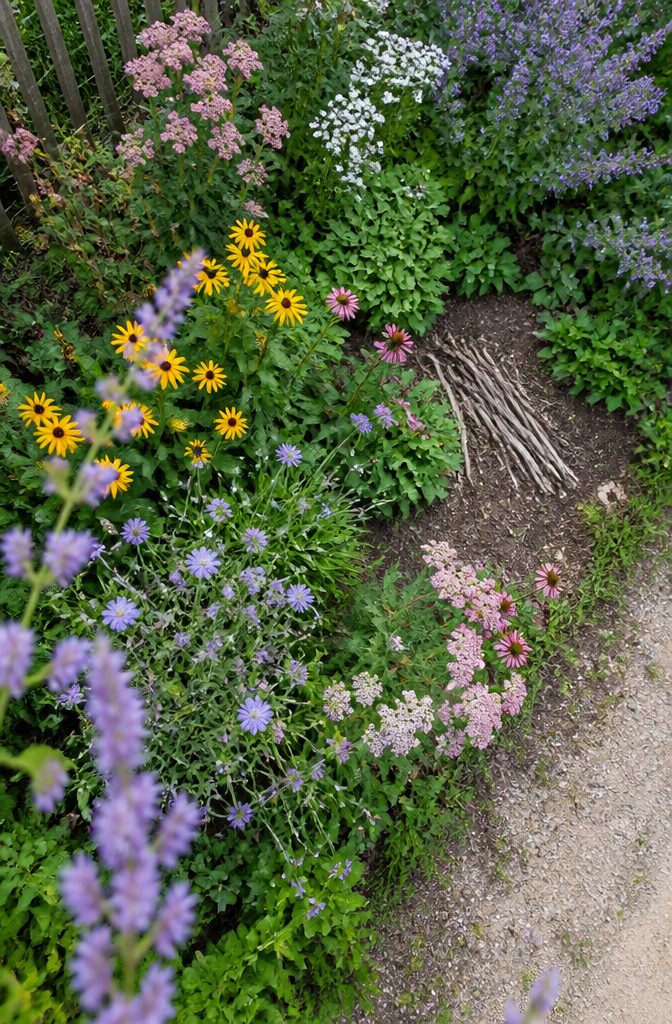
One of the most rewarding ways to bring a garden to life is to plant for the animals that actually use it.
Native wildflowers and herbs that bloom at different times through the season give bees and butterflies a consistent food source, and when you choose plants hardy across zones 3 through 9, the same species can work whether you garden in Minnesota or Georgia.
I like to cluster several of the same flower rather than scatter singles, because pollinators forage more efficiently when nectar is concentrated.
A butterfly’s full lifecycle runs only 10 to 14 days, so even a small planting can support multiple generations in a summer.
Beyond flowers, leaving a patch of bare ground or a small pile of twigs gives solitary bees a place to nest and beneficial insects somewhere to overwinter.
The garden starts to feel inhabited rather than static, and the hum of activity becomes part of the decoration.
16. Make Garden Décor Functional
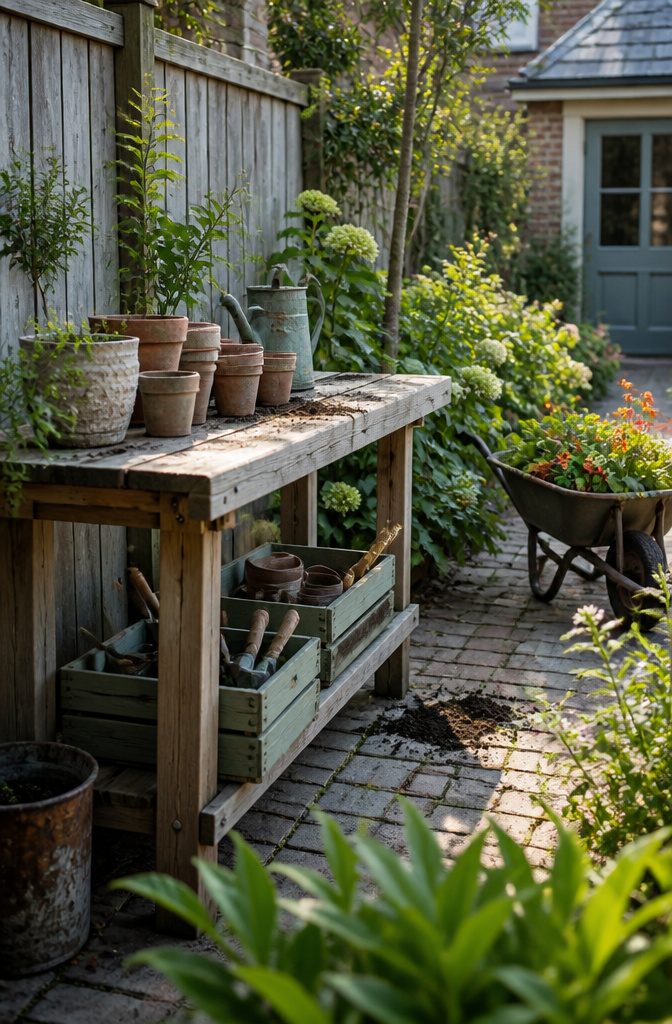
The best garden décor does two jobs at once. A potting bench built from reclaimed wood gives you a work surface for filling pots or mixing fertilizer while adding color and personality to the space.
An old wheelbarrow turned planter holds seasonal vegetables and flowers in less than half the footprint of raised beds, and you can move it to the entrance or the seating area when the light shifts.
I’ve found any piece that solves a storage problem while looking intentional tends to stick around longer than purely decorative objects.
Wooden crates painted to match the fence or the trim work as both planters and storage containers. Set one near the door for gloves and hand tools, another by the back gate for garden twine and stakes.
The paint ties them into the space instead of reading as yard-sale leftovers, and you avoid the usual clutter of tools leaning against walls or piled on steps.
Why Outdoor Durability Matters
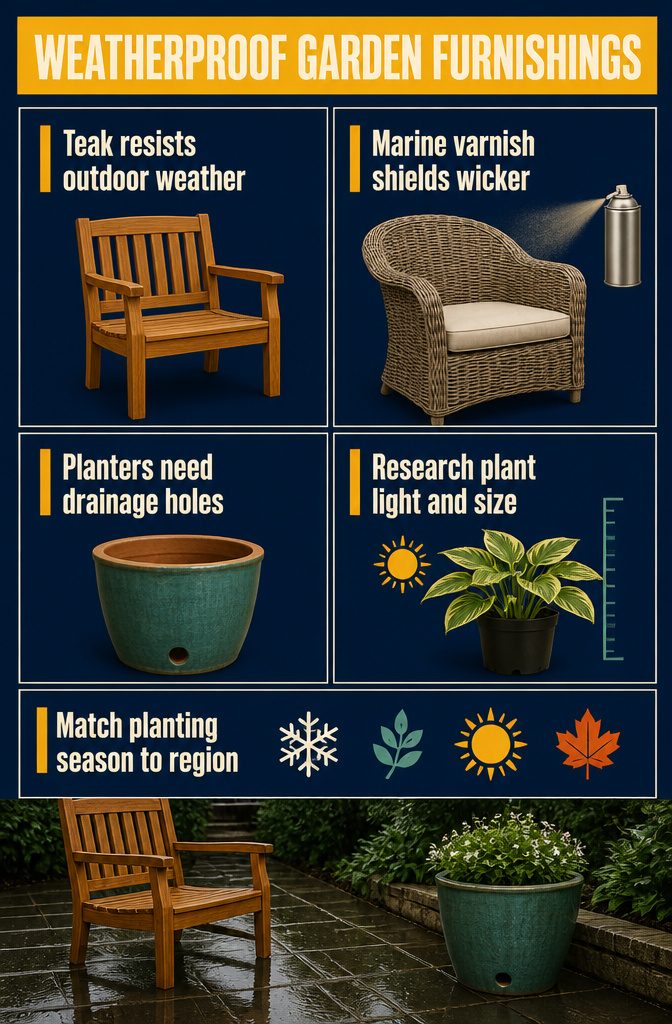
Outdoor pieces face rain, sun, wind, and temperature swings that indoor furniture never sees. Materials like powder-coated aluminum, teak, or all-weather wicker hold up season after season without warping, rusting, or fading.
I look for those when choosing garden furniture, and the same durability standard applies to planters, décor, and anything left outside year-round.
If you already own something suitable for indoor use, weatherproofing extends its life.
A spray-on marine varnish turns wicker chairs into outdoor furniture that can handle moisture and UV exposure. The same treatment works for wood pieces that started indoors.
Planters need drainage holes, especially if they’re repurposed from containers not originally meant for plants.
Without drainage, roots sit in water and rot. Before choosing plants, research their light requirements, mature size, and the right planting season for your region.
A shade plant forced into full sun won’t thrive no matter how well the container drains, and planting at the wrong time means replanting later.
Keep Scale and Restraint in Mind
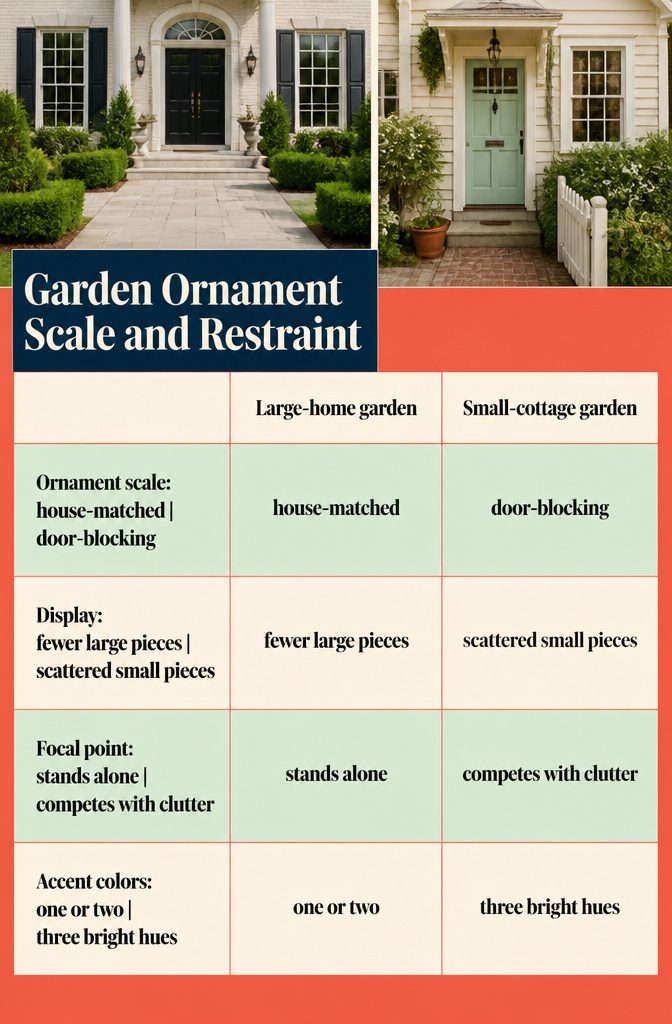
A five-foot ornamental urn can anchor the side of a 2,400-square-foot home, but in front of a small cottage it blocks the door and competes with the building itself.
The scale of any ornament needs to match the mass of the house behind it, and that means choosing fewer, larger pieces rather than scattering small ones across the yard.
A focal point only works when it sits alone long enough for your eye to register it.
Color follows the same rule. Three bright containers in different hues make the patio feel cluttered, even when each one is attractive on its own.
I find it easier to hold to one or two accent colors and repeat them in different materials—say, blue ceramic pots near the door and blue cushions on the bench—so the garden reads as composed rather than collected.
Restraint matters more than variety when the space is small or the backdrop is already busy.
Frequently Asked Questions
How can I make my garden look nicer?
Start with garden art or sculptures to create focal points, add seating where you’ll actually use it, and install lighting to extend evening hours.
Water features bring movement and sound, while plants in containers or repurposed objects add color and texture without permanent commitment.
Layer these elements instead of adding everything at once, and let the space guide what it needs after you’ve spent time in it.
What can I add to make my garden look nice?
Sculptures in metal or stone create visual anchors, while water features like fountains or birdbaths add movement and attract wildlife.
Birdhouses and feeders bring birds into the space, and plants grouped by height and color fill beds with interest. Lighting, seating, and fragrant plants near paths round out the experience.
How should I arrange colors in my garden?
Pick one or two accent colors and repeat them across pots, furniture, and plantings to create rhythm through the space.
Clustering colors rather than scattering them pulls the eye through the garden and reads as intentional. Mixing freely works too, but it takes commitment to avoid looking cluttered.
What are outdoor decor ideas for small places?
Use vertical space with trellises, hanging baskets, and climbing plants to layer height without losing ground room.
String lights overhead soften the space, and one large colorful pot does more than several small ones. Mirrors can make a compact garden feel larger by reflecting light and plantings.
How can I attract birds in my outdoor space?
Provide a birdbath with fresh water at least once a week, place feeders where you can see them but away from windows, and add a birdhouse or nest box for nesting.
A shallow basin works better than a deep bowl because small birds need water they can wade into safely. Moving water from a fountain or pond attracts them faster than still water and prevents mosquitoes.
Which lights are the best for outdoor decor?
String lights hung overhead create atmosphere for seating areas and make the space feel like somewhere you’d linger.
Solar lights with rechargeable batteries line pathways without wiring, and LED spotlights highlight trees or architectural features. Lanterns add warmth to tables and steps without running any line at all.