
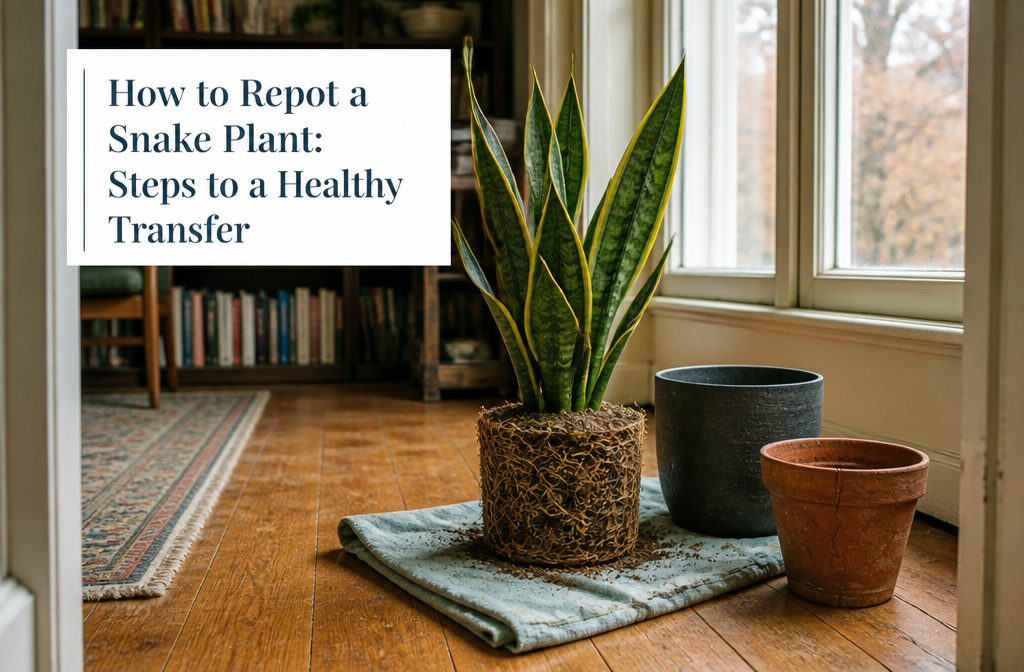
Snake plants need repotting only when roots emerge from drainage holes, the pot cracks, or water drains straight through without soaking in.
Move the plant to a pot 2 to 4 inches wider, wait 5 to 7 days before watering, and position it at the same depth it sat before. Most people water too soon and lose the plant to rot in the first week.
1. When to Repot a Snake Plant
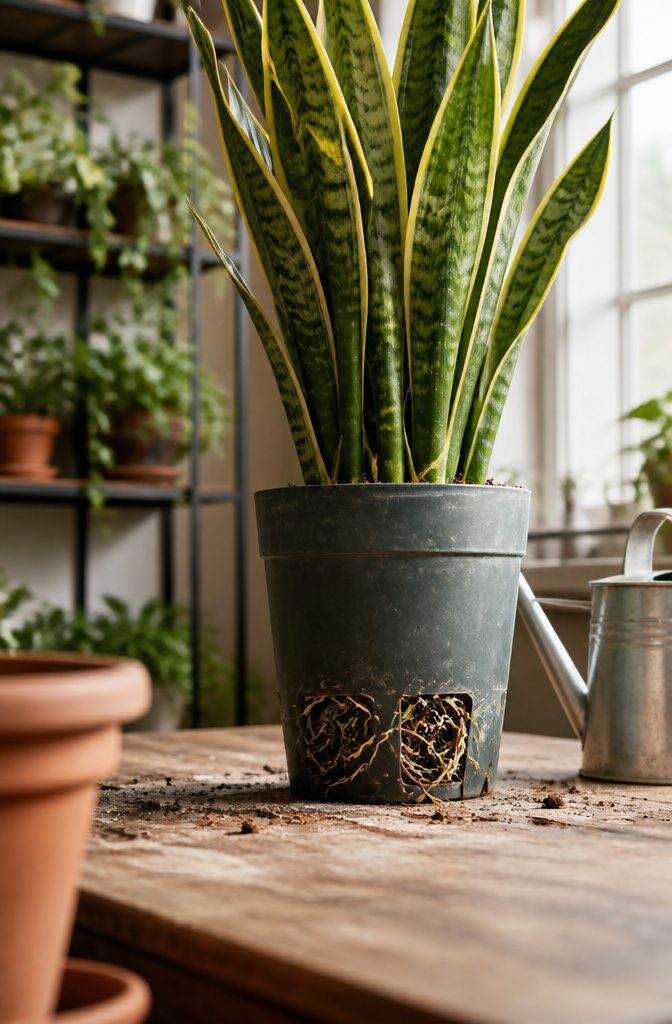
Snake plants show they need repotting through visible signs rather than demanding a strict schedule.
Roots emerging from drainage holes are the clearest indicator: the plant has filled its pot and needs more space. Water that drains straight through suggests roots have displaced most of the soil, leaving little room for moisture or nutrients.
A cracked or bulging pot signals aggressive root growth, common in plastic pots that split and ceramic pots that bow under pressure.
Crowded foliage pressing against the rim means cramped roots below. Slowing or stalled growth during the active season points to limited root space, even when light and watering stay consistent.
Snake plants tolerate being snug and actually grow better slightly potbound, so I only repot when signs appear.
Some sources recommend every 2–3 years; others say every 4–6 years. Growth rate and conditions decide the interval more than the calendar.
Spring or early summer is most common for timing, when the plant is actively growing and recovers faster.
Late winter or early spring also works, just before the growing season starts. That said, a plant cracking its pot or showing real stress can be repotted outside ideal seasons if needed.
2. Choose a Pot with Drainage and the Right Size
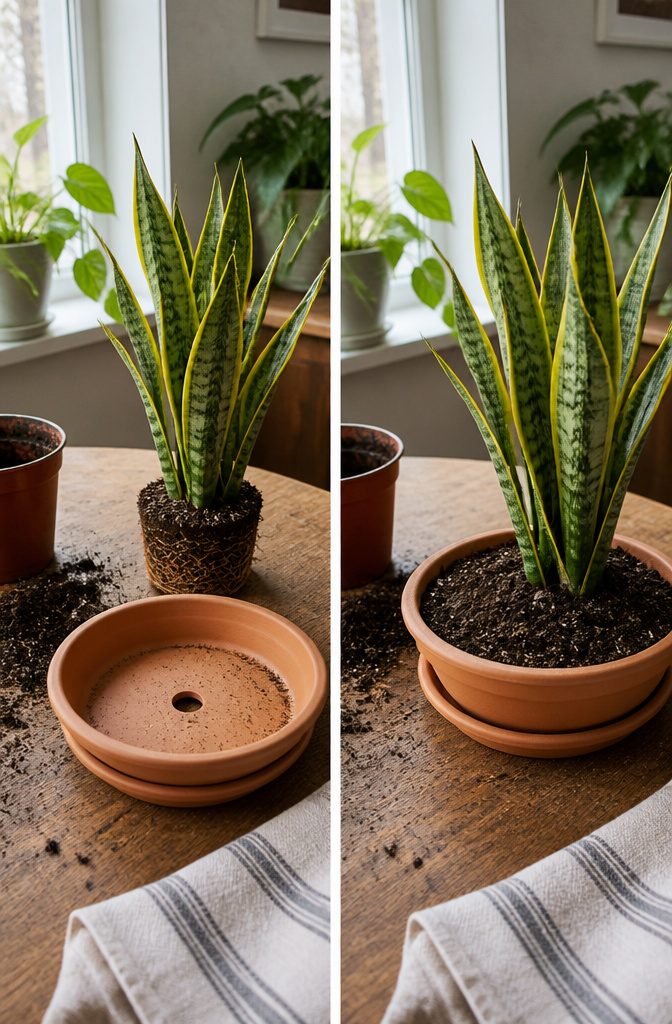
Drainage holes are non-negotiable. Snake plants are tough, but standing water kills them faster than anything else.
The new pot needs at least one drainage hole at the bottom, and if it came with an attached saucer, empty it after every watering so the roots never sit in pooled water.
Size matters more than most people think. When I move a snake plant up, I go 2 to 4 inches wider than the current pot—a 6-inch grow pot becomes an 8-inch pot, not a 12-inch one.
Snake plants like being slightly snug, and too much extra soil holds moisture longer than the roots can use it. That wet soil is what sets up root rot, especially in low light where the plant drinks less.
If your new pot doesn’t have drainage holes then please don’t put your lovely Sansevieria in it. Sansevierias are tough plants and will produce lots of new offsets when happy but root rot is the surest way to kill them.
That advice covers most situations.
The exception is a very large plant that needs proportional support—a 6-foot snake plant in a 10-inch pot can jump to an 18-inch pot without problems because the root mass and top growth justify the space.
Avoid deep pots. Snake plants spread outward through thick rhizomes, not downward, so a shallow pot works better.
Deep containers trap soil at the bottom that stays wet for too long. Clay and ceramic are both fine if they drain well, and unglazed terracotta helps wick moisture away faster than glazed finishes do.
3. Gather Supplies and Soil Mix
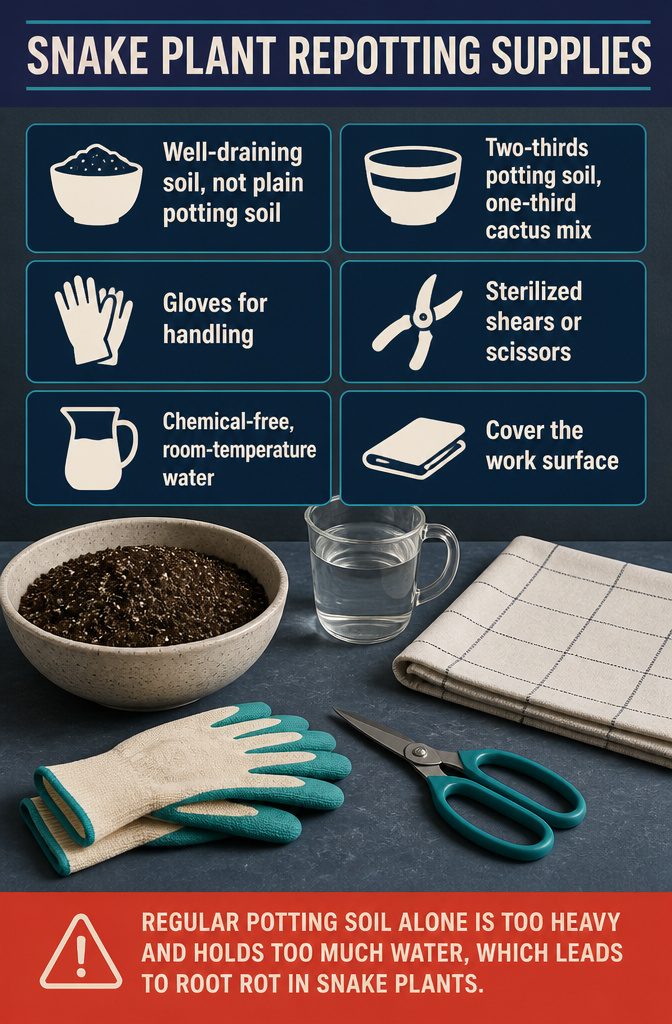
You’ll need a few simple materials before you start. Most are already in your home.
Set out well-draining soil, gloves, sterilized pruning shears or scissors, room-temperature water that’s chemical-free, and a covering for your work surface.
Regular potting soil alone is too heavy and holds too much water, which leads to root rot in snake plants.
For the soil mix, I use one of these recipes:
- 2/3 potting soil and 1/3 succulent and cactus mix for good drainage and aeration
- Equal parts cactus mix and regular houseplant soil
- 2 parts loam-based potting mix to 1 part horticultural grit
If you don’t have cactus mix on hand, you can improve drainage by adding perlite, pumice, clay pebbles, coco coir, or sand to your potting soil. These amendments keep the mix airy and prevent excess moisture.
Organic compost and worm compost can be added as slow nourishment. A 1/2-inch layer of worm compost as top dressing works well without overwhelming the plant.
4. Remove the Plant from Its Pot
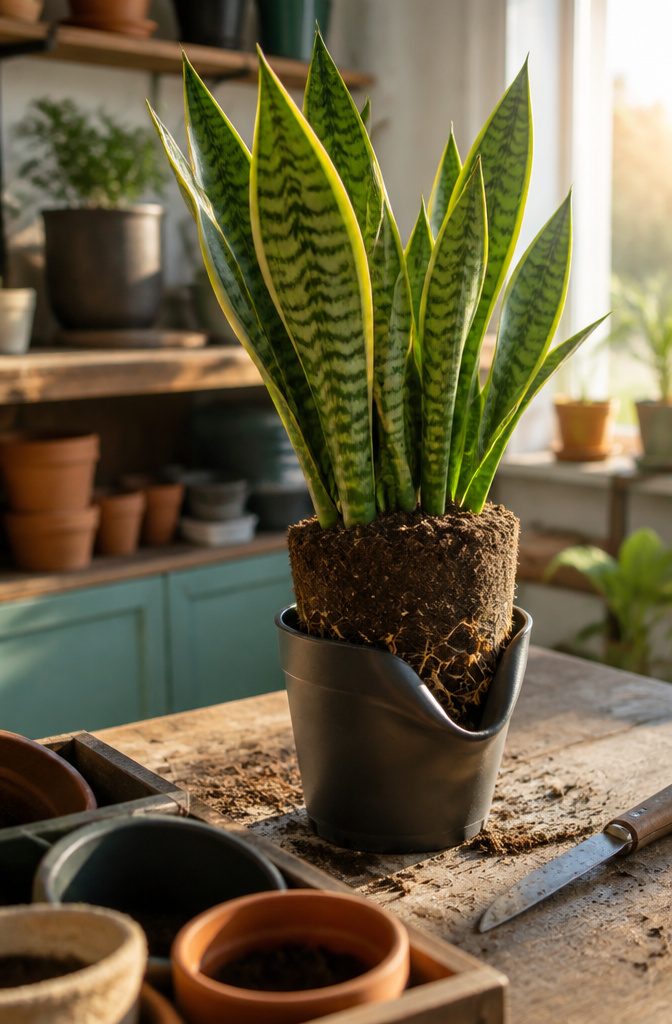
Hold the plant at the base, not by the leaves, and ease it out slowly. The leaves can snap if you pull on them, and grabbing near the soil gives you better control anyway.
If the plant sticks, press the sides of the pot gently or run a dull knife around the inside edge to loosen the root ball.
Snake plant roots are tough, so you can be reasonably firm without causing damage, but rough yanking still isn’t worth it.
5. Clear Old Soil and Inspect the Roots
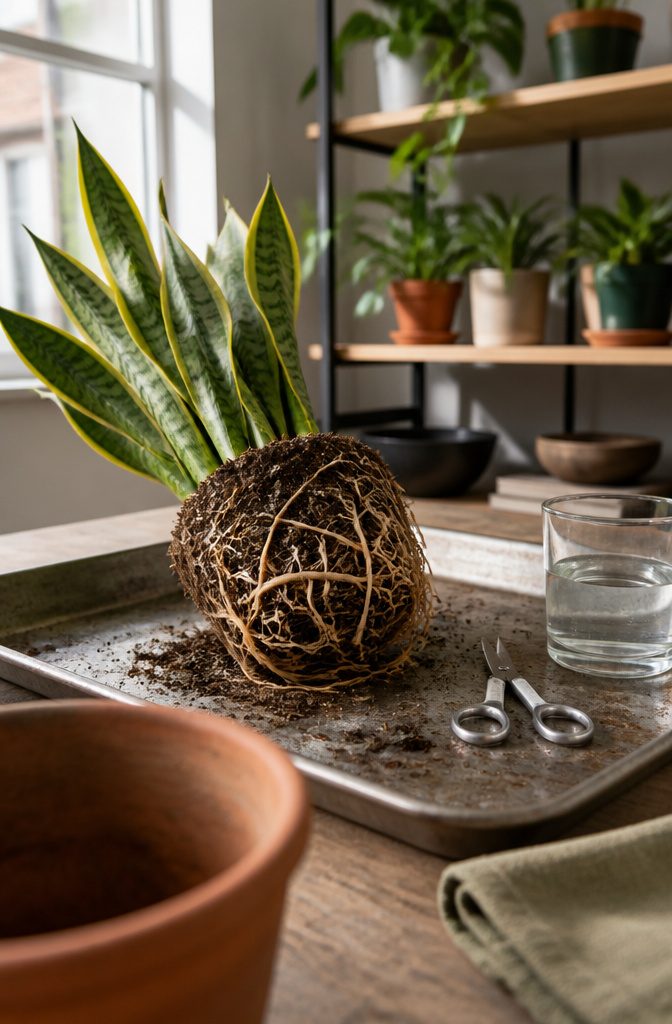
Once the plant is free, shake or brush away the old soil to expose the roots.
Use your fingers to work through the root ball gently. This cleanup lets you see what you’re working with.
Healthy roots are firm and light-colored, typically white or pale tan. Damaged roots look mushy, soft, blackened, or discolored, and they may smell foul.
If you find any, trim them back with sterilized scissors or pruning shears. I clean my tools with rubbing alcohol before cutting, since root rot can spread if the blade carries it from one section to another.
This is also the moment to separate pups if you want more plants, or to divide a large root ball with a sharp knife.
Snake plant roots are resilient, so splitting them is straightforward. If you’re keeping the plant whole, move straight to the new pot.
6. Position the Plant and Fill with Soil
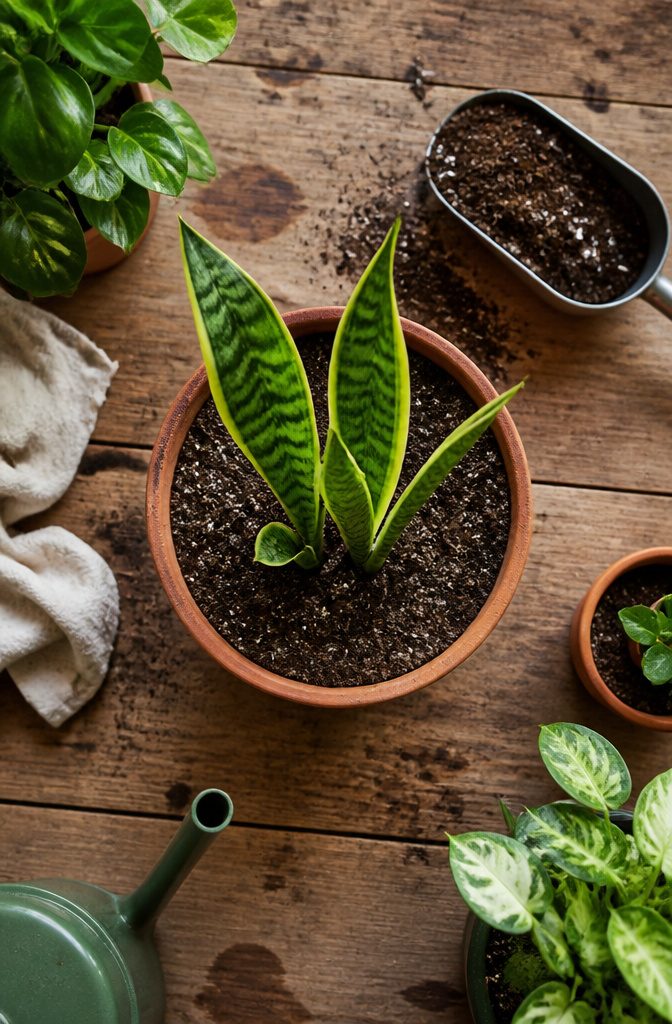
Add a layer of fresh mix to the bottom of the new pot before you lower the plant in. Position the base of the plant at the same depth it sat before, with the stems just above the soil surface.
Planting too deep traps moisture around the base and invites rot, so take a moment to adjust the height now rather than after the pot is full.
Once the depth looks right, fill in around the sides with more mix. Press gently as you go to remove air pockets and keep the plant upright, but don’t pack it so tight that water can’t move through.
Some growers set the root ball about half an inch above the rim because the plant’s weight settles it down in light mix; others leave an inch of headroom between the soil surface and the pot edge to make watering easier.
Either way, the plant should feel stable without being jammed in.
7. Wait Before Watering
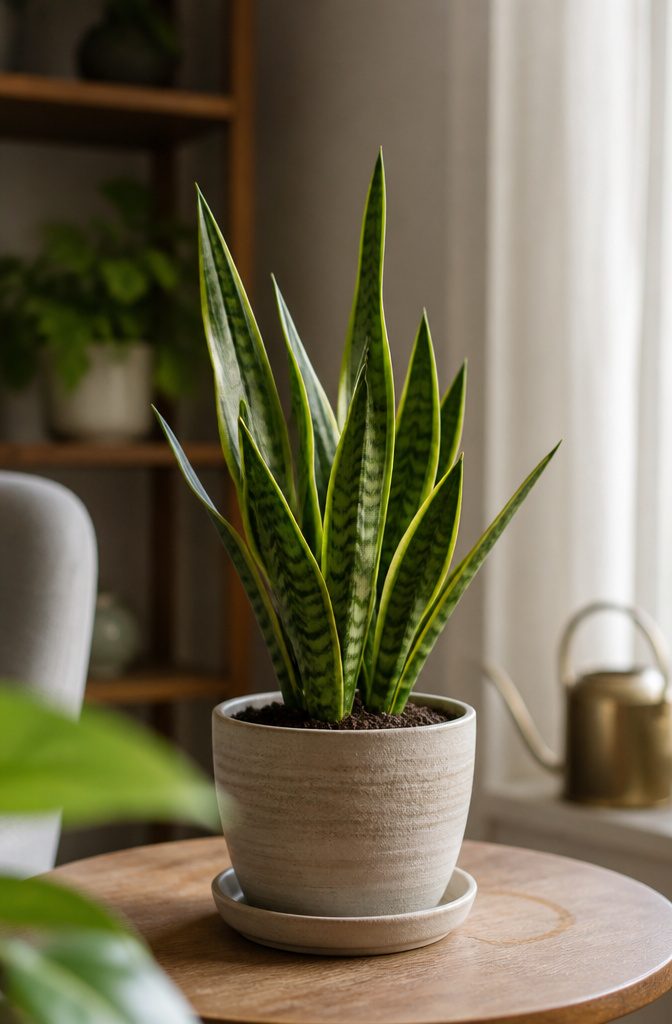
After repotting, wait 5–7 days before watering. Snake plants store water in their leaves the way all succulents do, and fresh soil usually holds enough moisture to carry them through the settling period.
Watering too soon is one of the most common ways people lose a plant right after moving it.
If the new mix is completely dry when you finish, a light watering is fine to help the soil settle around the roots.
But if it feels even slightly damp, hold off. The dry window gives damaged roots time to seal over instead of sitting in wet soil where rot starts easily.
I check by pressing a finger an inch down: dry means I can water lightly, moist means I leave it alone for the week.
Once the waiting period passes, go back to the regular schedule: water only when the top two inches of soil feel dry, and water less often in winter when growth slows.
8. Place in Bright Indirect Light and Monitor
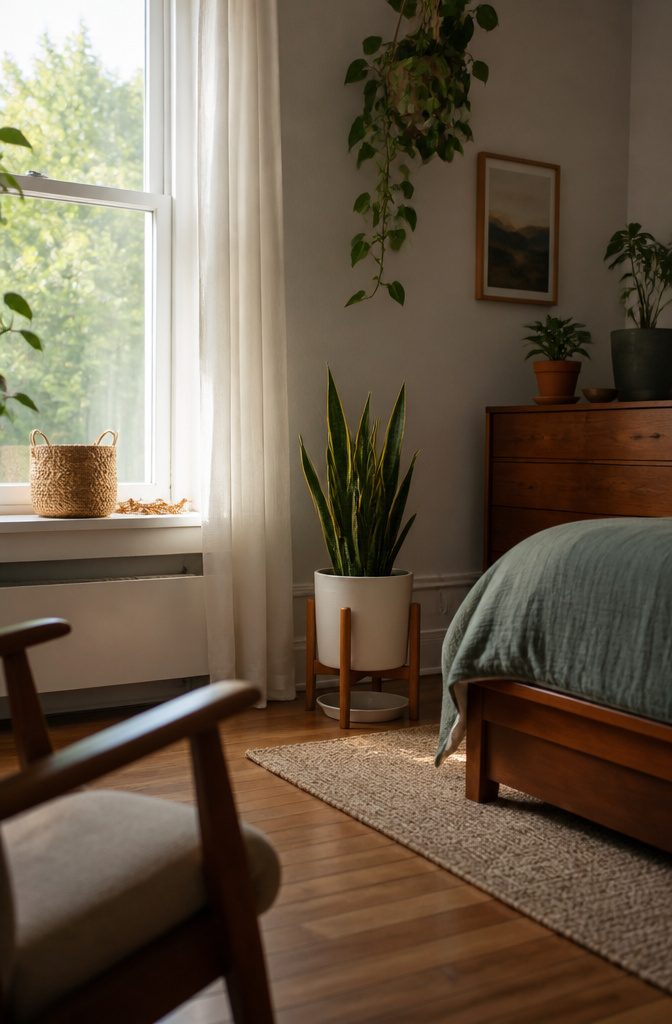
Once the plant is in its new pot, put it near an east- or south-facing window where it gets bright, indirect light.
Direct sun will scorch the leaves and add stress right when the plant is trying to settle. I avoid placing it anywhere the sun hits the foliage directly.
Watch for drooping, yellowing, soft leaves, leaning, or paused growth in the days after. Those signs can point to transplant shock, overwatering, root damage, poor drainage, or a pot that’s too large.
Check the soil about 2 inches down before you water again. If it feels dry, water.
If it’s still damp, leave it alone. Overwatering at this stage does more harm than underwatering.
Once the plant recovers and resumes normal growth, water only once every 2–4 weeks.
After you water, pour away any excess that collects in the saucer after about 10 minutes. Snake plants rot fast when they sit in standing water.
When to Add Fertilizer
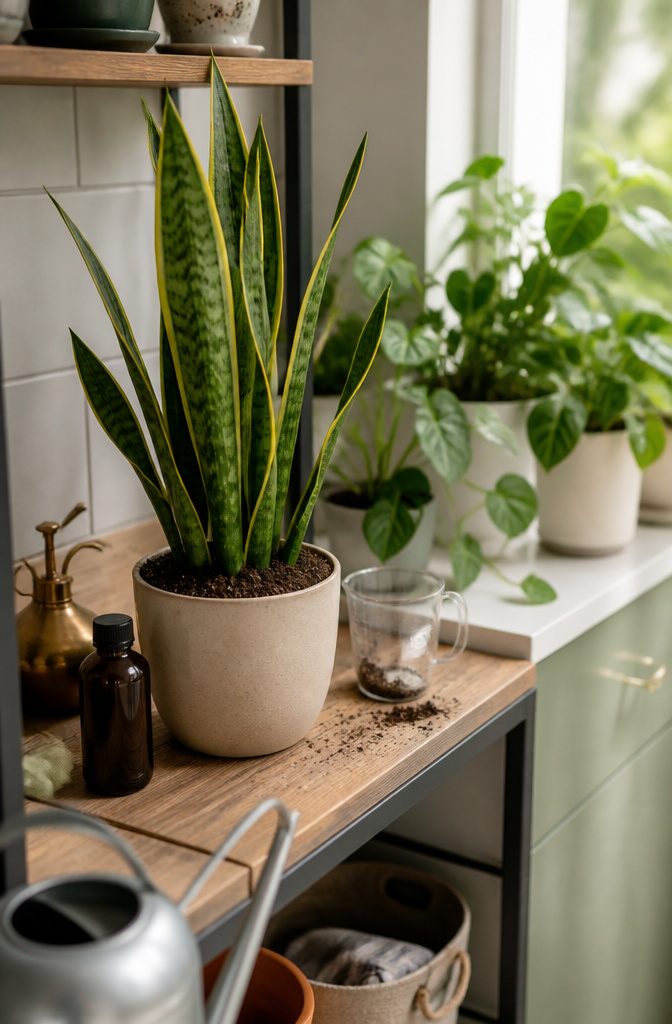
I add fertilizer during early spring or summer, timing it to the months when the plant actually grows rather than forcing food on it year-round.
Perfect Plants Liquid Snake Plant Fertilizer is one option worth naming because it’s mixed for sansevierias specifically, and the directions on the bottle keep you from overdoing it.
Over-fertilization shows up as browning leaf tips or a crust of salts on the soil surface, and once that happens the damage is already done.
If you already worked organic compost or worm compost into the potting mix, those break down slowly enough that you can skip liquid feeding altogether for the first six months.
The plant will pull what it needs as the material decomposes.
Dividing or Separating Pups
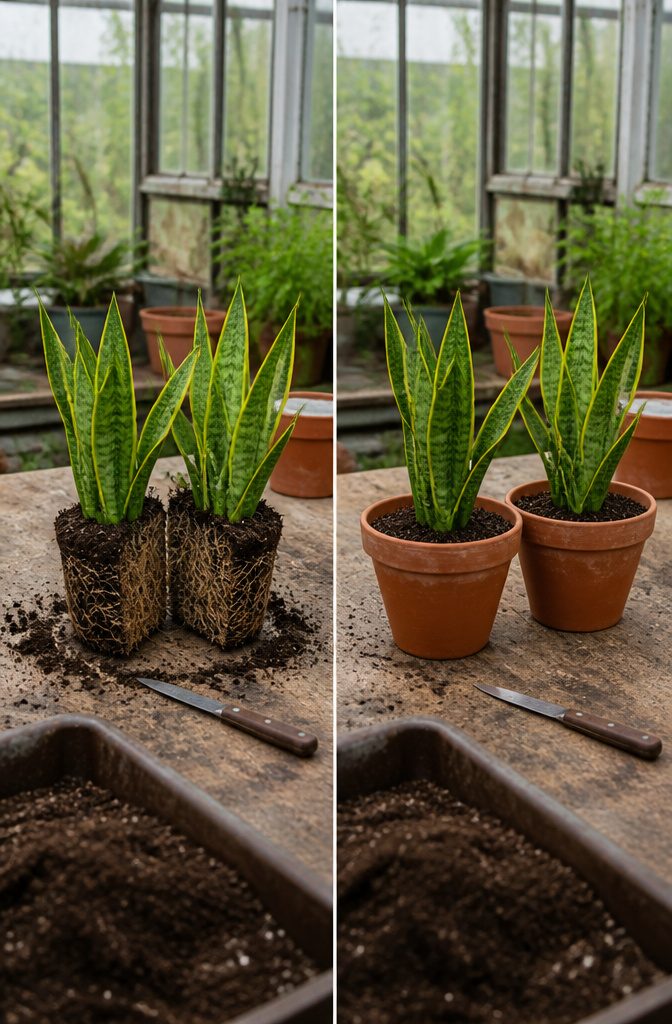
If the plant has grown large or crowded, you can divide the root ball with a sharp knife instead of moving the whole thing to a bigger pot.
Snake plants pull apart fairly easily once they’re out, and repotting is the best time to separate pups or split a dense clump into smaller sections.
I divide when the plant has become unwieldy or when I want more plants without buying them.
The roots are resilient, so a clean cut through the center works without much fuss. You’ll end up with two or three plants from one, each planted into its own pot at the same depth as before.
If the roots separate in your hands, no knife needed. This keeps the plant manageable and gives you control over how much space each section gets.
What Goes Wrong After Repotting
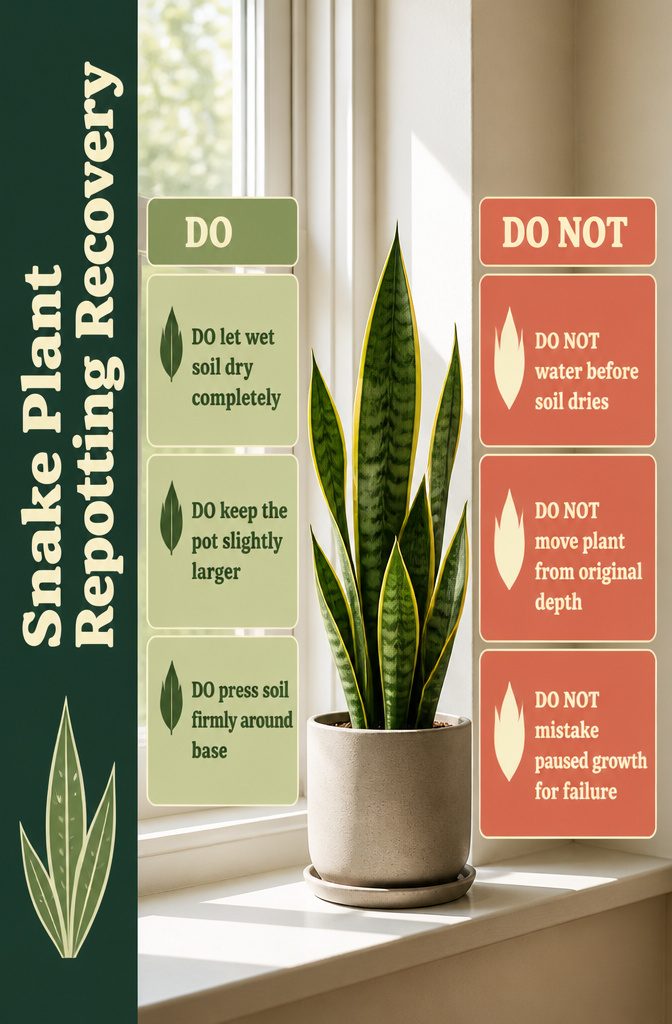
Snake plants handle a lot, but repotting can throw them off for a few weeks.
Most issues trace back to moisture, root handling, or light. Here’s what to watch for:
- Drooping points to transplant shock, overwatering, or a pot that’s too large for the root mass. Let wet soil dry completely and check that the new pot is only slightly bigger than the old one.
- Yellowing leaves suggest poor drainage, root damage during the transfer, or watering too often after repotting. Make sure the soil drains fast and ease up on water until the plant settles.
- Soft or mushy leaves mean too much moisture. Check the soil and wait until it’s fully dry before adding more water.
- Leaning or instability happens when the soil is too loose. Press the mix firmly around the base and keep the plant at its original depth.
- Paused growth is normal after repotting. The roots need time to adjust. Place the plant in bright, indirect light and give it a few weeks.
Low light makes overwatering and root rot more likely, so err on the dry side until you see new growth.
Snake Plant Toxicity
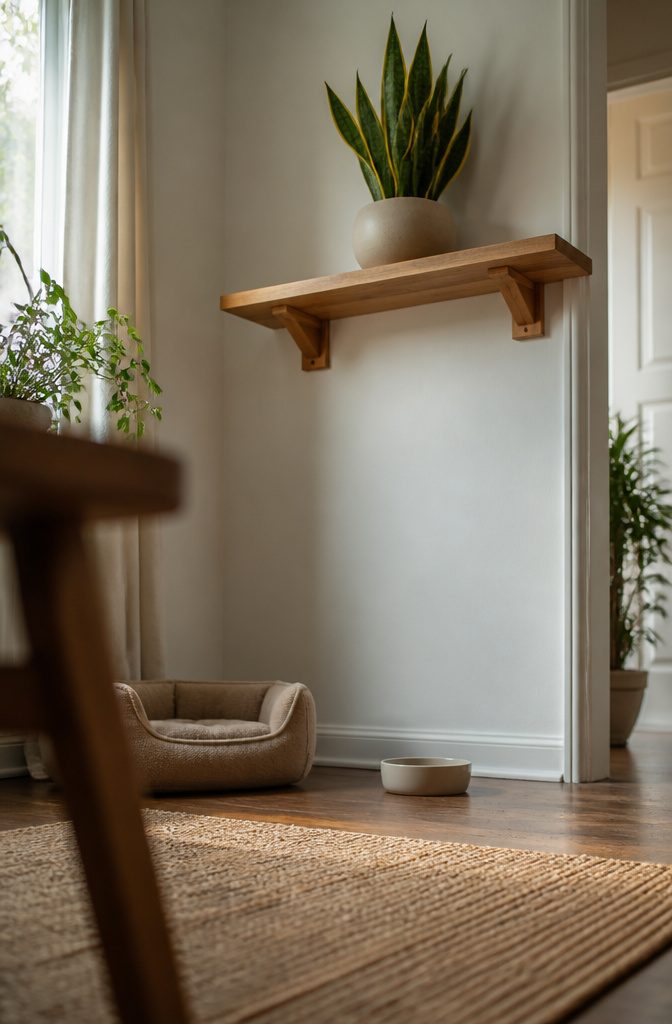
Snake plants are toxic to cats and dogs if ingested.
The leaves contain saponins, which can cause nausea, vomiting and diarrhea in pets. The reaction is usually mild but uncomfortable, and it means you need to think about placement if you have animals in the house.
I keep mine on high shelves or in rooms my dog doesn’t wander into, because even a low-risk plant isn’t worth the cleanup or a vet visit.
Cats are more likely to chew on foliage out of curiosity, so a hanging planter or a closed bedroom works better than a floor pot in a shared space.
If a pet does take a bite, remove any plant material from their mouth and watch for symptoms. Most cases resolve without treatment, but call a vet if the reaction seems severe or lasts more than a day.
Frequently Asked Questions
When should you repot a snake plant?
Repot when roots emerge from drainage holes, water drains straight through without absorbing, the pot cracks or bulges, or growth stalls during the active season.
Spring or early summer is best because the plant recovers faster during active growth, though late winter works too.
Do snake plants like to be crowded?
They tolerate being snug and actually grow better slightly potbound. Repot only when roots fill the pot completely, growth slows, or the container cracks under pressure.
Do snake plants need deep pots?
No.
Snake plants spread outward through rhizomes rather than growing downward, so shallow pots work better. Deep containers trap soil at the bottom that stays wet for too long and increases the risk of root rot.
What size pot do I use when repotting snake plants?
Go 2 to 4 inches wider than the current pot.
A 6-inch pot becomes an 8-inch pot, not a 12-inch one. Too much extra soil holds moisture longer than the roots can use it and sets up root rot.
What kind of soil do snake plants like?
Use a well-draining mix that prevents excess moisture.
Try 2/3 potting soil and 1/3 succulent mix, or improve regular potting soil by adding perlite, pumice, sand, or coco coir. Regular potting soil alone is too heavy and holds too much water.
Can I use regular potting soil for snake plants?
No.
Regular potting soil alone is too heavy and holds too much water, which leads to root rot. Mix it with cactus mix or add perlite, pumice, or sand to improve drainage and aeration.
When to water snake plants after repotting?
Wait 5 to 7 days before watering. Fresh soil usually holds enough moisture to carry the plant through the settling period, and watering too soon is one of the most common ways people lose a plant right after moving it.
If the new mix is completely dry when you finish, a light watering is fine to help the soil settle.
Should I put my snake plant in the sun after repotting?
No.
Place it near an east- or south-facing window where it gets bright, indirect light instead. Direct sun will scorch the leaves and add stress right when the plant is trying to settle.
Why is my snake plant drooping after repotting?
Drooping points to transplant shock, overwatering, or a pot that’s too large for the root mass. Let wet soil dry completely and check that the new pot is only slightly bigger than the old one.
Why is my snake plant turning yellow after repotting?
Yellowing leaves suggest poor drainage, root damage during the transfer, or watering too often after repotting. Make sure the soil drains fast and ease up on water until the plant settles.
Why is my snake plant dying after repotting?
Most issues trace back to overwatering, poor drainage, root damage, or transplant shock.
Check the soil about 2 inches down before watering again, and place the plant in bright, indirect light. Overwatering at this stage does more harm than underwatering.
Can I repot snake plants in summer?
Yes.
Spring or early summer is actually best for timing because the plant is actively growing and recovers faster. Use bright, indirect light and avoid overwatering after the move.