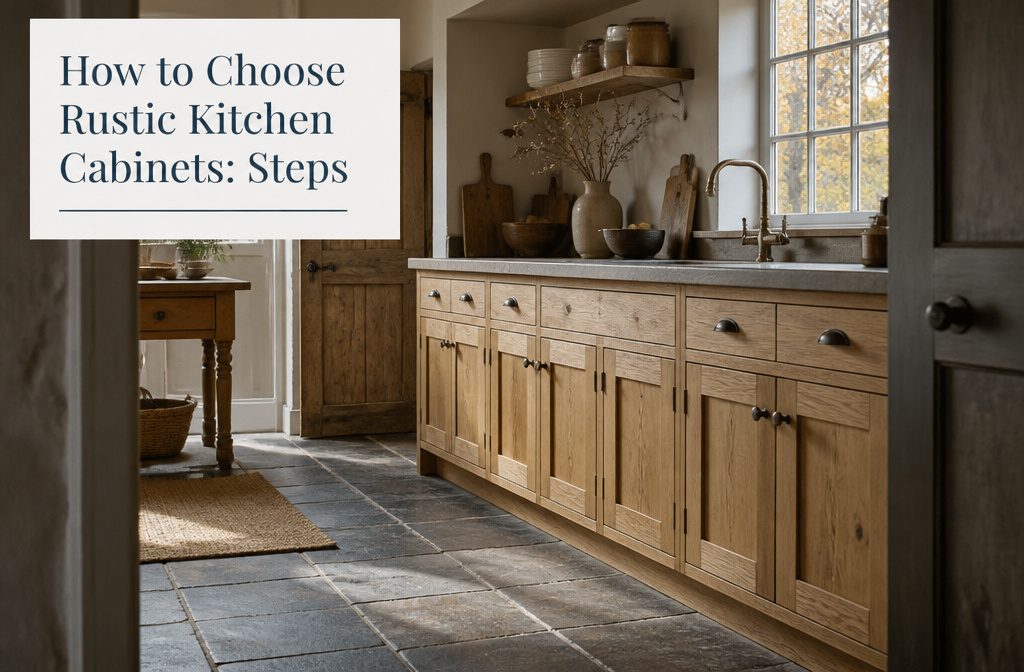
Rustic kitchen cabinets land between $150 and $1,800 per linear foot depending on material, and the stage that decides whether the look holds or tips costume is the finish.
Natural oak shows knots and grain plainly, distressed paint ages the surface artificially, and how much wear you apply separates character from overdone theatrics.
White oak leads at 51% of rustic renovations for the tight grain and sandy tones it brings under a clear matte sealer.
1. Decide What Rustic Means for Your Kitchen
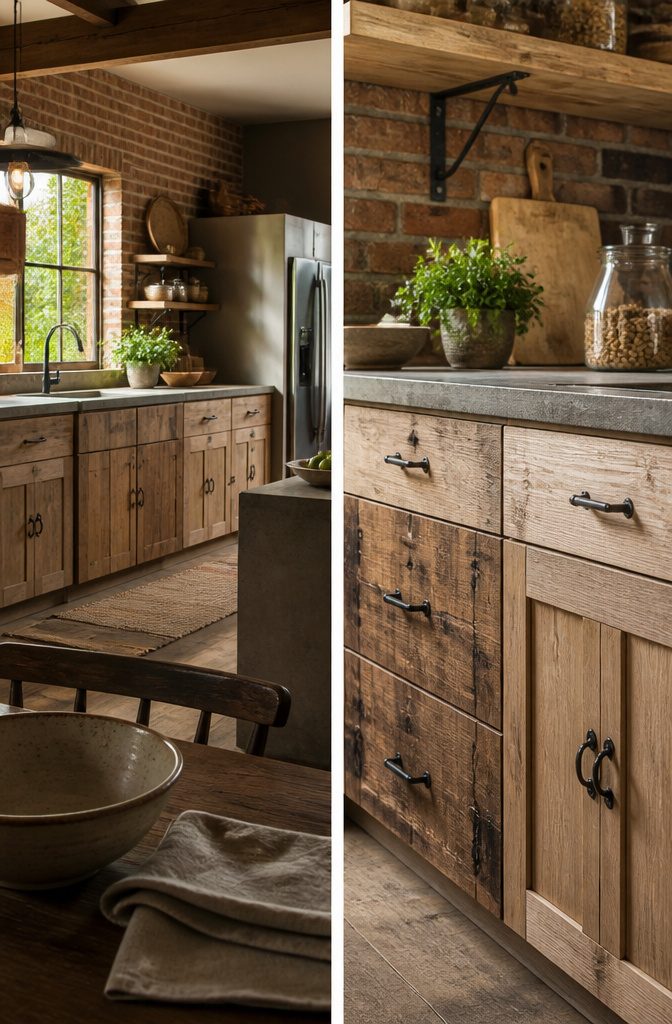
Rustic means different things depending on what you’re trying to replicate, and the cabinet choice changes once you know which version you’re after.
Farmhouse rustic leans on warm wood tones, distressed finishes, and neutral palettes, often with shaker-style doors that read casual but refined.
Cabin rustic goes further into raw materials, highlighting knots and uneven grain instead of hiding them, and pairs reclaimed wood with wrought iron or burnished copper hardware.
Modern rustic pulls back on the texture and lets clean lines share the space with natural wood, so you might see a textured reclaimed base cabinet under a sleek concrete or quartz countertop.
Rustic style has a natural ruggedness and warmth to it which you’re going to love. There is a major focus on textures, form, and antique pieces to make them perfect for your kitchen.
— Decoist
That ruggedness shows up in how the material is treated. Industrial rustic adds exposed brick, stainless steel appliances, and heavy concrete surfaces alongside natural wood, while coastal rustic softens the palette and pulls in lighter, weathered wood tones.
Country rustic sits somewhere in the middle, with painted cabinetry, black hardware, and open shelving stocked with visible pantry storage in glass jars.
If you want rustic but the space feels tight or dark, modern rustic gives you the warmth without the weight, because the clean hardware and minimal detailing keep the room from closing in.
2. Choose Wood or Another Cabinet Material
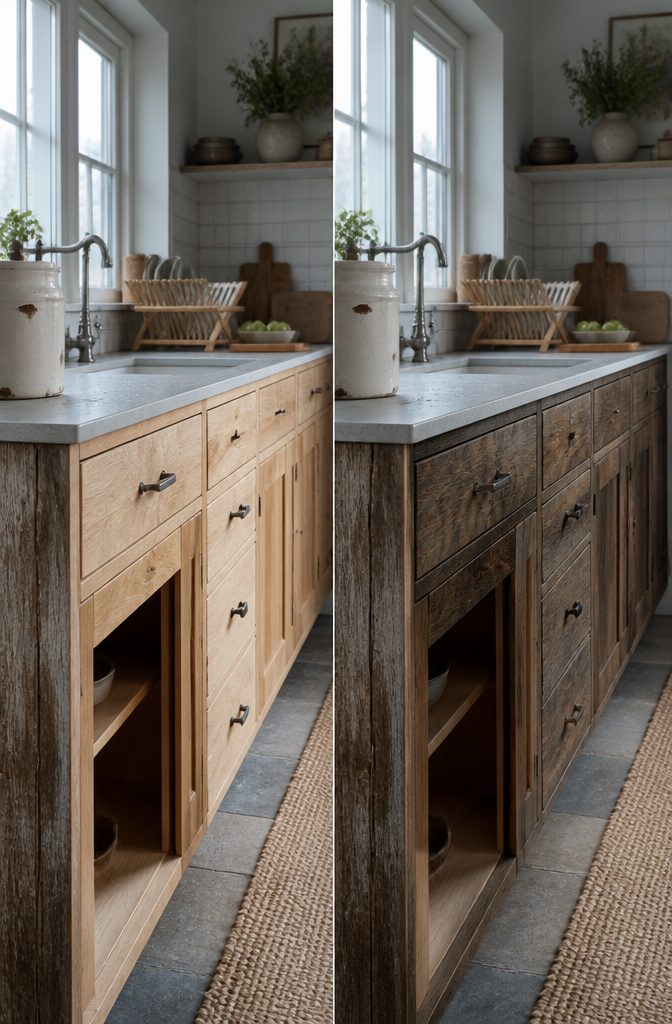
Solid wood with visible grain is what most rustic cabinet projects are built on. White oak leads: 51% of homeowners and designers renovating kitchens choose it for the straight, tight grain and sandy tones it brings under a clear matte sealer.
Hickory delivers more texture and a rugged look that suits country kitchens. Alder shows subtler grain with occasional knots and mineral streaks.
Pine leans into imperfection—the knots and irregularities are the point. Oak in general remains the most popular rustic choice for the grain patterns, mineral streaks, and natural defects that define the style.
Reclaimed wood emphasizes age and character when that matters more than uniformity. For painted cabinets, HDF works well at an affordable price and holds a smooth finish.
Plywood makes sense around sinks and dishwashers, where moisture resistance counts. MDF fits upper cabinets or decorative doors when sealed and painted properly, though it needs careful prep work to hold up in daily use.
3. Pick a Door Style and Surface Finish
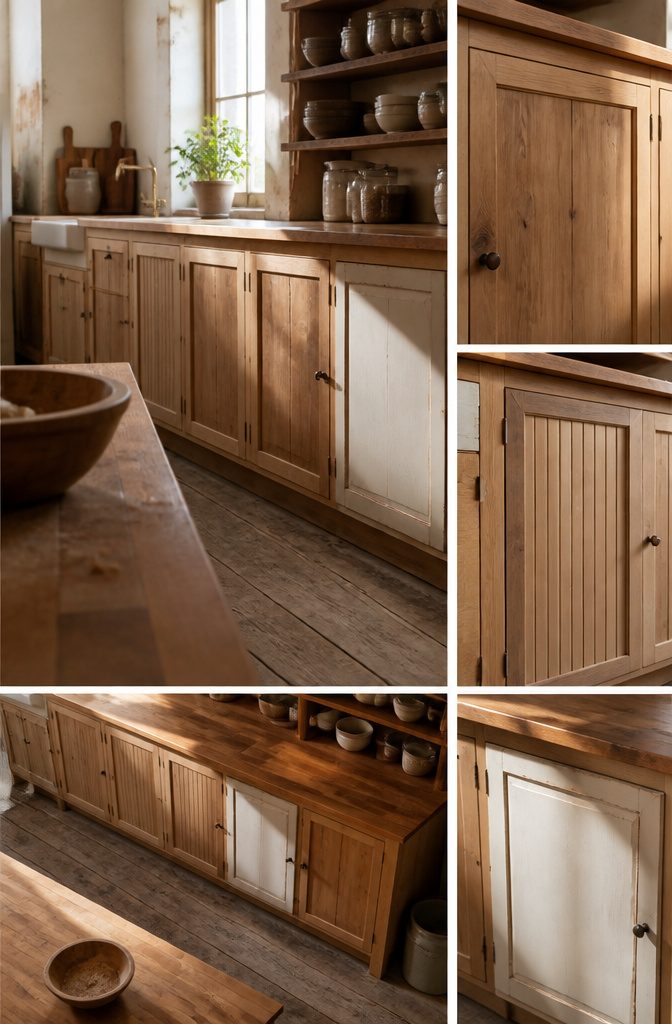
Shaker doors anchor most rustic kitchens, and the reason is structure without fuss. The five-piece door with a recessed center panel brings dimension you can see without carving or ornament getting in the way.
Beadboard runs a close second for texture—vertical planks grooved into the surface add handcrafted detail that flat panels skip.
Slab doors work when the rest of the room carries the rustic load through open shelving or reclaimed countertops, but they lean modern unless you pair them carefully.
Raised-panel doors show up in traditional rustic projects, though they tip formal faster than Shaker or beadboard.
Finish is where opinion splits.
Natural wood left unstained shows grain and knots plainly, which fits lakeside or mountain kitchens that want the material front and center. Stained finishes in walnut or dark oak add warmth without hiding imperfections.
Painted cabinets in soft white or cream lighten the space, and whitewashed surfaces sit between the two. Distressing—sanding through paint, denting with chains, light charring with a torch—ages the wood artificially, but how much to apply divides people.
Some sources call for visible wear; others flag overdone distressing as costume rather than character. Matte and weathered finishes keep the look grounded; high gloss reads wrong in a rustic room.
4. Set the Color and Contrast
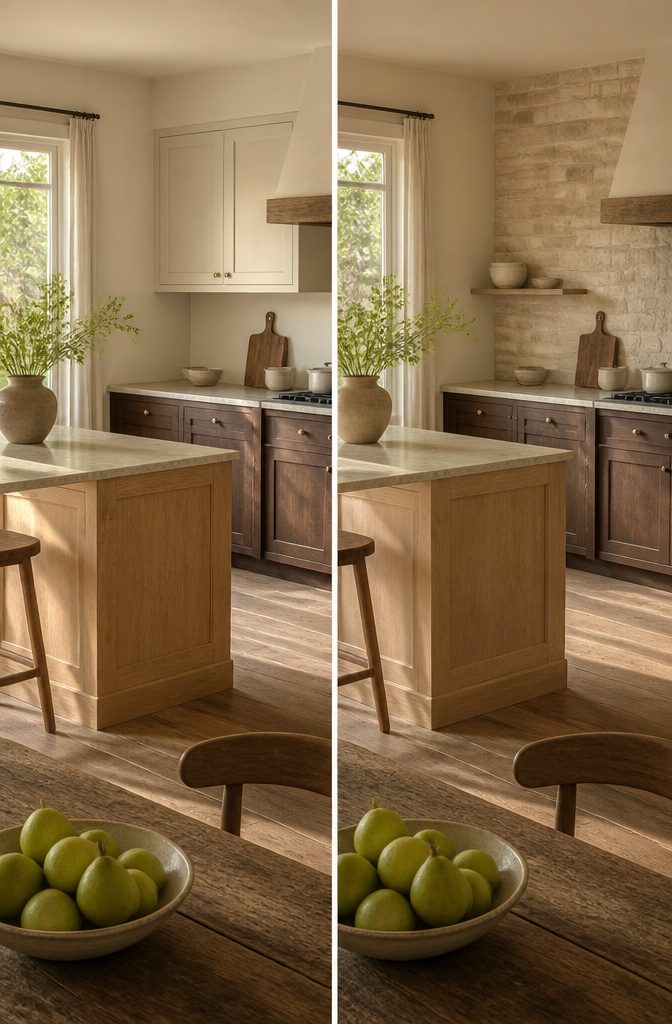
Natural wood tones dominate rustic kitchens, but you have room to push them in different directions.
Soft whites, creams, and natural wood tones appear across most rustic designs, and when you pair light counters with darker wood cabinets, the contrast keeps the room from reading flat.
I’ve seen white cabinets work beautifully when the island or range hood is stained walnut or oak, which brings warmth without tipping the whole space brown.
Darker stains like the rich chocolate tones of walnut add sophistication, though they need balance. If you go dark on the lower cabinets, keep the uppers light or leave them off entirely.
A few rustic kitchens layer in color, robin’s egg blue and sage green among them, and those work best when the cabinet material itself is distressed wood rather than painted smooth.
Light blue-green cabinets feel outdoor and bright, and a deep blue pantry can anchor a wood-heavy kitchen without pulling it modern.
Let one finish lead while the others support it, so the textures stay visible and the room doesn’t flatten into a single tone.
5. Coordinate Hardware and the Wider Kitchen
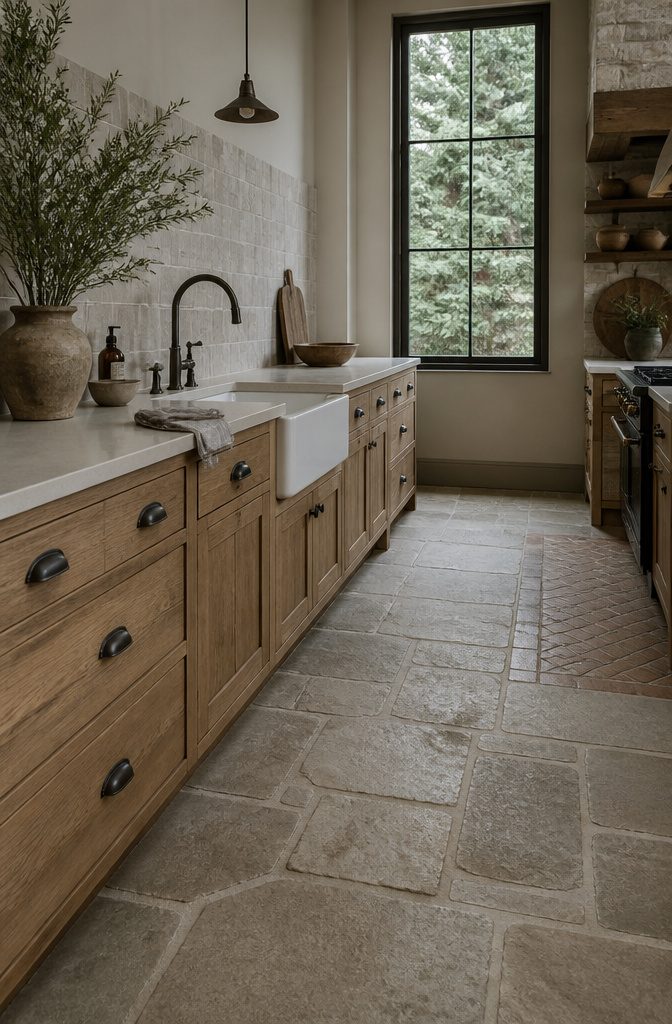
Hardware pulls the rustic cabinets into the rest of the room or leaves them stranded. Oil-rubbed bronze pulls and knobs add vintage weight, especially when the finish carries through to faucets and light fixtures.
Matte black works when the goal leans modern, and aged brass softens the look without tipping traditional. I avoid shiny chrome in rustic kitchens because the contrast reads more like a mistake than a choice.
Countertops balance the texture. Rustic cabinets have grain, knots, and surface movement, so pairing them with smooth quartz or a waterfall edge keeps the room from feeling overly busy.
Stone flooring in wide planks or flagstone adds warmth, while herringbone brick tile gives pattern without competing with the cabinets. Backsplash and lighting follow the same rule: keep one element clean and the other textured, never both at once.
6. Check Fit, Function, Upkeep, and Cost
Storage space hits first.
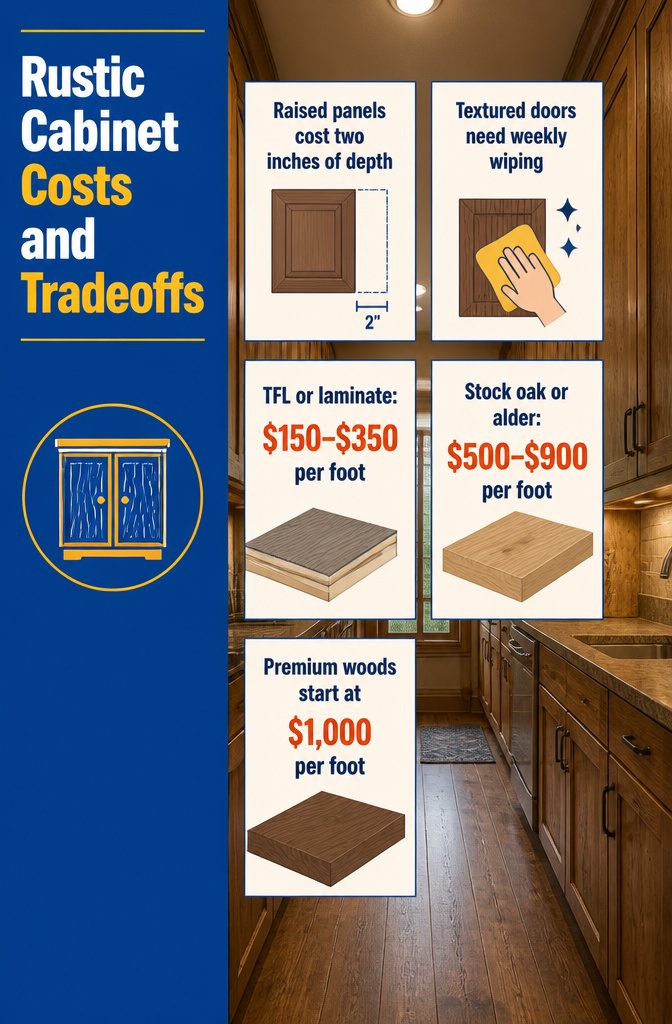
Rustic cabinets with raised panels or recessed details eat more room inside the box than a flat slab does, so measure what you actually need to store before committing to a door style that costs you two inches of depth.
In a galley layout, that loss compounds fast.
I find that textured finishes also show dust and grease more readily than smooth painted surfaces, so if the kitchen sits near a mudroom or gets heavy daily use, plan to wipe down doors weekly rather than monthly.
Material durability separates budget options from ones that hold up. Textured TFL or laminate runs $150–$350 per linear foot and handles moisture better than real wood, but it reads flat in person.
Stock knotty oak or alder sits at $500–$900 and gives you genuine grain variation, though hand-distressing adds 20% to 40% to labor costs. Premium white oak or walnut starts at $1,000 per linear foot and climbs past $1,800 for custom work.
The iStyle Traditional Kitchen line by Starmark starts at $268 per linear foot, while their Custom Inset line begins at $371. Those figures cover materials only, so factor in installation and any custom finishing separately.
Natural wood grain brings character, though it also brings inconsistency. If the room already has strong pattern or a lot of competing finishes, rustic cabinets can tip the space into visual noise rather than warmth.
Wood Species and Grain That Fit Rustic Character
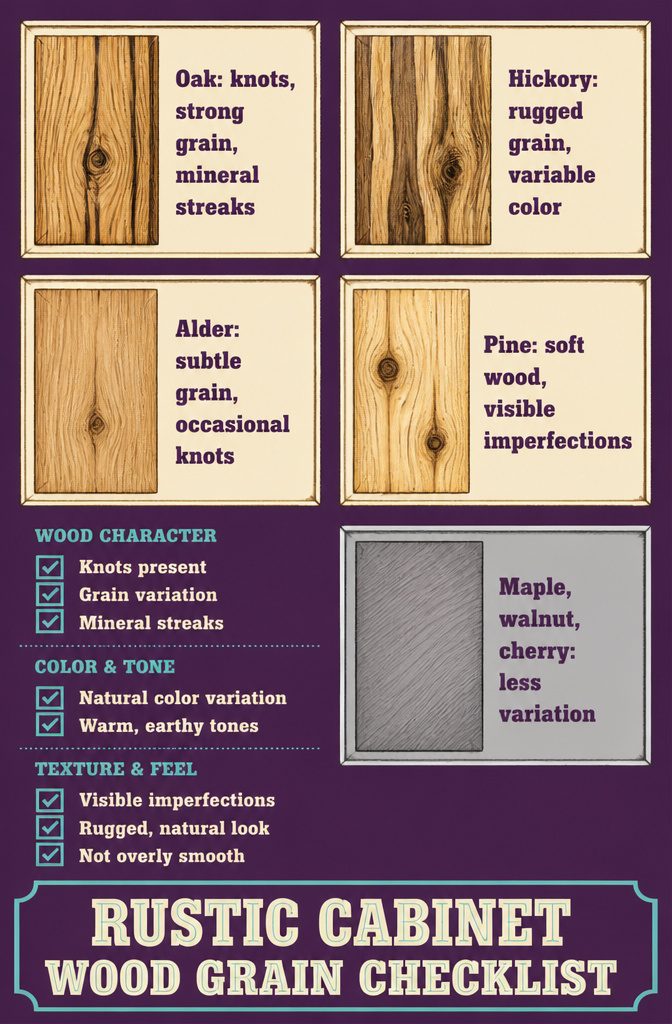
The wood species you choose carries most of the rustic look. Knots, mineral streaks, and grain variation are what separate rustic cabinets from smooth, select-grade work, and not every species delivers them equally.
- Oak is the most popular choice for rustic cabinets. It shows knots, strong grain patterns, and mineral streaks that give each door visible character. White oak runs tighter and straighter than red oak, with a sandy tone that pairs well with a clear matte sealer.
- Hickory is harder and more rugged. The grain is prominent and the color varies more than oak, which works when you want a country kitchen that feels lived-in rather than polished.
- Alder has a subtle, even grain with occasional knots and mineral streaks. It reads rustic without being as bold as oak or hickory, so it fits kitchens where the cabinets need texture but not drama.
- Pine is lighter and softer, and the knots and imperfections show up more clearly. That makes it a good match for farmhouse or cottage styles where the wood is supposed to look relaxed rather than refined.
Maple, walnut, and cherry are select woods sorted for consistency, so they lack the natural variation rustic kitchens depend on.
Pairing Rustic Wood With Modern Elements
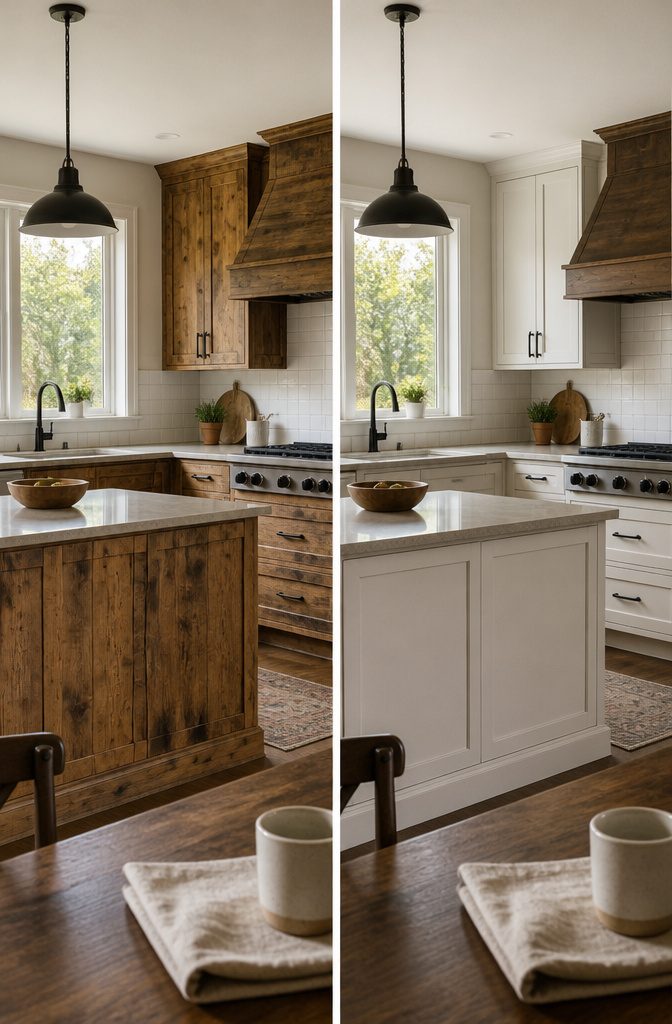
Rustic wood cabinets gain modern balance when you set them against smooth, neutral surfaces and simplified lines.
White painted cabinets work especially well paired with a natural wood island, because the contrast keeps the room from reading as all-barn all the time.
Clean subway tile, gray walls, and light countertops prevent the wood from dominating the visual weight.
A stained range hood or floating wood shelves can tie the island back to the rest of the space without reintroducing the heaviness you just avoided.
Black fixtures and hardware add definition where wood meets painted surfaces, and they echo the dark hardware that often appears on rustic doors and drawers.
The approach works because each material does one job: the wood brings warmth, the painted cabinets reflect light, and the hardware holds the two in tension instead of letting them blur together.
Frequently Asked Questions
What is a rustic kitchen cabinet?
A rustic kitchen cabinet features natural wood grain, visible knots, and textured finishes that emphasize warmth and authenticity.
The style relies on materials like oak, hickory, or reclaimed wood with imperfections left visible rather than hidden. Rustic cabinets often pair distressed surfaces with neutral tones and simple door profiles like Shaker or beadboard.
Can rustic cabinetry look modern?
Yes. Modern rustic pairs natural wood cabinets with clean lines, sleek hardware, and smooth countertops to balance warmth with minimal detailing.
A stained wood island under white upper cabinets, for instance, brings rustic character without the heaviness of an all-wood kitchen. Black fixtures and slab surfaces keep the look current.
How much does a rustic cabinet cost?
Textured laminate runs $150 to $350 per linear foot for materials only, stock knotty oak or alder costs $500 to $900, and premium white oak or walnut starts at $1,000 and can exceed $1,800.
Hand-distressing adds 20% to 40% to labor costs. Custom inset lines like Starmark’s iStyle begin at $371 per linear foot.
What types of wood work for rustic cabinets?
Oak is the most popular choice for its strong grain, mineral streaks, and visible knots.
Hickory delivers a more rugged texture, alder offers subtle grain with occasional imperfections, and pine shows knots and irregularities plainly. These species provide the natural variation rustic kitchens depend on.
How to clean rustic kitchen cabinets?
Wipe down with a soft cloth and mild soap weekly if the kitchen sees heavy use, since textured finishes show dust and grease more readily than smooth surfaces.
Avoid harsh cleaners that strip natural finishes. Apply wood conditioner occasionally to keep the material from drying or cracking.
Are rustic kitchen cabinets outdated?
No.
Modern rustic aligns with current natural-material trends and holds broad appeal in the 2026 real estate market. The style adapts when you pair rustic wood with clean hardware, minimalist styling, and light countertops rather than loading every surface with texture.
Are rustic cabinets more expensive?
Often yes, particularly with solid hardwood and custom finishes. Selecting wood with the right grain and applying hand-distressed finishes requires skilled work at every production stage, which raises the cost above standard painted flat-panel cabinets.
Are rustic cabinets difficult to clean?
Textured finishes require somewhat more maintenance than smooth painted surfaces because they show dust and grease more readily. In a high-traffic kitchen, plan to wipe down doors weekly rather than monthly.
Do rustic kitchens increase home value?
High-quality natural wood kitchens typically maintain strong resale appeal and help homes sell faster. A minor kitchen remodel focusing on updated cabinetry yields a strong ROI, often recouping 85% to 113% of costs.
What is the most popular cabinet style for modern farmhouse kitchens?
Shaker is the most popular for its clean lines and versatility. The 5-piece door with a recessed center panel brings structure without fuss, and it pairs well with both rustic and modern elements in a farmhouse kitchen.
Are custom cabinets worth the investment?
Custom cabinets offer a tailored fit, superior material quality, and long-term durability that stock options often lack. They make sense when the kitchen layout requires specific dimensions or when you want precise grain matching and hand-glazed finishes.
What finishes work best for farmhouse cabinetry?
Whitewashed wood, natural matte sealers, and soft whites or creams appear most often in farmhouse designs.
Muted blues and greens work when applied to distressed wood rather than smooth painted surfaces. Stained walnut or dark oak add warmth when balanced with lighter uppers or open shelving.
Can I mix different cabinet styles in one kitchen?
Yes.
Combining a stained wood island with white painted uppers, or pairing closed cabinets with open shelving, adds depth without flattening the room into a single tone. Let one finish lead while the others support it so the textures stay visible.