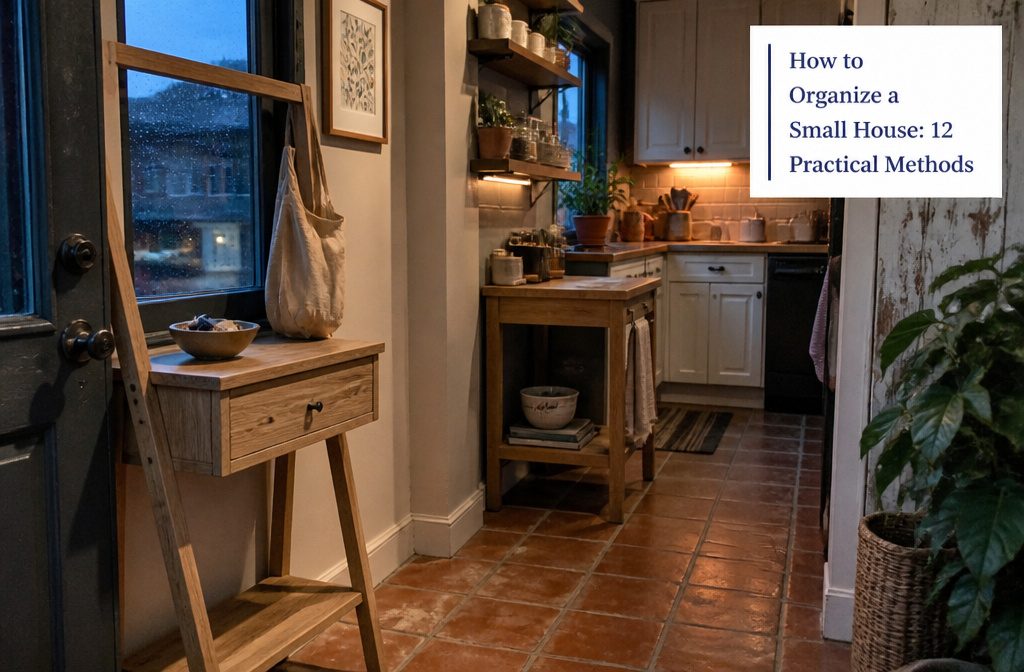
Organizing a small house takes about three hours a month of active sorting plus daily five-minute resets, and the step most people skip is giving every single item a fixed location before buying containers to hold them.
Without that assignment, bins become junk drawers and closets turn into archaeology sites.
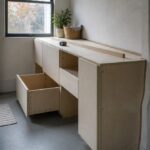
One client with a 905-square-foot condo solved her entryway pile problem with a ladder desk that has a drawer the same size as the top, containing what used to spread across the floor.
1. Declutter and Limit What Comes In
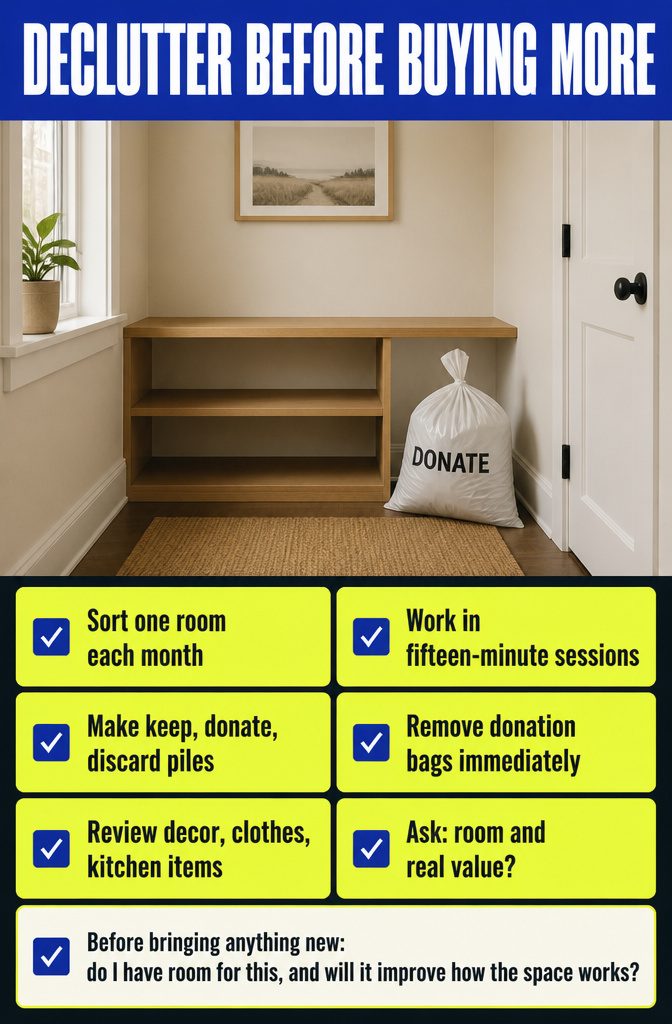
The first move is to remove what doesn’t earn its place. Set aside a few hours each month to sort through what you own, room by room, and decide what stays.
Ask whether the item adds real value or just fills a corner. In a small house, unused belongings make every other organizing method harder to sustain.
Work in fifteen-minute sessions if a full afternoon feels overwhelming.
Pull everything from one drawer or shelf, sort into keep, donate, and discard piles, and get rid of the last two immediately. Holding onto donation bags for weeks adds the same clutter you just cleared.
Before bringing anything new into the house, ask two questions: do I have room for this, and will it improve how the space works?
If either answer is no, leave it at the store. I review decor, clothes, and kitchen items every six months to catch what stopped being useful before it piles up again.
2. Give Every Belonging a Designated Place
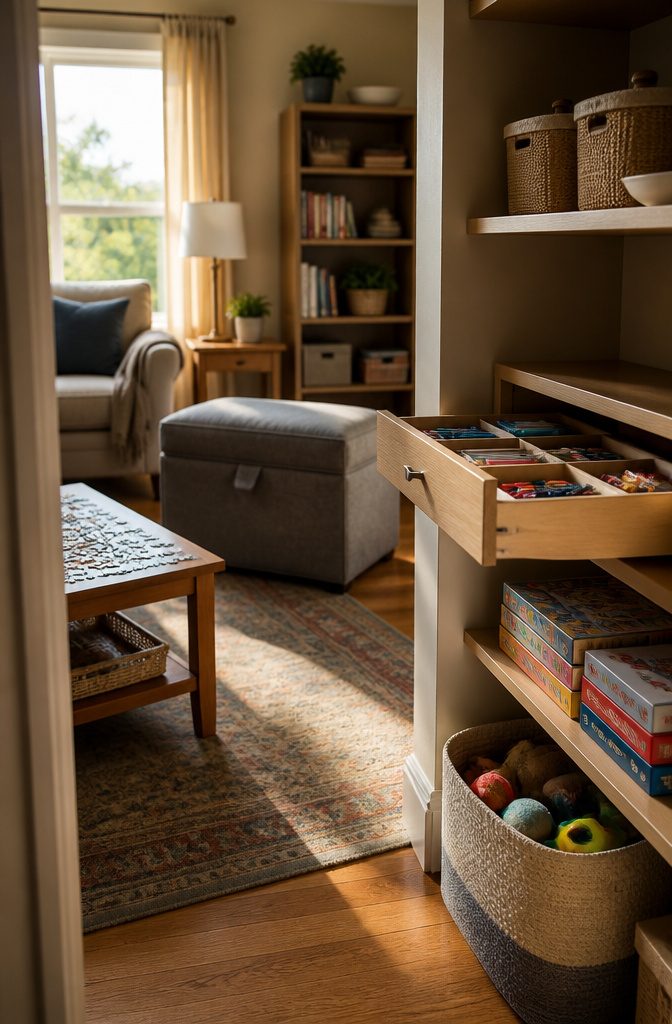
Grouping like items and putting them back immediately stops piles from forming and makes any object easier to locate when you need it. Office supplies live in one drawer, board games on one shelf, cleaning products under one sink.
The rule is simple: every item gets one spot, and you return it there after use. In a small house, enforcement is easier because the correct location is only a few steps away, no matter where you are standing.
Children are much more likely to help clean up when toys have a designated place. A storage ottoman or a single bin gives them a clear target, and the task becomes mechanical instead of abstract.
I rotate half the toys into a closed box on a high shelf so the visible set stays manageable, then swap them every few weeks.
This keeps the space feeling organized without requiring constant supervision, and the reduced visual clutter makes the whole house feel larger than its square footage.
Labeling bins and baskets speeds up both retrieval and reset. When every container is marked, you can find what you need without opening three lids, and other people in the house can put things back correctly on the first try.
The habit of resetting your space daily prevents small messes from accumulating into larger problems.
Spending five or ten minutes before bed returning items to their assigned spots maintains the system with minimal effort, and you wake up to a house that feels in control.
3. Use Vertical and Wall Space
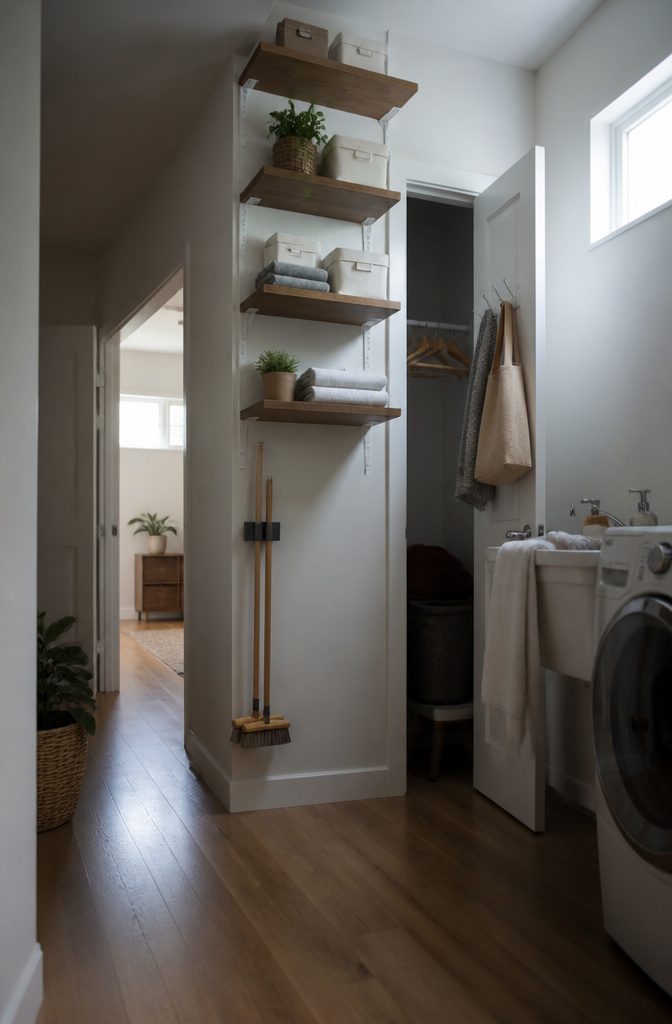
Floor space disappears fast in a small house, but wall space and ceiling height rarely get used to their full capacity.
Shelves that run the full height of a wall, hooks mounted inside closet doors, and pegboards fitted with clips all hold what would otherwise sit on counters or floors.
I reach for floating shelves first when a room needs more storage without blocking circulation, because they keep surfaces clear and still display what you want visible.
A vertical broom holder mounted near the laundry area takes up six inches of wall and replaces a floor-standing unit that would claim a full corner.
Ceiling-mounted clothes airers work especially well in small homes where a traditional floor-standing rack consumes space even when folded. The airer hangs above head height, uses dead space that serves no other purpose, and lowers when you need it.
Products like IKEA’s Pluggland hanging storage mount to walls or the inside of cabinet doors and add compartments without requiring new furniture. Tall cabinets that reach the ceiling eliminate the gap where dust collects and nothing useful fits.
A wide mirror hung on a narrow wall reflects light back into the room and makes the space feel deeper than it measures, and if you’re willing to add a bracket system behind it, the mirror can swing open to reveal shallow storage for mail or keys.
4. Store Under Beds, Above Doors, and in Narrow Gaps
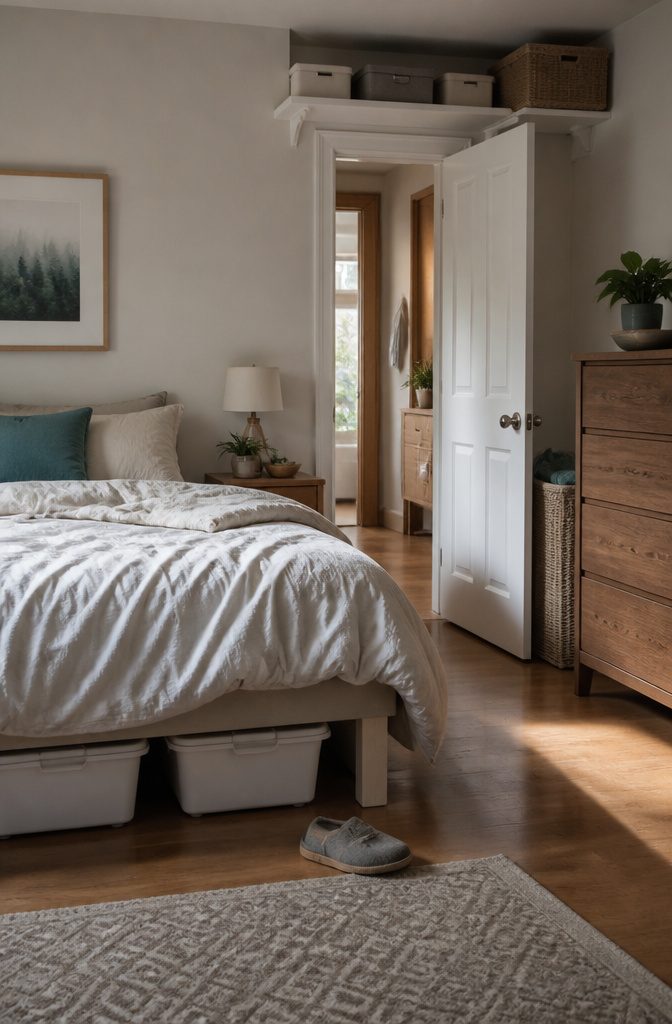
Under-bed space, the wall strip above door frames, and the narrow gaps between cabinets all hold more than most people give them credit for.
Bed risers lift the frame just enough to slide bins underneath for linens, wrapping paper, or seasonal clothes. Loft beds work well in kids’ rooms, clearing enough vertical room beneath for a bookshelf or a small dresser.
Cleaning under a bed gets harder the moment you store things there, so limit what goes in and keep it in bins that slide.
A floating shelf mounted right above the door frame turns forgotten wall space into storage for books, small boxes, or decorative pieces. The same approach helps in closets, where the high band of wall above the door often sits empty.
Corner shelves pull double duty in tight rooms, making awkward angles useful without blocking light the way a full cabinet would. In kitchens, pull-out or cranked larder units reach deep into corners that fixed shelving leaves wasted.
Storage ottomans and side tables with lift-tops add capacity without claiming extra floor area.
One source describes covering a metal trash can with plywood and a tablecloth to create an end table with hidden storage inside. Decorative baskets work the same way, holding everyday clutter while keeping surfaces clear.
5. Choose Furniture With Built-In Storage
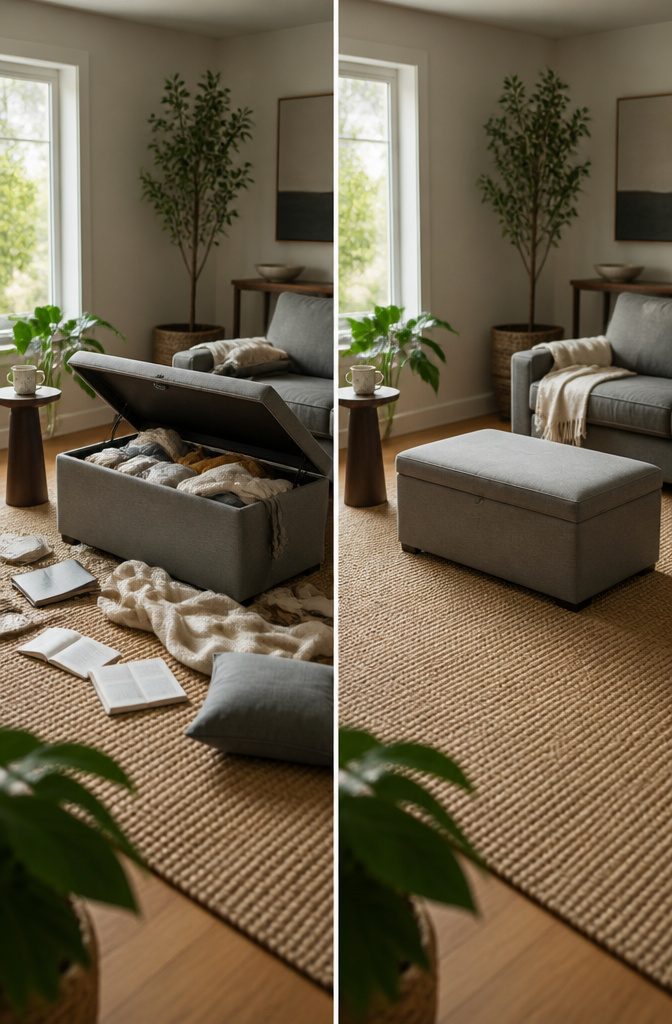
Storage ottomans and beds with hidden compartments handle two jobs at once: seating or surface area up top, and a place to stash what would otherwise land on the floor or pile up in corners.
In a small house, furniture that does double duty means fewer separate pieces fighting for square footage.
An ottoman works as a footrest, extra seat, or coffee table while hiding shoes, blankets, or anything that tends to collect near the couch.
The Bonlife Grey Folding Ottoman Coffee Table with Storage sits at $73.49 and folds flat when you need the floor back. For a bolder look, the Boucle Louise Storage Ottoman runs $398 and adds texture without giving up function.
If the entryway is where clutter lands first, the Carmen Hall Tree with Bench and Shoe Storage includes three shelves and nine hooks for $73.49, covering drop-zone storage and seating in one frame.
Bed frames with built-in storage make the most sense in a bedroom that can’t spare a dresser.
Ottoman beds lift to reveal space underneath for out-of-season clothes, extra bedding, or shoes, and the gain is real without eating into the room visually the way rolling bins or stacked boxes do.
6. Group and Contain Belongings With Bins and Baskets
Group and Contain Belongings With Bins and Baskets
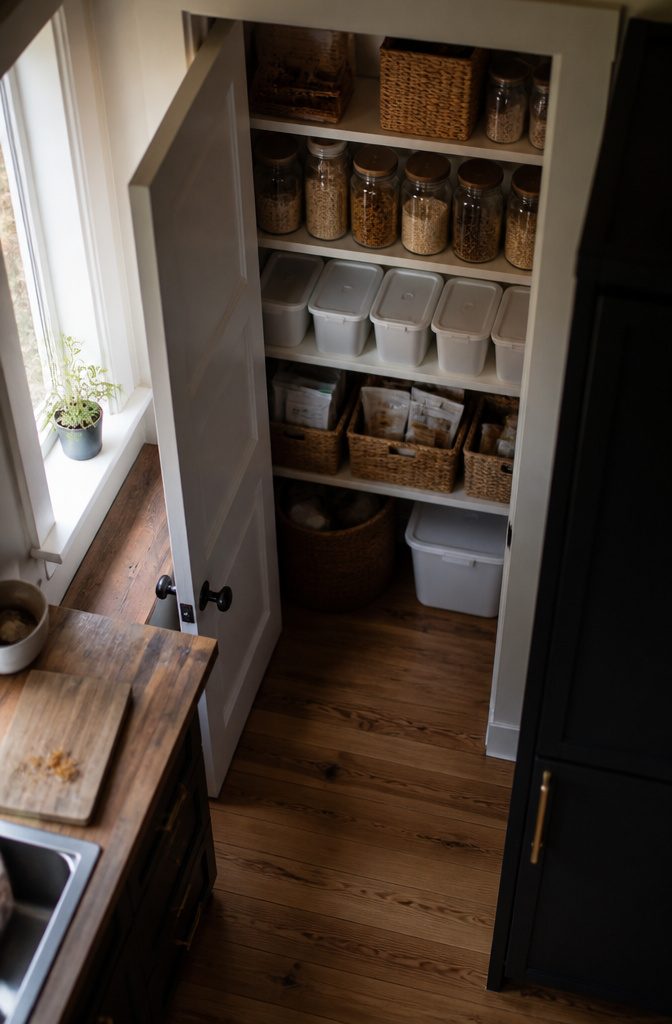
Bins, baskets, and shelf dividers let you group what belongs together and hide what looks messy when it sits out.
A stack of blankets in a decorative basket on the closet shelf takes up less visual space than the same pile sitting open.
The same goes for pantry clutter: labeled bins and clear jars make it faster to find what you need and easier to see when something is running low.
If you use clear containers instead of the original boxes, you gain the same practical win.
I recommend stackable containers when the shelf is tall enough, since vertical storage leaves you room for more.
The UOMIO Kitchen Cabinet Countertop Organisers at $33.73 work for spices, oils, and small condiments, and the black steel and wood finish carries over to other rooms if you need matching storage.
For closets, the OAKNO Expandable Wardrobe Storage dividers add a second shelf level without drilling, though plastic means you should keep the load light.
Label as many bins and baskets as you can. When storage multiplies across a small house, retrieval speed matters more than it does in a larger one.
7. Create Zones for Activities or Common Clutter
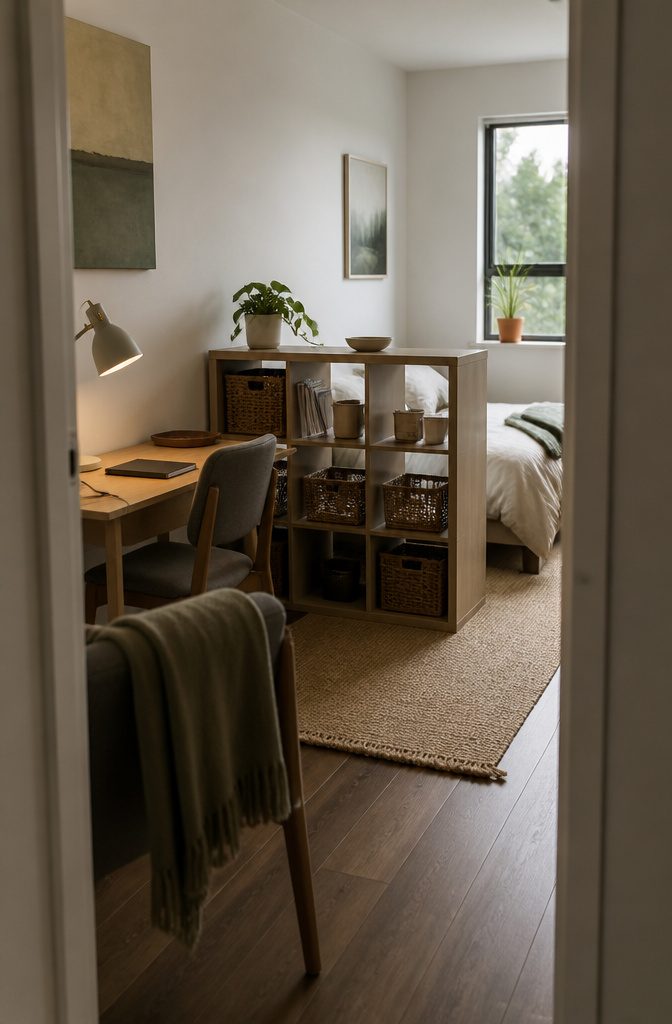
Small rooms work harder when you divide them into zones: a corner where the front door opens becomes the entryway, a section of the living room becomes the workspace, and one side of a shared bedroom holds toys or books.
Without those boundaries, clutter from one activity drifts across the room and settles wherever there’s space.
I organize zones by clustering furniture and storage around each task. A dresser or cabinet near the door creates a drop zone for keys, bags, and shoes.
A tray or bowl on top corrals smaller items. The furniture itself marks the boundary without a full wall or divider.
For a room that serves as bedroom and office at once, a cubby storage unit can separate the bed from the desk and screen the work surface when you’re trying to sleep.
Zones also help when you can’t hide everything.
Pinpointing where clutter collects lets you contain it before it spreads. Different wall colors, rugs, or small furniture pieces can define the edges when space is too tight for larger dividers.
8. Keep Floors and Surfaces Clear
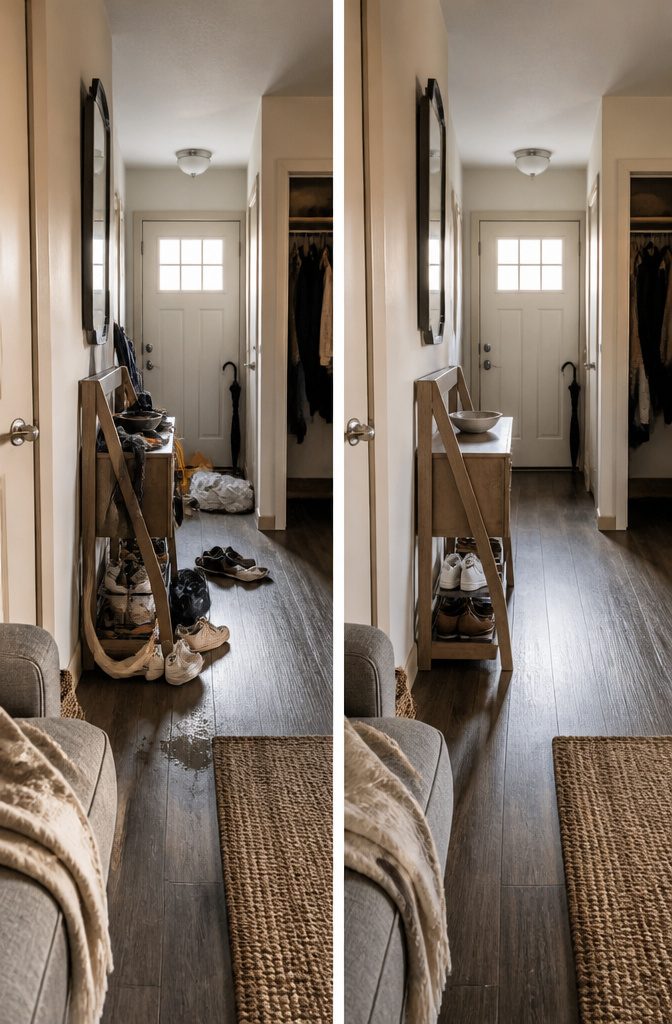
Keeping floors and counters empty makes any home look larger, and that effect matters more in a small one. Floor space attracts clutter fast.
A single bag left near the door becomes a landing zone for shoes, backpacks, purses, and whatever else comes through. The area turns into a dumping ground without a conscious decision to use it that way.
Clear floors also make cleaning faster.
Moving items every time you need to vacuum or sweep adds friction to maintenance, and maintenance that takes longer gets skipped. A client with a 905-square-foot condo solved the drop-off problem with a ladder desk near the entry.
The desk has a drawer the same size as the top, about 2 feet by 3 feet, and that single drawer holds what used to pile on the nearest flat surface.
The clutter still exists, but it sits inside something with a lid instead of spreading across the room.
9. Set Regular Tidy-Up Habits
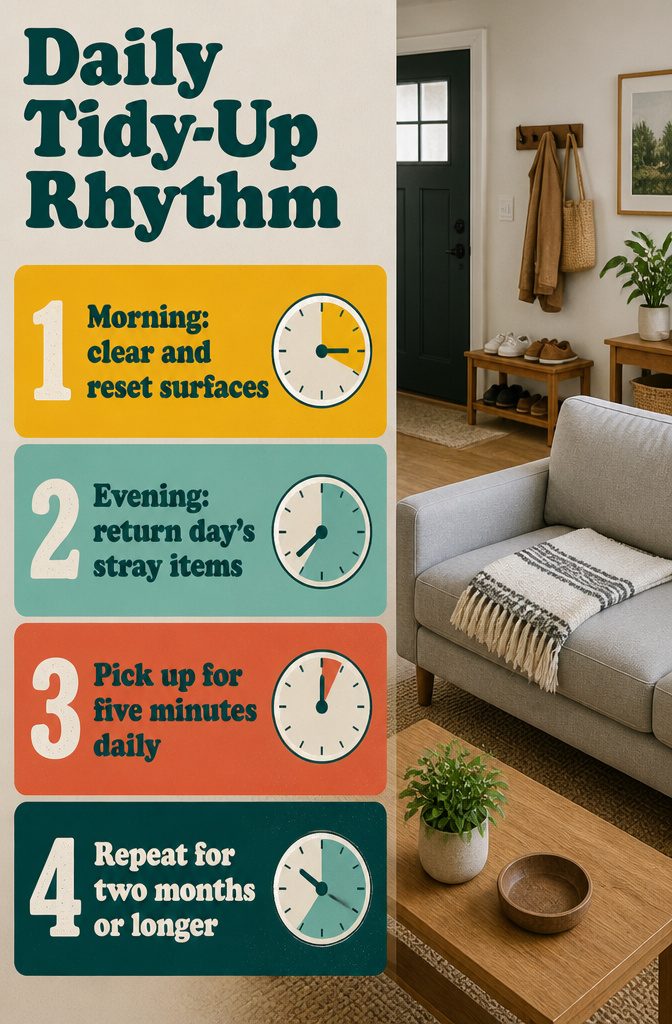
Clutter builds when there’s no routine pushing back against it. Two short tidy-ups each day—morning and evening, each around fifteen minutes—will keep a small house from tipping into chaos.
I focus the morning round on surfaces: clearing the kitchen counter, folding the throw blanket, returning mugs to the cabinet.
The evening pass catches what accumulated during the day: mail on the entry table, shoes by the door, clothes draped over chairs. Ten minutes before bed is usually enough to reset a room if you’ve already done the morning sweep.
Five minutes of picking up daily sounds small, but it stops the pile. I treat it as a separate habit from the longer sessions, because five minutes is short enough to do without deciding to do it.
The clothing that lands on the bedroom chair, the toy left in the hallway—those add up faster in a small house than a large one, because there’s less buffer space to absorb them.
Forming the habit takes two months or longer, so the first month will feel like effort. After that, the reset becomes automatic, and the house stays ahead of the mess instead of catching up to it.
10. Keep Everyday Items Easy to Reach
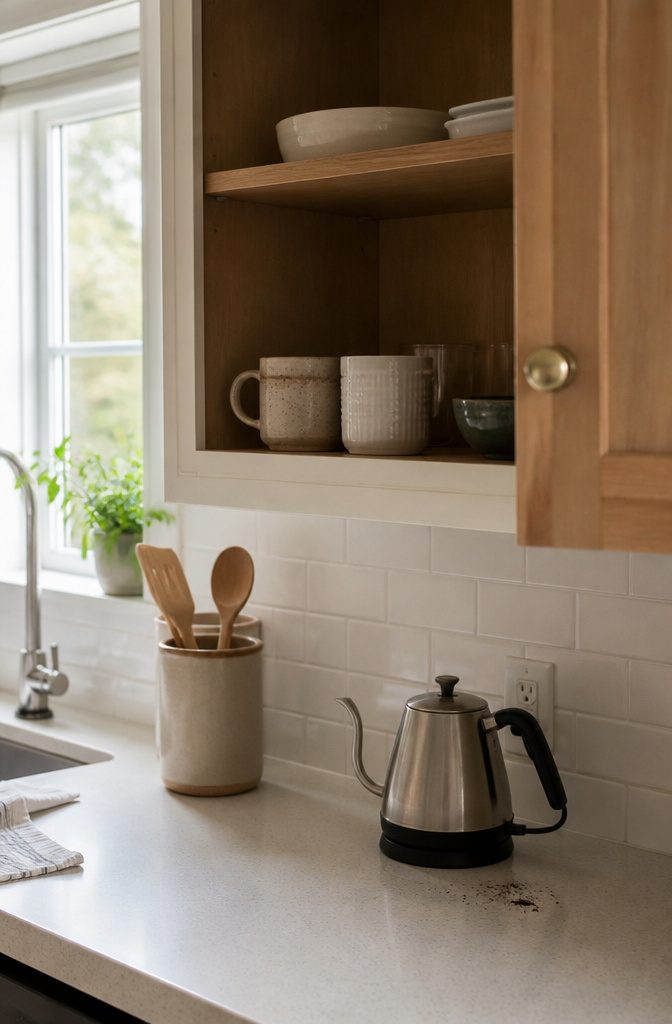
Put the things you use every day where you can reach them without moving anything else. Kitchen tools you grab each morning belong on the counter or the first shelf inside the cabinet door.
Coats, keys, and bags sit near the entrance. The blender that runs once a week goes higher or deeper, and the waffle iron you break out twice a year slides to the back of the upper cabinet.
This is not about perfection; it is about not digging through three baskets to find your phone charger on a Tuesday morning.
This saves time every day in a small house.
You stop pulling everything out to get to one thing, which means you stop creating mess while trying to stay organized. I keep bathroom items I use daily in a shallow bin under the sink, front edge out.
Seasonal or occasional stuff goes in the bin behind it. The five seconds it takes to think about frequency before putting something away saves twenty minutes of frustrated searching later.
Hard-to-reach spots are not wasted space when you fill them with things you rarely need.
Top shelves, under-bed boxes, and high cabinet corners work fine for holiday decor, extra bedding, or the serving platter you use twice a year. The mistake is storing your everyday coffee mug behind the punchbowl.
11. Label and Categorize Stored Items
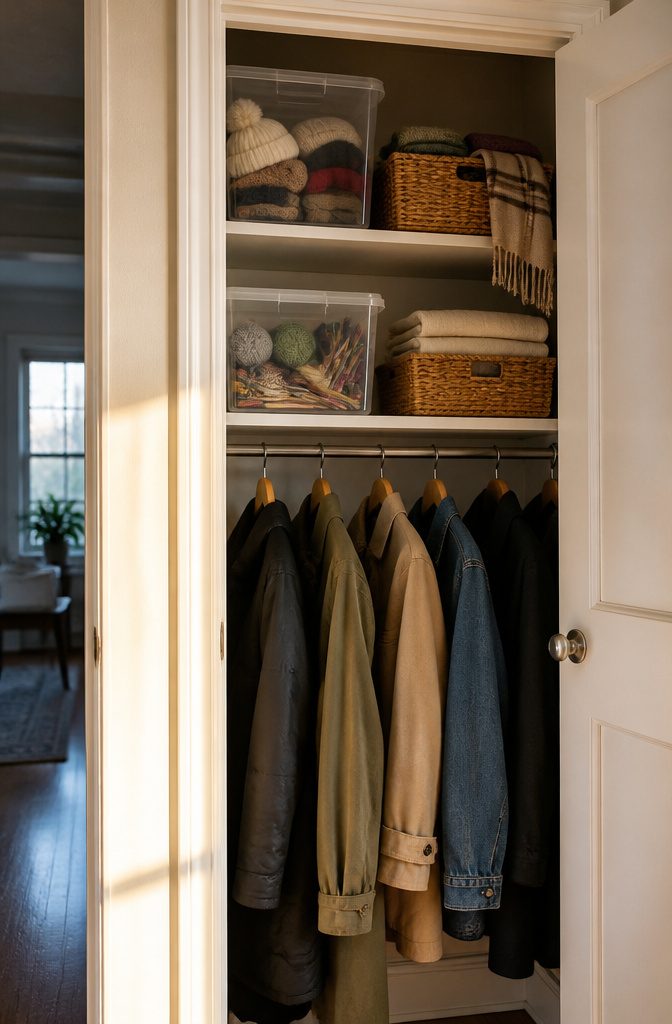
Labels matter when you have bins you don’t open every day. Write what’s inside on the front of each container, so you know whether the winter accessories box holds scarves or gloves without lifting the lid.
The same goes for bins stacked on a closet shelf or stored under a bed. If you can see the contents through clear plastic or an open basket, skip the label.
Grouping like items in one spot makes storage work better in a small house. Office supplies go together, cleaning products stay in one cabinet, and board games share a shelf.
When everything related lives in the same place, you walk a few steps to find it and a few steps to put it back. That habit frees up space you used to waste on scattered duplicates.
Categories don’t need to be complicated. Start with broad groups: all kitchen tools, all bathroom extras, all craft materials.
Tighter sorting inside those groups depends on how often you reach for something. Daily items stay easy to grab, seasonal ones go higher or farther back, and the label tells you which bin holds what without unpacking half the closet.
12. Digitize Paperwork to Reduce Storage

Digitize Paperwork to Reduce Storage
Scanning paper documents and downloading bills from email lets you clear out file folders and filing cabinets without losing the records.
Save the files to a cloud storage service, many of which offer free storage space that handles years of household paperwork.
Take pictures or scan receipts, medical records, and anything else that used to sit in a drawer, then store them in organized folders on your computer or in the cloud.
The physical clutter goes, and finding what you need gets faster.
Going through mail daily keeps paper from piling up in the first place. I toss what goes to recycling or shredding right away, and most days that leaves nothing or one piece to file.
Bills, receipts, and medical records still need a system if you keep any in paper form, so labeled folders or binders work for anything you decide not to scan. Regularly discard what you no longer need.
Add Closet and Cabinet Organization Systems
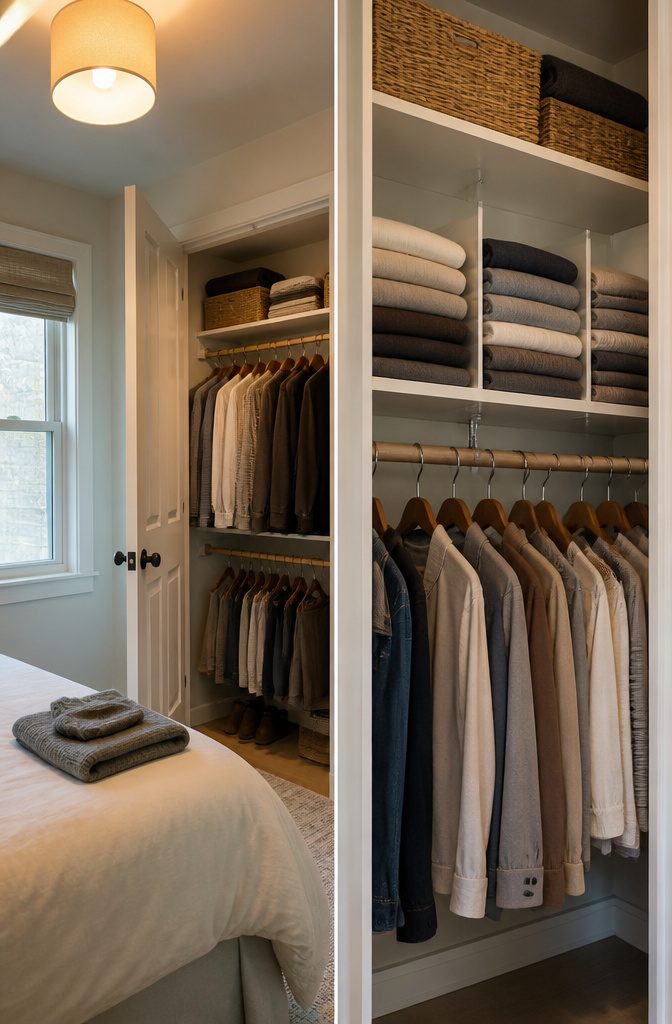
The standard closet arrives with a rod, a shelf, and wasted air.
Cabinet dividers and shelf inserts change that arithmetic fast—they let you stack upward instead of piling deep, so you can pull a sweater from the back without an avalanche.
I’ve found expandable shelf dividers work well for folded items like t-shirts in the closet and small jars in the kitchen; they’re plastic, so don’t overload them, but they genuinely double usable height on an existing shelf.
Spinning organizers—lazy Susans—belong in any cabinet where small items disappear into corners. Spices, condiments, and oils stay visible and within reach instead of forming a graveyard at the back.
In the bedroom, hanging storage pockets keep underwear and socks off shelves that should hold bulkier things, and hooks on the inside of a closet door clear purses and backpacks off the floor.
If you can add a second rail or an interior shelf to a closet, do it; the vertical space between the existing rod and ceiling usually holds nothing but potential.
Get Family Members to Help
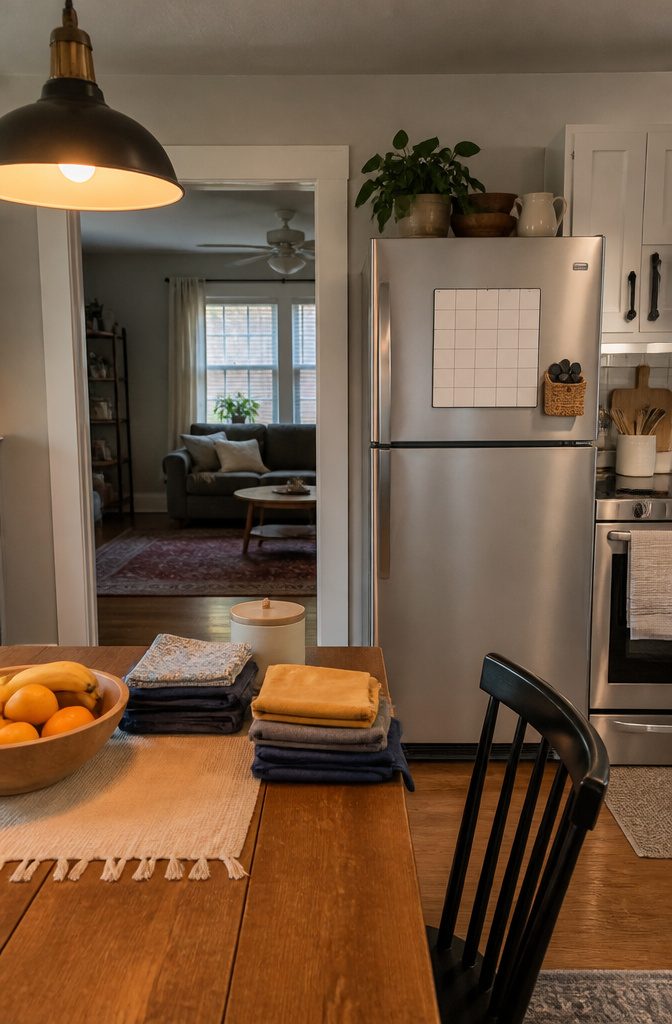
Assigning tasks to everyone who lives there cuts the work load fast.
A chore chart on the fridge or inside a cabinet door keeps the list visible without turning into one more thing to organize. I rotate tasks every two weeks so nobody stays stuck with the worst jobs.
A five-year-old can match containers to lids, and a teenager can handle laundry sorting or trash rounds. The chart works because it names the task, the person, and the day it happens, which removes the daily negotiation.
A weekly family meeting sounds formal, but ten minutes at the table on Sunday evening does more than scattered reminders all week.
I use it to flag what fell apart since the last meeting and to reassign anything that proved too much for one person.
Housing schedules in a command center keeps everyone on the same page without text threads that get buried. When the system is shared, maintaining order stops being something one person nags about and becomes something the household runs together.
Use Light Colors and Lighter Decor
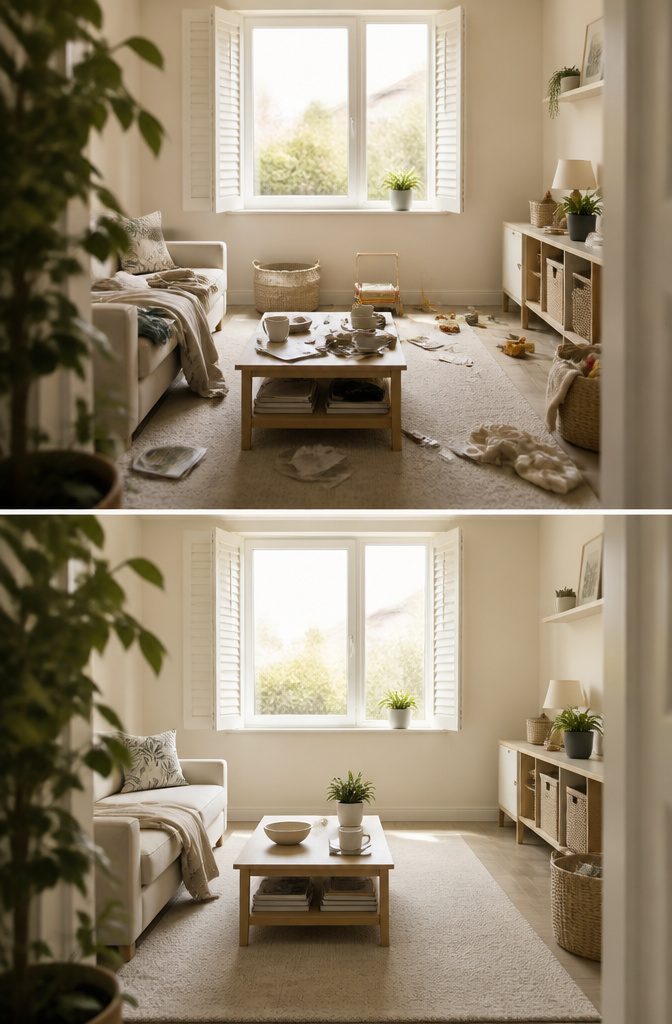
Heavy curtains and crowded windowsills cut the natural light a small house needs most.
Choose blinds or shutters instead, and keep the sill itself clear. A windowsill packed with objects reads as clutter even when everything has a home, and the shadow they cast makes the room feel closed in.
I find that lighter colored decor opens up the space in a way paint alone can’t match.
Walls in fresh, natural hues let the light move, and floors or rugs in cream or pale gray reflect brightness rather than absorbing it.
If you’re tempted by busy prints, printed carpets, or a bold feature wall, pause. In a small room, pattern competes with light.
A single accent piece works where four would make the room feel stuffed. Lighter finishes read as more space without adding square footage.
Store Laundry Equipment Off the Floor
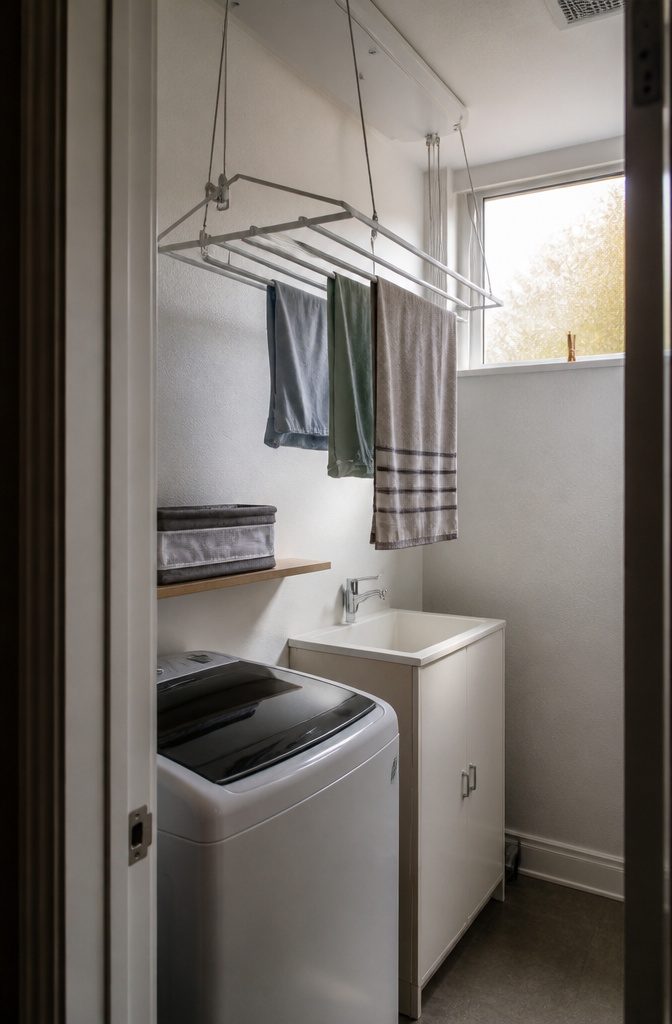
A ceiling-mounted drying rack folds flat against the wall or overhead when you’re not using it, which matters when laundry equipment would otherwise live on the floor and block foot traffic.
I’ve seen these work well in tight bathrooms and laundry closets where a standing rack would cut the usable space in half.
The pulley models drop down when you need them and lift back up to dry out of the way. They hold about the same load as a floor rack but give you the square footage back.
Collapsible laundry baskets sit flat in a cabinet or under a bed between loads instead of taking up permanent floor space in a bedroom or hallway.
The fabric sides fold in on a rigid base, so the basket stores at about two inches tall.
That makes a real difference in a small house where visible clutter compounds quickly. I keep one behind the bedroom door, and it disappears completely when I’m not actively sorting clothes.
Frequently Asked Questions
How do you declutter small spaces?
Sort items into keep, donate, and discard piles, then get rid of the last two immediately.
Work in 15-minute sessions if a full room feels overwhelming, focusing on one drawer or shelf at a time. Remove what doesn’t add value before it piles up again.
What is the best way to organize small spaces?
Give every item a designated spot and return it there after use, keeping floors and surfaces clear.
Use vertical space with wall-mounted shelves and hooks, and choose furniture with built-in storage like ottomans or beds with hidden compartments. Daily 5-minute resets prevent clutter from building up.
My space is clean–how do I keep it this way?
Run two short tidy-ups each day, about 15 minutes in the morning and evening, returning items to their assigned spots.
Review what you own every 6 months to catch what stopped being useful, and ask if you have room for something before bringing it home. The daily habit takes 2 months to form but prevents mess from accumulating.
What is the root cause of clutter?
Clutter builds when items lack designated homes and when there’s no routine pushing back against it.
Without clear boundaries for where things belong, belongings drift across rooms and settle wherever there’s space. Bringing in more than you have room for and skipping daily resets compounds the problem fast.