
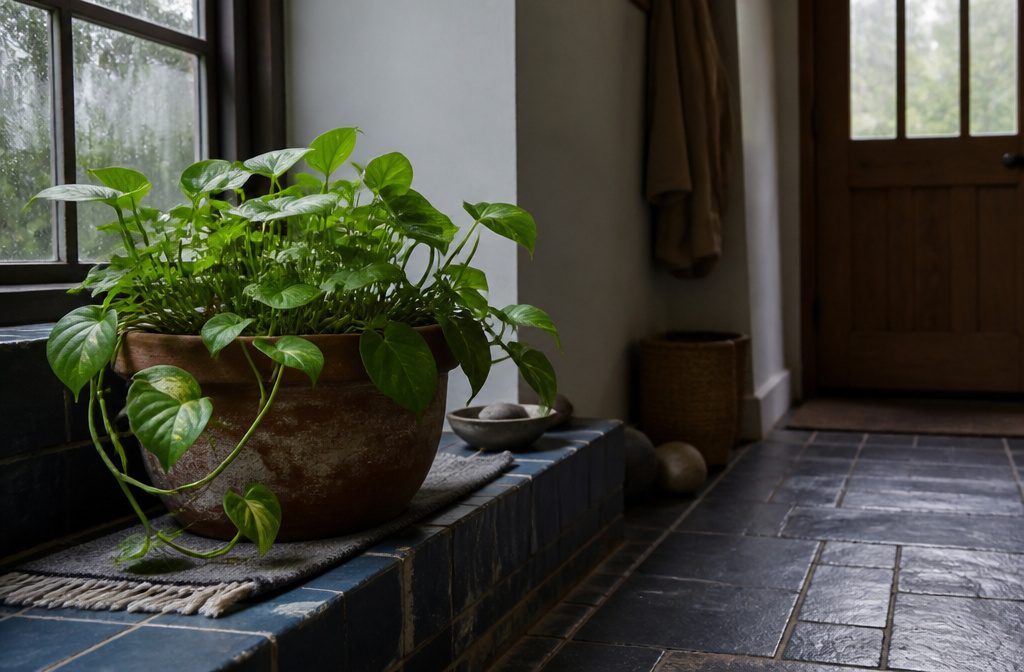
A full pothos comes from multiple plants potted together, not from a single vine encouraged to branch. Pruning and fertilizer help, but they won’t thicken a bare base the way rooted cuttings will.
Most single-stem pothos stay single-stem, so if you want the look of a nursery plant, you’ll need to add stems yourself or cut back to two inches above the soil and hope for follow-through.
1. Prune existing vines to encourage new growth
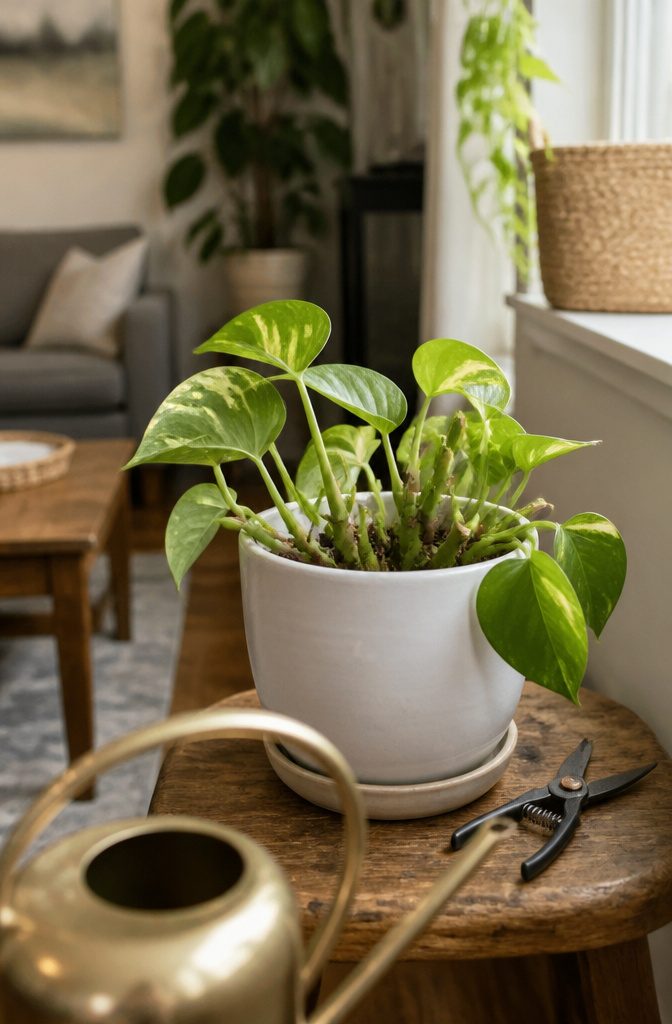
Pruning feels counterintuitive at first, but cutting back existing vines is one of the fastest ways to push new growth from the base of the plant.
The move is simple: cut just below a leaf node using clean scissors or pruning shears. That node is where new stems can emerge, so cutting above it leaves you with bare stem and no follow-through.
Without pruning, the stems will continue trailing and becoming thinner over time. They often grow into areas with less light, leading to sparse foliage and an uneven, leggy appearance.
If your pothos is mostly long trails with nothing at the top, a hard prune makes sense.
Stems can be cut back to as little as two inches above the soil line, as long as you leave one or two leaves on each stub.
Any shorter and the plant has no way to pull energy, which usually means dead stems rather than regrowth.
Spring and summer give the plant its best shot at recovering quickly, since that is when growth is already active. Fall and winter pruning stresses the plant when it is naturally slowing down.
One thing worth noting: pruning usually shortens the plant rather than making it branch. Occasionally a hard prune triggers a second growth point, but that is a bonus, not something to count on.
2. Add rooted cuttings or plants to the pot
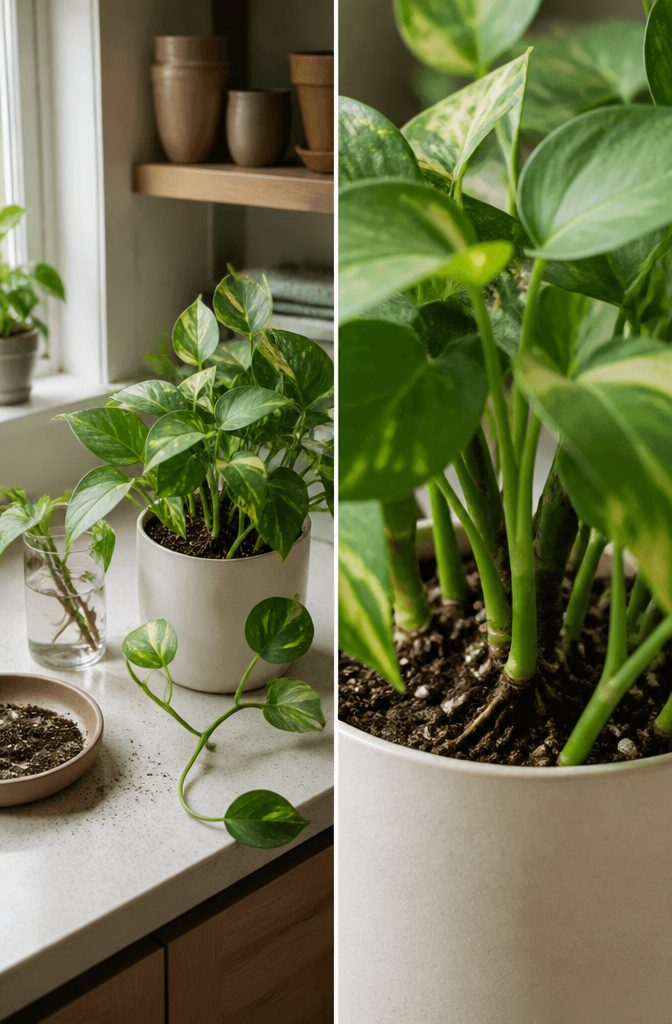
Taking cuttings from your pothos and planting them back in the same pot is the fastest way to build fullness without waiting for vines to branch on their own.
Nursery plants that look lush on the shelf aren’t one plant. They’re five or six rooted cuttings potted together, and you can do the same thing at home.
Each cutting needs a node at the base and about 2–5 leaves. You can root them directly in soil or start them in water and transfer once roots reach 2–3 inches long.
I prefer rooting in moss first, since unrooted cuttings sitting in damp soil are more prone to rot. Rooting takes a few weeks, and a genuinely full look takes a growing season after that.
In a six-inch pot, five or six cuttings read as full, while three look intentional but spare. You can also buy small pothos plants and group them in the same container if you want the look sooner than propagation allows.
3. Give the plant bright, indirect light

Bright, indirect light keeps a pothos compact and full. When the plant sits in dim conditions, growth slows down, the stems stretch thin between leaves, and the overall look turns sparse.
That happens because the plant reaches toward whatever light it can find, lengthening the distance between nodes instead of putting out dense foliage.
I’ve seen pothos tucked into dark corners lose their variegation and take on a leggy, stringy shape within a few months.
The fix is straightforward: a spot a few feet from a south-, east-, or west-facing window gives the plant plenty of light without the burn that comes from direct sun.
Pothos grow under tree canopies in the wild, so they want brightness filtered through something, not beaming straight onto the leaves.
You can place the pot closer to the window than you might expect, as long as the light stays indirect. The difference shows up fast: fuller growth, tighter spacing between leaves, and better color.
4. Water consistently without leaving soil soggy
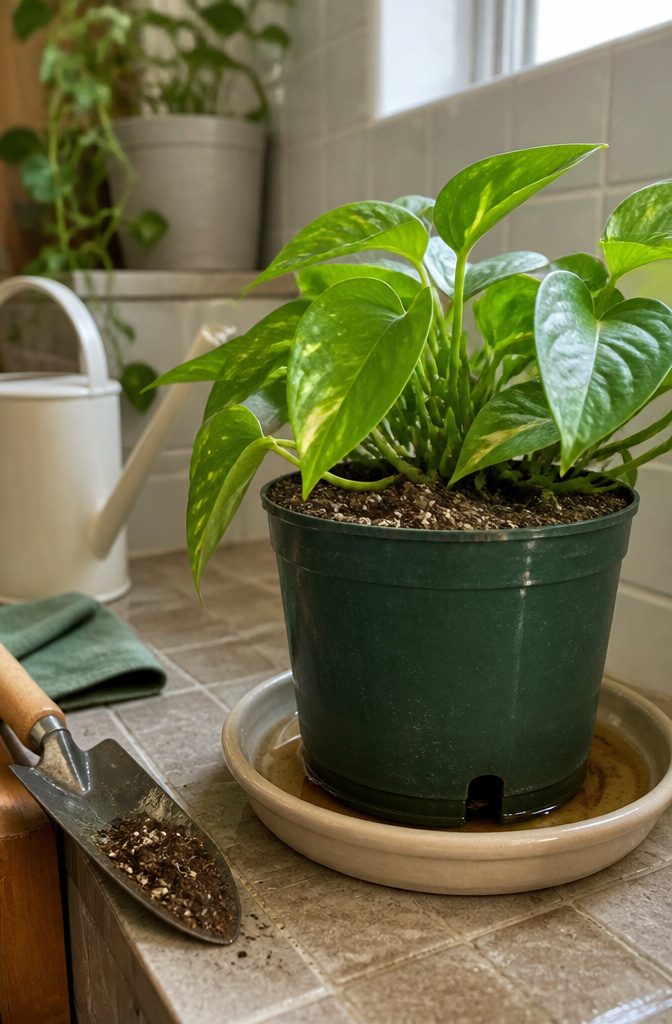
I water when the top two to three inches of soil feel dry to the touch, not on a fixed schedule.
In my climate that works out to about every seven days in summer and every ten to fourteen days in winter, but your timing will shift with heat, humidity and pot size.
When I do water, I run it until water flows from the drainage holes, then let the excess drain completely.
The pot needs those holes. Soil that stays damp invites root rot, and sitting water finishes the job fast.
If you are adding unrooted cuttings directly to the parent plant’s pot, damp soil becomes a bigger risk.
Cuttings without roots rot more easily than established plants do. Root them in moss or water first, then plant them once they have a few inches of root.
5. Fertilize during the growing season
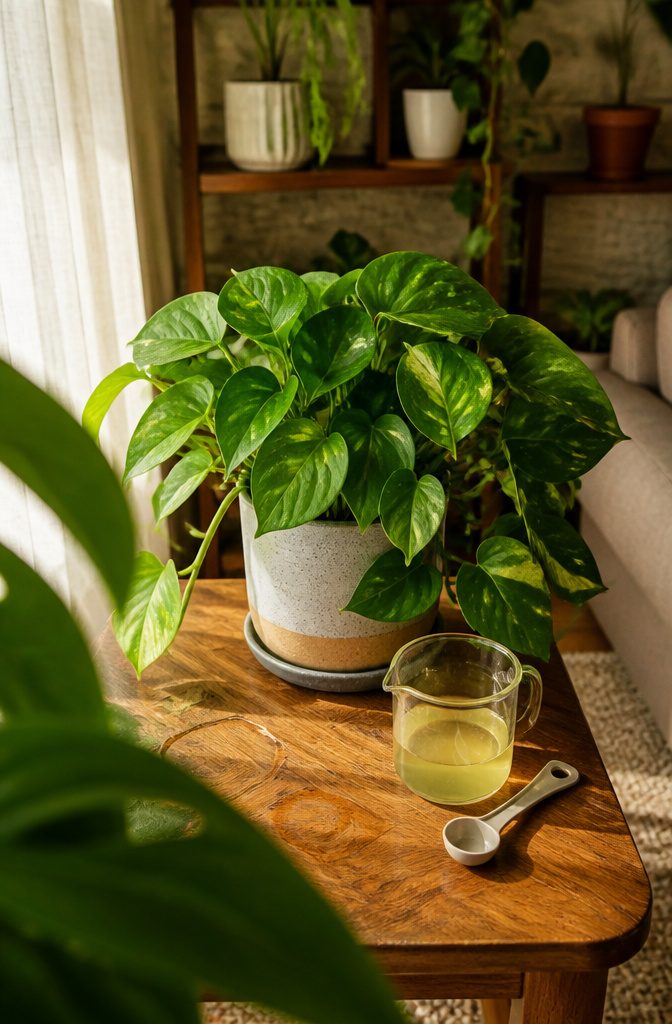
Pothos plants are light feeders and grow fine without fertilizer, but a balanced, water-soluble houseplant fertilizer every 4–6 weeks during spring and summer helps push fuller foliage when light and watering are already dialed in.
I use a 20-20-20 all-purpose mix about every three weeks once the plant is actively growing, usually late winter into spring.
Compost or liquid seaweed diluted to half strength once or twice a month works just as well if you prefer organic options.
Fertilizer supports the growth the plant is already capable of.
It will not force new vines to appear where the plant structure does not support them, so if the base is bare, adding nutrients alone will not fill it in. That is what propagation and pruning are for.
Wait until the plant looks healthy before you fertilize. A scraggly pothos with good color can take it; a yellowing one cannot, and the extra salts may push it over.
Keep the temperature between 65–85°F
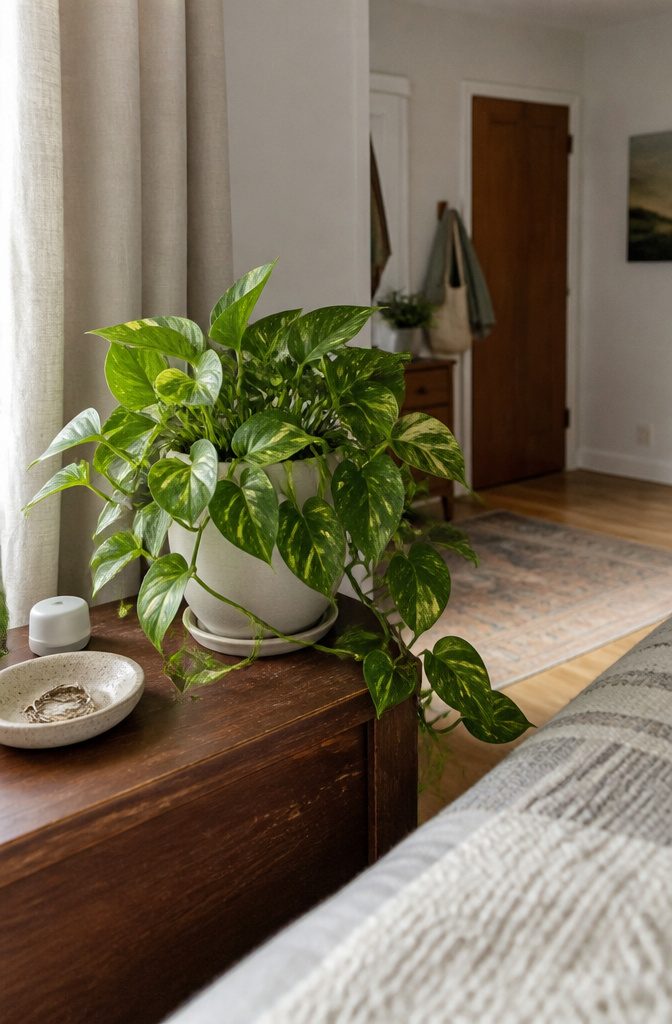
Pothos grows best when you keep the room between 65–85°F. Below that range or above it, the plant slows down, the leaves start to look limp, and new growth comes in sparse.
I’ve noticed that temperature stress shows up faster than most care problems because the plant can’t regulate the way it would outdoors under a canopy.
Direct sun or a spot near a heating vent can push the leaves past their tolerance and cause burn, which kills any chance of filling out the plant.
Cold drafts from a window or an air conditioner set too low have the same effect in reverse. The plant survives, but it stops putting out the dense, layered growth that makes it look full.
If the room swings outside that 65–85°F band regularly, moving the pot to a more stable spot usually fixes the problem within a few weeks.
Choose the right pot and soil
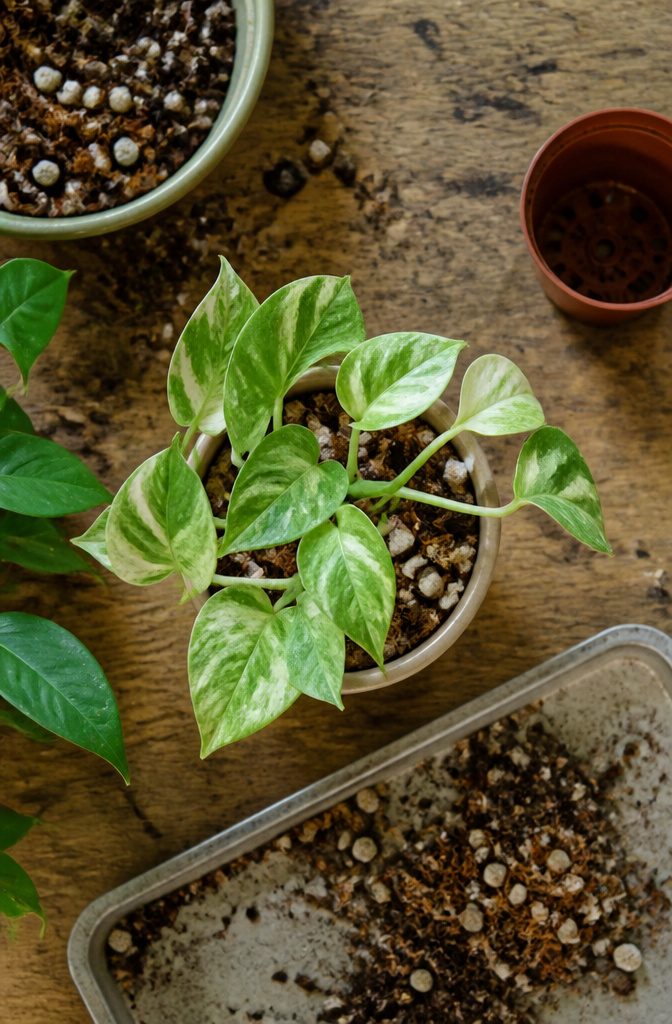
The right pot size matters more than most people expect.
A pot that’s too small can stunt growth, while one that’s too large holds wet soil the roots can’t reach, and that sitting moisture invites rot. When repotting, go one size up from the current pot, not two or three.
If you’re potting several fresh cuttings together, resist the urge to use a big container right away. Small root systems in a lot of soil means water sitting where it shouldn’t.
The mix inside the pot decides whether water moves through or sits.
I use potting soil formulated for houseplants, then add a couple of handfuls each of coco chips, coco fiber, and pumice. The chips and pumice open up space for air and drainage, which pothos roots need.
A handful or two of compost or worm compost adds slow nourishment without forcing you to fertilize as often. This setup drains fast enough that overwatering becomes harder to do by accident.
Frequently Asked Questions
How do you fix a leggy pothos?
Prune the stems back to just below a leaf node using clean scissors, leaving at least one or two leaves on each stem.
You can cut as far down as two inches above the soil line if needed. Save the healthy cuttings and root them in water or moss, then plant them back into the same pot once roots develop to add fullness.
Does trimming pothos make it bushier?
Trimming usually shortens the plant rather than making it branch. A hard prune may occasionally trigger a second growth point, but that is a bonus rather than something to count on.
The most reliable way to build fullness is to root the cuttings from pruning and plant them back into the same pot.
Why is my pothos plant not full?
The most common causes are insufficient light and lack of pruning.
Pothos in dim conditions grow long, thin stems with sparse leaves as the plant stretches toward light. Without pruning, the stems keep trailing and become thinner over time, leaving the base bare.
How many cuttings do I need for a full-looking pot?
Five or six rooted cuttings in a six-inch pot look full, while three look intentional but spare.
Nursery plants that appear lush are usually five or six cuttings potted together, and you can replicate that at home with your own propagations.
Can I put cuttings straight back into the parent plant’s pot?
Yes, but unrooted cuttings sitting in damp soil are more prone to rot.
Root them in moss or water first, then plant them once roots reach 2–3 inches long. That extra step gives the cuttings a better chance of surviving in soil.
How long until it looks bushy?
Rooting cuttings takes a few weeks, and a genuinely full look takes a growing season after that.
If you want the look sooner, you can buy small pothos plants and group them in the same container instead of waiting for propagation.
Do pothos roots like to be crowded?
They tolerate being a little root-bound but can suffer if extremely crowded.
When repotting, go one size up from the current pot, not two or three. A pot that is too large holds wet soil the roots cannot reach, and that sitting moisture invites rot.
What does a pothos look like when it needs to be watered?
Wilting leaves are the clearest sign.
Water when the top two to three inches of soil feel dry to the touch, not on a fixed schedule. Run water until it flows from the drainage holes, then let the excess drain completely.
Why does my pothos only have one vine?
Pothos generally grow from one active growth point at a time, producing a single trailing or climbing vine. Full-looking plants are almost always five or six rooted cuttings sharing a pot, not one plant that has branched naturally.
Does a moss pole make a pothos bushier?
Not exactly. A moss pole can make the plant bigger, with larger leaves closer together, but it does not increase the number of vines or fill in a bare base.
For true fullness, you need multiple cuttings or plants in the same pot.
Do coffee grounds help pothos plants?
Coffee grounds can add nitrogen to the soil as they break down, but pothos are light feeders and grow fine without them.
A balanced water-soluble fertilizer every 4–6 weeks during spring and summer is a more reliable way to support fuller foliage when light and watering are already dialed in.
How to get huge leaves on pothos?
Give the plant bright, indirect light and let it climb a moss pole or other support.
Climbing triggers the plant to produce larger, more mature leaves. Adequate light, consistent watering, and occasional fertilizer during the growing season all support that larger leaf size.