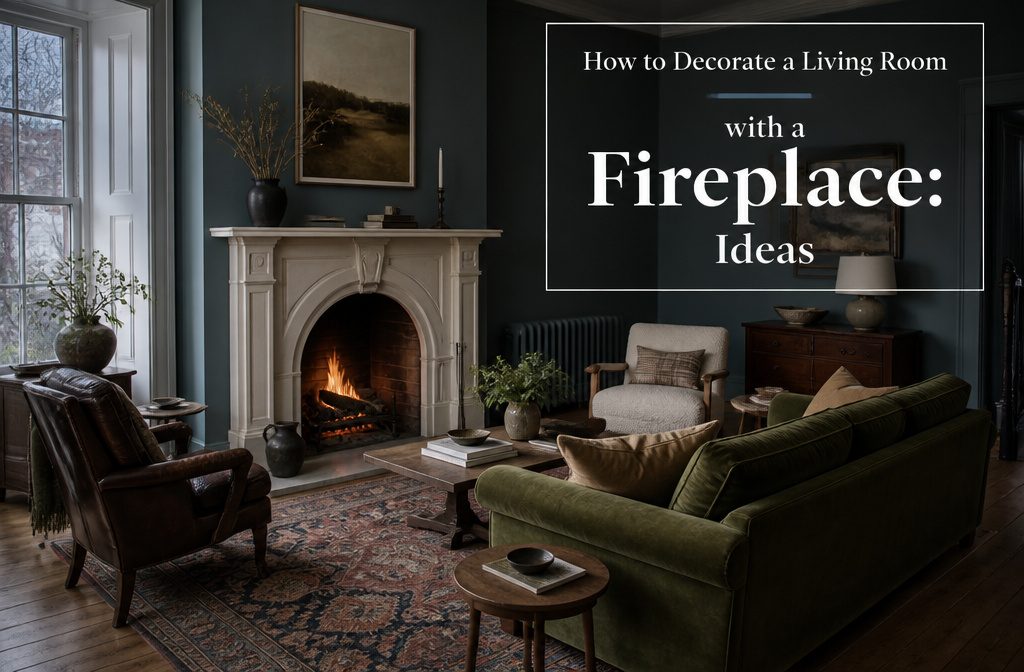
A living room with a fireplace takes furniture that addresses the hearth first, which means a sofa facing the fire and side chairs angled in to complete the sightlines.
Most layouts fail because the TV pulls attention away from the fireplace or the furniture arrangement tries to serve two focal points at once.
A stone surround needs contrasting soft textures nearby, while a Victorian fireplace pairs better with modern pieces that won’t compete with the ornate detail.
1. Make the Fireplace the Focal Point
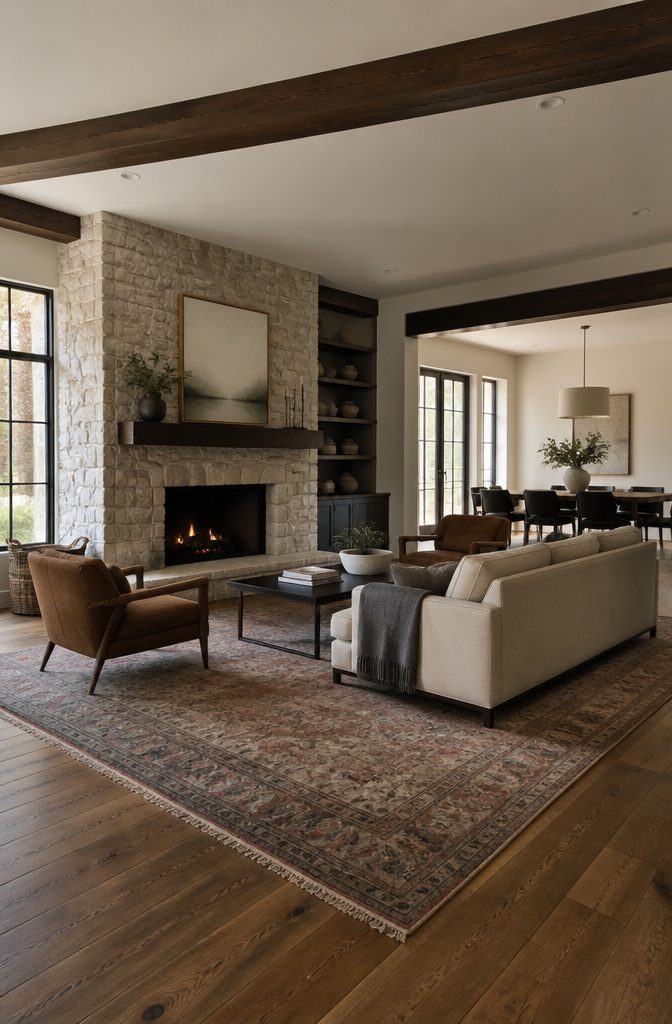
The furniture should face the fireplace or open toward it so every seat in the conversation area has a clear view of the hearth.
A sofa directly opposite the fireplace is the most common arrangement, and it works in most room shapes because it centers the layout on the feature you want people to notice first.
Side chairs angled toward the fire complete the grouping without blocking sightlines. In a square living room, matching pieces on either side of the fireplace echo the symmetry and make the focal point feel intentional rather than accidental.
If the room is large or L-shaped, pull the seating into the middle rather than pushing it against the walls.
An area rug under the furniture defines the conversation zone and keeps the fireplace at the center of that grouping, even when the rest of the room has other purposes.
The back of the sofa acts as a natural divider, sectioning off the seating area while leaving the front of the fireplace as the visual anchor.
2. Choose a Furniture Layout That Suits the Room and How It Is Used
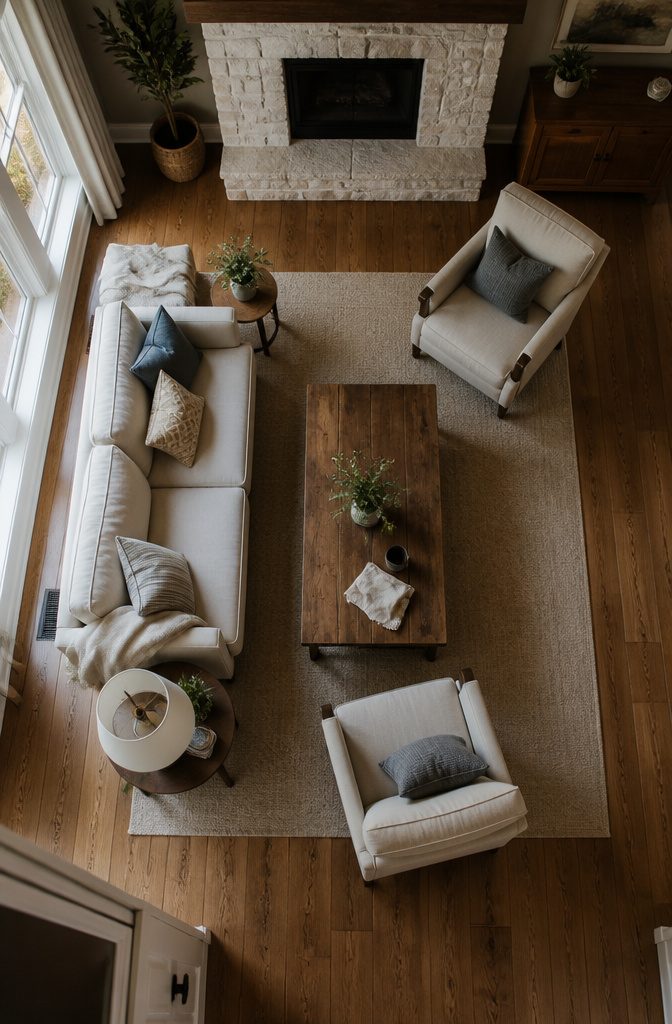
The first call is whether you want all the seating facing the fireplace or a layout that pulls the room toward conversation.
A sofa with a pair of chairs opposite works when the fireplace sits on one wall and the room has enough width to let people talk without shouting.
I find that arrangement gives the most flexibility: the chairs can angle in slightly, the sofa grounds the space, and a coffee table or ottoman in the middle keeps the circle tight.
If the room is large enough for it, a sectional wraps the seating without needing multiple pieces, though it commits you to one configuration.
Two sofas facing each other suit a longer room where the fireplace takes a side wall. That setup keeps the hearth visible from both pieces of seating and balances the visual weight without crowding one end.
In a square room, arranging furniture in a semicircle or loose circle around the fireplace makes the most of symmetry and keeps sightlines open.
When a room runs long and narrow, I often see people try to cram everything into one zone; splitting it into two smaller seating areas—one near the fireplace, another toward a window or opposite wall—uses the length better and gives the space a reason to exist past the first six feet.
3. Balance the Room Visually
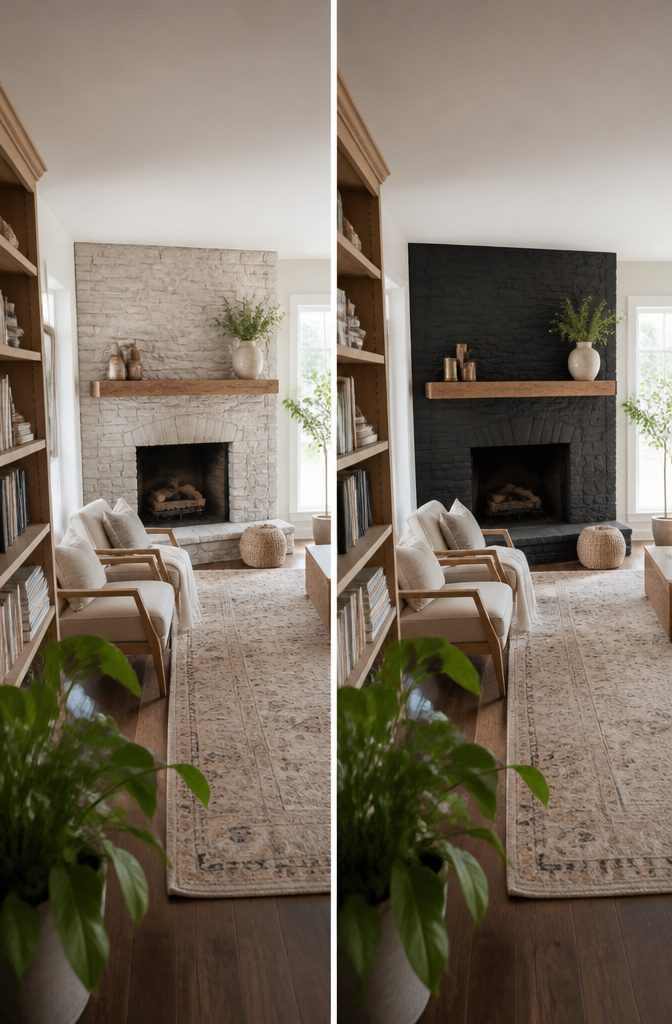
A fireplace brings instant presence to a wall, and the room around it needs weight distributed so nothing feels tipped to one side.
That doesn’t mean mirroring every item across a centerline. Balance here means spreading visual mass across the space in a way that feels stable rather than cluttered on one side and bare on the other.
If your fireplace is large and heavy in proportion to the room, counter it with a tall bookshelf or substantial seating grouping on the opposite wall.
A bulky stone surround can weigh down the entire side of the room, and adding nothing of consequence across from it leaves the space feeling unfinished.
On the other hand, a small fireplace surrounded by delicate furniture can disappear entirely. Use one or two solid pieces nearby to anchor it.
Color and scale both contribute.
A dark fireplace pulls the eye harder than a light one, so if you paint or refinish the surround, lighter tones in soft whites, pale grays, or warm beiges let the space breathe and feel larger.
For the mantel, three smaller items of varying height grouped together on one end can balance against a single larger object on the opposite side.
4. Adapt the Layout to the Fireplace’s Position
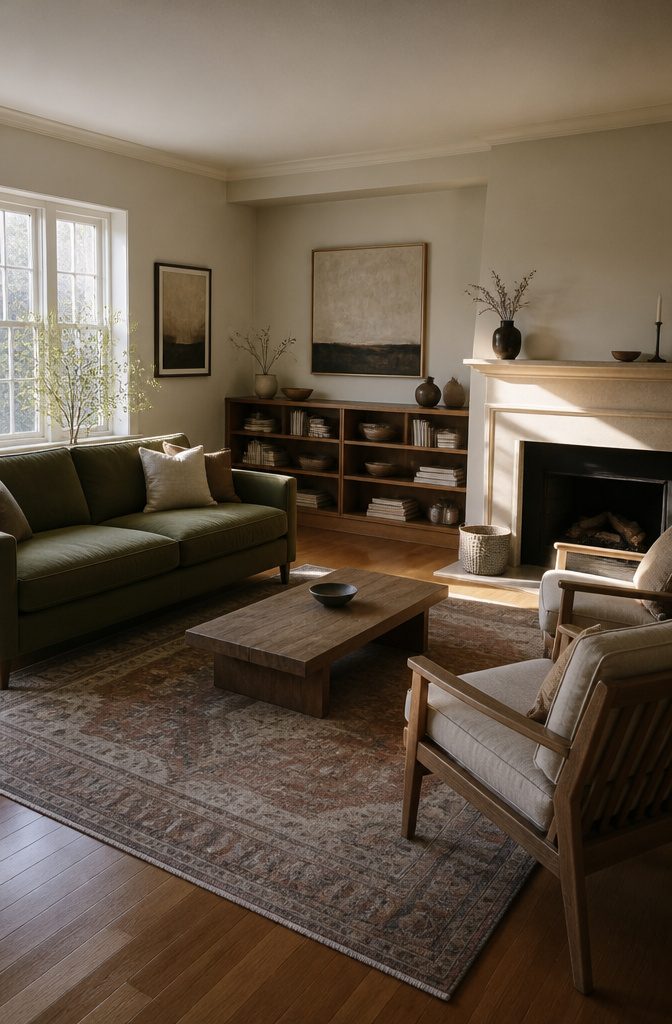
A fireplace in the center of a wall invites symmetry, and that usually means identical seating on both sides: a sofa facing the fire with matching chairs or loveseats flanking it.
The layout reads formal, and it works best in square or near-square rooms where balance feels natural rather than forced. I lean into that symmetry rather than fighting it, because the fireplace itself has already claimed the focal point.
Corner fireplaces change the equation entirely. The angle makes a symmetrical arrangement awkward, so I typically anchor one side with the sofa and use the perpendicular wall for a second seating piece or a media console.
The room feels more open this way, and you’re not boxing yourself into a rigid conversation area that fights the architecture.
Off-center placement is the trickiest. If the fireplace sits to one side of the wall rather than dead center, placing a sofa directly across from it can leave the rest of the room feeling unbalanced.
The fix I come back to most often is placing a sofa against the wall beside the fireplace rather than opposite it, then using a rug and a pair of chairs to define the conversation zone.
That shifts the visual weight and gives the room a more deliberate, less accidental feel.
Double-sided fireplaces act as room dividers, and the furniture layout has to acknowledge that. One side might serve as the main seating area while the other opens to a dining space or hallway.
The back of the sofa becomes the line between zones, and a large rug on the living room side reinforces the separation.
5. Plan for the Room’s Size and Shape
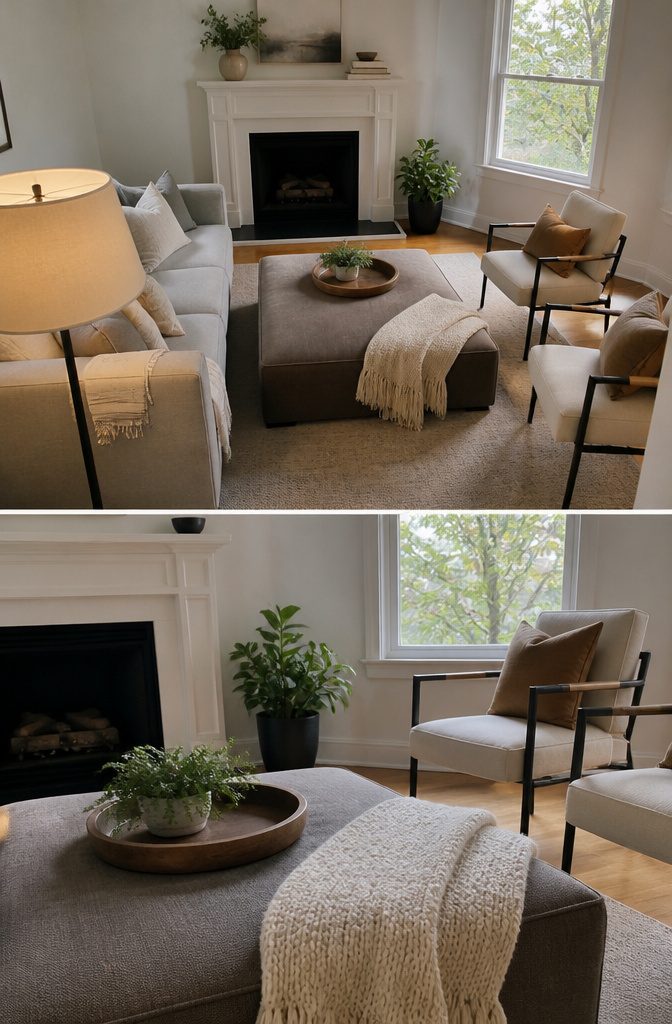
A small living room forces you to choose furniture width carefully. I buy sofas in the smallest width that still seats the people who use it, then keep accent chairs compact rather than overstuffed.
A lot of small end tables and accent pieces make a small room feel cluttered, so I limit them to where they’re actually needed and use a large coffee table instead.
One larger piece reads cleaner than several small ones scattered around, and an ottoman-style coffee table doubles as extra seating when you need it.
A large living room gives you room for a sectional or multiple sofas, plus more flexibility in where you place things.
Awkward or narrow rooms benefit from a drawn plan before you commit to furniture. I use Floorplanner.com when I need a digital layout; graph paper works just as well if you prefer to sketch it by hand.
Both let you test combinations at scale before anything ships, which matters more in a room where the fireplace already anchors one wall and limits your options.
6. Decide Where the TV Belongs
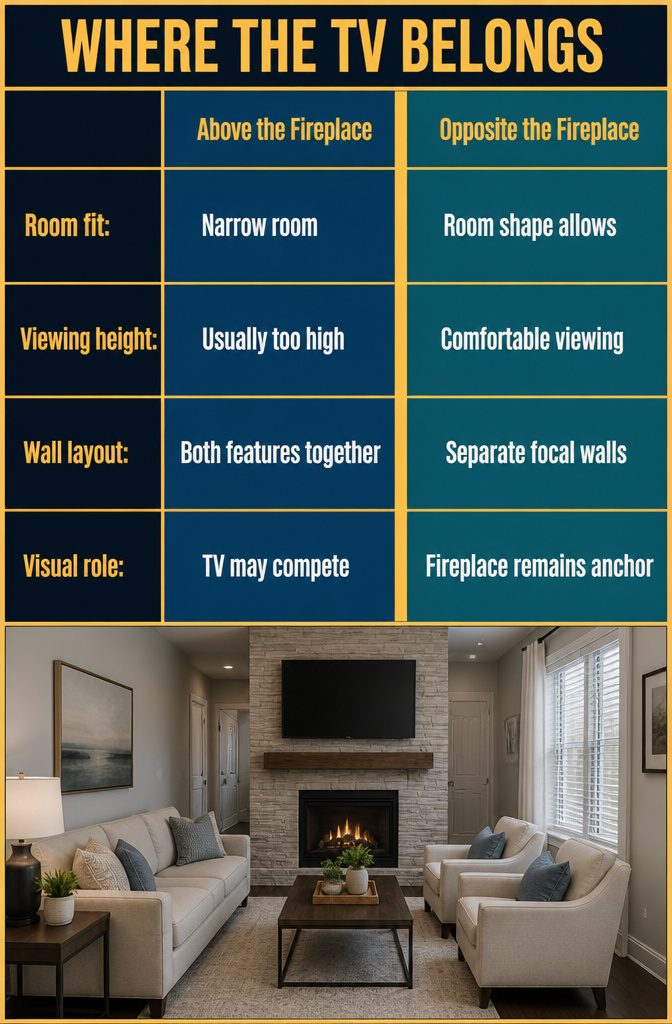
The TV can go above the fireplace, on the opposite wall, or off to one side, and each option trades something.
A TV mounted over the mantel keeps both features on one wall, which works well in narrow rooms where furniture faces a single direction.
The frame TV is popular here because it can display art when off, softening the black rectangle. The problem is height: a TV above the mantel usually sits too high for comfortable viewing, especially during a long movie.
Placing the TV on the wall opposite the fireplace solves the height issue and lets each feature claim its own wall.
I prefer this layout when the room shape allows it, because seating can address either side without competing focal points stacked on top of each other. The fireplace stays the visual anchor, and the TV becomes functional without dominating.
A TV stand angled in a corner beside the fireplace is the least visually appealing option, but it can work in awkward layouts where the other two placements fail.
The corner setup tends to feel tacked on rather than planned, so I’d only use it when wall space or sightlines rule out the cleaner choices.
7. Use a Rug or Furniture Placement to Define the Seating Area
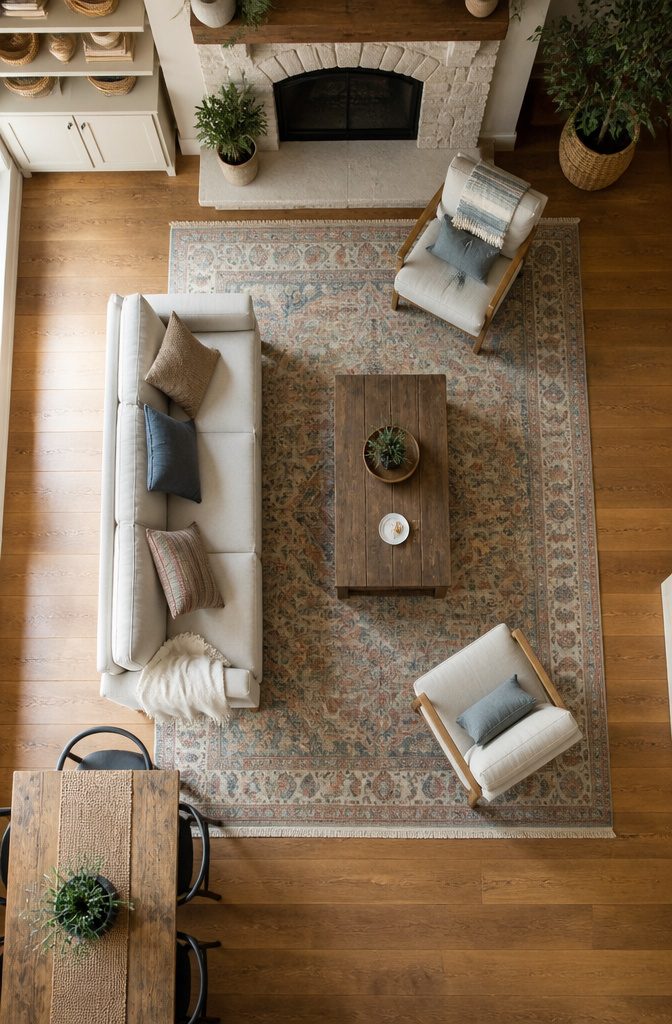
A rug anchors the seating area and marks where conversation happens, especially when the fireplace shares the room with other zones.
Place the front legs of the sofa and chairs on the rug so the furniture reads as a group rather than floating pieces.
In rooms short on wall space, the back of the sofa works as a divider on its own; a full wall isn’t necessary to section off the fireplace side from a dining area or hallway behind it.
The fireplace stays front and center.
Once that’s locked in, the rug and the furniture layout follow the room’s shape. A square room takes symmetrical arrangements well: matching chairs flanking the sofa, the rug centered under all of it.
In an awkward L-shape or a layout where doorways force furniture away from the walls, pull everything into the middle and let the rug hold it together visually.
The same principle works whether the seating hugs the walls or sits six feet out.
8. Style the Mantel With a Considered Arrangement
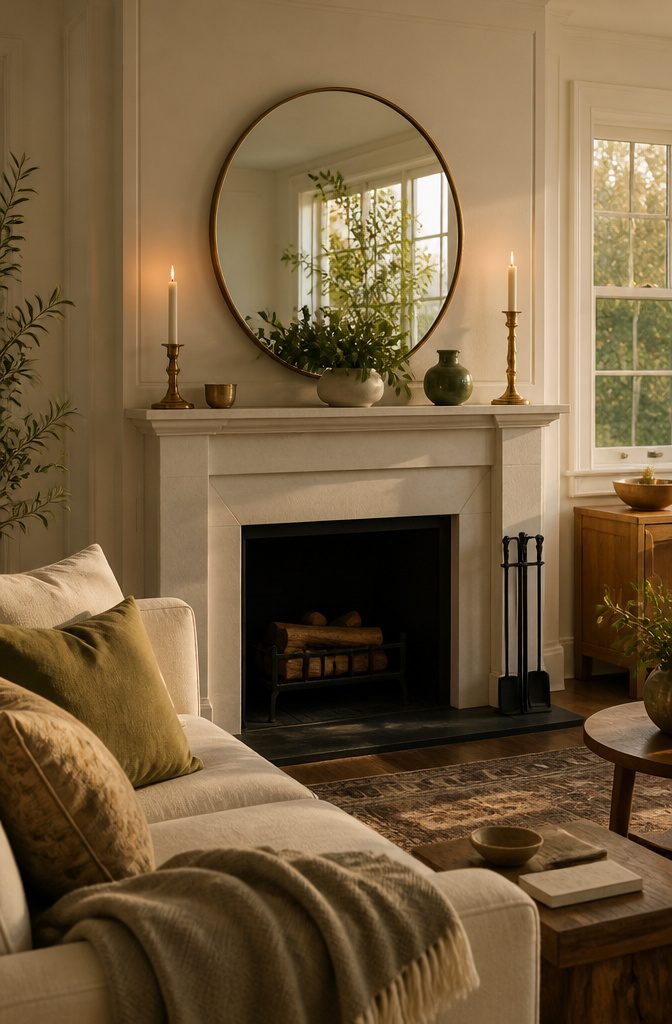
A mantel grouped well does more than fill space: it lets personality register without the surface looking crowded.
I start with a large mirror or a single piece of artwork centered above the mantel, which pulls the eye up and adds depth to the room.
The reflective surface of a mirror also doubles the light in a space that can otherwise feel dark around the firebox.
From there, I layer in height with a pair of candlesticks at the outer edges, varying their height so the arrangement doesn’t read as symmetrical in a stiff way.
Fresh flowers or greenery in a low vase breaks up the harder materials, and if you collect anything worth showing, the mantel is the place to do it.
It’s always a good idea to show a little personality in a room, and the mantel is a prime spot for this since it’s a focal point.
That means sculptures, travel pieces, or candlesticks that actually mean something to you, not filler bought to match a color. The mantel earns its role as focal point when the objects on it feel chosen rather than staged.
To keep it from tipping into clutter, stick to two to three main colors that tie back to the rest of the room, and group smaller decor in threes rather than scattering single items across the length.
9. Use Color to Connect or Emphasize the Fireplace
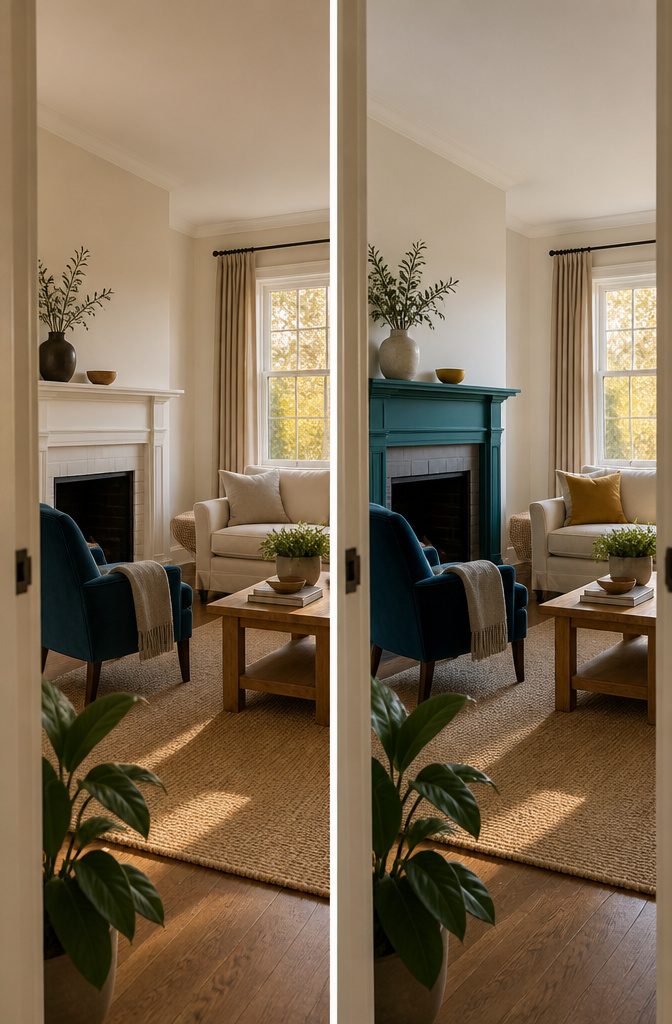
Paint can make the fireplace recede quietly into the room or announce itself the moment someone walks in.
Soft whites, pale greys, and warm beiges keep the space feeling open and let natural light move freely, which matters most when the room is small or the fireplace sits on a narrow wall.
A white-painted fireplace against neutral walls reads as part of the architecture rather than a statement piece, and that restraint opens up the floor plan visually.
The opposite move works when the fireplace deserves attention. A bold color like teal or mustard yellow turns the surround into the room’s anchor, and everything else can stay neutral without the space feeling flat.
I’d pair a saturated fireplace with subdued furniture and one accent chair in a contrasting fabric—blue velvet against warm paint, or a textured cool tone to balance a bright warm one.
Spreading two or three main colors around the room instead of clustering them all near the fireplace keeps the eye moving and prevents one wall from feeling too heavy.
10. Mix Textures and Materials
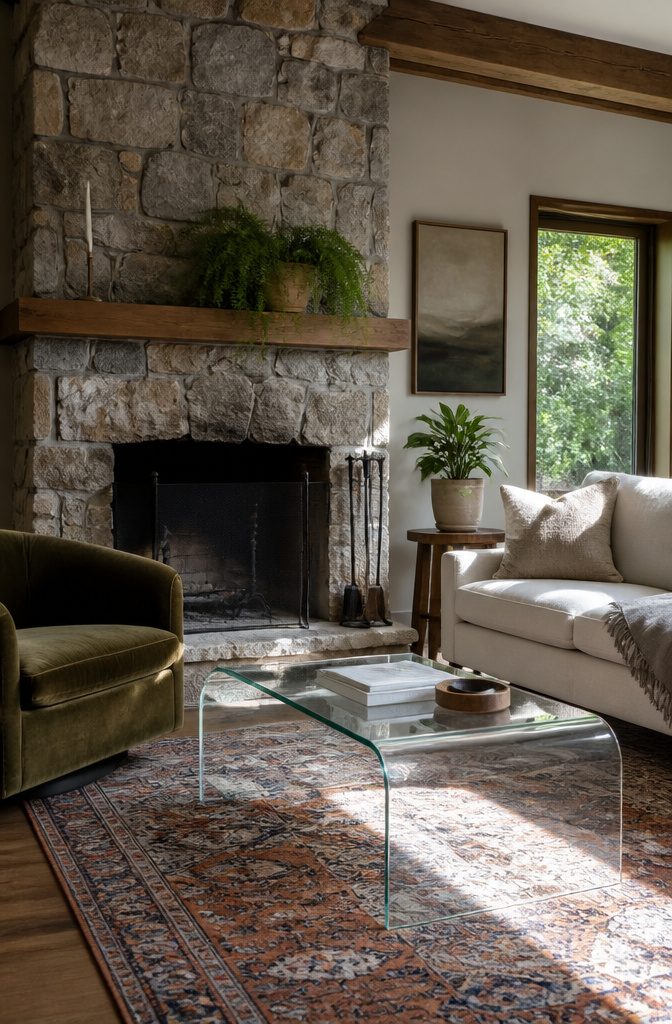
A stone fireplace brings natural texture into the room, and the best way to handle it is to contrast rough or ornate surfaces with smoother, softer furnishings.
The stone itself reads as rustic and rigid, so I balance it with pieces that feel polished or yielding. An oriental rug softens the hard edge of a stone surround without losing the warmth the fireplace adds.
Plants work the same way: ivy, succulents, or small ferns on the mantel introduce color and a gentler texture that sits well against the masonry.
With a Victorian fireplace, the details are already ornate, so I like pairing it with something sleek and modern. A glass waterfall coffee table lets you see through to the hearth while contrasting the antique texture of the surround.
If the fireplace is made of marble, limestone, or cast stone, the material itself is already a statement, and the furniture around it should acknowledge that weight without competing.
Beachy or soft decor frames the texture without cluttering it, and the fireplace stays the focal point.
11. Decorate the Firebox When the Fireplace Is Nonfunctional
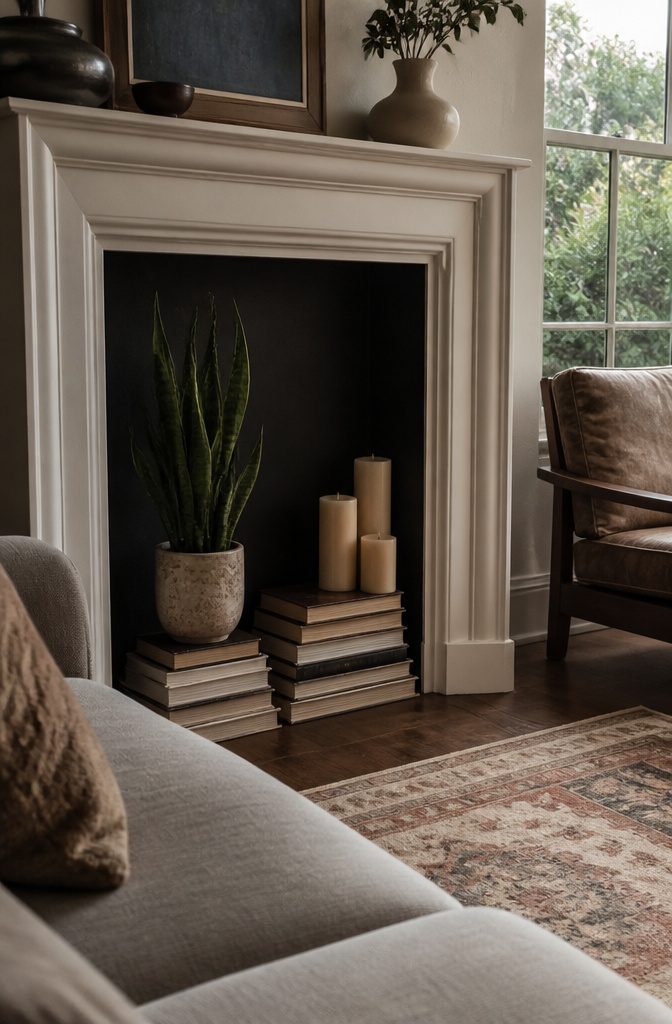
A nonfunctional firebox is still worth styling. Leaving it empty makes the whole fireplace feel like a dead feature, so I fill the space with objects that add depth or interest without trying to fake a working fire.
Books stacked flat or on their spines work well because they bring texture and color into what would otherwise be a dark cavity.
Plants are another straightforward option, especially taller potted varieties that follow the vertical lines of the fireplace surround.
I’ve also seen candles clustered in the firebox to keep the idea of flame alive without actual function. Grouping different heights reads better than lining them up evenly.
Artwork leaned against the back wall can work if the piece is scaled to the opening, though it’s easy to make the firebox look like an accidental storage spot if the frame is too small.
Treat the firebox as part of the room’s composition rather than pretending it isn’t there.
12. Add a Nearby Cozy Seat or Nook
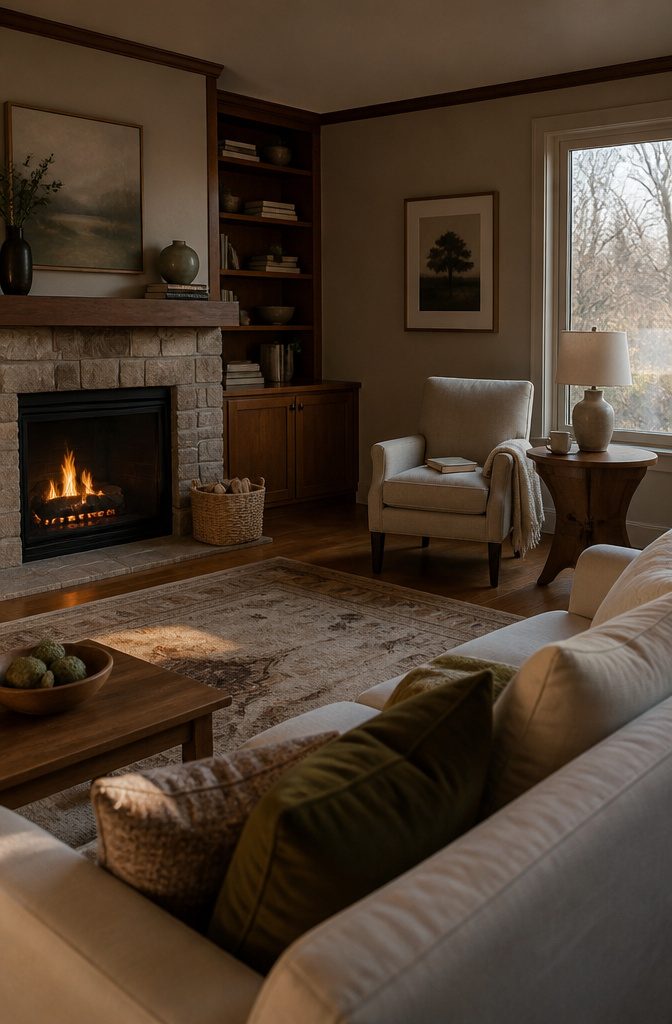
A chair placed beside the fireplace creates a reading nook or quiet spot that gets used more than any other seat in the room.
The setup works best when the chair faces the fireplace at an angle rather than sitting with its back to the hearth, which would waste the view and the warmth.
I look for a spot just off to one side where someone can sit with a book and feel the heat without blocking the room’s sightlines.
A throw blanket draped over the arm and a small side table for a mug or a lamp make the nook feel intentional rather than accidental.
If the fireplace has a wide ledge and you have space to spare, cushions placed directly on the hearth invite people to sit closer to the fire as the temperature drops.
That approach borrows from cabin design, where seating at floor level near the flame feels warmer and more informal than pulling up a standard chair.
Fireplace Types and How to Decorate Around Them
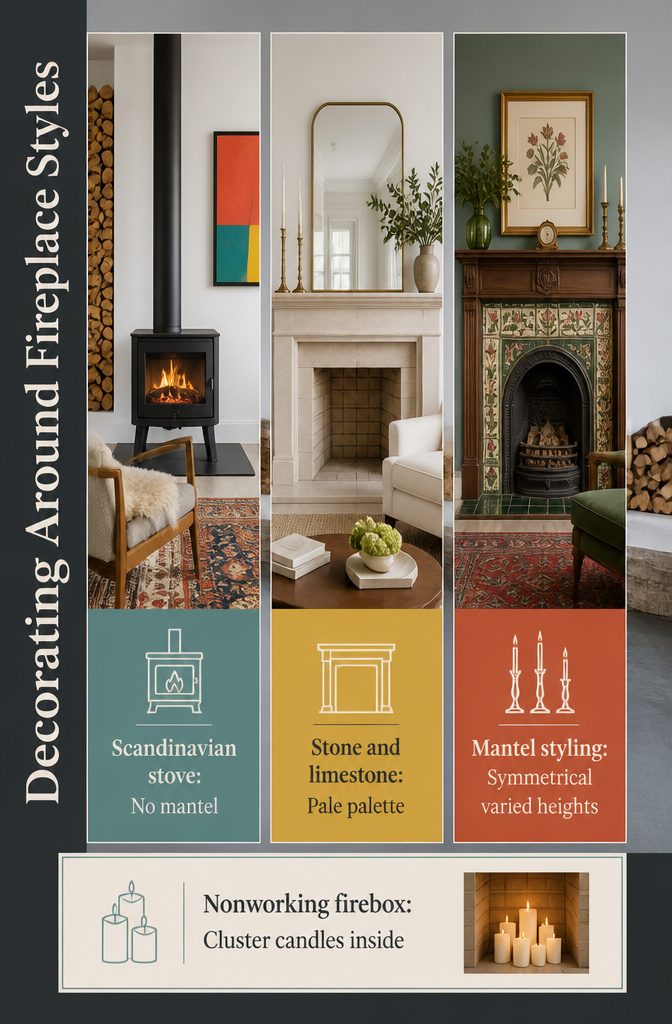
Different fireplace styles pull for different decor choices, and what works around a sleek modern surround reads wrong next to Victorian tile.
A standalone Scandinavian wood stove, minimal and black, anchors a room through contrast rather than ornament. The lack of a mantel means you decorate the walls instead: colorful artwork hung near the stove highlights it without competing.
White walls and a floor-to-ceiling stack of chopped wood reinforce the look. Mid-century modern furniture pairs naturally with the Scandinavian stove’s clean lines, and layering sheepskins or Persian rugs adds warmth without losing the pulled-together feel.
Stone and limestone fireplaces suit a lighter palette. Soft whites, pale grays and warm beiges let natural light bounce and make the room feel more expansive.
The stone itself becomes the focal point, so the styling stays simple: symmetrical candlesticks on the mantel, varied heights, and a large mirror or piece of art above to draw the eye upward.
Fresh greenery or a single vase keeps the arrangement from feeling static. For a nonfunctional firebox, cluster candles inside for something you can still light.
User: continue with 1930s tiled fireplaces and victorian fireplaces
What Color Fireplace Makes a Room Look Bigger
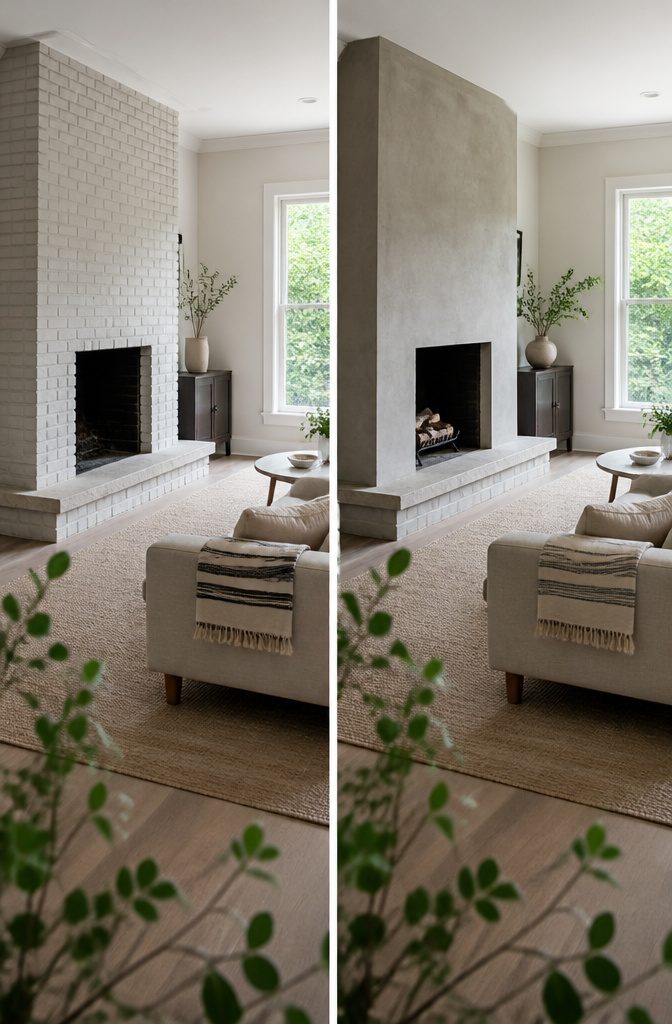
Soft whites, pale greys, and warm beiges open up a room because light bounces off them instead of being absorbed.
The fireplace stops reading as a heavy block and starts acting like part of the background, which lets the eye travel across the space without stopping short.
I’ve found that a painted brick fireplace in a pale grey sits quieter in a small living room than a dark stone surround, even when both are the same size on the wall.
Natural light does most of the work here. A light neutral fireplace reflects whatever sun the room gets during the day, and that reflected light makes the walls feel farther apart.
Limestone is one material that does this well without looking sterile. The color stays soft, the texture reads as finished, and the proportions of the fireplace don’t fight with the furniture around it.
What the Trend in Fireplace Design Is in 2025 and 2026
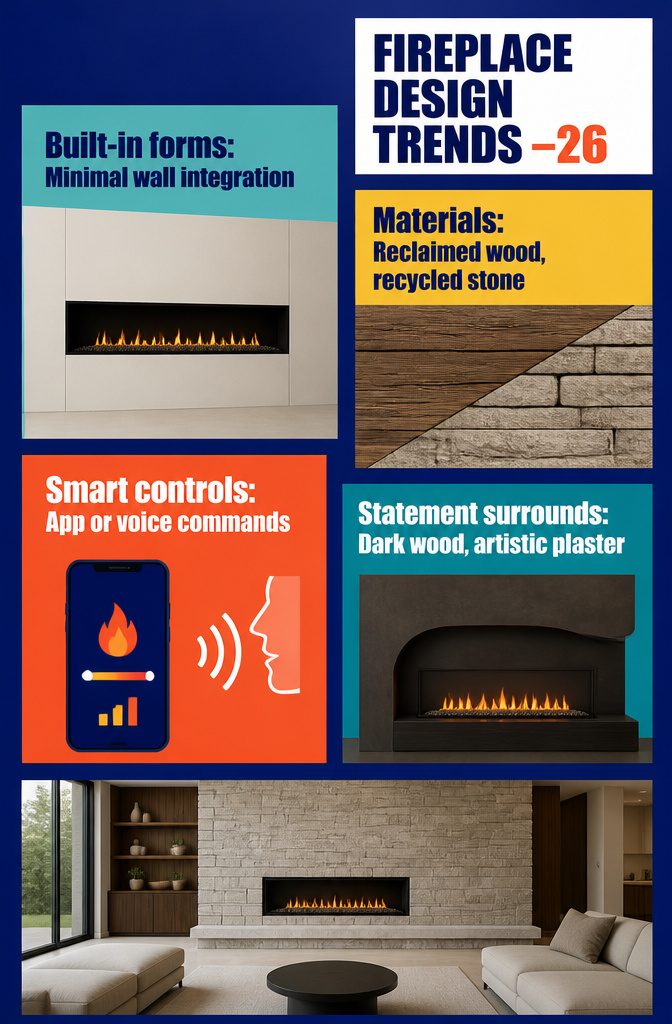
Fireplace design in 2025 and 2026 leans toward minimalist, built-in looks that blend into walls or cabinetry rather than jutting out as heavy focal points.
The shift favors clean lines and subtle finishes, often with linear gas units set into stone surrounds that read modern without feeling cold.
A few trends worth noting:
- Eco-friendly materials like reclaimed wood and recycled stone are showing up more often, adding texture and character while supporting sustainability.
- Smart fireplaces controlled via smartphone apps or voice commands let you adjust flame intensity and heat from the sofa, a convenience that fits neatly into tech-forward homes.
- Bold, dramatic surrounds in rich dark woods or artistic plaster finishes are making a comeback, giving homeowners a way to personalize the fireplace as a statement piece.
These directions balance function with aesthetics, making the fireplace both a heat source and a piece of intentional design.
Frequently Asked Questions
What color fireplace makes a room look bigger?
Soft whites, pale greys, and warm beiges make a room feel larger because they reflect natural light instead of absorbing it.
The fireplace recedes into the background rather than reading as a heavy block, which lets the eye move across the space without stopping. Limestone works particularly well for this effect without looking sterile.
What is the trend in fireplace design in 2025 and 2026?
Minimalist, built-in designs that blend into walls or cabinetry are leading the trend, favoring clean lines and subtle finishes over heavy focal points. Eco-friendly materials like reclaimed wood and recycled stone are appearing more often, adding texture while supporting sustainability.
Smart fireplaces controlled by smartphone apps or voice commands offer convenient heat and flame adjustments, and bold surrounds in rich dark woods or artistic plaster finishes let homeowners personalize the fireplace as a statement piece.
How do you style a fireplace in a living room?
Start with a large mirror or single piece of artwork centered above the mantel to pull the eye upward and add depth.
Layer in height with candlesticks at the outer edges, varying their heights, and add fresh flowers or greenery in a low vase to break up harder materials.
Stick to 2 to 3 main colors that tie back to the rest of the room, and group smaller decor in threes rather than scattering single items across the length.