
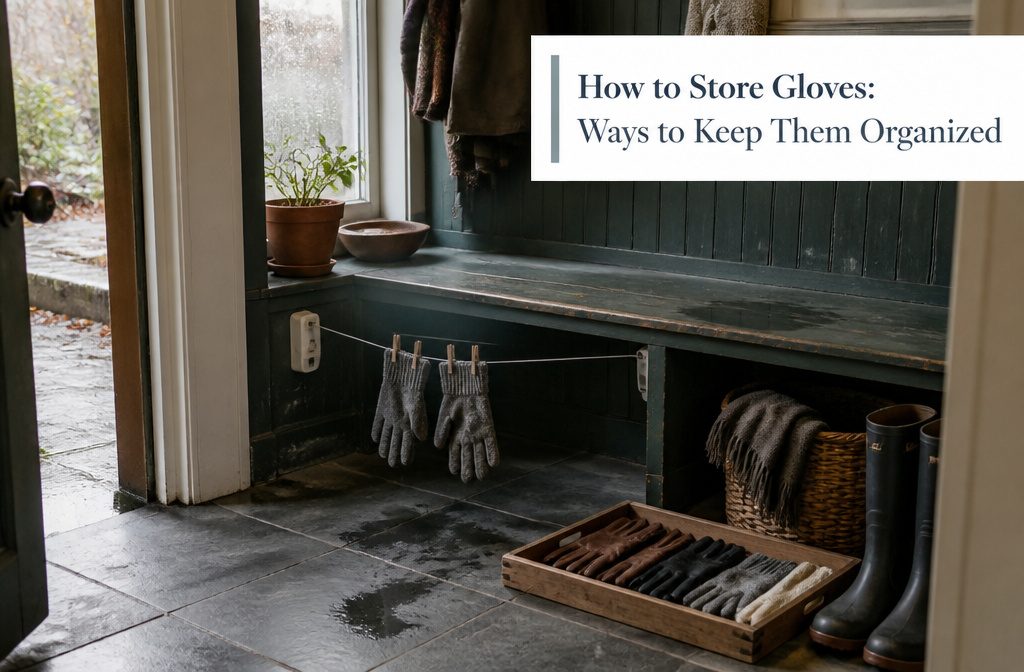
Gloves stay organized when they have one consistent spot and dry completely before going in. Most people skip the drying step and end up with mildewed fabric or a smell that won’t leave.
A retractable clothesline like the Mrrainbow at $13.99 gives you drying space when gloves come in wet, then disappears so the system doesn’t take over your entryway.
1. Use Bins, Baskets, or Drawers
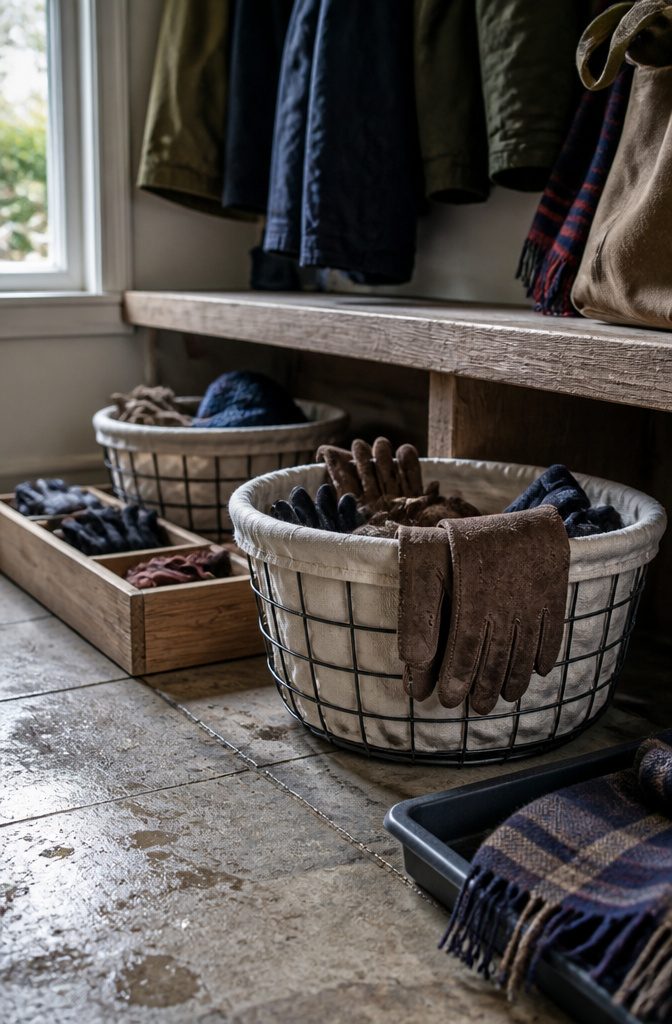
Bins, baskets, and drawers keep gloves from scattering across the mudroom or bedroom closet. I like wire laundry baskets that are wider than they are tall, because it’s easier to spot a single glove at a glance.
Kierste Wade slides a pair of lined wire baskets under a bench in her mudroom, one for hats and one for gloves, and the liner hides the mess while staying machine washable. A similar basket runs about $19.98.
Canvas storage bins work when you want open access. You can toss gloves in without opening a lid, and the whole thing lives on a shelf or under the bed.
For families or shared spaces, drawer dividers separate gloves by person or type without needing separate containers. Just make sure anything going into a drawer or bin is completely dry first, or mildew shows up fast.
2. Use Hanging or Over-the-Door Organizers
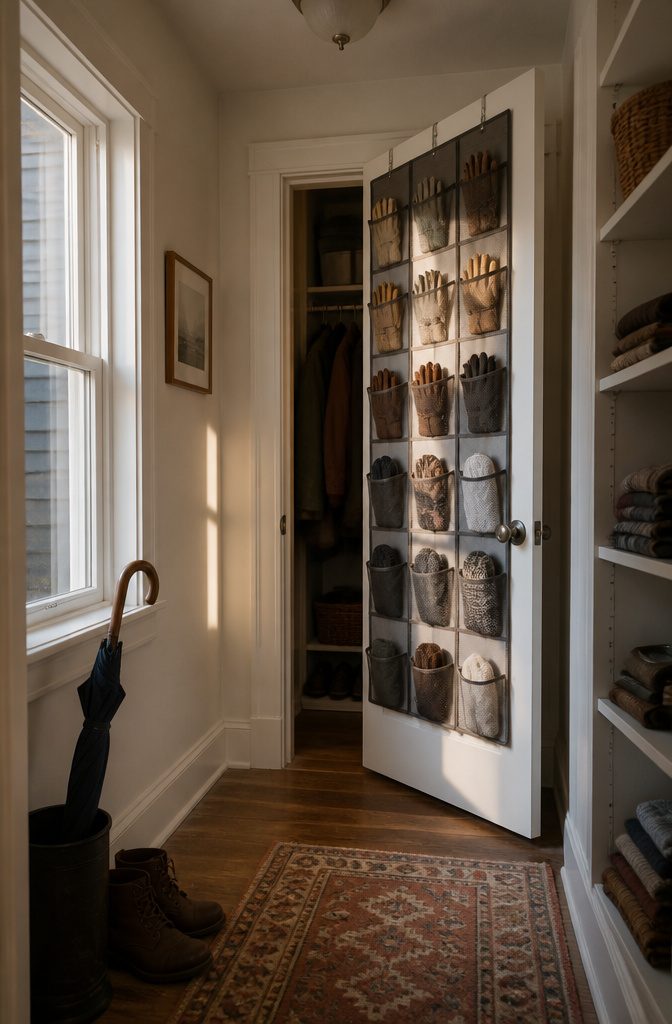
A hanging organizer over the door or mounted on the wall grabs vertical space that would otherwise sit empty, and the pockets keep every pair visible instead of tangled at the bottom of a bin.
The MISSLO 28 Large Pockets Hanging Shoe Organizer costs $12.99 and gives you at least 28 compartments, enough to sort gloves by person or by use without running out of slots.
If you want something sturdier, the Spacehacks organizer holds 40 pounds and comes in five colors, though the mesh construction on both makes it easy to spot what you need without opening anything.
I’d put work gloves near the top if you grab them daily and winter gloves lower down where seasonal items can sit until the temperature drops.
The door mount keeps floor space open, which matters in a narrow closet or entryway where a basket on the ground becomes a trip point.
3. Hang Gloves on a Line, Rod, or Hooks
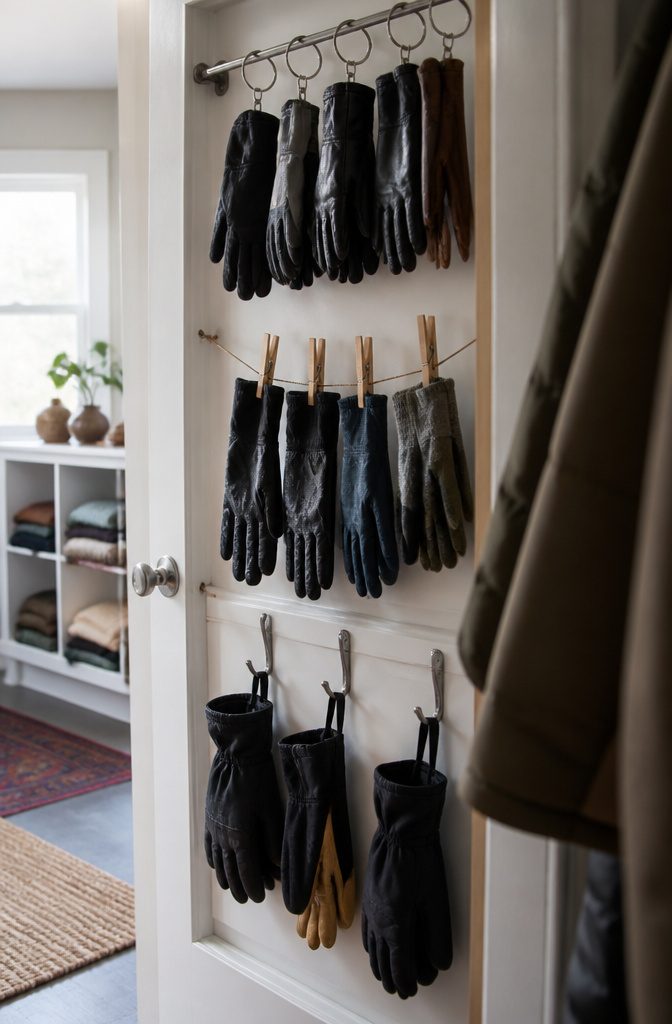
A tension rod across the inside of a coat closet door holds gloves on shower curtain rings or S-hooks, and the setup uses space that would otherwise sit empty.
I hang each pair from one ring clipped through both cuffs, which keeps them together and lets air move through damp fabric.
A small metal curtain rod screwed into the door frame works the same way, or you can skip the mounting and hang a tension rod from a double-prong wall hook if the door cannot take hardware.
The rings slide along the rod, so access stays quick even when you add scarves or hats to the same line.
For gloves that come off wet, a retractable clothesline gives you drying space when you need it and disappears when you do not.
The Mrrainbow Retractable Clothesline runs $13.99 and mounts inside a closet or behind an entry door, and clothespins hold individual gloves without taking up drawer room.
The Homz drying rack adds 11.5 feet of drying space over the door and handles multiple pairs at once.
Command Large Utility Hooks at $10.99 go straight on the wall, spaced 10 to 12 inches apart, and each hook holds one pair by the cuff.
4. Keep Gloves With the Coat They Go With
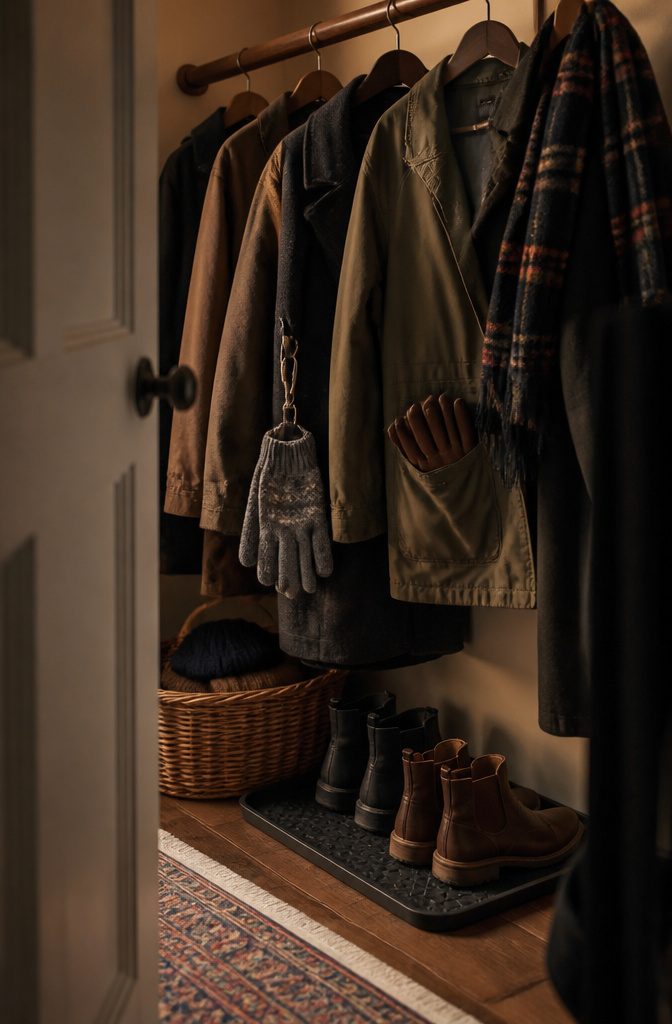
Keeping gloves in coat pockets or clipped to the sleeve means everything you need walks out the door together.
No hunting through bins when you’re already running late, and the coat you grab is the one with the right weight of glove already attached.
I use this for winter gloves that pair with a heavy wool coat and lighter driving gloves that live in a spring jacket.
Clipping gloves to the coat sleeve with a mitten clip keeps pairs together while letting damp gloves air out between wears.
The clip holds them secure without forcing them into a closed pocket where moisture lingers. Pockets work fine for dry gloves or leather that doesn’t hold water, but anything that came in from snow or rain needs open air.
Clipped gloves hang in plain sight, which looks fine on kids’ gear and less tidy on adult coats in a front closet guests can see.
5. Sort Gloves by Person, Category, Color, or Size
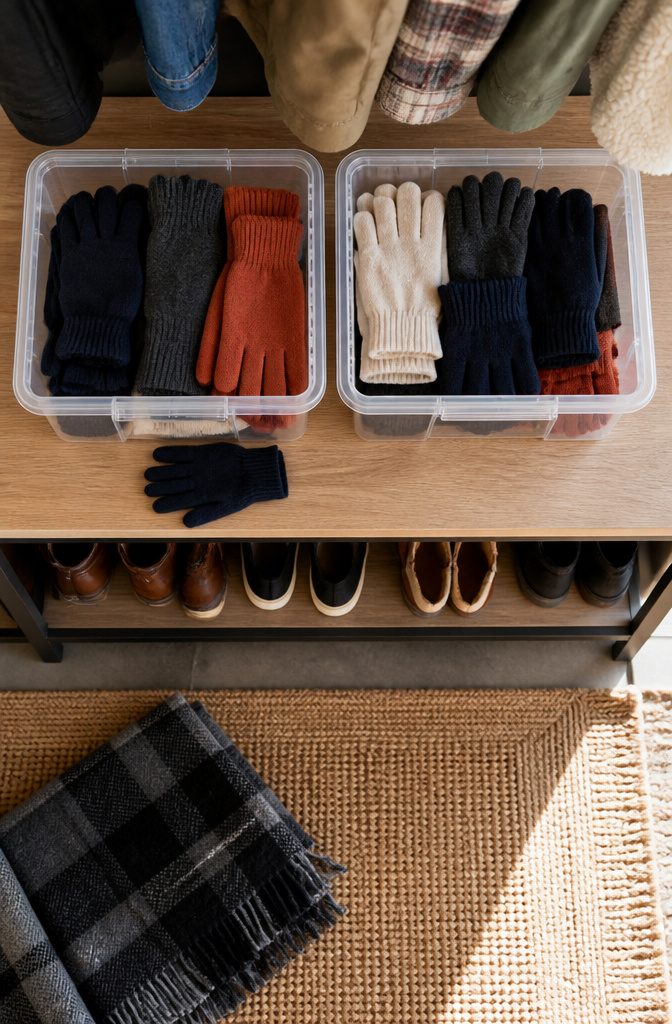
Once gloves are in baskets, bins or drawers, sorting them by person, size or color makes the one you need easier to find.
A family of six ranging from age 3 to over 40 can get by with two clear rectangular bins with lids, presumably sorted by person or by size so each member knows which bin to check.
Assigning each person a basket or bin keeps items separate, and you can use color-coded baskets or labels with names for quick identification.
Color-coding the gloves themselves is another option if you want to match an outfit without digging through a mixed pile.
I find sorting by person works best when storage space is tight, because one bin per family member avoids the need for separate categories.
Sorting by color only makes sense if you own enough pairs in varied shades to warrant grouping them that way.
6. Dry Gloves Before Storing
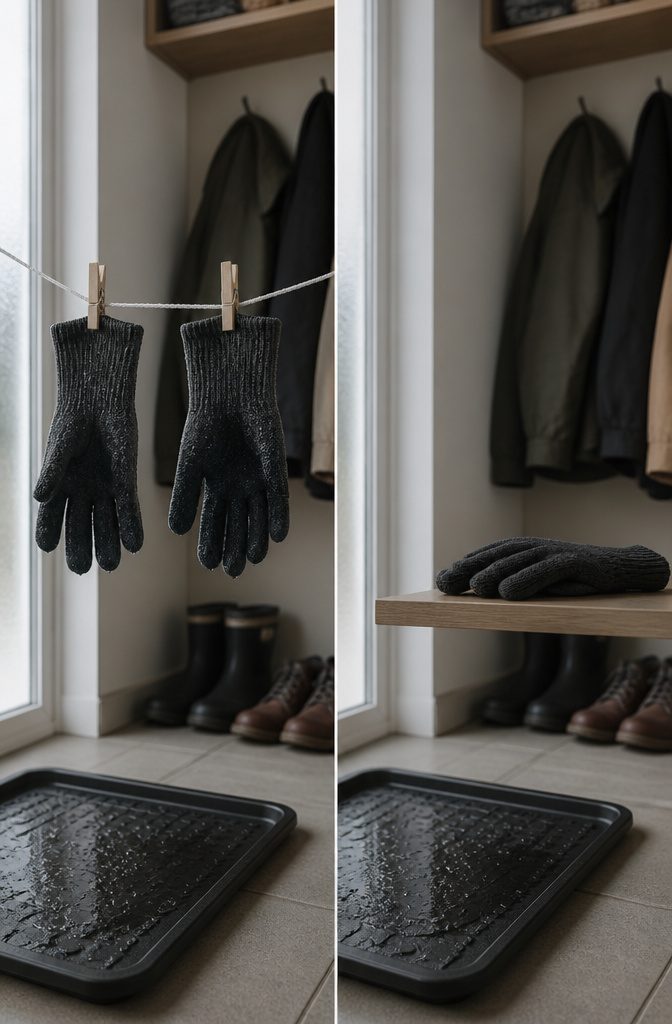
Wet gloves belong nowhere near a drawer or closed container. Storing them damp invites mildew, which ruins the fabric and leaves a smell that won’t shake.
I always air-dry gloves completely before putting them away, even if that means they sit out an extra day. For winter gloves that come in soaked from snow, hanging works better than flat drying because air reaches all sides.
A simple clothesline near the entry does the job: pin the gloves by the cuff and let them hang until they’re fully dry to the touch. If you use bins or baskets, the same rule applies.
Damp gear needs ventilation first, storage second. Skipping this step is the fastest way to wreck a good pair of gloves.
7. Store Gloves for the Off-Season
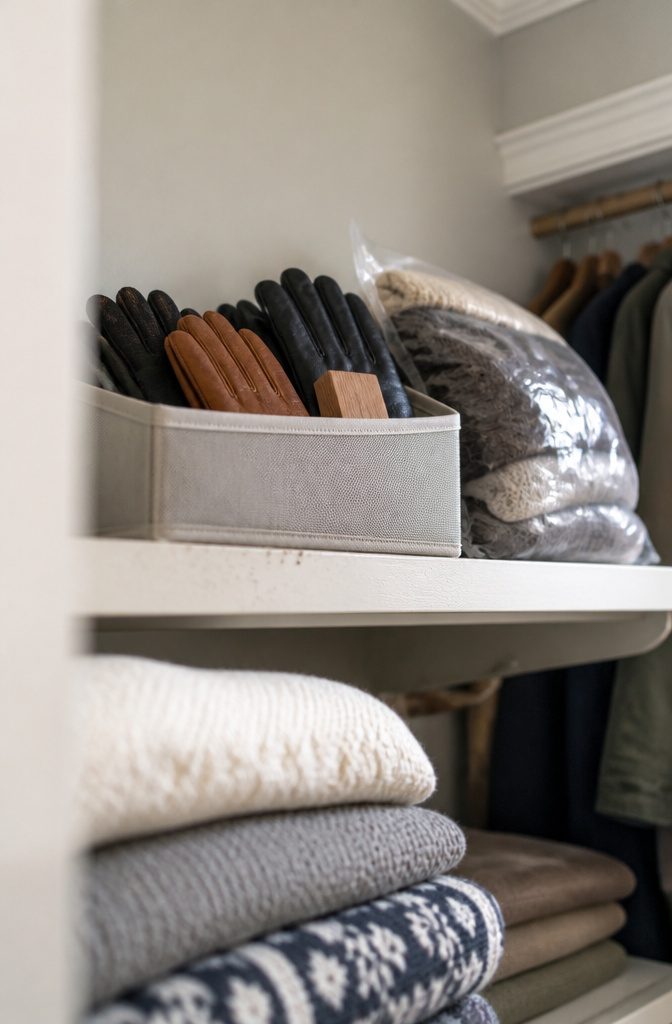
When winter ends, pack gloves in labeled bins or vacuum-sealed bags and move them somewhere out of the way. A high closet shelf, under the bed, or the back of a storage closet all work.
This frees up the accessible spots for whatever you need next. I rotate seasonal gear this way every year, and it keeps the entry closet from turning into a pile of things I won’t touch for six months.
Before anything goes into storage, make sure gloves are clean and completely dry.
Vacuum-sealed bags work well for soft items like fleece or knit gloves, and you can tuck a scented sachet inside to keep them fresh. For leather or lined gloves, skip the vacuum seal and use a breathable bin instead.
A sachet of cedar, cinnamon, or lavender acts as a moth repellent, which matters if you’re storing natural fibers for months at a stretch. Label every bin or bag with what’s inside so you’re not guessing next fall.
Give Gloves a Consistent Home
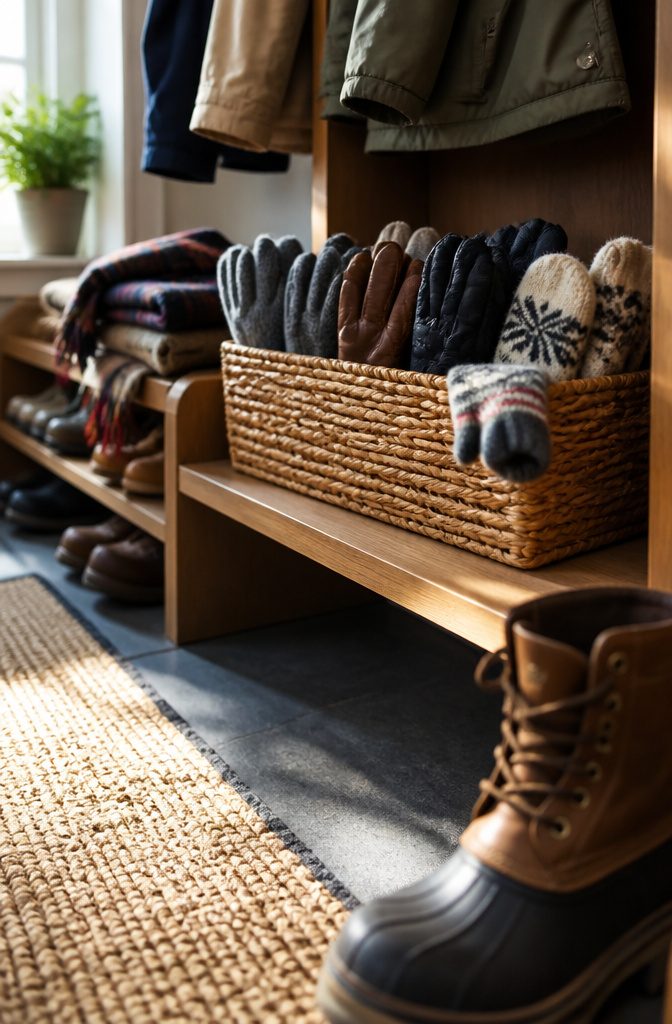
Gloves disappear because they drift. Without a single spot that always holds them, one goes in a coat pocket, the other ends up on a shelf, and retrieval turns into a scavenger hunt the next time you need them.
Kids toss gloves wherever they land, and adults aren’t much better when tired or in a hurry.
The fix is simple: designate one place, make it visible, and use it every time. Open baskets work well for this, because you can see what’s inside and toss items back in without thinking.
Filing gloves in a neat pile keeps the most-used pairs on top and makes the system stick. A consistent home solves two problems at once: gloves stay together, and you stop wasting time searching for them.
Choose Storage That Fits the Space
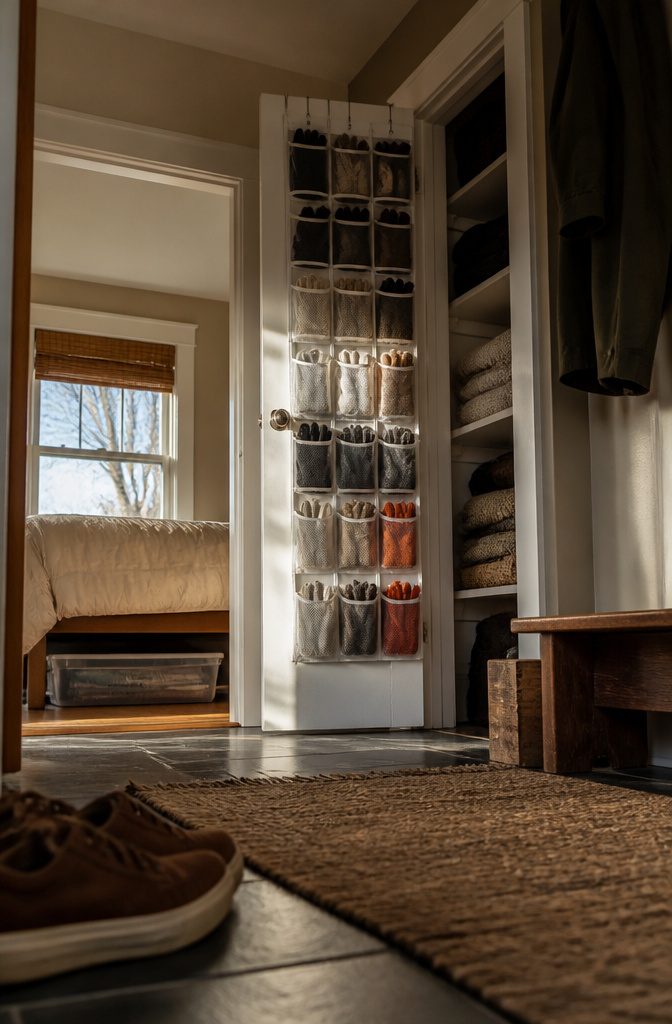
The right storage depends on where you actually have space to put it.
An over-the-door organizer makes immediate use of vertical space if you have a closet or entryway door that opens inward, and most of the mesh or pocket versions hold up to 40 pounds without hardware.
One option with 24 large pockets can double as shoe storage, and another uses detachable baskets that work separately when you need them elsewhere.
Wall-mounted baskets are the better pick if your door swings into traffic or you want gloves visible instead of tucked behind something. They mount with adhesive or screws, so they work for renters who can’t drill and homeowners who can.
If you don’t have wall or door space to spare, a flat storage bin under the bed keeps winter gear out of the way until cold weather returns.
Label the bin and choose a water-resistant version if you’re storing it in a damp basement or garage.
A retractable clothesline inside a closet works when you need immediate drying and retrieval space but don’t want a permanent fixture taking up room year-round.
Frequently Asked Questions
How do you organize gloves and hats?
Use bins, baskets, or drawers to keep hats and gloves separate and easy to find.
Sort by person or category so each family member knows which container to check. Wire baskets that are wider than tall work well because you can spot individual items at a glance without digging through a pile.
What is the best way to store winter gloves?
Store winter gloves in open baskets, over-the-door organizers, or on a tension rod with shower curtain rings so they stay visible and accessible.
Make sure gloves are completely dry before putting them away, or mildew will develop. For off-season storage, pack them in labeled bins or vacuum-sealed bags and move them to a high shelf or under the bed.
How do you keep gloves from getting lost?
Give gloves a consistent home in one visible spot, like an open basket or over-the-door organizer, and use it every time.
Clip pairs together with mitten clips or hang them from shower curtain rings on a tension rod so they stay matched. Keeping gloves in the coat pocket they go with means everything walks out the door together.
Should you store gloves in drawers?
Drawers work well for gloves as long as you use dividers to separate pairs by person or type.
Make sure gloves are completely dry before putting them in a drawer, or mildew shows up fast. Open bins or baskets on a shelf give quicker access if you grab gloves daily.