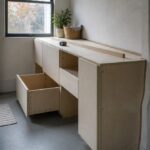
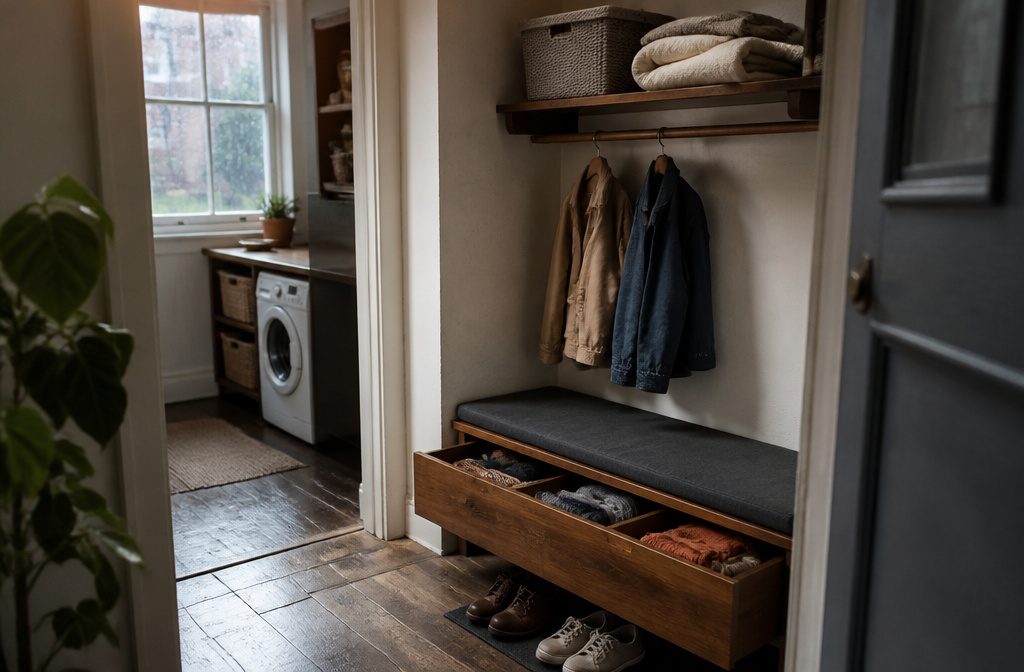
A small apartment stays organized when you use vertical space, rotate what you keep seasonally, and assign each item one fixed location.
Most setups fail because people organize prime storage first and leave seasonal items in daily-reach drawers, so winter coats take the space where everyday clothes should go.
A storage bed runs $500 to $3,200 depending on whether the frame seals dust out, and floating shelves start at $30 for two feet.
1. Declutter and Limit What You Keep
I start organizing a small apartment by clearing out what I don’t use, because storage solutions only work when there’s less to store in the first place.
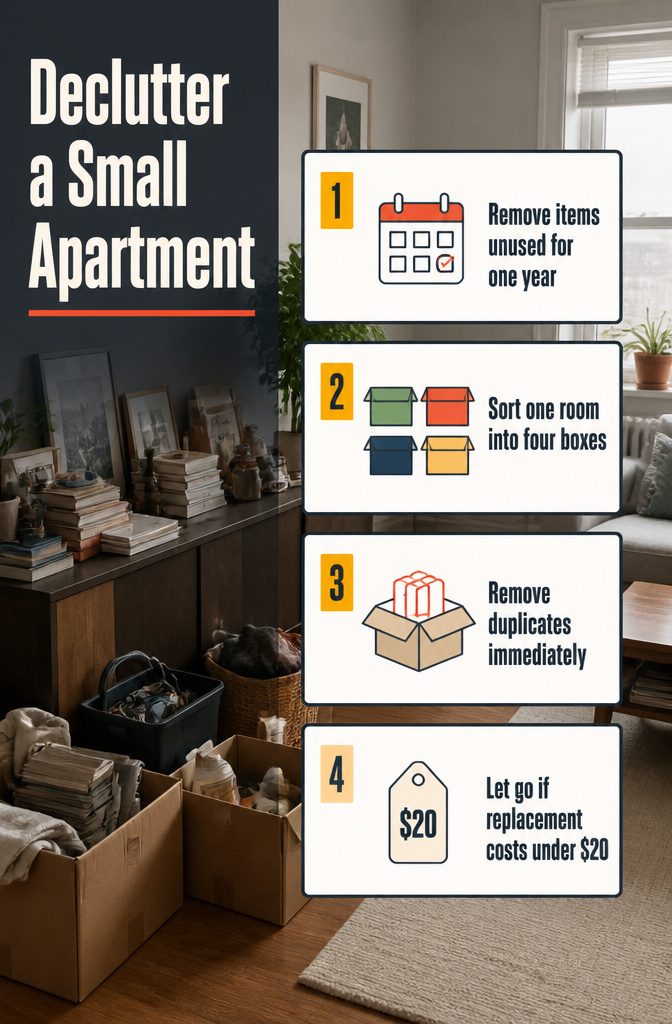
The one-year rule keeps this honest: if I haven’t touched something in a year, it leaves unless I have a documented reason to keep it.
That cuts through the fantasy version of my life where I suddenly take up rock climbing or host eight-person dinners.
The four-box system makes the physical work faster. I label four boxes—keep, donate, trash, relocate—and sort one room at a time without backtracking.
Duplicates go immediately: three wooden spoons when I use one, four half-empty bottles of the same cleaner, backup phone chargers that don’t fit anything I own.
For the things I keep "just in case," I ask whether replacing it would cost under twenty dollars.
If yes, and I haven’t needed it in months, it goes. I can always buy another garlic press if the moment ever comes, and twenty dollars is cheaper than the cabinet space it’s borrowing.
2. Use Vertical Space on Walls and Above Furniture
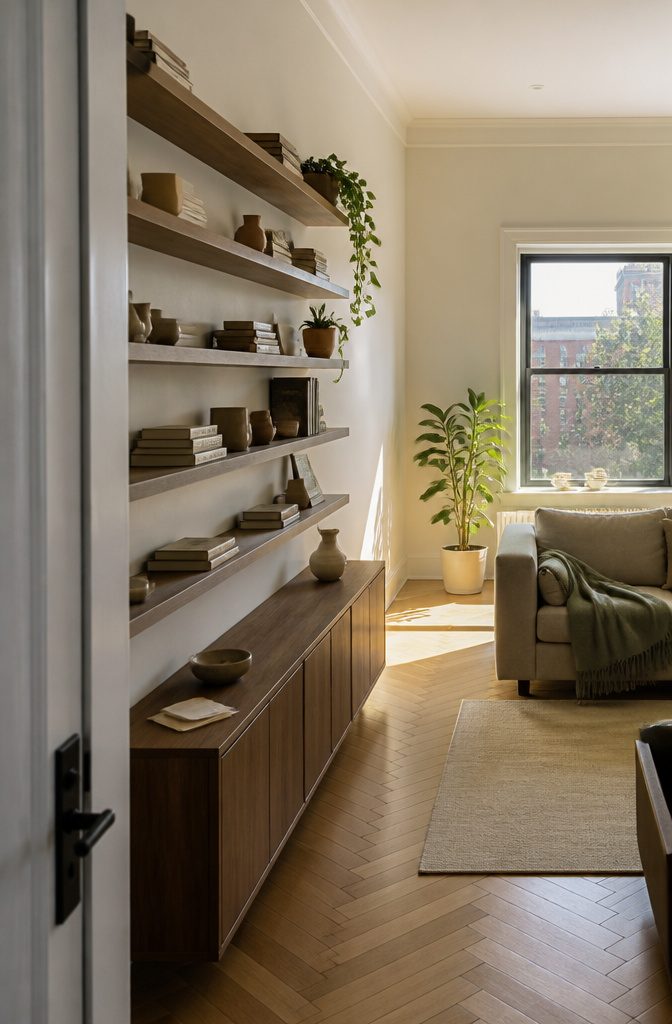
Shelves and hooks reclaim the space above eye level without eating into floor area, and floating shelves start at $30 for two feet from CB2 or West Elm.
The CB2 option sits 4.25 inches deep, narrow enough to hold keys or mail near an entry without jutting into circulation.
Brackets alone run $15–$30, so you can pair them with a cut plank from the hardware store if you want to control the finish or match existing trim.
Pegboards work in tight kitchens to hang utensils and pots where cabinet space is scarce.
Wall-mounted racks keep towels off bathroom counters, and hooks handle coats, hats, or bags the moment you walk in. The space above cabinets holds infrequently used items in baskets or clear bins, keeping them accessible but off the working surface.
I prefer floating shelves in a living room for books and small decor, since they pull the eye up and make the ceiling feel higher without the visual weight of a wide, squat bookcase.
3. Choose Multifunctional Furniture
Choose Multifunctional Furniture
A storage bed cuts the need for a dresser outright.
The Nest storage bed at $3,200 keeps dust off what you stash underneath, since the mattress seals the storage compartment, and that setup works particularly well when you swap heavy winter clothes for summer or need somewhere to tuck kids’ toys between seasons.
Less expensive options with open drawers underneath run closer to $500 and still free up a surprising amount of floor space.
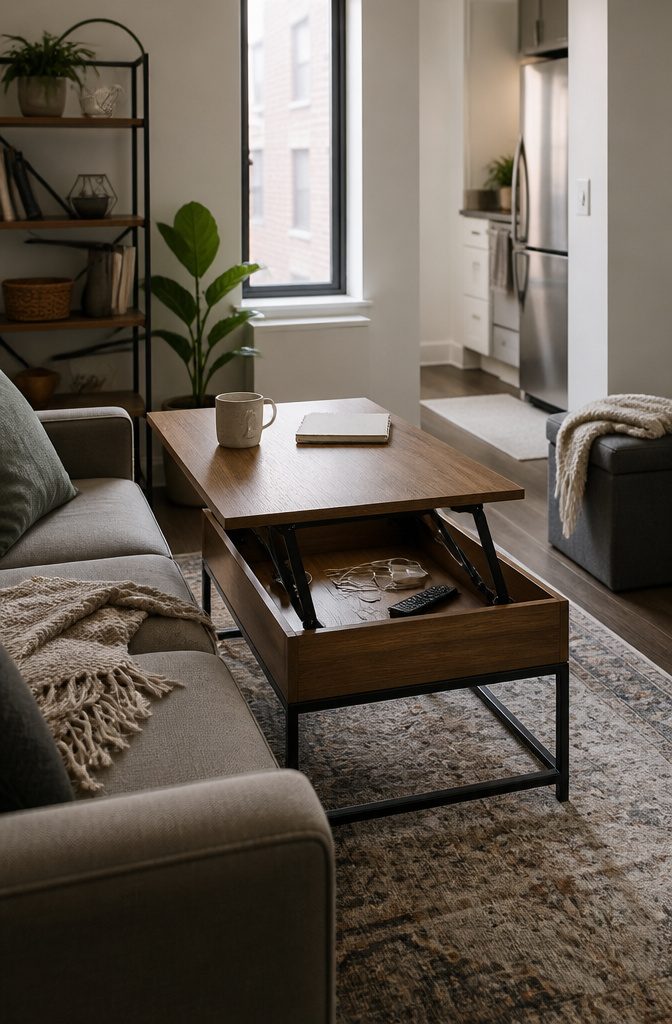
In the living room, a lift-top coffee table does triple duty as a work surface, a dining spot and hidden storage for remotes and charging cables. The toy-chest coffee table at $79.99 lands at the budget end of that category.
Storage ottomans handle seating, a footrest and a place to stash blankets without adding a separate side table. Benches with built-in compartments work the same way near an entryway or at the foot of a bed.
Folding furniture and Murphy beds disappear when you need the floor back, though most require at least some custom work to install cleanly.
4. Store Items in Overlooked Spaces
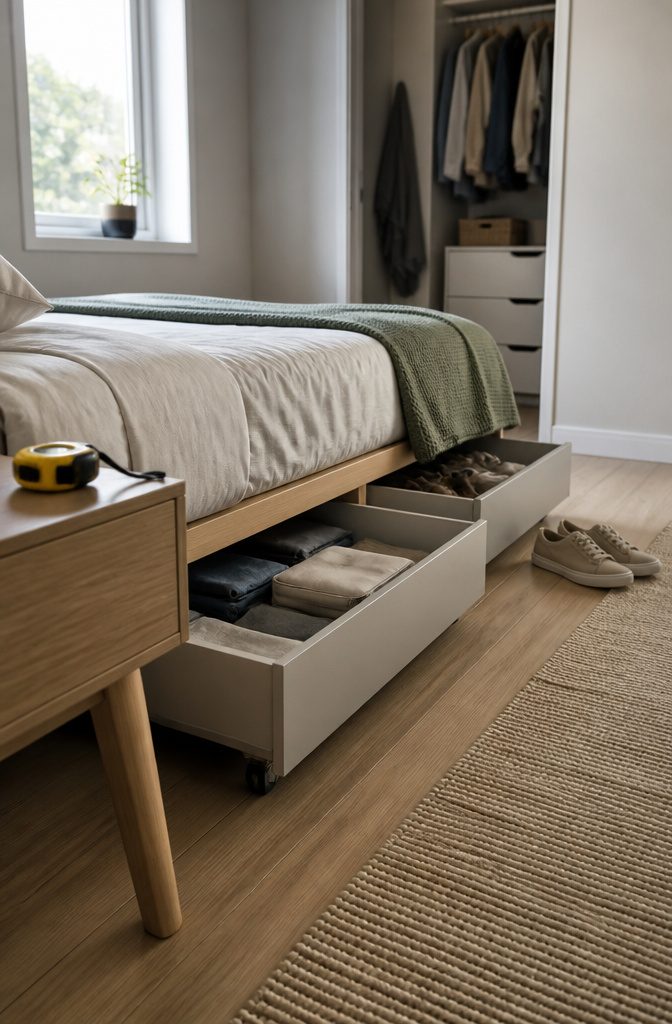
The space under the bed holds more than most people expect, especially when you measure first.
A typical bed frame leaves anywhere from 6 to 12 inches of clearance, and that range decides whether you can fit rolling bins, shallow drawers, or nothing at all.
I start with a tape measure before I buy anything, because a drawer advertised as low-profile still won’t slide under a platform bed that sits 5 inches off the floor.
Under-bed drawers work well for clothes, shoes, and seasonal items that rotate in and out a few times a year.
Wayfair sells under-bed drawers around $110, and IKEA’s Malm under-bed storage boxes come as a two-pack, which keeps the cost lower if you need to outfit more than one room.
Both options roll, so you’re not dragging weight across the floor every time you need a winter coat in October.
Beyond the bed, I look at the tops of cabinets, the backs of doors, and any corner that doesn’t already hold furniture. These spots rarely get attention, but they add up faster than a single closet organizer ever will.
5. Organize Cabinet and Kitchen Storage
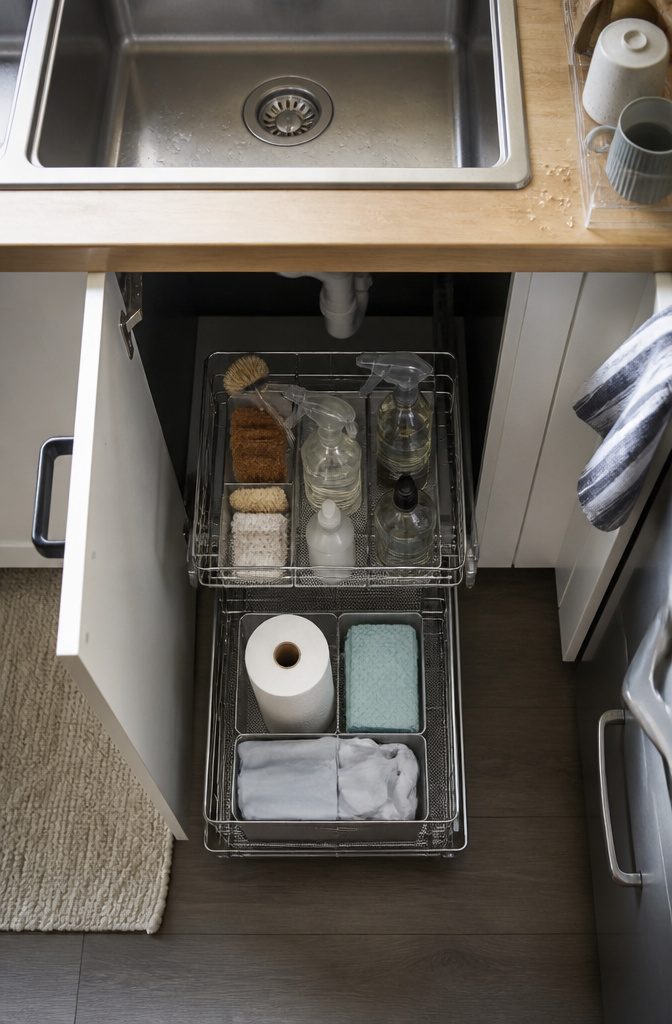
Cabinet organizers turn wasted depth into working storage, and the difference shows most in kitchens where every drawer and shelf has to hold more than it should.
Roll-out undersink drawers pull the back six inches forward so cleaning supplies and trash bags stay visible instead of shoved behind the trap.
The Lynk model at 14 inches wide runs around $45 and drops into most sink bases without cutting or drilling.
A triple pull-out trash can from Home Depot installs with four screws and costs $125, which I think is worth it when floor space is tight and you need recycling sorted without a permanent bin taking up room.
Acrylic risers in 4-by-2, 6-by-3, 8-by-4, and 10-by-5-inch sizes stack mugs or cans in two layers without the top row blocking the bottom.
Pot-lid organizers slot lids vertically for about $14 and free up the cabinet floor for the pots themselves. Lazy Susans work just as well in the refrigerator or on a bathroom shelf as they do in a corner cabinet.
A rolling pantry at $26 fits the gap beside the fridge and holds dry goods you would otherwise pile on the counter.
6. Add Door-Mounted Storage
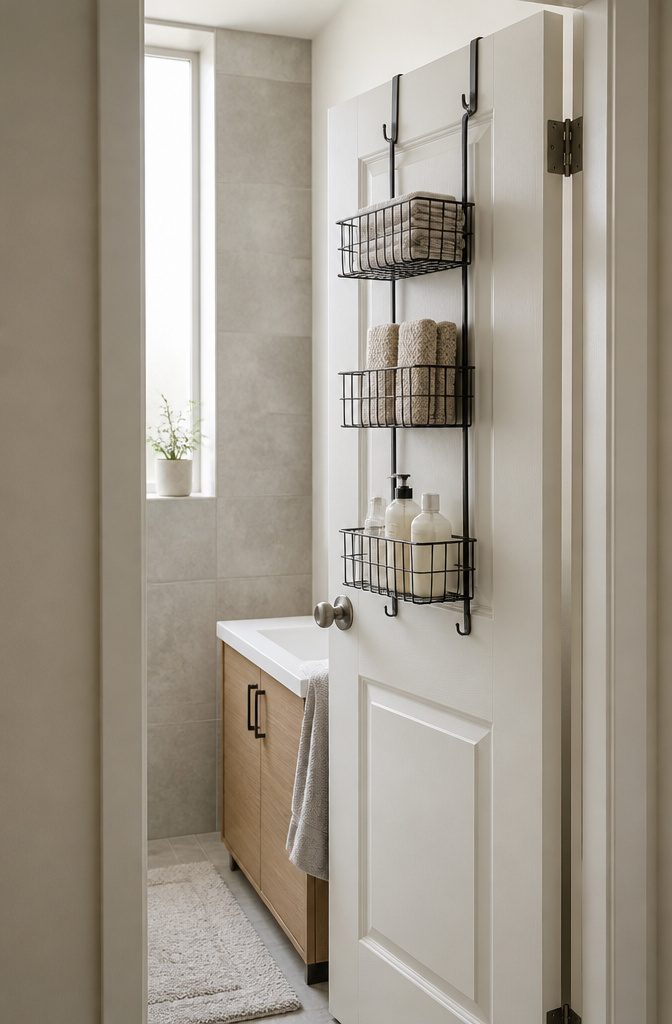
Doors are worth organizing because they hold things you reach for often without claiming floor space or cabinet depth.
Over-the-door racks in wire or fabric work for shoes in the bedroom, cleaning supplies in a utility closet, or toiletries in the bathroom, and most hang on standard interior doors without screws.
I use them where cabinet depth is too shallow or where items need to stay visible instead of stacked behind a cabinet door.
The friction comes from door clearance and surface damage. A rack adds two to three inches of depth to the door, so measure the gap between the door edge and the nearest wall or furniture before you buy.
Some doors do not close fully once the rack is mounted, which matters in a bathroom or bedroom. The other issue is scratching.
Metal hooks can mark painted doors if the door swings hard or if the organizer shifts over time, so I check that the hooks have padded backing or add felt pads myself before hanging anything heavy.
If the door finish matters or if you are renting, test the fit and weight with something light before loading it with shoes or bottles.
7. Organize Closets and Clothing Storage
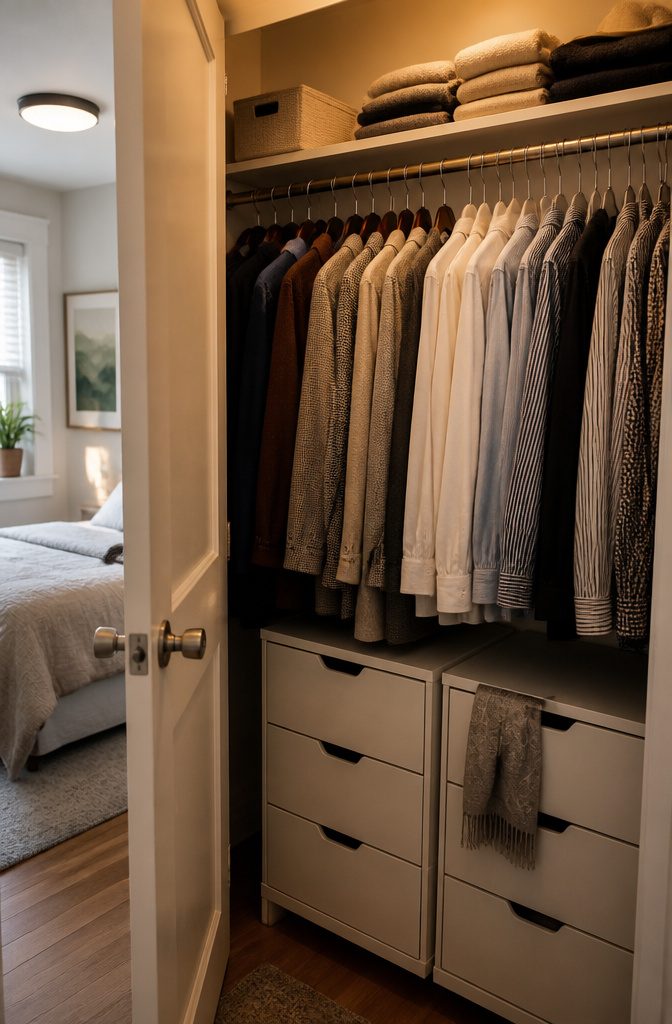
Closet space shrinks fast in a small apartment, and the fastest fix is hangers that let you fit more clothes in the same run of rod.
AmazonBasics velvet suit hangers at $25 hold about 25 percent more clothes than standard plastic ones, because the slim profile and non-slip surface let you pack them tighter without everything sliding into a heap.
Fayleeko ultrathin metal hangers come in a 40-pack for $36 and save even more width. I like velvet for anything with weight — coats, blazers, anything that would pull a wire hanger out of shape — and metal for the rest.
Moralve makes two hangers worth the small jump in price: pants hangers at $17.99 that stack vertically so you can hang four pairs where one used to go, and space-saving hangers at $29.99 that hold multiple garments horizontally, then flip to hang vertically when you need the rod space back.
Both work best when you commit to them fully rather than mixing them with regular hangers, because the whole point is density.
If you still run out of hanging space, stackable storage drawers fill the floor or shelf area below short garments without wasting the vertical gap.
The real win is pairing all of this: slim hangers free up rod space, stacked pants hangers reclaim depth, and drawers catch what does not need to hang.
8. Move Seasonal or Infrequent Items Out of Prime Space
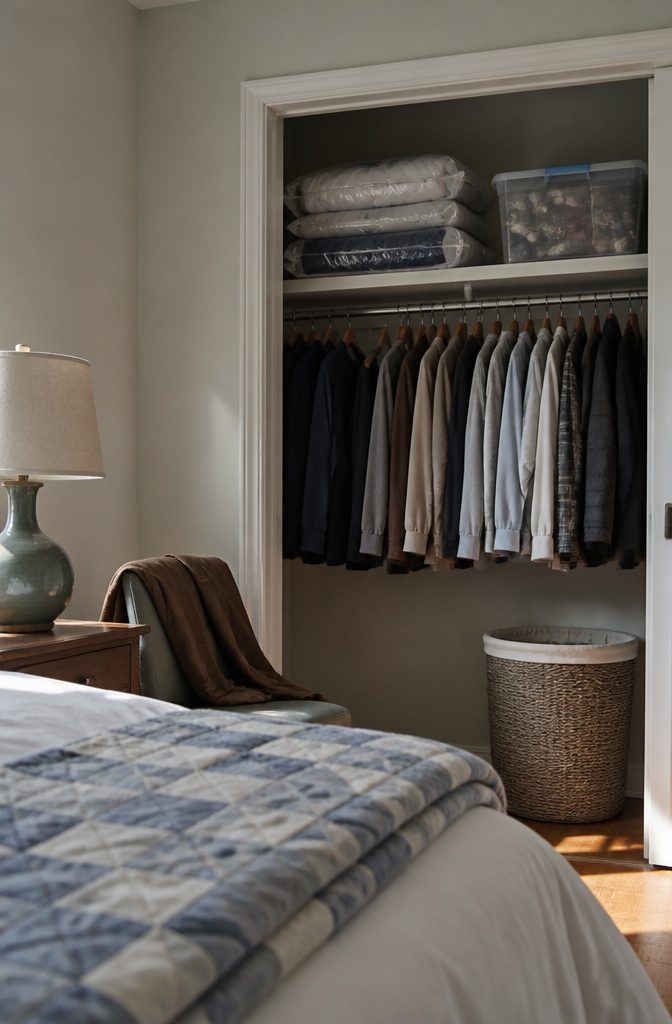
Move Seasonal or Infrequent Items Out of Prime Space
The space under your bed and the top shelf of your closet should hold what you don’t touch regularly.
Off-season bedding, winter gear, and holiday decorations belong in vacuum-sealed bags or hard plastic bins rather than taking up a drawer you open every day.
Tailink 12 vacuum pack bags run $29.99 and compress bulky items into a fraction of their original volume, which matters when you’re working with five feet of closet rod and no linen cabinet.
Store the sealed bags on the highest shelf or slide bins under the bed where you won’t trip over them.
If your apartment offers a storage closet or garage space, check with the complex before you move anything in.
Some buildings restrict what goes there, but when it’s allowed, I use it as a holding area for things I’m not ready to part with.
A stackable storage drawer like the Iris USA model at $44.99 keeps smaller seasonal items visible and separated without digging through a single large tub every time the weather changes.
9. Assign Every Item a Designated Place
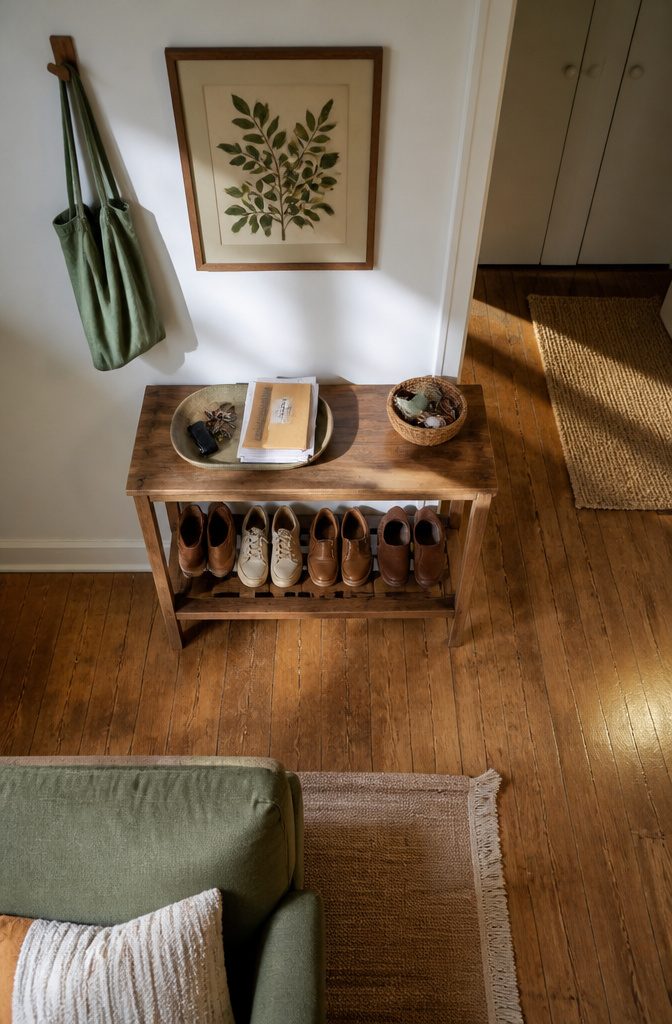
Keep every item in a fixed location — coat by the door, keys in one dish, toiletries on their own shelf — and clutter stops piling up in the first place.
In my reading, sources that work with small apartments come back to this more than any other rule, because a few items out of position in a tight layout read as mess immediately.
Start at the entryway with a drop zone: a tray or small basket for keys and mail keeps those from migrating onto counters.
Expandable drawer dividers turn one drawer into dedicated sections for socks, undergarments, and accessories without guessing where things land.
I’d put Hay storage boxes at $43 for a set of four on open shelves for paperwork and receipts; the stripe pattern holds up as décor while keeping less-pleasant admin tasks contained.
Container Store bins start at $6, lids sold separately at $7, and the small perforations let you see what’s inside without opening them. Tower stackable baskets run $15, and IKEA’s Hallbar bin sits at $6 if budget decides it.
The organizing step that fails is the one where belongings drift between rooms.
Shoes stay in their rack, toys in the kid’s room, clothing in closets or laundry areas. Countertops especially collapse under a few extra objects in a small kitchen, so I’d set a weekly five-minute sweep to return items that wandered.
10. Use Rolling Carts or Movable Storage
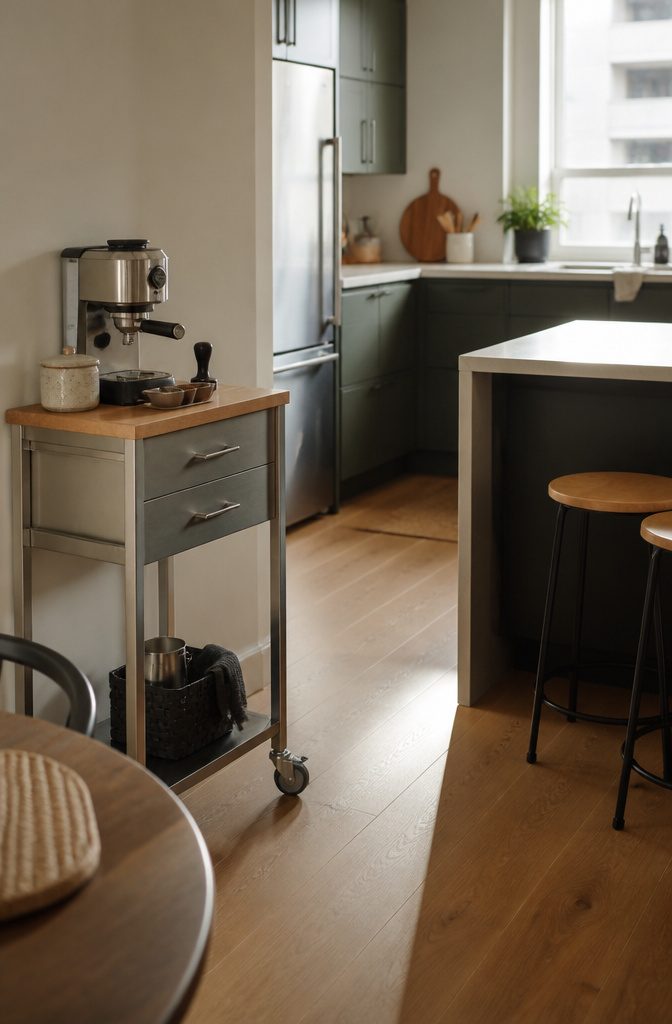
A rolling cart means the storage moves when you need it and disappears when you don’t. That flexibility matters in any room doing more than one job at once—which in a small apartment is most of them.
A chef’s cart with drawers runs about $66 and handles pantry overflow in the kitchen, or you can grab one with open shelves for $60 and use it for pots and pans.
The drawer version wins if you’re short on cabinet space; the shelf cart works better when you’re stacking things you reach for often.
I like carts in rooms that shift roles during the day. A rolling unit can hold coffee supplies in the morning, serve as a bar setup in the evening, then tuck beside the sofa when neither applies.
The same logic carries into a bathroom stocked with extra towels or a corner of the bedroom holding work-from-home essentials. The point is keeping what you need within reach without committing floor space to it permanently.
11. Place Mirrors to Make a Room Look Larger
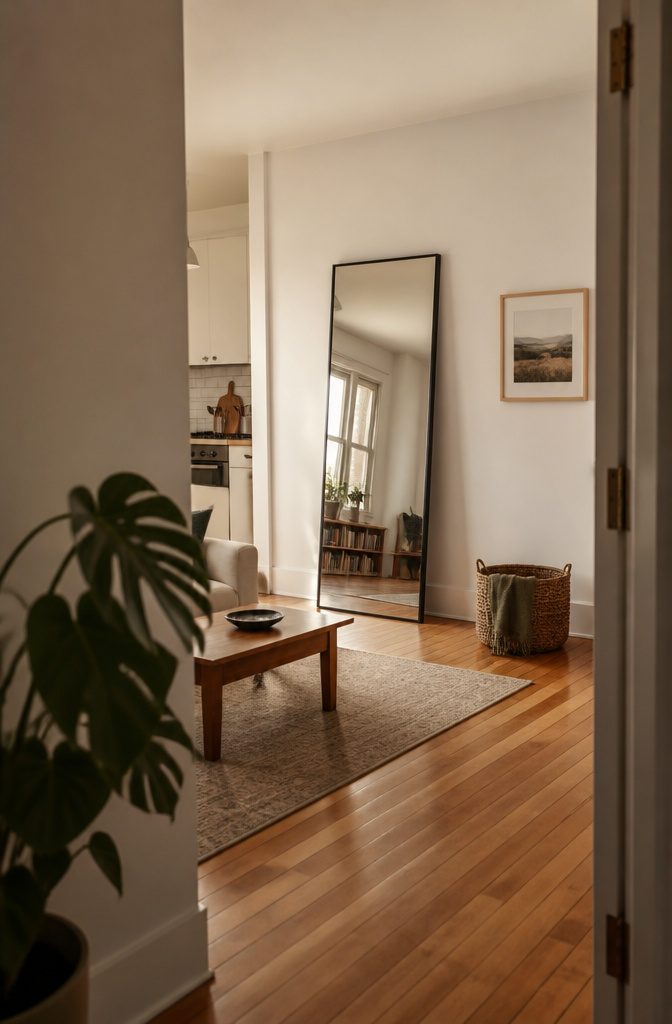
A mirror makes a small apartment feel more open without adding actual square footage. The reflection creates an illusion of depth, so a narrow hallway reads wider and a tight living room feels less closed-in.
The effect works best when you position the mirror where it catches light from a window or bounces back a view of the room rather than a blank wall.
Hang the mirror higher than eye level and tilt it slightly downward. That angle pulls the ceiling into the reflection and makes the room feel taller without forcing you to look up at it.
A floor mirror does the same work vertically—the Adesso Alice floor mirror at $102 is one I’d suggest if you want something that looks finished for the price.
It leans against the wall, which keeps install simple in a rental, and the frame gives it enough weight that it doesn’t read as dorm furniture.
12. Arrange Furniture to Open the Room
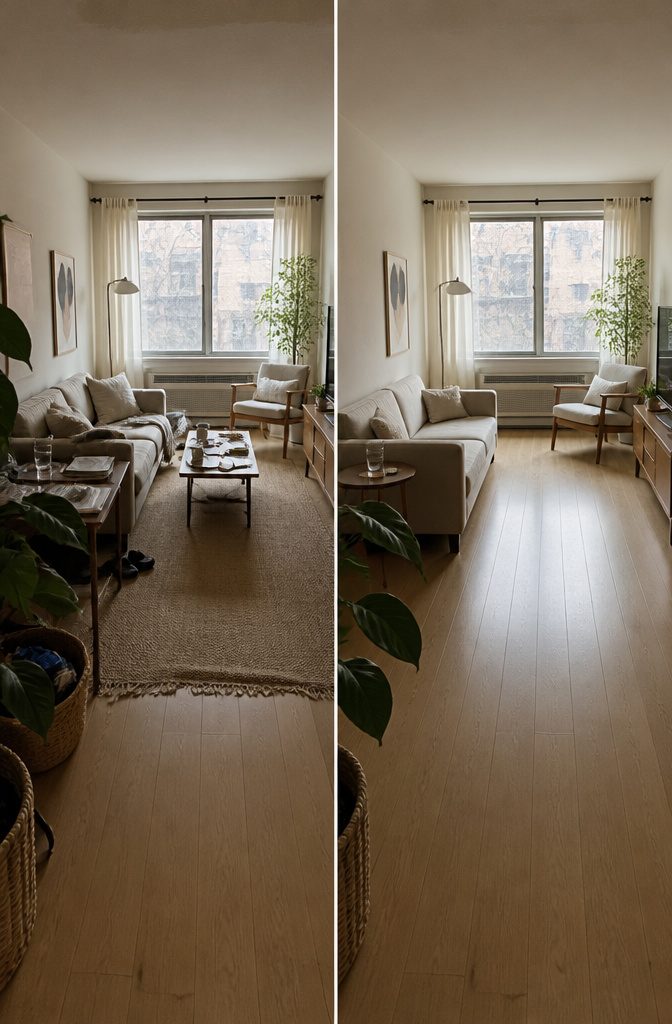
Pushing furniture toward the walls or cutting a piece entirely opens up floor space fast, and that visible breathing room makes a small apartment feel bigger the moment you walk in.
In a living room, sliding the couch and chairs against the perimeter clears the center and turns a tight layout into something you can move through without sidling.
The same move works in a bedroom: shift the bed from the middle to one wall and the room suddenly has room for a chair, a hamper, or just easier circulation.
I find the real win is visual more than functional. When the floor is visible edge to edge, the space reads larger even if the square footage hasn’t changed.
The other half of this is keeping furniture to a minimum in the first place. If a second chair or an extra side table crowds the walking path, the room feels smaller no matter where you push things.
13. Consider External or Temporary Storage
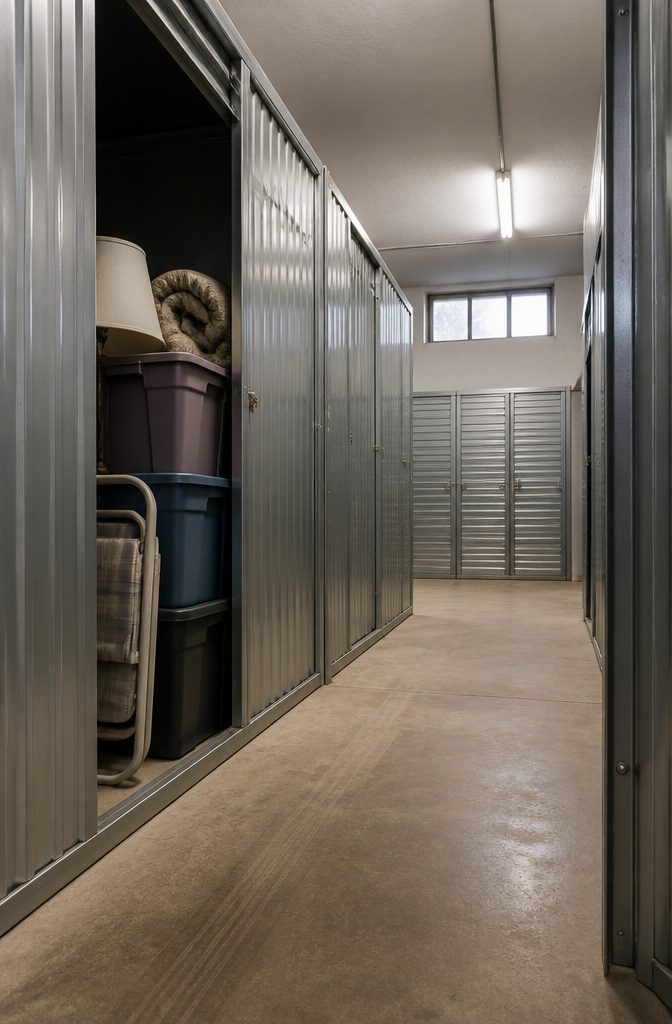
When your apartment has run out of room, the building itself may still have options. Many apartment complexes offer basement storage lockers or garage units that you can rent month-to-month, sometimes for less than off-site facilities charge.
I check with property management first, because these spaces tend to go fast and the waitlist can be long.
Off-site storage makes sense when you need to keep furniture between moves, archived documents, or seasonal gear that would otherwise crowd a closet.
The newer storage-by-the-box services let you pay only for the bins you actually use instead of renting a full unit, and they pick up and deliver on request.
That model works well for things you access once or twice a year but cannot get rid of yet. The cost adds up if you are storing items indefinitely, so I treat it as temporary rather than permanent overflow.
If something has been in storage for more than a year and you have not needed it, that is usually the signal to let it go.
Keep a Daily 10-Minute Reset
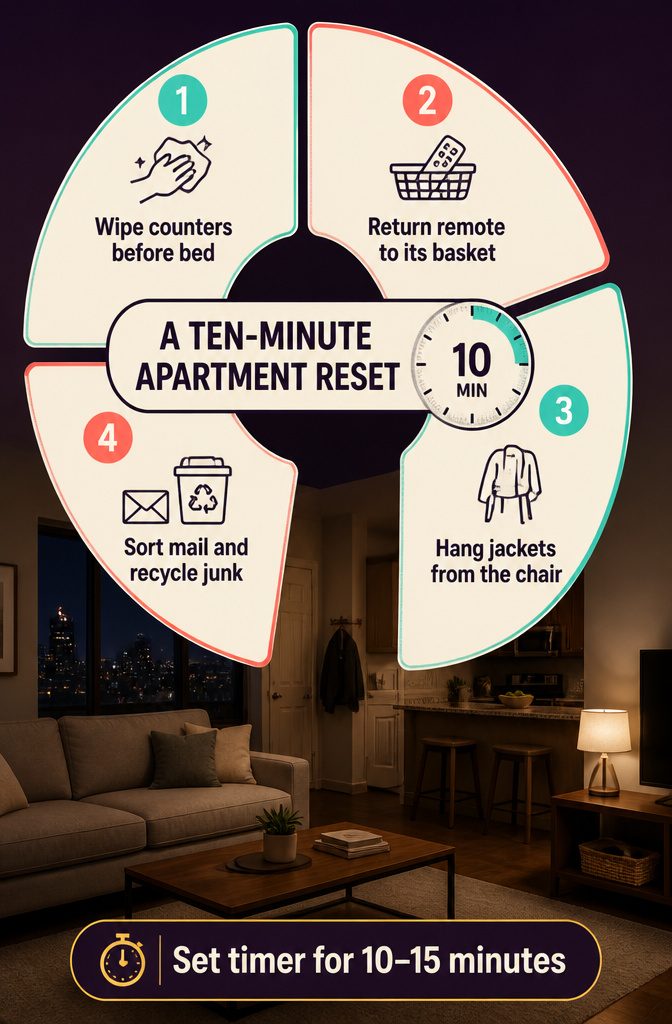
Daily 10-Minute Reset
The organization you set up only works if you keep it from sliding back. A ten-minute daily reset is the single habit that stops small messes from turning into overwhelming clutter.
I run mine before bed: counters get wiped, the remote goes back in its basket, jackets move from the chair to the hook, and mail gets sorted on the spot. Junk gets recycled immediately, bills go to their designated spot.
The goal is not deep cleaning. You are returning the apartment to its baseline state, the way it looked when you finished organizing.
Set a timer for ten to fifteen minutes and move with purpose through the main living areas. Fluff the pillows, put books back on the shelf, clear the coffee table.
This small routine prevents the daily pile-up that makes weekly cleaning harder. A little effort each day keeps the system running without the need for another overhaul.
Create Zones for Activities
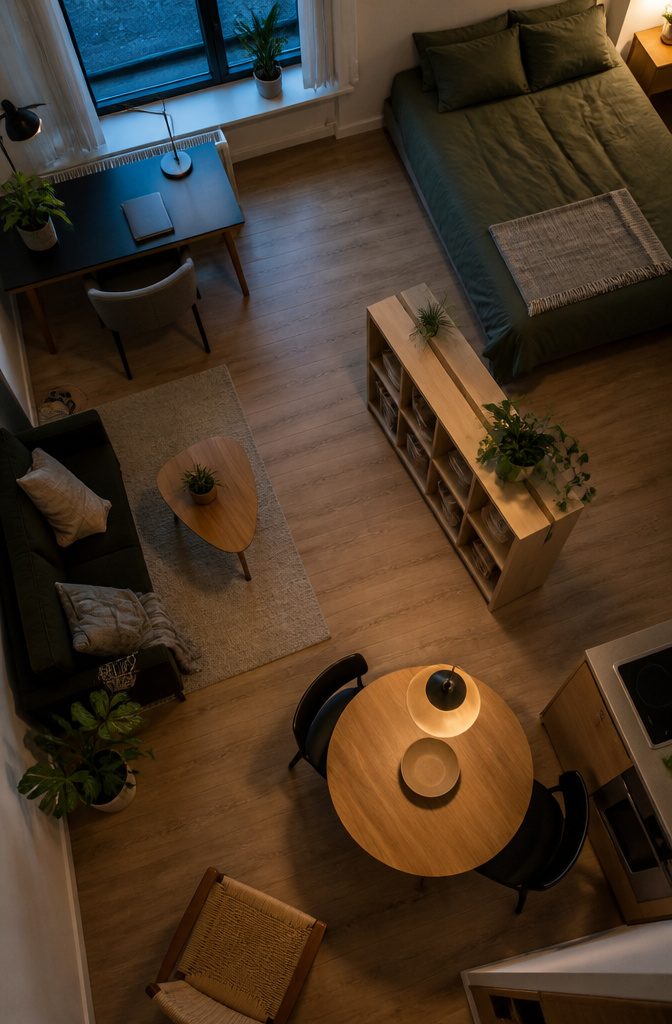
A studio becomes livable the moment you stop treating it as one big room and start assigning each corner a job.
Working, eating, and sleeping all happen in the same square footage, but they don’t have to feel like they’re happening on top of each other.
Cattano recommends deciding what activities the space needs to support before anything else goes in: enough desk area, a proper sitting zone, a bed that doesn’t shrink to fit. Once those are set, the rest works around them.
The mental shift matters as much as the physical layout. When your dining table knows it’s only for eating, it stops turning into a permanent office setup or a laundry-folding station.
A rug under the couch, a bookshelf turned sideways as a divider, even just consistent lighting in one area—all of it tells your brain the room has structure.
That structure is what keeps a small apartment from feeling chaotic, even when everything sits eight feet apart.
Track What You Store With a Digital Inventory
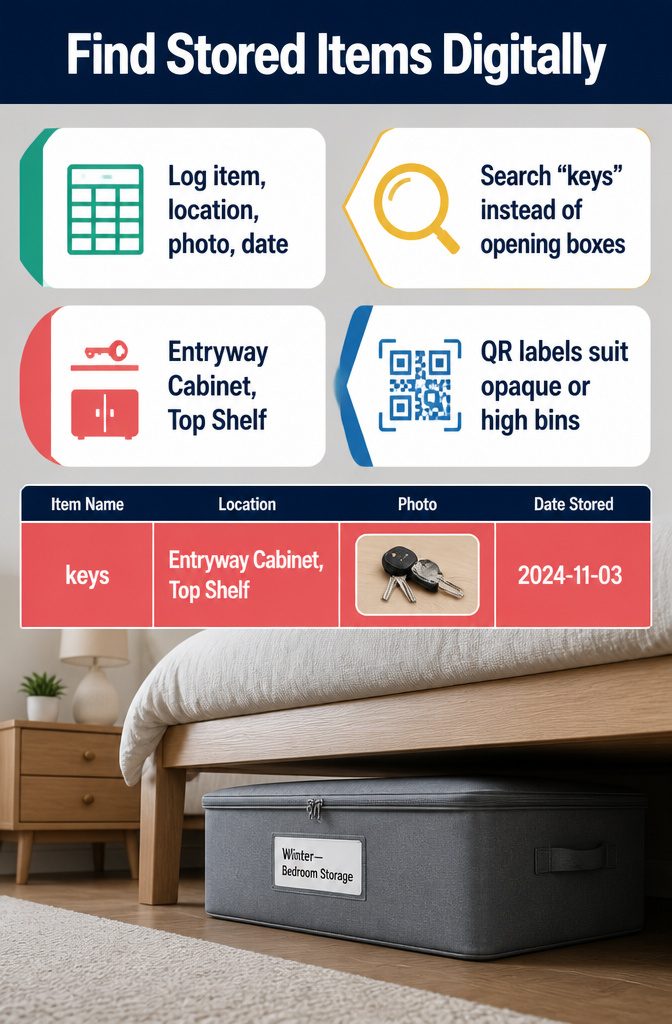
I keep a simple spreadsheet with columns for item name, location, photo, and date stored.
When I put winter coats in a bin under the bed, I snap a quick photo of the bin’s contents, label the bin "Winter—Bedroom Storage," and log it as one row.
The real payoff comes months later: instead of opening four boxes to find spare keys, I search "keys" in the spreadsheet and see "Entryway Cabinet, Top Shelf" immediately.
The search function turns memory into a system, and I stop buying duplicates of things I already own but can’t locate.
Some people stick QR code labels on bins and link them to digital records, which works well if you store items in opaque containers or high shelves where reading a handwritten label means climbing up to check.
Set a Weekly Cleaning Schedule
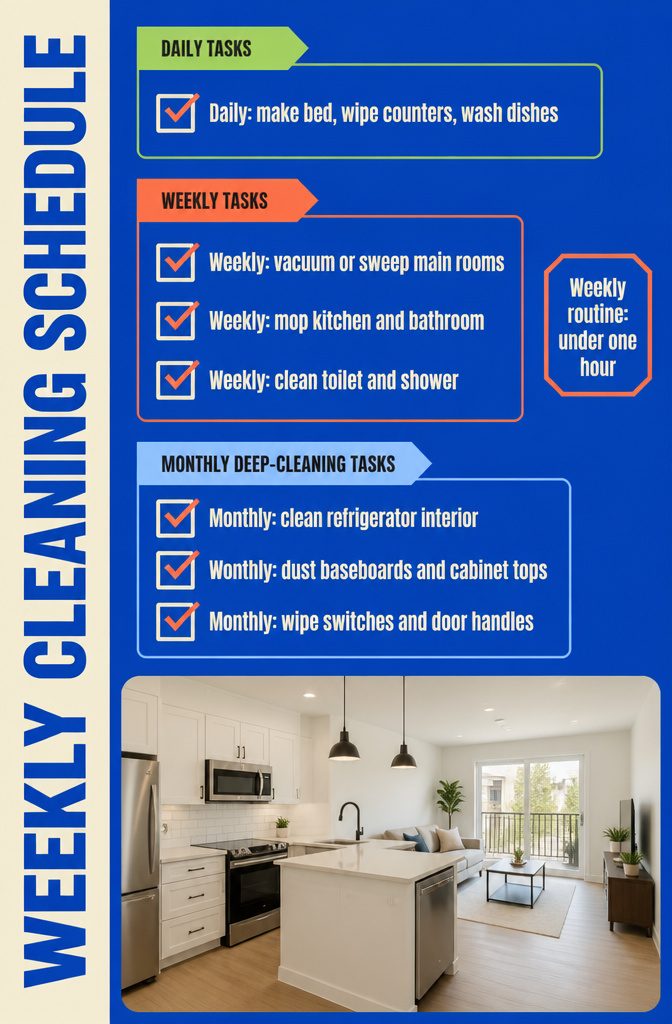
A recurring schedule keeps the apartment from sliding back into clutter after you’ve organized it.
I break cleaning into three tiers: daily tasks, weekly tasks, and monthly deep cleaning. The daily list is short and takes about ten minutes.
Make the bed, wipe down kitchen counters, and wash the dishes before they pile up. Those three habits alone prevent most of the visible mess.
Weekly tasks address floors and bathrooms. Vacuum or sweep the main rooms, mop the kitchen and bathroom, and clean the toilet and shower.
In a small apartment, the whole weekly routine rarely takes longer than an hour because there simply isn’t that much square footage to cover.
Monthly tasks go deeper. Clean inside the refrigerator, dust baseboards and the tops of cabinets, and wipe down light switches and door handles.
These spots don’t show dirt daily, but they accumulate grime faster than you’d expect. A set schedule means you catch buildup before it turns into a project.
What Renters Should Check Before Installing
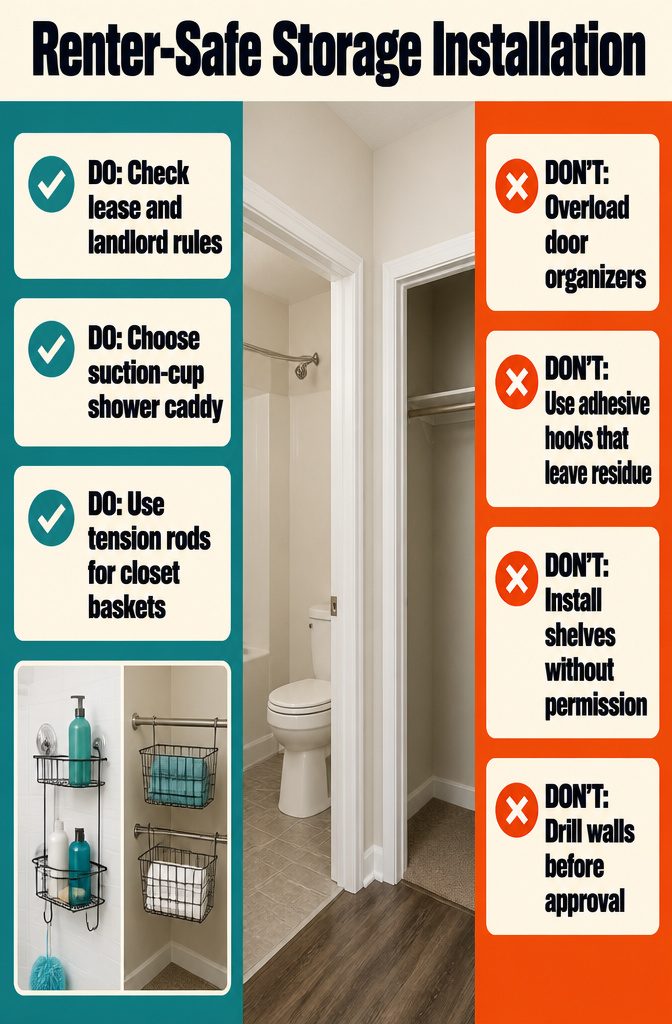
Before you drill, hang or stick anything, check your lease and walk the room with your landlord’s rules in hand.
Over-the-door organizers can scratch paint or dent hollow-core doors if they hang too heavily loaded, and adhesive hooks leave residue that costs you part of the deposit.
Wall-mounted shelves need permission in most buildings, and the brackets themselves run $15 to $30 before you add the lumber.
A tiered shower caddy with suction cups solves the bathroom without a single screw, and tension rods hold baskets in closets the same way.
If you’re renting short-term or the walls are already marked up, movable solutions let you pack and go without patching holes or repainting trim.
Frequently Asked Questions
How to make a small apartment feel less cluttered?
Start by decluttering ruthlessly using the one-year rule: if you haven’t used something in a year, it goes.
Then assign every item a fixed location so nothing migrates between rooms, and run a 10-minute daily reset to return the apartment to its baseline state.
Visible floor space and consistent placement make the biggest difference in how open a small apartment feels.
What should I remove first when decluttering?
Remove duplicates immediately: extra utensils, multiple bottles of the same cleaner, backup chargers that don’t fit your devices.
Next, cut anything you keep "just in case" that costs under $20 to replace and hasn’t been used in months. The four-box system (keep, donate, trash, relocate) speeds up the sorting without second-guessing every item.
What is the 10-10-10 rule for decluttering?
For "just in case" items, ask whether replacing it would cost under $20; if yes and you haven’t needed it in months, let it go.
How to furnish a small apartment?
Choose multifunctional furniture that serves 2 or 3 purposes: storage beds eliminate the need for a dresser, lift-top coffee tables work as dining surfaces and hidden storage, and ottomans handle seating plus blanket storage.
Push furniture toward the walls to open up floor space, and cut any piece that crowds the walking path. Keeping furniture to a minimum makes the room feel larger even when the square footage stays the same.