A fast clean that covers the whole house in 30 minutes or less depends on which rooms you tackle and what you skip.
If you try to deep-clean everything, you will run out of time halfway through the kitchen. Focus on high-traffic zones first—entryway, counters, bathroom sink—and save baseboards and grout for monthly sessions when you have the hour they need.
1. Clear Clutter and Put Things Away
Clear Clutter and Put Things Away
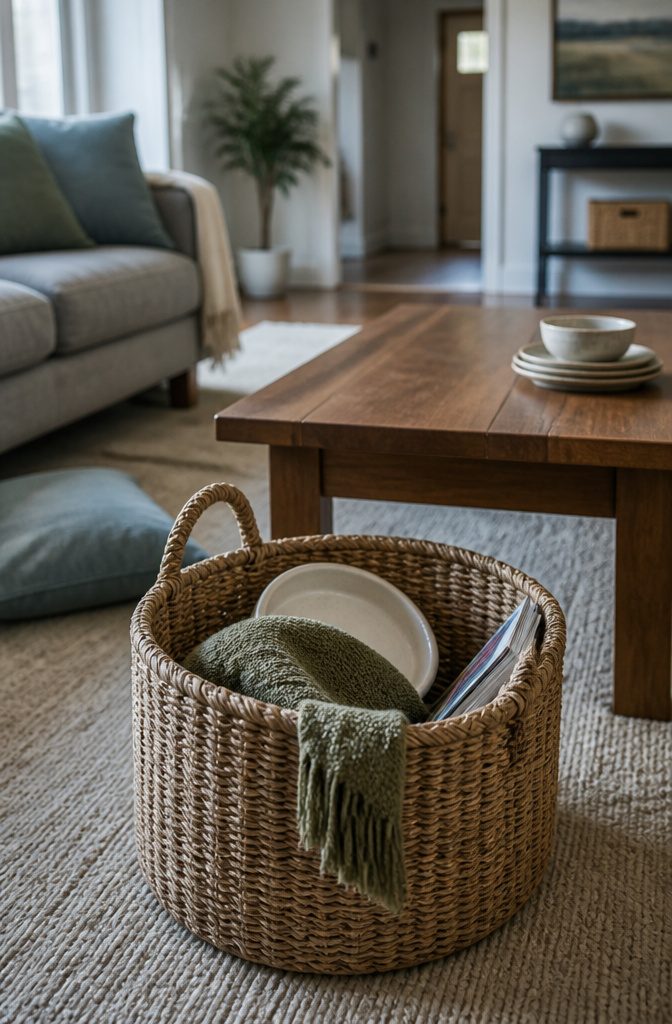
Cleaning around loose objects slows every task and leaves parts of counters and floors untouched.
Before you reach for a spray bottle, collect misplaced items in a basket or laundry basket, clear dishes to the sink, toss trash, and move laundry into a hamper.
This step makes every surface accessible and cuts the time you spend working around clutter.
I carry an extra basket when I clean to hold items that belong in other rooms, then return them all at once instead of stopping mid-task.
The same system works for a coffee table piled with mail, a desk buried in small objects, or a hallway shelf crowded with things that drifted there over the week.
Pick one surface, spend five focused minutes clearing it, and move on.
Skip organizing drawers or closets unless that is the session’s goal.
Drop those items in the basket and finish the cleaning pass first. This order keeps your flow consistent and stops dust from landing on freshly wiped counters.
2. Gather Supplies and Keep Them Close
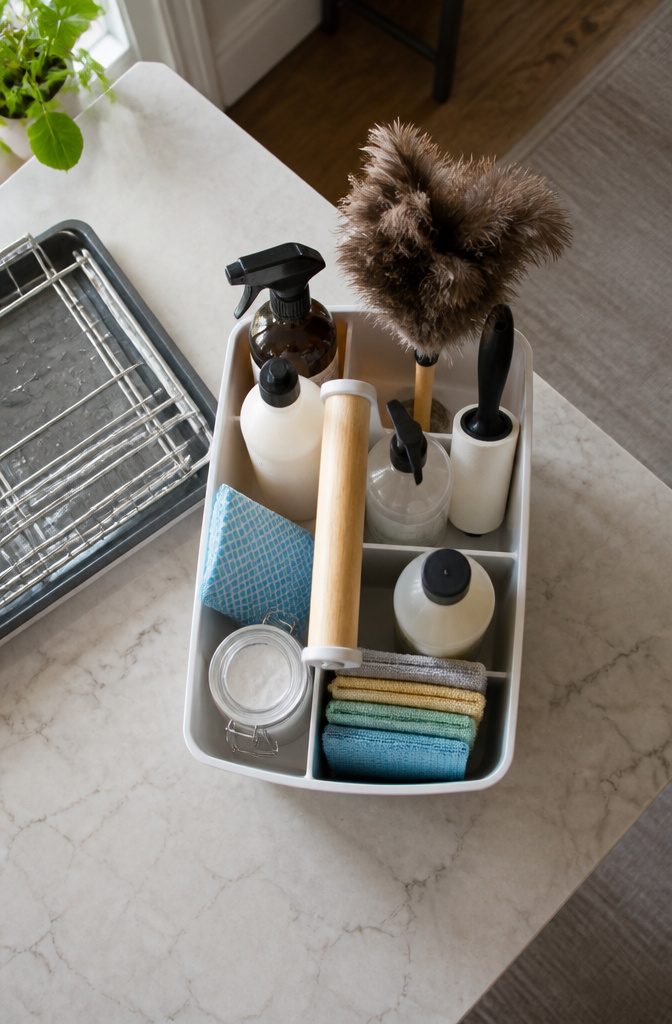
Gather your supplies in a caddy or tote before you start, and you will not burn five minutes hunting for a spray bottle or clean cloth halfway through.
I keep a portable caddy stocked with microfiber cloths, all-purpose cleaner, disinfecting wipes, window cleaner, and a feather duster.
Magic erasers, a lint roller, baking soda, lemon juice, and vinegar round out the kit when I need them for specific jobs. Swedish cloths work well if you prefer something that rinses and dries faster than paper towels.
One caddy in the kitchen, another in the bathroom, and a third in a hall closet means you can grab what you need without crossing the house twice.
The upfront investment in a few duplicates pays back in saved time every single session. Organize by room or by task if that makes more sense for your routine, but keep everything together in one container you can carry.
When the timer runs and you have fifteen minutes to get the main rooms guest-ready, reaching for what you need without thinking is the only way you finish.
3. Dust and Wipe Visible Surfaces
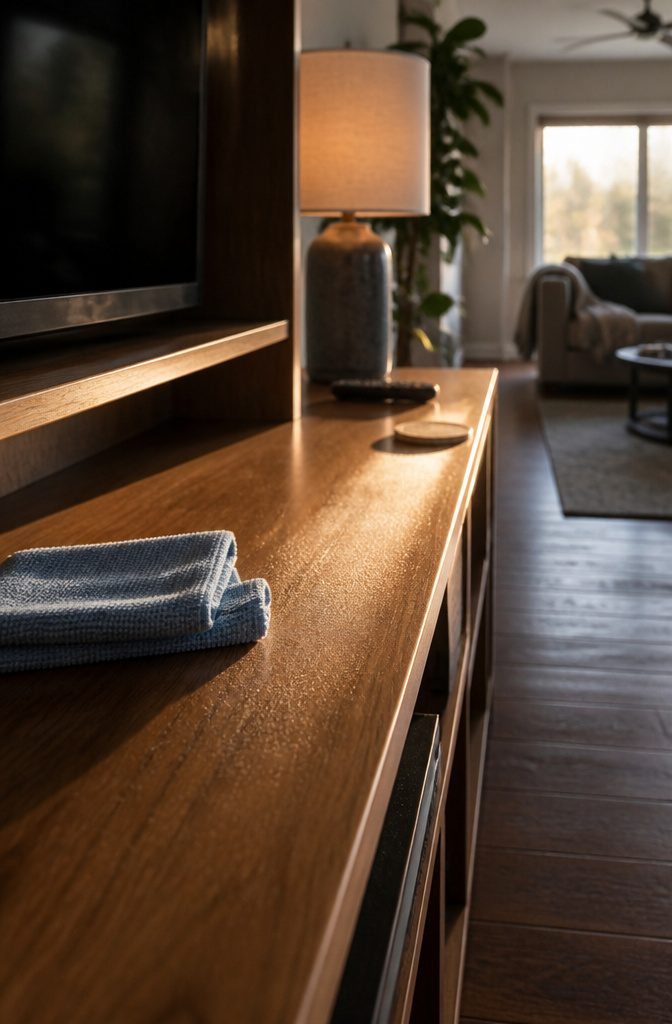
Dusting high-visibility surfaces before floors is the move that keeps you from cleaning twice. When you wipe shelves, tables, and light fixtures, debris falls.
If you vacuum first and dust second, that dirt lands on clean carpet and you start over. I always run a microfiber cloth across tabletops, shelves, and the entertainment center, then hit ceiling fans and lamp bases.
The kitchen and bathroom get the same treatment: counters, faucets, and anything sitting out. A quick wipe clears the visual clutter dust creates, especially in natural light.
The top-down pattern works because gravity does part of the job. Start with anything above shoulder height, move to waist-level surfaces, then finish with the floor.
That sequence means dirt only travels in one direction. If you reverse it, crumbs and dust from the bookshelf undo the vacuuming you just finished.
4. Focus on Kitchen Counters, Dishes, Sink, and Appliances
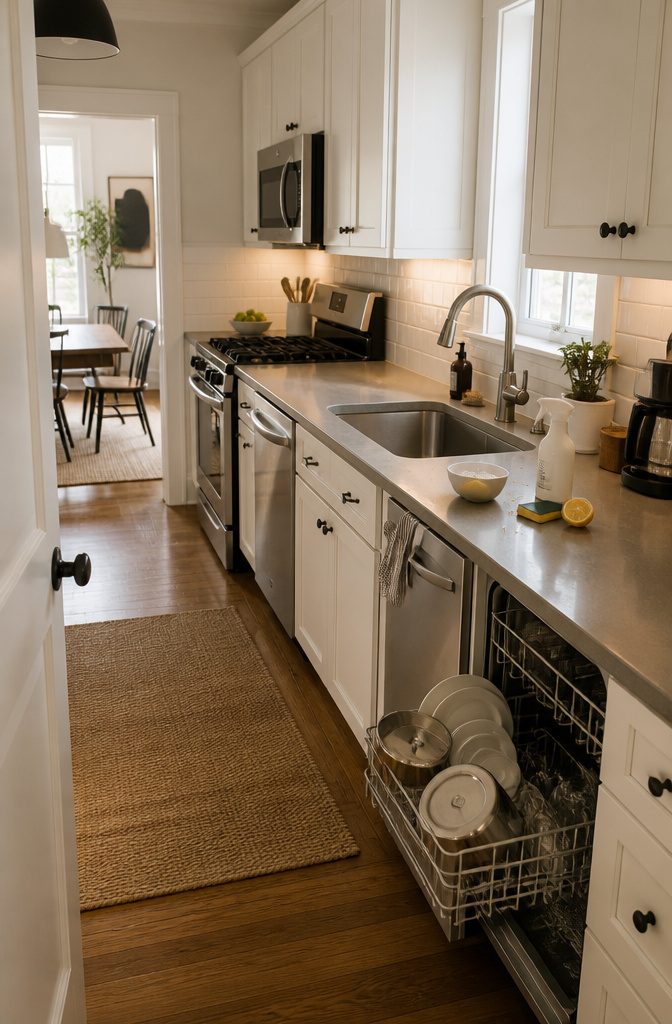
I start in the kitchen by loading dirty dishes straight into the dishwasher or washing them by hand if there are just a few.
Clearing those first makes everything else move faster. Once the sink is empty, I wipe the counters with multipurpose spray, working from back to front so crumbs land where I can catch them.
If the counters are crowded with small appliances or jars that don’t need to be out, I spend the time putting those away instead of wiping around them.
The sink itself gets a quick scrub with baking soda mixed with 10 drops of lemon juice, then I work it with a sponge and rinse.
Cabinet fronts and appliance handles collect fingerprints and grease quickly, so I spray those and let the cleaner sit for a minute or two before wiping.
That dwell time lifts stuck-on film without extra scrubbing. If the fridge door or drawer pulls look smudged, those get the same treatment.
5. Freshen the Bathroom
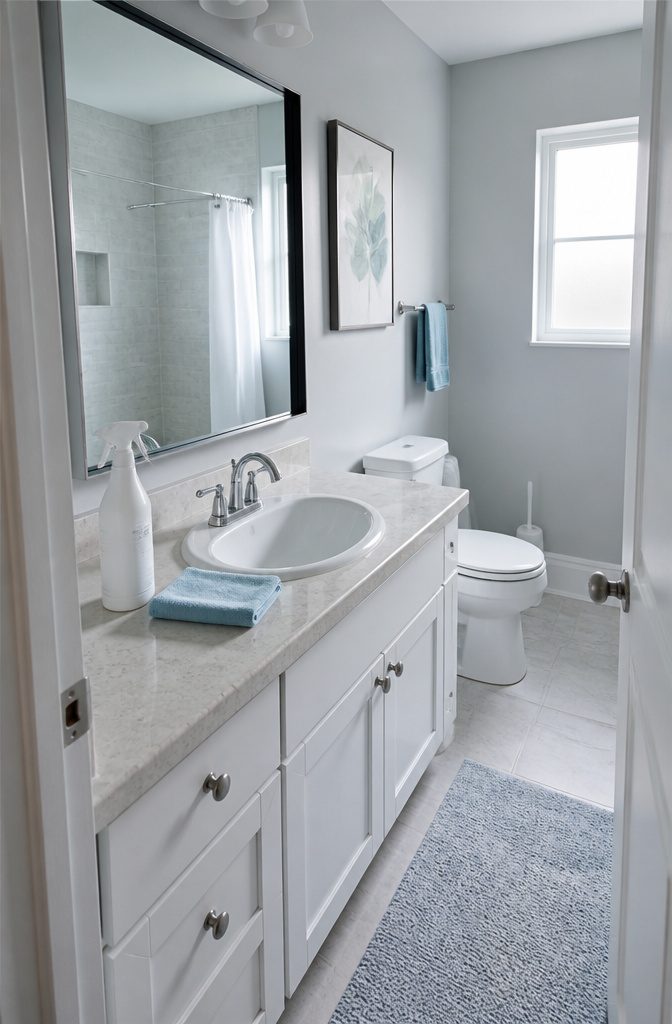
I start with the sink and mirror because they decide the first impression. Spray both, then move to the toilet bowl, seat, and base, and finish with any visible counter or floor area near the toilet.
The method most sources describe is to spray first and let the product sit while you clear counters or wipe the mirror, so the cleaner does its work without you standing over it.
Fantastic Cleaners puts the whole routine at about ten minutes, which lines up with what I’ve seen when the bathroom gets attention more than once a week.
Work from cleanest to dirtiest: mirror and shelves first, then the sink and any buildup around the faucet or drain, then the toilet.
A microfiber cloth handles the mirror and counter in under five minutes if the sink bowl gets a quick rinse first.
For the toilet, scrub the bowl with the brush, then wipe the tank, seat, and base with disposable wipes or a cloth you keep just for that job.
On the way out, hit the door handle and light switch. Those spots collect more contact than anything else in the room, but they’re easy to forget.
6. Tidy Bedrooms and Living Areas
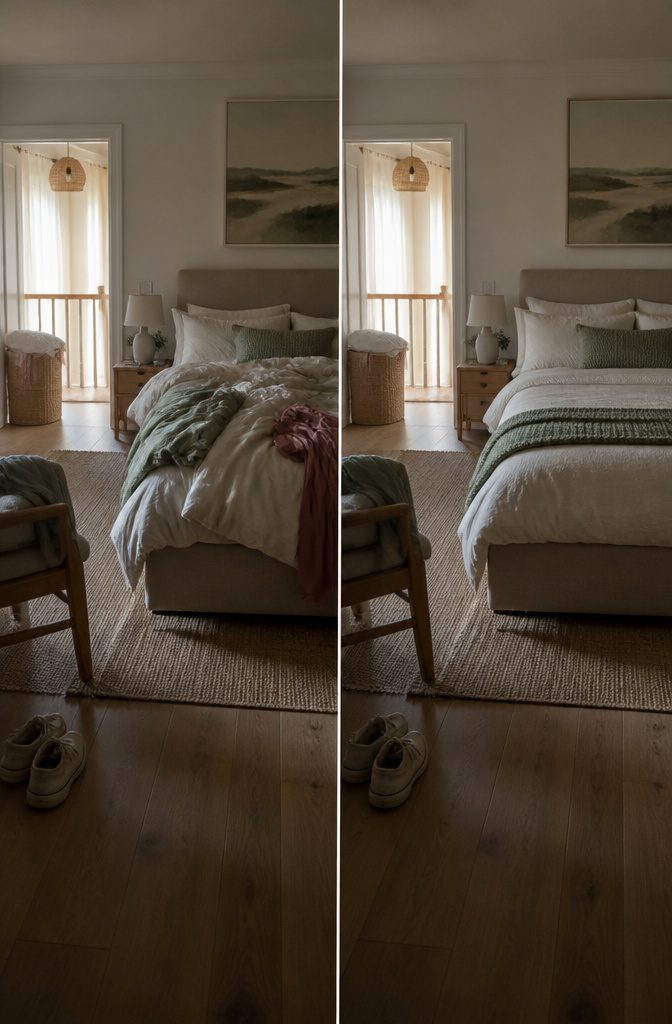
Making the bed is the fastest reset in the bedroom.
Around 30 seconds gets it done if you keep the process simple: pull the duvet straight, fluff the pillows, tuck any loose sheets. A made bed changes how the whole room reads when you walk past.
Some mornings stretch that to two minutes if you align pillow shams or straighten a throw, but even then the time stays short enough to fit before you leave.
After the bed, I go straight to visible clutter.
Clothes on the floor go back in the closet or hamper, shoes move to the entryway, and anything sitting on the nightstand that doesn’t belong there gets put away. You’re clearing what catches your eye first, not organizing deep.
In the living room, cushions and throws are the equivalent move. Fluff the cushions and fold any blankets draped over the sofa, then return the remote controls to their usual spot.
Magazines and newspapers can be straightened into a stack or recycled if they’re outdated. A quick pass like this takes a few minutes and makes the space feel intentional again, even when you skip dusting or vacuuming.
7. Vacuum or Sweep Floors, Especially Busy Areas
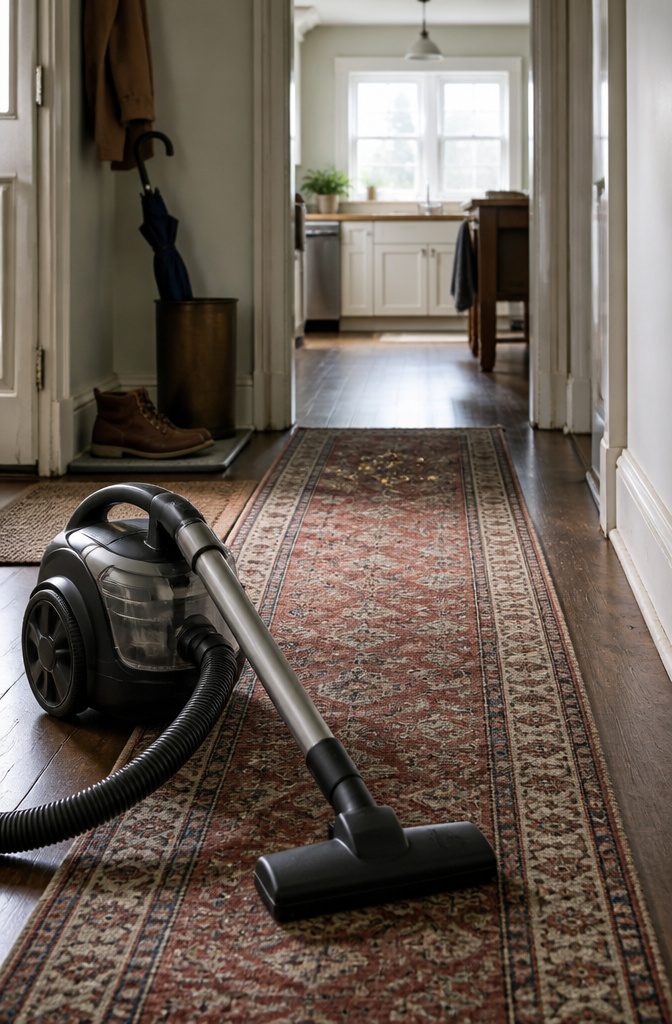
I leave floors until I’ve finished dusting and wiping surfaces, because anything knocked loose during surface work lands on the floor. Cleaning in that order means you sweep or vacuum once instead of twice.
When time is tight, I focus on the paths people actually walk: entryways, the stretch between the kitchen and living room, the hallway outside the bathroom.
Those areas show dirt faster and matter more to how clean the whole space feels.
Carpets and rugs get a pass with the vacuum on the right setting for the pile. On hard floors, I vacuum or sweep away loose grit before bringing out a mop and compatible floor cleaner.
Start in the farthest corner and work back toward the doorway so you don’t step across the area you just finished.
A vacuum is not always better than a broom. Use whichever tool matches the flooring, especially on finishes that scratch easily or react badly to moisture.
8. Use a 15-Minute Timer and Stay Focused
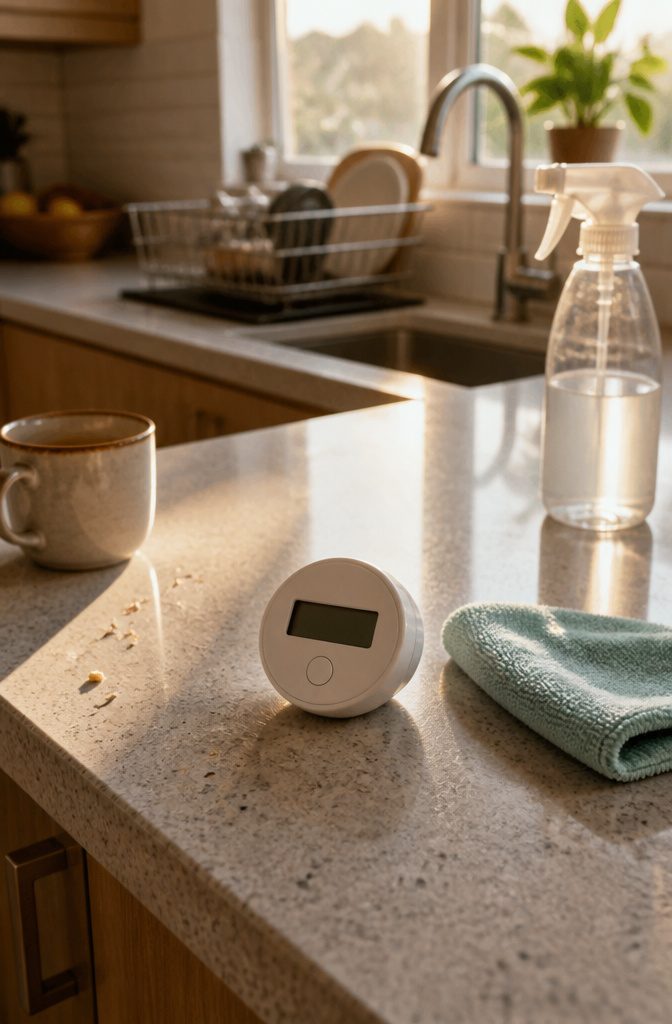
Set a 15-minute timer.
A focused sprint each day beats a lost Saturday. That short limit keeps the work from expanding to fill an entire evening, and the constraint pushes you to make decisions fast instead of debating which room deserves more attention.
I treat it the same way I treat a quick workout: the clock starts, distractions wait, and I move until the alarm goes off.
The interval you pick depends on whether you’re resetting one room or speed-cleaning the whole house. A 5–10-minute burst works when you’re clearing one thing: the coffee table, the kitchen counters, the entryway before someone arrives.
For a full house pass, 30–60 minutes is the realistic window: enough time to hit the bathrooms, sweep the floors, and handle the kitchen without rushing past the details that actually matter.
Two hours gives you room for laundry cycles and dusting, but anything longer stops feeling like a sprint and starts feeling like a weekend project you never wanted.
The timer itself matters less than what it does to your attention.
Without one, a quick clean drifts into organizing a drawer or scrolling your phone mid-task. With one, you stay on your feet and finish what you started.
9. Replace Towels or Take Out Trash
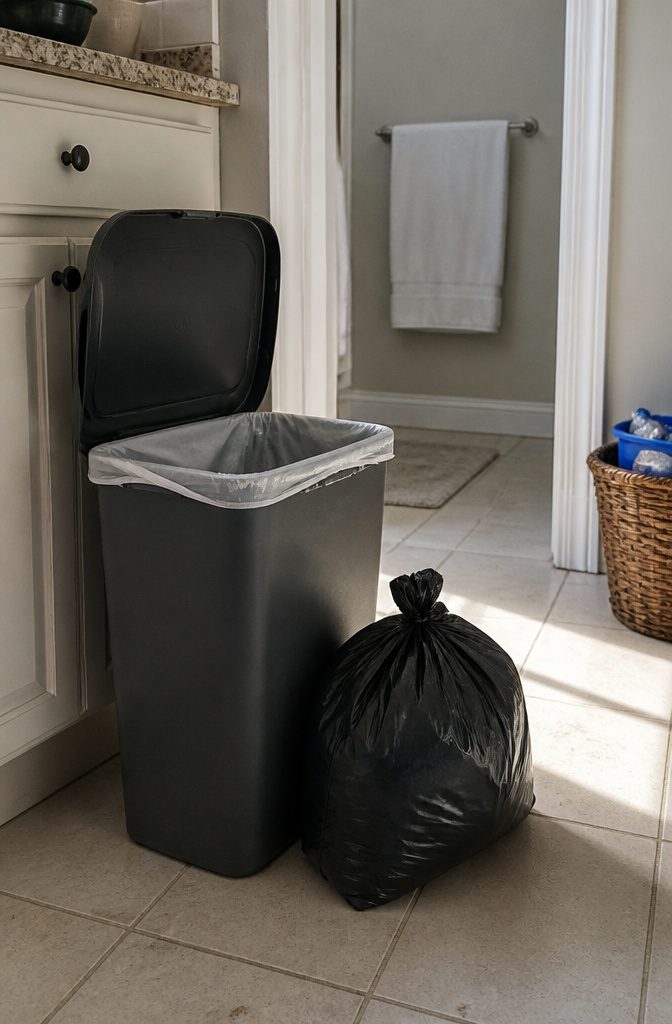
Taking out the trash and swapping in fresh towels reset a room faster than almost anything else you can do in thirty seconds.
An overflowing bin signals mess even when the rest of the kitchen is passable, and a crumpled hand towel on the bathroom counter reads the same way.
Replace the liner after you pull the bag, wipe the bin lid if anything touched it, and the kitchen immediately feels maintained.
In the bathroom, a clean towel on the bar and a replaced hand towel by the sink give the impression someone just tidied, whether or not you scrubbed anything else.
These are finishing moves, not deep work, but they close the gap between "lived-in" and "neglected" without costing you real time.
10. Keep Up with Small Daily Chores
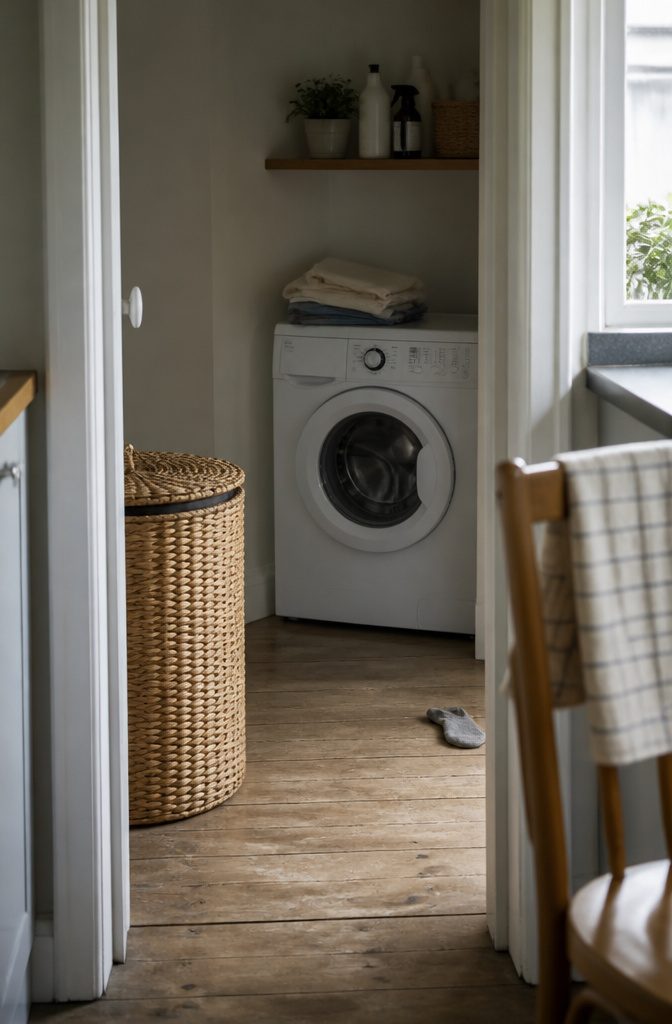
Keep Up with Small Daily Chores
I find that doing dishes, wiping counters, and running frequent small loads of laundry stops the buildup that makes later cleaning take twice as long.
A daily reset covering dishes, clutter, spills, and food waste keeps the baseline livable between deeper sessions.
Sources back this consistently: washing smaller loads throughout the week instead of waiting for the pile to grow means you skip the entire-day catch-up cycle.
The rhythm matters more than the intensity. Brief daily resets distribute the work so that weekly tasks like vacuuming, mopping, and dusting stay manageable instead of overwhelming.
When dirt and clutter never get the chance to accumulate, each session runs faster. I sort laundry as it comes in rather than facing the decision all at once on wash day, and that alone cuts folding time noticeably.
The two-hour whole-home clean only works if you’ve already knocked out small chores each day; otherwise the timer becomes a stress test instead of a tool.
What Fast Cleaning Is and Is Not
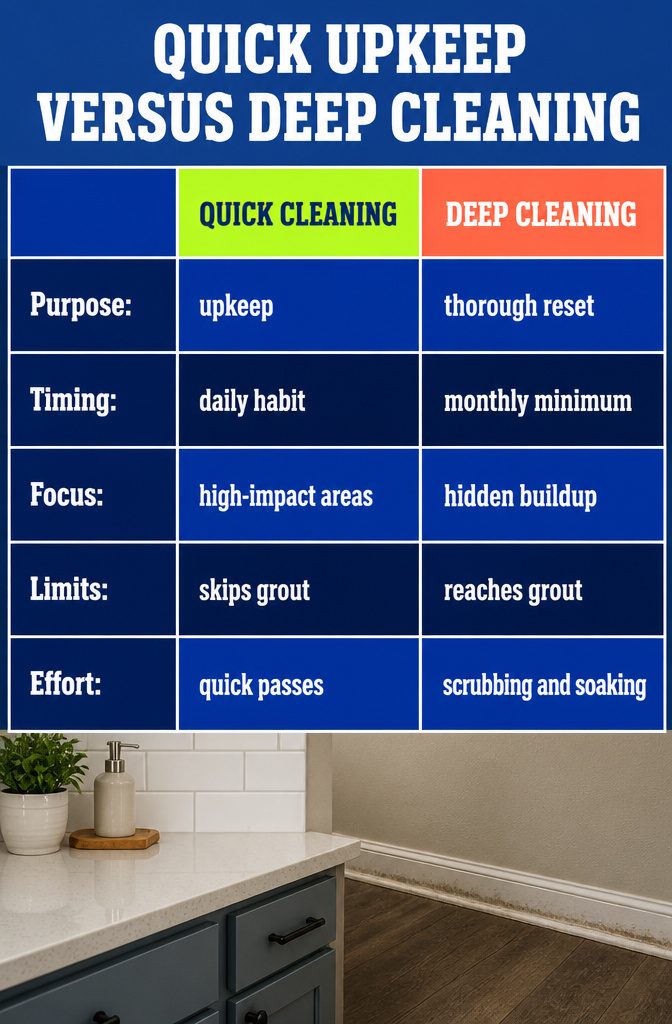
Quick cleaning is upkeep between deeper sessions, not a replacement for them.
It keeps a home looking presentable when time is tight or guests are on their way, but it won’t reach baseboards, grout lines, or the back of the fridge.
I treat it as maintenance that buys time until a full clean can happen.
Speed cleaning works best as a daily habit: a few minutes wiping counters or straightening a room adds up faster than waiting for the mess to compound.
The high-impact areas get attention first, and anything that needs scrubbing or soaking gets saved.
Deep clean at least once a month to catch what the quick passes miss, and reserve weekly or monthly blocks for jobs that take real effort.
Work Top to Bottom
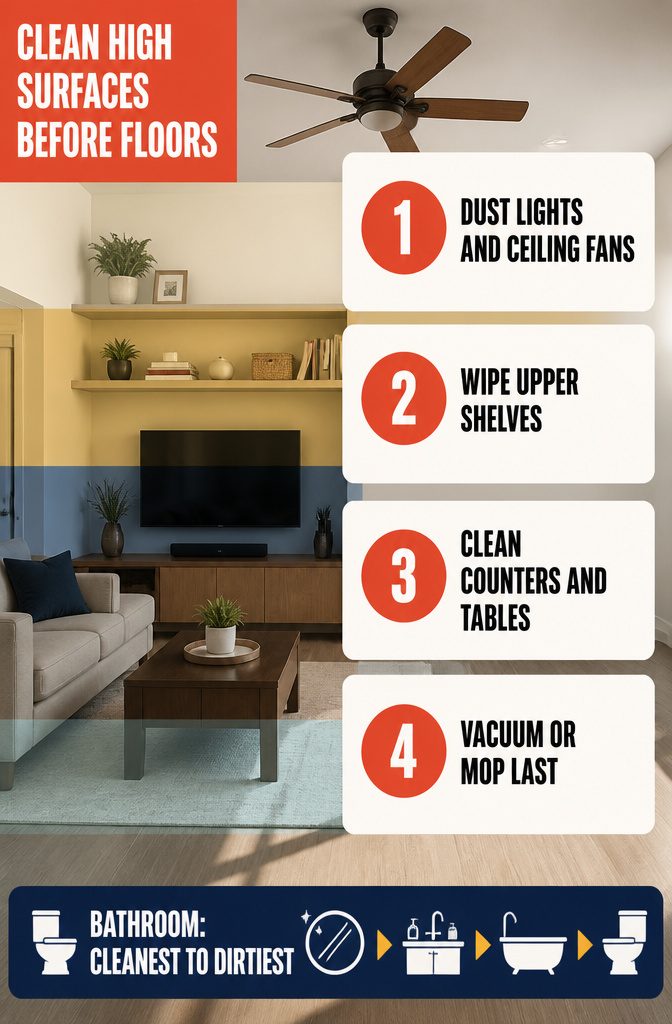
Starting at the ceiling and working down keeps you from cleaning the same surface twice.
Dust from light fixtures, ceiling fans, and upper shelves falls as you wipe, so if you vacuum first, that debris lands on a floor you just finished.
I tackle high surfaces first, then counters and tables, and leave the floors until every other task is done. That way the vacuum or mop collects everything in one pass.
The bathroom works a little differently. Surfaces there go from cleanest to dirtiest rather than strictly top to bottom, so I might wipe the mirror and counter before I scrub the tub or toilet.
The principle is the same: move in a direction that does not force you to backtrack. Both patterns save time by giving falling dirt and splatter somewhere to go until you are ready to deal with it at the end.
Prioritize Visible or High-Traffic Areas
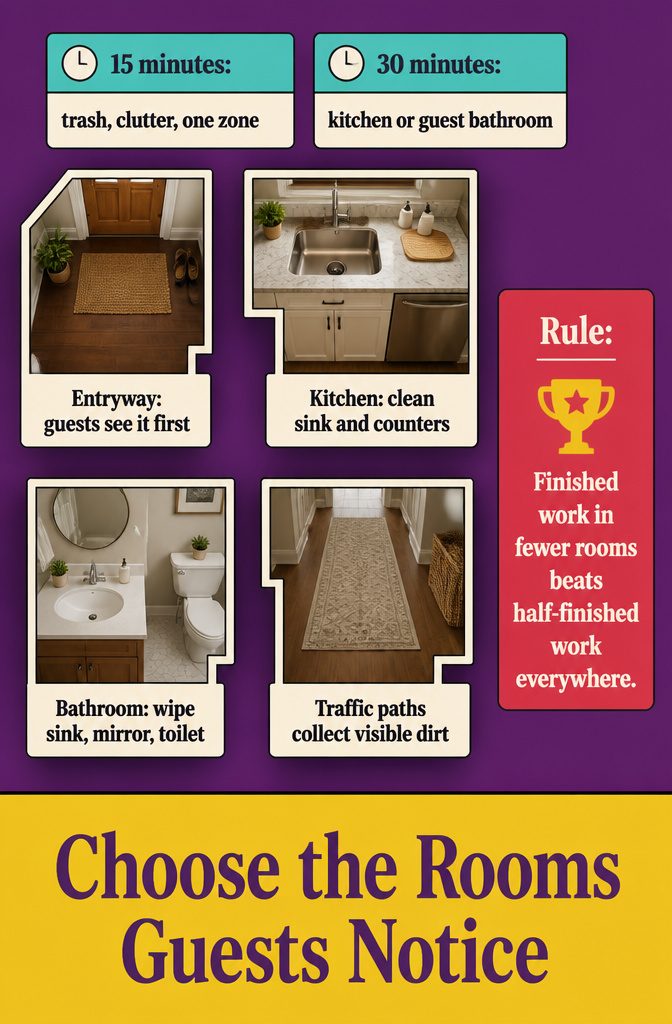
When you’re working against the clock, focus on the spaces that set the whole home’s tone: the entryway, the kitchen counters, the bathroom, and anywhere visible dirt collects fast.
These are the zones guests see first and the ones you move through most often during the day. A clean kitchen sink and wiped counters make the whole space feel maintained, even if the pantry is still a mess.
The same logic applies to the bathroom. Wipe the sink, mirror, and toilet, and the room reads as clean.
Narrow the scope before you start rather than rushing through every task. A timed session works as a maintenance reset for a reasonably tidy home, not as a substitute for deep cleaning.
Decide where you will stop, then use the same top-to-bottom order within the areas you choose. If you have fifteen minutes, collect trash and clutter, clear one high-use area, or spot-vacuum the busiest path.
With thirty minutes, tackle the kitchen or guest bathroom and clear one main traffic route if time allows. Finished work in fewer rooms beats half-finished work everywhere.
Frequently Asked Questions
What is the most efficient order to clean a house?
Gather your supplies in a caddy, clear clutter and misplaced items, dust and wipe surfaces from top to bottom, then vacuum or sweep floors last.
This sequence stops debris from landing on areas you already finished and keeps you from cleaning the same spot twice. Pretreating surfaces that need dwell time saves scrubbing effort later.
Should I clean one room at a time or complete one task throughout the house?
Use task-by-task when you have uninterrupted time for a routine whole-house clean: dust every room, wipe all surfaces, then finish all floors together.
Room-by-room works better for detailed cleaning or when you expect interruptions, since you can stop after completing one space. Either way, follow the same top-to-bottom order within each area.
How can I clean my house faster without overlooking important areas?
Decide which rooms matter most before you start, keep supplies in a portable caddy, and stick to a short checklist that covers high-use zones like the kitchen, bathroom, and entryway.
Skip deep-cleaning tasks like baseboards or grout and save those for a separate session. A 15-minute timer keeps the work focused and stops you from drifting into organizing projects.
Do I need to disinfect every surface during routine cleaning?
No. Routine wiping with multipurpose cleaner handles everyday dirt and keeps surfaces looking maintained.
Disinfecting is appropriate when someone in the household is sick, after raw food contact, or when the product label calls for it, but daily cleaning does not require it.
How often should I follow this cleaning method?
Use these quick routines daily or several times a week to maintain a baseline between deeper sessions.
Frequency depends on household size, pets, and how much traffic each room sees. Schedule a full deep clean at least once a month to reach what the fast passes miss.
How to clean up quickly?
Set a 15-minute timer, clear clutter first, then focus on the spaces guests see: kitchen counters, the bathroom sink and mirror, and high-traffic floors.
Keep supplies in a caddy so you do not waste time hunting for a spray bottle mid-task. This approach resets visible areas without requiring a full deep clean.
What are the benefits of cleaning?
A clean home reduces stress, makes spaces more functional, and stops dirt buildup that leads to longer, harder cleaning sessions later.
Daily resets covering dishes, spills, and clutter keep the baseline livable so weekly tasks like vacuuming and dusting stay manageable. Quick cleaning also readies your home for unexpected guests in minutes rather than hours.
Is baking soda good for cleaning?
Yes. Baking soda mixed with 10 drops of lemon juice scrubs sinks without scratching, lifts stuck-on film, and works well on counters and appliances.
It handles everyday grime and grease when you work it with a sponge, then rinse. Keep it in your caddy alongside multipurpose spray for jobs that need a little extra abrasion.
What is the 5 5 5 rule for decluttering?
The rule asks you to find 5 items to throw away, 5 to donate, and 5 to return to their proper place.
This method creates quick progress when clutter feels overwhelming and gives you a clear stopping point. It works well as a warm-up before you start cleaning surfaces, since clearing items first makes every other task faster.