I’ve swapped these pieces between rooms more times than I can count.
Nightstands stand 24–28 inches tall, built for bedside symmetry with drawers hiding your chaos: glasses, chargers, midnight snacks.
End tables hit 22–26 inches, designed for sofa-side living with finished backs and surfaces meant for display. Height alignment is critical. Match your nightstand to your mattress top and your end table to your sofa arm. Nightstands often hide unfinished backs against walls; end tables look good from every angle since guests circle them. You can cross them over, but only when proportions line up. A too-tall nightstand beside a low sofa creates visual discord rather than an intentional design choice. The real trick is knowing which rules bend and which ones break your space. The specific measurements and placement decisions outlined above determine whether a piece works in its intended location.
Where Nightstands and End Tables Belong
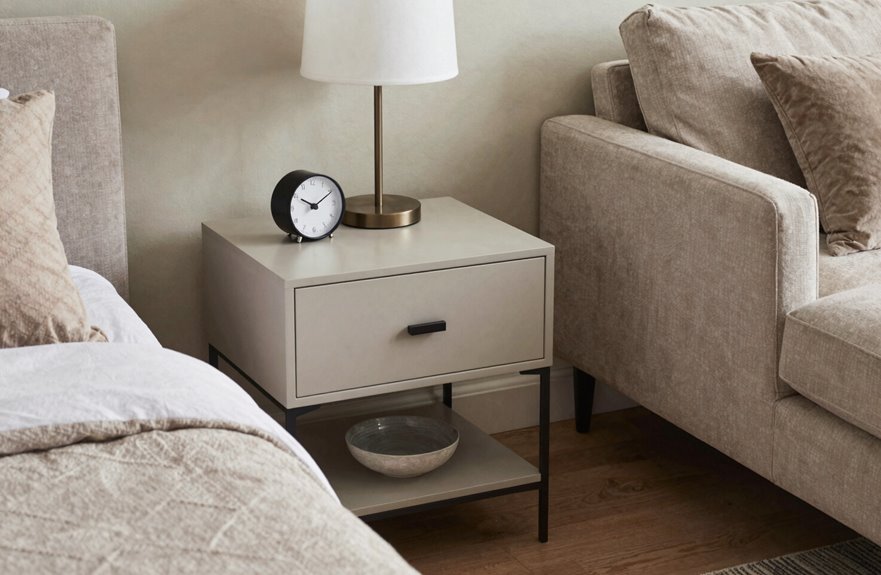
Where do these pieces actually belong? Figure out the right placement so your space feels intentional, not accidental.
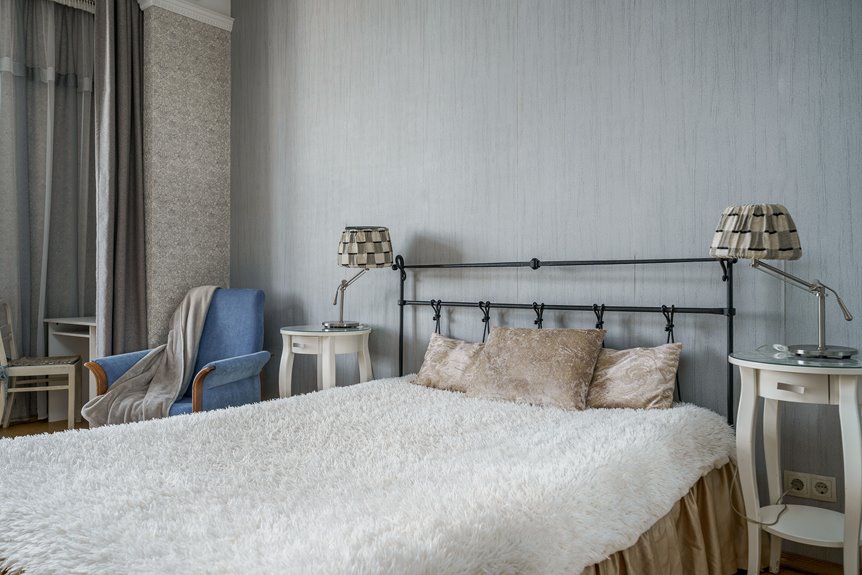
I keep nightstands flanking my bed. That symmetry matters when I walk into my bedroom. They’re bedroom storage workhorses, hiding reading glasses, hand cream, and that book I’ve been pretending to finish for months. Mine has a drawer for secrets and a shelf for display.
End tables, though? Those belong in your living room. I park mine beside the sofa, perfect for cradling coffee cups during movie nights. They’re lighter, more flexible. I slide mine around when friends gather.
The distinction matters. I’ve mistakenly used an end table by my bed; it felt wrong, like wearing jeans to a wedding. Your pieces should feel like they belong exactly where you’ve placed them.

𝐀𝐥𝐰𝐚𝐲𝐬 𝐛𝐲 𝐘𝐨𝐮𝐫 𝐒𝐢𝐝𝐞. 𝐎𝐯𝐞𝐫𝐚𝐥𝐥 𝐃𝐢𝐦𝐞𝐧𝐬𝐢𝐨𝐧𝐬: 𝟏𝟓.𝟕𝟓"𝐋 𝐱 𝟏𝟏.𝟖𝟏"𝐖 𝐱 𝟐𝟑.𝟔"𝐇
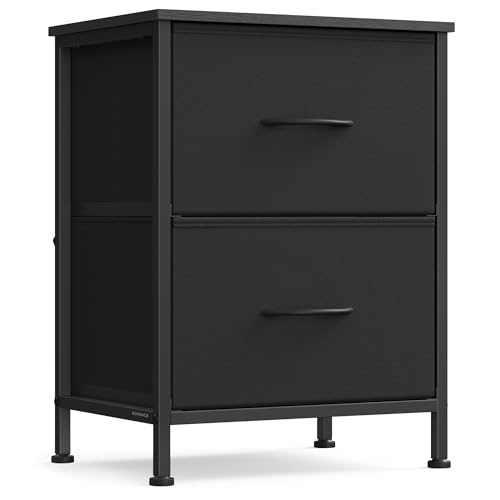
Fusion That Delights: From the BELLAH Collection, this nightstand fuses steel, engineered wood, and non-woven fabric for a perfect blend of strength, softness, and storage. Pair it with chest of drawers for a cohesive space that feels just right

Modern LED Black Nightstand: Enhance your space with Lazzanto's sleek nightstand, featuring a smart LED light strip. Control the lighting via cord or app, with options for timer settings, voice activation, and music sync to create the perfect ambiance
Height Standards: Matching Tables to Beds and Sofas
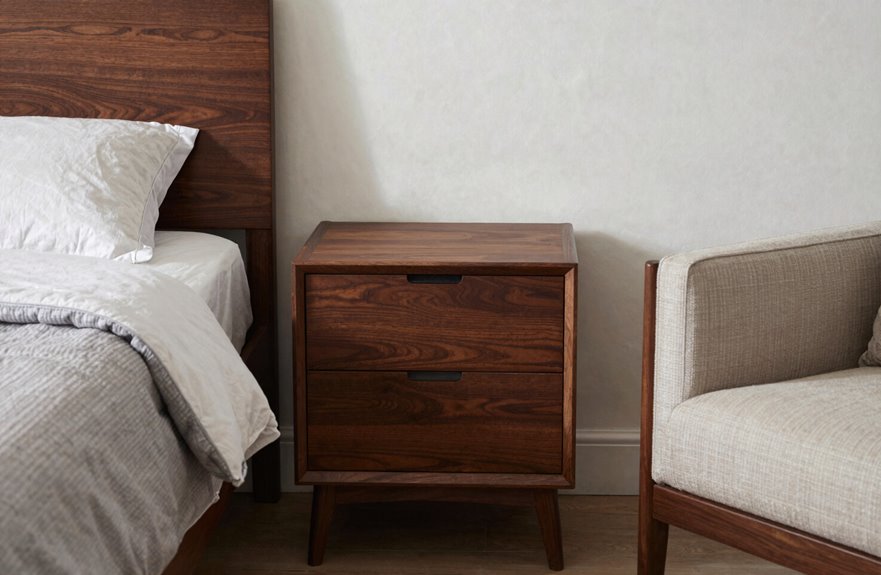
How do you know if your table hits the right height? It’s all about alignment, not exact measurements.
The right table height isn’t about precise numbers—it’s about alignment with what matters most.
For your bedside, aim for a nightstand around 24–28 inches, roughly level with your mattress top. This is the ideal range where you can roll over, reach your lamp, and avoid strain. Platform beds sit lower, so you’d drop to 20–24 inches instead.
On the sofa side, match your table height to the sofa arm, usually 22–26 inches. Too tall, and you’re knocking drinks over; too short, and you’re reaching for the remote.
The visual cue that ties it together is a near-level line from mattress or arm to tabletop. When heights harmonize, your space feels intentional and welcoming.

𝐀𝐥𝐰𝐚𝐲𝐬 𝐛𝐲 𝐘𝐨𝐮𝐫 𝐒𝐢𝐝𝐞. 𝐎𝐯𝐞𝐫𝐚𝐥𝐥 𝐃𝐢𝐦𝐞𝐧𝐬𝐢𝐨𝐧𝐬: 𝟐𝟑.𝟔"𝐋 𝐱 𝟏𝟏.𝟖"𝐖 𝐱 𝟐𝟑.𝟖"𝐇

[Fits Small Spaces] This slim side table sized at 11.8”D x 15.7”W x 24.4”H easily fits the gaps between your couches or the tight spots beside your bed

Slides Perfectly Under Your Sofa: Engineered with a slim C-shaped silhouette that slides effortlessly under most couches, recliners, or beds with low clearance. The low-profile base glides in and out smoothly, bringing your coffee, snacks, or books right to your side without taking up extra floor space
Storage vs. Surface: What Each Piece Holds
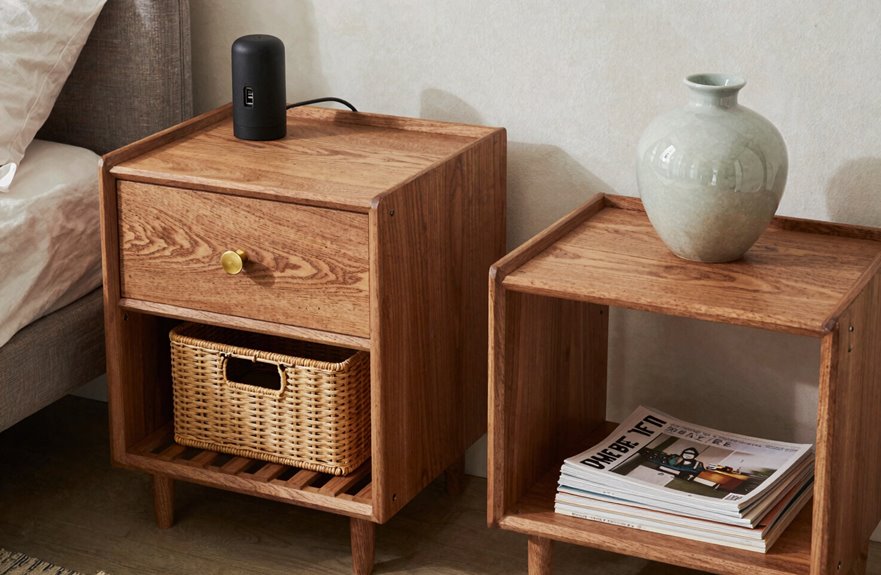
I’ve always thought of my nightstand as a tiny vault with deep drawers stuffed with lip balm, chargers, and that one book I’ll never finish, while my end table functions as a stage for coffee cups and the remote I’m always losing. The difference comes down to access: I reach forward from bed for hidden storage, but I circle my end table from every angle when I’m flopped on the couch. It’s not just furniture placement; it’s about whether you’re hoarding secrets or displaying your afternoon tea.

nstant Bedside Space: Slides under your mattress to create a reachable side table without taking floor space; keeps your phone, glasses, remote, book, and water close when a normal nightstand will not fit

【Great Substitute for Nightstands】 Forget climbing down from the top bunk or getting out of bed just to grab something from the floor or across the room. With Sleeper Shelf, a smart phone, book, alarm clock, drink, or any other items you might bring with you in bed can be just an arm's length away. Sleeper Shelf allows you to save floor space, making it an excellent alternative to a nightstand in a cramped room or bunk bed.

[SPACE-SAVING FOLDING MECHANISM & DISCREET STORAGE]: Designed with an easy one-touch release buckle and a triangular folding hinge, this side platform drops down flat against the bedframe when not in use. It frees up walking aisles in tight bedrooms, keeping your sleeping area tidy and uncluttered without taking up valuable floor area.
Nightstand Storage Depth
Why does storage depth matter so much when you’re half-asleep, fumbling for your lip balm at 2 a.m.? It’s the difference between finding relief and a full wake-up call.
Nightstand storage typically runs 14 to 22 inches deep, designed specifically for your bedside chaos. Unlike an end table, which prioritizes surface over substance, proper storage depth lets you hide life’s small necessities.
What I reach for in mine:
- Prescription bottles behind a soft-close drawer
- My uglier skincare tubes, concealed from judgment
- That book I’ve been “reading” since March
- Lip balm, finally. Always the lip balm.
An end table simply can’t offer this hidden storage intimacy. At 2 a.m., depth isn’t just measurement. It’s functional necessity.
End Table Surface
Where do you actually put your coffee when you’re sunk into the couch, halfway through a true crime documentary? That’s where the end table surface earns its keep. Surface area matters more than hidden compartments here. My living room pairs need room for drinks, remotes, and that lamp I can’t live without.
| What Lives Here | Why It Works | The Feel |
|---|---|---|
| Coffee mug | Within arm’s reach | Cozy, settled in |
| Stack of books | Visual warmth | Lived-in, personal |
| Catch-all tray | Keeps chaos contained | Organized but real |
| Reading lamp | Soft evening light | Inviting, yours |
| Phone charger | Practical magic | Modern convenience |
Table height aligns with sofa arms, usually 22-26 inches, because accessibility shouldn’t mean reaching or hunching. Some of mine roll on casters, shifting when friends crowd in. It’s less about storage and more about staying present together.
Access Priority Difference
How do you know which piece is doing the hard work in your room? I look at what it holds, and how I reach for it.
Nightstand storage hides my chaos: chargers, journals, that half-read novel. End table surface displays my intentional choices: a candle, coffee, the remote. The access height tells the whole story. My nightstand aligns with my mattress, so I grab my water without waking fully. My end table matches my sofa arm, perfect for casual, passing reach.
Bedside versus lounge placement shapes everything. One supports private ritual; the other supports shared living.
What I’ve learned:
- Measure your mattress or sofa arm before buying. Height mismatch ruins the flow.
- Prioritize drawers near beds, openness near seating.
- Test your reach while seated. You’ll be glad at 2 AM.
- Let each piece serve its space, not swap roles.
Access and Construction: Backs, Legs, and Room Placement
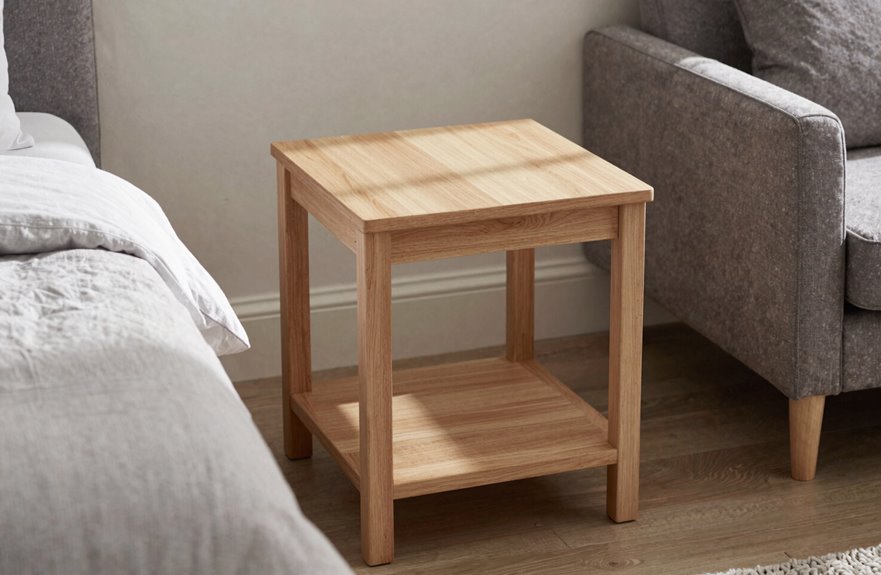
What distinguishes a nightstand from an end table isn’t just where you put it, it’s how you actually live with it. I learned this the hard way when I bought matching tables for my bedroom and living room, only to realize they served completely different purposes.
Nightstand height matters significantly. At 24–28 inches, mine aligns perfectly with my mattress edge, eliminating fumbling for water at 2 a.m. End table access works differently; at 22–26 inches, it hugs your sofa arm and invites conversation from every angle.
Backing design reveals everything about function. My nightstand’s unfinished back faces the wall, hidden and practical. Nobody sees it or cares. But my end table is finished on all sides because guests circle it, set down drinks, and admire photos from every direction.
Room placement seals these roles. I keep my nightstand 2–6 inches from bed’s edge, close enough to grab things and far enough to make the bed. My end table mirrors this philosophy by the sofa, creating that same intuitive reach without crowding the conversation space.
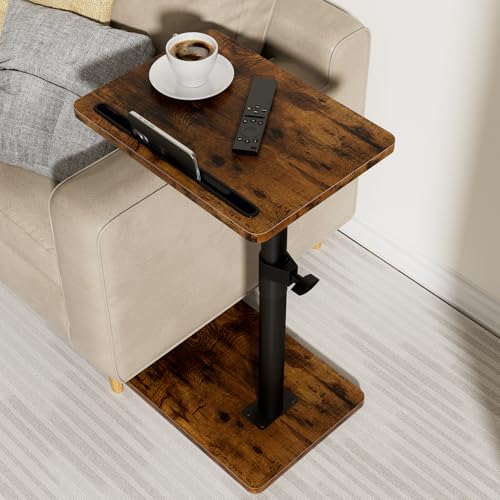
✔️Mini Side Table For Couch: If you're in search of furniture that can fit snugly into tight spaces, this compact sofa table is the ultimate solution. Whether you need a versatile eating tray, a cozy coffee table, a convenient snack holder, or a handy TV table for your recliners, this table is perfect for small rooms and various space-saving needs.

Tool-Free Magnetic 3-in-1 Design: Upgrade your lounging experience with a versatile couch arm table featuring an innovative magnetic 360° rotating phone stand and a 3.78" cup holder (featuring a mug handle slot). Instantly adjust angles or swap positions for hands-free viewing and drinking without the hassle of screws

【Suitable for Many Shapes and Sizes】Experience ultimate flexibility with our adjustable couch arm tray. The opening angle of the splint can be tailored to fit sofa armrests ensuring a secure and stable fit for a wide variety of sizes. Perfect for adapting to different living spaces and scenarios.
Can You Swap Them? Rules for Cross-Room Use
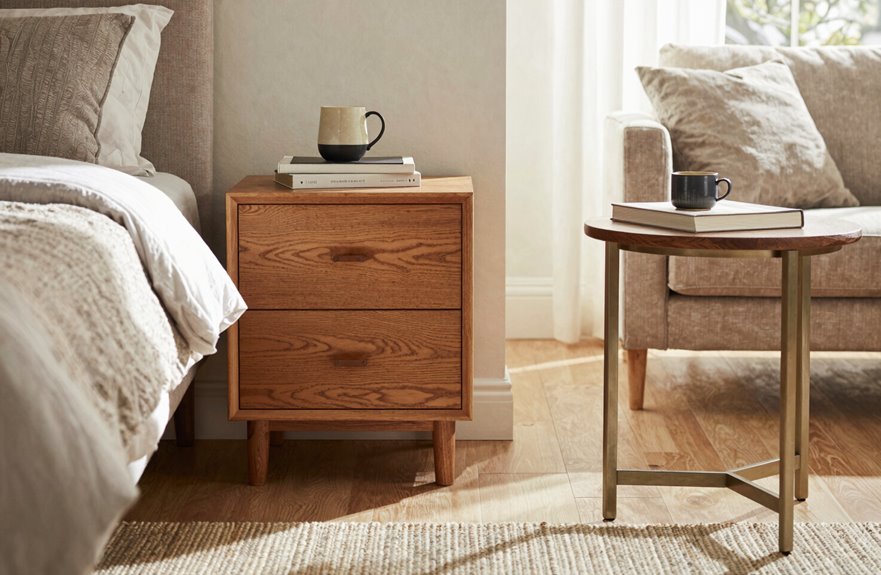
Why limit a good table to just one room? Nightstands and end tables can absolutely switch places with a little planning. Cross-room use works when you pay attention to height alignment above all else.
Here’s what works in practice:
- Check your measurements first—nightstands run 24–28 inches, end tables 22–26 inches
- Match the nightstand height to your sofa arm, or the end table to your mattress top
- Consider storage needs; that drawer-filled nightstand hides remotes beautifully
- Embrace asymmetry. One statement piece beats mismatched pairs.
A sleek end table placed beside a bed loses drawer space but gains clean lines. A grandmother’s nightstand repurposed as a living room accent provides hidden compartments for coasters. Measure twice and make your space feel genuinely yours.

Space-Saving Narrow Side Table: This narrow side table measures 7.87'' D × 15.75'' W × 25.20'' H. Its slim design allows it to fit perfectly into small spaces like corners and wall gaps. Taking up minimal floor space, it works well in small bedrooms, living rooms, and apartments, helping you make rational use of scattered, limited spaces

Nightstand with Charging Station: This white night stand comes with built-in 2 outlets and 2 USB ports, as well as a 4.9 foot power cord. Provide a convenient charging place for your mobile phone, Bluetooth earphones, watches, lamp and laptop, everything is within your arm's reach.

Versatile Farmhouse Charm: This nightstand features a rustic finish and a refined metal knob, bringing farmhouse warmth and style to your living room, bedroom, or office
Picking the Right Piece: Bedside or Sofa Side
I always start by measuring my mattress or sofa arm before I shop, because nothing ruins a morning routine like fumbling down to a too-short nightstand or stretching up to an end table that towers over the cushions. Once I’ve got that height locked in, roughly even with the mattress top for beds or aligned with those 22-to-26-inch sofa arms, I ask myself what I’m actually storing: drawers for my sleep mask, charger, and that embarrassingly large novel I’m pretending to read, or open shelves where guests can set a drink without hunting for a handle. This two-step check prevents me from buying attractive pieces that fail functionally within a week.

【2 Fabric Drawers】This compact nightstand features 2 removable storage drawers that keep your bedtime essentials, books, electronics, or clothes neatly organized and within easy reach. It's perfectly sized for cozy bedrooms, dorms, and apartments.

Large Capacity for small Space: Overall dimension: 11.8"D x 15.7"W x 23.6"H, drawer dimension: 11"D x 14"W x 5.9"H. Each drawer support to 10 lbs,the top wood could support to 35lbs,open shelf support 20 lbs

【Nightstand with Outlets】Add 2 AC outlets,1 USB port and 1 Type-C port, more charging spots for bedtime, plug in your phones and turn on your lamps, this nightstand with drawer will comfort your bedtime with convenient charging. Plus: Contain patent pending drawer slide
Height Alignment Priority
How do you know you’ve picked the right height? Height alignment affects function as much as aesthetics. Reaching your water glass shouldn’t require a morning stretch.
When choosing bedside furniture, follow these essentials:
- Match your nightstand height to your mattress top, within 1–2 inches either way
- Remember that end table height rules differ; sofas sit lower, so 24–26 inches usually works
- Account for platform beds needing 20–24 inches for that seamless, grounded feel
- Size your lamp so the shade bottom hits eye level when you’re propped up reading
A 30-inch piece I once purchased created an awkward reach for the lamp. Standard beds require 24–28 inches. When proportions align correctly, your space functions well and feels intentional.
Storage Needs Assessment
Once you’ve identified the height, consider what you’re actually storing. Nightstands excel at concealed storage with drawers that hide clutter effectively. End tables offer more surface area but less hidden capacity.
| Storage Priority | Nightstands | End Tables |
|---|---|---|
| Concealed needs | Drawers, cabinets | Rare; occasional doors |
| Daily essentials | Books, glasses, chargers | Remotes, coasters, lamps |
| Tech integration | Built-in outlets, USB ports | Usually absent |
| Visual clutter | Hidden away | On display, curated |
Nightstands work best when you need enclosed storage for daily items like books, glasses, and chargers. End tables suit spaces where you want visible, curated displays. Your bedroom storage needs differ from your living room, so choose furniture that matches each space’s function.