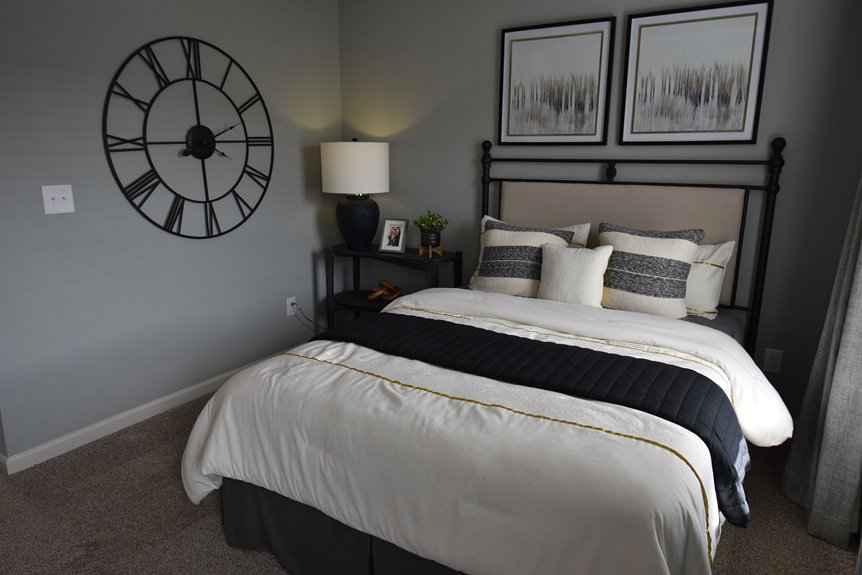
I’ve learned that choosing the right bed frame comes down to your space, style, and how you actually sleep. Platform beds give you that clean, modern look without the bulk of box springs. Panel beds bring traditional weight and presence, though you’ll need that extra foundation. Storage beds hide drawers or lift-up compartments for tight spaces; just watch the ceiling height. Canopy frames make a statement if your room can handle the scale; otherwise, they overwhelm. Adjustable bases address back pain or snoring concerns. Each option serves different functional and aesthetic needs.
Platform Bed Frames: When to Go Box-Spring-Free
Why do we keep buying box springs out of habit when our mattresses don’t actually need them?
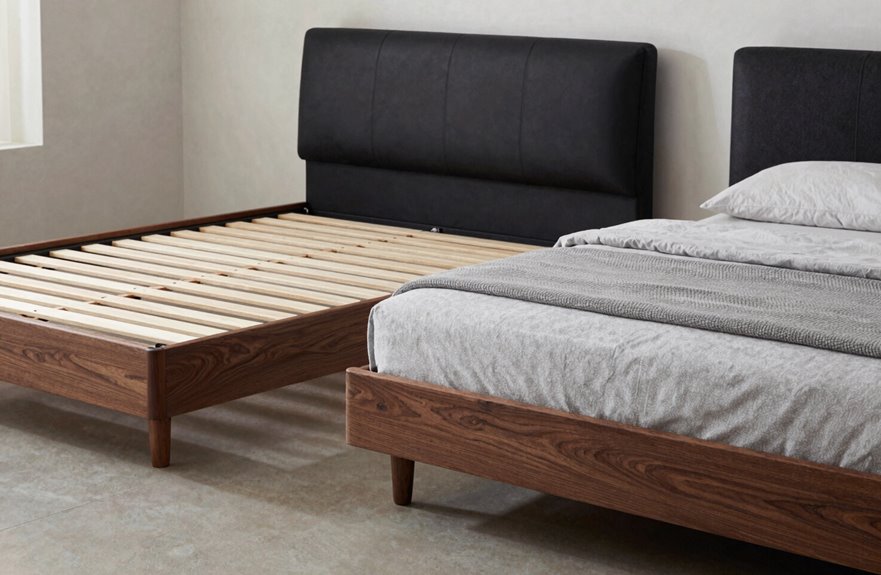
Platform bed frames let us ditch the extra bulk entirely. These box-spring-free setups sit low, usually 12 to 18 inches from floor to sleeping surface, giving bedrooms that clean, minimalist design we see everywhere now. Platform beds work with either slats (keep them under two inches apart) or a solid base, both preventing the sag that ruins mattress performance.
My hybrid mattress sleeps cooler and more supported without a box spring underneath. The low-profile look fits modern, Scandi, and industrial vibes. Among bed frame types, this one is the versatile workhorse. Want easier getting in and out. Pair yours with a thicker mattress to achieve that comfort level.

Low profile bed frame: The queen platform bed dimension is 79.5"L x 59.5"W x 4"H. The height of black bed frame queen is ideal for those who prefer sleeping close to the floor.

Queen Size Bed Frame Dimension:79.5" L x 59.5" W x 4" H. Weight capacity up to 3000 lbs.

Queen size box spring with metal slats compatible with any memory foam or hybrid mattress.
Panel Bed Frames: The Traditional Choice and Its Hidden Costs
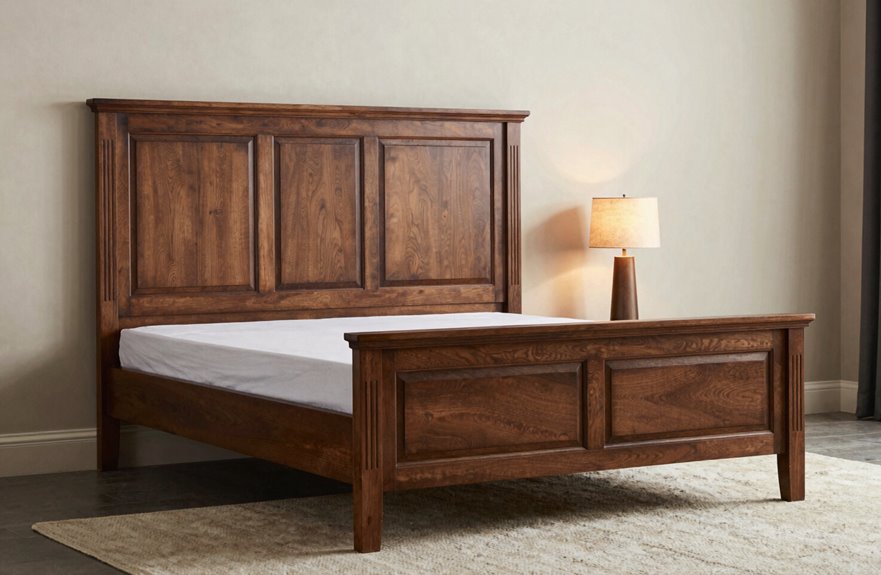
How often do we inherit our bedroom furniture choices without really questioning them? Panel bed frames feel like that comfortable family tradition: headboard, footboard, side rails, and yes, usually a box spring. They give your bedroom style that architectural outline, that sense of permanence we crave.
I once bought a traditional panel bed without weighing the trade-offs. The geometric alignment works beautifully with contemporary decors. Here’s what I learned:
| Feature | Reality |
|---|---|
| Bed height | Elevated, dramatic, but harder to climb into |
| Under-bed storage | Minimal; clean lines mean closed space |
| Box spring pairing | Adds bounce, yet newer mattresses may resist |
| Room presence | Substantial weight demands larger bedrooms |
Traditional panel bed drawbacks sneak up on you. That larger bedroom presence can overwhelm a space. Among bed frame types, this traditional bed remains a grounding choice, though you should measure twice and understand the specific limitations before purchasing.

[Geometric Panel Headboard & Footboard] More than a simple walnut bed frame, this queen size bed uses three framed rectangular panels on both the headboard and footboard to create a clean, symmetrical farmhouse look. The crisp geometric moulding turns the bed into a calm visual centerpiece for modern, classic, or transitional bedrooms.

100% Solid Pine Wood Construction: Crafted entirely from premium solid pine wood, this queen bed frame is free from engineered wood or metal frames. It's the most natural and durable solid wood frame in its class, providing unmatched stability and support for a restful sleep experience.

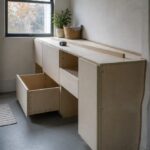
【Ample Storage Space】 Equipped with 4 large under-bed storage drawers on wheels and a adjustable headboard shelf, this queen platform bed with storage provides plenty of room to organize clothes, books, toys, and daily essentials, helping maximize small bedroom space
Storage Bed Frames: Maximizing Space Without Sacrificing Style
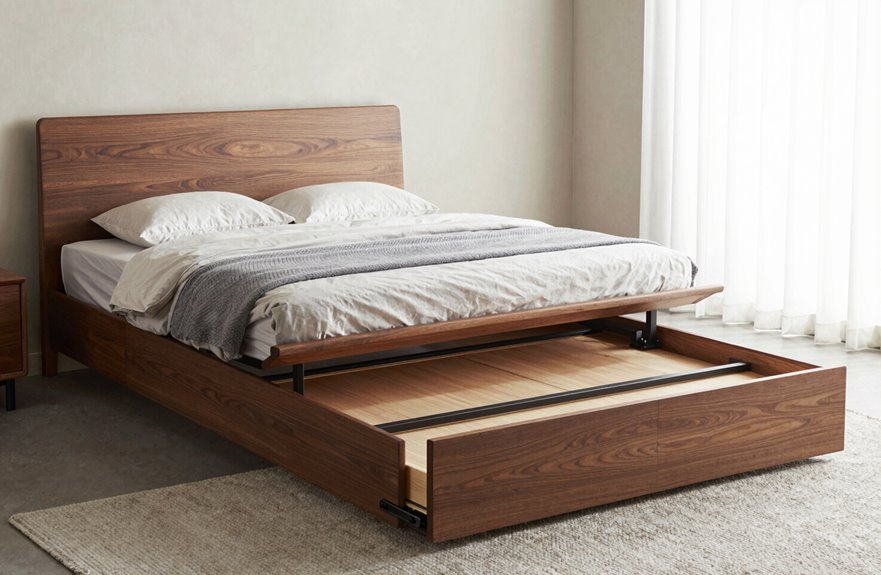
Panel beds charm you with their clean lines, but I got tired of dust bunnies collecting under mine while my closet overflowed. That’s when I discovered storage bed frames, and they’ve changed how I think about bedroom design.
These space-saving solutions turn wasted under-bed storage into organized, hidden storage. You’ll find two main styles: built-in drawers that slide out smoothly, or lift-up storage that reveals a cavernous cavity beneath your mattress. I went with drawers for daily access, though lift mechanisms hold more if you don’t mind removing bedding.
For compact rooms, these bed frame types feel like gaining a dresser without losing floor space. Just measure your ceiling height first. The solid plinth base adds bulk, and you don’t want your sanctuary feeling cramped.

STORAGE BOOKCASE HEADBOARD - This multifunctional storage headboard gives you smart storage solutions with 3 open shelves, a discreet storage compartment, plus 2 handy side shelves on each side of your bed. Keep your bedtime essentials like books, phone, and alarm clock within easy reach while maintaining a clean, organized bedroom.

Spacious Hidden Under-Bed Organization: This hidden under-bed storage space offers huge untapped room to organize seasonal dress blankets and bedroom clutter. Maximize every inch of your bedroom floor space and keep your room tidy all year round

AMPLE STORAGE-Lift-up design provides complete and ample under-bed storage space. Placing suitcases, seasonal clothing other large items, saves your home space, make your life more tidy and orderly.
Canopy and Poster Bed Frames: Do You Have the Room for Statement Furniture?
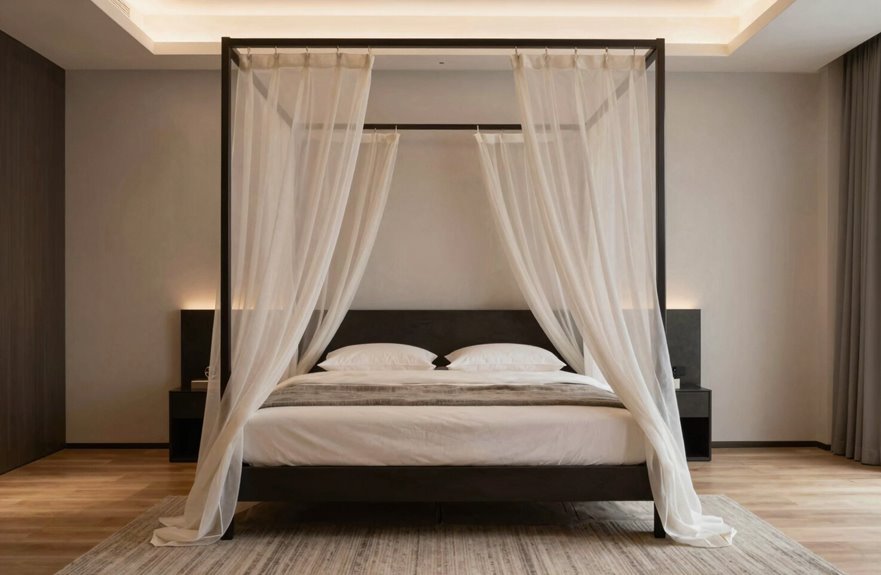
Where do you draw the line between furniture and architecture? With canopy beds and four-poster beds, that line blurs beautifully. These post beds command attention, transforming your sleeping space into something that feels curated and intentional.
Not every room can handle this statement furniture. Ceiling height matters immensely. Nine feet minimum is required, or the posts will feel oppressive. Room proportion and room scale determine whether your bed frame footprint elevates the space or overwhelms it.
Consider traditional vs contemporary carefully. Bulky wood posts read French Country; lighter canopy frame materials in metal or minimal wood suit Japandi or industrial vibes. Match the style to your architecture, and you will create a cohesive bedroom design that enhances rather than disrupts your space.

【Thickened Canopy Bed Frame Size】Full Size: 53" X 78" X 78". Queen Size: 59" x 78" x 78". King Size: 78" x 78" x 78". Metal connectors: make the bed frame more firm, not wobbly. Used to connect height poles, length poles and width poles.

Queen Size:59"WX 78"LX 78"H,16 rods of height, 8 rods of length and 6 rods of width. The frame is very easy to install, use a T-joint to connect the height pole, length pole and width pole, then place the stand feet under the foot of the bed.
【Thickened Canopy Bed Frame Size】Full Size: 53" X 78" X 78". Queen Size: 59" x 78" x 78". King Size: 78" x 78" x 78". Metal connectors: make the bed frame more firm, not wobbly. Used to connect height poles, length poles and width poles.
Choosing Between Bed Frame Types: A Decision Framework for Your Space and Sleep Needs
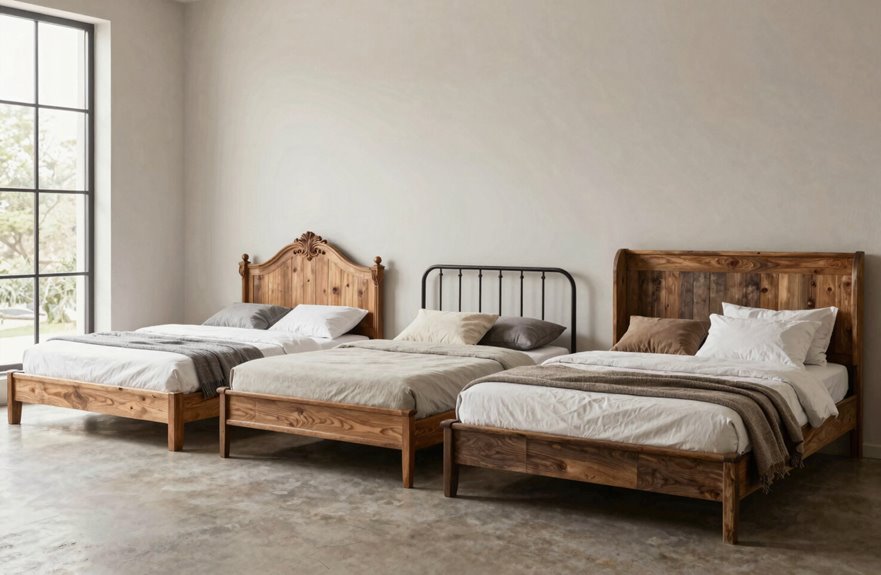
| Your Situation | Best Bed Frame Types | Key Benefit |
|---|---|---|
| Small bedroom, lots of stuff | Storage beds, platform beds | Under-bed storage, clean lines |
| Large room, traditional vibe | Panel beds, sleigh styles | Presence, classic room decor |
| Back pain, snoring partner | Adjustable bases | Customizable positioning |
Match finishes to your room decor. Warm wood floors pair well with walnut or oak. Cool, painted walls work with metal or upholstered frames to create visual cohesion.

Adjustable Comfort: Independently adjust head (0-61°) and foot (0-37°) inclines with a wireless remote for the ultimate comfort in sleep and relaxation.

UNMATCHED COMFORT: Head and foot position of this adjustable bed frame can be controlled separately or simultaneously, explore your ultimate sleeping position and add to customized position. Preset the Zero Gravity, Anti Snore positions to increase comfort, relieve pain, reduce sleep apnea, and acid reflux

Ergonomic Support & Enhanced Comfort: Elevate your rest with an adjustable bed frame designed for optimal body alignment. Independent head (0–50°) and foot (0–10°) inclines allow you to customize your position for ergonomic breathing and spinal support. By keeping your body in a stress-free posture, it effectively relieves back pressure, nighttime snoring, acid reflux, and digestion issues