The real trick to outdoor furniture storage ideas is that the best solutions disappear into your space instead of fighting for attention, and most people start with the wrong question entirely.
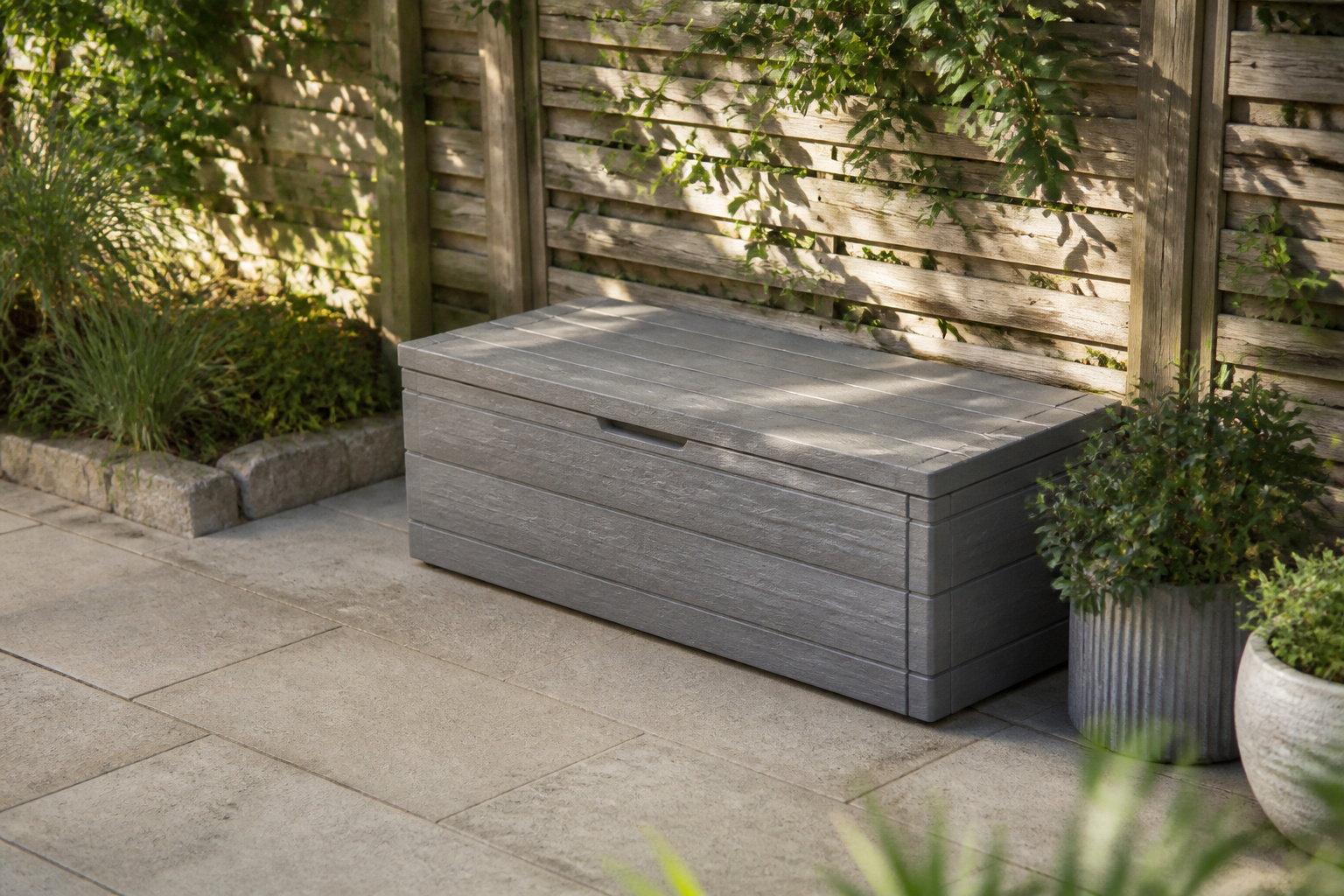
A deck box finished in weathered gray resin against your siding reads as stone, not plastic, because it stays low and horizontal where the eye expects ground.
The Keter Solana proves this: its flat lid works as bench seating, so you gain storage without losing the square foot it sits on.
Deck Box
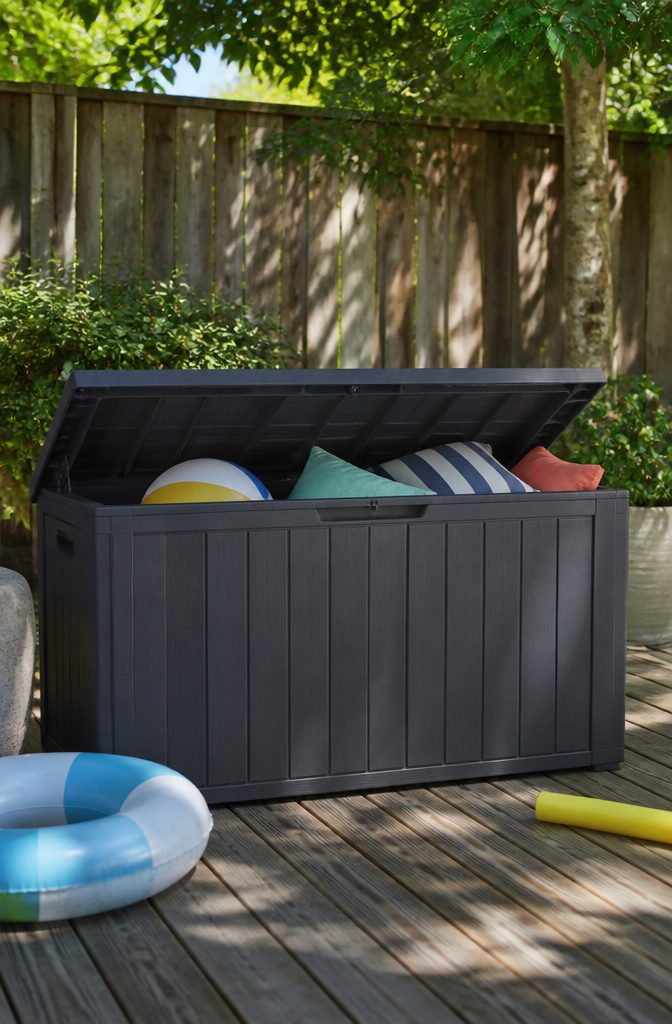
A deck box works best for the things that live outside but still need shielding from rain and sun. Pool toys, outdoor throw pillows, citronella candles, even a small pool robot tucked away between uses all fit.
The catch is moisture trapped inside. A deck box should be sealed well, so the habit that saves grief is letting things fully dry before storing them.
Wet cushions left overnight earn mildew that never quite washes out.
Style choices run wider than the big-box look I used to picture. Resin boxes in dark gray or brown fade against a wall or corner instead of shouting for attention.
Wicker finishes like the Palm Harbor line read more like furniture than utility.
The Keter Solana and Comfy models, or Patiowell’s 78-gallon black plastic version, sit at different price points but share the same trick worth buying for: a flat lid that doubles as bench seating.
Two people can perch on the larger units without the box flexing. That second use matters on a small deck where every square foot earns its keep.
Towel Valet
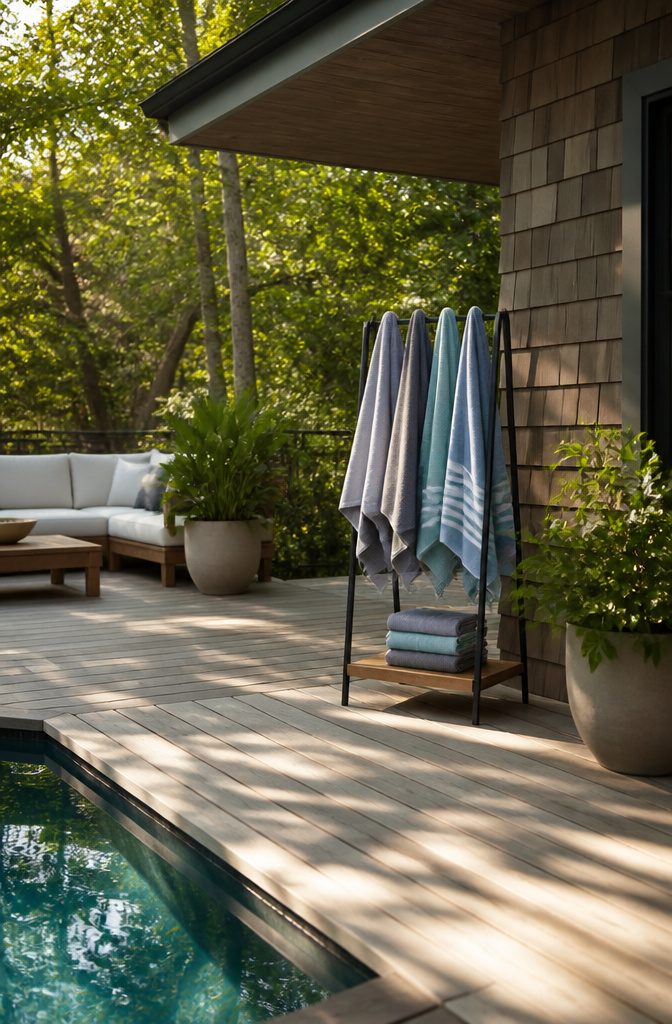
A dedicated spot for pool towels keeps the patio from turning into a laundry pile. I added a towel valet to the backyard last summer, and it has been a game changer.
Most guests bring their own towel, but plenty do not, and I want them to feel like we have so many towels poolside they need not worry about bringing one unless they really want to.
The rack also cuts down on wet kids sprinting through the house to grab one from the mudroom. It gives resort vibes in the best way.
A valet with a small shelf or basket underneath catches the extras, so the supply stays visible and easy to grab.
For the look, a black metal frame or weathered wood finish blends with most patio furniture without shouting for attention.
Wayfair and Ballard Designs both stock valets that hold up to regular use, with the Positano Towel Cabana leaning more decorative if your space reads pool club rather than backyard casual.
Pool Float Storage
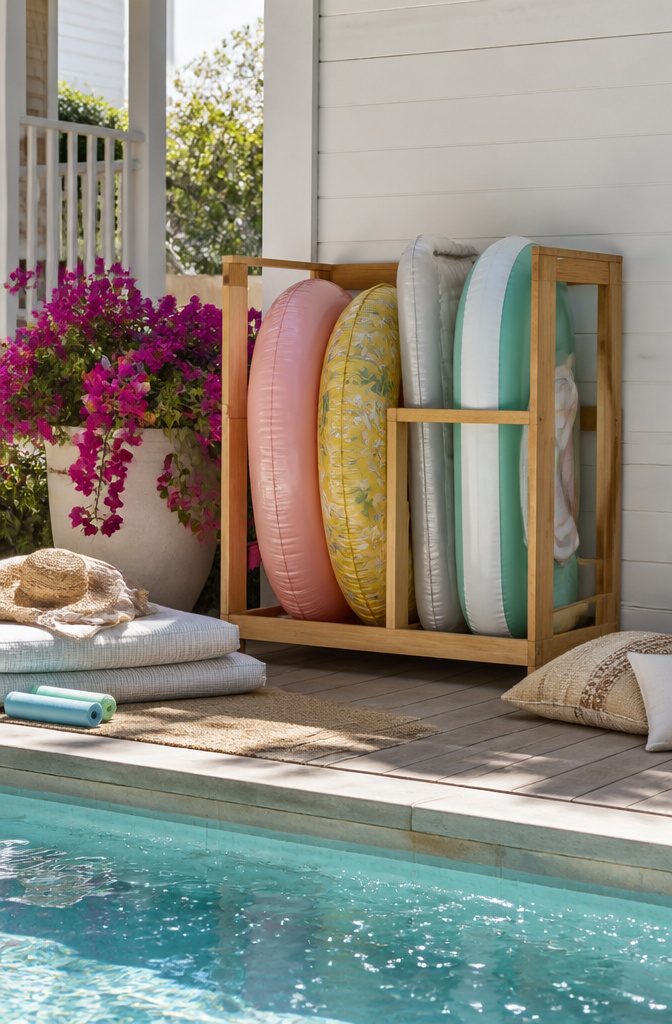
Pool floats have a way of multiplying once you own a pool.
The inner tubes that once stacked neatly in a deck box give way to loungers with rigid backs and odd dimensions, and suddenly nothing fits where it used to.
I have seen this exact progression, and the honest answer to where those larger floats live is that there is not always a great solution yet.
Some end up draped over an outdoor shower rail, others get deflated after every use just to reclaim the space.
A simple storage rack works for the round inner tubes, keeping them upright and easy to grab.
For the loungers, a slotted rack that holds each one vertically by its edge keeps them off the ground and prevents the warped-foam look that comes from leaning them against siding all summer.
Both options stay lean and do not fight the visual landscape the way a bulky bin would.
The oversized floats reserved for movie nights or parties still make the most sense deflated and stowed flat.
It is extra work, but it is the only method that actually protects the material and keeps your deck clear for the other 360 days of the year.
Outdoor Bar Cart
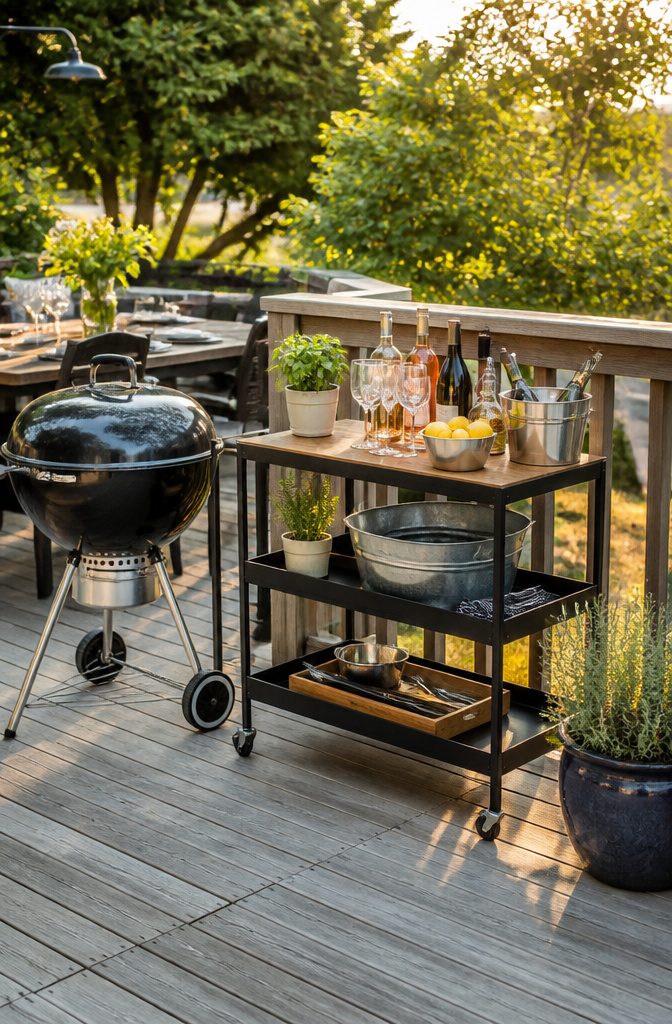
An outdoor bar cart next to the grill turns a simple cooking corner into something that actually functions like a kitchen.
Last summer, while helping redo my sister Andi’s back deck, we rolled one in beside her grill and it immediately became the workhorse of the space: grilling tools on the bottom shelf, prep surface on top, drinks within arm’s reach so no one was trekking back and forth.
The elevated cooler approach works even better for flow than a built-in beverage fridge. A freestanding cooler on a cart keeps guests out of the cook’s way and becomes part of the layout rather than a traffic problem.
Stores carry options like the Lirago Outdoor Kitchen Island with a sink if you want running water, or the simpler Luxeyard Grill Cart for tighter budgets and footprints.
Versatility is the real win here. Roll the cart against the wall for storage, pull it beside the grill for a Saturday cookout, wheel it to the seating area when the food’s ready.
A solid-wood island from Wayfair or a metal rolling cart from Lowe’s both handle the weather if you have a covered spot.
Without cover, plan on a fitted cover or seasonal storage; even powder-coated steel holds up only so long against standing water.
Hose Storage
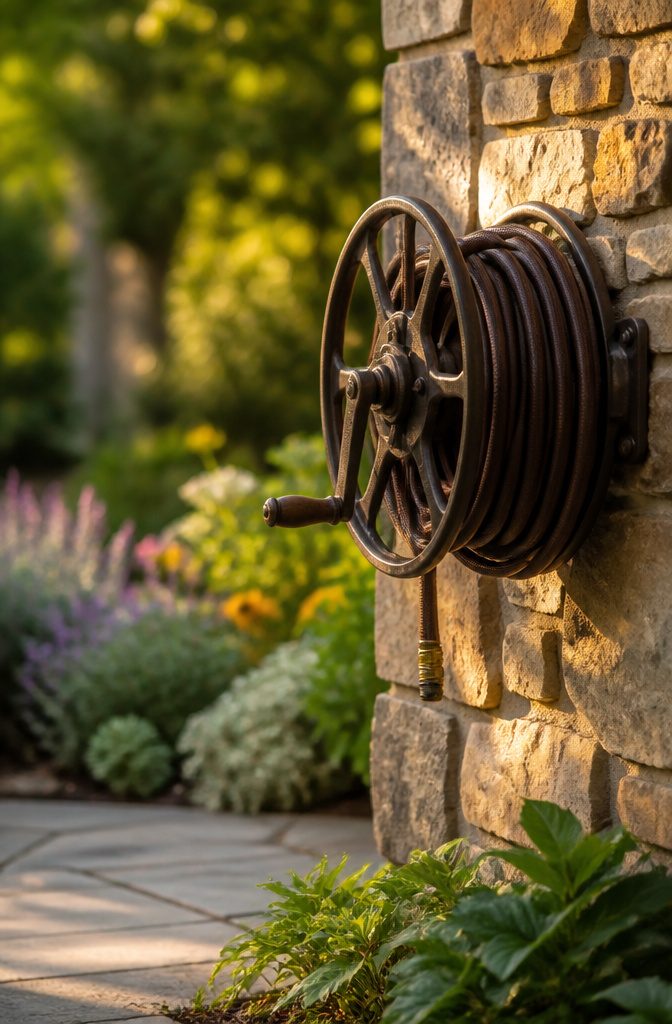
Hose storage has really come a long way in terms of aesthetics, and that matters more than you might expect.
If the hose is going to be attached to the front or side of the house or in an exposed place, make it beautiful.
A hand-crank wall reel blends into masonry and keeps the coil off the ground without asking you to reach into any concealed space. For a freestanding option, a resin hose bin hides the entire length from sight.
Copper and embossed metal hose pots read as planters at a glance, which helps when the spigot sits in a bed rather than against siding.
The resin bin works well if you use a hose twice a week and want the fastest wind-up; the pot wins if you move the hose around the yard and need something you can carry.
What Blends In
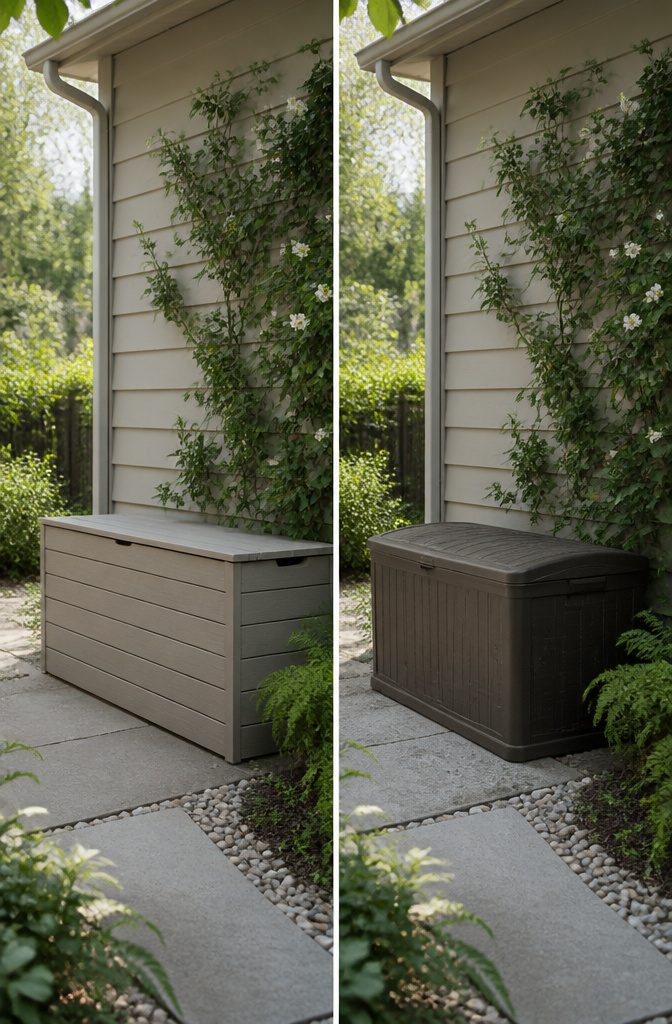
A storage box that fights the whole patio for attention ends up as the thing you notice first.
The sources keep coming back to the same test: does the solution stay quiet in the visual field, or does it announce itself?
Chris Loves Julia frames this as not disrupting the visual landscape, and that phrasing sticks because it shifts the burden onto the object rather than the eye. The eye is doing what it should.
Material does most of the work here.
Wood that has weathered to a soft gray, resin finished in a tone that reads as stone rather than plastic, metal with a matte powder coat in charcoal or olive: these disappear against decking or gravel in a way that glossy black or bright white never will.
The finish should read as found, not placed.
Scale matters too. A low, wide cabinet follows the horizontal lines of most patios; something tall and narrow breaks them.
The eye travels up, and up is where you wanted the sky to stay.
The harder call is color versus texture. A woven surface in a slightly wrong brown still blends better than a perfectly matched paint in a flat, machine finish.
Texture catches light the way leaves do; flat paint catches it like a sign.
What Works Hard
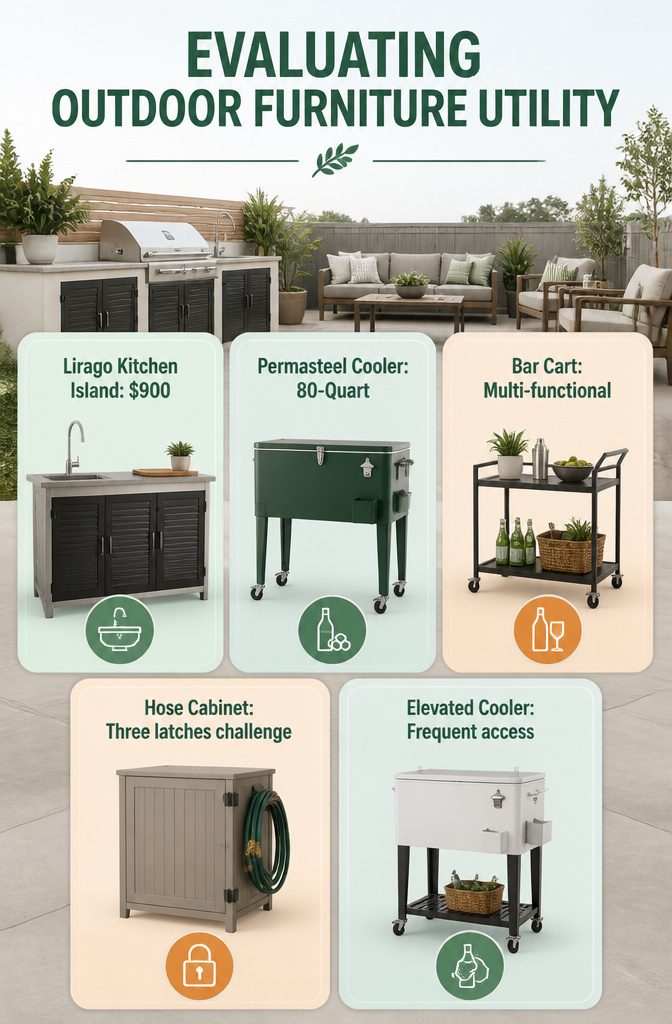
A storage solution earns its spot by solving exactly one problem well. The Lirago outdoor kitchen island with sink keeps prep and cleanup contained to the patio so you’re not tracking through the house with grill grease on your hands.
The Permasteel 80-quart classic patio cooler does something different: it moves beverage service out to where guests actually gather instead of clustering around a doorway.
That distinction matters when you’re deciding what to buy. I look at how a piece will be used Tuesday through Thursday, not just during the party.
A bar cart parked next to the grill becomes a workhorse for weeknight cooking, part station, part tool storage, part serving surface. The elevated cooler works harder for flow during hosting, but sits idle more often.
The test is whether the item pulls weight on ordinary days. Pool float storage that only corrals on Sunday fails.
A hose cabinet that hides the mess but requires three latches to open fails faster.
Built-in beverage fridges look seamless, yet I keep noticing how much use a simple elevated cooler gets when it’s easier to reach than the full outdoor kitchen.
Chris Loves Julia’s setup layers both: permanent storage for daily grilling tools, portable pieces for the moments when people actually show up. That split, not one perfect box, is what makes a patio functional.
What Pulls Double Duty
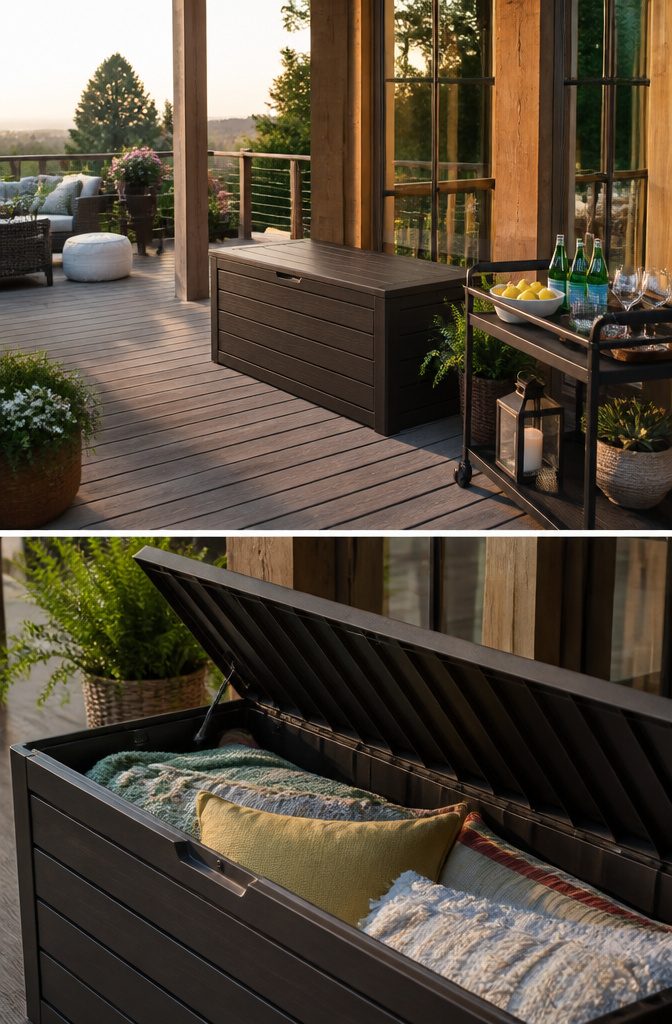
A deck box that doubles as a bench is the first place most patios should start.
The Keter Solana and the Comfy 71 Gallon both sit at standard seat height, which means you gain a place to put cushions and pool gear without losing a square foot of floor space.
The seal matters more than the style: anything damp goes in moldy, so pool toys and goggles need a full dry on the railing first.
Dark gray or brown resin against a wall basically disappears. Wicker looks sharper on a covered porch, but the resin boxes shrug off a full season of rain and cost half as much.
For renters especially, a 71-gallon box that moves with you beats built-in seating you leave behind.
The outdoor bar cart route works if you grill more than you lounge.
My sister’s deck had no room for a kitchen island, so we parked a cart next to the grill and split the load: tools below, prep surface above, drinks on the cooler beside it.
The elevated cooler turned out to be the better buy than the cart itself, since guests stopped bottlenecking through the kitchen door.
Frequently Asked Questions
Where do you keep your pool floats when they’re not in the pool?
There is not always a great solution yet. Round inner tubes fit on a simple upright rack, and loungers with rigid backs do best on a slotted rack that holds each one vertically by its edge.
Oversized floats for special occasions should be deflated and stored flat to protect the material and keep your deck clear.
Can I borrow a towel?
A towel valet stocked with plenty of extras makes the question unnecessary. Most guests bring their own, but a visible supply poolside means no one has to ask or feel awkward about forgetting one.
It also cuts down on wet feet running through the house, and the rack itself reads as resort-style rather than utilitarian.