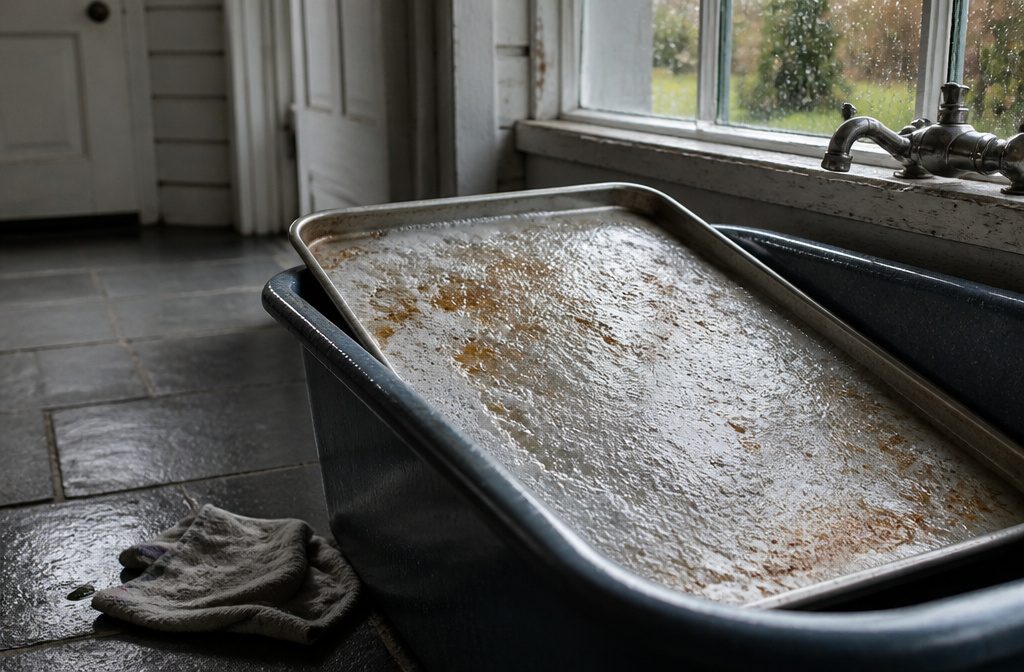
Most baked-on grease comes off with baking soda, hot water and 30 to 60 minutes of soaking. The messes that need more are the ones left through a dozen oven cycles, where sugar and fat have fused to the metal.
For those, a peroxide and baking soda sandwich sits for 2 hours before wiping, or you can spray oven cleaner, wait half an hour in a cold oven, then scrub with a Brillo pad.
1. Hot Water and Salt or Baking Soda
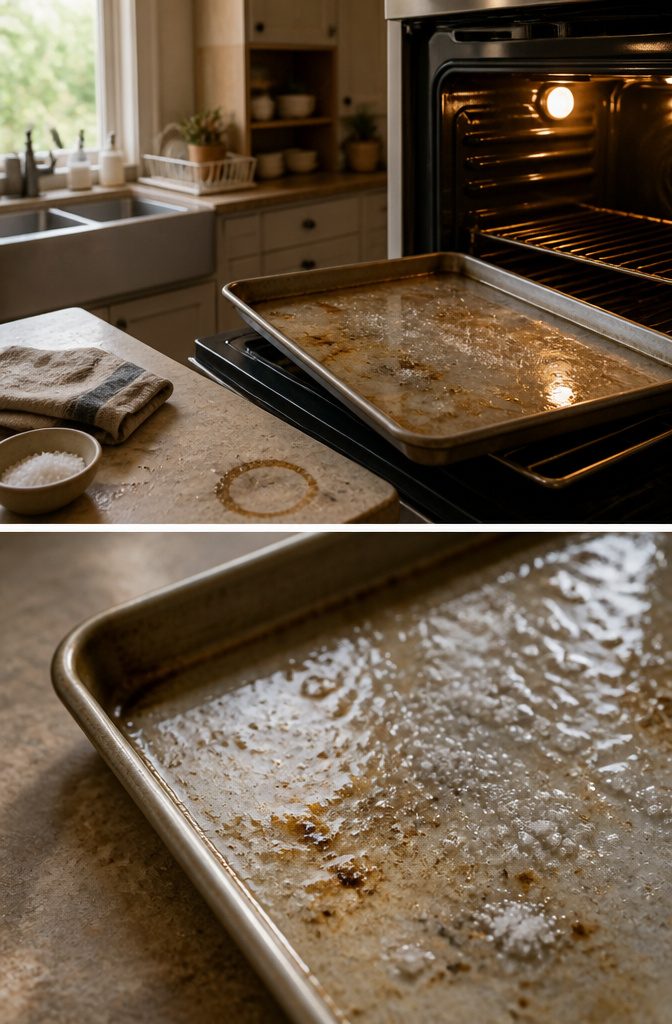
Hot water works when grease or recent residue needs softening rather than scrubbing.
The simplest version is to sprinkle two tablespoons of salt or baking soda on the sheet, fill it with water, then put it in the oven at 225°F for half an hour.
Once the water boils, turn off the heat and remove the pan.
Dump the water and wipe with a sponge or crumpled foil. I reach for this when a nonstick sheet has fat drippings or caramelized spices that a regular wash won’t shift.
If the pan won’t fit in the oven, boil salted water separately and pour it over the sheet.
Let it sit up to two hours before scraping. For smaller pans, sprinkle salt or baking soda on the surface, cover with water, bring to a boil on the stove, then turn off the heat and let sit 30 minutes.
All three soften oils and residue without hard scrubbing. A fourth option is steam: heat water to 140°F in a tray, rest the sheet above it for 10–15 minutes, and the steam loosens grease enough to wipe off.
2. Baking Soda Paste and Vinegar Treatments
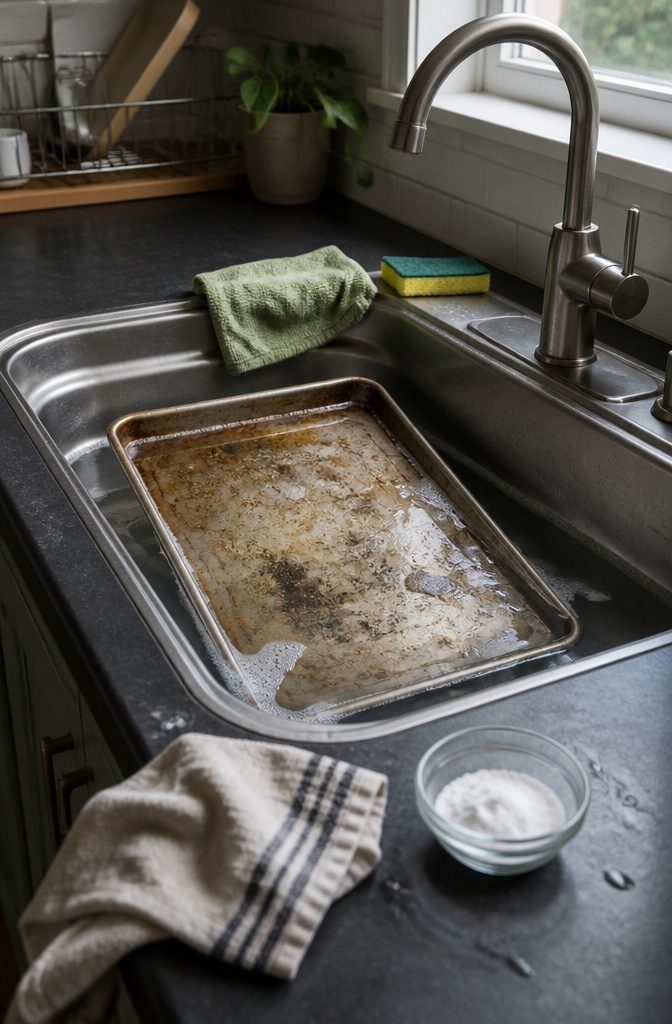
Baking soda lifts grease and burnt residue without scratching, and for most messes that’s enough on its own.
Pour hot water over the pan, sprinkle a few tablespoons of baking soda on top, and let it sit for an hour before wiping clean with a soft cloth.
When the buildup is tougher, filling the sink with hot water plus half a cup of baking soda and half a cup of vinegar works for non-nonstick pans soaked 30 to 60 minutes, then scrubbed with the rough side of a sponge.
For nonstick surfaces, cover the pan with 2 teaspoons baking soda and 1 cup vinegar, let it sit 30 minutes, then wipe with warm water and a soft rag.
Seriously scorched pans get an overnight soak in hot water with 1 tablespoon baking soda and a few drops of dish soap.
One wrinkle: some argue the fizzing reaction between baking soda and vinegar cancels both out, leaving you with salt water that does little.
I still find the combo pulls up stubborn spots baking soda alone won’t budge, especially when the pan has been sitting dirty for days.
3. Hydrogen Peroxide With Baking Soda
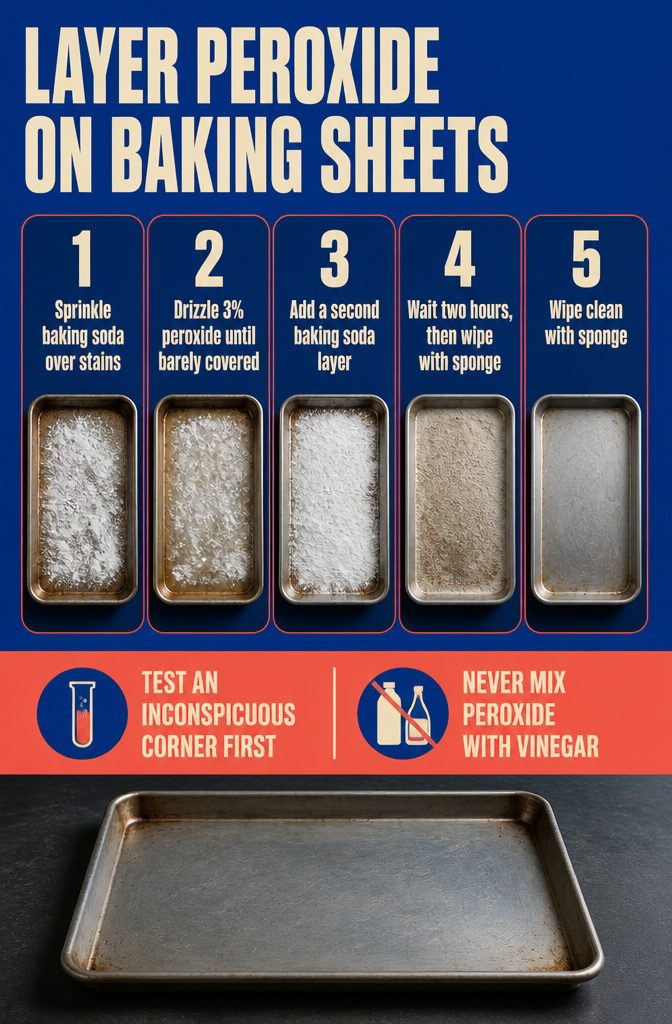
This treatment layers ingredients for controlled reaction. Sprinkle baking soda over the stained area, drizzle 3 percent hydrogen peroxide until the powder is barely covered, then add a second baking soda layer on top.
The sandwich sits for two hours before you wipe it clean with a sponge. For stainless steel sheet pans, the same peroxide concentration works with a shorter wait of fifteen minutes.
Peroxide is not food-grade and carries bleaching properties, so I test it on an inconspicuous corner first to confirm the metal tolerates it. Never mix hydrogen peroxide with vinegar.
The combination produces peracetic acid, which damages surfaces and irritates skin. If you use both cleaners in your kitchen, keep them on separate surfaces and never in the same container, where the concentration becomes more harmful.
4. Scrubbing With Foil, Sponges, or Steel Wool
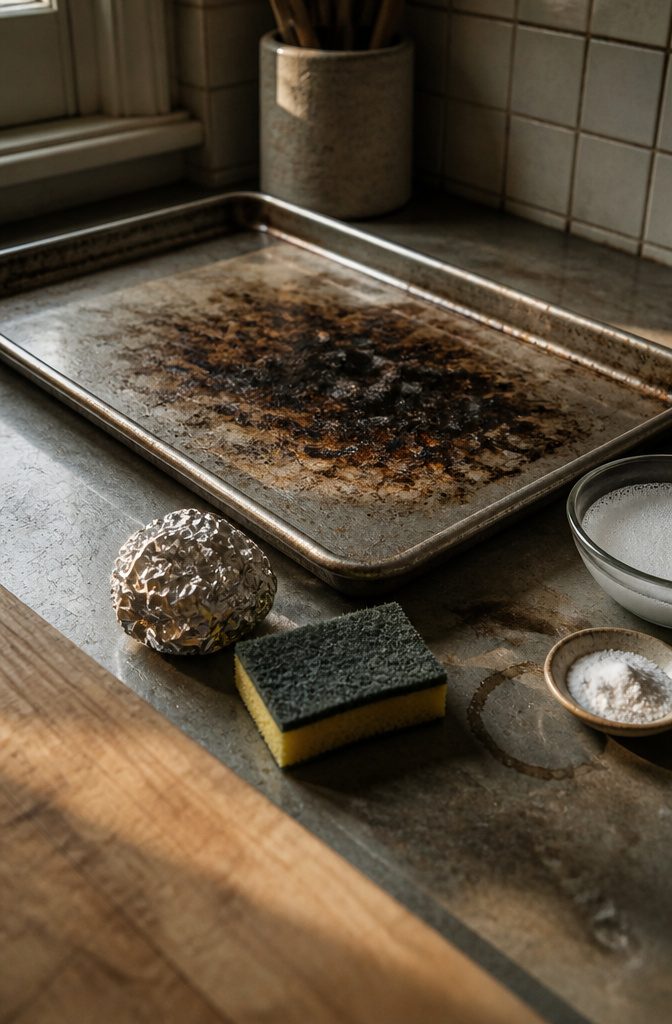
A fist-sized ball of aluminum foil works like a reusable scrubber when crusty bits won’t come loose any other way.
Crumple the foil gently so it holds together, then scrape in small circles with hot water, dish soap, or a sprinkle of baking soda to lift baked-on grease.
Foil is safe on uncoated stainless steel or aluminum sheets but will scratch nonstick or coated pans, so check the surface before you start.
For pans that can handle abrasion but don’t need foil, the rough green side of a kitchen sponge clears most buildup when paired with hot water and a little elbow pressure.
I reach for that combination first unless the residue is thick or carbonized. When grease clings after soaking, a rice-grain scrub with hot water lifts stubborn spots without gouging the metal.
Steel wool or a Brillo pad becomes appropriate only on heavy stainless steel with burned patches that won’t budge otherwise—those tools remove finish along with the mess, so they’re the last option rather than the first.
5. Oven Cleaner for Heavy Buildup
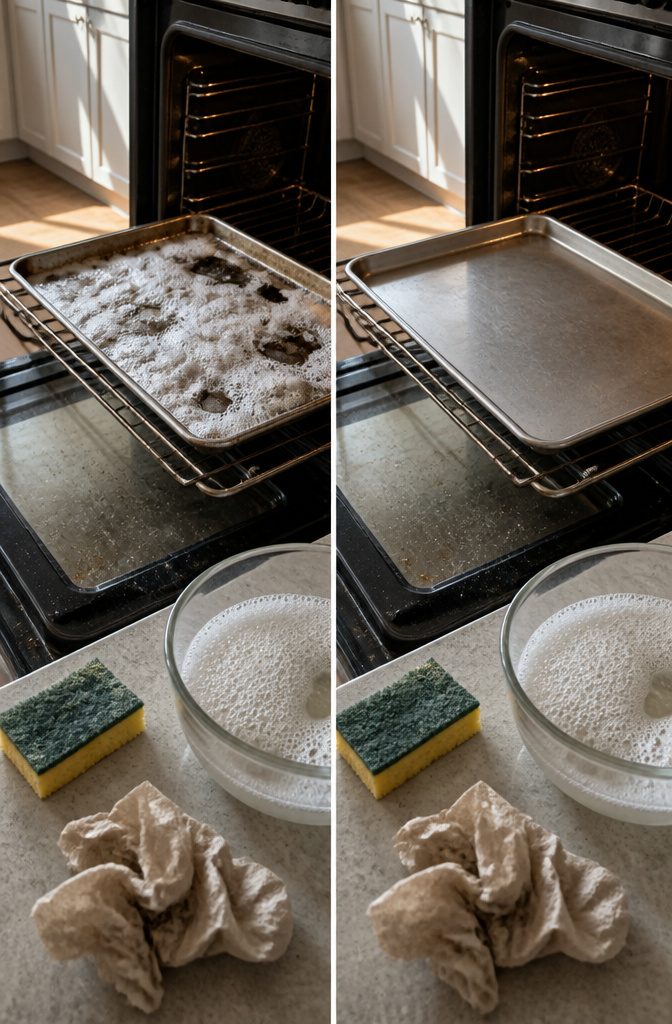
Easy-Off oven cleaner uses a caustic formula that can strip stains gentler methods leave behind. Spray the sheet until foam covers the surface, place it in a cold oven to contain the fumes, and wait half an hour.
Wipe off the foam with paper towels, then scrub any remaining residue with a heavy-duty sponge or Brillo pad. The process removed several layers of baked-on grease but did not bring the pan back to pristine.
It also required more scrubbing than the product’s label suggested, and a second round of spray and waiting when the first pass left dark patches in the center.
Two warnings matter here. Oven cleaners contain lye or other alkaline chemicals that may not be safe around food even after rinsing, so wash the sheet thoroughly with hot water and dish soap before using it again.
The same chemicals can also damage aluminum pans by discoloring or pitting the surface, which means this method works best on steel.
Match the Method to the Pan Surface
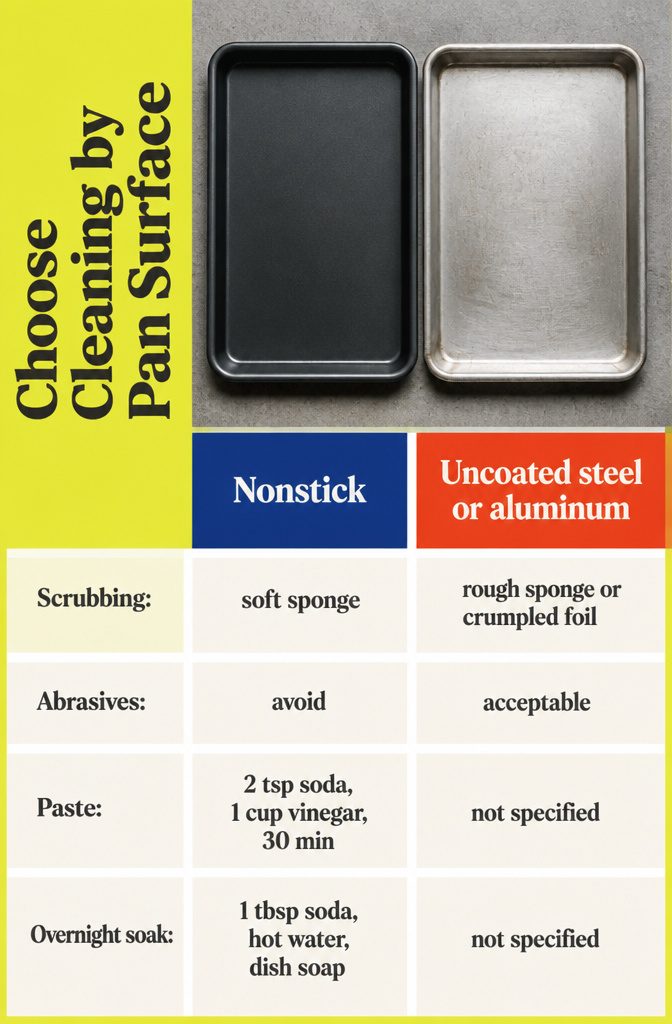
The approach depends on what you’re cleaning and what the pan can handle.
Recent messes come off more easily than grease and sugar that baked into the surface over time, so a simpler method often works when you catch it early.
A fresh spill might need only hot water and a scrub, while something left on through a dozen oven cycles calls for stronger chemistry.
Nonstick pans deserve gentler treatment. Anything abrasive will scratch the coating, so skip steel wool, foil scrubbing, and anything rougher than the soft side of a sponge.
For nonstick surfaces, the safer path is a paste made from 2 teaspoons baking soda and 1 cup vinegar left to sit for 30 minutes, then wiped away with warm water and a soft cloth.
If that doesn’t lift the debris, an overnight soak in hot water with 1 tablespoon baking soda and a few drops of dish soap usually finishes the job.
Uncoated stainless steel or aluminum can take more force.
You can use the rough side of a sponge or even crumpled foil as a scrubber, as long as the pan has no coating to protect. Just avoid foil on anything nonstick.
What Scrubbing Tools Can Damage
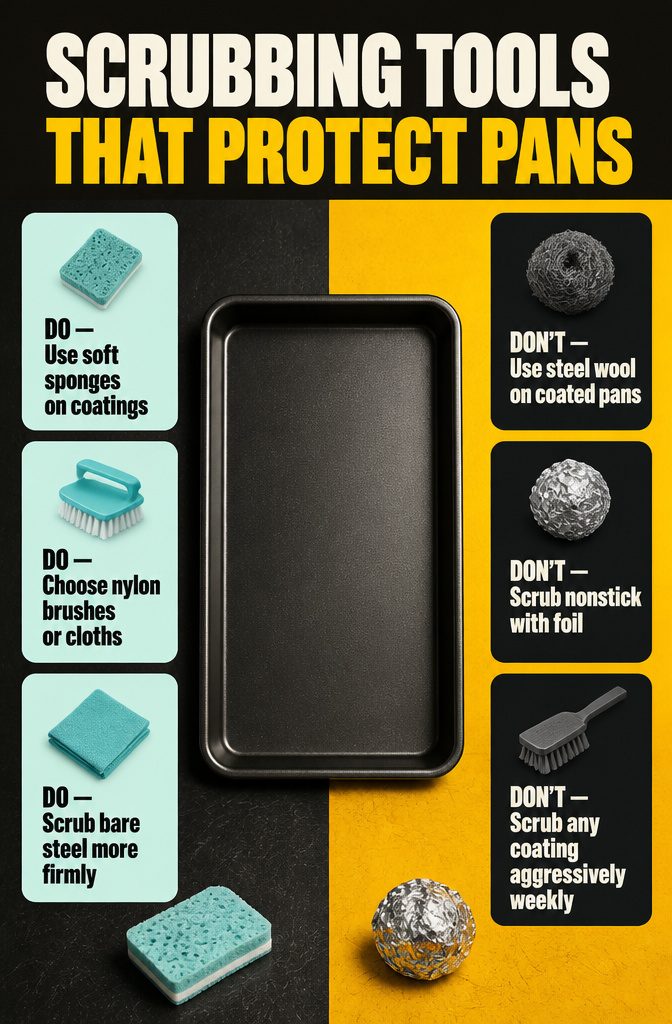
The wrong scrubbing tool strips nonstick coatings faster than burnt food ever could. Here’s what to skip:
- Steel wool and Brillo pads scratch nonstick, ceramic, and aluminum pans. They work on uncoated stainless steel, but they leave fine scratches that catch grease over time.
- Aluminum foil is safe on stainless steel or bare aluminum if you crumple it gently and scrub in circles. Do not use it on nonstick or coated surfaces — it scratches through the finish the same way steel wool does.
- Repeated hard scrubbing wears down any coating eventually. A few passes with a stiff brush won’t ruin a pan, but weekly aggressive scrubbing turns nonstick into stick-plenty within a year.
For nonstick and ceramic, stick with soft sponges, nylon brushes, or dish cloths. For stainless steel, you can scrub harder without worry.
When Replacement Beats Cleaning
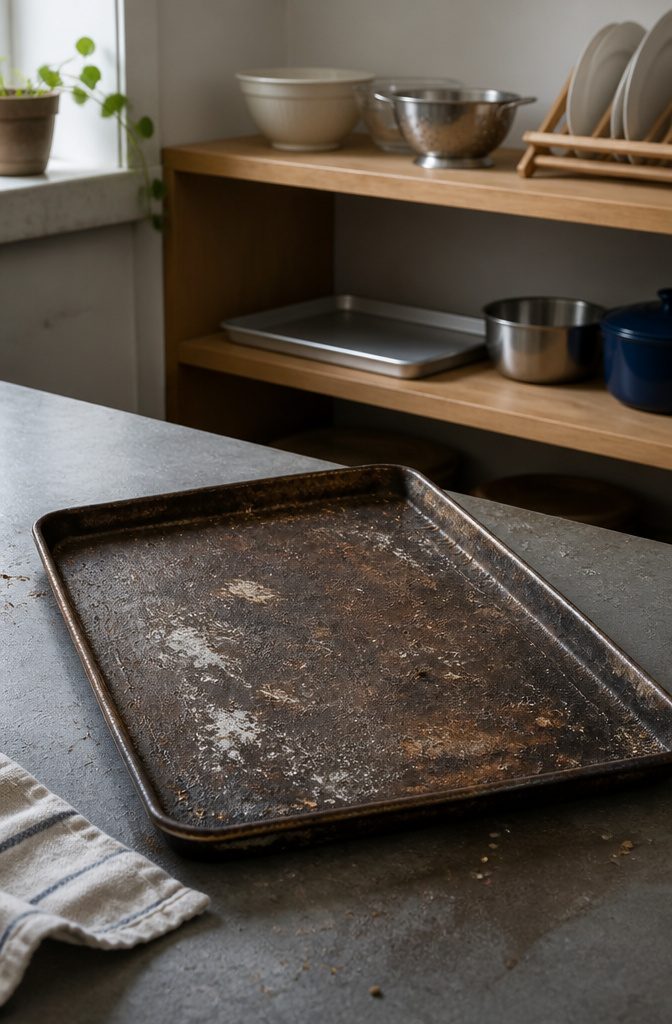
Sometimes a pan has taken so much heat and grease that no amount of scrubbing will bring it back to clean. If the surface is warped, flaking, or showing rust through the coating, replacement is the better call.
I’ve tested oven cleaner on heavily stained aluminum pans and seen real improvement, but even the strongest methods leave ghost marks where carbonized oil has fused to the metal.
That residue is permanent. If a pan still bakes evenly and the residue doesn’t transfer to food, you can keep using it.
But if you’re spending an hour per sheet and the stains barely budge, the time and chemical cost outweigh what a new pan runs.
A basic aluminum half-sheet costs less than ten dollars, and starting fresh often makes more sense than chasing a finish that won’t come back.
Stop Buildup Before It Starts
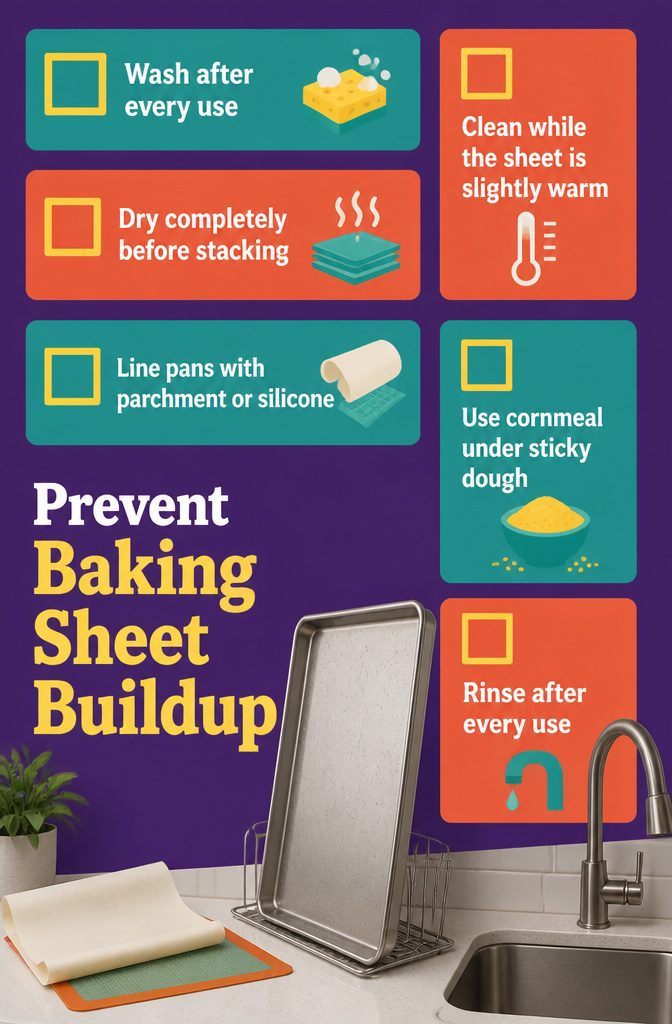
The best defense against heavy buildup is stopping it from settling in the first place. A few small habits save you from the scrubbing marathons later.
- Clean after every use. Grease and sugar harden fast, and what wipes off easily when warm turns into a scrubbing project overnight. A quick wash while the sheet is still slightly warm takes thirty seconds.
- Dry sheets completely before stacking. Moisture trapped between pans can rust aluminum and leaves stains that look baked on even when they’re not.
- Line with parchment paper or silicone mats. They catch drips and splatter before they reach the metal, and you can toss the liner instead of soaking the pan.
- Sprinkle cornmeal under sticky dough or items that tend to leak. It absorbs some of the grease and keeps the mess from spreading across the whole sheet.
Skipping the deep scrub once in a while is fine. Skipping the rinse after every use turns into the kind of buildup that needs cornstarch paste or microbubble steaming to fix.
Frequently Asked Questions
Can you use baking soda and vinegar to clean baking pans?
Yes. Fill a sink with hot water, add half a cup of baking soda and half a cup of vinegar, then soak the pan for 30 to 60 minutes before scrubbing with the rough side of a sponge.
For nonstick pans, cover the surface with 2 teaspoons baking soda and 1 cup vinegar, let sit 30 minutes, then wipe with warm water and a soft cloth.
What is the best way to remove burnt grease from baking sheets?
Sprinkle 2 tablespoons of salt or baking soda on the sheet, fill with water, and heat in the oven at 225°F for 30 minutes.
Once the water boils, turn off the heat, remove the pan, dump the water, and wipe clean with a sponge or crumpled foil.
Is it safe to use aluminum foil to scrub baking sheets?
Foil is safe on uncoated stainless steel or bare aluminum sheets but will scratch nonstick or coated pans. Crumple it gently and scrub in small circles with hot water or baking soda to lift baked-on grease.
How often should baking sheets be cleaned to prevent buildup?
Clean after every use.
Grease and sugar harden quickly, and what wipes off easily when warm turns into a scrubbing project overnight. A quick wash while the sheet is still slightly warm takes 30 seconds.
Can I put cookie sheets in the dishwasher?
Most manufacturers recommend hand washing baking sheets because dishwasher detergent can discolor aluminum and strip nonstick coatings over time.
If the pan is heavily stained and you don’t mind accelerated wear, a dishwasher cycle may help, but it shortens the pan’s life.
How do I get the brown off the bottom of my pans?
Make a paste from baking soda and hydrogen peroxide (3 percent), spread it over the brown spots, and let sit for 2 hours before wiping clean. For stainless steel, the same peroxide concentration works with a 15-minute wait.
How to prevent baking pans from rusting?
Dry sheets completely before stacking.
Moisture trapped between pans can rust aluminum and leaves stains that look baked on even when they’re not. Store in a dry spot and avoid leaving water sitting on the surface.