Professional cleaners claim a full house takes an hour when you follow their system, but that speed depends on never stopping mid-task to find a bottle or remember which room comes next.
The real trick is letting products sit while you work elsewhere.
Spray bathroom surfaces and leave for an hour while you dust bedrooms, because the solution breaks down soap scum without scrubbing and you finish two rooms in the time one used to take.
1. Plan the Work and Prepare Supplies
Professional cleaners follow a system, and the first step in that system is deciding what gets cleaned when and having everything you need in arm’s reach before you start.
Daily, weekly, monthly, and seasonal checklists keep the work predictable instead of reactive. Once a week is the most common schedule for a full house clean, and some cleaners claim the entire job takes an hour with the right routine.
That might only hold for very small homes, but the principle is sound: time disappears when you stop mid-task to hunt for a spray bottle or remember what room comes next.
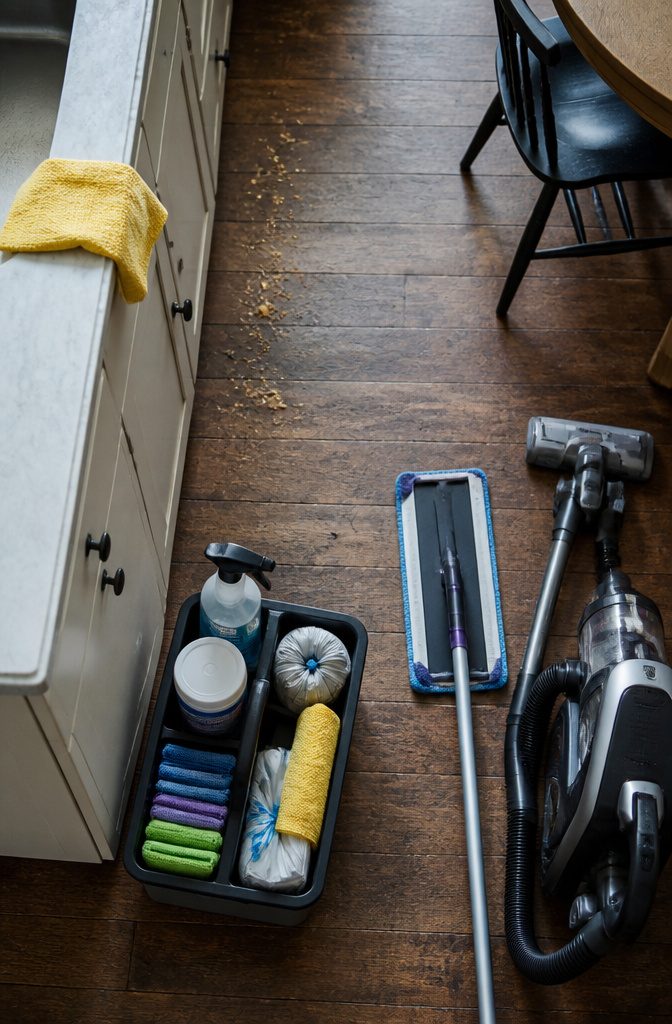
Gather your supplies in one caddy or bucket before you move through the house. That means trash bags, a mop, a vacuum, all-purpose cleaner, glass cleaner, microfiber cloths, and disinfectant wipes.
You can simplify further if you want—some professionals work with as few as three products: one cleaning solution, white vinegar in a spray bottle, and a wood cleaner like lemon oil.
You want your hour for cleaning, not hunting down supplies.
2. Tidy or Declutter Before Cleaning
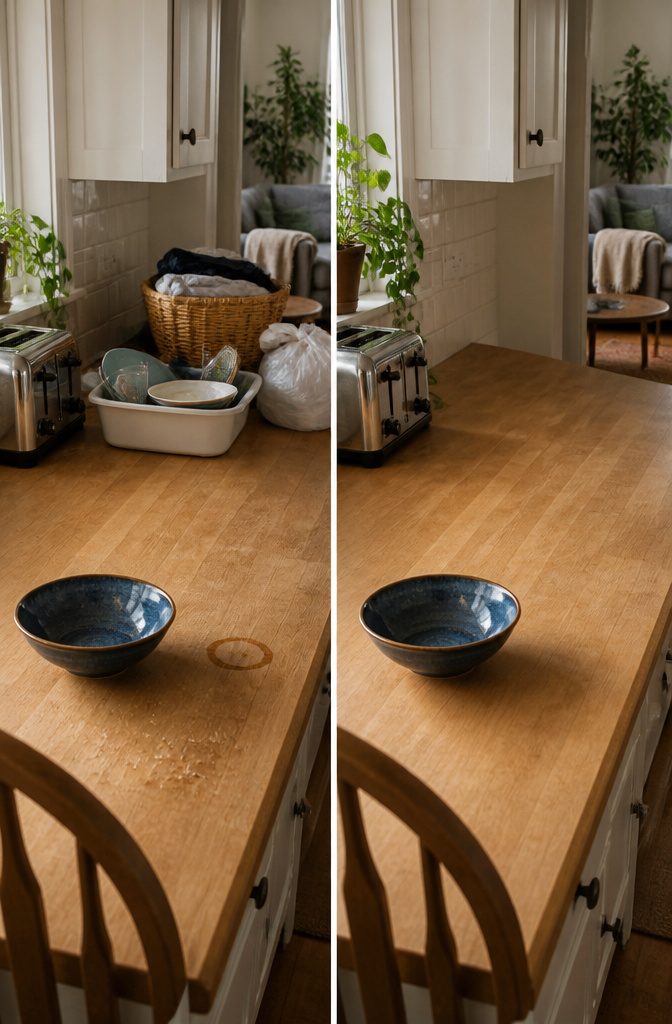
Clear the surfaces and gather items by room before you pick up a cloth. Trying to clean around clutter slows the work and wastes product.
I work corner to corner through a space and group things that belong elsewhere: dirty dishes to the dishwasher, laundry to a basket, trash to the bag I carry. That keeps me from cleaning the same surface twice.
Sources differ on whether you should tidy quickly as part of cleaning or set decluttering aside as a separate task.
The quick-tidy approach treats it as the first pass through each room. The separate-task approach warns against attempting to clean and declutter at the same time, because sorting belongings and scrubbing floors pull your attention in opposite directions.
Both agree that moving room by room to collect laundry, dishes or trash before the actual cleaning begins makes the rest go faster.
3. Apply Products That Need Time to Work
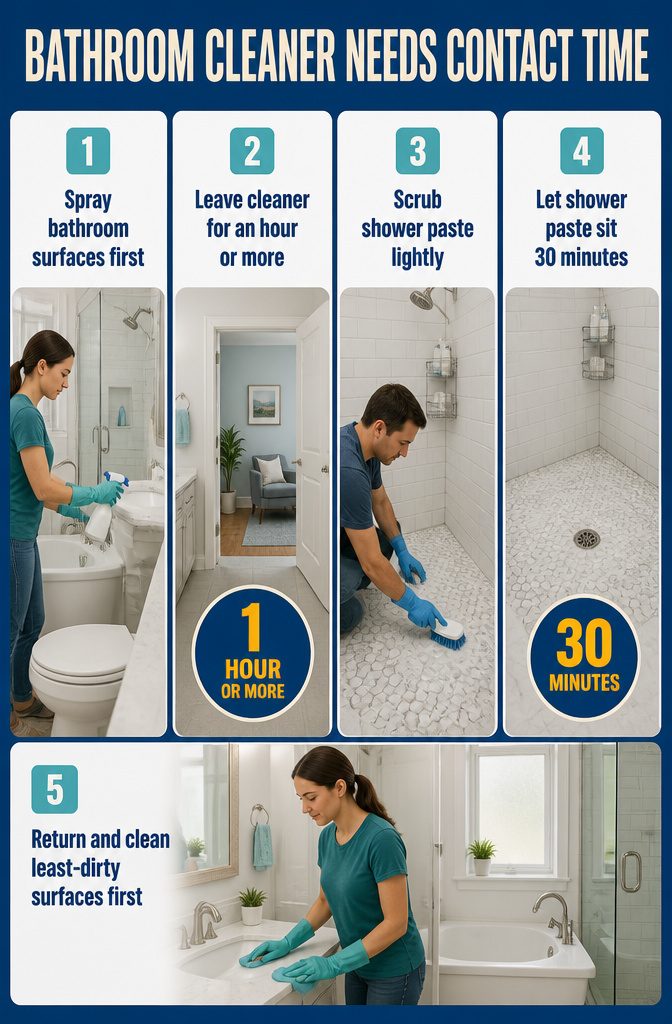
The real difference between someone who cleans and someone who cleans professionally is knowing when to walk away.
Most bathroom products work better when you let them sit for an hour or more, which means you spray the sink, tub, toilet and shower first, then leave the room and do something else.
The solution needs time to break down soap scum and mineral deposits without scrubbing.
When you come back, start with the least dirty surface and work toward the dirtiest, which gives the grimiest spots the longest contact time before you touch them.
Shower floors are the exception, because they need a different approach. A paste made from powdered cleanser and granular dishwasher detergent sits directly on the grout and textured surfaces that trap dirt.
Sprinkle powdered Comet and granular dishwasher soap on the floor of your shower. Add enough water to make a paste. Using a scrub brush, first scrub a little in, then let it sit for about 30 minutes.
— BuzzFeed
That half-hour window is long enough to clean another room, and when you return the paste has already loosened what used to take ten minutes of scrubbing.
4. Clean Systematically from High to Low
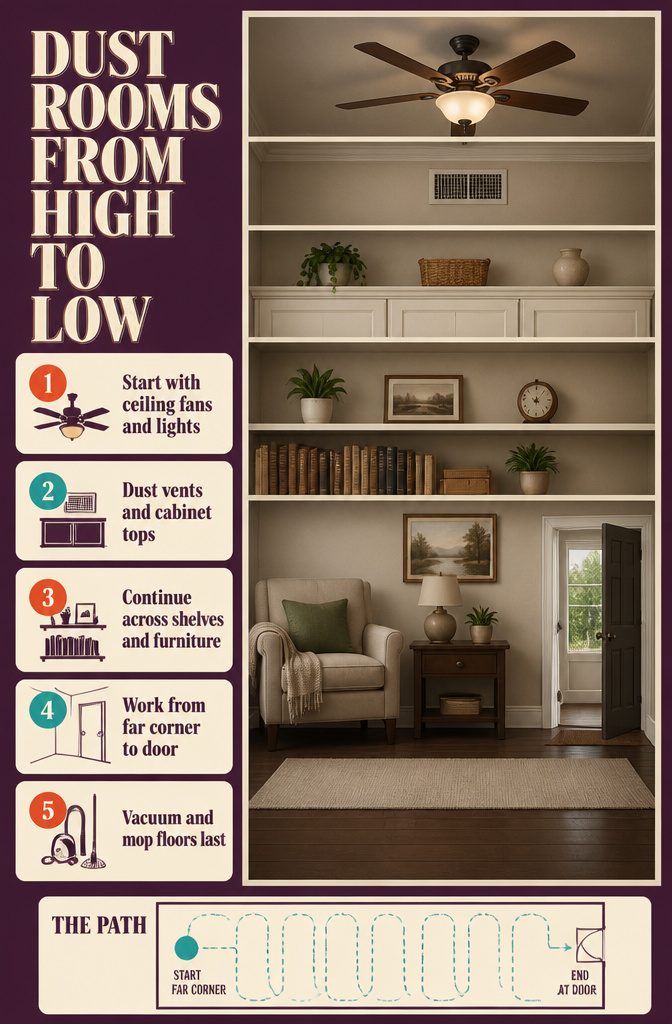
I dust from the ceiling downward so that debris falls onto surfaces I haven’t finished yet instead of onto ones I just wiped.
That means ceiling fans and light fixtures first, then vents, tops of cabinets, shelves, and furniture, and floors dead last. If I vacuum before I dust, I end up vacuuming twice.
The path matters as much as the order. I start in the farthest corner of the room and work my way back toward the door, which keeps me from walking through finished areas and tracking dust or dirt across them.
Within each zone, I move from back to front and top to bottom. A long-handled bendable duster handles ceiling fans and high shelves without a step stool.
For delicate items, a soft-bristled paintbrush clears dust without risking damage, and the brush attachment on a vacuum works well for air vents and baseboards where dust tends to pack in.
5. Work Efficiently Across Tasks or Rooms
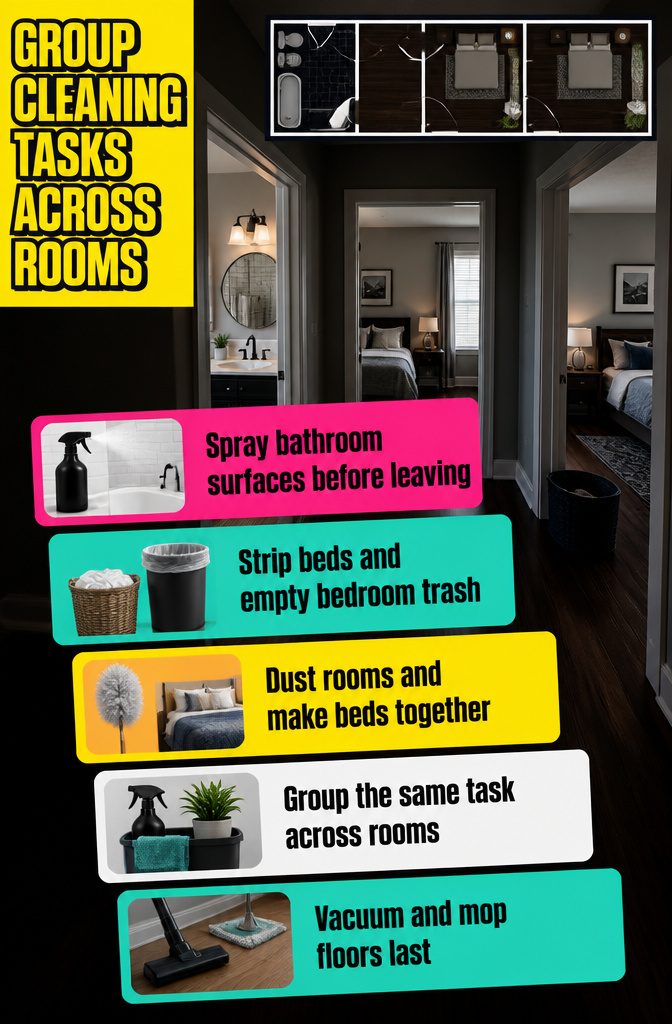
Professional cleaners rarely walk the same hallway twice, sequencing work so products soak while they move between rooms. Start in the bathroom: spray every surface, then leave.
Walk to the bedrooms, strip the beds, empty trash cans. Dust those rooms next and make each bed while you are already standing in it, which beats a second lap later.
By now the bathroom cleaner has sat long enough to break down soap scum without scrubbing, so finish that room. Vacuum and mop floors last, working backward toward the door so you do not walk over what you just cleaned.
The same logic applies when appliances run themselves. Load the dishwasher or washing machine first, then clean baseboards or wipe down walls while the machine cycles.
If a tub needs serious attention, spray it, clean two other rooms, then come back and rinse. Backtracking eats time, and grouping the same task across multiple rooms cuts the mental load of switching gears every few minutes.
6. Finish with Floors and Overlooked Details
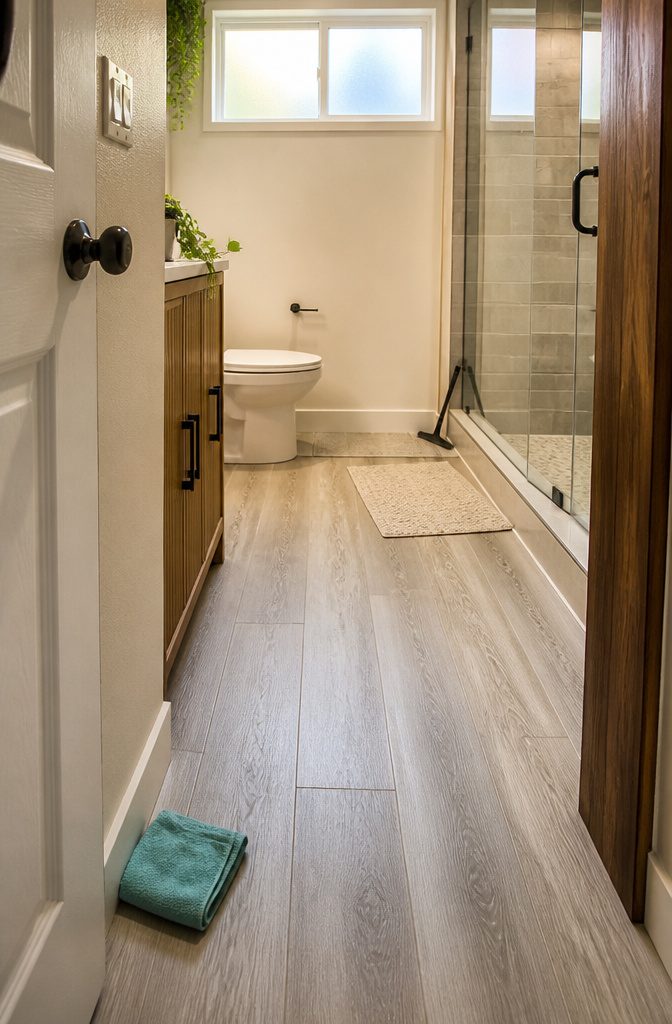
Floors come last because everything above them has already dropped dust and crumbs during the earlier work.
Vacuum or sweep thoroughly before mopping so you’re not pushing dirt around in wet streaks. For hard floors, mop in the direction of the grain if the material has one.
Kitchen and bathroom floors need the most attention, and in bathrooms especially I skip the mop and use a rag on my knees instead, which gets into the gap between the toilet and the wall where a mop head won’t fit.
Before the floors dry, I wipe down the details that show whether a room is actually finished: door handles, light switches, and baseboards.
Baseboards pick up dust fast, and cleaning them before you mop means the floor catches whatever comes off.
High-touch surfaces in the kitchen and bathroom get disinfected if anyone’s been sick, but most of the time a damp microfiber cloth does the job.
Stainless steel appliances show every fingerprint, and microfiber works better than paper towel for buffing out smudges without streaks.
Use Suitable Tools and Keep Them Ready
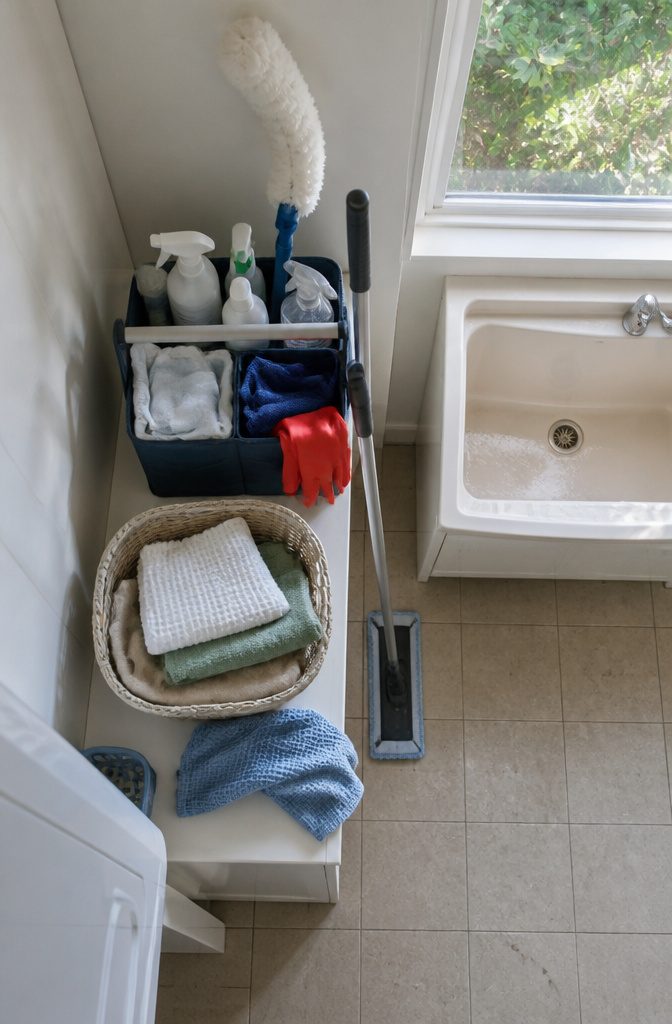
Having appropriate tools ready means you move from task to task without stopping to search for what you need next. Professionals keep their supplies organized in one place, and a caddy or bucket makes that portable.
Start with these basics:
- Microfiber cloths — buy them in bulk, because they clean nearly everything and you can wash and reuse them
- Cotton rags — old towels and t-shirts work, white ones preferred so color doesn’t transfer to upholstery
- Dawn Dish Soap — a couple drops in warm water cleans most surfaces, plus dishes
- Vinegar and baking soda — tackle grease, odors, and gunk in appliances, tracks, and drains
- Swiffer Duster with extendable handle — reaches fans, light fixtures, and high shelves while trapping dust instead of spreading it
- Swiffer Wet Jet — mops without needing a bucket
- Rubber gloves — protect hands from abrasive cleaners and remove pet hair when rubbed against fabric
- Squeegee — clears shower doors and mirrors without streaks
- Long-handled bendable duster — gets into ceiling corners and vents
Most professionals rely on just three cleaning products: an all-purpose spray, a glass cleaner, and a bathroom cleaner. And if you’re washing dishes by hand, the dishwasher takes 3.5 times less water, which saves time and money.
Regular Cleaning Makes Later Work Easier
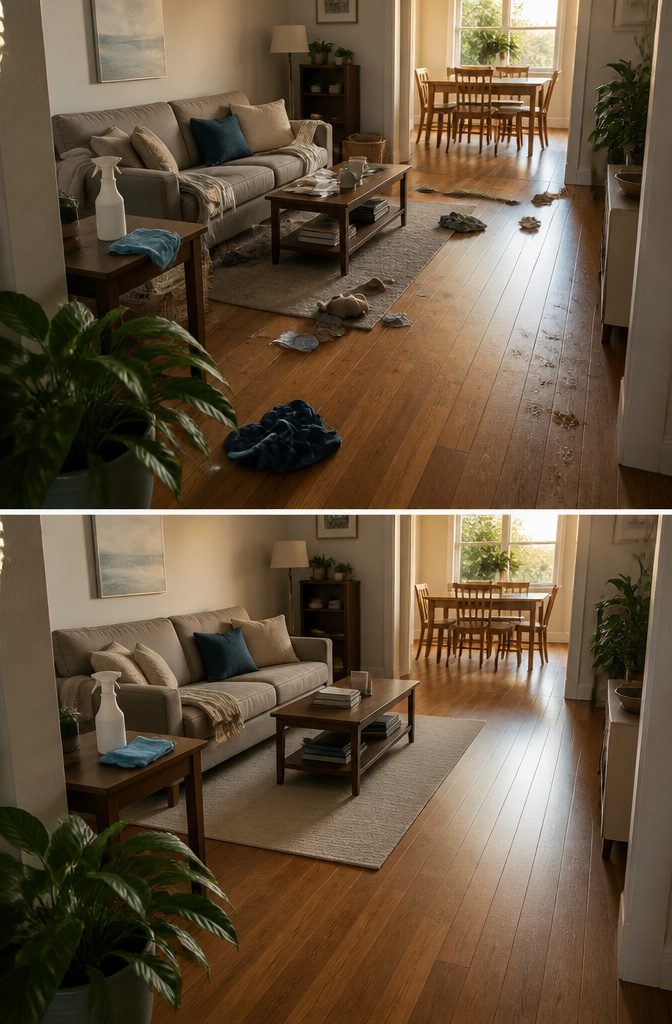
Recurring routines make you faster in two directions: you learn the movements through repetition, and you never let grime pile up enough to require catch-up work. Professionals clean for a living, which means they clean regularly.
That gives them an edge in speed and sharpness, because practice tightens both. The more you run the same sequence, the less you think about where the sponge goes next or which room comes after the hall.
A cleaning schedule that splits tasks across daily, weekly, monthly, and deep-cleaning intervals prevents dirt and clutter from accumulating.
When you stay on top of cleaning, you avoid marathon sessions. The work gets easier each time because you are maintaining a baseline instead of digging out from under neglect.
Some cleaners claim you can do an entire house in an hour with focus and a streamlined system. That might only hold for the smallest homes, but the principle stands: consistency turns cleaning into maintenance rather than rescue.
Frequently Asked Questions
How do professionals clean so fast?
Professional cleaners follow a system and work regularly, which means they never face deep grime that requires extra time.
They keep all supplies in a single caddy, declutter before they start, and spray products that need soak time first so they can clean other rooms while those solutions work.
Moving top to bottom and grouping the same task across multiple rooms prevents backtracking.
What is the 20/10 rule for cleaning?
The 20/10 rule means you clean for 20 minutes, then take a 10-minute break, repeating the cycle until the work is finished. Breaking the job into timed intervals keeps you from getting overwhelmed and helps maintain focus during longer sessions.
What is the 1% rule of cleaning?
The 1% rule suggests improving your cleaning routine by 1% each day through small, manageable changes rather than attempting a complete overhaul. Over time, these tiny improvements compound into a cleaner home with less effort.
What is the 5-5-5 rule for cleaning?
The 5-5-5 rule asks you to find 5 things to throw away, 5 things to put back where they belong, and 5 things to donate or give away.
This quick decluttering method takes only a few minutes and prevents clutter from building up between full cleaning sessions.