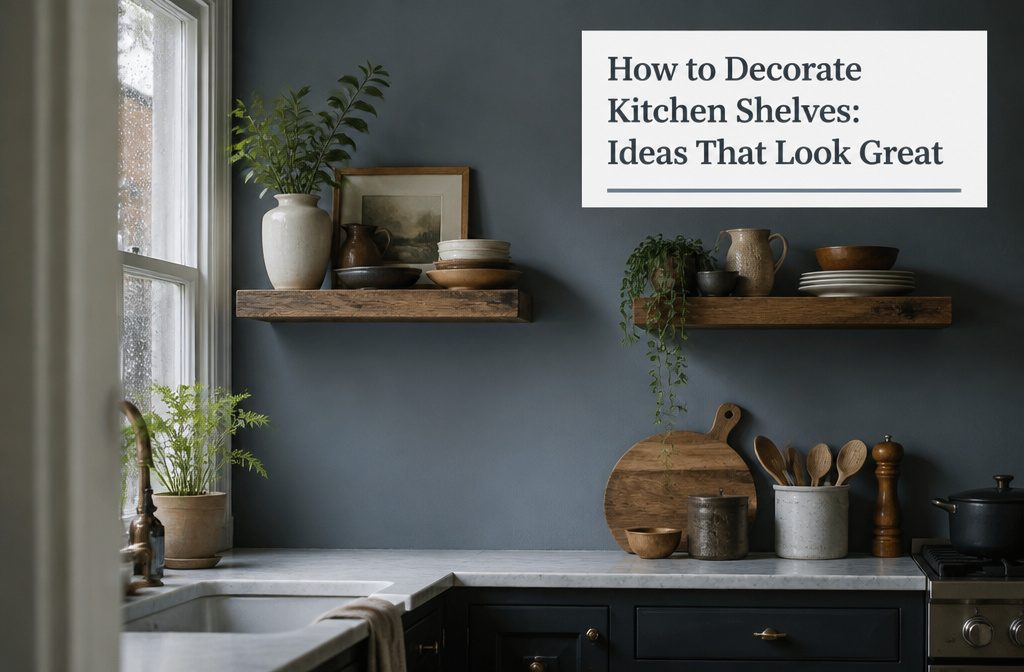
Open kitchen shelves look best when each shelf holds one or two groupings of objects, not a continuous line of things from end to end.
The arrangement falls apart when you fill every available inch or when everything on the shelves shares the same height and texture. A shelf 30 to 48 inches wide holds two groupings comfortably, with breathing room between them.
1. Balance Practical Items With Decorative Pieces
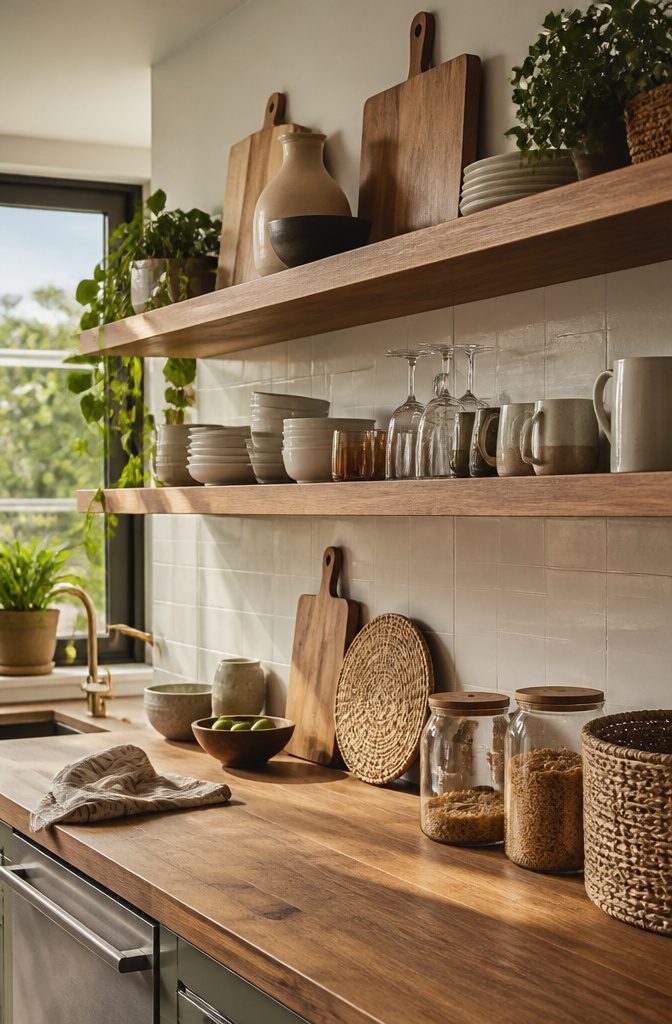
The everyday items you reach for most often should sit on shelves where you can grab them without thinking. Plates, bowls, glassware, and mugs belong on the most accessible shelf, usually somewhere between waist and eye level.
I keep the pieces I actually use in plain sight and move the ones that come out twice a year into base cabinets or a pantry.
That frees the shelves to hold what earns its place by looking good and getting used.
Stacking dishware gives you a clean base to build from.
Taller pieces like cutting boards, vases, or ceramic jars add height without eating up too much depth. Woven baskets or canisters work as storage that doubles as texture.
The goal is not to fill every inch. Leaving a little room between objects keeps the arrangement from reading as clutter.
I find it helps to think in pairs: a stack of plates next to a small pitcher, a row of glassware near a plant. Functional pieces can carry the whole display if you pick ones worth looking at.
2. Leave Space So Shelves Feel Uncluttered
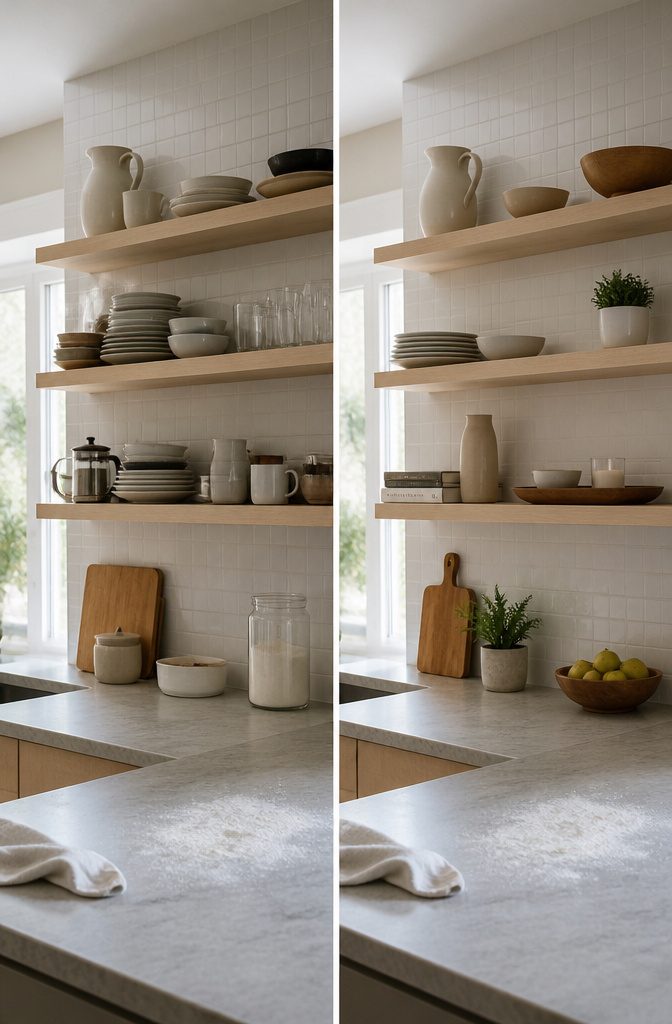
The most common mistake I see with open shelves is filling every available inch.
The shelves hold more, but the whole display reads as crowded. Leaving deliberate gaps between objects gives the eye somewhere to land and makes each grouping feel intentional rather than packed.
Instead of filling each shelf from end-to-end and top-to-bottom, leave space between and above objects. This creates an intentionally curated look.
— Magnolia
That open space does more than prevent clutter.
It lets you vary the rhythm on each shelf, so a stack of books or a tall vase sits next to something lower, like a small bowl or a tray with a candle.
The difference in height creates the visual interest, but only if the space around each piece is clear enough to read the difference.
Group items together, then leave room before the next grouping starts. That breathing room is what keeps the shelves from feeling accidental.
3. Build a Cohesive Look With Color
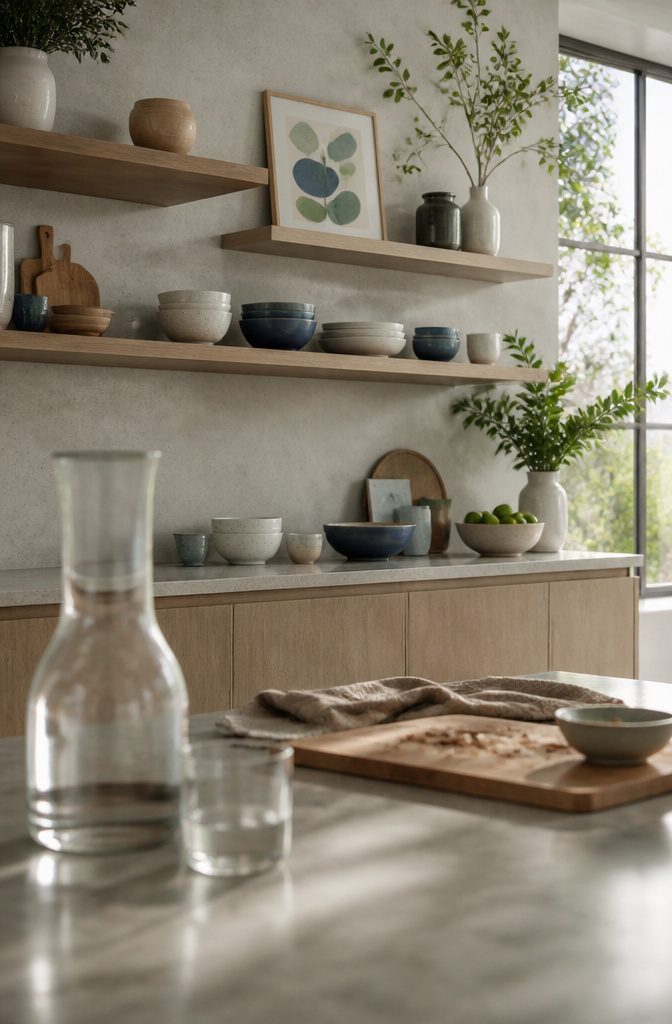
Color is a powerful way to make open shelves feel intentional. I start by picking one neutral and one accent color, then repeat them across dishes, accessories, and the rest of the room.
A common approach is to use beige, gray, or black as the neutral, then bring in one color like blue, green, or burgundy to tie everything together.
The accent can come from a piece of art on or near the shelves, and pulling those tones into your dishes or bowls creates a cohesive color story without feeling forced.
Neutral dishes work especially well if you want flexibility. White, cream, or speckled stoneware reads calm and gives you room to change out smaller pieces seasonally.
If you do bring in color, keep the tones subdued. Brown, green, blue, and ivory work together when the shades stay close to what you see in nature.
I find that mixing too many bright or competing colors makes shelves feel busy, but a muted palette lets you layer different materials without visual clutter.
4. Vary Size, Height, Shape and Texture
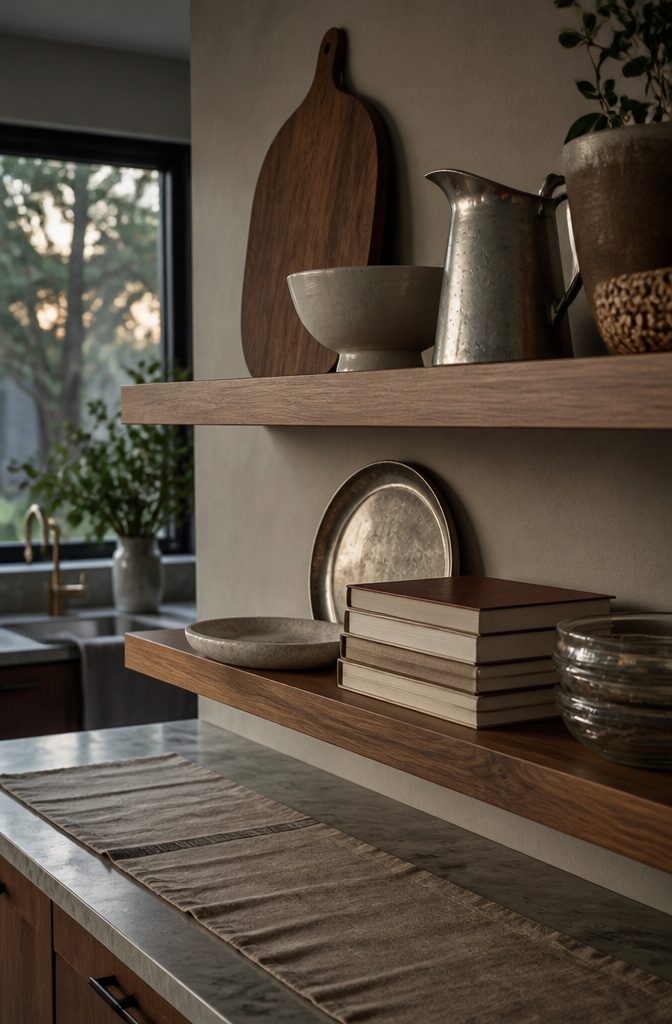
The trick to making shelves read as designed rather than stored is mixing materials that feel different to the eye: a wood cutting board next to a ceramic bowl next to a metal pitcher.
When everything on a shelf shares the same texture or finish, the arrangement flattens out no matter how carefully you space it.
I usually work with wood, stone, ceramic, natural fiber and metal, overlapping them until the contrast feels balanced instead of random.
Height matters as much as material. A vertical pitcher or vase takes up the space between shelves and breaks the monotony of low bowls and stacks.
Pair tall objects with shorter ones on the same shelf—stacked books next to an open bowl, a tray with a candle beside something that reaches higher—so the eye moves instead of skating across at one level.
Antiques in different forms work especially well together: silver platters, glass bowls and wooden boards bring both variety in shape and a span of textures that holds attention without effort.
5. Group and Layer Objects
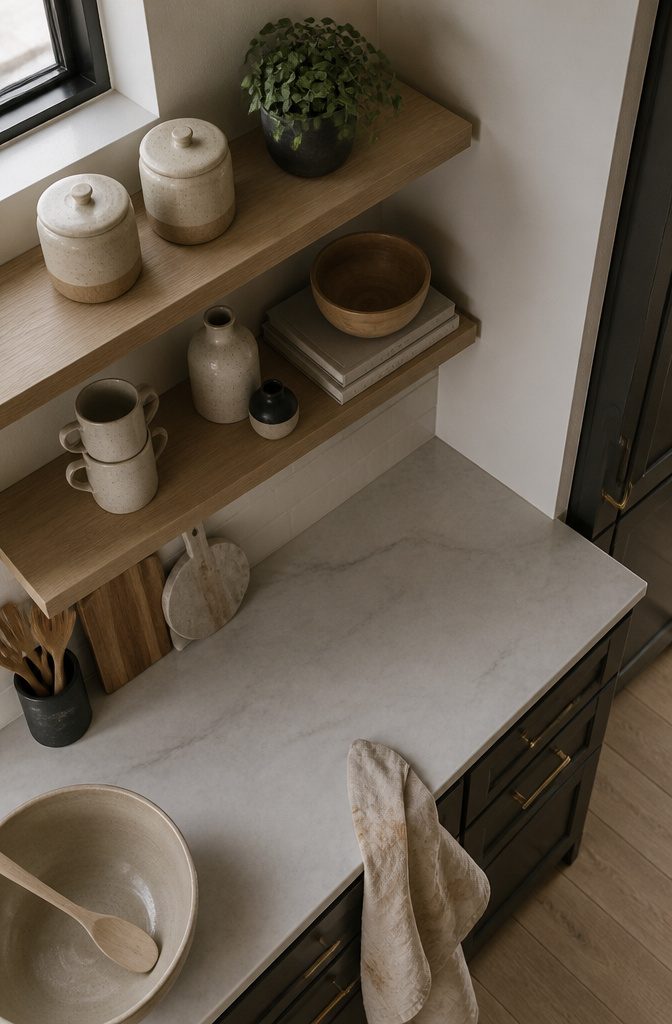
Clustering objects instead of spacing single pieces across the shelf makes the difference between intentional and cluttered.
A grouping is two to four items placed close together, and the connection between them can be visual—similar color, scale, or material—or just that they look right side by side.
A pair of matching canisters next to a small plant in a dark planter reads as intentional. Three mugs stacked together become display instead of storage left out.
Layering adds interest when it’s done lightly: a small sculptural piece in front of a taller vase, or a bowl resting on a short stack of books.
But too much layering makes the shelf hard to read visually, and the whole arrangement starts to feel like it needs editing.
I keep layering to one or two moments per shelf and let the rest of the groupings sit flat.
6. Repeat Elements Across the Shelves
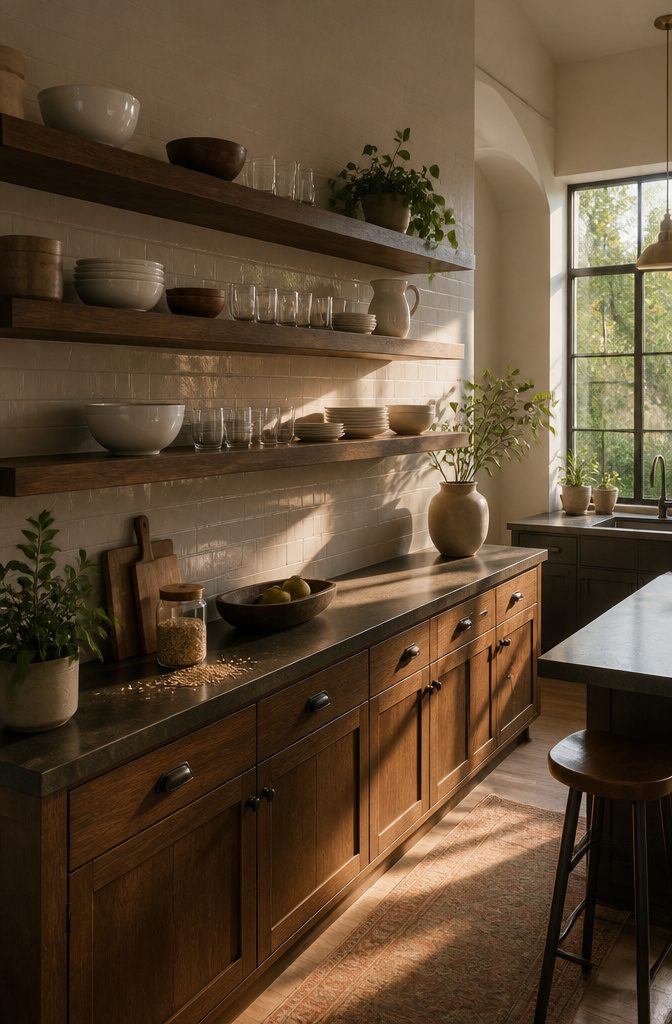
Repeat Elements Across the Shelves
Repeating the same color, material, or object type across multiple shelves makes the whole arrangement feel connected instead of random. I think of it as giving the eye a path to follow.
If you have white ceramic pitchers, for example, placing one on the top shelf and another on the bottom creates that kind of thread. The same goes for greenery, wooden cutting boards, or any pattern you like.
Diagonal repetition is the version I see work best. Put a white bowl on the left side of the top shelf, another white piece on the right side of the middle shelf, and a third on the left again below.
That zigzag keeps the eye moving and balances the weight across the whole unit without lining everything up in a grid.
You can do this with almost anything: glassware, natural elements, or even a specific finish like espresso-stained wood. The spacing matters more than the exact object.
7. Include Greenery or Natural Elements
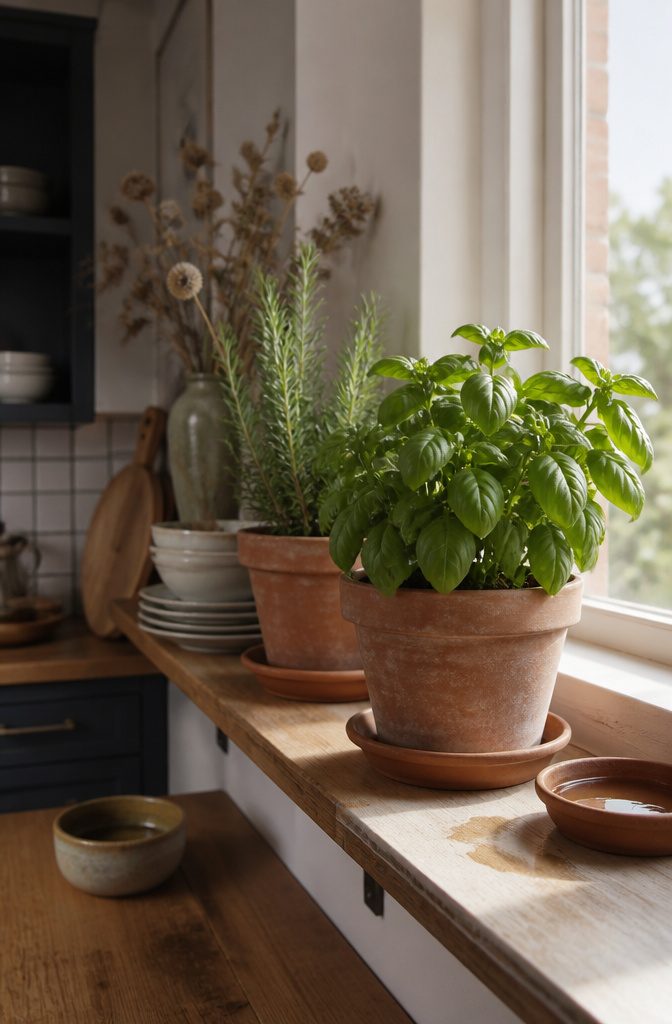
Plants work because they add color and texture without taking up much room. Potted herbs like basil or rosemary sit near a sunny window and give you something to clip into dinner, which means they earn their place twice.
The downside is watering, which gets old when you have to reach above your head three times a week.
Faux plants solve that if you’d rather skip the maintenance. A small olive tree or baby’s breath arrangement reads real from a few feet away and needs no thought after you set it down.
I prefer real greenery when the shelf gets enough light, but fake wins in a dim corner or on a high ledge where watering is genuinely annoying.
Low-maintenance options include dried seed pods, grasses, or branches, which look finished without water or trimming. They add the natural element your eye looks for without adding another task to the week.
8. Use Personal, Vintage or Collected Objects
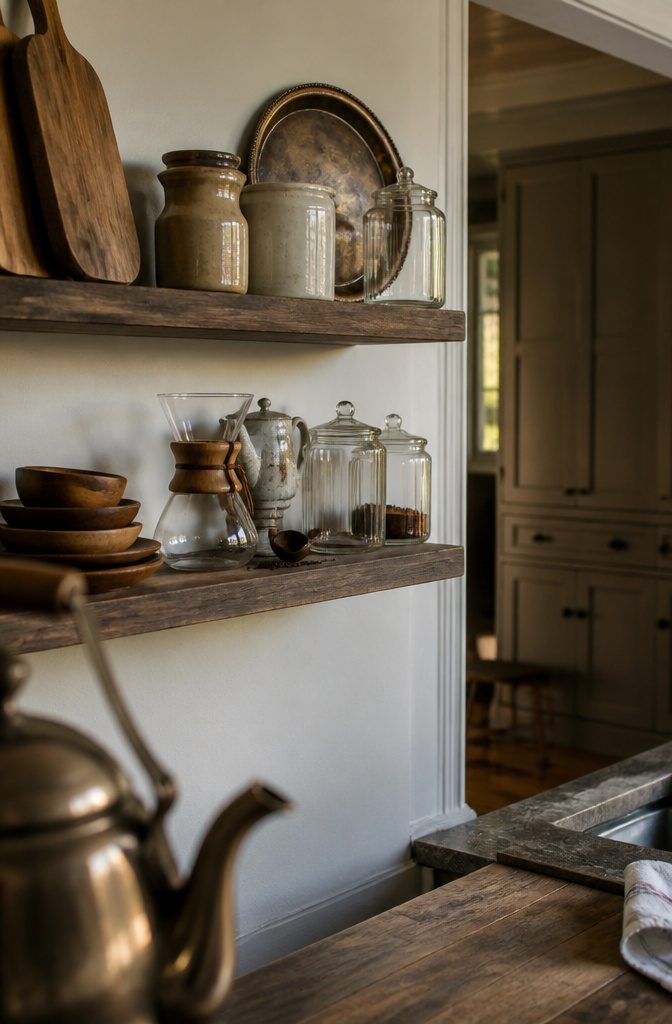
Objects you already own and care about make better shelf displays than things bought to fill space.
Family pieces, antiques, and collected items tell a story that generic decor does not, and mixing old with new keeps shelves from reading like a vintage shop or a catalog page.
I look for objects that have texture and history: a wooden cutting board worn smooth at the handle, stoneware crocks in varied glazes, glass canisters that catch the light.
A modern Chemex next to a vintage spice bottle is the kind of pairing that works because the shapes are simple and the materials—glass, wood, metal—relate without matching exactly. The age difference becomes interesting rather than jumbled.
Antiques with patina earn their spot. Silver platters, wooden boards, and glass bowls layer well together because the wear shows they were used, not staged.
If every object on the shelf is new and perfect, the space reads stiff. A few pieces with scratches, tarnish, or faded labels give the kitchen a lived-in honesty that careful styling never quite delivers.
9. Use Dishes and Glassware as Display and Storage
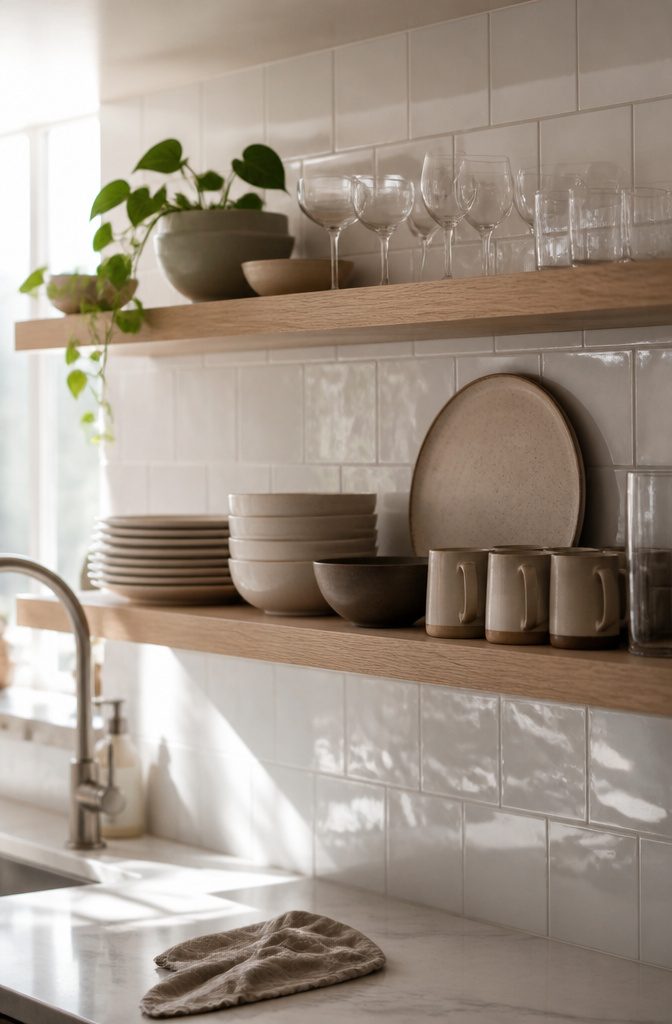
Dishes and glassware as display and storage
Plates, bowls, mugs and glasses belong on open shelves because they do both jobs at once. Stack everyday dishes where you can reach them easily, and the shelf stays useful instead of turning into a museum.
I like moving clean dishes straight from the dishwasher to the shelf, which keeps the rotation quick enough that dust never settles.
Leaning a bowl or platter against the wall adds height without blocking what sits in front. A display stand holds the piece at an angle, or you can set it flat if the rim has enough detail to show.
Glassware reads as practical even when it looks good, so cocktail glasses or small tumblers fill a shelf without feeling fussy.
Melamine dishes from Pottery Barn hold up to daily use and still look intentional on a shelf, which matters when the kitchen has more open storage than closed cabinets.
10. Add Art, Photos or a Large Decorative Piece
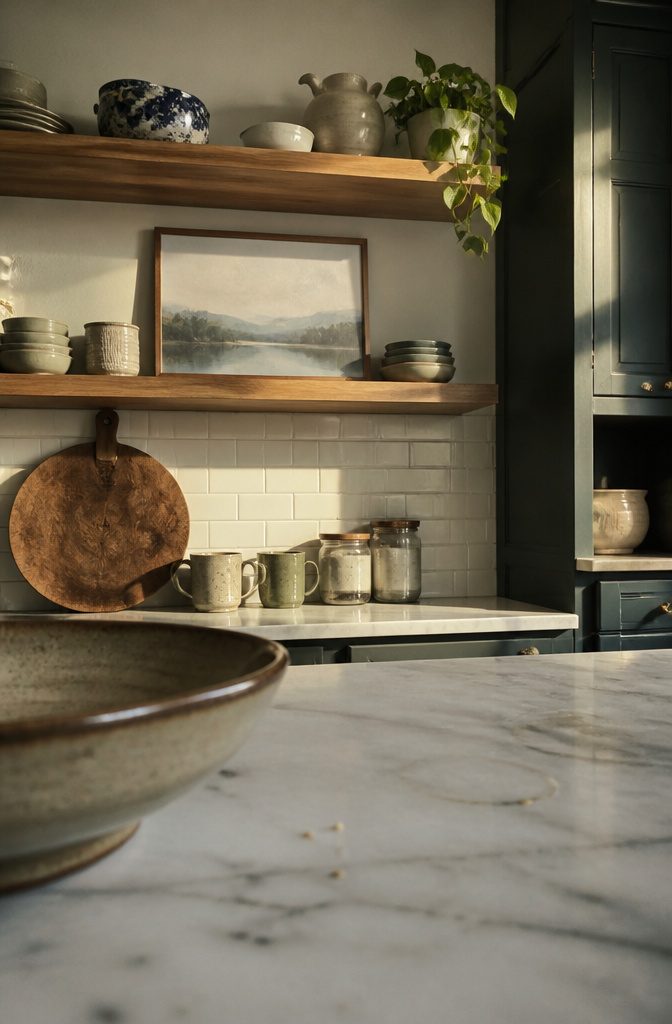
A framed print or a piece of art can anchor an arrangement that might otherwise feel scattered.
An 11 by 14 inch print is large enough to stand as a focal point without dominating the shelf, and it ties smaller objects around it into a single grouping rather than leaving them looking random.
I use this approach when a shelf holds a lot of small items—mugs, jars, small bowls—that need something behind them to feel deliberate.
The frame works best when it picks up a color already present in the dishes or accessories nearby.
A landscape with blues and greens makes blue stoneware or green dinnerware look chosen instead of leftover. The same logic applies to black-and-white photography or text prints: they ground arrangements that might otherwise read as too busy.
Larger decorative pieces—a wide cutting board, a mirror, an oversized bowl—do the same job when framed art does not suit the space.
Use Measurements to Plan How Many Groupings Fit
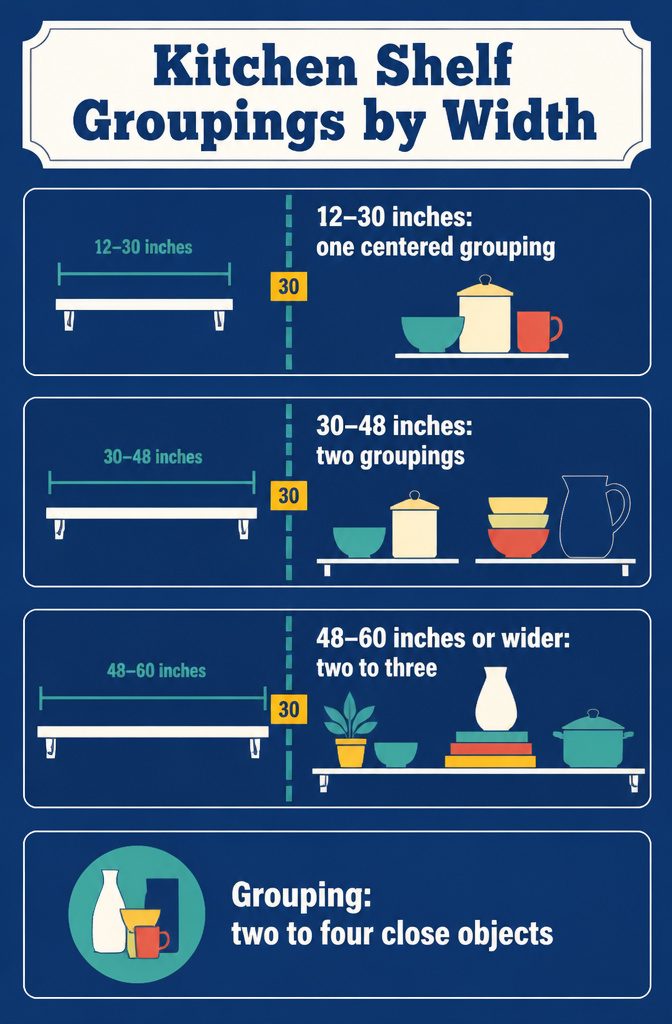
Start by measuring the shelf width, because that number tells you how many groupings will fit without crowding. A grouping is two to four objects placed close together, usually related by color, size, shape, or function.
- Measure each shelf in inches from bracket to bracket or end to end if it’s a floating shelf.
- Count groupings based on width. A shelf 12–30 inches wide holds one grouping, centered. A shelf 30–48 inches wide holds two groupings. A shelf 48–60 inches or wider holds two to three.
- Scale the objects to the space. Wider shelves need larger items in each grouping. On a 60-inch shelf with plenty of room between clusters, a tall vase or stacked cookbooks can anchor a grouping without looking lost. On a 20-inch shelf, the same vase would overtake the whole run.
- Leave space between groupings. The wall or back panel showing through between clusters keeps the shelf from reading as a single unbroken line.
Start by Clearing and Cleaning the Shelves
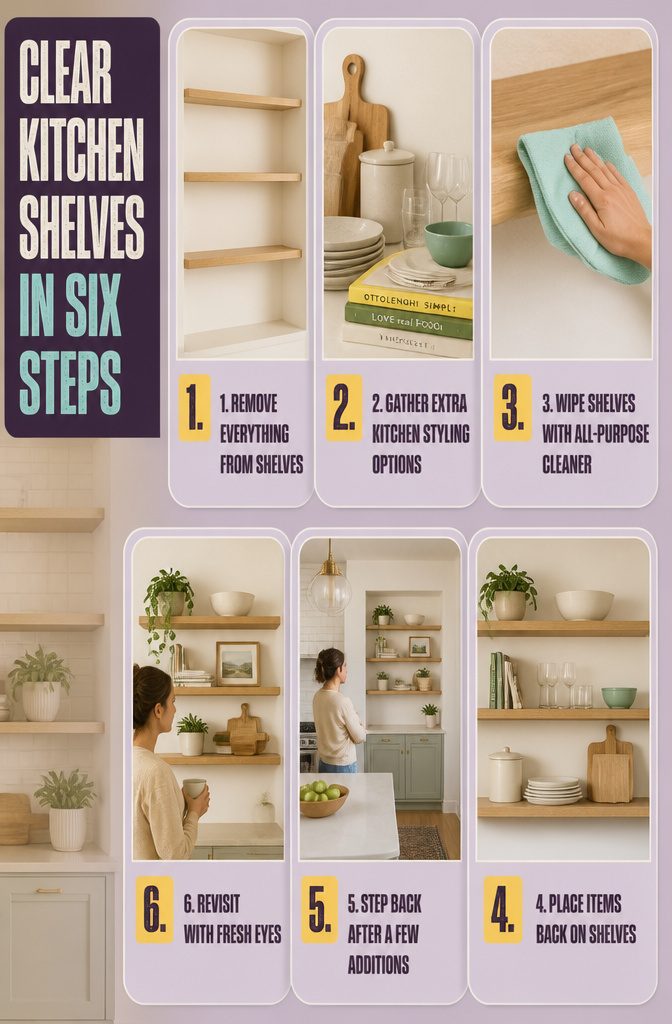
- Pull everything off the shelves and set it on the counter or table. You want a blank surface and a full view of what you have to work with.
- Gather styling options from around the kitchen: dishes, glassware, cutting boards, canisters, bowls, small appliances, cookbooks. Collect more than you think you’ll need. Having extra gives you choices when you start arranging.
- Wipe the shelves down with an all-purpose cleaner. Dust shows up fast on open shelving, and starting clean makes the finished look sharper.
- Begin placing items back, using the guidelines in the sections that follow.
- Step back after every few additions to see how the arrangement reads from across the room. What looks balanced up close can feel lopsided from the doorway.
- Walk away for an hour or come back the next morning. Fresh eyes catch gaps, clutter and color imbalances you miss when you’ve been staring at the shelves for twenty minutes straight.
Frequently Asked Questions
How do you balance functional and decorative items on kitchen shelves?
Place everyday dishes, glassware, and mugs you use regularly on the most accessible shelves between waist and eye level.
Then add decorative pieces like vases, cutting boards, or plants that provide texture and height, thinking in pairs so a stack of plates sits next to a small pitcher or a row of glasses near a plant.
How do you keep kitchen shelves from looking cluttered?
Leave deliberate gaps between objects rather than filling every inch of shelf space. Group 2 to 4 items close together, then leave room before the next grouping starts so the eye has somewhere to land and each cluster reads as intentional.
What colors work best for kitchen shelf decor?
Pick one neutral like beige, gray, or black and one accent color like blue, green, or burgundy, then repeat them across dishes and accessories.
Neutral dishes give you flexibility, while muted tones inspired by nature let you layer different materials without visual noise.
How do you make kitchen shelves look interesting?
Mix materials that feel different to the eye, like wood cutting boards next to ceramic bowls next to metal pitchers.
Vary height by pairing tall objects like vases with shorter ones like bowls or stacked books on the same shelf so the eye moves instead of staying flat.
Should you repeat items across multiple kitchen shelves?
Yes, repeating the same color, material, or object type across shelves makes the whole arrangement feel connected.
Diagonal repetition works best: place a white bowl on the left side of the top shelf, another white piece on the right side of the middle shelf, and a third on the left again below.
What kind of plants work on kitchen shelves?
Potted herbs like basil or rosemary work well near a sunny window and give you something to clip into dinner.
Faux plants or low-maintenance dried grasses and branches add the natural element without watering, especially in dim corners or on high ledges.
How many groupings fit on a kitchen shelf?
A shelf 12–30 inches wide holds one grouping centered.
A shelf 30–48 inches wide holds 2 groupings. A shelf 48–60 inches or wider holds 2 to 3 groupings, with space between each cluster.
Should you display dishes on open kitchen shelves?
Yes, plates, bowls, mugs, and glasses work as both display and storage when you stack everyday dishes where you can reach them easily.
Leaning a bowl or platter against the wall adds height, and glassware reads as practical even when it looks good.